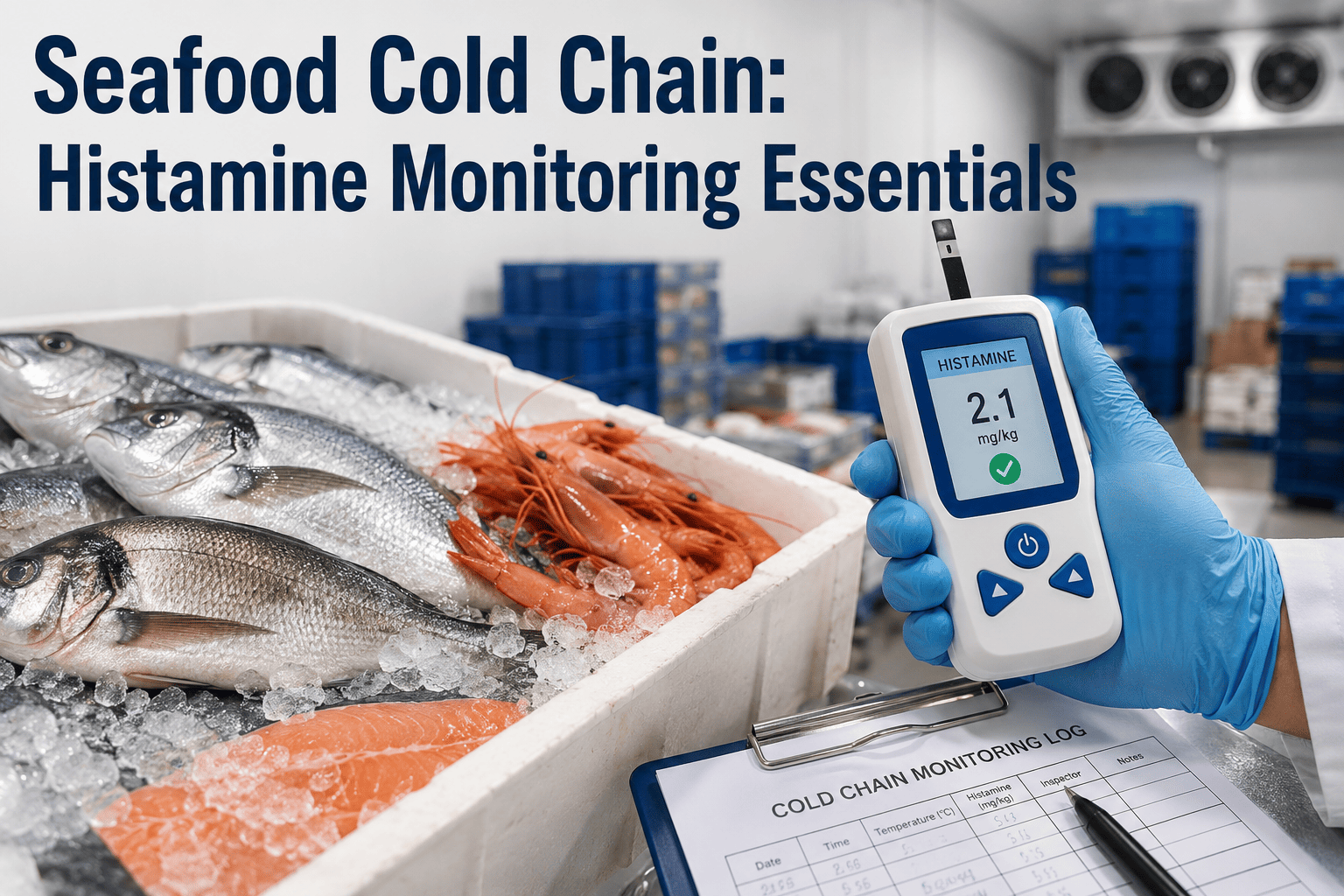
Histamine poisoning from seafood is one of the few foodborne illnesses that cooking cannot fix, because the toxin forms before the fish ever reaches a pan and survives freezing, canning, and heat without breaking down. Tuna, mackerel, and mahi-mahi carry naturally high levels of histidine in their flesh, and once time and temperature abuse begins, bacterial conversion to histamine can happen faster than most handlers expect. iFactory gives seafood processors continuous, species-aware time-temperature tracking built specifically around histamine-risk species, detailed further at iFactory support.
Species-Aware Cold Chain · Histamine-Risk Seafood
Seafood Cold Chain: Histamine Doesn't Wait for a Missed Temperature Check
iFactory tracks time and temperature continuously for tuna, mackerel, and other scombroid species, flagging cumulative exposure before histamine formation becomes a food safety risk.
Species Risk Profile
Which Species Carry the Highest Histamine Formation Risk
Species
Histidine Level
FDA Action Level
Bluefish
Moderate–High
50 ppm
The Formation Window
How Fast Histamine Can Form Once Temperature Abuse Begins
0–2h
Minimal risk if held near freezing
2–4h
Bacterial activity begins above 40°F
4–8h
Histamine formation accelerates rapidly
8h+
Risk of exceeding action level rises sharply
Histamine Cannot Be Reversed Once It Forms — Only Prevented
Continuous cumulative time-temperature tracking flags histamine-risk exposure while there's still time to intervene, before product ever reaches lab testing.
Critical Control Points
Four Points Where Histamine-Risk Species Need Extra Scrutiny
Vessel Hold
The clock starts the moment a fish is caught, and inadequate icing on the vessel is the single biggest contributor to eventual histamine risk.
Dock Offload
Time spent on the dock awaiting transport is often the least monitored segment of the entire chain, despite ambient temperatures frequently exceeding safe limits.
Processing Line
Extended time on a processing line at room temperature during filleting or portioning adds cumulative exposure that a single spot check easily misses.
Distribution Transit
A reefer trailer running above setpoint during a multi-stop delivery route can push cumulative exposure over the edge without triggering a single alarming reading.
Testing & Compliance Checklist
Five Practices That Support FDA Compliance
1Track cumulative time-temperature exposure across the full chain, not isolated readings at each stage.
2Set alert thresholds based on cumulative exposure models specific to histamine-risk species, not generic seafood limits.
3Pair continuous monitoring with periodic lab testing to validate that exposure tracking correlates with actual histamine levels.
4Document every handoff between vessel, dock, processor, and distributor with a timestamped temperature record.
5Train handling staff on cumulative exposure concepts, since a fish that looks and smells normal can still exceed action levels.
The Underlying Chemistry
Why Histamine Formation Is Different From Ordinary Spoilage
Most seafood spoilage is a gradual, roughly linear process that correlates fairly well with sensory cues — smell, texture, and appearance degrade together in a way trained handlers can often detect. Histamine formation doesn't follow that pattern. Certain bacteria naturally present on fish, including some Morganella, Photobacterium, and Raoultella species, convert free histidine in the muscle tissue into histamine through decarboxylase enzyme activity, and this conversion accelerates sharply once temperature rises into the range where those bacteria thrive, typically above 40°F. The critical detail for handlers is that this enzymatic process is largely irreversible: once significant histamine has formed, subsequent freezing, cooking, or canning does not break it down, because it's a heat-stable compound. A fish that experienced a temperature abuse event early in its handling chain can look, smell, and taste completely normal while carrying histamine levels well above the FDA action level, which is precisely why time-temperature history matters more than any single point-in-time inspection for these species.
Why This Matters Beyond Compliance
Scombroid Poisoning Is Among the Most Commonly Reported Seafood Illnesses
Rapid Onset
Symptoms typically appear within minutes to a few hours of consumption, including flushing, headache, and gastrointestinal distress, making the connection to the meal usually obvious to the consumer.
Frequent Underreporting
Because symptoms often resolve within hours and resemble an allergic reaction, many cases go unreported to health authorities, meaning actual incidence is likely higher than official figures suggest.
Business Risk
A single documented illness traced to a processor or restaurant can trigger a recall, regulatory scrutiny, and lasting reputational damage well beyond the cost of the affected lot itself.
Frequently Asked Questions
Histamine Monitoring — What Seafood Processors Ask First
Can continuous monitoring actually predict histamine levels?
Continuous time-temperature tracking predicts cumulative exposure risk based on established formation models for scombroid species, giving an early warning of elevated risk. It is not a substitute for laboratory histamine testing, but it identifies which lots warrant priority testing and which handling segments are contributing most to risk, making a testing program far more targeted.
Book a Demo to see how exposure modeling works for your species mix.
Does this cover the vessel stage before the fish reaches our facility?
Where vessels carry compatible logging equipment, that data can feed into the same cumulative exposure record that continues through dock, processing, and distribution. For vessels without existing instrumentation, dock-arrival readings combined with catch-time documentation from the vessel log provide a starting estimate for the pre-arrival exposure window.
How does this help with FDA HACCP compliance specifically?
Continuous, timestamped exposure records give HACCP plans a documented critical control point history for the time-temperature parameters that scombroid toxin formation guidance identifies as key risk factors. This documentation supports both routine compliance recordkeeping and rapid response during an FDA inspection or a customer audit.
Contact support for documentation formats aligned to your HACCP plan.
What species-specific thresholds does the system use?
Threshold models are configured per species based on established histidine content and formation rate research, so tuna, mackerel, and mahi-mahi each carry exposure models appropriate to their individual risk profile rather than a single blanket threshold applied across all seafood.
How long does deployment take for a processing facility?
A single-facility deployment covering receiving, processing, and cold storage typically goes live in two to three weeks. Extending coverage to vessel and distribution segments depends on how many external partners need to be integrated into the tracking chain.
Book a Demo for a timeline specific to your supply chain.
Give Your Histamine-Risk Species the Continuous Tracking Their Chemistry Demands
Species-aware cumulative time-temperature monitoring across the full seafood cold chain, live in as little as two weeks.