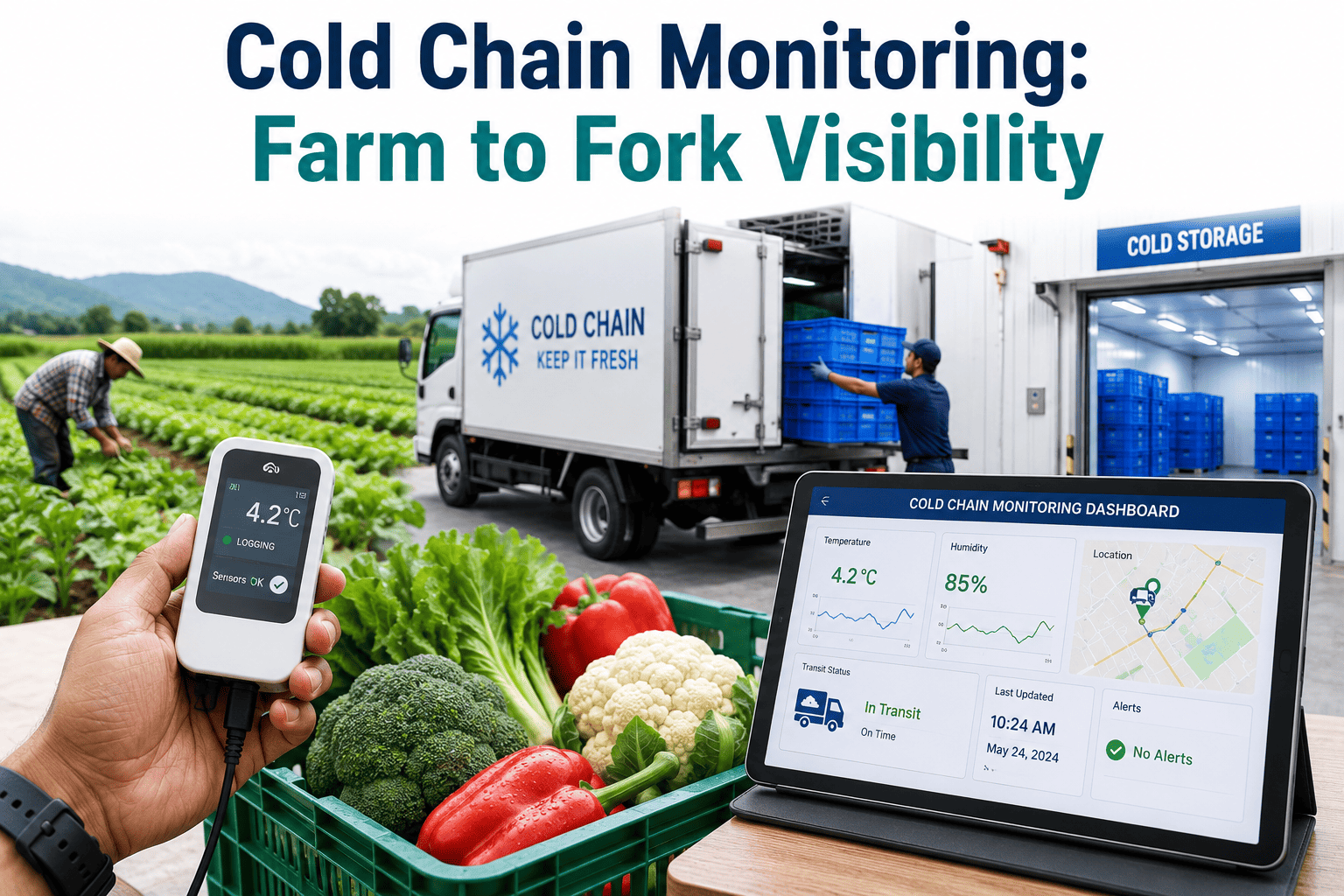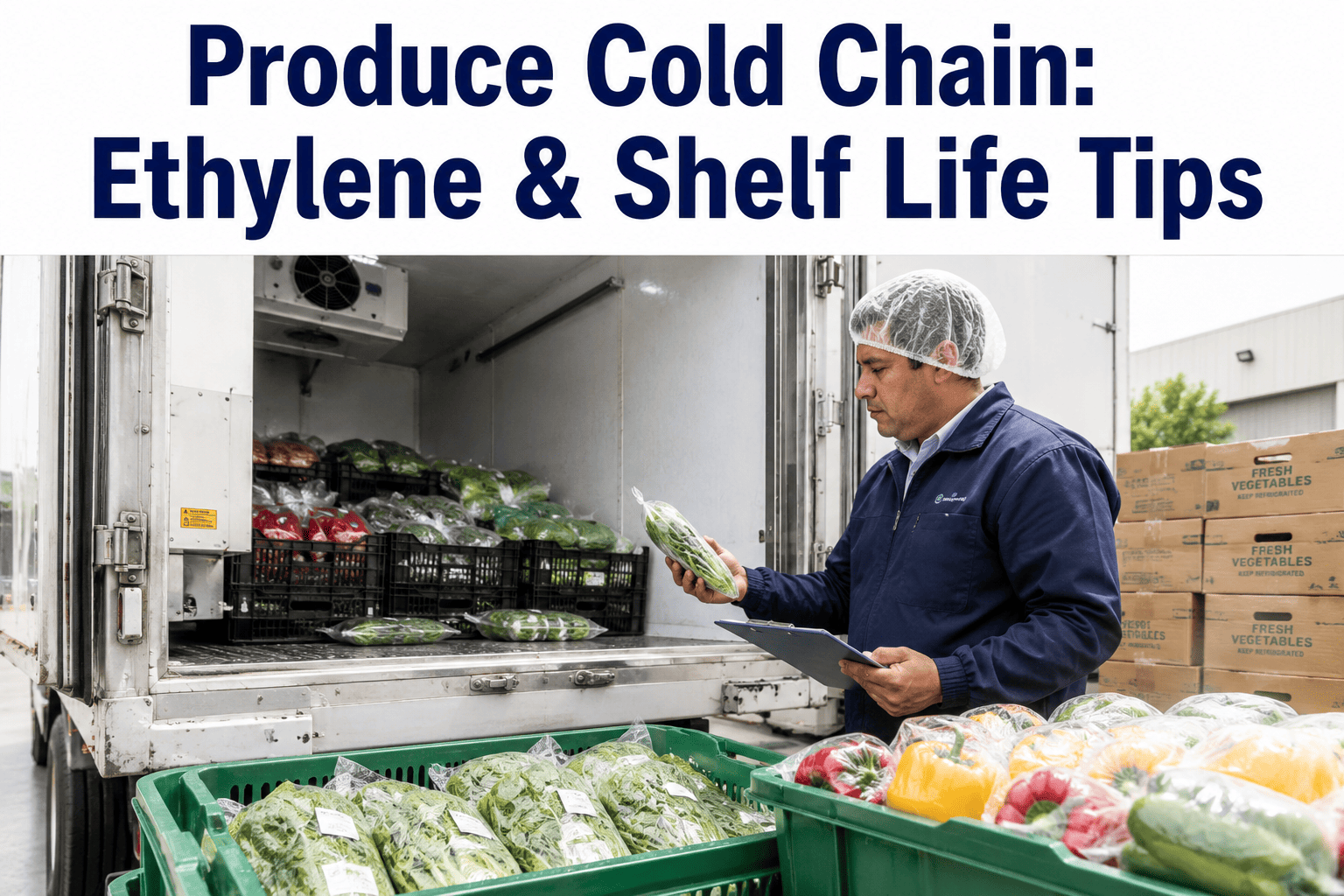
A single case of ripening bananas sitting one pallet away from a shipment of broccoli can quietly shave days off that broccoli's shelf life before either product ever leaves the distribution center, because the invisible gas one produces is exactly what triggers the other to age faster. Ethylene is one of the least visible variables in produce cold chain management precisely because it can't be seen, smelled at low concentrations, or caught by a standard temperature check, yet it interacts with temperature and humidity to determine how much usable shelf life actually survives the trip from field to shelf. iFactory's produce monitoring platform tracks ethylene alongside temperature and humidity so ripening stays intentional instead of accidental.
Manage ripening on purpose, not by accident
iFactory monitors ethylene, temperature, and humidity together across storage and transit, so produce reaches shelves at peak condition instead of past it.
Why ethylene is the produce cold chain's blind spot
Most cold chain programs are built around two variables: temperature and time. That framework works reasonably well for meat, dairy, and packaged goods, but it misses the mechanism that governs how fresh produce actually ages. Ethylene is a natural plant hormone that many fruits and vegetables produce as they ripen, and that same gas accelerates ripening in nearby produce that's exposed to it, even when temperature and humidity are both perfectly controlled. A shipment can pass every temperature check on its record and still arrive with noticeably reduced shelf life if it spent transit time near a heavy ethylene producer.
High Ethylene Producers
Highly Ethylene-Sensitive
How ethylene exposure compounds across a shipment's journey
Harvest
Produce begins its own natural ethylene production, rate varies sharply by variety.
Cooling
Rapid cooling slows ethylene production and respiration, the single biggest lever for shelf life.
Mixed Storage
Co-location with high-ethylene items accelerates ripening in sensitive produce nearby.
Transit
Poor ventilation lets ethylene concentration build inside a sealed trailer over hours.
Retail Arrival
Accumulated exposure determines remaining shelf life, regardless of temperature compliance alone.
A perfectly temperature-compliant shipment can still lose a third of its shelf life to ethylene co-mingling. Book a demo to see ethylene readings from your own storage and transit routes.
What actually controls produce shelf life together
Ethylene doesn't act alone. Its effect compounds with temperature and humidity in ways that make single-variable monitoring misleading on its own. Lower temperatures slow both the produce's own ethylene production and its sensitivity to ambient ethylene, which is why a mixed load that would ripen quickly at ambient temperature can hold up far better under proper cold storage even with some ethylene present. Humidity affects a different failure mode entirely, since produce that loses moisture wilts and shrinks regardless of ethylene exposure, and modified atmosphere packaging is often used specifically to manage both gas exchange and moisture loss at once.
Temperature
Slows both ethylene production and produce sensitivity to ambient ethylene exposure.
Ethylene Concentration
Determines how fast ripening and softening accelerate in sensitive nearby produce.
Humidity
Controls moisture loss, wilting, and shrinkage independent of the ripening process.
Ways to actually manage ethylene exposure in practice
| Approach | What It Does | Best Fit |
|---|---|---|
| Segregated Storage | Physically separates high producers from sensitive items | Distribution centers with room flexibility |
| Ethylene Scrubbing | Actively removes ethylene from storage or trailer air | Long-haul transit, high-value sensitive loads |
| Modified Atmosphere Packaging | Controls gas exchange and humidity at the package level | Retail-ready packaged produce lines |
| Continuous Monitoring | Flags rising ethylene concentration before damage accumulates | Any facility running mixed produce categories |
What shippers see after adding ethylene visibility
Why ethylene monitoring pairs naturally with existing cold chain programs
Most produce operations already have temperature and humidity monitoring in place across storage and transit, which means adding ethylene sensing extends an existing program rather than starting a new one from scratch. The data streams naturally complement each other, since a rising ethylene reading paired with a specific storage zone or trailer route quickly points to exactly where a segregation rule is being violated, whether that's a receiving dock staging mixed pallets too close together or a transfer point where high and low ethylene loads sit side by side longer than intended.
A short pilot on the highest-value sensitive produce lines, paired with a review of current storage layout and loading sequences, is usually enough to identify the specific points in the supply chain where ethylene exposure is quietly costing shelf life. From there, the fix is often a straightforward layout or sequencing change rather than a major capital investment, making this one of the higher-return, lower-disruption additions a produce cold chain program can make.
Ethylene monitoring questions we hear most
Find out how much shelf life you're losing to ethylene
See real ethylene, temperature, and humidity data from your own storage and transit routes.