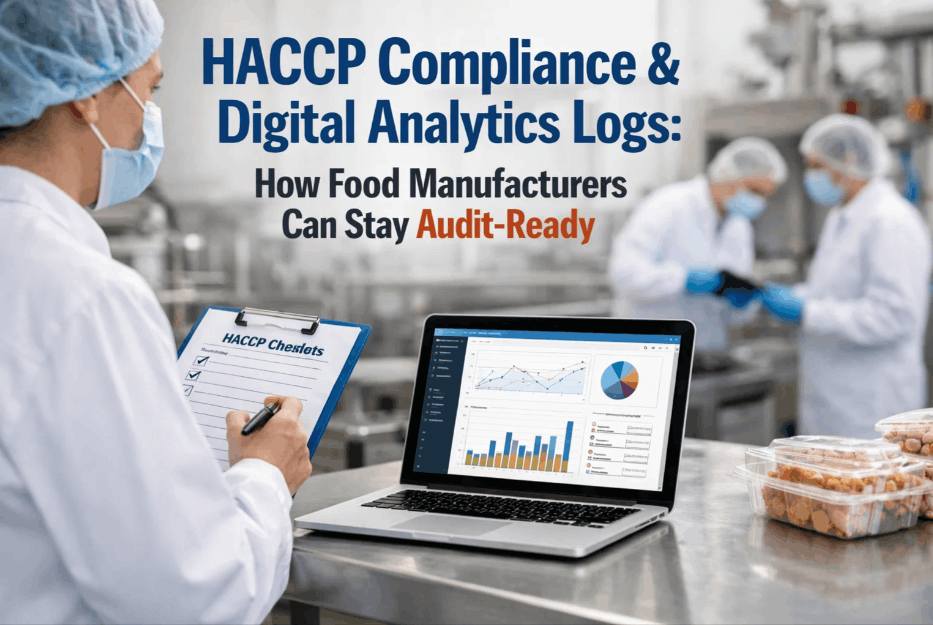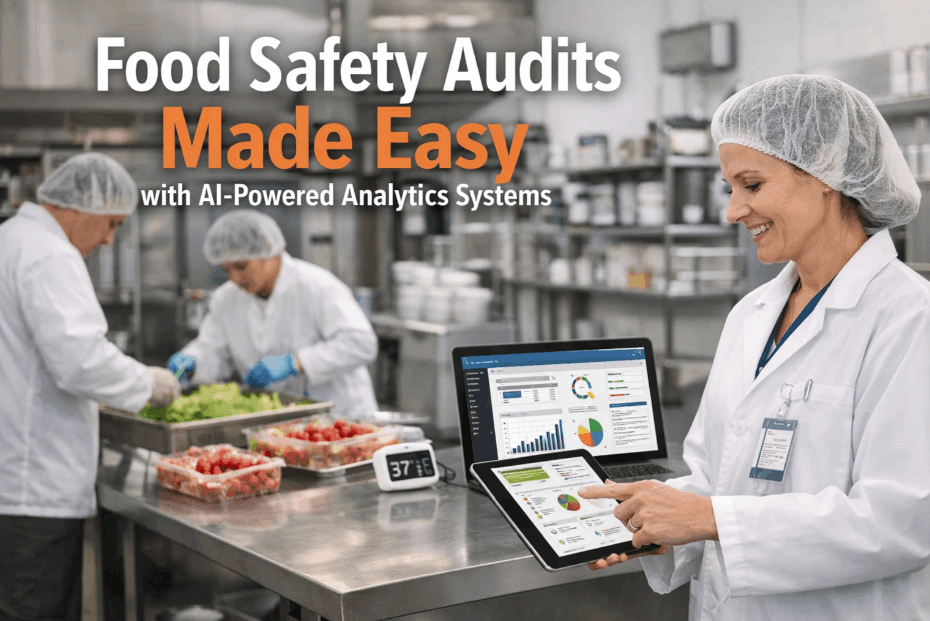
Food safety audits have long been the pressure point where manufacturers either prove compliance or face consequences — recalls, warning letters, or facility shutdowns. In 2026, AI-powered analytics systems are fundamentally changing how food and beverage facilities prepare for, execute, and document audits. With FDA FSMA 204 enforcement accelerating and retailer-driven BRC and SQF requirements tightening, manual compliance logs and spreadsheet-based HACCP records are no longer viable. This article covers how AI-driven audit readiness tools, digital compliance documentation, and automated tracking software are making food safety audits faster, more accurate, and continuously audit-ready — rather than a reactive scramble every inspection cycle. Book a demo to see how iFactory's compliance platform keeps your facility audit-ready every day of the year.
Automate Your Food Safety Audit Documentation
iFactory's AI-powered analytics platform generates tamper-resistant compliance records, HACCP logs, and CCP monitoring data automatically — so your facility is audit-ready before the inspector walks in.
Why Traditional Food Safety Audit Management Is Failing
The core problem with manual food safety audit management isn't effort — it's architecture. Paper-based HACCP logbooks, shared spreadsheets, and disconnected temperature records were never designed to produce the structured, timestamped, tamper-resistant documentation that modern food safety regulations now demand. When an FDA investigator or BRC auditor requests records, they expect instant retrieval across months of production history. Manual systems cannot deliver that — and the gap between what regulators expect and what paper systems can produce is widening every year.
AI-powered food safety compliance tracking software solves this at the infrastructure level. Rather than requiring staff to manually log critical control point readings, sanitation events, and corrective actions, AI analytics platforms capture this data automatically from connected sensors and equipment systems — generating structured compliance records as a byproduct of normal operations. The result is a facility where audit readiness is a continuous state, not a preparation sprint.
The AI Advantage in HACCP Audit Management Systems
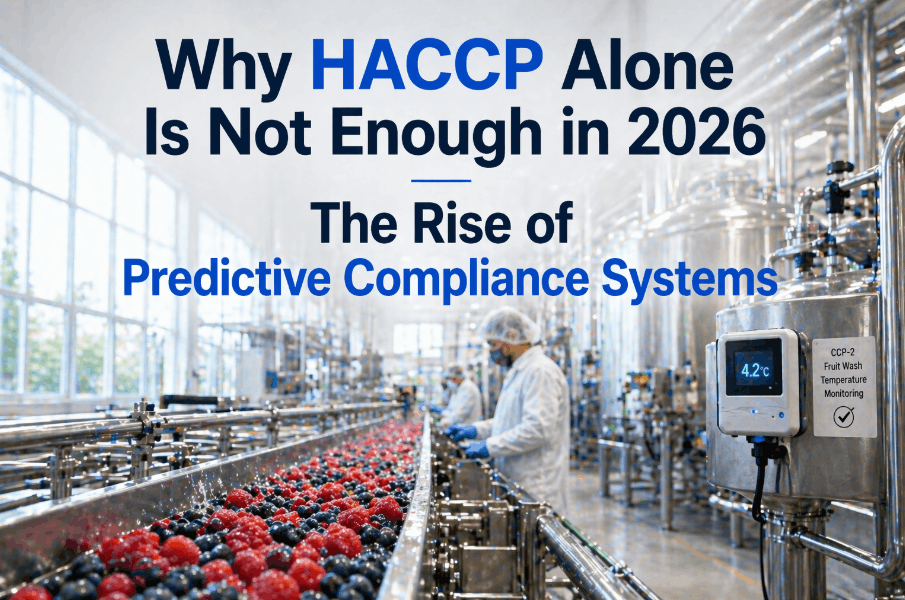
HACCP audit management systems powered by AI go far beyond digital logbooks. They apply machine learning to critical control point data streams — detecting deviations before they become violations, triggering corrective action workflows automatically, and generating the complete evidence chain that regulators require. When a temperature excursion occurs at a pasteurization CCP, an AI-powered system doesn't just record it — it timestamps the deviation, logs the corrective action taken, confirms system return to control, and stores the entire event as a structured compliance record retrievable in seconds.
Continuous Critical Control Point Tracking
AI analytics systems monitor every CCP in real time — temperature, pressure, pH, water activity — generating timestamped records for each monitoring interval automatically, with no manual entry required from production staff.
Automated Corrective Action Documentation
When a CCP deviation occurs, the system automatically opens a corrective action workflow, tracks resolution steps, and links the complete event — deviation, response, and verification — into a single retrievable audit record.
Digital Compliance Logs: From Paper to Audit-Proof Records
Digital compliance logs in food manufacturing are only as valuable as their integrity guarantees. AI-powered compliance documentation platforms use tamper-evident storage, cryptographic timestamping, and structured data formats to produce records that satisfy not just routine audit requirements but regulatory enforcement actions and product liability proceedings. Every sensor reading is stored with its equipment source, calibration status, and chain of custody — giving auditors and regulators the evidence trail they need to confirm ongoing compliance rather than spot-check compliance.
Facilities using book a demo to see how iFactory's digital compliance log architecture works — the shift from paper to structured digital records eliminates the single biggest risk factor in food safety audit failures: documentation gaps. A missing logbook entry, an illegible temperature reading, or a corrective action without a completion timestamp can convert a minor deviation into a major non-conformance during an audit.
Audit Records That Cannot Be Altered After the Fact
iFactory stores every compliance record with cryptographic timestamps and immutable audit trail metadata — so records presented during FDA, BRC, or SQF audits carry full chain-of-custody integrity that paper logs and editable spreadsheets cannot match.
Any Record, Any Date, Retrieved in Seconds
Production records spanning months are searchable by date range, product lot, equipment ID, or CCP event type — returning complete structured documentation in seconds rather than hours of manual file-searching or logbook transcription.
One Platform for FDA, USDA, BRC, and SQF Requirements
AI compliance platforms configured for multiple regulatory frameworks simultaneously produce all required documentation outputs — from HACCP verification records to sanitation monitoring logs — within a single integrated workflow rather than separate siloed systems.
Compliance Gaps Flagged Before the Auditor Finds Them
AI monitoring systems continuously scan for documentation gaps, overdue verifications, and approaching calibration deadlines — alerting quality teams to close compliance gaps before they become audit findings. Book a demo to see the alert dashboard in action.
FSMA 204 Compliance: What AI Traceability Systems Deliver
FDA FSMA 204 represents the most significant traceability mandate in the history of U.S. food safety regulation. Covered facilities must maintain Key Data Elements at every Critical Tracking Event — receiving, transformation, creation, and shipping — and produce those records within 24 hours of an FDA request. No manual system can reliably meet that timeline across a complex production environment. AI-powered food safety audit software automates the capture of traceability data at every production stage, linking ingredient lot numbers, processing parameters, equipment records, and distribution data into a single auditable chain.
The competitive implication goes beyond compliance. Facilities with instant lot-level traceability can execute targeted recalls in hours rather than days — dramatically limiting recall scope, cost, and brand damage. AI traceability platforms that connect ingredient sourcing to finished product distribution give manufacturers the ability to isolate implicated lots with precision that broad, conservative recalls cannot match. Manufacturers still relying on manual lot tracking systems face not just compliance risk but significant financial exposure when recall events occur. If your facility needs to close this gap now, book a demo to walk through iFactory's traceability module.
Food Safety Audit Readiness: Continuous vs. Periodic Compliance
The most important operational shift AI compliance technology enables is the move from periodic audit preparation to continuous audit readiness. Traditional food safety audit management treats compliance as something you achieve at audit time — pulling records together, verifying logs, preparing corrective action histories in the days before an inspection. That model works until an unannounced audit, a 24-hour FSMA records request, or a supply chain incident triggers a recall investigation on a normal production day.
Periodic Compliance — High Risk
Records assembled before audits. Manual logs with gaps. Corrective actions undocumented or reconstructed after the fact. Compliance exists only when someone has recently checked. Fails on unannounced inspections and rapid recall requests.
Continuous Readiness — Fully Defensible
Every CCP event, sanitation cycle, and corrective action documented automatically in real time. Compliance gaps surfaced by AI before auditors find them. Records retrievable in seconds on any day — including unannounced inspections and 24-hour FSMA data requests.
Sanitation Compliance Tracking with AI-Powered CIP Analytics
Sanitation is the most audit-scrutinized area in most food manufacturing facilities — and the most documentation-intensive. Every CIP cycle must produce evidence of chemical concentration, contact time, temperature, flow rate, and rinse adequacy. AI-powered sanitation compliance tracking systems capture all of this sensor data automatically, validate cycle performance against facility-specific cleaning protocols, and generate structured sanitation records that satisfy FDA, BRC, and SQF documentation requirements without manual logbook entries.
Beyond documentation, AI analytics identify CIP performance degradation before it creates compliance risk. Pump wear patterns, nozzle blockage signatures, and chemical dosing drift are detectable weeks before they compromise cleaning efficacy — giving quality teams the ability to intervene proactively rather than discover a sanitation failure during microbial testing or audit review. Facilities looking to close sanitation compliance gaps should book a demo to see how predictive CIP analytics work in a live food plant environment.
Food Safety Compliance Tracking Software: Feature Comparison
The table below summarizes the core capabilities that separate AI-powered food safety audit software from conventional digital compliance tools — a quick reference for quality managers evaluating platform options.
| Capability | Manual / Basic Digital | AI-Powered Compliance Platform | Audit Impact |
|---|---|---|---|
| CCP Monitoring | Manual log entries | Continuous automated capture | Eliminates documentation gaps |
| Corrective Actions | Paper forms, reconstructed after the fact | Automated workflow with linked evidence | Complete event chains, instantly retrievable |
| Sanitation Records | Technician sign-off sheets | Sensor-validated, tamper-resistant records | Satisfies FDA, BRC, SQF automatically |
| FSMA Traceability | Spreadsheet-based lot tracking | Automated CTE/KDE capture at every stage | 24-hour records request met without scrambling |
| Audit Preparation Time | Days of manual compilation | Single report export, minutes | Unannounced inspections handled without disruption |
| Compliance Gap Detection | Found by auditors | AI-flagged before audit occurs | Non-conformances prevented, not just documented |
| Regulatory Framework Support | Single standard, manually maintained | FDA, USDA, BRC, SQF — one platform | Multi-standard facilities covered in one workflow |
Building an Audit-Ready Food Safety Culture with AI Tools
Technology alone doesn't produce audit-ready facilities — but it removes the operational friction that makes consistent compliance difficult. When AI systems handle documentation automatically, quality teams shift their attention from record-keeping to genuine compliance improvement: reviewing trend data, investigating near-miss events, and analyzing CCP performance patterns that indicate process optimization opportunities. The facilities winning food safety audits in 2026 aren't just documenting compliance — they're using AI analytics to continuously improve the underlying food safety management systems that compliance documentation is meant to represent.
The return on investment for AI-powered food safety audit software compounds over time. Year one delivers immediate audit readiness improvements and documentation cost reductions. Years two and three surface the process patterns — equipment wear correlations with quality deviations, sanitation cycle inefficiencies, CCP monitoring gaps — that drive systemic food safety improvements. Facilities that invest in AI compliance infrastructure now are building the operational foundation that turns regulatory audits from threats into routine confirmation of what their data already shows. Book a demo with an iFactory solution architect to scope the right deployment for your facility's compliance requirements.
Food Safety Audit Software: Frequently Asked Questions
What is AI-powered food safety audit software?
AI-powered food safety audit software uses machine learning and connected sensor data to automatically capture, validate, and store compliance records — including HACCP CCP logs, sanitation documentation, corrective actions, and traceability data — without manual data entry, creating a continuously audit-ready compliance environment.
How does AI compliance tracking software handle FSMA 204 requirements?
AI traceability platforms capture Key Data Elements at every Critical Tracking Event automatically — linking ingredient lots, processing parameters, and distribution records into a structured chain that can be retrieved and produced to FDA within the 24-hour requirement without manual compilation.
Can AI audit management systems support multiple regulatory frameworks simultaneously?
Yes. Platforms like iFactory are configured for FDA, USDA, BRC, and SQF requirements within a single documentation workflow — so facilities operating under multiple retailer and regulatory standards produce all required records without maintaining separate parallel systems for each framework.
How quickly can a food plant implement digital compliance documentation?
iFactory deployments on priority CCP and sanitation equipment typically go live in 4–8 weeks using non-invasive sensor installation — with compliance documentation generation beginning immediately upon connection, requiring no production downtime during implementation.
What is the ROI of investing in food safety compliance tracking software?
ROI comes from multiple sources: reduced audit preparation labor, avoided non-conformance remediation costs, lower recall risk from improved traceability, and the prevented regulatory actions that result from proactive compliance gap detection. For high-volume facilities, a single prevented recall event typically covers multiple years of platform cost.
Make Every Food Safety Audit a Formality, Not a Crisis
iFactory's AI-powered analytics platform gives food and beverage manufacturers the continuous compliance documentation, HACCP audit management, and digital traceability records needed to pass any inspection — announced or unannounced — without scrambling. See how it works in your facility.