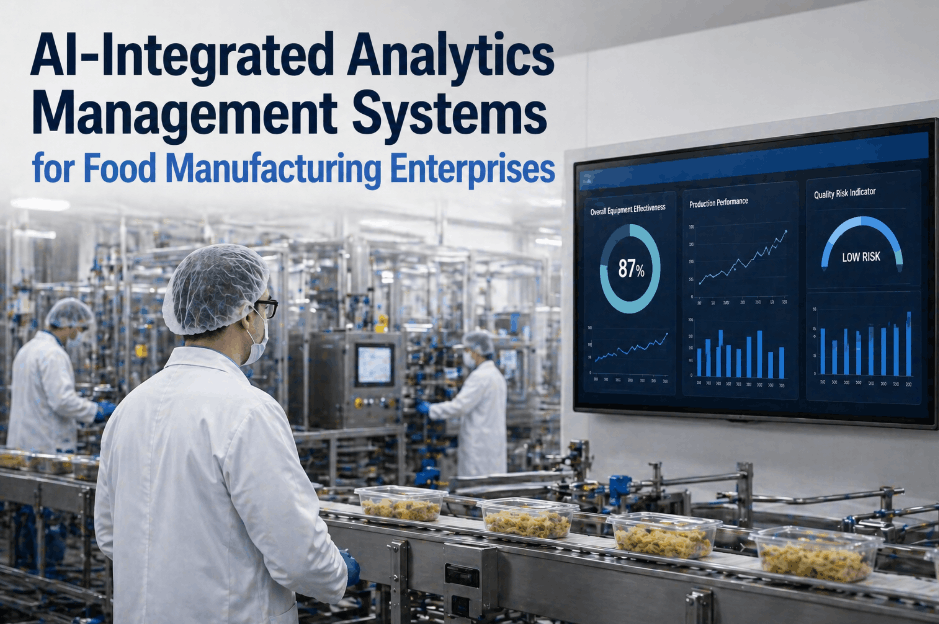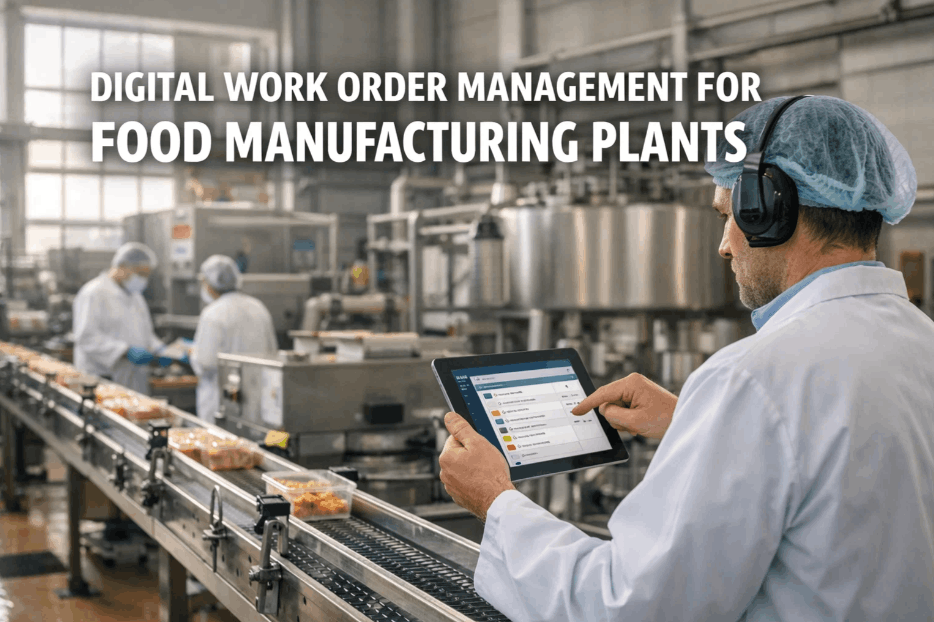
Food manufacturing plants lose an average of 23% of their productive capacity to poorly managed maintenance workflows — and the culprit isn't a lack of technicians or budget. It's paper-based, reactive work order systems that were never designed for the speed, compliance demands, and operational complexity of modern food production. Digital work order management for food manufacturing plants eliminates the chaos of clipboard-and-radio dispatch, replacing it with AI-driven ticketing, real-time technician tracking, and audit-ready documentation that food safety inspectors expect. Book a Demo to see how iFactory transforms maintenance operations across food plants of every scale.
Automate Every Work Order in Your Food Plant — From Ticket to Closure
iFactory's digital work order management platform connects your maintenance team, equipment assets, and compliance logs in one AI-powered system — cutting response time by 60% and eliminating audit gaps before your next FSSAI, HACCP, or BRC inspection.
Why Food Manufacturing Plants Are Replacing Paper Work Orders with Digital Systems
The food manufacturing industry operates under a unique set of pressures that make traditional, paper-based maintenance management genuinely dangerous — not merely inefficient. A handwritten work order that goes missing means a compressor belt replacement is missed. A missed replacement means a production line failure. A production line failure means temperature excursions, batch losses, and potential FSSAI non-compliance. The chain reaction from one administrative gap can cost lakhs in a single shift.
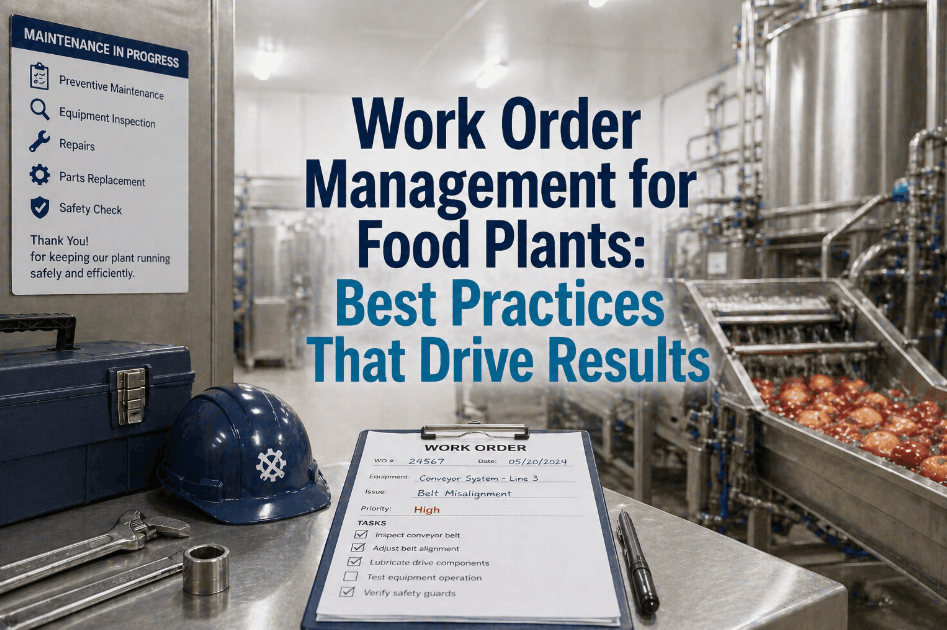
Digital work order management software for food manufacturing breaks this chain at its origin. By digitizing the entire lifecycle of a maintenance request — from equipment fault detection through technician dispatch, parts procurement, repair execution, and compliance sign-off — food plants gain the operational visibility and documented evidence that modern food safety standards require. The transition from reactive to predictive, from paper to platform, is no longer a technology upgrade. It is a food safety imperative. Book a Demo to understand how your current maintenance gaps translate to compliance risk.
The Hidden Cost of Manual Work Orders in Food Plants
Manual work order systems in food manufacturing aren't just slow — they create compounding operational debt that becomes visible only during audits, shutdowns, or customer complaints. Understanding these cost centres is the first step toward building a case for digital transformation.
Technician Dispatch Delays
In a plant with 80+ production assets, coordinating technician dispatch via radio calls and handwritten job cards introduces an average 35–45 minute delay between fault detection and repair initiation. In food manufacturing, that window can mean a spoiled batch or a HACCP critical control point breach.
Incomplete Maintenance Records
Paper job cards are lost, incomplete, or illegible in high-humidity food plant environments. When an FSSAI auditor requests documented evidence of scheduled maintenance on a refrigeration unit, a folder of degraded paper cards is not an acceptable response. Digital work order logs close this gap permanently.
No Visibility into Technician Workload
Maintenance supervisors in plants using manual systems have no real-time view of which technician is working on what, which tasks are overdue, or which assets have unresolved faults. This invisibility leads to duplicated effort, missed PMs, and inequitable workload distribution across the team.
Reactive Rather Than Preventive Culture
Without a digital system to schedule and trigger preventive maintenance work orders automatically, food plant maintenance teams spend 70–80% of their time firefighting breakdowns rather than preventing them. This reactive posture drives up both maintenance costs and unplanned downtime frequency.
Spare Parts Chaos
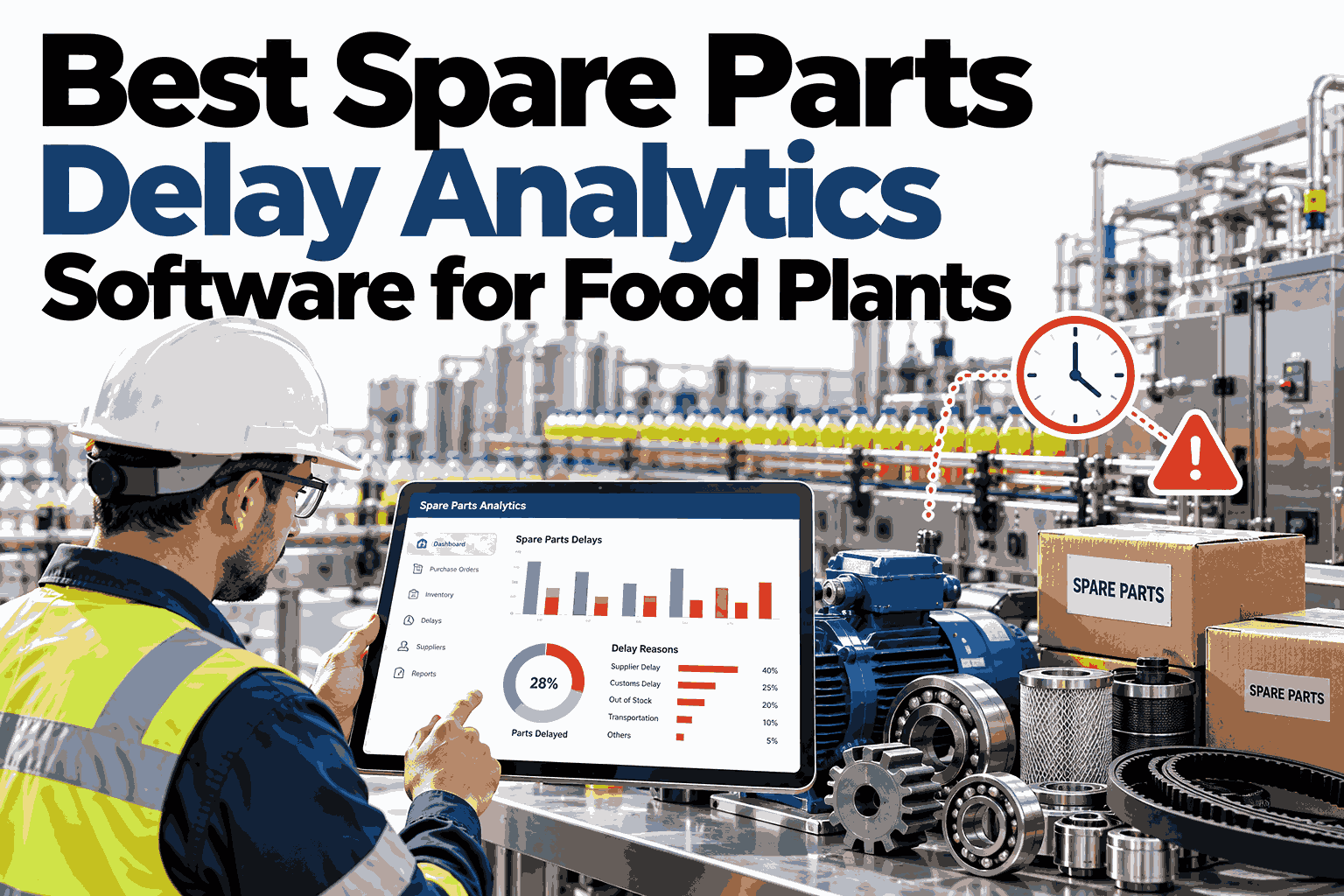
Manual work orders are not linked to spare parts inventory, meaning technicians frequently arrive at a breakdown job without the correct replacement part — triggering a secondary delay for part retrieval. Digital analytics ticketing systems for food plants link every work order to parts inventory, triggering automated reorder on consumption.
Zero Analytics on Maintenance Performance
Paper systems produce no data. Food plant managers using manual work order processes have no MTTR benchmarks, no asset reliability trends, no technician productivity metrics, and no failure frequency analysis. Without this data, every maintenance budget decision is made on intuition rather than evidence.
How Digital Work Order Management Software Works in a Food Factory
A purpose-built digital work order management platform for food manufacturing is not a generic ticketing system bolted onto a food plant environment. It is an end-to-end maintenance operations platform designed around the specific asset types, compliance requirements, and shift patterns of food production facilities. The operational flow moves through five integrated stages.
Automated Fault Detection & Work Order Creation
IoT sensors on production equipment — filling machines, conveyors, chillers, boilers, and packaging lines — stream performance data continuously. When a parameter crosses a threshold or an anomaly pattern is detected by the AI engine, a work order is automatically created, classified by priority, and assigned to the correct skill set within seconds. No human intervention required between fault detection and ticket generation. Book a Demo to see automated work order creation from live sensor data at a food manufacturing facility.
Intelligent Technician Dispatch & Mobile Execution
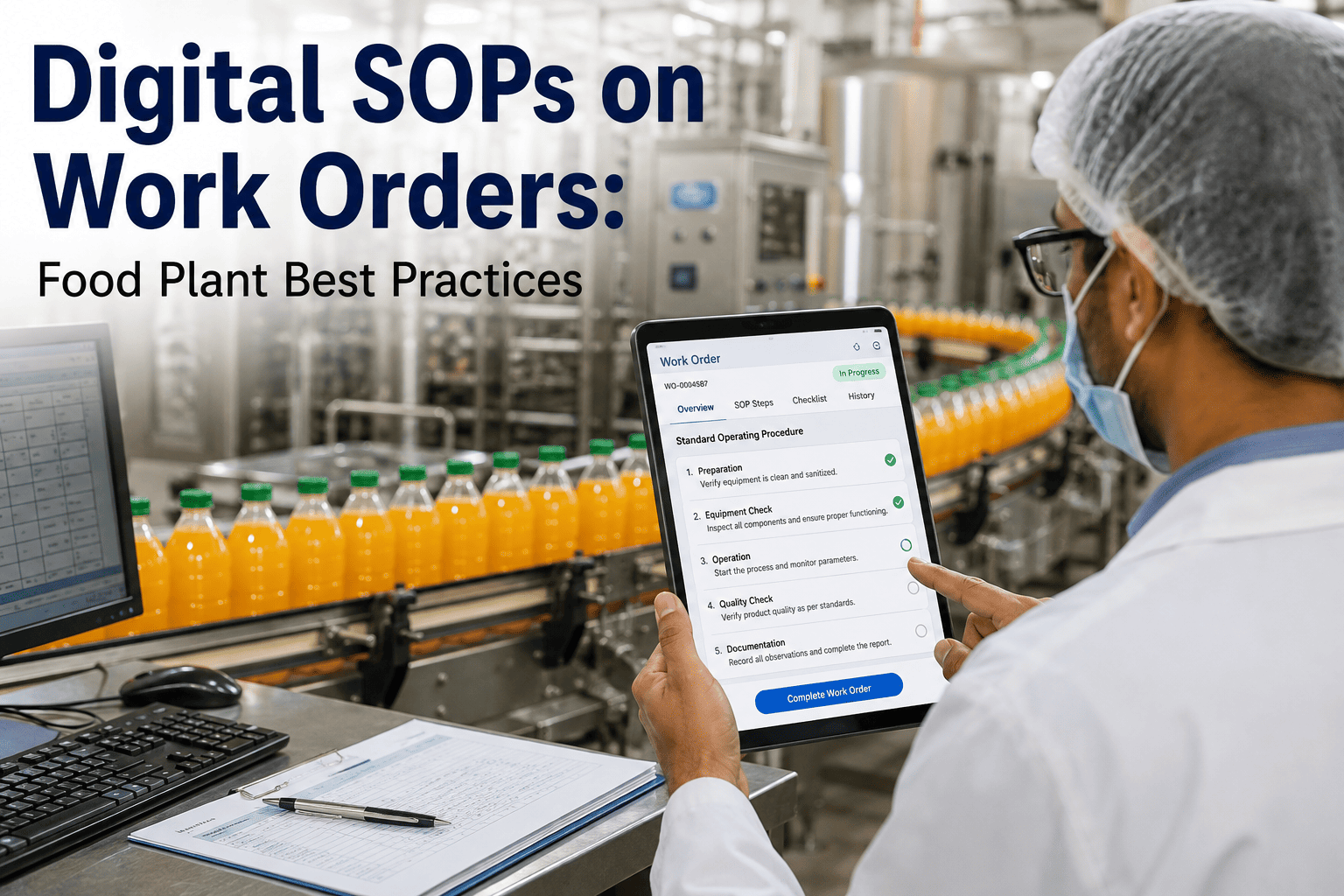
The dispatch engine evaluates technician availability, proximity, skill certification, and current workload before routing the work order to the optimal team member. The technician receives the full job brief on their mobile device — equipment history, last maintenance date, recommended parts, safety checklist, and step-by-step procedure. Work orders are completed, photographed, and signed off digitally at the point of maintenance — eliminating paperwork and creating an instant compliance record.
Preventive Maintenance Scheduling & Automation
Time-based and condition-based PM schedules are configured per asset — whether a quarterly gearbox inspection on a conveyor drive or a monthly calibration check on a metal detector. The system automatically generates PM work orders at the correct intervals, assigns them, escalates overdue items, and records completion evidence. PM compliance rates in food plants using digital systems average 94% versus 61% in manual environments.
Parts Inventory Integration & Auto-Replenishment
Every work order is linked to the spare parts catalogue. When a technician selects a replacement part on their mobile device, inventory is decremented in real time. When stock falls below the reorder point, a purchase requisition is automatically raised in the connected ERP system. Food plants using integrated work order and parts management report a 42% reduction in emergency parts procurement costs.
Compliance Logging & Audit Report Generation
Every work order — corrective, preventive, or predictive — is time-stamped, linked to the specific equipment asset, and stored in an immutable audit log. For FSSAI Schedule 4, HACCP CCP documentation, BRC Global Standard Issue 9, and FDA FSMA inspections, audit reports are generated in minutes rather than days. Book a Demo to see a live audit log export from a food plant deployment.
Work Order Management Across Food Plant Equipment: What Gets Tracked
Effective work order automation in food manufacturing requires coverage across every critical asset category — from process equipment on the production floor to utilities and cold chain infrastructure. The following table outlines the recommended work order types and compliance benefits for each equipment class.
| Equipment Category | Work Order Types Generated | Key Parameters Tracked | Compliance Benefit | PM Frequency |
|---|---|---|---|---|
| Filling & Packaging Machines | Corrective, Preventive, Calibration | Fill weight variance, seal integrity, motor current | HACCP CCP documentation | Weekly/Monthly |
| Conveyors & Drive Systems | Preventive, Predictive, Lubrication | Belt tension, bearing vibration, motor temp | Breakdown prevention records | Bi-weekly |
| Cold Storage & Refrigeration | Corrective, PM, Temperature Excursion Log | Zone temp, compressor amp, defrost cycles | FSSAI temperature compliance logs | Weekly |
| Boilers & Steam Systems | Statutory, Preventive, Safety Inspection | Pressure, water level, safety valve status | IBR statutory compliance records | Monthly/Annual |
| Metal Detectors & Checkweighers | Calibration, Corrective, Validation | Sensitivity settings, test piece results | BRC/SQF CCP calibration logs | Daily/Weekly |
| Wastewater & ETP Systems | Preventive, Corrective, Environmental Audit | Effluent pH, BOD levels, pump performance | CPCB/SPCB compliance records | Monthly |
Give Your Maintenance Team a System That Works as Fast as They Do
iFactory's AI-driven work order platform dispatches the right technician to the right job in under 60 seconds — with full equipment history, parts availability, and compliance documentation built in at every step.
AI-Driven Work Order Prioritization: How Analytics Changes Maintenance Decision-Making
Traditional maintenance scheduling treats every work order with equal urgency — or worse, prioritizes based on whoever shouts loudest. An AI-driven analytics ticketing system for food manufacturing replaces gut-feel prioritization with data-driven decision-making that accounts for production schedule impact, equipment criticality, failure probability, and compliance deadline proximity.
When a predictive alert fires on a conveyor drive motor showing abnormal vibration, the AI engine doesn't just create a work order. It calculates the production batch at risk, the estimated hours to failure, the cost of line stoppage versus a planned maintenance window, and the spare parts availability — and recommends the optimal intervention timing. Maintenance managers using AI-prioritized work orders report a 44% improvement in planned-to-unplanned maintenance ratio within six months. Book a Demo to see the AI prioritization engine applied to your specific equipment portfolio.
Production-Aware Scheduling
Work orders are automatically scheduled during planned production gaps, shift changeovers, and sanitation windows — never during peak throughput periods unless the failure risk warrants emergency intervention. The system pulls production schedule data directly from your ERP to make context-aware maintenance timing decisions.
Criticality-Weighted Dispatch
Every asset in the food plant is assigned a criticality score based on its impact on food safety, production throughput, and regulatory compliance. Work orders on HACCP Critical Control Point equipment are automatically elevated to P1 priority with escalation alerts if not acknowledged within a defined response window.
Failure Probability Scoring
Machine learning models trained on historical failure data generate a real-time failure probability score for each monitored asset. When a score crosses a threshold, a predictive work order is generated automatically — with a confidence window and days-to-failure estimate — giving the maintenance team a 2–5 week planning horizon for every critical failure.
Compliance Deadline Tracking
Statutory inspections, calibration due dates, and FSSAI-mandated equipment certifications are tracked within the work order system. Approaching deadlines trigger automatic work order generation with escalation routing to ensure no compliance obligation is missed — eliminating the risk of audit non-conformances from administrative oversights.
Technician Productivity Analytics: Measuring What Manual Systems Cannot
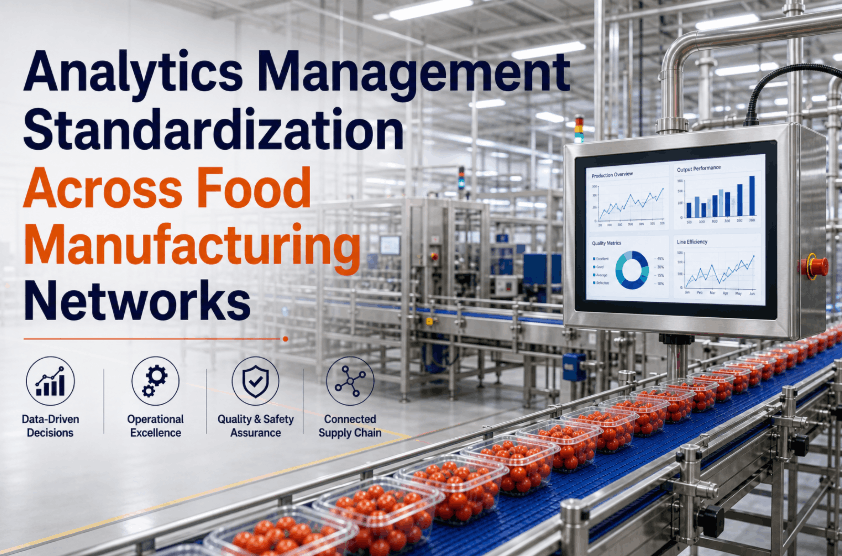
One of the most underappreciated benefits of digital technician dispatch software for food manufacturing is the operational intelligence it generates as a byproduct of normal usage. Every work order opened, assigned, in-progress, and closed creates a data point. In aggregate, these data points produce a maintenance performance dashboard that no paper system could ever approach.
Food plant maintenance managers using digital work order analytics report that performance visibility alone drives a 25–30% improvement in technician productivity — not from additional headcount, but from eliminating wasted time, duplicate effort, and untracked idle periods. When every technician knows their performance is visible and measured, accountability follows naturally. Book a Demo to explore the full maintenance analytics dashboard available to food plant managers.
FSSAI & HACCP Compliance Through Digital Work Order Documentation
Food safety compliance in India and globally is increasingly data-driven. FSSAI Schedule 4, HACCP documentation requirements, and BRC Global Standard Issue 9 all share a common expectation: that food manufacturers can produce documented, time-stamped evidence of equipment maintenance, calibration, and corrective actions at any moment — not just during scheduled audit windows.
Schedule 4 Maintenance Documentation
FSSAI Schedule 4 requires food business operators to maintain documented records of equipment maintenance, cleaning, and sanitation activities. Digital work order systems generate these records automatically, with date-time stamps, technician signatures, and photographic evidence — all exportable in formats accepted by FSSAI inspectors.
CCP Corrective Action Records
HACCP principles require documented corrective actions for every deviation at a Critical Control Point. When a temperature excursion or equipment fault triggers a work order at a CCP — such as a metal detector or pasteurization unit — the digital system records the corrective action taken, the time elapsed, and the batch disposition decision as a linked audit trail.
Preventive Maintenance Evidence
BRC Global Standard Issue 9 clause 4.7 requires documented evidence of a planned preventive maintenance programme with completion records for every scheduled intervention. Digital work order platforms generate BRC-compliant PM completion reports automatically, with calibration records, spare parts used, and technician certification details embedded in each closed work order.
Implementation Roadmap: Deploying Digital Work Orders in a Food Manufacturing Plant
Transitioning a food plant from paper-based to digital work order management does not require a production shutdown, a lengthy IT project, or a complete system overhaul. A phased implementation approach allows food manufacturers to realize value within weeks while building toward full operational integration.
Asset Register & Work Order Template Configuration
All production assets are catalogued in the digital system with equipment specs, criticality scores, maintenance history (migrated from paper), and PM schedules. Work order templates are configured for each asset category — corrective, preventive, and statutory — with food-specific checklist fields aligned to HACCP and FSSAI requirements.
Technician Mobile Onboarding & Dispatch Activation
Maintenance technicians are onboarded to the mobile work order app. Skill profiles, certification records, and shift patterns are configured in the dispatch engine. The first automated work orders are issued, and the team completes their first digital job closures — generating the first immutable compliance records in the system.
IoT Integration & Predictive Work Order Activation
Sensor data from IoT-enabled equipment feeds into the work order engine. Predictive maintenance alerts begin generating condition-based work orders automatically. PM compliance rates climb as scheduled tasks are no longer missed. The analytics dashboard goes live, giving the maintenance manager full visibility into team performance, asset reliability trends, and backlog status.
Full ROI Realization & Audit Readiness
With 3+ months of digital work order history, food plants are fully audit-ready for FSSAI, HACCP, and BRC inspections at any moment. Unplanned downtime frequency drops by 50–65%. Maintenance cost per unit of output falls as the planned-to-reactive ratio improves. The total ROI of 3.8× is realized through combined productivity gains, inventory loss prevention, and energy savings.
7 Features to Demand from Any Food Manufacturing Work Order Software
Not every work order management platform is designed for the demands of food production environments. Generic CMMS tools built for industrial or facilities management applications often lack the food-specific compliance templates, hygiene-zone awareness, and sensor integration required in food factories. Use these criteria to evaluate any digital work order software for food manufacturing.
Food-Grade Hygiene Zone Awareness
Work orders generated in high-care and high-risk food production zones must enforce hygiene entry protocols, PPE requirements, and sanitation sign-off steps as mandatory checklist items before closure. Generic CMMS tools do not include these food-specific workflow controls.
FSSAI & HACCP Audit Log Export
The platform must generate maintenance compliance reports in formats directly accepted by FSSAI inspectors and HACCP auditors — with batch correlation, corrective action documentation, and digital signatures — without manual reformatting or data extraction.
IoT & Sensor Data Integration
The work order platform must natively receive sensor data from IoT devices — temperature probes, vibration sensors, current clamps — and generate work orders automatically when anomalies are detected, without requiring a separate IoT platform for data processing.
Offline Mobile Capability
Food plant cold rooms, underground utilities areas, and high-density production floors frequently have poor WiFi coverage. Technician mobile apps must function offline — capturing work order completions, photos, and signatures locally — and sync when connectivity is restored, without creating compliance log gaps.
Multi-Shift & Contractor Management
Food manufacturing plants operate across 2–3 shifts with a mix of permanent and contract maintenance technicians. The work order platform must manage shift handover notes, contractor access permissions, and job continuity across shifts without losing work order history or accountability chains.
ERP & SAP PM Integration
Work order data must flow bidirectionally with your existing ERP (SAP, Oracle, Microsoft Dynamics, or equivalent) — creating purchase requisitions for parts, updating asset registers, and syncing maintenance cost data to financial reporting without manual rekeying.
Proven Food Industry Deployment Record
Request deployment evidence from dairy, meat processing, beverage, or ready-to-eat manufacturing environments specifically. A CMMS with generic industrial case studies may lack the food safety workflow logic, sanitation-cycle-aware scheduling, and FSSAI compliance templates that food plants require. Book a Demo to review iFactory's food plant deployment case studies before evaluating any other platform.
Frequently Asked Questions: Digital Work Order Management in Food Plants
How long does it take to deploy a digital work order system in a food manufacturing plant?
A standard deployment covering asset register setup, technician mobile onboarding, and PM schedule configuration typically takes 10–15 working days for a plant with up to 150 assets. IoT sensor integration for predictive work order generation adds another 5–10 days, depending on the number of monitored assets and existing network infrastructure. Full production operation of the system is achievable within 3–4 weeks without any production shutdown.
Can digital work orders replace paper logbooks for FSSAI inspections?
Yes. FSSAI inspectors increasingly accept — and in many cases prefer — digital maintenance logs over paper records, provided the system generates time-stamped, tamper-evident records with technician identification and corrective action documentation. Food plants using iFactory's digital work order platform have successfully used system-generated reports as primary compliance evidence across FSSAI Schedule 4, HACCP, and BRC audits.
What happens to work orders when a technician is in a cold room with no WiFi signal?
The mobile work order app operates in full offline mode — technicians can access their assigned jobs, complete checklists, capture photos, and record parts usage without any network connection. All data is stored locally on the device and synced automatically to the central system when connectivity is restored, maintaining a continuous, unbroken compliance record.
How does the system handle emergency breakdown work orders outside business hours?
Emergency work orders trigger an automated escalation sequence — push notifications to on-call technicians, SMS alerts to the maintenance supervisor, and email notifications to plant management — with configurable response time SLAs. If the primary technician does not acknowledge within the defined window, the escalation automatically routes to the next available qualified resource, ensuring 24/7 breakdown coverage without manual coordination.
Can the system manage both internal maintenance staff and external service contractors?
Yes. Contractor profiles are configured with their specific skill certifications, authorized work zones, and access permission levels. Work orders assigned to contractors include digital acceptance confirmation, site induction checklist completion, and work sign-off by an internal supervisor before closure — maintaining full accountability across the hybrid maintenance workforce.
What is the typical ROI timeline for a food plant implementing digital work order management?
Most food manufacturing facilities achieve measurable ROI within 60–90 days of full deployment, driven primarily by the reduction in unplanned downtime events and the elimination of emergency spare parts procurement costs. Full 3.8× ROI across all financial levers — productivity, inventory protection, energy savings, and audit cost reduction — is typically documented within 10–12 months of deployment.
Stop Managing Maintenance on Paper. Start Running a Food Plant That Never Stops.
Join food manufacturers across India who have achieved 94% PM compliance, 60% faster technician dispatch, and 3.8× ROI with iFactory's digital work order management platform — purpose-built for the compliance demands and operational pace of food production.