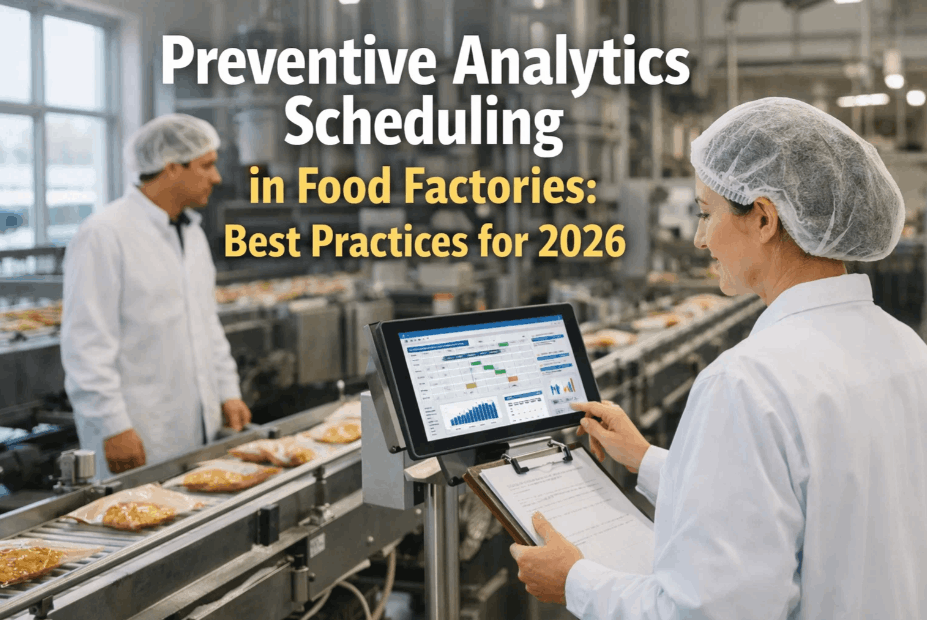
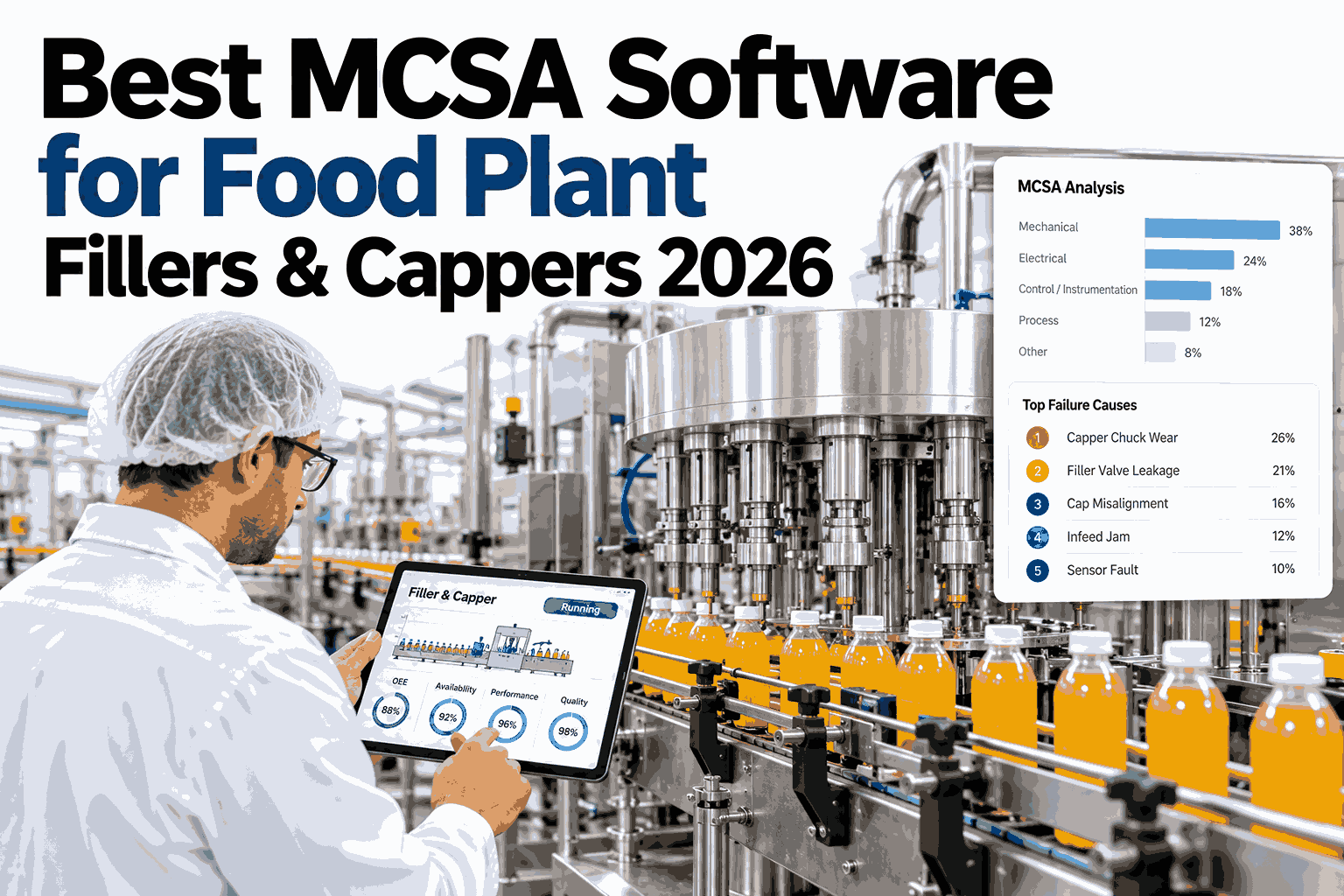
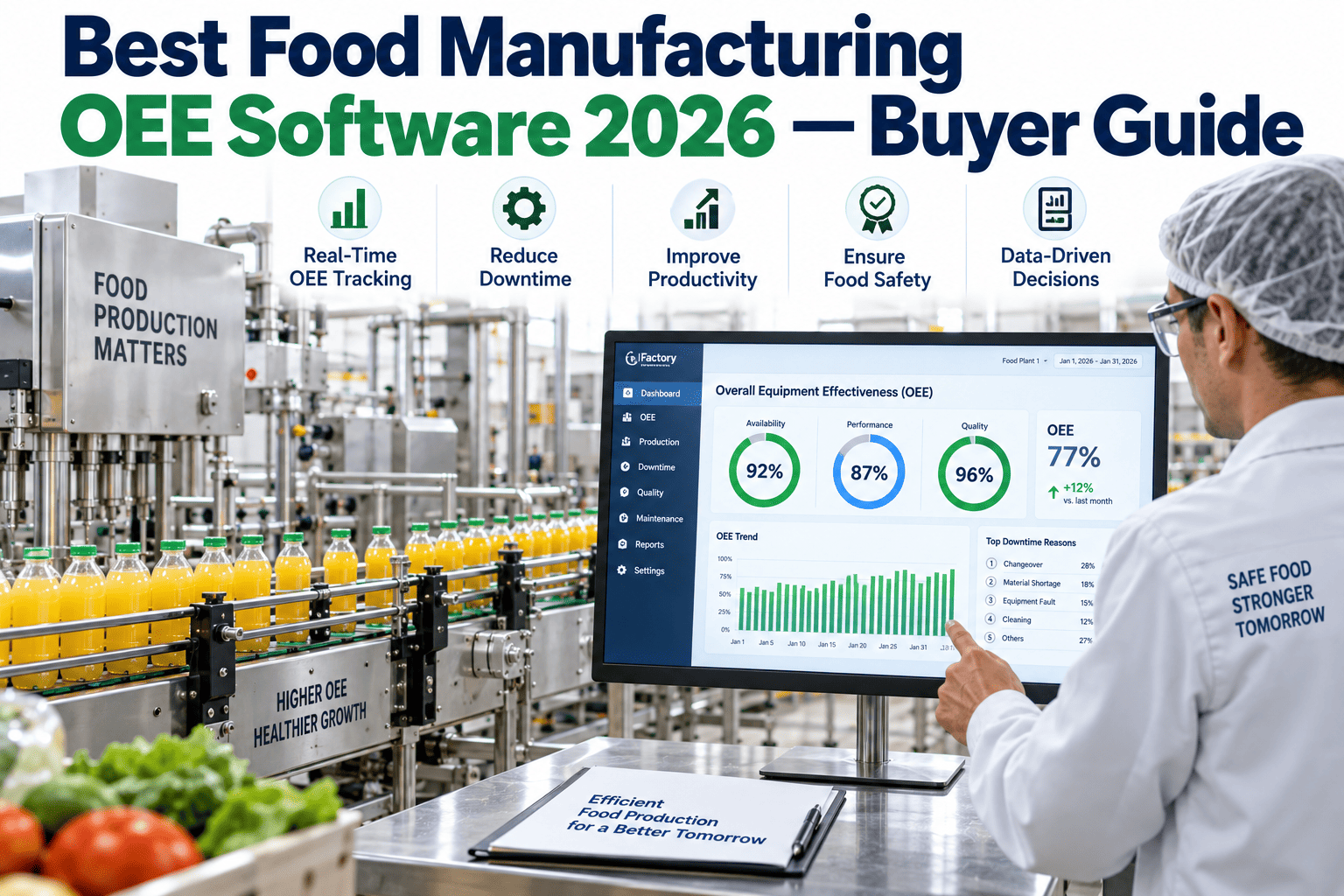
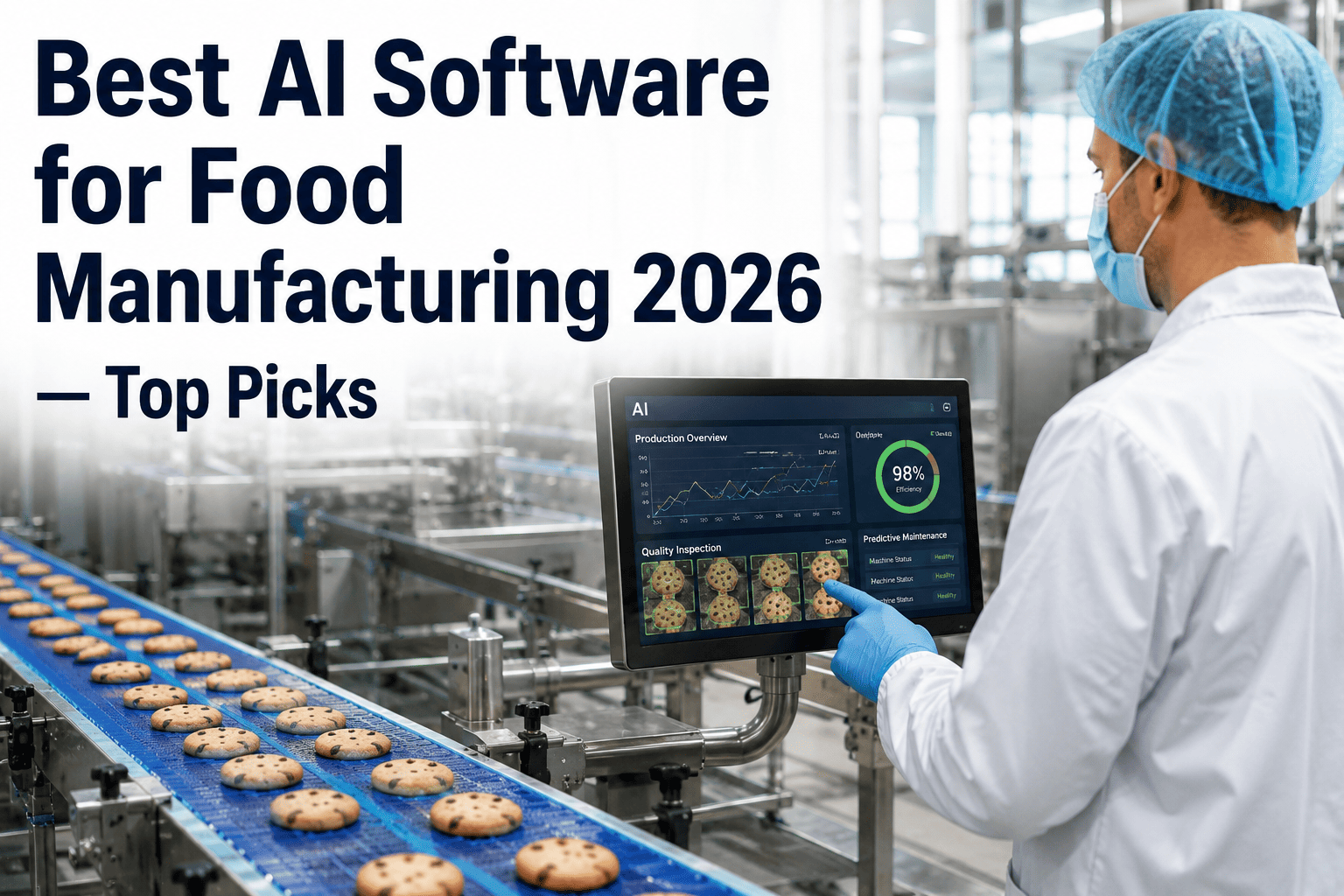
Preventive analytics scheduling is no longer a luxury for food manufacturers — it is an operational necessity that directly determines production uptime, regulatory compliance, and food safety outcomes. In 2026, food factories running without a structured PM calendar automation system are absorbing avoidable equipment failures, risking GFSI audit findings, and burning labor hours on reactive firefighting. The shift to data-driven preventive analytics scheduling is the single highest-ROI operational decision a food plant manager can make this year.
AI-DRIVEN PLATFORM
·
PREDICTIVE ANALYTICS
·
FOOD PLANT READY
Stop Equipment Failures Before They Happen — AI Predictive Analytics Built for Food Processing
iFactory monitors every critical asset in your food processing plant — delivering machine failure predictions 7 to 21 days in advance, automated CCP compliance records, and real-time production health dashboards that keep your facility audit-ready year-round.
Why Preventive Analytics Scheduling Matters More Than Ever in Food Manufacturing
The food manufacturing landscape in 2026 is defined by tighter margins, more complex supply chains, and regulatory scrutiny that has never been higher. Equipment failures do not just cost downtime — they generate nonconformity risks, compromise temperature-controlled processes, and can trigger product holds. A well-structured preventive analytics food factory program eliminates these risks before they materialize.
Modern analytics scheduling software for the food industry integrates real-time sensor data, equipment runtime counters, and historical failure patterns to generate dynamic maintenance schedules that match actual asset condition — not arbitrary calendar dates. The result is fewer emergency work orders, longer equipment life cycles, and audit documentation that writes itself.
73%
of unplanned food plant downtime is preventable with structured PM scheduling
40hrs+
saved per audit cycle when PM records are automated and instantly retrievable
2–4x
longer equipment lifespan with condition-based preventive analytics programs
30 days
to full PM compliance posture after deploying automated analytics scheduling
Core Challenges
The Hidden Failures of Manual Maintenance Scheduling in Food Plants
Most food factories still manage preventive maintenance through spreadsheets or paper-based work order binders. The problems compound silently until an audit or equipment failure forces them into the open.
Missed PM Intervals
Static schedules do not account for real equipment usage or seasonal surges. Tasks slip, records go unsigned, and gaps accumulate until an auditor finds them.
Documentation Fragility
Paper work orders get lost or left incomplete. When a BRC or SQF auditor requests years of maintenance history, manual systems cannot deliver in time.
Reactive Maintenance Culture
Without predictive triggers, teams default to fixing failures rather than preventing them — adding contamination risk and compliance burden on top of operational cost.
No PM Compliance Visibility
Plant managers have no real-time view of overdue PM tasks or failing equipment. Every decision is made reactively, not from a position of data-driven control.
Best Practices 2026
Preventive Analytics Scheduling Best Practices for Food Factories in 2026
Building an effective PM calendar automation program requires a structured methodology that aligns maintenance scheduling with food safety risk priorities and compliance requirements. These are the practices leading food manufacturers are implementing in 2026 — book a demo to see how they apply to your facility.
01
Stratify Assets by Food Safety Risk Level
Not all equipment carries equal food safety risk. Metal detectors, pasteurizers, and CCP-adjacent equipment demand higher PM frequency and more rigorous documentation. A risk-stratified asset register assigns PM priority based on food safety criticality — exactly what SQF, BRC, and FSSC 22000 auditors look for when reviewing your preventive maintenance program.
02
Implement Condition-Based PM Triggers Alongside Time-Based Schedules
Fixed-interval scheduling is a baseline, not a ceiling. Layer condition-based triggers — IoT sensor anomalies, vibration deviations, temperature drift — on top of calendar PM schedules. Platforms built for food plant compliance analytics automate both trigger types from a single dashboard, reducing both over-maintenance and under-maintenance.
03
Automate Work Order Generation and Technician Assignment
Automated PM systems generate work orders on schedule, assign them based on technician skill set and workload, and escalate overdue tasks automatically. Each work order captures fault description, parts used, and technician sign-off — satisfying GFSI documentation requirements without manual intervention.
Book a demo to see the complete work order lifecycle.
04
Integrate Calibration Schedules Within Your PM Calendar
Calibration treated separately from PM creates documentation silos. Best practice integrates both into one calendar with automated reminders and compliance records. When an auditor requests calibration history alongside PM history for the same asset, an integrated system delivers both in seconds — eliminating the calibration nonconformities that top SQF, BRC, and FSSC 22000 audit findings.
05
Build a Closed-Loop Corrective Action Process for Every PM Deviation
Every PM deviation must trigger a documented corrective action — from detection through root cause to verified closure. Automated
recurring analytics systems with integrated corrective action workflows ensure a traceable evidence trail for every event, automatically.
Book a demo to see how corrective action integration works end-to-end.
06
Track PM Compliance Rates as a Real-Time KPI
Most facilities discover PM compliance gaps during audits — by then the damage is done. Best practice treats PM compliance rate as a live dashboard KPI alongside CCP compliance and yield metrics. When compliance drops below threshold, the system flags it before it becomes an audit finding, transforming maintenance from a documentation exercise into a genuine food safety control.
PM Scheduling: Manual vs. Automated Analytics Systems
How food factories perform across key maintenance and compliance metrics when transitioning from manual PM scheduling to automated analytics calendar systems.
Food Factory PM Scheduling Comparison — 2026
Compliance Mapping
How Automated PM Scheduling Maps to SQF, BRC, and FSSC 22000 Requirements
Every major GFSI-benchmarked certification scheme includes explicit requirements for documented preventive maintenance programs. Auditors want evidence that your facility proactively manages equipment reliability as a food safety control. To see how iFactory maps to your specific scheme, book a demo and we will walk through the clause coverage in detail.
SQF Edition 9 — PM Requirements
- Element 11.1: PM schedules for all food safety-critical equipment
- Element 11.2: Calibration management integrated with PM calendar
- Element 11.3: Work order records with technician sign-off
- Element 2.5.2: Corrective actions for all PM deviations
SQF audit prep: 3 weeks reduced to under 4 hours
BRC Issue 9 — PM Requirements
- Clause 6.1: Documented PM program for all food-contact equipment
- Clause 6.2: Calibration register with out-of-tolerance records
- Clause 6.1.3: Emergency repair and breakdown history
- Clause 3.9: Nonconformity records linked to PM deviation events
BRC major nonconformities from PM gaps: zero
FSSC 22000 v6 — PM Requirements
- ISO 22000 Clause 8.2: Prerequisite programs including equipment maintenance
- FSSC Req. 2.5.3: Scheduled PM evidence with completion verification
- Clause 8.9: Corrective actions for all maintenance deviations
- Clause 9.1: PM compliance rate performance monitoring
FSSC v6 PM requirements: fully covered automatically
Real-World Outcome
A mid-size dairy processing facility reduced their pre-audit maintenance documentation sprint from eighteen days to a three-hour automated report. Their previous BRC audit cycle produced four major nonconformities related to calibration and work order gaps. After deploying automated PM scheduling, their next BRC audit produced zero major nonconformities — with the auditor citing their maintenance records as a program strength. Every record requested was retrieved within minutes.
Book a demo to achieve this compliance posture at your facility.
Implementation Roadmap
How to Deploy Automated Preventive Analytics Scheduling at Your Food Factory
The most effective deployments follow a structured four-stage approach that delivers measurable compliance improvement within 30 days and full operational integration within 60 days.
1
Build a Risk-Stratified Asset Register
Document every food-safety-critical asset with its PM schedule, calibration requirements, and maintenance history. Assign risk tiers based on food safety criticality — this register becomes the foundation of your automated scheduling system and the first document an auditor requests.
Outcome: Complete asset inventory with food safety risk classification
2
Configure PM Schedules and Calibration Intervals
Import your asset register and configure PM tasks, frequencies, and calibration schedules. Map each task to the relevant GFSI scheme clause so documentation is automatically tagged for audit retrieval from day one.
Outcome: Automated PM calendar running within 48 hours of configuration
3
Activate Work Order Automation and Corrective Action Workflows
Enable automated work order generation with technician assignment rules. Configure deviation thresholds that trigger corrective action workflows automatically — capturing every event from detection through root cause to verified closure.
Outcome: Every PM event generates a complete, audit-ready documentation trail
4
Monitor PM Compliance and Generate Audit Reports on Demand
Review your PM compliance dashboard weekly to catch gaps before they accumulate. When an audit is announced, generate a comprehensive documentation package covering any date range within minutes — scheduled or unannounced.
Outcome: Continuously audit-ready PM documentation posture, every day
Frequently Asked Questions
What is preventive analytics scheduling in food manufacturing?
It is a data-driven approach to planning equipment maintenance before failures occur. It combines time-based PM calendars with sensor-triggered alerts to ensure every critical asset is serviced at the right interval — with automatic documentation that satisfies SQF, BRC, and FSSC 22000 audit requirements.
How does PM calendar automation reduce audit nonconformities?
Automated calendars eliminate the documentation gaps that cause most maintenance-related nonconformities. Every work order is auto-generated, every calibration interval is tracked, and every deviation triggers a corrective action record — so auditors receive complete evidence in minutes, not gaps.
How quickly can a food factory achieve PM compliance?
Most facilities reach a fully compliant PM documentation posture within 30 to 45 days of deployment. By the end of the first full PM cycle, records are complete, timestamped, and instantly retrievable — regardless of when an audit is announced.
Does automated PM scheduling work for multiple GFSI certifications?
Yes. The platform maps PM documentation to multiple GFSI scheme clauses simultaneously — eliminating duplicate record-keeping for facilities holding SQF, BRC, or FSSC 22000 certifications at the same time.
What equipment should be prioritized in a food factory PM schedule?
Pasteurizers, metal detectors, checkweighers, and filling lines carry highest priority. All food-safety-critical and CCP-adjacent equipment should receive higher PM frequency, rigorous documentation, and integrated calibration management within your scheduling system.
How does preventive analytics scheduling improve food safety outcomes?
By keeping critical equipment in verified operational condition, it directly reduces process deviations at CCPs — temperature excursions, metal detection failures, and allergen cross-contact events. It also generates the evidence trail that demonstrates effective food safety risk control to auditors and retail customers.
Transform Your PM Program This Quarter
iFactory — AI-Driven Preventive Analytics Scheduling for Food Factories
Stop managing maintenance on spreadsheets that fail during audits. iFactory's automated PM calendar generates every work order, calibration record, and corrective action your food plant needs for continuous GFSI compliance — without manual data entry, documentation gaps, or the pre-audit scramble.
Risk-stratified PM scheduling for food-safety-critical assets
Integrated calibration management with auto-scheduled reminders
Automated work order generation and technician assignment
Real-time PM compliance dashboard with proactive gap alerts
Closed-loop corrective action workflows for every PM deviation
Instant audit report generation mapped to SQF, BRC, and FSSC 22000