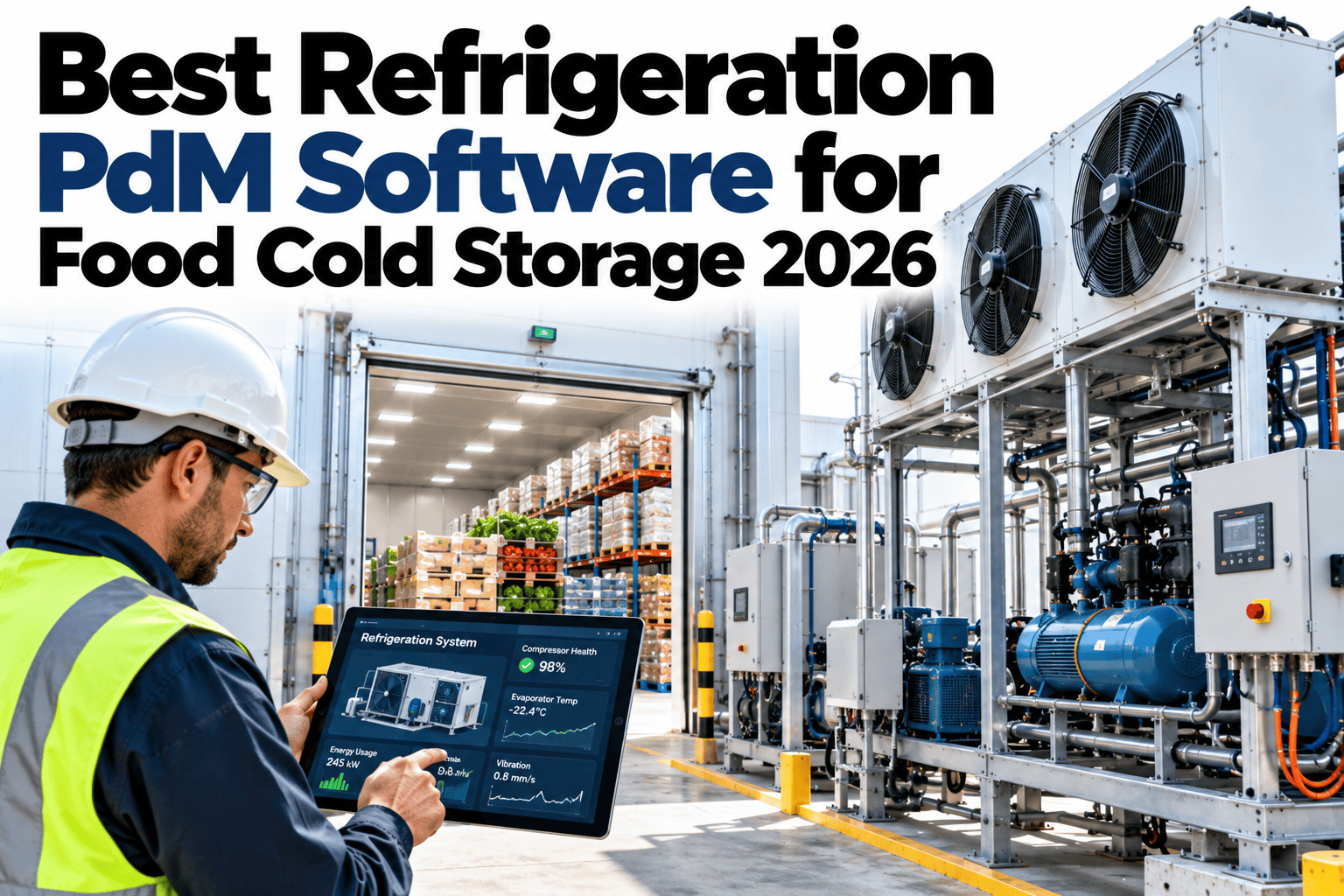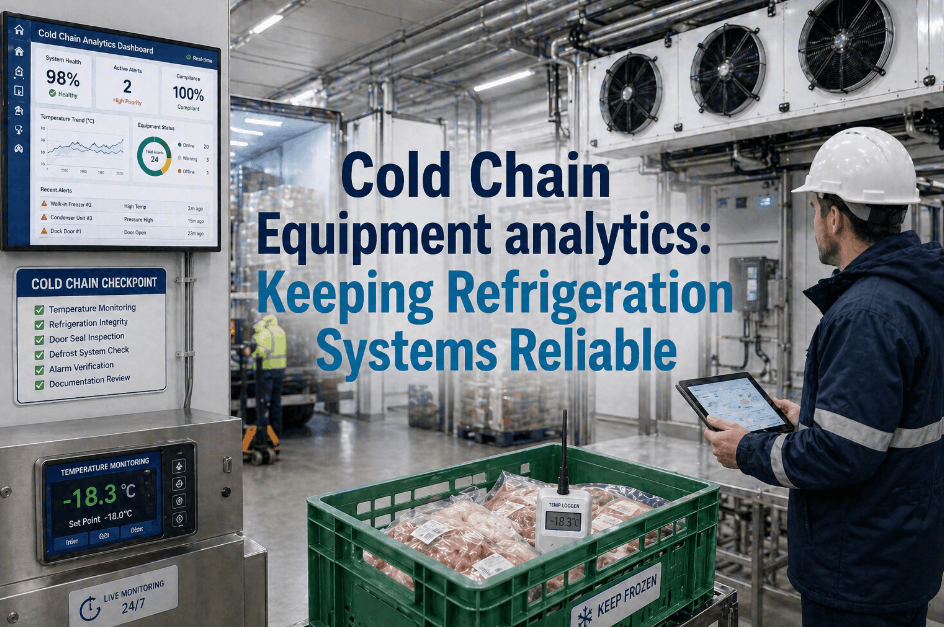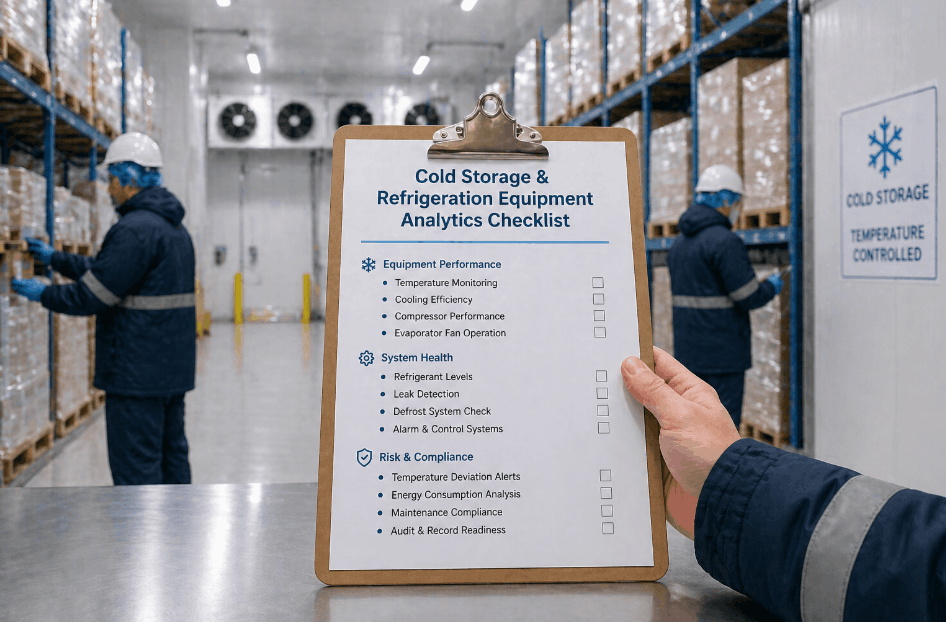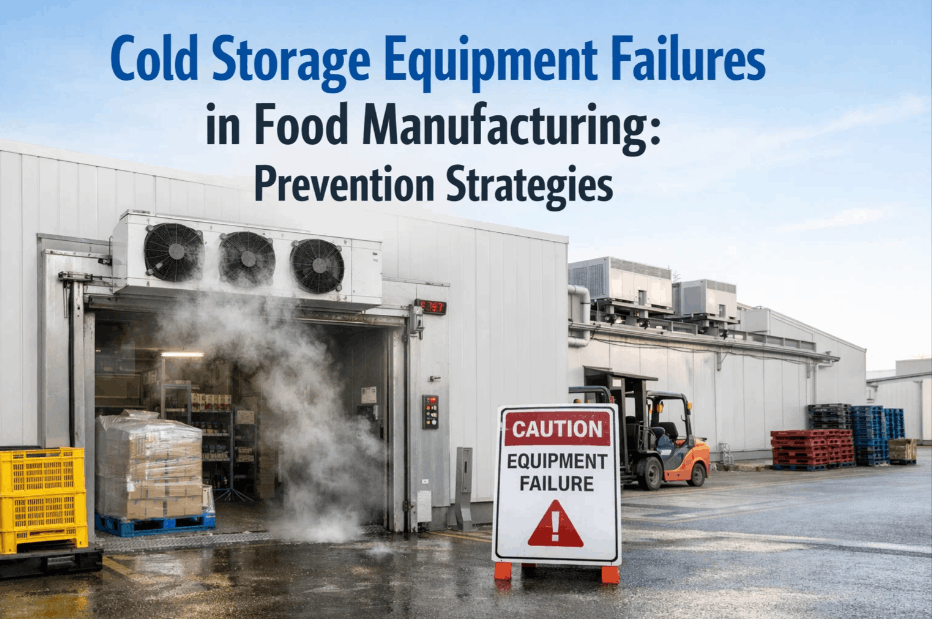
Cold storage equipment failures in food manufacturing facilities cost the industry billions annually — and unlike most operational setbacks, they strike with brutal speed. A single compressor failure or refrigeration system breakdown can wipe out an entire batch of temperature-sensitive inventory in under two hours, trigger FSSAI and HACCP non-compliance, and force costly emergency shutdowns. Yet the vast majority of these failures are entirely preventable with the right cold chain analytics solution and real-time temperature monitoring systems deployed across the facility. Book a Demo to see how predictive refrigeration analytics transforms cold chain reliability in food plants.
Achieve Zero Cold Storage Downtime with AI-Driven Refrigeration Analytics
iFactory monitors every compressor, evaporator, and cold zone in your food manufacturing facility — delivering real-time failure alerts, predictive maintenance scheduling, and complete audit-ready temperature documentation before your next FSSAI, HACCP, or BRC inspection.
Why Cold Storage Equipment Failures Devastate Food Manufacturers
Food manufacturing operates at the intersection of perishable product, stringent compliance, and razor-thin margins. When cold storage systems fail — whether a walk-in freezer compressor, a blast chiller condenser, or a refrigerated conveyor line — the cascading consequences extend far beyond a single batch loss. Temperature-sensitive products like dairy, meat, seafood, and ready-to-eat meals are immediately at risk. But the deeper damage is regulatory: failed cold chain logs can trigger FDA 21 CFR Part 117 and FSSAI temperature compliance audits, customer chargebacks, and in severe cases, mandatory product recalls. Book a Demo to see how iFactory detects these risks before they become emergencies.
The root cause in most facilities is reactive maintenance. Technicians address compressor and evaporator failures only after they have already occurred — by which point the refrigeration monitoring system has already recorded damaging temperature excursions. Transitioning from break-fix to predictive cold storage analytics software is no longer optional for high-volume food plants; it is a food safety and financial imperative.
The 6 Most Common Cold Storage Equipment Failure Modes in Food Plants
Understanding failure patterns is the first step toward intelligent prevention. These six failure modes account for over 85% of unplanned cold chain downtime events across food manufacturing facilities globally. Each can be detected weeks in advance with the right refrigeration failure prevention system. Book a Demo to get a complete failure-risk assessment of your cold storage assets.
Compressor Overheating & Burnout
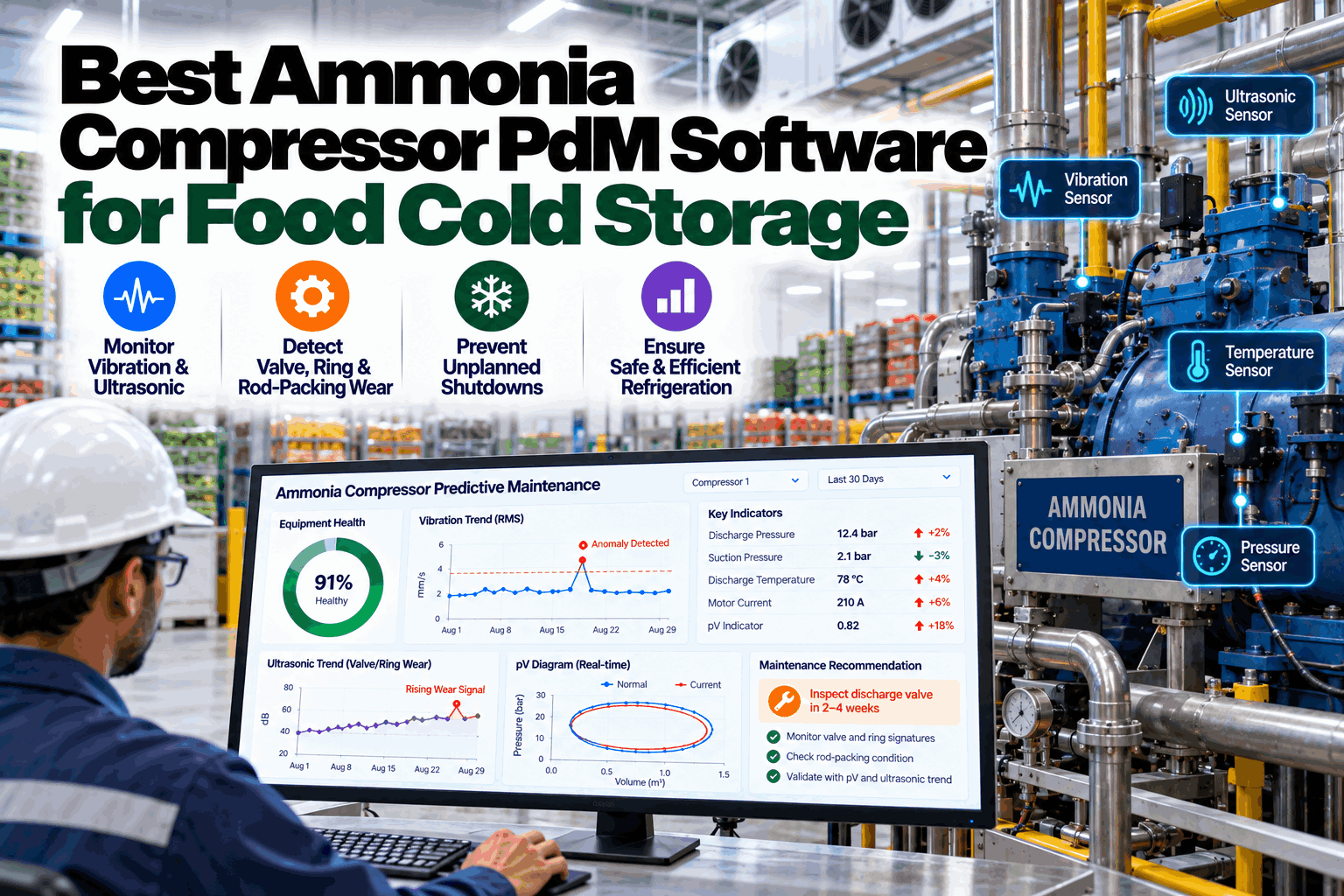
The most catastrophic and costliest failure. Compressor discharge temperature rise of just 8–12°C above baseline signals imminent burnout. Cold storage analytics software monitoring motor amp draw and suction pressure can predict this 3–5 weeks in advance.
Condenser Coil Fouling & Airflow Blockage
Gradual fouling reduces heat rejection efficiency, forcing the compressor to work harder and consume 15–25% more energy. Differential pressure sensors and thermal imaging via real-time refrigeration monitoring detect fouling drift before it cascades into failure.
Expansion Valve Malfunction
A faulty thermostatic or electronic expansion valve disrupts refrigerant flow, causing superheat fluctuations and inconsistent cold room temperatures. Superheat trend analysis in cold chain analytics platforms flags valve drift before product temperature excursions occur.
Refrigerant Leak & Charge Loss
Slow refrigerant leaks are nearly invisible until the system loses sufficient charge to maintain set-point temperatures. Continuous suction pressure monitoring and superheat tracking in food factory compressor analytics systems detect charge loss as little as 5% below nominal — weeks before failure.
Evaporator Fan Motor Failure
Fan motor failures in walk-in coolers and blast freezers create cold spots, uneven temperature distribution, and accelerated ice buildup on coils. Vibration signature analysis via food manufacturing refrigeration monitoring systems detects bearing wear up to 30 days before motor seizure.
Door Seal & Gasket Degradation
Worn door seals on cold rooms and freezers allow warm, humid air infiltration — raising energy consumption by up to 20% and creating condensation-related microbial risk. Cold storage analytics platforms using ambient humidity drift data flag seal degradation before food safety audits expose the gap.
How Predictive Cold Chain Analytics Prevents Equipment Failures
Modern cold storage analytics software doesn't wait for alarms to trigger — it monitors hundreds of data points simultaneously, identifies anomalous patterns, and generates maintenance work orders before any temperature excursion or equipment failure occurs. The architecture of a robust food manufacturing refrigeration monitoring system rests on three interconnected layers.
Real-Time Sensor Data Acquisition
Non-intrusive IoT sensors — including wireless temperature probes, vibration accelerometers on compressor and fan motors, differential pressure transducers on condenser coils, and amp clamps on power circuits — continuously stream data to the analytics platform. In food manufacturing environments, these sensors are food-grade rated and designed for high-humidity, low-temperature zones down to -30°C. Critically, Book a Demo to see how deployment across a 6-zone cold storage facility can be completed in under 10 days without production interruption.
AI-Driven Anomaly Detection & Failure Prediction
Machine learning models trained on equipment-specific baseline data — your compressor, your evaporator, your specific product load cycles — identify deviations that no static alarm threshold could catch. A compressor drawing 7% more current than its 30-day rolling average at 2 AM on a Sunday is invisible to conventional SCADA systems but immediately flagged in a cold chain analytics solution. Predictive alerts are generated with a confidence window and an estimated days-to-failure metric, enabling scheduled maintenance rather than emergency callouts.
Automated Compliance Logging & Audit Readiness
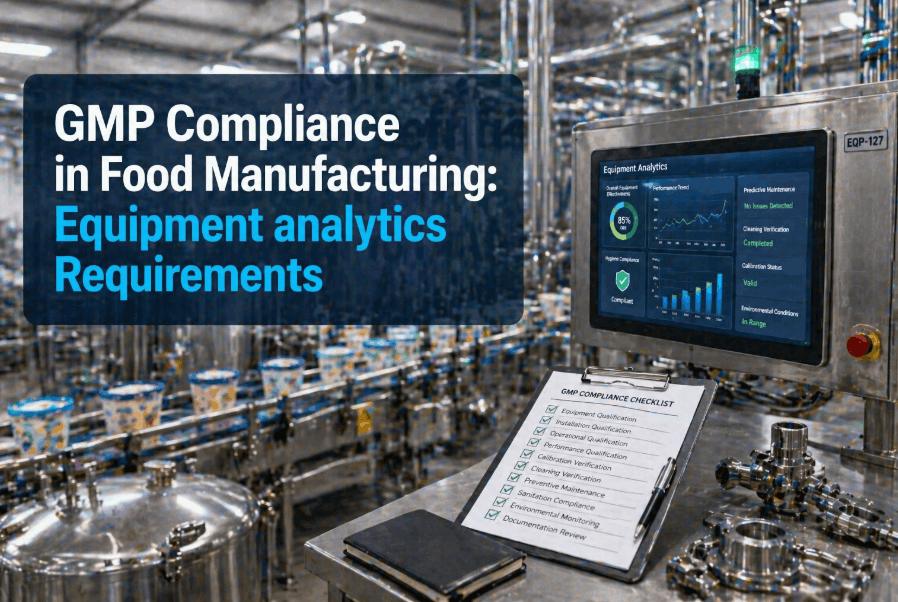
Every temperature reading, maintenance intervention, and equipment event is time-stamped and stored in an immutable, audit-ready log. For FSSAI, FDA 21 CFR Part 117, HACCP, and BRC Global Standard audits, this means instant report generation replacing manual logbook compilation that previously consumed 3–4 days of staff time per audit cycle. Temperature compliance food manufacturing teams report 80% reduction in audit preparation time after implementing automated cold chain logging. Book a Demo to see a live compliance log export from a food manufacturing deployment.
Cold Storage Failure Prevention: Equipment-by-Equipment Analytics Strategy
Effective refrigeration failure prevention requires a tailored monitoring strategy for each asset class in the cold chain. Below is the recommended analytics approach for the critical equipment categories found in food manufacturing cold storage operations.
| Equipment | Key Monitored Parameters | Failure Predicted | Advance Warning | Compliance Benefit |
|---|---|---|---|---|
| Screw/Reciprocating Compressors | Discharge temp, amp draw, suction pressure, vibration | Motor burnout, bearing failure, valve wear | 3–5 weeks | HACCP refrigeration log compliance |
| Condenser Units (Air/Water Cooled) | Differential pressure, outlet air temp, fan RPM | Fouling-induced overload, fan motor failure | 2–4 weeks | Energy audit documentation |
| Evaporators & Blast Chillers | Coil ΔT, superheat, fan vibration, defrost cycle data | Ice bridging, fan seizure, coil blockage | 2–3 weeks | Product temperature trace records |
| Cold Room / Walk-In Freezers | Zone temperatures, door open events, humidity drift | Seal failure, temperature excursion, mold risk | 1–2 weeks | FSSAI zone temperature logs |
| Refrigerated Conveyors & Tunnels | Zone setpoint adherence, belt drive motor current, airflow | Drive motor failure, airflow loss, temp drift | 2–3 weeks | Batch-level cold chain traceability |
| Ammonia / CO₂ Refrigeration Systems | Refrigerant pressure, leak detection sensors, oil level | Refrigerant leak, oil separator failure | 1–3 weeks | EPA/FSSAI refrigerant compliance records |
Predict Every Refrigeration Failure Before It Stops Your Cold Chain
iFactory's food-grade IoT sensors and AI-driven compressor analytics give your maintenance team a 3–5 week advance warning on every critical cold storage failure — from bearing burnout to refrigerant charge loss — with zero production interruption during deployment.
The ROI of Cold Storage Analytics Software in Food Manufacturing
The business case for investing in cold chain analytics solutions is not theoretical — it is grounded in measurable, verifiable operational improvements. For food manufacturers operating multi-zone cold storage facilities, the return typically appears across four financial levers within the first 12 months. Book a Demo to get a customised ROI projection for your specific facility size and refrigeration load. With the right refrigeration monitoring system food plant operators have achieved the following transformation trajectory.
Baseline Assessment & Sensor Deployment
IoT sensors deployed across compressors, condensers, and cold zones. Baseline thermal and vibration profiles established. Immediate visibility into existing temperature excursion frequency and compressor overwork patterns. Most facilities discover 3–5 pre-failure conditions already present upon first inspection. Book a Demo to run a baseline cold storage health audit at your facility.
Predictive Alerts & Maintenance Optimization
AI models trained on facility-specific equipment signatures begin generating high-confidence predictive alerts. Maintenance is rescheduled from calendar-based PMs to condition-based interventions. Energy consumption drops as compressors are relieved of undetected overwork conditions. Audit logs begin generating automatically, eliminating manual temperature recording.
Zero Unplanned Downtime Achievement
With 3+ months of predictive alert history, all scheduled maintenance interventions are completed during planned production gaps. Unplanned cold storage downtime events drop to zero. Inventory loss from temperature excursions falls by 70–85%. FSSAI and HACCP audits are completed in hours rather than days using auto-generated compliance logs.
Full ROI & Continuous Optimization
Total first-year ROI of 4.2× achieved through combined inventory loss elimination, energy savings, and maintenance cost reduction. Extended equipment asset life of 3–5 additional years per compressor reduces capital expenditure planning requirements. The facility operates with 99.6% cold storage availability — a competitive advantage in cold chain-dependent customer contracts.
Temperature Compliance in Food Manufacturing: Regulatory Standards You Must Meet
Cold storage analytics software isn't just an operational tool — it is increasingly a regulatory requirement. Food manufacturing facilities in India, the US, the EU, and globally are facing tightening temperature compliance mandates that paper-based logging systems simply cannot satisfy. Understanding the compliance landscape is essential for any food plant operations or quality manager.
FSSAI Food Safety Standards
FSSAI Schedule 4 regulations mandate continuous temperature monitoring and documented cold chain records for Category A and B food products. Facilities must demonstrate temperature control throughout storage and distribution. Manual logbooks are no longer considered sufficient evidence during inspections — digital, time-stamped records from a validated temperature monitoring system are the expected standard.
FDA FSMA 21 CFR Part 117
The Food Safety Modernization Act requires food manufacturers to implement hazard analysis and risk-based preventive controls, with documented temperature monitoring as a core preventive control for cold storage operations. Predictive cold chain analytics platforms that generate immutable, timestamped records satisfy FSMA's requirement for scientific validation of preventive controls.
HACCP & BRC Global Standard
HACCP Critical Control Points (CCPs) in cold storage require continuous monitoring, defined critical limits, and documented corrective actions for every temperature deviation event. BRC Global Standard Issue 9 specifically requires food manufacturers to demonstrate equipment calibration records and preventive maintenance documentation — both generated automatically by cold storage analytics software.
Facilities that implement real-time refrigeration monitoring systems report that regulatory audit preparation time drops by an average of 80%, and the risk of major non-conformances related to temperature control is effectively eliminated. For facilities exporting to international markets, this compliance infrastructure is increasingly a contractual requirement from retail and foodservice customers. Book a Demo to review how automated compliance logging maps to your specific audit requirements.
Choosing the Right Cold Storage Analytics Solution: 7 Evaluation Criteria
Not all cold chain analytics platforms are built for the demands of food manufacturing environments. Selecting the wrong system creates integration debt, compliance gaps, and sensor reliability issues in high-humidity cold environments. Book a Demo to see exactly how iFactory is purpose-built for food plant cold storage before you evaluate any other platform. Use these seven criteria to evaluate any refrigeration monitoring system food plant teams are considering.
Food-Grade Sensor Certification
Sensors deployed in food manufacturing cold storage must be IP67 or IP69K rated for washdown resistance, NSF-certified for incidental food contact zones, and validated for operation at temperatures as low as -40°C for deep-freeze environments. Verify certification documentation before deployment.
Multi-Refrigerant Compatibility
Food plant refrigeration systems use R-22, R-404A, R-410A, ammonia (R-717), and CO₂ (R-744). The analytics platform must support pressure and temperature sensor integration across all refrigerant types without requiring separate monitoring infrastructure for each system.
Sub-60-Second Alert Latency
In cold storage, a 10-minute delay between a temperature excursion event and an operator alert can mean the difference between a recoverable situation and a total batch loss. Real-time refrigeration monitoring systems must deliver alerts to mobile devices within 60 seconds of anomaly detection.
HACCP-Ready Audit Log Export
The platform must generate HACCP-format temperature logs with batch correlation, corrective action documentation fields, and digital signature capability. Logs should be exportable in formats accepted by FSSAI, FDA, BRC, and SQF auditors without manual reformatting.
Edge Computing for Connectivity Gaps
Large food manufacturing facilities — particularly those with underground cold storage, high-density steel racking, or remote freezer blocks — often experience WiFi dead zones. Edge computing gateways that store and forward data during connectivity gaps prevent audit log gaps that create compliance risk.
ERP & CMMS Integration Capability
Predictive maintenance alerts are only actionable if they automatically create work orders in your existing CMMS (SAP PM, Maximo, or equivalent) and link to spare parts inventory. Verify API integration capability with your existing food manufacturing ERP before committing to any cold chain analytics solution.
Proven Food Manufacturing Deployment Track Record
Cold storage analytics software built for generic industrial applications often lacks the food-specific compliance templates, high-humidity sensor durability, and sanitation-cycle-aware monitoring logic required in food manufacturing. Request case studies from dairy, meat processing, or ready-to-eat production environments specifically. Book a Demo to review deployment evidence from comparable food manufacturing facilities.
Frequently Asked Questions: Cold Storage Equipment Analytics
How early can cold storage compressor failures be predicted?
With continuous vibration, temperature, and electrical current monitoring, compressor bearing failures are typically detectable 3–5 weeks before failure. Refrigerant charge degradation and valve inefficiency patterns are identifiable 2–4 weeks before they cause temperature excursions. The prediction window depends on the failure mode and the quality of baseline data established during the first 30 days of monitoring.
Can the system monitor both ammonia and HFC refrigeration systems in the same facility?
Yes. Modern cold chain analytics platforms support multi-refrigerant environments with configurable sensor inputs for R-717, R-744, R-404A, and HFO blends. Separate monitoring dashboards and compliance log templates can be configured for each refrigeration circuit type, with unified anomaly detection across all systems in a single operations view.
Does deploying IoT sensors require production shutdown in active cold storage facilities?
No. Non-intrusive wireless sensors for temperature, vibration, and current monitoring are clamped or mounted externally on equipment without requiring any shutdown, refrigerant recovery, or process interruption. A typical 10-zone cold storage facility can be fully instrumented within 7–10 days of working during shift changeovers and sanitation windows.
How does the system handle defrost cycles in temperature logging?
Intelligent cold storage analytics software automatically identifies defrost cycles from the equipment's operational signature and excludes planned defrost temperature rises from compliance alarm windows. This prevents false-positive audit log entries during scheduled defrosts while still flagging genuine temperature excursions that occur outside the defrost window.
What is the typical energy saving from continuous condenser monitoring?
Facilities implementing continuous condenser coil fouling detection and head pressure optimization typically achieve 15–31% reduction in compressor electrical consumption within 90 days. For a food manufacturing facility with 500 TR of installed refrigeration capacity, this translates to ₹12–18 lakh in annual energy cost savings depending on local electricity tariffs.
How does cold chain analytics reduce product recall risk?
By maintaining continuous, immutable temperature records with batch-level correlation, cold storage analytics software enables food manufacturers to definitively prove — or disprove — that a product lot remained within safe temperature limits throughout storage. This batch-specific cold chain traceability is the most powerful defense against unwarranted product recalls and dramatically reduces the scope of any recall event that does occur.
Stop Preventable Cold Storage Failures From Draining Your Profitability
Join food manufacturers across India and globally who have achieved 99.6% cold storage availability, 80% faster compliance audits, and 4.2× ROI with predictive cold chain analytics. We'll show you exactly which hidden failure risks are present in your facility today.