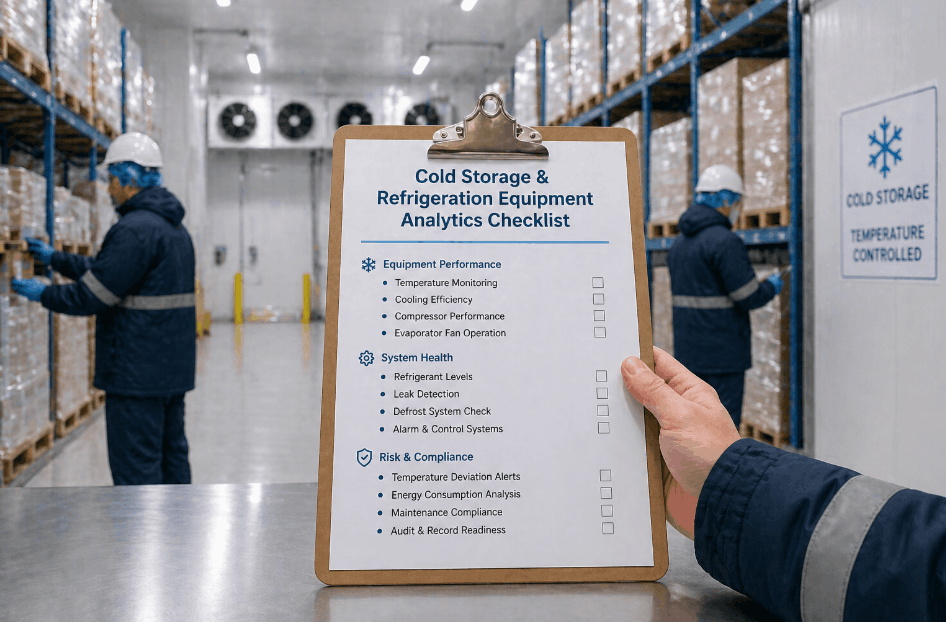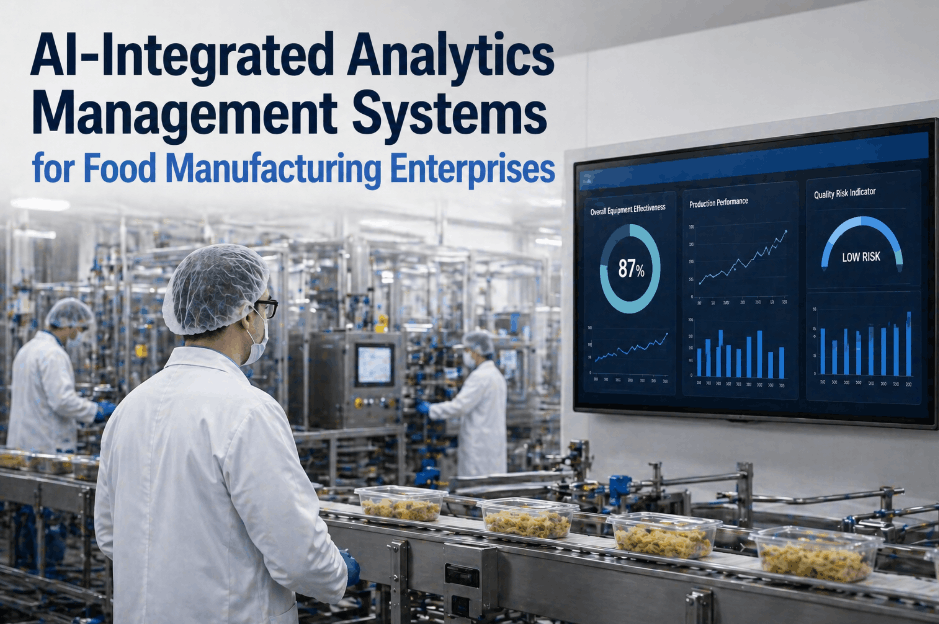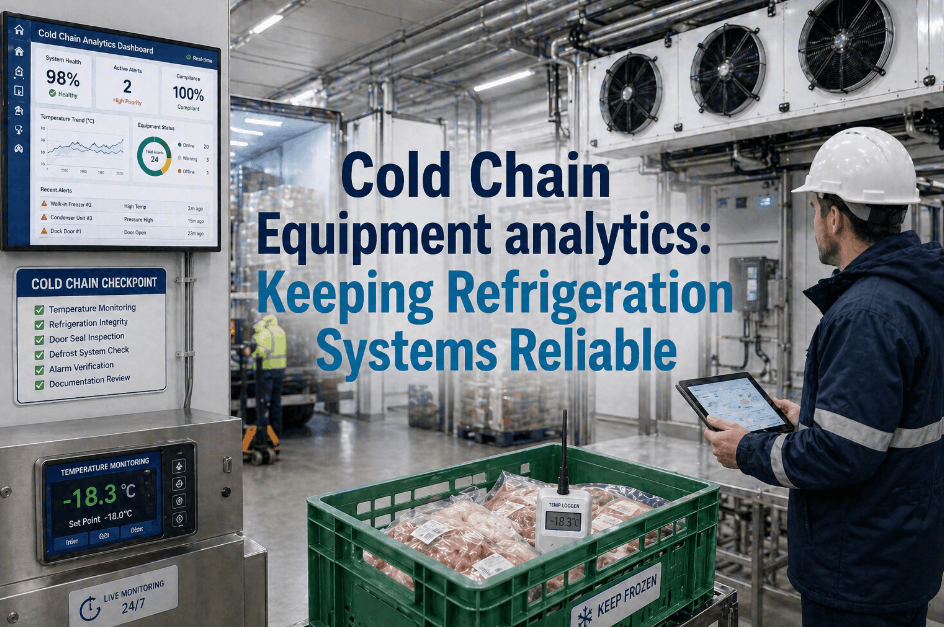
Cold chain equipment analytics has become a non-negotiable discipline for food manufacturing plants, pharmaceutical facilities, and distribution centers that depend on refrigeration systems to protect product integrity. Refrigeration system reliability is no longer managed through periodic inspections alone — it demands continuous data collection, predictive failure analysis, and AI-driven maintenance scheduling that transforms raw sensor data into actionable intelligence. In 2026, facilities operating without a structured cold chain analytics program face compounding risks: unexpected compressor failures, regulatory temperature exceedances, product loss events, and FDA audit findings that trace directly back to inadequate equipment monitoring. This guide covers every dimension of cold chain equipment analytics, from chiller performance tracking to walk-in cooler PM schedules and temperature alarm system design.
Automate Cold Chain Equipment Analytics Across Your Facility
iFactory's AI-driven platform integrates with your refrigeration systems to deliver real-time compressor health monitoring, predictive PM scheduling, and temperature alarm analytics — keeping your cold chain compliant and product-safe 24/7.
What Is Cold Chain Equipment Analytics and Why It Matters in 2026
Cold chain equipment analytics refers to the systematic collection, integration, and interpretation of operational data from refrigeration assets — including chillers, blast chillers, walk-in coolers, cold storage rooms, condensing units, and compressor banks — to optimize performance, prevent failures, and maintain regulatory compliance. Unlike traditional preventive maintenance programs that rely on calendar-based service intervals, analytics-driven cold chain programs use real-time sensor data, historical trend analysis, and machine learning models to predict when a refrigeration component will fail before it does.
For food manufacturing plants, the consequences of cold chain equipment failure extend well beyond repair costs. A single compressor failure in a walk-in cooler holding finished goods can trigger a mass product loss event worth hundreds of thousands of dollars, a mandatory temperature deviation report under FSMA, and a corrective action process that can consume weeks of compliance team time. Book a Demo to see how real-time refrigeration analytics eliminates unplanned cold chain failures in food plants.
Key Cold Chain Equipment Categories Requiring Analytics Coverage
An effective cold chain analytics program must cover every refrigeration asset category within the facility. Each equipment type presents distinct failure modes, performance metrics, and regulatory requirements that must be individually addressed in a comprehensive refrigeration PM strategy.
Chiller Systems and Centralized Refrigeration Plants
Industrial chillers serving large food manufacturing facilities represent the highest-criticality assets in the cold chain. Analytics for chiller systems must track compressor amperage draw, suction and discharge pressures, refrigerant superheat and subcooling, condenser approach temperatures, evaporator leaving water temperatures, and coefficient of performance (COP) trends over time. Deviations in any of these parameters — even within acceptable ranges individually — can indicate early-stage mechanical degradation that predictive models can flag weeks before a failure occurs.
Walk-In Cooler and Cold Storage Room Monitoring
Walk-in cooler analytics must capture ambient temperature at multiple sensor points throughout the storage space, door open/close events and duration, defrost cycle timing and completion, evaporator coil temperature differentials, and condenser fan operation status. Continuous monitoring of these parameters enables facilities to identify door gasket degradation, coil icing patterns, and refrigerant undercharge conditions before they result in temperature exceedances that trigger regulatory reporting obligations.
Blast Chiller and Blast Freezer Performance Analytics
Blast chiller PM in food manufacturing environments is particularly demanding because these units operate under extreme thermal stress cycling — moving from ambient loading temperatures to pull-down targets of 40°F or below within defined time windows. Analytics for blast chillers must track pull-down rate per cycle, compressor staging patterns, refrigerant circuit pressures under load, and cumulative run hours against manufacturer-specified overhaul thresholds. Cycle-by-cycle performance logging allows food safety teams to document HACCP compliance at the chilling CCP.
Compressor Health Monitoring and Refrigerant Management
Compressor analytics in food plant refrigeration programs must address both individual unit health and system-level refrigerant management. Oil pressure monitoring, vibration signature analysis, current draw trending, and discharge temperature tracking provide the leading indicators of compressor wear. Simultaneously, refrigerant management analytics — tracking charge levels, leak detection sensor readings, and refrigerant consumption history — ensure compliance with EPA Section 608 reporting requirements and support sustainability goals tied to HFC phase-down obligations.
Integrating analytics across all four equipment categories within a unified cold chain platform — rather than managing disparate monitoring systems per asset class — delivers the cross-system visibility that analytics engineers need to prioritize maintenance interventions and allocate resources against actual risk. Book a Demo to explore unified cold chain equipment analytics dashboards built for food manufacturing environments.
Cold Chain PM Metrics: What to Measure and Why
Defining the right key performance indicators (KPIs) is the foundation of any effective refrigeration analytics program. Without well-chosen metrics, cold chain data collection produces volume without insight — generating dashboards that look comprehensive but fail to surface the signals that predict failures and compliance risks.
| Equipment Type | Primary Analytics KPIs | Failure Mode Detected | Alert Threshold Basis |
|---|---|---|---|
| Industrial Chiller | COP trend, compressor kW/ton, approach temperatures | Refrigerant undercharge, fouled condenser, compressor wear | Manufacturer spec ± 8% deviation |
| Walk-In Cooler | Ambient temp variance, door event frequency, defrost efficiency | Gasket failure, coil icing, infiltration load increase | FSMA-aligned temperature limits |
| Blast Chiller | Pull-down rate, cycle duration, discharge temp under load | Reduced refrigerant flow, compressor staging fault | HACCP CCP critical limits |
| Compressor Bank | Oil pressure, vibration RMS, current draw trend | Bearing wear, valve failure, oil pump degradation | Vibration baseline ± 25% shift |
| Cold Storage Room | Multi-point temp mapping, humidity, air circulation delta | Stratification, dead zones, evaporator fan failure | Product-specific storage spec range |
Analytics programs that limit monitoring to a single ambient temperature sensor per space miss the vast majority of cold chain failure precursors. Multi-point sensor arrays, combined with runtime data from compressors and air handlers, provide the dimensional dataset that machine learning models require to generate reliable failure predictions. Book a Demo to review sensor architecture recommendations for food plant cold chain analytics programs.
AI-Driven Cold Chain Scheduling: Beyond Calendar-Based PM
Traditional refrigeration PM programs schedule maintenance activities based on fixed calendar intervals — quarterly compressor oil analysis, annual coil cleaning, bi-annual refrigerant charge verification. While these intervals provide a baseline, they are fundamentally disconnected from actual equipment operating conditions. A compressor running 22 hours per day in a hot ambient environment accumulates wear far faster than the same unit running 14 hours per day in a climate-controlled space. Calendar-based PM treats both identically.
AI-driven cold chain PM scheduling replaces fixed intervals with condition-based triggers derived from continuous equipment monitoring. Machine learning models trained on historical failure data, OEM reliability curves, and facility-specific operating patterns generate dynamic maintenance recommendations that adapt to actual equipment health rather than assumed usage patterns. The result is fewer unnecessary PM interventions, reduced parts consumption, lower labor costs per maintenance cycle, and significantly higher equipment reliability. Book a Demo to see how AI-driven cold chain scheduling reduces refrigeration PM costs while improving uptime.
Condition-Based Trigger Logic
AI scheduling systems analyze compressor runtime hours, thermal cycle counts, vibration trend slopes, and refrigerant consumption rates simultaneously to generate maintenance triggers calibrated to actual degradation rates. When a compressor's vibration signature trend line crosses a statistically derived threshold, the system generates a work order — regardless of where the calendar interval stands.
Predictive Failure Windows
Beyond individual threshold alerts, AI cold chain platforms generate failure probability forecasts with confidence intervals. A chiller compressor showing a 72% probability of failure within 21 days based on current trend trajectories gives maintenance teams a defined planning window — enabling parts procurement, labor scheduling, and temporary capacity arrangement before an unplanned failure forces emergency response.
PM Work Order Prioritization
In facilities with dozens of refrigeration assets, not all PM interventions can be executed simultaneously. AI-driven prioritization ranks open work orders by failure probability, criticality of the supported product zone, and available maintenance resources — ensuring that high-risk assets serving primary storage areas receive attention before lower-criticality utility refrigeration equipment.
Lifecycle and Replacement Planning
Cold chain analytics platforms that accumulate multi-year equipment performance histories provide the data foundation for capital planning. Compressors whose maintenance cost-per-running-hour has exceeded replacement thresholds, or whose reliability profiles have degraded beyond acceptable risk levels, can be flagged for replacement planning with quantitative justification — replacing gut-feel capital requests with data-driven business cases.
Temperature Alarm System Design for Cold Chain Compliance
A temperature alarm system is only as valuable as its ability to deliver the right alert to the right person within the time window that prevents a compliance event. Poorly designed alarm systems — those with imprecise setpoints, excessive nuisance alarms, or notification routing gaps — create alarm fatigue that causes personnel to ignore or delay response to legitimate temperature exceedance events. In food manufacturing environments, a temperature alarm ignored due to fatigue can be the difference between a contained deviation report and a full product recall.
Tiered Alarm Architecture with Escalation Logic
Effective cold chain temperature alarm systems implement at least three alarm tiers: an advisory tier that alerts on-floor personnel to a developing condition, a warning tier that escalates to shift supervisors when advisory conditions persist beyond a defined time window, and a critical tier that simultaneously notifies quality assurance, facility management, and on-call maintenance engineers when temperatures approach regulatory limits. Each tier must have documented response procedures with defined maximum response times.
Deadband Configuration to Eliminate Nuisance Alarms
Temperature alarm setpoints must incorporate appropriate deadband values — the gap between the alarm trigger threshold and the reset threshold — to prevent alarms from cycling repeatedly as temperatures fluctuate near the trigger boundary. For walk-in cooler environments, a deadband of 1–2°F centered on the setpoint eliminates the majority of nuisance alarm events while preserving sensitivity to genuine temperature exceedances.
Alarm Response Documentation for Regulatory Inspection
Every temperature alarm event in a food manufacturing cold chain must generate a documented response record that captures alarm trigger time, first notification timestamp, response personnel identity, actions taken, return to acceptable temperature time, and root cause determination. Automated alarm management systems that log these records without manual data entry provide the audit trail that FDA investigators and third-party food safety auditors expect during inspections of cold chain operations.
Cold Chain Compliance: Regulatory Requirements for Refrigeration Analytics Records
Cold chain compliance in food manufacturing is governed by an overlapping framework of FSMA preventive controls requirements, HACCP-based temperature control documentation obligations, and customer-mandated food safety standards including SQF, BRC, and FSSC 22000. For analytics engineers managing refrigeration programs, understanding the specific documentation requirements of each regulatory layer is essential for designing a data collection architecture that satisfies all applicable standards simultaneously.
| Regulatory Framework | Cold Chain Documentation Requirement | Retention Period | Analytics Program Implication |
|---|---|---|---|
| FSMA 21 CFR Part 117 | Preventive control monitoring records for temperature CCPs | 2 years | Continuous, timestamped temperature logging with PCQI review trail |
| FSMA Section 204 Traceability | Storage temperature records linked to lot codes at holding CTEs | 2 years | Temperature logs must be linkable to specific product lots in storage |
| HACCP Plans | CCP monitoring records, corrective action logs, verification records | 1–2 years minimum | Automated CCP monitoring with corrective action triggering and documentation |
| SQF Code Edition 9 | Refrigeration PM records, calibration certificates, temperature logs | Per site specification | Integrated PM records and calibration management within analytics platform |
| EPA Section 608 | Refrigerant leak inspection records, refrigerant purchase and use logs | 3 years | Refrigerant consumption tracking integrated with equipment monitoring data |
The intersection of these regulatory requirements creates a documentation burden that manual record-keeping systems cannot reliably sustain at scale. Facilities with 15 or more refrigeration assets subject to continuous monitoring obligations typically find that automated cold chain analytics platforms reduce documentation labor by 50–70% while simultaneously improving record completeness and accessibility during audits.
Common Cold Chain Analytics Gaps Found in Food Plant Audits
Third-party food safety audits and internal program assessments consistently surface the same categories of cold chain analytics gaps in food manufacturing facilities. Identifying these gaps proactively allows analytics engineers and facility management teams to close vulnerabilities before an external audit surfaces them as findings.
Single-Point Temperature Monitoring in Multi-Zone Storage Rooms
Many facilities monitor cold storage rooms with a single temperature sensor positioned near the return air intake of the evaporator — the coldest point in the room. This approach fails to detect warm zones near loading doors, ceiling stratification layers, or equipment-generated heat pockets that can maintain products at temperatures significantly warmer than the room average. GFSI scheme auditors increasingly expect temperature mapping validation studies to define multi-point sensor placement requirements.
No Calibration Traceability for Temperature Monitoring Sensors
Temperature sensors that drift out of calibration without detection generate compliance records that appear complete but are factually inaccurate. Analytics programs must include calibration management workflows that track sensor calibration dates, calibration certificate numbers, reference standard traceability, and alert users when sensor calibration intervals are approaching expiration. Sensors with no current calibration certificate are inadmissible as compliance documentation during regulatory inspections.
Refrigeration PM Records Not Linked to Temperature Performance Data
When PM records and temperature monitoring data live in separate, disconnected systems, it is impossible to correlate maintenance interventions with temperature performance outcomes. Analytics engineers lose the ability to demonstrate that a PM activity resolved a developing thermal performance issue, or to identify which PM activities deliver the greatest impact on equipment reliability. Integrated platforms that link work order completion records to post-maintenance performance data close this analytical gap.
Compressor Runtime Analytics Without Load Normalization
Compressor runtime hours accumulated during peak summer ambient conditions place far greater stress on components than the same number of hours logged during mild temperatures. Analytics programs that track cumulative runtime without normalizing for ambient conditions and load factors underestimate actual equipment wear rates and generate PM intervals that are too conservative during low-stress periods and dangerously optimistic during high-stress operating seasons.
How AI-Driven Cold Chain Analytics Platforms Deliver Measurable ROI
The business case for AI-driven cold chain equipment analytics extends well beyond compliance risk reduction. Facilities that implement comprehensive refrigeration analytics programs consistently report measurable improvements across four dimensions: energy cost reduction, maintenance labor optimization, product loss prevention, and audit preparation efficiency. Book a Demo to see how food manufacturers are quantifying cold chain analytics ROI across their refrigeration asset portfolios.
Energy optimization alone frequently justifies the investment in cold chain analytics software. Chillers operating with fouled condensers, undercharged refrigerant circuits, or degraded compressor efficiency consume 15–30% more energy than the same equipment operating at peak performance. Analytics platforms that continuously monitor system efficiency ratios and generate tuning recommendations enable facilities to capture energy savings that directly offset refrigeration operating costs while extending equipment service life. Book a Demo to model the energy savings potential for your facility's refrigeration assets.
Building a Cold Chain Analytics Roadmap: Implementation Priorities for Analytics Engineers
For analytics engineers tasked with building or upgrading a cold chain monitoring program, sequencing implementation priorities correctly determines whether the program delivers rapid value or becomes another disconnected monitoring initiative that fails to achieve adoption. The most successful implementations begin with the highest-criticality assets and the most acute compliance gaps before expanding to full facility coverage.
Phase 1 — Critical Asset Instrumentation and Baseline Establishment
Begin with chillers, blast chillers, and walk-in coolers serving primary HACCP CCPs. Deploy multi-point temperature sensors, compressor runtime meters, and energy monitoring at these assets first. Establish 90-day performance baselines before activating predictive alert thresholds — baselines derived from actual operating data prevent excessive false-positive alerts that undermine program credibility in the early adoption phase.
Phase 2 — PM Integration and Work Order Automation
Once monitoring baselines are established, integrate cold chain analytics data with the facility's computerized maintenance management system (CMMS) to enable condition-triggered work order generation. Configure escalation rules, assign PM tasks to specific technician skill classifications, and establish spare parts inventory links for the highest-frequency maintenance components — compressor oil, filter-driers, gaskets, and fan motor brushes.
Phase 3 — Compliance Documentation Automation and Audit Readiness
Build out compliance documentation workflows that automatically generate temperature deviation reports, corrective action records, and calibration due notifications. Configure export formats that satisfy FDA investigator requests for electronic records and implement access controls that prevent unauthorized record modification — ensuring that cold chain documentation satisfies 21 CFR Part 11 principles for electronic record integrity.
Frequently Asked Questions: Cold Chain Equipment Analytics
What sensors are required for a comprehensive cold chain analytics program in a food plant?
A comprehensive cold chain analytics deployment for a food manufacturing facility typically requires multi-point ambient temperature sensors in all cold storage spaces, compressor suction and discharge pressure transducers, compressor motor amperage CTs, refrigerant leak detection sensors, condenser and evaporator leaving-fluid temperature sensors, and door contact sensors for cold storage entry points. Energy meters at the compressor and chiller panel level round out the instrumentation package for facilities targeting energy optimization alongside reliability analytics.
How does cold chain analytics software integrate with existing CMMS platforms?
Modern cold chain analytics platforms integrate with CMMS systems through REST API connections that push condition-based work orders directly into the CMMS queue, pull completed PM records back into the analytics platform for performance correlation, and synchronize asset registers to ensure sensor data is mapped to the correct asset records. Common CMMS integration partners include IBM Maximo, SAP PM, UpKeep, Fiix, and Infor EAM.
What is the difference between predictive maintenance and preventive maintenance for cold chain equipment?
Preventive maintenance is scheduled at fixed calendar or runtime intervals regardless of actual equipment condition — monthly coil cleaning, quarterly oil analysis, annual overhaul. Predictive maintenance uses real-time sensor data and machine learning models to generate maintenance interventions based on detected condition changes — initiating a compressor bearing inspection when vibration signatures indicate wear, regardless of where the calendar PM interval stands. Predictive programs typically reduce total maintenance costs by 15–25% compared to equivalent preventive programs while achieving higher equipment reliability.
How long must cold chain temperature monitoring records be retained under FSMA?
Under FSMA's Preventive Controls for Human Food rule (21 CFR Part 117), records associated with preventive control monitoring — including temperature control records — must be retained for a minimum of two years from the date of creation. Under the Food Traceability Rule (Section 204), records capturing storage temperature events linked to traceability lot codes must also be retained for two years. Some GFSI certification schemes require longer retention periods; facilities should apply the most stringent applicable requirement.
Can small food manufacturers benefit from cold chain analytics, or is it only for large operations?
Cloud-based cold chain analytics platforms have made sophisticated refrigeration monitoring accessible to food manufacturers of all sizes. Small facilities with five to fifteen refrigeration assets can implement entry-level analytics programs using wireless IoT sensors and SaaS monitoring dashboards at a fraction of the cost of enterprise implementations — achieving meaningful compliance documentation improvements and equipment reliability gains without large capital investments in hardware infrastructure.
Ready to Build a Data-Driven Cold Chain Reliability Program?
iFactory's cold chain analytics platform connects your refrigeration assets, automates PM scheduling, and generates the compliance documentation your facility needs for FSMA, HACCP, and GFSI audit readiness — from a single, analytics-engineer-friendly interface.