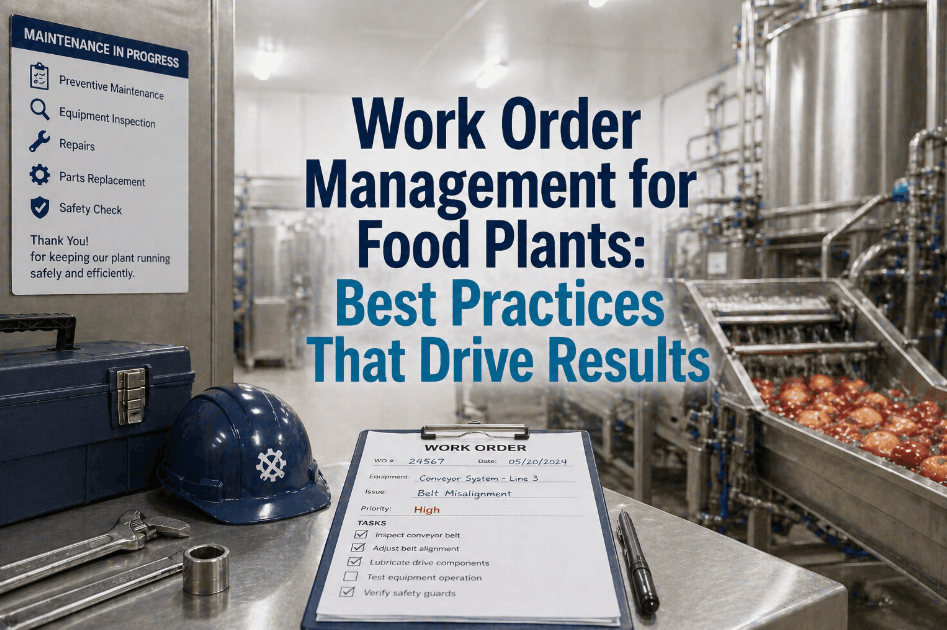
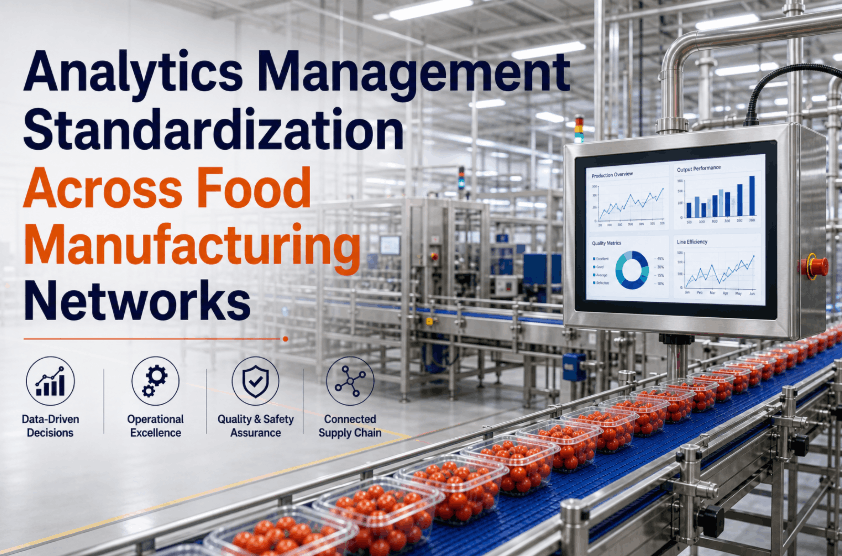
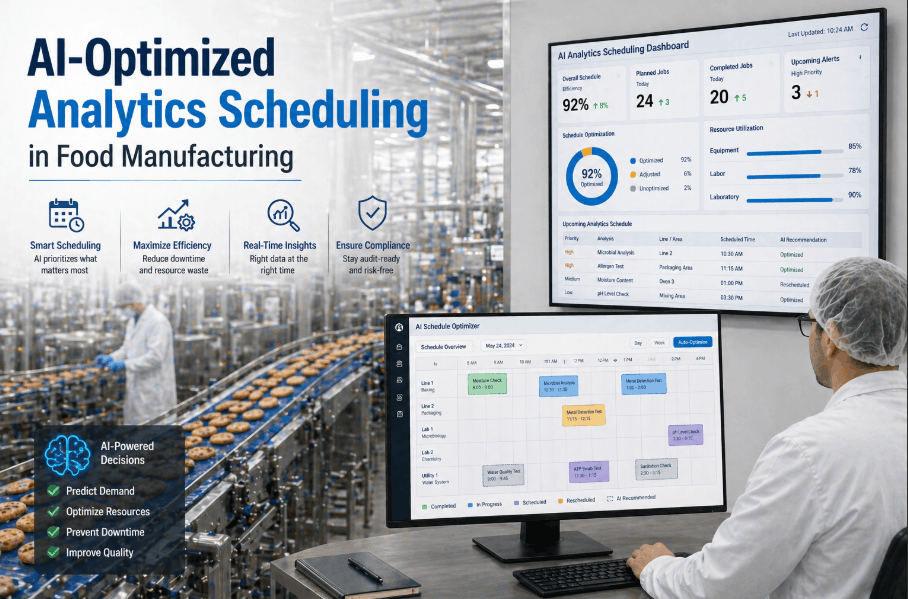
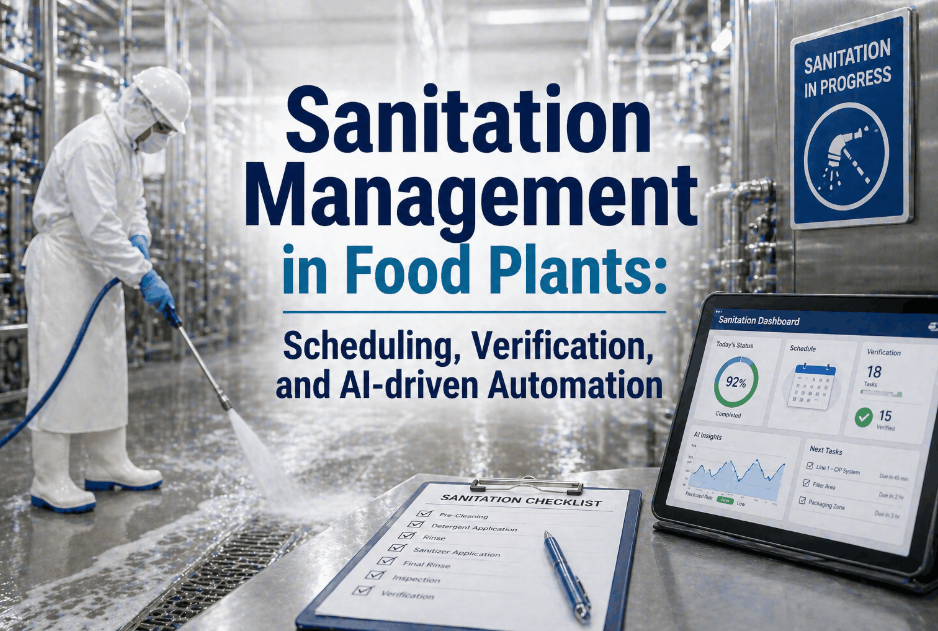
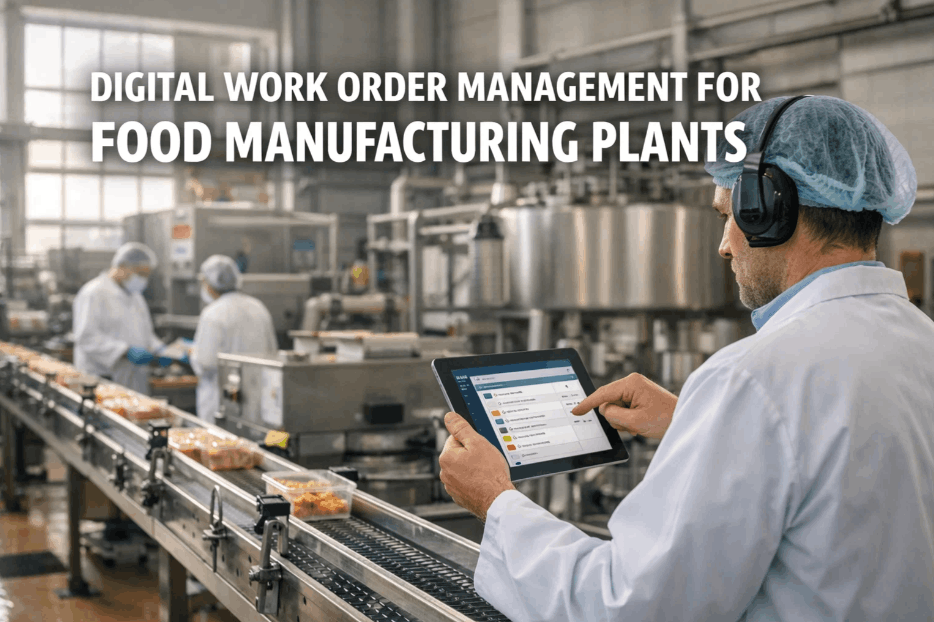
Work order management for food plants sits at the intersection of production continuity, regulatory compliance, and labor efficiency — yet most facilities still rely on paper tickets, shared spreadsheets, or disconnected CMMS modules that were never designed for the unique cadence of food manufacturing. From sanitation schedule coordination to priority routing during peak production runs, the gap between reactive analog workflows and AI-driven digital work order systems translates directly into measurable losses: delayed corrective actions, undocumented compliance events, and technician hours spent on administrative overhead rather than wrench-in-hand work. If your analytics supervisors are still manually reconciling completion data at shift end, Book a Demo to see how iFactory's digital work order platform eliminates that overhead entirely.
WORK ORDER MANAGEMENT · FOOD MANUFACTURING · AI-DRIVEN AUTOMATION
Digitize and Automate Work Orders Across Your Entire Food Plant
Give your analytics supervisors real-time visibility into every open, pending, and completed work order — with AI-driven priority routing and automated sanitation scheduling built in.
Why Work Order Management Is a Strategic Priority in Food Manufacturing
Food and beverage processing environments demand maintenance execution precision that generic work order systems simply cannot support. Every open corrective action carries dual risk: an equipment failure that stops production and a documentation gap that surfaces during an FDA FSMA audit. Digital work order management software built specifically for food plant operations closes both risk vectors simultaneously — routing every request through priority triage logic, attaching compliance evidence at task completion, and feeding performance analytics back to supervisors without manual data entry. The facilities seeing the highest OEE gains are those that have replaced static spreadsheet-based systems with real-time mobile work order workflows that keep technicians informed and analytics teams fully current on every asset's maintenance status.
Core Pillars of Best-Practice Work Order Management in Food Plants
Implementing a high-performance work order management system for food manufacturing requires more than digitizing paper forms. Best-practice digital workflows rest on five operational pillars that together eliminate the scheduling conflicts, compliance blind spots, and response-time delays that routinely inflate maintenance costs in food processing facilities. Book a Demo to see all five pillars active in a live food plant environment.
01
AI-Driven Priority Routing
Every incoming maintenance request is automatically scored against production schedule impact, asset criticality, food safety risk, and technician availability. High-priority corrective actions surface instantly to the right technician without supervisor intervention, cutting average response time by 60% or more in facilities with 100-plus active assets.
02
Sanitation Schedule Integration
Sanitation work orders are generated, sequenced, and closed within the same platform as corrective and preventive maintenance tasks. CIP cycle completion triggers automatic lockout verification steps before production restart, creating an unbroken audit trail that satisfies HACCP and FSMA preventive control documentation requirements.
03
Mobile Completion Capture
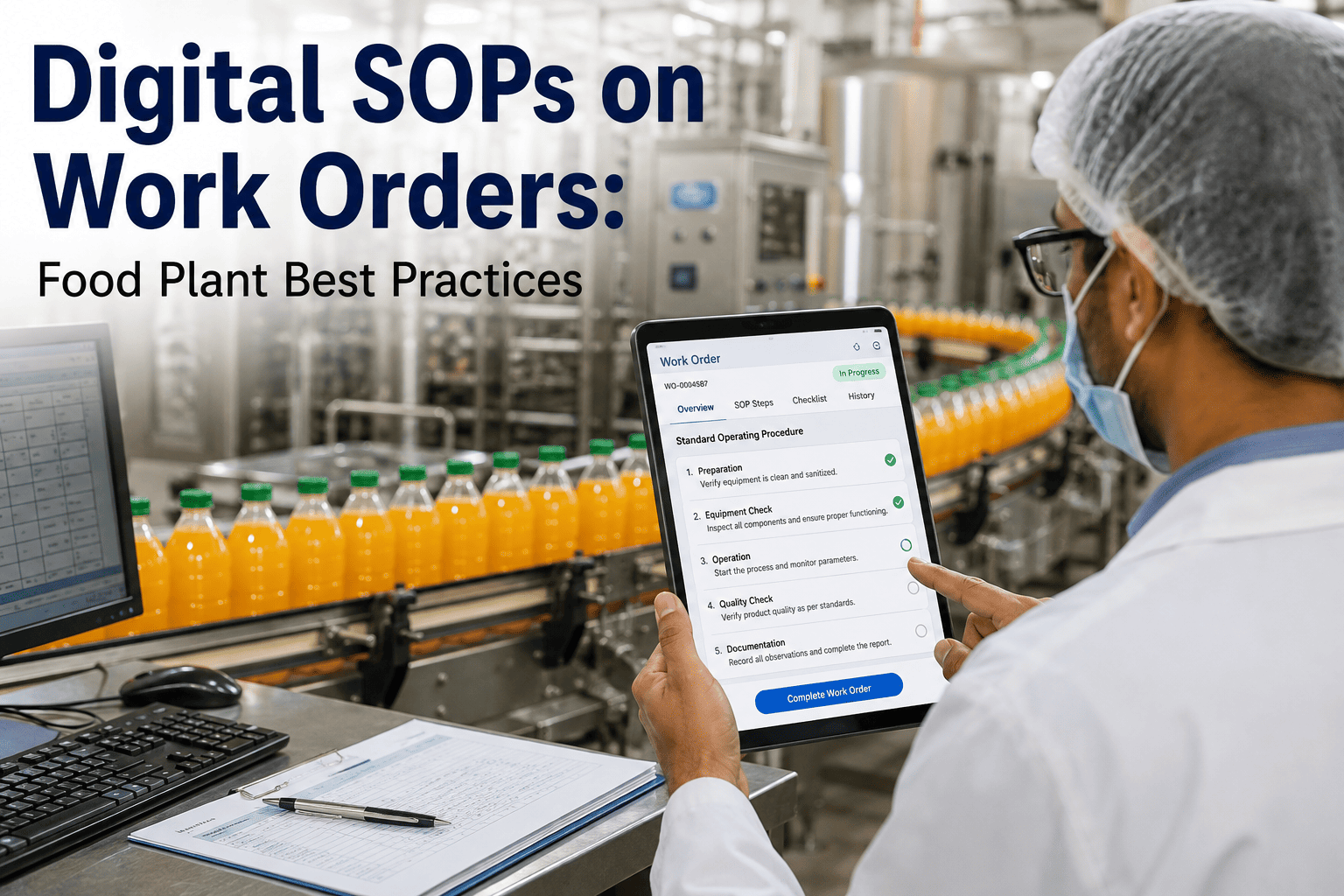
Technicians close work orders on ruggedized mobile devices directly at the asset — capturing labor time, parts consumed, failure mode codes, and photographic evidence in a single workflow step. No return trips to a terminal, no end-of-shift data entry backlog, and no lost paper tickets between the production floor and the maintenance office.
04
Predictive Trigger Automation
When the AI reliability engine flags an asset with an elevated Downtime Probability Index, a structured work order is auto-generated with fault hypothesis, inspection scope, and suggested intervention window already populated. Technicians arrive at the asset prepared — reducing diagnostic time and eliminating repeat failures from incomplete root-cause resolution.
05
Analytics Supervisor Dashboards
Real-time KPI dashboards give analytics supervisors instant visibility into backlog age, mean time to complete by technician and asset class, compliance closure rates, and cost-per-work-order trends. Drill-down capability to individual task level enables rapid identification of recurring failure patterns before they become systemic production risks.
Work Order Types in Food Manufacturing: A Complete Breakdown
Effective food plant work order management requires clear classification logic across every task category. Mixing corrective, preventive, predictive, and compliance-driven work orders into a single undifferentiated queue is the most common cause of priority inversion — where a low-urgency PM task blocks a critical corrective action. The table below outlines the core work order types, their triggering conditions, and the completion requirements specific to food processing environments. Analytics supervisors should audit their current CMMS to verify all six types are tracked as distinct workflow categories. Book a Demo to see how iFactory classifies and routes all six types automatically.
| Work Order Type |
Trigger Condition |
Priority Logic |
Compliance Documentation Required |
Avg. Close Time Target |
| Corrective — Emergency |
Active line stoppage or food safety risk |
Immediate — P1 override all queues |
Failure mode, root cause, corrective action, sign-off |
< 2 hours |
| Corrective — Planned |
Detected fault, non-critical asset |
AI-scored by criticality and production impact |
Fault description, parts log, labor time |
< 24 hours |
| Preventive Maintenance |
Calendar or runtime interval trigger |
Scheduled — production window coordinated |
Checklist completion, calibration records |
Per schedule window |
| Predictive Maintenance |
AI DPI threshold exceeded |
Auto-generated with fault hypothesis pre-loaded |
Inspection findings, intervention confirmation |
Within forecast window |
| Sanitation / CIP |
Production changeover or scheduled cycle |
Synchronized with production restart sequence |
Chemical concentrations, contact times, ATP swabs |
Per SOP time window |
| Regulatory / Compliance |
Inspection schedule, audit requirement |
Fixed — non-deferrable regulatory deadline |
Inspection report, certification attachment, approver sign-off |
Per regulatory deadline |
How AI-Driven Work Order Automation Changes the Analytics Supervisor Role
The traditional analytics supervisor in a food plant spends an estimated 35 to 45 percent of their working hours on work order administrative tasks: logging requests, assigning jobs, following up on overdue completions, and extracting performance data from CMMS exports into reporting spreadsheets. AI-driven work order management software eliminates every one of those activities — replacing them with exception-based management where the supervisor's attention is directed only to items that genuinely require human judgment rather than routine coordination. Book a Demo to see what the analytics supervisor dashboard looks like in a live iFactory deployment.
43%
Reduction in supervisor administrative hours after AI work order automation deployment
71%
Faster average work order response time with AI priority routing vs. manual queue management
89%
Compliance documentation closure rate on first attempt with mobile capture vs. 54% on paper-based systems
3.2x
More corrective actions completed per technician per shift with digital mobile workflows
Sanitation Scheduling: The Most Complex Work Order Workflow in Food Plants
No work order category in a food manufacturing facility carries higher stakes than sanitation. A missed CIP cycle, an out-of-sequence chemical concentration, or a production restart initiated before an ATP swab clears creates both food safety risk and regulatory exposure that no maintenance team wants to document. Yet manual sanitation scheduling — coordinating cleaning teams, production hold windows, and chemistry verification steps across multiple lines simultaneously — is precisely where spreadsheet-based systems fail most visibly.
iFactory's sanitation work order module handles this complexity through automated sequencing logic: each CIP or dry-clean event generates a structured task tree where steps must be completed in a defined order, each step requires a specific digital confirmation, and production restart authorization is blocked until all sign-off criteria are met. The result is a process that is simultaneously faster, more consistent, and more fully documented than anything a manually coordinated workflow can deliver.
Challenge
Multi-Line Changeover Coordination
Allergen changeovers require sequenced sanitation across interdependent production lines. Manual scheduling creates bottlenecks when lines run on different product cycles. AI sequencing aligns cleaning windows to the production schedule and flags dependency conflicts before they cause delays.
Challenge
Chemistry Verification Documentation
Chemical concentration records are the most frequently cited gap in FDA food safety audits. Mobile work order capture prompts technicians to record titration results at the task step level — not after the fact — creating contemporaneous documentation that satisfies FSMA preventive control verification requirements.
Challenge
Pre-Op Inspection Integration
Pre-operational inspection failures generate immediate corrective work orders within the same platform — creating a closed-loop between sanitation execution, inspection findings, and corrective action closure before production resumes. No parallel paper systems, no handoff delays between sanitation and maintenance teams.
Challenge
Frequency Optimization by Asset
Over-sanitizing shortens equipment lifespan and increases chemical costs; under-sanitizing creates microbial risk. AI modeling correlates production run length, product mix, and environmental monitoring data to recommend optimal CIP frequency per asset — replacing arbitrary fixed-interval schedules with risk-calibrated cleaning triggers.
Integrating Digital Work Orders with Production Planning Systems
Work order management software delivers its highest value when maintenance execution data flows bidirectionally with production planning. When a high-priority corrective action is raised on a filling line, the production schedule needs to know immediately — not after the shift supervisor notices a slowdown. Equally, when a production schedule change compresses a PM window that was allocated for a critical conveyor inspection, the maintenance system needs to automatically reschedule and re-notify the assigned technician. iFactory's REST API integration layer connects digital work orders to SAP PP, Oracle SCM, and standalone MES platforms to create precisely this bidirectional data flow, ensuring that maintenance and production planning operate from the same real-time operational picture rather than disconnected systems that update on different cadences. Book a Demo to walk through a live integration scenario with your ERP environment.
KPIs Analytics Supervisors Should Track in a Digital Work Order System
Food plant analytics supervisors transitioning from paper-based or legacy CMMS work order management to a digital platform gain access to a new tier of performance intelligence that simply did not exist before. The following KPI set represents the analytics foundation that best-practice food manufacturing maintenance organizations use to drive continuous improvement across work order execution quality, technician productivity, and regulatory compliance rates.
Mean Time to Acknowledge (MTTA)
Time between work order creation and first technician acknowledgment. AI routing drives MTTA below 8 minutes for P1 emergencies. Trending MTTA by shift identifies crew responsiveness gaps before they become pattern failures.
Mean Time to Complete (MTTC)
Total elapsed time from request creation to verified closure, segmented by work order type and asset class. MTTC benchmarks by equipment family expose assets with recurring diagnostic complexity — candidates for RCM review or spare parts stocking adjustments.
PM Compliance Rate
Percentage of scheduled preventive maintenance tasks completed within the allowed deferral window. Best-practice food plants target 95% or above. Facilities below 85% typically carry 2 to 3× the unplanned corrective work order volume of high-compliance peers.
Corrective-to-Preventive Ratio
The proportion of corrective vs. planned work orders is the clearest single indicator of maintenance program health. World-class food plants maintain a ratio below 30:70 corrective-to-planned. Most plants running paper-based systems discover ratios of 60:40 or worse when they migrate to digital tracking.
First-Time Fix Rate (FTFR)
The percentage of work orders closed without a repeat visit within 14 days. Low FTFR indicates root cause identification is incomplete or parts availability is limiting full repairs. AI fault hypothesis generation at work order creation improves FTFR by ensuring technicians arrive with the right diagnostic framework and parts kit.
Compliance Documentation Closure Rate
The percentage of work orders requiring regulatory documentation that achieve complete closure with all required fields — failure mode, corrective action, approver sign-off, and supporting evidence — captured at task completion. Target: 97% or above for FSMA and HACCP audit readiness.
Frequently Asked Questions: Work Order Management for Food Plants
What makes work order management in food plants different from other manufacturing environments?
Food plants carry regulatory compliance requirements — FSMA, HACCP, FDA — that mandate contemporaneous documentation on every sanitation, corrective, and preventive maintenance event. Work order systems must capture compliance evidence at task completion, not as a retroactive record, and must integrate sanitation scheduling into the same workflow as mechanical maintenance tasks.
How does AI priority routing handle conflicts between sanitation windows and corrective maintenance?
iFactory's routing engine evaluates production schedule constraints, food safety risk scoring, and asset criticality simultaneously. Sanitation windows are treated as hard constraints — corrective tasks are slotted around them unless the corrective action itself carries a food safety classification that overrides the sanitation hold.
Can mobile work order capture work in a food plant environment with connectivity limitations?
Yes. iFactory's mobile application operates in offline mode when Wi-Fi coverage is unavailable — common in refrigerated processing areas and freezer tunnels. Completed work orders sync automatically when the device re-enters coverage, with no data loss and full timestamp integrity preserved for compliance records.
How long does it take for analytics supervisors to see actionable performance data after deployment?
Most analytics teams see their first meaningful KPI trends within 3 to 4 weeks of go-live. MTTA, MTTC, and PM compliance rates populate automatically from closed work order data — no custom reporting setup required. The supervisor dashboard is pre-configured with food plant KPI benchmarks from day one.
Does the platform support multi-site food plant operations with centralized analytics reporting?
Yes. iFactory's multi-site architecture enables corporate maintenance teams to view cross-facility work order performance in a single dashboard, benchmark sites against each other, and identify best-practice patterns from high-performing locations for replication across the network.
What integration options are available for connecting work orders to existing food ERP systems?
iFactory integrates with SAP S/4HANA, Oracle EAM, Microsoft Dynamics 365, and independent CMMS platforms via REST API and standard OData connectors. Work order status, cost data, and parts consumption sync bidirectionally — eliminating duplicate data entry between maintenance and finance systems.
How does the system handle work order backlogs during planned shutdowns or seasonal production peaks?
iFactory includes a shutdown planning module that batches deferred corrective and PM work orders into prioritized shutdown work packages. Analytics supervisors can pre-assign technicians, pre-stage parts, and track shutdown completion in real time — reducing the typical post-shutdown recommissioning delays by 30 to 50 percent.
Transform Your Food Plant's Work Order Workflow with iFactory
Give your analytics supervisors AI-driven priority routing, automated sanitation scheduling, and real-time performance dashboards — all in one platform built for food manufacturing.