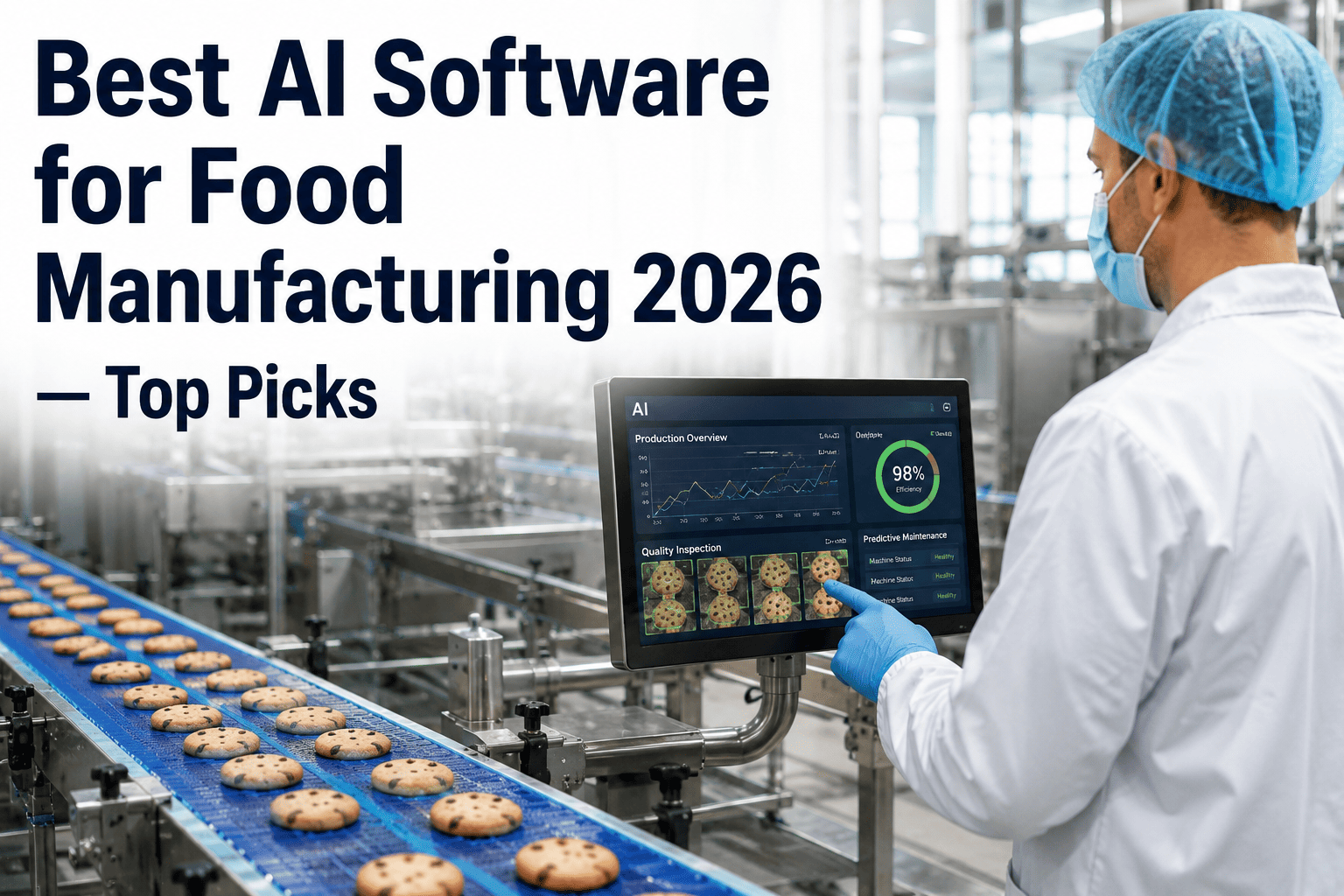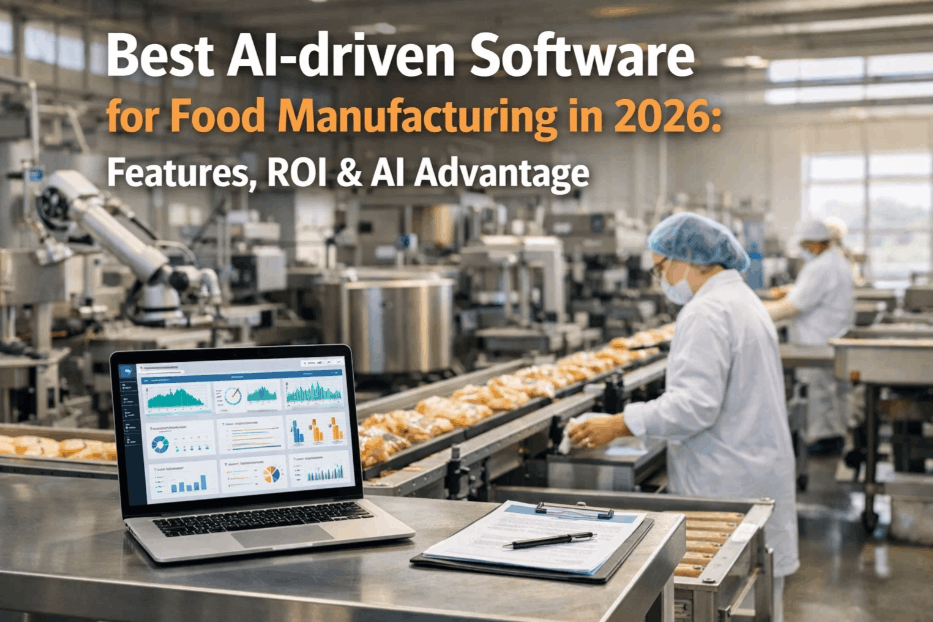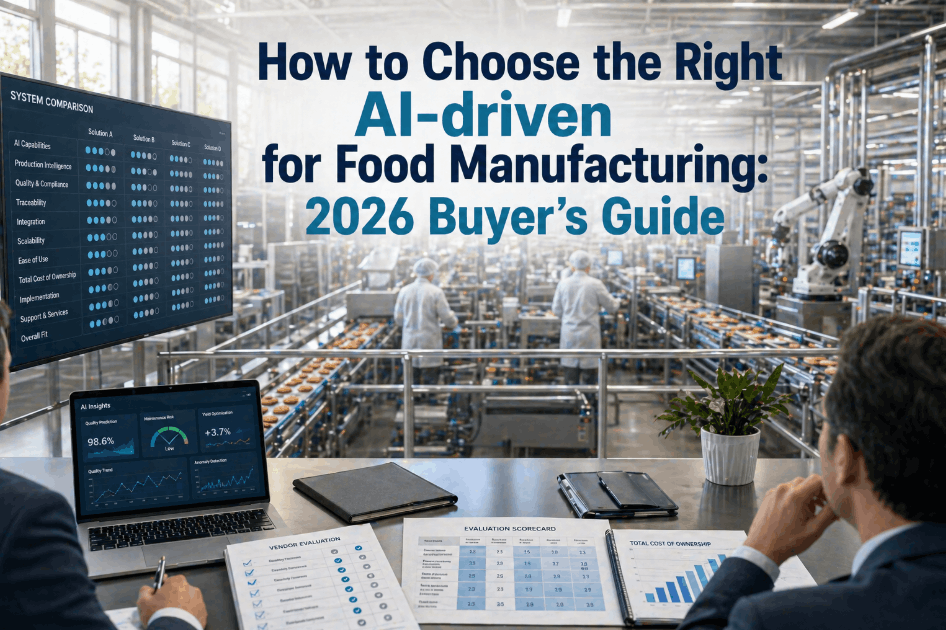
Choosing the right AI-driven analytics platform for food manufacturing is one of the highest-impact technology decisions a plant director or IT leader will make in 2026. With equipment downtime averaging $260,000 per hour, production yields under pressure from SKU complexity, and food safety regulations tightening across every global market, the wrong platform selection delays ROI by years — while the right one delivers measurable uptime improvement, compliance protection, and margin gains within the first operating quarter. This buyer's guide cuts through vendor complexity to give food manufacturing decision-makers the evaluation framework, capability checklist, and pricing intelligence needed to select an AI-driven platform that performs under real production conditions. To see how iFactory's AI-driven analytics platform performs inside a live food manufacturing environment, Book a Demo with our manufacturing intelligence team today.
What Is AI-Driven Analytics Software for Food Manufacturing?
Defining the Category Before You Evaluate Vendors
AI-driven food manufacturing software is a connected intelligence layer that collects real-time data from production lines, processing equipment, and quality control systems — then applies machine learning models to that data to surface predictive insights that human operators cannot generate manually at production speed. Unlike traditional SCADA systems or standalone CMMS platforms, a purpose-built food manufacturing AI platform integrates predictive maintenance, OEE tracking, quality deviation detection, food safety compliance monitoring, and supply chain analytics into a single operational decision framework. The distinction matters enormously during vendor evaluation: many platforms claim AI capabilities but deliver only rule-based alerting dressed in machine learning language. Understanding what separates genuine AI analytics from legacy automation is the first evaluation filter every plant director and IT leader should apply. Decision-makers ready to benchmark vendors can Book a Demo to see a working AI analytics configuration mapped to their specific food processing environment.
The 7 Capability Pillars Every Food Manufacturing AI Platform Must Deliver
Your Non-Negotiable Feature Checklist for 2026 Platform Selection
Vendor demonstrations often lead with visualization quality and dashboard aesthetics — features that are irrelevant if the underlying analytical models are not built for food manufacturing operational complexity. The seven capability pillars below represent the functional requirements that separate platforms delivering measurable production outcomes from those delivering reporting upgrades. Every vendor on your shortlist should be evaluated against each pillar before a procurement decision is made. Plant directors evaluating platforms against this framework can Book a Demo to see a live capability walkthrough mapped to their processing environment.
AI-Driven Food Manufacturing Platform Comparison: 2026 Market Landscape
How Leading Platforms Stack Up Across Critical Evaluation Dimensions
The food manufacturing AI platform market in 2026 has matured into three distinct tiers: purpose-built food manufacturing intelligence platforms, horizontal industrial IoT platforms adapted for food, and ERP-embedded analytics modules from legacy enterprise vendors. Each tier carries fundamentally different capability profiles, implementation timelines, and total cost of ownership — and the right choice depends on your production complexity, compliance obligations, and integration architecture. The table below maps the critical evaluation dimensions across these three categories to accelerate your shortlisting process.
| Evaluation Dimension | Purpose-Built Food AI Platform | Horizontal Industrial IoT | ERP Analytics Module |
|---|---|---|---|
| Food Safety Compliance (FSMA, HACCP) | Native Architecture | Configuration Required | Limited / Add-On |
| Predictive Maintenance Accuracy | Food Equipment Pre-Trained | Generic Models Only | Rule-Based Alerts |
| OEE Loss Categorization | Automated Root Cause | Manual Mapping Needed | Reporting Only |
| Time-to-Value (First Insights) | 4–8 Weeks | 3–6 Months | 6–12 Months |
| ERP / CMMS Integration Depth | Pre-Built Connectors | API-Only | Native (Same Vendor) |
| Allergen & Traceability Automation | Built-In Workflows | Not Available | Partial |
| Multi-Site Benchmarking | Native Capability | Custom Development | Dependent on License |
| AI Model Transparency (Explainability) | Full Audit Trail | Variable | Black Box |
| Total Cost of Ownership (3-Year) | Lowest (ROI-Adjusted) | Medium-High | Highest |
AI-Driven Food Manufacturing Software Pricing: 2026 Benchmarks
Understanding Total Cost of Ownership Before You Issue an RFP
AI-driven food manufacturing platform pricing in 2026 operates across three commercial models — site-based annual licensing, module-based subscription, and outcome-based pricing tied to documented OEE or downtime improvement. Understanding which model aligns with your facility's risk tolerance, IT budget structure, and internal ROI accountability framework is as important as the headline license cost. For a transparent pricing conversation mapped to your facility size and integration requirements, Book a Demo with the iFactory commercial team today.
Integration Requirements: Connecting AI Analytics to Your Existing Food Plant Systems
The Systems Compatibility Checklist IT Leaders Must Validate Before Procurement
The most common source of AI deployment failure in food manufacturing is not model inaccuracy — it is integration complexity that was underestimated during procurement. Food plants typically operate 4 to 9 distinct software systems across production, quality, maintenance, inventory, and finance functions, and an AI analytics platform must connect to each with minimal disruption to validated system configurations. The integration checklist below covers the critical compatibility dimensions IT leaders should verify before finalizing vendor selection. For a technical integration assessment mapped to your current systems architecture, Book a Demo with the iFactory engineering team today.
The 5-Step Evaluation Process for AI-Driven Food Manufacturing Platform Selection
A Structured Selection Framework for Plant Directors and IT Leaders
A structured AI platform evaluation process protects food manufacturers from two common procurement failure modes: selecting on demo quality rather than production capability, and selecting on price rather than total cost of ownership. The five steps below create a defensible evaluation framework that produces a vendor recommendation grounded in documented capability evidence — not sales cycle momentum.
Common AI Platform Selection Mistakes Food Manufacturers Make in 2026
Procurement Pitfalls That Delay ROI and Derail Deployments
Frequently Asked Questions
What is the difference between AI-driven analytics and traditional MES or SCADA in food manufacturing?
Traditional MES and SCADA systems record and display what is happening on the production line in real time. AI-driven analytics platforms use machine learning to analyze that data and predict what will happen — identifying failure patterns, quality deviations, and supply chain risks before they occur. The distinction is between operational visibility and operational intelligence.
How long does it take to deploy an AI-driven food manufacturing platform?
Purpose-built food manufacturing AI platforms typically deliver initial predictive insights within 4 to 8 weeks of data ingestion. Full deployment — including ERP integration, compliance automation, and trained predictive models — is typically complete within 12 to 20 weeks depending on facility complexity and integration scope.
Does our facility need IoT sensors already installed to adopt AI analytics?
Not necessarily. Many food manufacturing AI platforms can generate initial value from existing historian data, CMMS maintenance records, and quality management data before IoT sensor infrastructure is expanded. Full predictive maintenance capability does require sensor data — but a phased deployment starting from existing data sources is a viable approach for facilities with limited sensor coverage.
How does AI-driven analytics support FSMA 204 compliance in food manufacturing?
FSMA 204 requires food manufacturers to maintain traceable records linking finished product lots to key data elements at every upstream production stage. AI platforms with native FSMA support automatically capture, timestamp, and structure these records during normal production operations — eliminating the manual compilation burden that reactive compliance documentation creates before and during FDA inspections.
What ROI should food manufacturers expect from an AI analytics platform investment?
Documented outcomes across food manufacturing deployments consistently show 22 to 38 percent reduction in unplanned downtime, 15 to 28 percent improvement in OEE, and 18 to 31 percent reduction in MRO inventory carrying costs. Most facilities achieve full platform payback within 9 to 14 months — with the largest ROI contributors being emergency maintenance cost elimination and quality reject reduction.
Can AI-driven analytics platforms scale from a single site to an enterprise multi-site deployment?
Purpose-built food manufacturing AI platforms are designed for enterprise-scale deployment — with cross-site data normalization, centralized model governance, and network-level benchmarking built into the platform architecture. Horizontal IoT platforms and ERP analytics modules typically require significant custom development to achieve comparable multi-site intelligence capability.
How do we evaluate AI platform vendors without internal data science expertise?
The evaluation framework in this guide is designed for production operations and IT leaders — not data scientists. Focus your evaluation on documented production outcomes from reference accounts, contractual performance commitments, integration timeline accountability, and the vendor's willingness to run a proof-of-concept on your historical data. Vendors who require data science expertise to evaluate their platform are revealing an adoption barrier they have not solved.