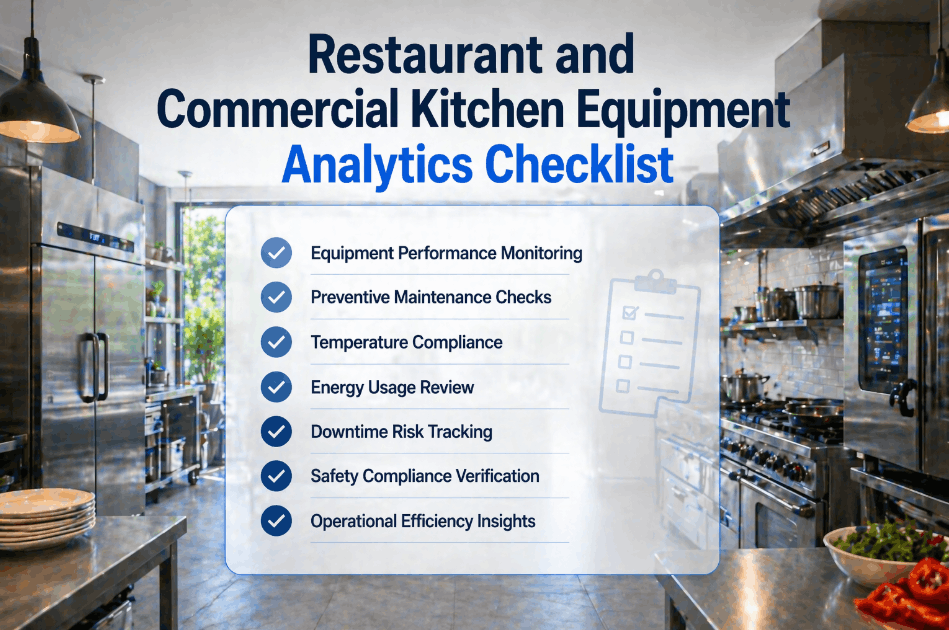
Restaurant and Commercial Kitchen Equipment analytics Checklist

By Josh Turley on April 24, 2026

restaurant-and-commercial-kitchen-equipment-analytics-checklist

Commercial kitchen equipment analytics is the foundation of operational safety, energy efficiency, and health department compliance. In high-volume restaurant environments, the failure of a walk-in cooler or an uncalibrated fryer can lead to catastrophic food waste and severe health violations. Book a Demo to automate your kitchen maintenance scheduling, track real-time refrigeration temperatures, and generate audit-ready HACCP and health department documentation for every piece of equipment in your facility.

Automate Commercial Kitchen Equipment Analytics Monitor refrigeration thermal drift, track fryer oil quality, log dishwasher temperature compliance, and generate automated maintenance records for your entire commercial kitchen operation.

1. Commercial Refrigeration & Walk-In Thermal Analytics

Monitor temperature stability and compressor health in real-time. Prevent food spoilage by identifying thermal drift before it reaches critical thresholds. Book a Demo to integrate wireless temperature monitoring into your kitchen grid.

2. Cooking Equipment - Ovens & Ranges Calibration

Verify thermal precision and gas safety for consistent cooking results. Prevent uneven cooking and fire hazards through regular burner and sensor audits. Book a Demo to log oven calibration data.

3. Fryer Management & Oil Analytics

Monitor oil quality and high-limit safety controls. Prevent oil degradation and fire risks through proactive maintenance and filtration tracking. Book a Demo to track fryer oil TPM levels.

4. Dishwashing & Sanitation System Analytics

Verify sanitization temperatures and chemical concentrations. Ensure every dish is sanitized according to health department codes. Book a Demo to automate dishwasher temperature logging.

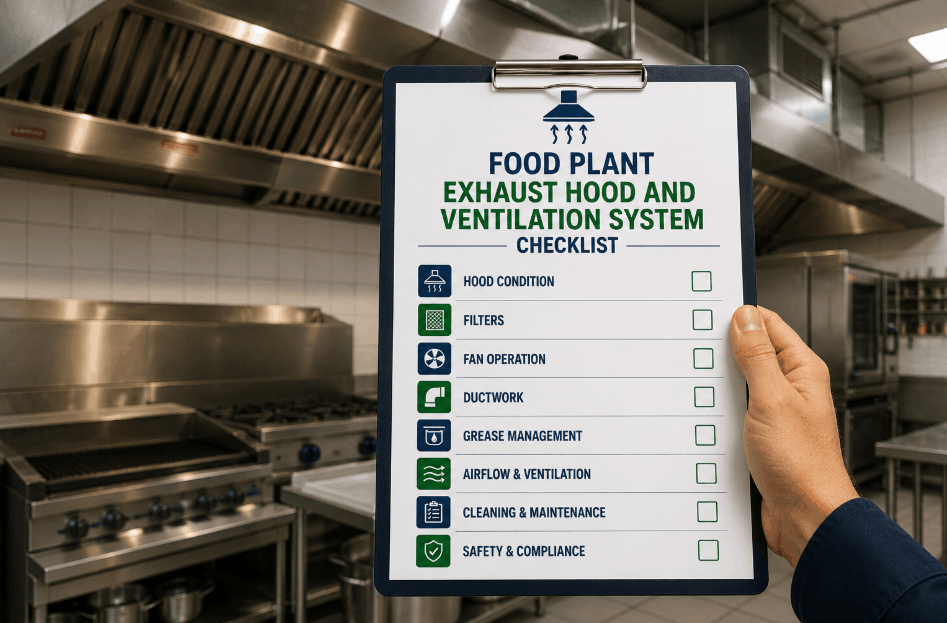
5. Exhaust Hoods & Ventilation Airflow Analytics

Maintain air quality and fire safety through ventilation audits. Prevent grease fires and kitchen overheating through regular hood and fan maintenance. Book a Demo to track hood cleaning schedules.

6. Grease Traps & Plumbing Flow Analytics

Prevent backups and municipal violations through drainage audits. Maintain grease trap efficiency and prevent sewer odors in production areas. Book a Demo to log grease trap pumping and compliance.

7. Food Preparation - Mixers & Slicers Analytics

Ensure mechanical safety and sanitation of prep equipment. Prevent operator injury and cross-contamination through regular blade and motor audits. Book a Demo to track slicer blade sharpening and sanitation.

8. Health Department & HACCP Compliance Analytics

Centralize documentation for rapid audit response. Ensure all temperature and sanitation logs are complete and timestamped. Book a Demo to digitize your HACCP compliance logs.

9. Electrical & Smart Kitchen Systems Analytics

Monitor utility efficiency and automation reliability. Prevent electrical overloads and ensure smart kitchen devices are communicating correctly. Book a Demo to track kitchen energy usage analytics.
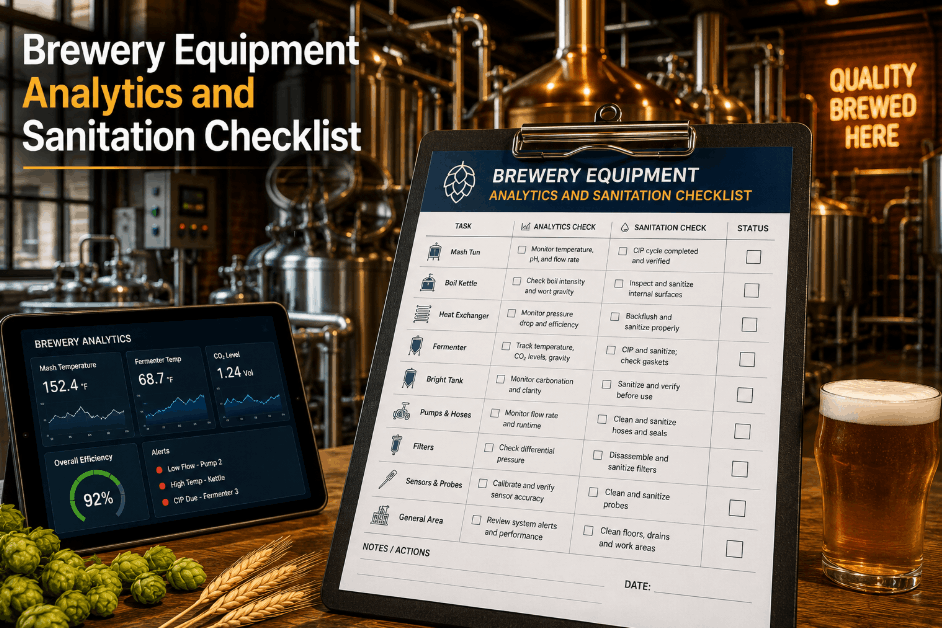
Digitize Your Commercial Kitchen analytics Program iFactory auto-schedules kitchen equipment maintenance, tracks refrigeration thermal drift, logs dishwasher temperature data, and generates audit-ready health department records for your entire facility.

Frequently Asked Questions — Commercial Kitchen Equipment Analytics

1. How often should walk-in coolers be inspected for thermal drift?
We recommend automated real-time monitoring with alerts. For manual checks, refrigeration should be logged at least twice daily. Thermal drift often indicates early-stage compressor failure or gasket issues; identifying it early prevents total cooling failure and food loss.
2. Why is dishwasher final rinse temperature so critical?
High-temperature commercial dishwashers must reach 180°F at the final rinse to kill pathogens. Anything less is considered a cleaning failure and a high-priority health department violation. Booster heaters should be monitored daily to ensure they can maintain this critical temperature.
3. What is the biggest fire risk in a commercial kitchen?
Grease accumulation in exhaust hoods and ductwork is the leading cause of restaurant fires. Regular cleaning of baffle filters and professional duct cleaning (NFPA 96) are the most effective fire prevention strategies. Additionally, uncalibrated fryer high-limit thermostats can lead to catastrophic grease fires.
4. How do grease traps affect overall kitchen compliance?
Clogged grease traps cause floor drain backups and severe odors, both of which are immediate health code violations. Furthermore, municipal authorities often audit grease trap waste manifests. Digitizing these records ensures you stay compliant with environmental and plumbing codes.
5. Can smart kitchen sensors replace manual temperature logs?
Yes, in most jurisdictions, automated digital logs are accepted and preferred by health inspectors because they provide an immutable, timestamped record. IoT sensors ensure that data is captured even during overnight hours or weekends when staff may not be present.
Start Your Commercial Kitchen Compliance Program Today Join restaurant operators automating maintenance scheduling, tracking refrigeration health, managing health department logs, and passing audits with complete, timestamped analytics documentation for every piece of equipment.

Share This Story, Choose Your Platform!