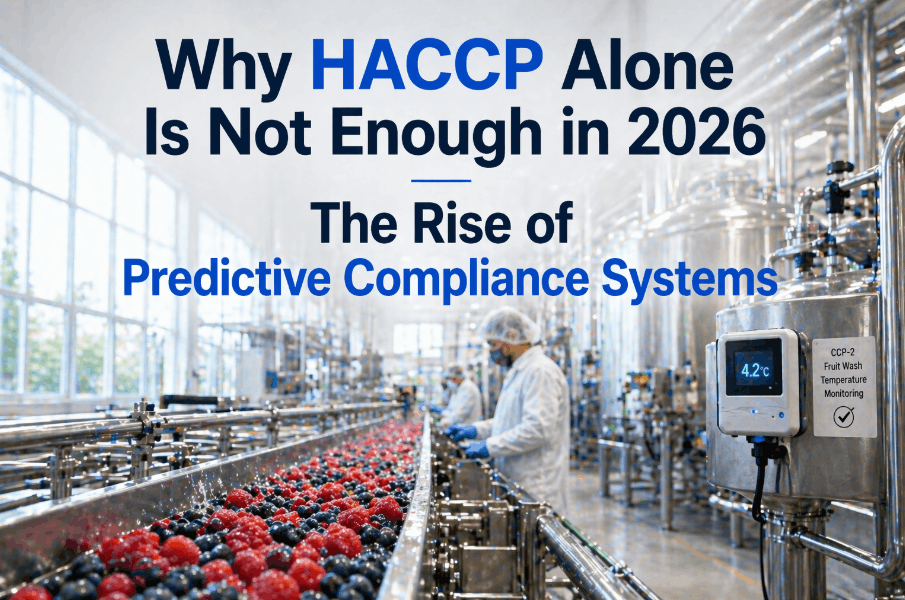
Traditional HACCP frameworks were built for a different era of food manufacturing — one where regulatory compliance meant documented critical control points, periodic audits, and paper-based corrective action logs. In 2026, that era is over. The food manufacturers facing the fewest FDA warning letters, zero-tolerance retailer delistings, and class-action recall exposure are not the ones with the most comprehensive HACCP manuals. They are the ones who recognized early that predictive compliance systems represent a structurally different approach to food safety — one built on real-time risk detection, AI-driven audit automation, and proactive regulatory intelligence — and acted on it. To see how this architecture works in practice, Book a Demo and explore what purpose-built compliance intelligence looks like for your facility.
Why HACCP Alone Is No Longer Sufficient for Food Safety Compliance in 2026
The Structural Limitations of a Point-in-Time Compliance Framework
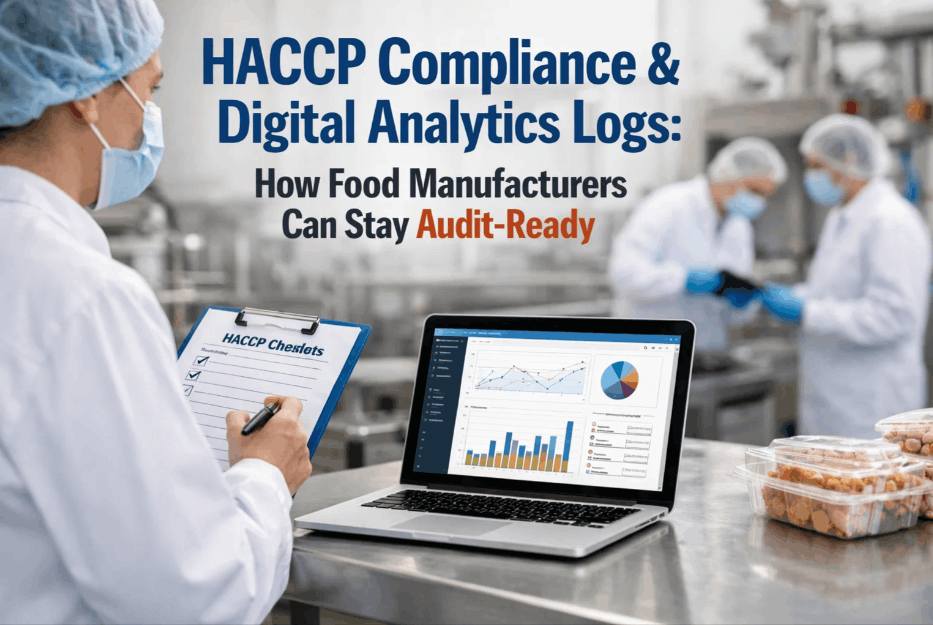
HACCP — Hazard Analysis and Critical Control Points — was a landmark advance in food safety management when it became the global regulatory standard. The framework introduced systematic hazard identification, defined critical limits, and established corrective action protocols that fundamentally improved food safety outcomes across the industry. But HACCP was designed for an operational environment where monitoring meant manual temperature logs, compliance evidence meant paper records, and audit readiness meant a binder on a shelf.
The food production environment of 2026 is categorically different. Production speeds are higher, SKU complexity has multiplied, allergen management has become a near-zero-tolerance discipline, and FSMA's preventive controls mandate has extended compliance obligations well beyond what traditional HACCP documentation can capture. The core structural limitation of standalone HACCP is timing — it identifies hazards in advance and monitors critical limits in the moment, but it cannot predict emerging compliance risk before it reaches a critical threshold. AI compliance monitoring platforms address exactly this gap by applying predictive risk detection to the continuous process data streams that HACCP frameworks were never designed to consume. If your facility is still relying on interval-based monitoring, Book a Demo to see how predictive detection closes the gap in real time.
What Predictive Compliance Systems Actually Do Differently
From Reactive Documentation to Real-Time Regulatory Risk Intelligence
The distinction between a HACCP system and a predictive compliance platform is not a matter of digital versus paper — it is a fundamental difference in operational logic. HACCP monitors whether defined critical limits are being met at established control points. Predictive compliance systems monitor whether the conditions that lead to critical limit violations are beginning to develop — hours or days before any threshold is breached. This shift from reactive threshold monitoring to proactive risk detection is what makes purpose-built smart HACCP software a structurally superior compliance architecture for high-throughput food manufacturing. Food safety teams considering this transition can Book a Demo to compare their current monitoring architecture against a predictive compliance model built for 2026 regulatory demands.
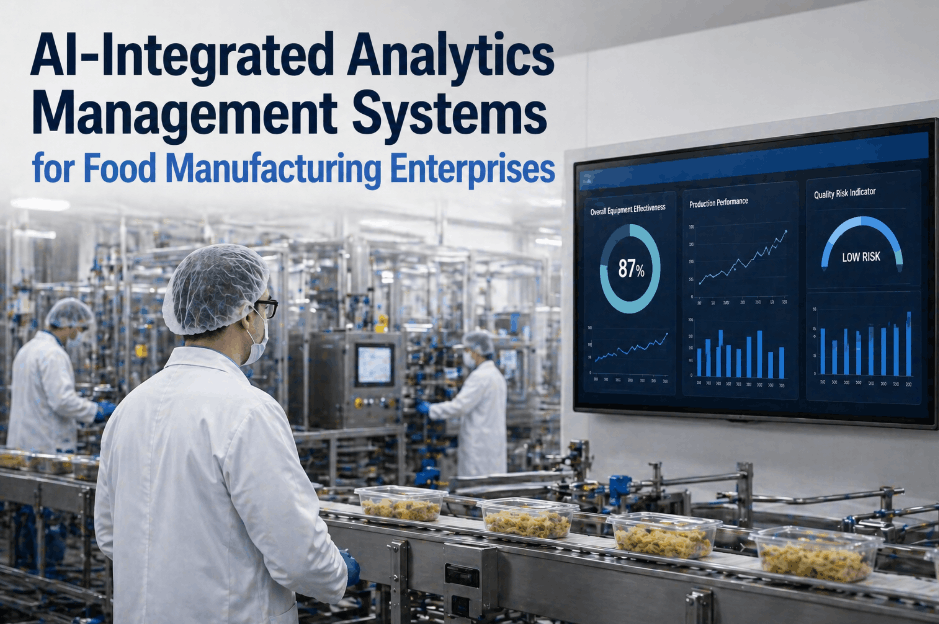
Modern predictive compliance platforms ingest continuous data from inline temperature sensors, pH monitoring systems, allergen detection checkpoints, sanitation validation records, and environmental monitoring programs. Machine learning models trained on food manufacturing failure patterns identify early-stage anomaly signatures — subtle process drift patterns, cross-contamination risk precursors, and cleaning validation deviations — before they escalate into reportable non-conformances. Facilities that have deployed food safety analytics software on these integrated data streams report reducing their corrective action frequency by 60 to 75 percent within the first two operating quarters. To understand what that reduction looks like mapped to your specific production lines, Book a Demo with the iFactory compliance team.
The Five Compliance Gaps HACCP Cannot Close in Modern Food Manufacturing
Where Traditional Food Safety Systems Break Down Under Current Regulatory Pressure
Understanding why HACCP alone is insufficient in 2026 requires examining the specific operational scenarios where its architectural limitations create measurable regulatory and commercial risk. Each gap below represents a documented failure mode that predictive risk detection systems are specifically engineered to close. To see exactly which gaps apply to your production environment, Book a Demo and walk through a live risk gap assessment with the iFactory team.
AI Compliance Monitoring vs. Traditional HACCP Systems: A Capability Comparison
Evaluating Food Safety Technology for Modern Regulatory Requirements
Not all compliance technology upgrades are equivalent. The table below maps the critical capability dimensions across traditional HACCP documentation systems, generic digital food safety platforms, and purpose-built AI compliance monitoring platforms designed for the regulatory complexity of 2026 food manufacturing environments.
| Compliance Capability | Traditional HACCP | Generic Digital Food Safety | AI Predictive Compliance Platform |
|---|---|---|---|
| Real-Time Process Risk Detection | No | Threshold Alerts Only | Predictive AI Models |
| Allergen Cross-Contact Monitoring | Scheduled Verification | Basic Checklist | Continuous Risk Scoring |
| Environmental Pathogen Trending | Manual Analysis | Result Logging Only | ML Pattern Detection |
| FSMA Auto-Documentation | Manual Records | Partial Digital Log | Full Auto-Log |
| Audit Readiness Dashboard | Manual Binder Prep | Scheduled Reports | Live Real-Time Score |
| Supplier Compliance Risk Signals | No | No | 10–20 Day Advance Warning |
| Corrective Action Automation | Manual Work Orders | Basic Notification | Automated Routing |
| Multi-Site Compliance Aggregation | Not Available | Manual Consolidation | Enterprise Dashboard |
| Time to First Risk Insight | Post-Event Only | Same-Day Threshold | 2–8 Hours Pre-Event |
Building a Predictive Compliance Architecture on Your Existing HACCP Foundation
Integrating AI Risk Detection Without Dismantling Your Current Food Safety Program
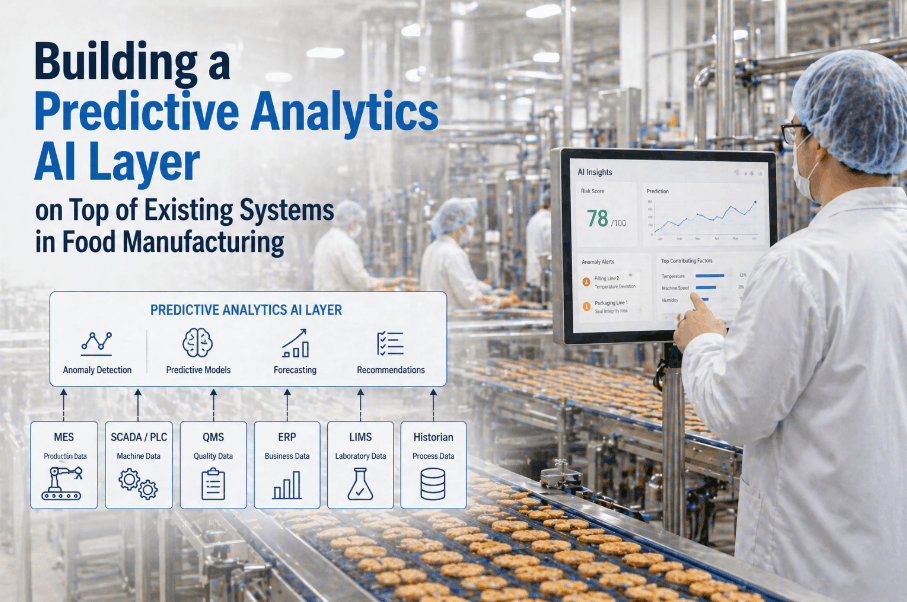
The most common misconception about deploying predictive compliance systems is that they require replacing existing HACCP plans, retaining external consultants to rebuild preventive controls programs, or taking production lines offline for infrastructure upgrades. Purpose-built food manufacturing compliance technology platforms are specifically designed to layer over and extend existing HACCP frameworks — not replace them. The existing HACCP plan becomes the structured knowledge base that the AI models use to contextualize sensor data and classify risk signals against established critical limits.
For most mid-to-large food production facilities, the integration architecture follows a standardized five-stage deployment sequence that delivers operational predictive alerting within four to six weeks of project kickoff with zero production interruption. The platform connects to existing inline sensors, PLC monitoring outputs, LIMS data feeds, and environmental monitoring programs through standard integration protocols — building a unified compliance data layer without requiring new sensor hardware on validated production lines. Food safety directors exploring this architecture can review the complete implementation roadmap or speak directly with a compliance technology specialist by scheduling a session through the platform team.
The Regulatory Landscape Driving Predictive Compliance Adoption in 2026
FSMA Enforcement Trends, GFSI Benchmark Updates, and Retailer Food Safety Requirements
The urgency behind predictive compliance system adoption in 2026 is not solely driven by internal quality improvement goals — it is being shaped by converging external regulatory and commercial pressures that traditional HACCP frameworks were not designed to withstand. Three specific trends are accelerating the technology adoption curve across every segment of food and beverage manufacturing.
FDA's FSMA enforcement posture has shifted materially toward data-driven audit methodology. Inspectors in 2025 and 2026 are increasingly requesting access to process monitoring records in real time during facility visits — not just reviewing historical logs. Facilities that can demonstrate continuous digital monitoring with automatic anomaly flagging and corrective action documentation receive measurably more favorable inspection outcomes than those presenting manually compiled HACCP records. The second pressure point is GFSI benchmark scheme updates — both SQF Edition 9 and BRCGS Issue 9 have strengthened their requirements for predictive and proactive food safety management, moving beyond the reactive documentation model that earlier editions rewarded. The third driver is direct retail channel pressure: major grocery and food service accounts are now including digital food safety monitoring capability assessments in their supplier qualification audits, making operational compliance monitoring technology a commercial prerequisite rather than an optional quality investment. Manufacturers who want to assess their current qualification posture against retailer audit requirements can Book a Demo to map their compliance data infrastructure against current retail channel expectations.
Making the Business Case for Predictive Compliance Investment
Translating Food Safety Risk into Financial Exposure Language for Executive Approval
Quality and food safety directors frequently encounter the same internal barrier when seeking approval for predictive compliance technology investment: the difficulty of expressing food safety risk in the financial terms that CFOs and executive committees respond to. The compliance cost baseline must include not just the direct cost of a recall or regulatory action, but the full financial impact chain — production hold costs, product destruction, retailer chargeback penalties, emergency response fees, legal and regulatory counsel costs, brand equity erosion, and the long-term commercial damage of customer loss. When this full cost baseline is constructed accurately, the investment case for preventive compliance technology becomes straightforward — a single prevented Class I recall event covers the platform cost for five to ten years across most enterprise food manufacturing deployments.
Frequently Asked Questions
Does deploying a predictive compliance system mean replacing our existing HACCP plan?
No. Predictive compliance platforms are designed to extend and enhance existing HACCP frameworks — not replace them. Your current HACCP plan, critical control points, and critical limits remain the structural foundation. The AI platform layers predictive risk detection and automated documentation on top of that foundation, closing the monitoring and evidence gaps that traditional HACCP cannot address without modifying your validated food safety plan.
How do predictive compliance systems integrate with existing inline sensors and LIMS platforms?
Purpose-built food manufacturing compliance platforms connect to existing inline sensors, PLC monitoring outputs, LIMS data feeds, and environmental monitoring programs through standard industrial integration protocols — including OPC-UA, MQTT, and direct LIMS API connections — without requiring hardware replacement or line modification. Most food plant infrastructure integrations are completed within three to seven days per system with zero production interruption.
What food safety documentation does a predictive compliance platform automatically generate for FSMA audits?
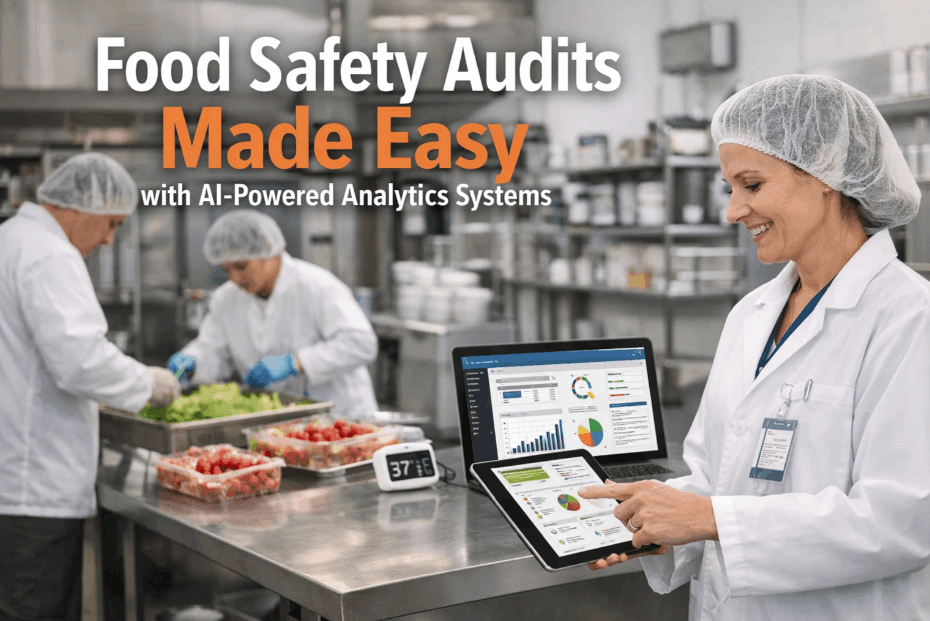
Predictive compliance platforms automatically generate the full range of FSMA preventive controls documentation — monitoring records for every critical control point and monitoring parameter, corrective action records with timestamps and responsible party attribution, verification activity logs, calibration histories, sanitation validation records, and supplier verification documentation. All records are structured in FSMA-compliant formats and indexed for rapid retrieval during FDA inspections and third-party GFSI audits.
How far in advance can AI compliance monitoring detect a potential food safety deviation?
For process parameter deviations — temperature excursions, pH drift, water activity trends — AI predictive models calibrated to food manufacturing operating conditions typically generate actionable early warnings 2 to 8 hours before any critical limit breach occurs. For environmental pathogen trending and allergen cross-contact risk patterns, detection windows of 24 to 72 hours are common, providing intervention time that eliminates reactive corrective action scenarios in most documented cases.
Is predictive compliance technology required for GFSI certification schemes like SQF and BRCGS in 2026?
While GFSI benchmark schemes do not yet mandate specific technology platforms, both SQF Edition 9 and BRCGS Issue 9 have strengthened their requirements for proactive food safety management, continuous monitoring capability, and data-driven corrective action processes. Facilities with predictive compliance platforms consistently score higher on these scheme audits and report fewer non-conformances than those relying on traditional HACCP documentation systems alone.
What is the typical implementation timeline for a predictive compliance platform in a food manufacturing facility?
For a facility with three to six production lines and existing digital sensor infrastructure, the typical implementation sequence runs four to six weeks from project kickoff to live predictive alerting. This includes infrastructure discovery, data pipeline integration, AI model calibration against historical process and compliance data, automated documentation configuration, and food safety team onboarding — completed without any production line interruption at any stage of the deployment.