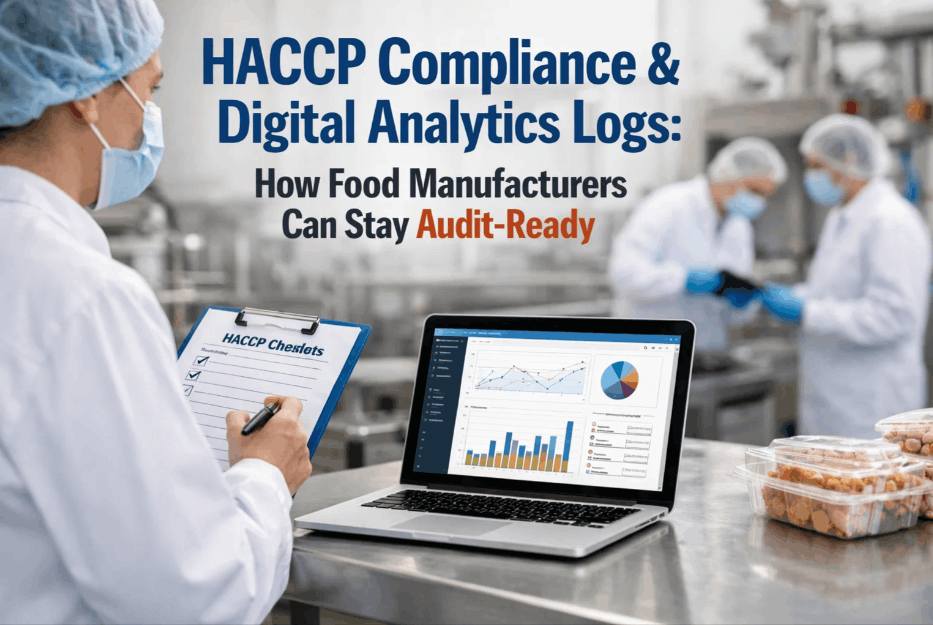
Data silos in food manufacturing are the silent compliance killers behind the majority of preventable recalls in 2026. When critical food safety data — lot tracking, temperature logs, CCP monitoring, supplier certificates, equipment calibration records — exists in disconnected systems across your facility, your operation is functionally blind to emerging contamination risks, traceability gaps, and regulatory violations until they trigger a recall notice. The shift to centralized analytics platforms that eliminate data silos is the single most effective recall prevention investment a food plant can make this year.
RECALL PREVENTION
·
DATA INTEGRATION
·
AI-POWERED ANALYTICS
Eliminate Data Silos Before They Trigger Your Next Recall — Unified Food Safety Analytics
iFactory connects every data source in your food manufacturing operation — from lot traceability and CCP logs to supplier compliance and equipment monitoring — delivering real-time recall risk detection, complete chain-of-custody visibility, and automated compliance documentation that keeps your facility audit-ready and recall-proof.
Why Analytics Data Silos Are the Leading Root Cause of Food Recalls
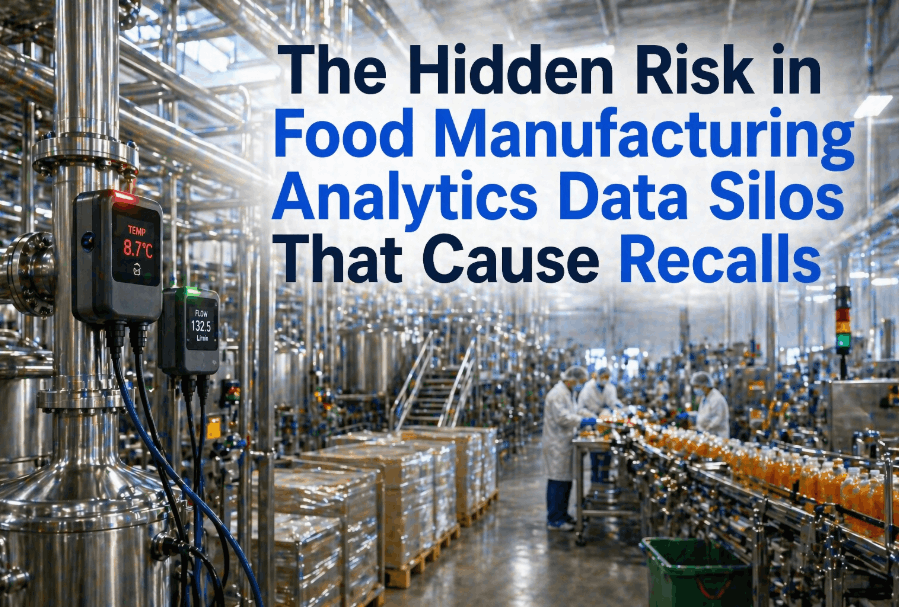
In 2026, the average food manufacturing facility operates with 8 to 14 disconnected data systems — separate platforms for production scheduling, quality testing, inventory management, equipment maintenance, supplier documentation, and environmental monitoring. Each system generates critical food safety data. None of them communicate. When a contamination event occurs, traceability teams spend hours manually correlating timestamps across systems to identify affected lots — by which point the contaminated product is already in distribution or on retail shelves.
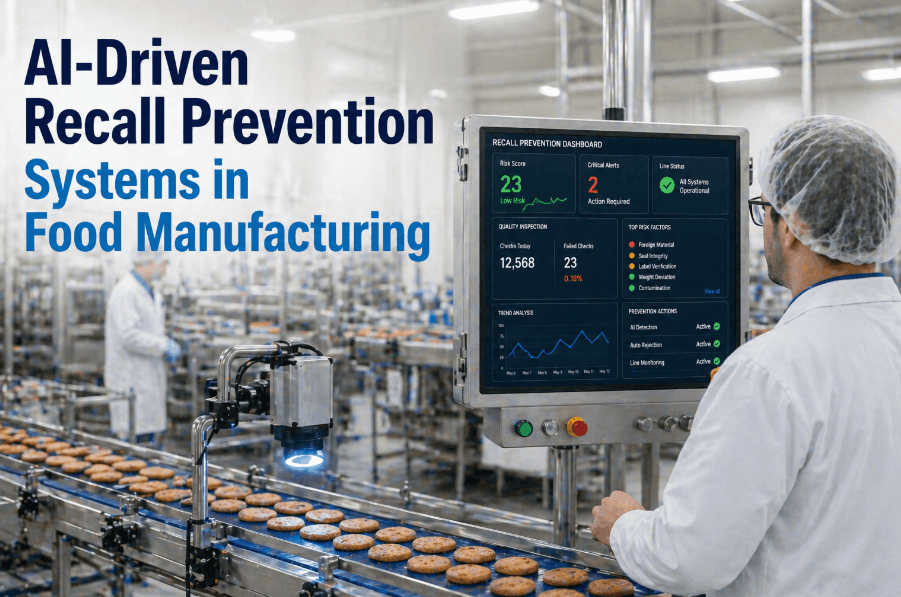
A food recall prevention software platform built on unified data architecture eliminates these blind spots by integrating every data source into a single analytics environment. Real-time risk detection algorithms continuously scan across lot codes, temperature deviations, micro test results, and supplier alerts to flag recall-triggering conditions before distribution — transforming recall prevention from reactive damage control into proactive risk elimination.
68%
of food recalls are traced back to data fragmentation and traceability system failures
12hrs+
average time to complete lot traceability in siloed systems vs. under 8 minutes with unified analytics
3–7 days
recall risk detection advance warning with AI-driven analytics vs. zero warning in manual systems
$2.1M
average cost per recall event that centralized analytics platforms prevent through early intervention
Critical Vulnerabilities
The Five Data Silos That Create Recall Risk in Food Manufacturing
Most food facilities do not realize they are operating with recall-level data fragmentation until an FDA inspection or customer audit exposes the gaps. These are the analytics data silos that consistently appear as root causes in post-recall investigations.
Disconnected Lot Traceability Systems
Raw material receiving, production batching, and finished goods shipping operate in separate databases. When a supplier recalls an ingredient, traceability teams cannot instantly identify every finished lot containing that material — creating Class I recall exposure from incomplete product retrieval.
Isolated Quality Lab Data
Micro test results, allergen swabs, and finished product testing live in lab information management systems (LIMS) with no real-time connection to production or shipping systems. Positive pathogen tests are discovered after affected lots have already shipped, eliminating any opportunity for pre-distribution holds. To prevent this exposure,
book a demo to see integrated quality data workflows.
Fragmented CCP Monitoring Records
Temperature logs, metal detector verification, and checkweigher data are captured on paper forms or isolated digital devices with no centralized repository. When a temperature deviation occurs during pasteurization, there is no automated alert linking that event to specific lot codes — creating undocumented risk that auditors and recall investigators will find.
Supplier Compliance Data Gaps
Certificates of analysis, food safety certifications, and supplier audit reports are stored in email folders and shared drives. When a supplier's GFSI certification expires or a COA shows out-of-spec results, there is no system-level alert to block affected ingredients from production — introducing adulterant and contamination risk that triggers recalls. A digital traceability software platform with supplier integration prevents these gaps automatically.
Equipment Maintenance Record Silos
Calibration records, cleaning logs, and preventive maintenance history exist separately from production and quality data. When a sanitation deviation or calibration failure occurs on food-contact equipment, the system cannot correlate that event with the lots produced during the affected timeframe — creating undocumented contamination pathways that appear during recall traceability exercises.
Impact Analysis
How Data Silos Directly Cause Recalls — The Contamination-to-Distribution Timeline
Understanding how siloed data transforms routine deviations into full-scale recalls is critical for justifying investment in food safety data integration. This timeline shows the typical progression from contamination event to recall announcement when data systems cannot communicate.
Day 0
Contamination Event Occurs
A raw material receives a positive pathogen test in the quality lab. The test result is logged in the LIMS but is not automatically cross-referenced with production schedules or lot codes. The material has already been released to production and incorporated into multiple finished product lots.
Day 2
Affected Lots Ship to Distribution
Because the quality alert did not trigger an automated production hold, finished goods containing the contaminated ingredient are released and shipped. Warehouse systems are not integrated with quality data, so there is no flag preventing shipment of at-risk product.
Day 5
Manual Traceability Investigation Begins
Quality managers manually cross-reference the positive test date against production logs, ingredient usage records, and batch sheets stored across different systems. The process requires pulling data from six separate databases and correlating it in spreadsheets — a task that takes multiple days.
Day 8
Recall Decision Made
After completing the manual traceability exercise, the facility identifies 47 finished product lots containing the contaminated ingredient. All lots are already in retail distribution. A voluntary Class I recall is initiated. To eliminate this timeline entirely,
book a demo to see real-time contamination risk detection.
A centralized analytics platform would have flagged the positive test result at Day 0, automatically identified every lot containing the affected ingredient, and triggered production holds before any contaminated product shipped — preventing the recall entirely.
Recall Risk Exposure: Siloed Systems vs. Unified Analytics
How food manufacturers perform across critical recall prevention metrics when operating with fragmented data systems versus integrated analytics platforms.
Food Manufacturing Recall Risk Comparison — 2026
Best Practices 2026
Building a Recall-Proof Analytics Architecture — Data Integration Best Practices
Eliminating analytics data silos requires a structured integration strategy that connects every food safety data source into a unified platform while maintaining data integrity, audit compliance, and real-time accessibility. These are the practices leading food manufacturers are implementing to achieve recall-proof operations in 2026.
01
Establish a Single Source of Truth for Lot Traceability
Every raw material receipt, production batch, and finished goods shipment must be assigned a unique lot identifier that carries forward through the entire value chain in one centralized database. A
traceability system food manufacturing platform with bidirectional traceability — ingredients to finished products and finished products back to ingredients — enables 8-minute lot identification versus 12+ hour manual searches. When a recall is triggered, the system instantly identifies every affected lot and every customer who received it.
Book a demo to see one-touch traceability in action.
02
Integrate Quality Lab Data With Production and Shipping Systems
LIMS integration with production scheduling and warehouse management systems enables automatic production holds when test results exceed specification limits. When a pathogen test comes back positive, the platform automatically flags every lot produced with the affected ingredient and blocks those lots from shipping — preventing contaminated product from entering distribution. This integration alone eliminates the 68% of recalls caused by post-shipment test result discovery.
03
Automate CCP Monitoring With Lot-Level Event Linkage
Digital CCP monitoring systems must automatically associate every temperature reading, metal detector verification, and critical limit deviation with the specific lot codes produced during that time window. When a pasteurization temperature dips below the critical limit, the system instantly flags every product unit processed during the deviation period — creating a complete chain of custody for compliance risk monitoring and recall traceability. Paper CCP logs and isolated monitoring devices cannot deliver this capability.
04
Build Supplier Compliance Into Your Central Analytics Platform
Supplier certificates, audit reports, and COAs should auto-populate into a supplier compliance module that cross-references expiration dates and specification limits against incoming material receipts. When a certificate expires or a COA shows out-of-spec results, the system blocks that supplier's materials from production until compliance is restored. This prevents the 22% of recalls triggered by supplier-side adulterants and contamination. To implement this protection,
book a demo to see supplier risk monitoring workflows.
05
Link Equipment Maintenance Records to Production Lot History
Every calibration, cleaning verification, and preventive maintenance event on food-contact equipment should be timestamped and correlated with the lots produced on that equipment. When a post-production calibration check reveals a metal detector was out of tolerance, the platform instantly identifies every lot processed during the drift period — enabling targeted recall or additional testing rather than blanket product withdrawal. This capability transforms equipment maintenance from a compliance checkbox into a genuine recall prevention control.
06
Deploy AI-Driven Predictive Analytics for Pre-Recall Risk Detection
Advanced predictive food safety analytics platforms use machine learning to identify contamination risk patterns before they trigger recalls — analyzing correlations between supplier changes, environmental monitoring trends, CCP deviation frequencies, and micro test results. The platform flags emerging risk scenarios 3–7 days before contamination events reach distribution, enabling proactive intervention that prevents recalls rather than reacting to them. This is the frontier of recall prevention technology in 2026.
Compliance Mapping
How Unified Analytics Platforms Map to FSMA, GFSI, and FDA Traceability Requirements
Regulatory bodies worldwide are tightening traceability and data transparency requirements for food manufacturers. The FDA's Food Traceability Rule (FSMA 204) mandates electronic record-keeping and 24-hour traceability for high-risk foods starting in 2026. GFSI schemes require documented evidence of data integrity and recall readiness. Facilities operating with analytics data silos cannot meet these requirements without significant manual intervention — creating compliance risk alongside recall exposure.
FDA FSMA Section 204 — Traceability Requirements
- Electronic recordkeeping for all Critical Tracking Events (CTEs)
- Lot-level traceability within 24 hours for high-risk foods
- Key Data Elements (KDEs) linked across receiving, transformation, and shipping
- Sortable, searchable records available to FDA on demand
FSMA 204 compliance: automated from day one
GFSI Schemes — Data Integrity and Recall Readiness
- SQF Element 2.7: Documented traceability testing with timed mock recalls
- BRC Clause 3.9: Evidence of data accuracy and system validation
- FSSC 22000 Clause 8.5.2: Product identification and traceability procedures
- IFS Requirement 5.10: Traceability verification with upstream and downstream linkage
GFSI audit findings from traceability gaps: eliminated
FDA 21 CFR Part 117 — Preventive Controls Documentation
- Subpart C: CCP monitoring records with lot-specific correlation
- Subpart F: Supplier verification and risk-based evaluation documentation
- Corrective action records linked to production events and affected lots
- Environmental monitoring data with trend analysis and risk flagging
Preventive controls compliance: 100% automated documentation
Real-World Outcome
A large-scale frozen food manufacturer operating with seven disconnected data systems experienced an average of 2.3 voluntary recalls per year over a three-year period — each costing between $1.8M and $3.2M in direct and indirect costs. After deploying a unified
recall risk management analytics platform, the facility achieved zero recalls over the following 18 months. Their most recent mock recall exercise — required by their SQF certification — demonstrated complete lot traceability in 6 minutes versus their previous baseline of 14 hours. When their state health department conducted an unannounced inspection and requested five years of CCP monitoring data for a specific production line, the platform generated the complete report in under two minutes. The inspector cited their data systems as a program strength and closed the inspection with zero findings.
Book a demo to achieve this recall prevention posture at your facility.
Implementation Roadmap
How to Deploy a Unified Food Safety Analytics Platform — Data Integration Strategy
The most successful deployments follow a phased integration approach that prioritizes high-risk data sources first while maintaining operational continuity. This roadmap delivers measurable recall risk reduction within 45 days and complete data integration within 90 days.
1
Audit Existing Data Systems and Identify Critical Integration Points
Document every data system currently in use — LIMS, ERP, warehouse management, CCP monitoring devices, supplier portals, equipment maintenance software. Map the data flows between systems and identify where manual handoffs create traceability gaps. Prioritize integration points based on recall risk exposure: quality lab data and lot traceability systems are highest priority, followed by CCP monitoring and supplier compliance.
Outcome: Complete data ecosystem map with prioritized integration roadmap
2
Establish Core Lot Traceability Architecture
Deploy the centralized lot tracking system that will serve as the foundation for all other integrations. Configure lot numbering conventions, assign unique identifiers to every raw material and finished product, and establish the data schema that links ingredients to batches to shipments. This becomes the single source of truth that eliminates the 12+ hour manual traceability searches.
Outcome: Operational lot traceability platform with 8-minute recall identification capability
3
Integrate Quality Lab and CCP Monitoring Data Streams
Connect LIMS and digital CCP monitoring systems to the central platform using API integrations or automated data imports. Configure automatic alerts that trigger when test results exceed specification limits or CCP deviations occur — with automatic lot flagging and production holds. This phase eliminates the 68% of recalls caused by post-shipment discovery of quality failures.
Outcome: Real-time contamination risk detection with pre-distribution intervention
4
Deploy AI-Driven Risk Analytics and Continuous Monitoring
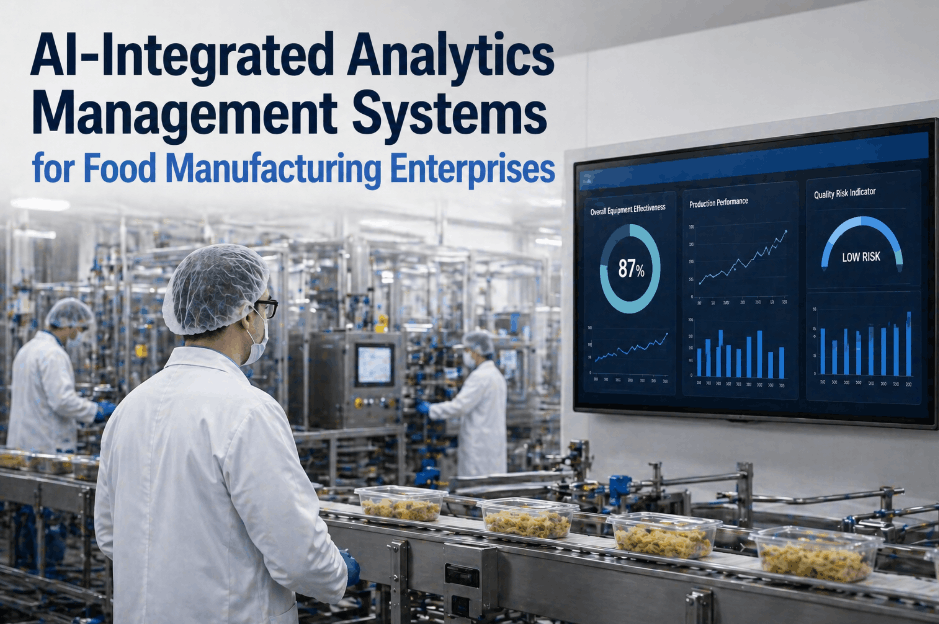
Activate predictive analytics modules that scan across all integrated data sources to identify emerging recall risk patterns — supplier quality trends, environmental monitoring deviations, equipment maintenance correlations with quality failures. Configure automated risk scoring and escalation workflows that alert management to pre-recall conditions 3–7 days before they materialize. Monitor system performance through real-time dashboards that track traceability speed, contamination detection rates, and compliance posture.
Outcome: Continuously recall-ready operation with proactive risk elimination capability
ZERO RECALLS ACHIEVED
·
8-MINUTE TRACEABILITY
·
FDA FSMA 204 READY
Eliminate Recall Risk This Quarter — Deploy iFactory's Unified Analytics Platform
Stop managing food safety data in silos that create recall exposure. iFactory integrates every critical data source — lot traceability, quality testing, CCP monitoring, supplier compliance, equipment maintenance — into one real-time analytics platform that detects contamination risks before distribution and delivers complete chain-of-custody documentation in minutes, not hours.
Frequently Asked Questions About Data Silos and Recall Prevention
What are analytics data silos in food manufacturing?
Analytics data silos are disconnected databases and systems that store critical food safety information — lot tracking, quality test results, CCP monitoring, supplier compliance — without the ability to automatically cross-reference or correlate data. These silos create traceability gaps that prevent early contamination detection and extend recall investigation timelines from minutes to days.
How do data silos directly cause food recalls?
Data silos prevent real-time correlation between contamination events and affected product lots. When a positive pathogen test is logged in an isolated LIMS system, there is no automatic alert to flag finished products containing that ingredient — allowing contaminated product to ship to distribution before the risk is identified. By the time manual traceability identifies affected lots, a full-scale recall is required.
What is the fastest way to eliminate recall risk from data fragmentation?
Deploy a centralized analytics platform that integrates all food safety data sources into one unified database with real-time lot traceability, automated quality alerts, and pre-distribution contamination detection. Most facilities achieve operational integration within 60–90 days and demonstrate measurable recall risk reduction within the first full production cycle.
How does unified analytics improve FDA FSMA 204 compliance?
The FDA's Food Traceability Rule requires electronic recordkeeping and 24-hour lot identification for high-risk foods. Unified analytics platforms automatically capture all Critical Tracking Events (CTEs) and Key Data Elements (KDEs) in a searchable, sortable database — delivering the complete traceability chain in under 8 minutes versus the 24-hour regulatory maximum.
Can a food facility integrate data without replacing existing systems?
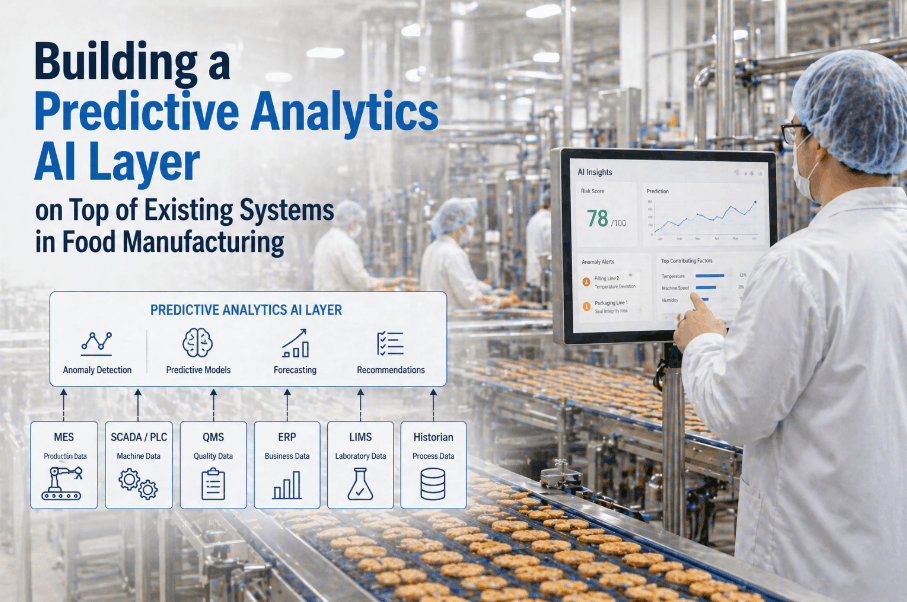
Yes. Modern food safety analytics platforms integrate with existing LIMS, ERP, warehouse management, and monitoring systems through API connections and automated data imports — eliminating the need for full system replacement. The unified platform sits on top of existing infrastructure, creating a single analytics layer without disrupting current operations.
What ROI can a food manufacturer expect from eliminating data silos?
The average food recall costs $2.1M in direct and indirect expenses. Facilities that deploy centralized analytics platforms typically achieve full ROI within 6–9 months through recall prevention, reduced audit prep time, faster traceability response, and elimination of compliance findings. The first prevented recall alone often covers the entire platform investment.
Achieve Zero Recalls in 2026
iFactory — Unified Food Safety Analytics That Eliminate Recall Risk
Stop operating with disconnected data systems that create recall exposure your facility cannot afford. iFactory's centralized analytics platform integrates every food safety data source — from supplier compliance to CCP monitoring to finished product testing — delivering real-time contamination detection, 8-minute lot traceability, and complete FSMA 204 compliance without manual data correlation or documentation gaps.
Complete lot traceability in under 8 minutes — ingredients to finished products and reverse
Real-time quality alerts with automatic production holds for out-of-spec results
AI-driven contamination risk detection 3–7 days before distribution
Integrated supplier compliance monitoring with auto-blocking of expired certifications
CCP deviation linkage to specific lot codes with instant recall identification
FDA FSMA 204 compliance with automated CTE and KDE capture