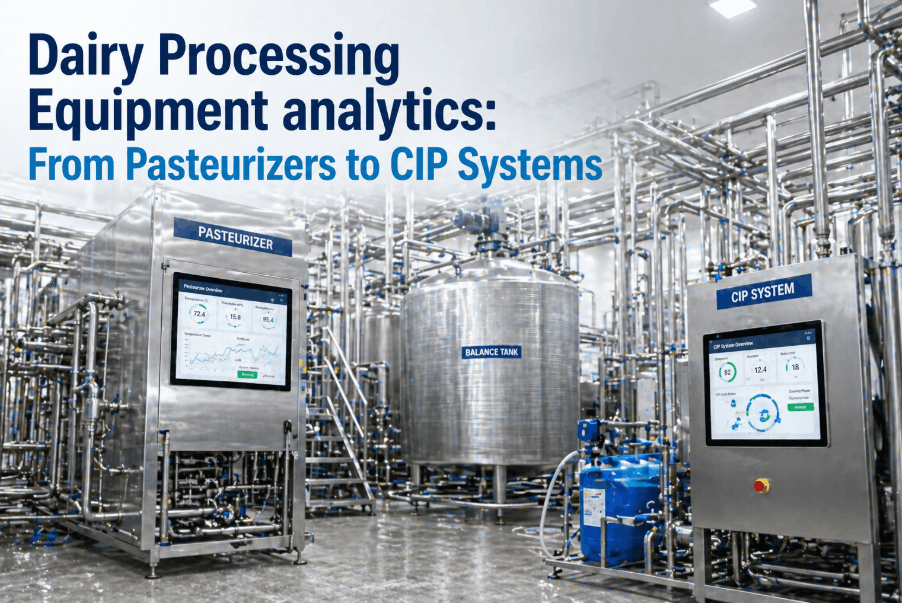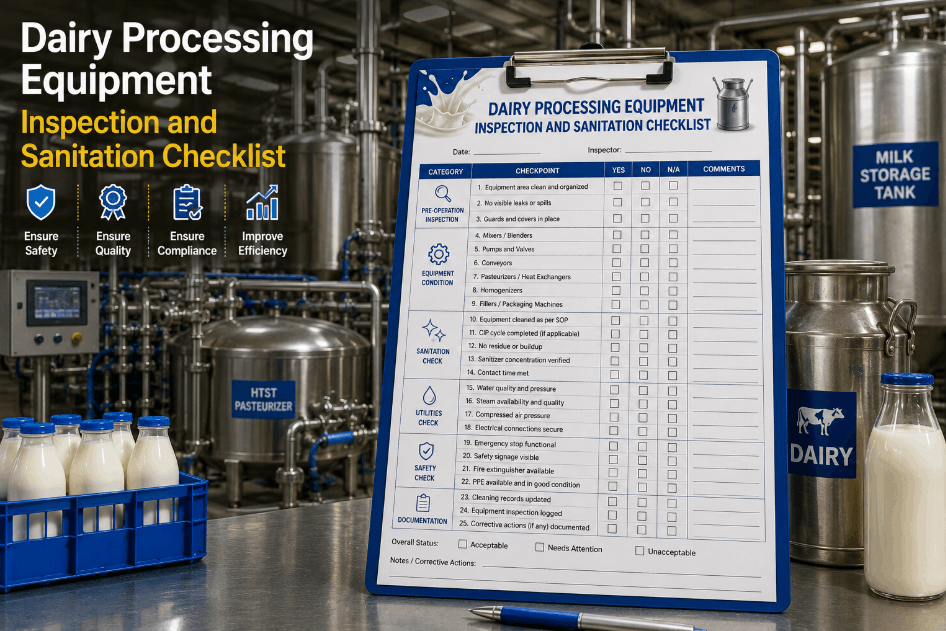
Dairy processing equipment analytics is the foundation of product safety, extended shelf-life, and rigid Pasteurized Milk Ordinance (PMO) compliance. In high-volume dairy environments, the failure of a pasteurization hold-time or a compromised homogenizer seal can lead to massive product recalls and catastrophic microbial contamination. Book a Demo to automate your dairy maintenance scheduling, track real-time thermal lethality cycles, and generate audit-ready HACCP and SQF documentation for every critical control point in your facility.
1. Raw Milk Receiving & Silo Storage Analytics
Monitor temperature stability and agitator health in real-time. Prevent bacterial growth (psychrotrophs) by identifying thermal drift before it reaches 45°F. Book a Demo to integrate wireless silo telemetry into your facility grid.
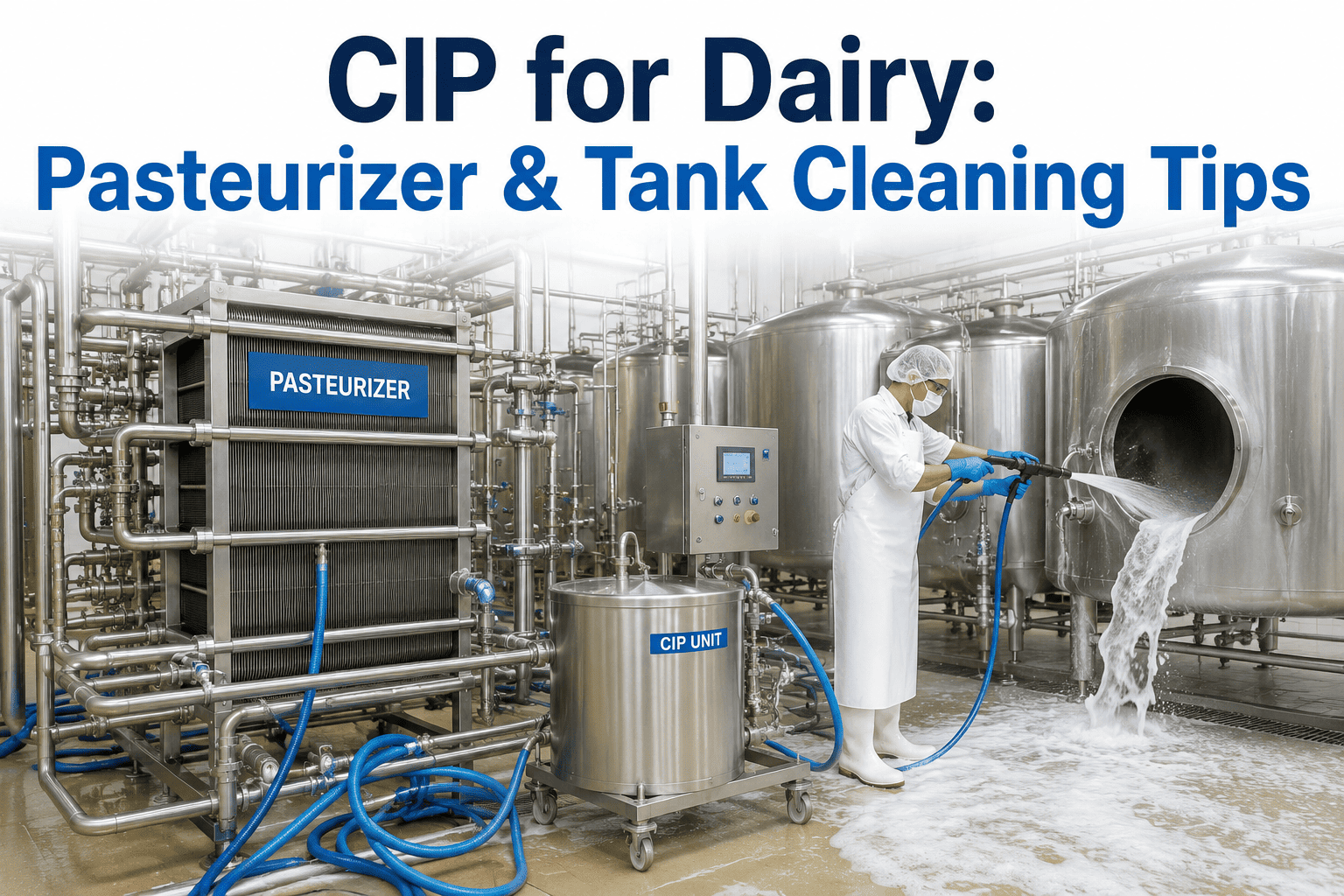
2. Pasteurization (HTST) System Lethality Verification
Verify thermal lethality and flow diversion compliance. Prevent pathogen survival through sub-second monitoring of holding tube temperatures. Book a Demo to log automated pasteurization safety records.
3. Separator & Homogenizer Performance Analytics
Monitor fat-standardization precision and mechanical vibration. Prevent emulsion failure and bearing destruction through real-time asset monitoring. Book a Demo to track homogenizer pulsation analytics.
4. CIP (Clean-in-Place) Intelligence & Loop Verification
Verify chemical concentration and flow velocity for 100% soil removal. Ensure every tank and line is sanitized according to food-grade codes. Book a Demo to automate CIP compliance logging.
5. Aseptic Filling & Packaging Reliability Analytics
Maintain sterile environments and filler accuracy. Prevent product spoilage through regular H2O2 and seal integrity audits. Book a Demo to track filler valve OEE.
6. Cold Storage & Distribution Thermal Analytics
Monitor finished goods warehouse stability and load-out temperatures. Prevent shelf-life degradation through proactive cold chain audits. Book a Demo to track distribution compliance.
7. Utilities - Steam, Water & Air System Analytics
Ensure consistent utility supply for critical processing. Prevent production stoppages through regular boiler and air-quality audits. Book a Demo to track dairy energy usage analytics.
8. Regulatory (PMO/SQF) & Digital HACCP Compliance
Centralize documentation for rapid audit response. Ensure all thermal lethality and sanitation logs are complete and timestamped. Book a Demo to digitize your dairy compliance logs.
9. Personnel Hygiene & Environmental Monitoring Analytics
Verify site-wide sanitation and worker GMP compliance. Prevent post-pasteurization contamination through regular ATP and environmental audits. Book a Demo to track dairy environmental results.