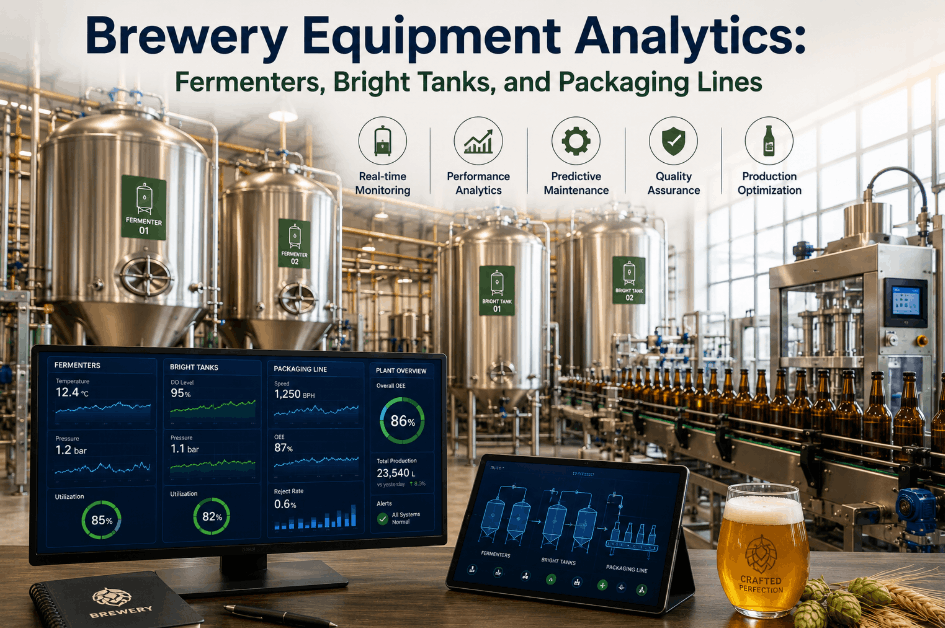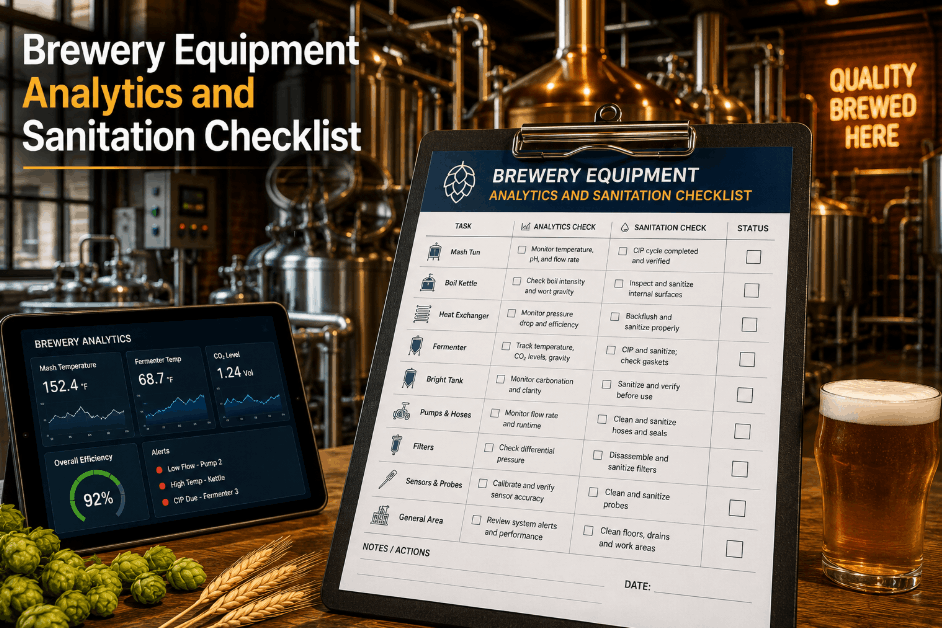
Modern craft and industrial brewing operations depend on the precise intersection of thermal engineering, fluid dynamics, and rigid sanitation protocols to maintain product consistency and brand reputation. A comprehensive brewery equipment analytics and sanitation checklist serves as the technological foundation for high-performance brewing — covering brewhouse heat transfer efficiency, fermentation temperature stability, and CIP loop verification. Book a Demo to see how ifactory's preventive analytics platform digitizes brewery monitoring, automates fermentation tracking, and provides real-time alerts for glycol chiller failures and sanitation deviations across your entire production floor.
Why Equipment Analytics Are Critical in Professional Brewing
Thermal Drift and Fermentation Stress Compromise Product Consistency
Fermentation is a high-sensitivity biological process where a 1°C temperature drift can trigger yeast stress, producing off-flavors that ruin an entire batch. Without real-time analytics on the glycol loop and tank jackets, facilities rely on reactive cooling that often responds too late. Implementing ifactory's preventive analytics detects chiller compressor degradation and valve actuator failures weeks before they cause a fermentation temperature runaway.
Inadequate Sanitation Verification Risks Microbial Contamination
The presence of Pediococcus, Lactobacillus, or wild yeast in a brewery is often the result of "blind spots" in the CIP (Clean-in-Place) cycle — such as inadequate flow velocity or low chemical concentration in hard-to-reach manifold zones. Digital verification ensures that every sanitation loop meets the minimum temperature and contact time requirements, providing a data-driven "kill step" verification that protects the shelf-life and quality of the finished beer.
Benefits of Digital Brewery Equipment Analytics
Zero Fermentation Temperature Failures
Predictive monitoring of the glycol chiller plant and tank solenoid valves ensures that cooling capacity is always available when fermentation heat peaks — eliminating the temperature runaways that cause yeast stress, high diacetyl levels, and ruined batches.
100% Sanitation (CIP) Verification
Automated conductivity, temperature, and flow velocity logging for every tank and pipe loop provides a data-driven "kill step" verification — eliminating the microbial contamination risks that reduce beer shelf-life and threaten brand reputation.
30% Reduction in Glycol Energy Costs
By identifying inefficient compressor cycles and air-locked jackets, ifactory's analytics engine optimizes glycol distribution and chiller plant performance — reducing annual energy consumption and extending the life of the brewery's most expensive infrastructure asset.
Elimination of Product Waste During Transfer
Real-time monitoring of pump seal health and tank pressure stability prevents the leaks and oxygen ingress events that occur during fermentation-to-BBT transfers, ensuring that 100% of the finished beer meets sensory specifications for DO and carbonation.
20% Recovery in Packaging Line OEE
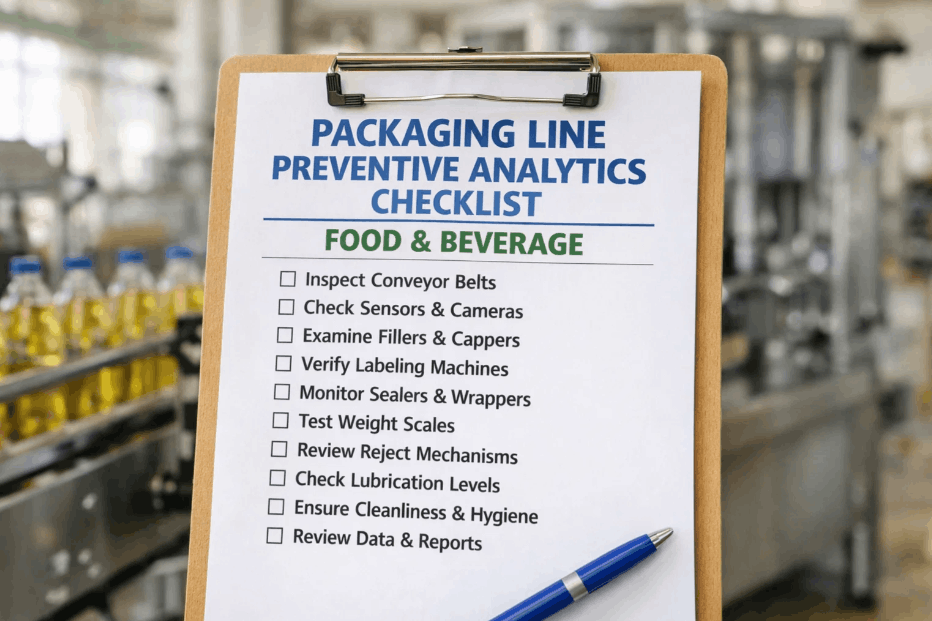
Predictive analytics on keg washers and bottling fillers identify sluggish valves and misaligned labelers before they cause a line stoppage — allowing for "on-the-fly" adjustments and increasing throughput during critical holiday release windows.
Audit-Ready Compliance Archival
Digital cellar logs and CIP verification records are automatically archived and timestamped, satisfying HACCP, SQF, and FDA requirements with a single click — eliminating the manual labor and error risk of paper-based documentation.