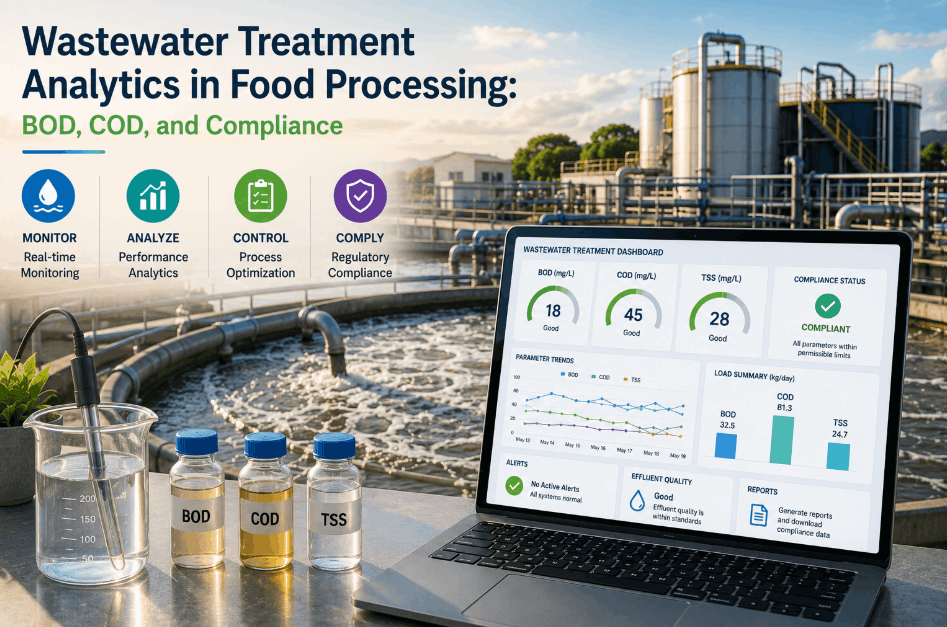
Wastewater Treatment System analytics Checklist for Food Processing

By Josh Turley on May 11, 2026

wastewater-treatment-system-analytics-checklist-for-food-processing

Industrial wastewater treatment systems in food processing facilities are critical infrastructure assets where mechanical failure or process drift can lead to immediate environmental non-compliance, heavy regulatory fines, and potential plant shutdowns. A comprehensive food processing wastewater treatment analytics checklist provides the structured framework required to manage the high variability of food plant effluent — covering equalization tank stability, chemical dosing precision, DAF system performance, and final discharge compliance. Book a Demo to see how ifactory's compliance tracking platform digitizes wastewater monitoring, automates Discharge Monitoring Reports (DMR), and provides real-time alerts for pH, TSS, and BOD deviations across your treatment train.

WASTEWATER ANALYTICS EPA COMPLIANCE DAF SYSTEM OPTIMIZATION

Automate Wastewater Treatment Compliance Across Your Food Facility

Monitor DAF efficiency, chemical dosing precision, biological health, and final discharge limits in real time — with audit-ready documentation for state and federal environmental agencies.

Why Treatment System Analytics Are Critical in Food Processing

High Effluent Variability Risks Biological and Chemical System Shock

Food processing effluent is characterized by massive swings in BOD, TSS, and pH driven by production shifts and sanitation cycles. Without real-time analytics and a structured verification checklist, these swings can "shock" biological treatment systems or overwhelm chemical precipitation processes, leading to discharge violations. Implementing ifactory's compliance tracking provides the predictive visibility needed to adjust dosing and aeration before the system reaches a failure threshold.

Regulatory Exceedance Triggers Massive Fines and Legal Liability

Discharge limits for pH, temperature, and chemical oxygen demand are strictly enforced by municipal and federal agencies. Facilities without automated monitoring and timestamped compliance records face significant liability during unannounced inspections or permit renewals. Digital verification ensures that every discharge event is documented and that corrective actions are triggered instantly whenever sensor readings drift toward a permit limit.

1. Inlet and Equalization Tank Verification
2. pH Adjustment and Chemical Dosing Control
3. DAF System Performance and Skimmer Operation
4. Biological Treatment and Aeration Health
5. Clarifier Stability and Sludge Handling
6. Tertiary Filtration and Disinfection Verification
7. Final Discharge and Compliance Monitoring
8. Digital Documentation and Regulatory Archival
PERMIT PROTECTION DIGITAL REPORTING

Ready to Digitize Wastewater Compliance Across Your Food Plant?

Automate DAF monitoring, biological health tracking, chemical dosing logs, and EPA-compliant reporting — and eliminate discharge risk with real-time analytics dashboards.

Benefits of Digital Wastewater Treatment Analytics

100% Discharge Limit Compliance

Real-time sensor integration and predictive threshold alerts notify treatment operators minutes before a pH or temperature limit is breached — enabling equalization or neutralization intervention that prevents the regulatory exceedances that cause fines and permit suspensions.

Significant Chemical Cost Reduction

By correlating influent characteristics with dosing rates, ifactory's analytics engine optimizes coagulant and polymer consumption — eliminating the "defensive over-dosing" common in manual systems and reducing annual wastewater chemical spend by up to 25%.

Biological System Protection

Continuous monitoring of equalization tank parameters detects high-load or high-pH "slugs" before they reach the aeration basin — allowing for diversion or pre-treatment that protects the microbial population and prevents the system-wide biological failure that takes weeks to recover.

Automated Regulatory Reporting

Digital compliance engines automatically aggregate flow, pH, and TSS data into state and federal Discharge Monitoring Reports (DMR) — eliminating hours of manual data entry and ensuring that all regulatory submissions are timestamped, accurate, and audit-ready.

Asset Life Extension

Predictive vibration and motor analytics on blowers, DAF saturators, and sludge pumps identify mechanical degradation (such as bearing wear or seal leaks) weeks before failure — allowing for planned maintenance that extends equipment life and prevents the emergency capital expenditure of full unit replacement.

Sludge Disposal Cost Optimization

Precise control over sludge dewatering polymer dosing and press cycle times produces higher-solids cake consistency — significantly reducing the total tonnage of waste shipped to landfills and lowering annual disposal costs by nearly a third.
Food Plant Wastewater Treatment FAQs

1. What are the most common wastewater discharge permit violations in food processing facilities?
Most violations occur due to pH spikes from sanitation chemicals, temperature exceedances during high-volume processing, or TSS/FOG (Total Suspended Solids / Fats, Oils, Grease) carryover from DAF systems during peak loads. ifactory's compliance platform addresses these by providing predictive alerts and automated corrective action triggers that allow operators to intervene before the final discharge meter exceeds a permit threshold.
2. How does ifactory's AI optimize chemical dosing in DAF systems?
The system correlates real-time influent turbidity and flow data with DAF effluent clarity to establish equipment-specific "dosing curves." Instead of static dosing, the system recommends dynamic chemical adjustments as production shifts from raw processing to sanitation, reducing polymer waste and improving floc stability.
3. Can digital analytics prevent biological system failure (biological shock)?
Yes. Biological systems fail when they are overwhelmed by sudden spikes in organic load (BOD) or chemical toxicity. by monitoring the equalization tank and influent stream, ifactory identifies these "toxic slugs" before they enter the aeration basin, enabling operators to divert the load to a holding tank or adjust aeration levels to compensate.
4. Is digital DMR reporting acceptable for state and federal environmental agencies?
Yes — nearly all regulatory agencies now accept or require electronic reporting. ifactory's platform maintains the necessary audit trails, secure data archival, and sensor calibration logs required to prove data integrity during unannounced inspections or permit renewals.
5. How frequently should wastewater treatment sensors (pH, DO, Turbidity) be calibrated?
In a high-variability food processing environment, pH and DO sensors should be verified weekly and calibrated bi-weekly or whenever drift is detected. ifactory automates the calibration log process, notifying the team when maintenance is due and archiving the results to ensure compliance validity.
6. What ROI should food plants expect from a digital wastewater analytics deployment?
Plants typically see ROI within 9-14 months, driven by three primary factors: a 15-25% reduction in chemical spend, a 20-30% reduction in sludge disposal tonnage, and the total elimination of regulatory fines and "emergency" maintenance call-out premiums.
GET STARTED DIGITIZE COMPLIANCE

Digitize Your Wastewater Treatment Compliance Program Today

Join food processing facilities that have eliminated discharge violations, automated regulatory reporting, and optimized chemical dosing with structured digital analytics workflows across every treatment phase.


Share This Story, Choose Your Platform!