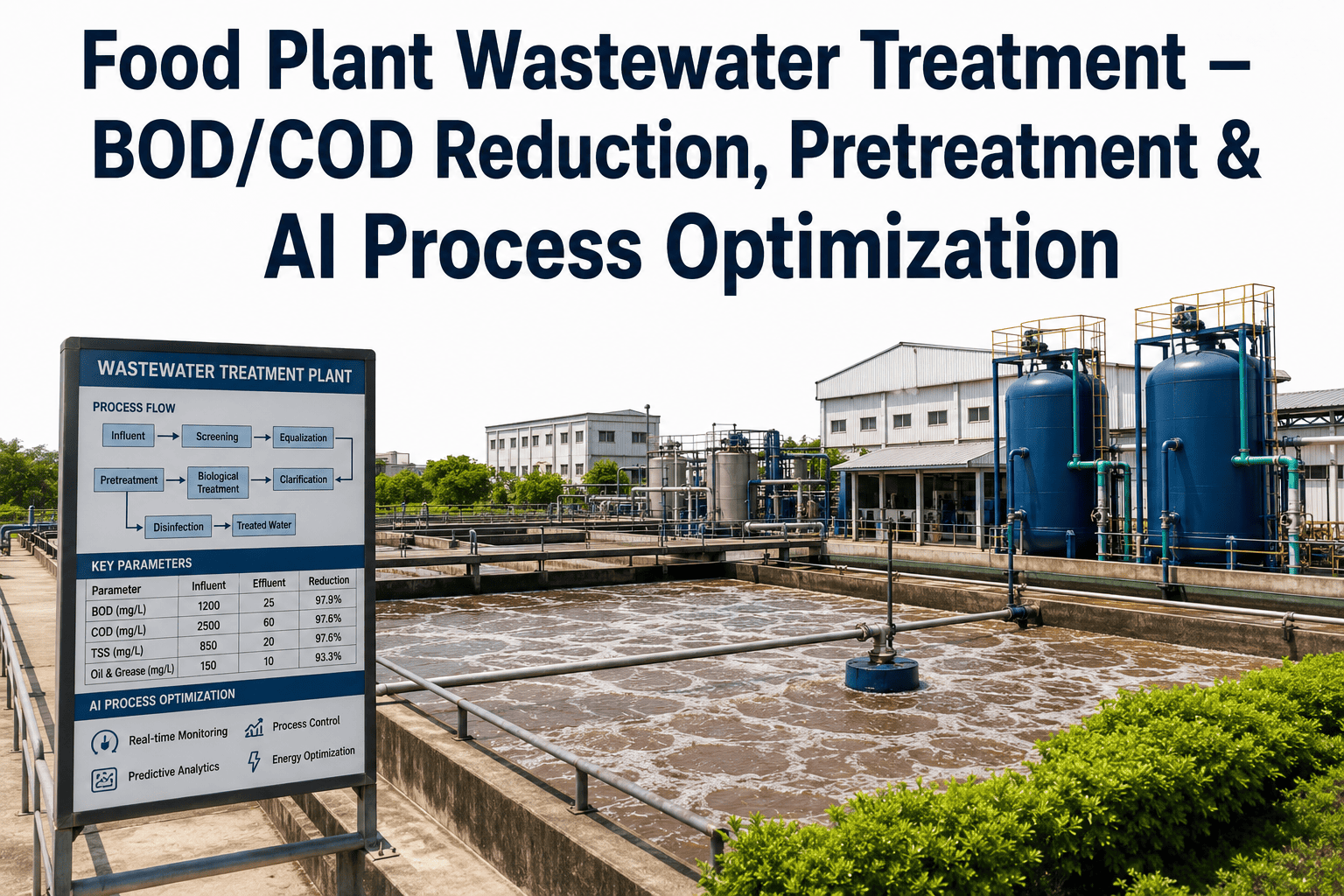
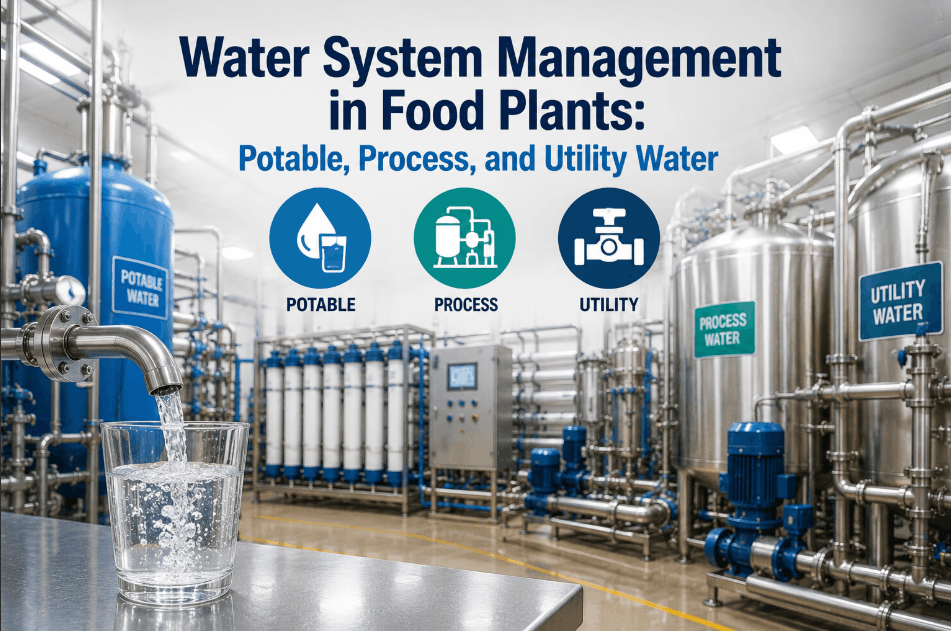
Food processing facilities face one of the most complex water management challenges in industrial manufacturing. Between high-volume water usage, strict discharge regulations, and growing pressure to reduce environmental impact, managing wastewater treatment in food processing plants has become a critical operational priority — not just a compliance checkbox. AI-driven compliance tracking transforms how food manufacturers monitor, document, and optimize every stage of their water treatment program.
Why Food Plant Wastewater Management Is More Challenging Than Ever
The food and beverage industry is among the highest water-consuming sectors globally. A single dairy processing plant, meat facility, or beverage manufacturer can discharge millions of gallons of effluent daily — carrying organic loads, fats, oils, grease, cleaning chemicals, and suspended solids that must be treated before discharge. Regulatory bodies including the EPA, state environmental agencies, and local pretreatment authorities enforce strict limits on effluent quality, and violations carry significant financial and operational consequences.
At the same time, water scarcity concerns are driving food manufacturers toward aggressive water conservation and recycling programs — requiring new monitoring infrastructure, more sophisticated analytics, and tighter integration between production operations and water treatment systems. Managing this complexity manually is no longer viable. Book a Demo to see how AI-driven wastewater compliance tracking closes the gap.
Real-Time BOD/COD Monitoring for Food Processing Wastewater
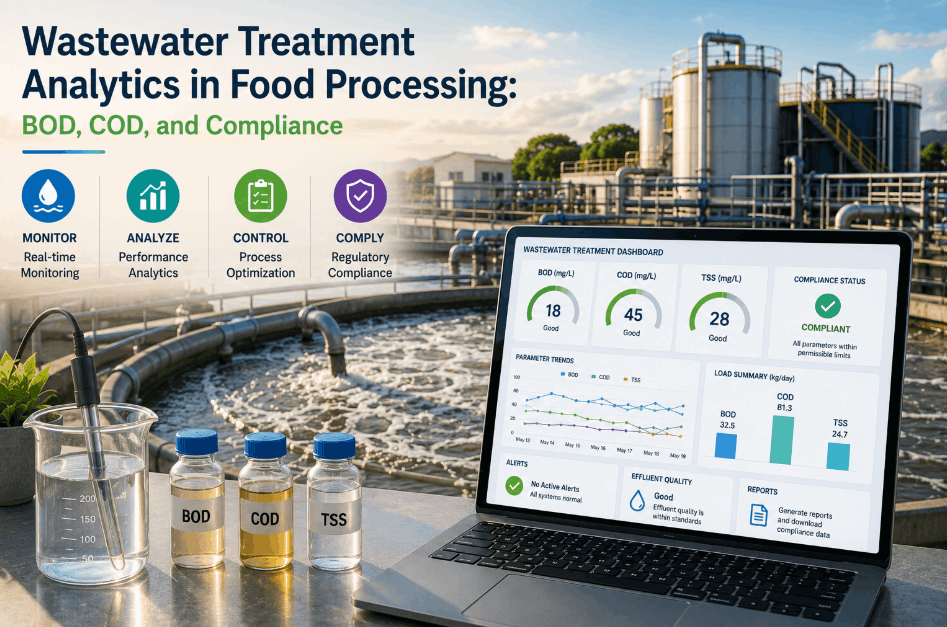
Biochemical oxygen demand (BOD) and chemical oxygen demand (COD) are the two primary indicators of organic load in food plant effluent — and the parameters most frequently cited in discharge permit violations. Traditional sampling protocols rely on grab samples and laboratory analysis, creating a 24-to-72-hour lag between production events and compliance data. By the time a high-BOD batch is identified, the discharge has already occurred.
AI-driven BOD/COD monitoring systems use inline and at-line sensors connected to a centralized compliance platform to provide continuous organic load tracking. When effluent quality trends toward permit limits, the system triggers early warnings — giving operations teams time to adjust treatment dosing, divert flows, or reduce production loads before a violation occurs. Book a Demo to see continuous BOD/COD monitoring in action.
DAF System Analytics: Optimizing Dissolved Air Flotation Performance
Dissolved air flotation (DAF) systems are the primary treatment technology in most food processing wastewater programs — removing fats, oils, grease, suspended solids, and a portion of the BOD load before biological treatment or discharge. DAF performance is highly sensitive to operating parameters: air-to-solids ratio, recycle flow rate, coagulant and polymer dosing, pH, and feed flow variability. Manual monitoring of these parameters is labor-intensive and prone to gaps.
DAF system analytics continuously track every critical operating variable, compare performance against design parameters, and identify drift before it becomes a treatment failure. When a DAF system underperforms, effluent quality degrades rapidly — making proactive monitoring essential for food plant EPA compliance. Book a Demo to see DAF analytics integrated with your compliance platform.
| DAF Parameter | Manual Monitoring | AI-Driven Analytics | Compliance Impact |
|---|---|---|---|
| Air-to-Solids Ratio | Checked during operator rounds | Continuous, auto-logged | Consistent flotation efficiency |
| Chemical Dosing | Manual adjustment, inconsistent | Dose tracking with alerts | Optimized coagulant use |
| Effluent Clarity | Visual check, subjective | Turbidity sensor, timestamped | Objective effluent quality data |
| Sludge Removal | Logged on paper, gaps common | Digital log, auto-triggered | Complete maintenance record |
| System Downtime | Tracked manually, incomplete | Auto-logged with work orders | Full equipment history |
| DMR Data Readiness | 3–5 days of data compilation | Generated in minutes | Zero last-minute scramble |
Food Plant EPA Compliance: From Reactive Reporting to Continuous Documentation
EPA compliance for food processing wastewater is not a once-a-year audit event — it is a continuous documentation obligation. NPDES permit holders must maintain daily or weekly monitoring records, submit monthly or quarterly discharge monitoring reports, document any bypass events or permit exceedances, and respond to exceedances with documented corrective actions. For facilities subject to categorical pretreatment standards, the documentation burden is even greater.
Water Conservation Programs for Food Factories: Tracking What Matters
Water conservation in food manufacturing is driven by three converging forces: rising municipal water costs, regional water scarcity regulations, and sustainability commitments that require documented reduction metrics. Effective water conservation programs for food factories require more than installing low-flow equipment — they require systematic tracking of water use intensity by production area, product type, and time period, with documented progress against reduction targets.
AI-driven water management platforms integrate with process water meters, CIP system flow controls, cooling tower makeup systems, and boiler feedwater monitors to provide a complete picture of facility water consumption. Book a Demo to see how iFactory tracks water use intensity across your entire food processing operation.
Monitor gallons per unit of production across process areas. Identify which products, lines, or shifts consume disproportionate water — and quantify improvement as conservation measures are implemented.
Track volumes of treated water reused in non-contact cooling, landscape irrigation, or CIP pre-rinse applications. Document recycling rates for sustainability reporting and regulatory credit programs.
Clean-in-place systems are among the highest water consumers in food plants. Monitor CIP water volumes, rinse cycle efficiency, and chemical concentration — identifying opportunities to reduce water use without compromising sanitation effectiveness.
Wastewater System Preventive Maintenance: Protecting Treatment Capacity
Wastewater treatment equipment — DAF systems, equalization tanks, biological treatment aeration systems, UV disinfection units, and effluent pumps — require rigorous preventive maintenance programs to sustain treatment capacity and meet discharge permits. An unexpected DAF failure or aeration system breakdown can result in immediate permit violations and emergency response costs that dwarf the cost of systematic maintenance. Book a Demo to see how iFactory manages wastewater PM programs.
iFactory — AI-Driven Wastewater Management for Food Processing Facilities
Stop managing effluent compliance with spreadsheets and paper logs. iFactory's AI-driven platform continuously monitors BOD/COD levels, DAF system performance, and discharge parameters — automatically generating the EPA-compliant documentation your facility needs, every day.