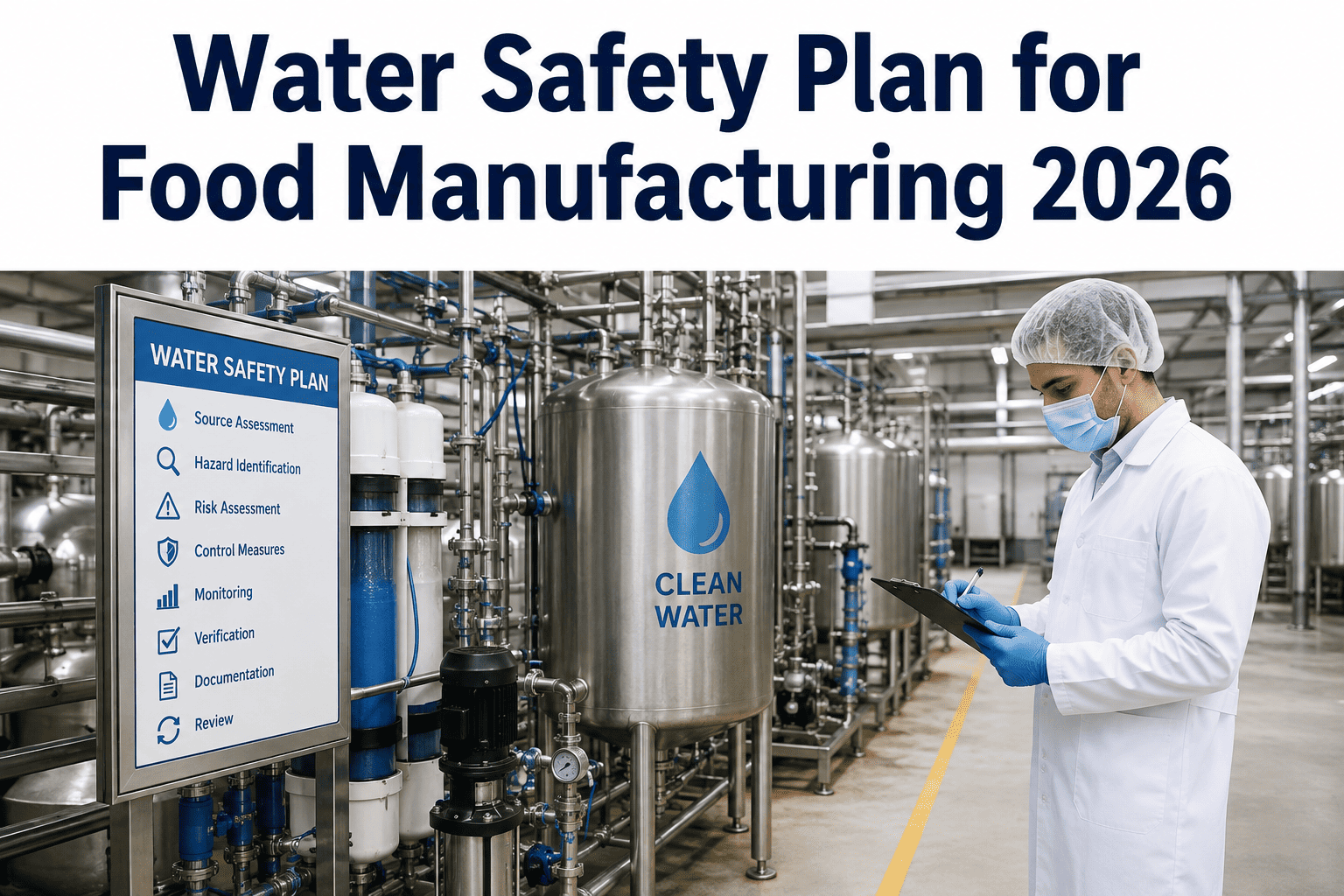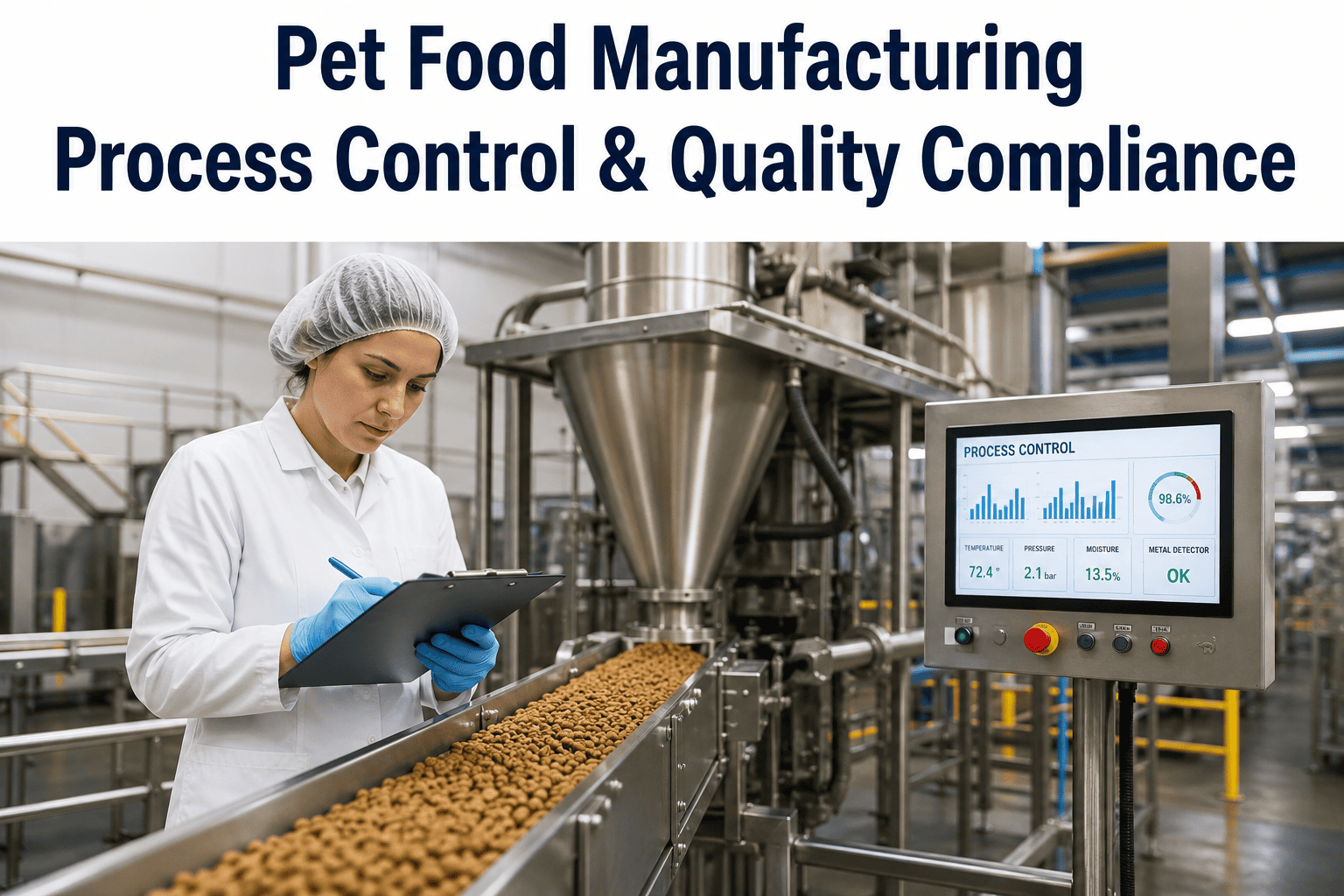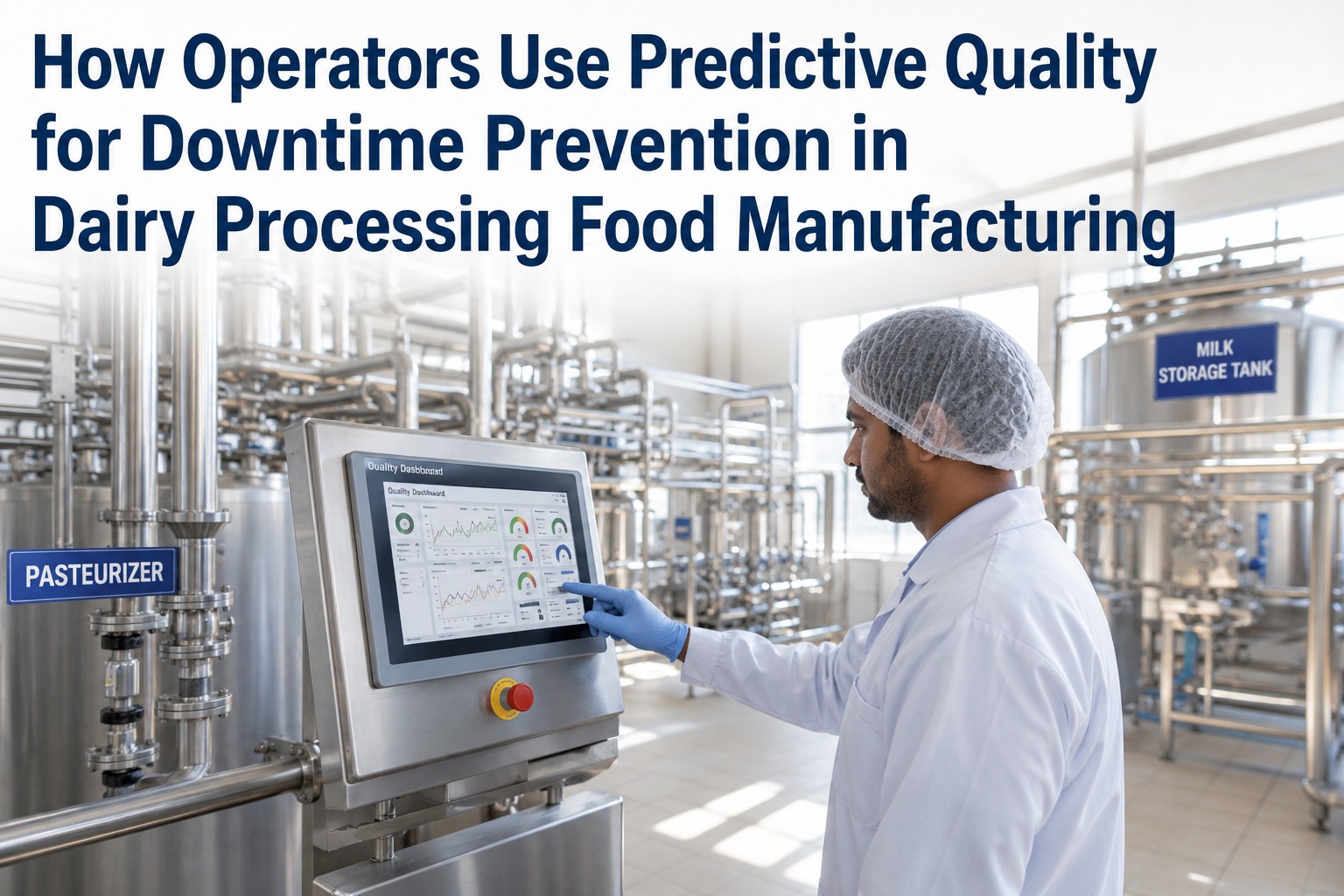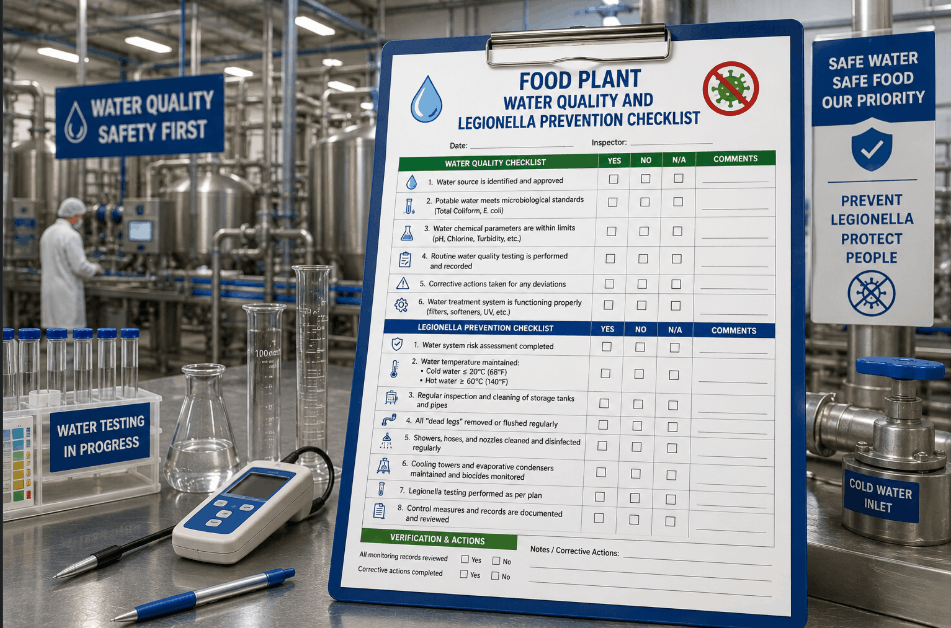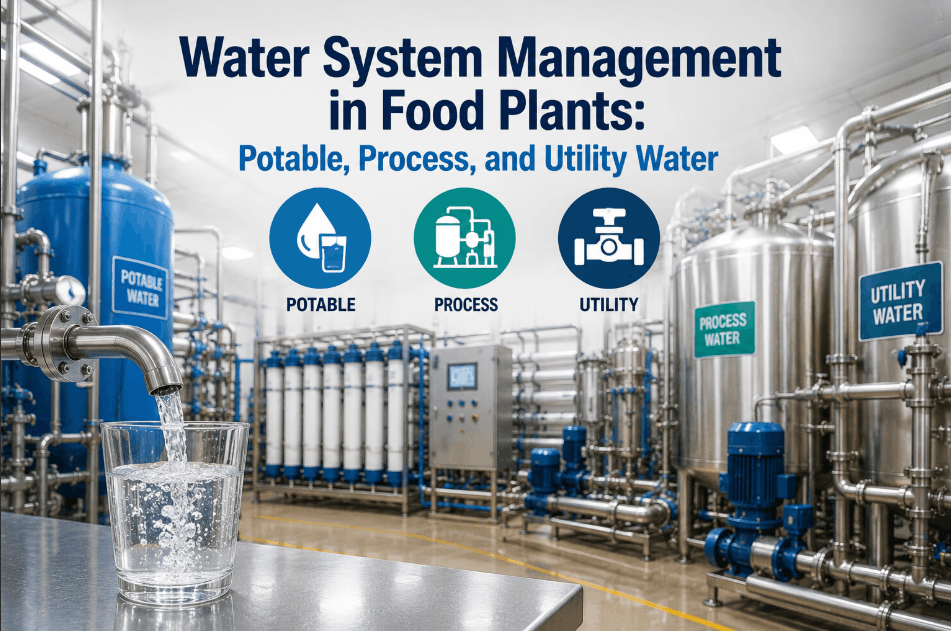
Water system management in food plants is one of the most complex and compliance-critical infrastructure challenges in modern food manufacturing. From potable water used in direct product contact to process water supporting cleaning operations and utility water powering boilers and cooling towers, every water stream carries distinct safety, quality, and regulatory obligations. Facilities operating under FDA FSMA, HACCP, and GFSI standards must demonstrate continuous control over water quality — not just during audits, but every hour of every production day. AI-driven compliance tracking platforms are transforming how food manufacturers manage, document, and defend their water systems — and food safety teams that book a demo with iFactory are discovering that their existing water data infrastructure contains untapped risk intelligence waiting to be activated.
Take Full Control of Your Plant's Water Safety
iFactory's AI-driven compliance platform delivers real-time water quality monitoring, automated documentation, and Legionella risk intelligence — purpose-built for food and beverage facilities.
Why Water System Management in Food Plants Demands a Separate Compliance Strategy
Most food plants treat water as a utility rather than a controlled ingredient — and that assumption creates regulatory exposure. Water used in food manufacturing is not a single category. It is a stratified system where potable water, process water, and utility water each operate under different quality thresholds, contact risks, and documentation requirements. Facilities that book a demo with iFactory commonly discover that cross-contamination pathways between water streams have gone unmonitored for years — not from negligence, but because traditional food safety programs were never designed to model water infrastructure as an integrated risk system.
The stakes are high. A single water quality failure in a food plant can trigger product holds, environmental pathogen events, FDA 483 observations, and in worst-case scenarios, plant shutdowns. The regulatory and operational cost of poor water system management in food manufacturing consistently exceeds the investment required to prevent it.
Potable Water Compliance Risk
Potable water used in direct product contact, ingredient hydration, and equipment cleaning must meet EPA drinking water standards and documented monitoring requirements under FSMA. Gaps in routine testing frequency or documentation are among the most common FDA findings in food facility inspections.
Process Water Quality Failure
Process water in wash systems, CIP circuits, and flume transport carries pathogen transfer risk when pH, temperature, chlorine residual, or turbidity drift outside safe parameters. Without real-time monitoring, process water quality deviations are often discovered through finished product testing — after contamination has occurred.
Utility Water Legionella Risk
Cooling towers, boilers, and HVAC condensate systems in food plants harbor Legionella growth conditions — stagnant water, warm temperatures, and biofilm accumulation. ASHRAE 188 Water Management Plans are now considered best practice in food facility design, and FDA inspectors increasingly review them during facility audits.
Cross-Connection Contamination
Inadequate backflow prevention between potable, process, and utility water systems creates contamination pathways that compromise food safety without generating any immediate sensor signal. Mapping and continuously monitoring cross-connection risk points requires a digital infrastructure most food plants have not yet deployed.
Potable Water Food Manufacturing Compliance: Testing, Documentation, and Continuous Monitoring
Potable water is the foundation of food safety in any food manufacturing facility. Under FSMA's Preventive Controls for Human Food rule, food manufacturers must identify water as a potential hazard source and implement monitoring, verification, and corrective action procedures when water contacts food, food contact surfaces, or food packaging. Facilities that rely on manual, schedule-based testing programs to meet these requirements are operating with visibility gaps that predictive compliance platforms can eliminate.
Potable Water Quality Testing Parameters Every Food Plant Must Monitor
Effective potable water quality monitoring in food plants goes beyond basic coliform testing. A complete water quality testing program for food manufacturing should continuously track microbial indicators (total coliform, E. coli), chemical parameters (chlorine residual, pH, nitrates, heavy metals), and physical parameters (turbidity, color, odor). AI-driven platforms integrate these data streams into a single water quality risk score — alerting food safety teams when combined parameter trends indicate deteriorating water safety before any individual parameter breaches a regulatory limit. Food safety managers who book a demo receive a facility-specific water quality monitoring gap analysis as part of the onboarding process.
Automated Water Safety Documentation for FDA and GFSI Audits
Manual water testing log books and spreadsheet-based records create documentation risk during FDA and GFSI audits. Inspectors reviewing food plant water compliance expect time-stamped, verifiable records showing continuous monitoring — not periodic sampling events reconstructed from paper logs. Digital water quality compliance platforms generate automated, inspector-ready documentation at every test point, reducing audit preparation time and eliminating the documentation gaps that generate 483 observations.
Process Water Food Safety: Real-Time Monitoring for Wash, CIP, and Flume Systems
Process water management in food plants is where water quality failures most directly translate into product safety risk. Wash water chemistry in produce processing, CIP circuit validation in dairy and beverage, and flume water pathogen control in protein processing all require continuous quality monitoring — not periodic sampling. When process water parameters drift, contamination transfer can occur within minutes, long before scheduled testing would detect the deviation.
Wash Water Chemistry Monitoring in Fresh Produce Processing
Fresh produce facilities managing wash water must continuously track free chlorine residual, oxidation-reduction potential (ORP), pH, turbidity, and water temperature to prevent pathogen survival and cross-contamination between product lots. AI-driven process water monitoring platforms integrate sensor data from multiple wash system points into a unified contamination risk model — issuing corrective action alerts when parameter combinations create conditions favorable to pathogen survival, even when no individual parameter has breached its set point. Produce safety managers exploring these platforms often begin with a book a demo session that maps their current wash water monitoring gaps against FSMA produce safety rule requirements.
CIP Water Quality Validation for Dairy and Beverage Manufacturing
Clean-in-place (CIP) circuit performance in dairy and beverage plants depends on chemical concentration, temperature, flow velocity, and contact time — all of which are directly influenced by process water quality. Hard water scaling, pH variability, and microbial contamination in CIP water can reduce sanitation efficacy without generating an immediate alert in systems relying on manual CIP log verification. Predictive platforms monitor CIP water quality parameters in real time, correlating deviations with sanitation efficacy outcomes to identify deteriorating circuit performance before a positive environmental swab confirms the failure.
| Water System | Critical Parameters | Traditional Monitoring Method | AI-Driven Monitoring Approach | Risk Reduction |
|---|---|---|---|---|
| Potable Water | Coliform, chlorine, pH, turbidity | Scheduled manual sampling | Continuous sensor integration + trend scoring | Documentation gaps eliminated |
| Produce Wash Water | Free chlorine, ORP, pH, turbidity | Periodic manual titration | Real-time multi-parameter risk scoring | Pathogen transfer risk –68% |
| CIP Circuit Water | Temperature, chemical concentration, flow | Post-CIP swab testing, 24–48 hr results | Predictive sanitation efficacy modeling | CIP failures detected 8× faster |
| Cooling Tower Water | Legionella risk, conductivity, biocide levels | Monthly or quarterly testing | Continuous Legionella risk condition monitoring | Risk event identification >30 days earlier |
| Boiler Feed Water | Hardness, pH, dissolved oxygen, conductivity | Manual operator log checks | Automated deviation alerting with trend forecasting | Equipment damage events –55% |
| Flume Transport Water | Temperature, chlorine, microbial load | Batch sampling at shift intervals | Continuous parameter monitoring + cross-lot risk scoring | Cross-contamination incidents –71% |
Legionella Prevention in Food Plants: Utility Water Risk Management and ASHRAE 188 Compliance
Legionella prevention is rapidly becoming a non-negotiable element of food plant water system management. While Legionella does not typically contaminate food products directly, it creates significant public health liability, regulatory exposure, and operational disruption when found in cooling tower aerosols, decorative water features, or HVAC condensate systems within or adjacent to food production areas. FDA and CDC guidance increasingly references water management plan requirements for food facilities, and GFSI benchmark standards are evolving to include utility water risk assessment as part of food safety management system certification.
Building a ASHRAE 188-Compliant Water Management Plan for Food Manufacturing Facilities
An effective water management plan (WMP) for a food plant must identify all building water systems that can harbor and amplify Legionella, define control measures and monitoring parameters for each system, establish corrective action procedures for control limit exceedances, and document all monitoring activities with verified records. AI-driven compliance tracking platforms automate WMP documentation, issue corrective action alerts when Legionella risk conditions are detected, and generate the continuous monitoring records that regulators and third-party auditors require. Food safety teams managing WMP implementation find that book a demo sessions with iFactory's engineers consistently surface monitoring gaps not identified during their initial WMP development process.
Cooling Tower Water Treatment Analytics for Food Plant Utility Systems
Cooling towers in food manufacturing environments require especially rigorous water treatment management because aerosol drift can potentially reach product handling areas. Effective cooling tower water treatment analytics track biocide dosing effectiveness, conductivity trends, corrosion inhibitor performance, and microbiological activity — correlating these parameters with temperature and flow data to identify Legionella growth condition risks before culture results confirm colonization. Platforms that model these relationships continuously provide food plant engineers with the lead time needed to intervene before a routine Legionella culture test returns a positive result.
Continuous Legionella Risk Condition Monitoring
AI platforms model temperature stratification, biocide depletion patterns, and biofilm accumulation risk in cooling tower systems — generating Legionella risk condition scores that update continuously rather than waiting for monthly or quarterly culture results. Risk events are identified more than 30 days earlier than traditional sampling programs.
Feed Water Quality and Steam Purity Compliance
Boiler feed water quality directly affects steam purity when steam contacts food products or food contact surfaces. Predictive platforms monitor hardness, pH, dissolved oxygen, and conductivity trends — issuing alerts when feed water chemistry creates scaling or corrosion conditions that could compromise steam quality and food safety compliance.
Stagnation and Biofilm Risk Management
HVAC condensate pans and ornamental water features in food facility common areas are frequently overlooked Legionella harborage sites. Predictive water management platforms include these systems in facility-wide WMP monitoring — ensuring no utility water asset operates outside the documented risk control framework required for ASHRAE 188 and GFSI compliance.
AI-Driven Water System Compliance Tracking: From Manual Logs to Continuous Intelligence
The shift from manual water log management to AI-driven compliance tracking fundamentally changes what food manufacturers can know about their water systems — and when they can know it. Traditional water safety programs in food plants generate compliance records reactively: a sample is collected, sent to a lab, and a result returns 24–72 hours later. Predictive platforms convert the same infrastructure into a continuous, forward-looking risk intelligence system that identifies water quality deterioration before any regulatory limit is breached. Food safety leaders exploring this transition consistently find that a single book a demo session with iFactory delivers a clearer picture of their current water compliance risk exposure than months of manual program review.
Integrating Water Quality Data with HACCP and Preventive Controls Programs
Water is a hazard source explicitly recognized in FSMA's Preventive Controls for Human Food and Produce Safety rules. Effective HACCP integration requires that water quality monitoring data flows directly into the facility's broader food safety risk management system — not into a separate water management silo that never connects to production decisions. AI-driven platforms unify water quality data streams with environmental monitoring, supplier risk, and sanitation verification data, enabling the cross-variable risk correlations that identify complex contamination pathways no single-system monitoring approach can detect.
Water Infrastructure Mapping & Sensor Deployment
Conduct a complete water system inventory — identifying all potable, process, and utility water assets, cross-connection points, and backflow prevention devices. Deploy inline sensors at critical monitoring points and integrate existing LIMS, lab, and PLC data streams into a unified water quality data historian. Pre-deployment gap analysis prevents coverage blind spots that undermine model accuracy in later phases.
Water Quality Risk Model Calibration & Alert Activation
Commission predictive water quality risk models using historical parameter data and facility-specific contamination profiles. Calibrate alert thresholds for each water system type — potable, process, and utility — to minimize false positives while ensuring genuine risk events are surfaced before they affect production. Activate Legionella risk condition monitoring and cross-system contamination pathway detection modules.
Automated Compliance Documentation & Audit Readiness
Activate automated FSMA water monitoring documentation, WMP record generation, and inspector-ready compliance exports. Integrate water quality compliance data with ERP and quality management systems for unified food safety program visibility. The platform generates continuous, time-stamped records across all water systems — eliminating the documentation gaps that generate FDA 483 observations and GFSI non-conformances related to water safety program management.
Food Plant Water Audit Readiness: What FDA and GFSI Inspectors Examine in Water System Reviews
Food plant water audits have grown significantly more rigorous over the past decade. Where inspectors once reviewed basic coliform testing logs and potable water supply certificates, modern FDA 21 CFR Part 117 inspections and GFSI scheme audits (SQF, BRC, FSSC 22000) now examine the entire water management ecosystem — including utility water systems, cross-connection controls, water management plan documentation, and evidence that corrective actions were taken and verified when water quality parameters deviated from established limits.
Common FDA 483 Observations Related to Water System Management in Food Facilities
The most frequently cited water-related 483 observations in food manufacturing inspections fall into four categories: inadequate frequency of potable water monitoring, missing or incomplete water quality records, failure to implement corrective actions when monitoring indicated a quality deviation, and lack of documented water management plans for facilities with cooling towers or other complex utility water systems. AI-driven compliance tracking platforms eliminate all four documentation failure categories by generating continuous, verified records automatically — with no dependence on manual log completion or data entry discipline.
Water System Management in Food Plants — Frequently Asked Questions
What is the difference between potable, process, and utility water in food manufacturing?
Potable water meets EPA drinking water standards and is used wherever water contacts food, food contact surfaces, or packaging. Process water is used in food production operations like washing, flume transport, and CIP — it must meet potable standards in most direct-contact applications but carries additional monitoring requirements for chemical parameters relevant to specific processes. Utility water powers boilers, cooling towers, and HVAC systems and must be managed separately to prevent cross-contamination with food-contact water systems and to control Legionella risk in aerosol-generating equipment.
What does FSMA require for water monitoring in food manufacturing facilities?
Under FSMA's Preventive Controls for Human Food rule, facilities must identify water as a potential hazard source, implement monitoring procedures for water used in food contact applications, maintain documented records of water quality testing, and establish corrective action procedures when monitoring reveals a deviation. The Produce Safety Rule includes specific water testing frequency and quality standards for agricultural water used in growing and harvesting operations. Both rules require that monitoring records be maintained and available for FDA inspection.
How does AI-driven water quality monitoring differ from standard water testing programs?
Standard water testing programs generate discrete data points from scheduled sampling events. AI-driven water quality monitoring integrates continuous sensor data streams — pH, chlorine residual, turbidity, temperature, conductivity — into machine learning models that identify multi-parameter risk patterns hours or days before any individual limit is breached. This predictive layer enables corrective action at the process level, rather than after a lab result confirms a water quality failure has already occurred.
Is a Water Management Plan required for food plants with cooling towers?
While no single federal regulation currently mandates water management plans (WMPs) for all food facilities, ASHRAE 188 provides the recognized standard of care for building water systems that can harbor Legionella. FDA inspectors increasingly request WMP documentation during food facility inspections, particularly for facilities with cooling towers, decorative water features, or complex HVAC systems. GFSI benchmark schemes are progressively incorporating utility water management into food safety system certification requirements.
What data does an AI-driven food plant water compliance platform require to operate?
Platforms integrate data from inline water quality sensors (pH meters, chlorine analyzers, conductivity probes, turbidity meters), LIMS laboratory results, SCADA and PLC data from process equipment, and manual test log imports. Most facilities achieve meaningful risk intelligence with 60–75% of data sources connected at deployment launch, with accuracy improving continuously as more historical data accumulates and additional sensor streams are integrated.
How long does it take to implement a water quality compliance monitoring system in a food plant?
For mid-size food manufacturing facilities, full deployment of a water compliance monitoring platform — including sensor installation, data integration, model calibration, and compliance documentation activation — typically requires 7–16 weeks. Facilities with existing inline sensor infrastructure and digital data historians can achieve initial water quality risk intelligence within 4–6 weeks of platform onboarding.
Deploy Continuous Water Safety Intelligence Across Every Water System in Your Facility
iFactory's AI-driven compliance tracking platform delivers real-time water quality monitoring, automated FSMA documentation, and Legionella risk intelligence — purpose-built for food and beverage manufacturers who cannot afford a water safety failure.