
Dairy processing equipment is the heart of a fluid milk or cheese facility, yet these assets are often the most vulnerable to unplanned downtime and regulatory non-compliance. In a high-volume dairy environment, a single pasteurizer divert failure or a separator bowl vibration anomaly can trigger an immediate production halt, leading to thousands of gallons of wasted product and sanitation crises that paralyze operations for shifts. iFactory's AI-Driven Preventive Analytics platform transforms passive dairy infrastructure into an intelligent, self-monitoring network—tracking differential pressure in HTST systems, drive motor torque in separators, and seal integrity in homogenizers in real time. Our platform ensures that failures are predicted weeks before they compromise food safety or throughput. Book a Demo to see how leading dairy plants have achieved 99.4% equipment availability.
Optimize Your Dairy Plant with AI-Driven Preventive Equipment Analytics
iFactory monitors HTST systems, centrifugal separators, and high-pressure homogenizers in real time—delivering predictive alerts, automated PM records, and full sanitary compliance for modern dairy operations.
Why Dairy Processing Analytics is the New Standard for Production Excellence
Modern dairy plants operate under extreme thermal and mechanical stress. Equipment must transition between 165°F pasteurization cycles and 185°F caustic CIP washes multiple times daily, creating massive expansion-contraction cycles that degrade gaskets, seals, and heat exchanger plates. Despite this, many plants still rely on fixed calendar-based maintenance for their most critical assets—an approach that is fundamentally blind to the actual mechanical condition of the machine between service dates.
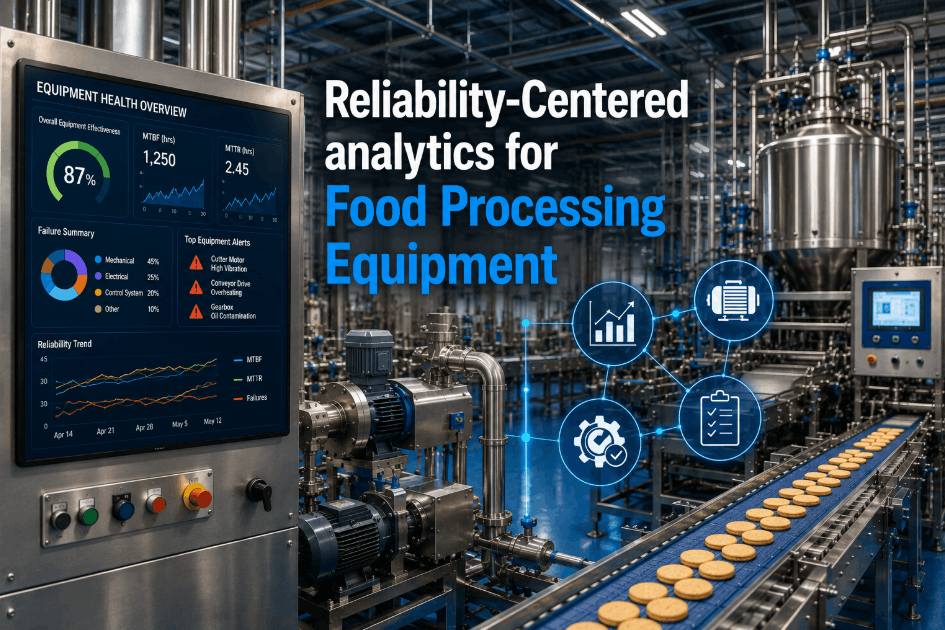
Dairy equipment analytics closes this critical gap. By deploying IoT sensors across pump drive motors, hydraulic actuators, and sanitary flow controls, iFactory builds a continuous, real-time health portrait of every unit on the production floor. The result is not simply faster response to failures—it is the total elimination of unexpected breakdowns. Facilities using condition-based dairy monitoring report a 74% reduction in unplanned downtime within the first six months of deployment. Book a Demo and benchmark your current plant uptime against industry leaders.
The 6 Dairy Processing Subsystems Most Vulnerable to Unplanned Failure
Dairy reliability depends on the coordinated health of complex mechanical, thermal, and electrical subsystems. iFactory's analytics monitors all six critical failure zones simultaneously, delivering integrated intelligence that standard PLC alarms cannot provide.
Pasteurizer Heat Exchangers
Differential pressure monitoring detects pinhole leaks and plate fouling before cross-contamination occurs. AI models track regeneration efficiency to identify early-stage scale buildup on heat transfer surfaces.
Separator Bowl Assembly
Vibration profiling and bowl speed anomaly detection flags bearing wear and imbalance issues. Identifies mechanical stress before it leads to a catastrophic bowl explosion or seal failure.
Homogenizer Plunger Seals
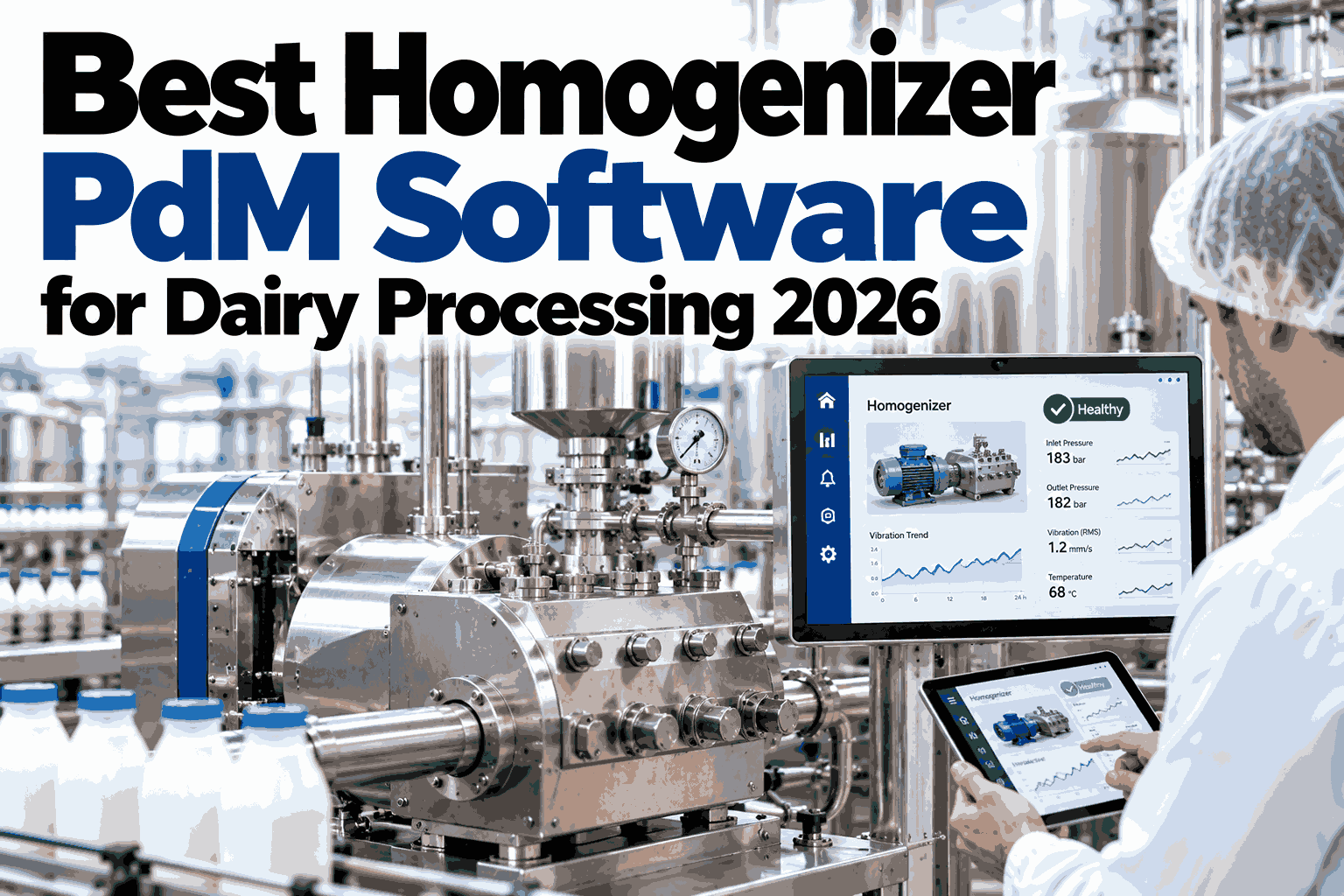
Pressure pulsation analysis and plunger block temperature monitoring detect seal degradation and valve seat wear. Prevents high-pressure leaks that cause significant sanitation and safety risks.
Sanitary Pump Drive Motors
Torque signature analysis detects impeller cavitation and winding insulation breakdown. Essential for maintaining consistent flow rates during critical thermal processing windows.
CIP Flow & Chemical Systems
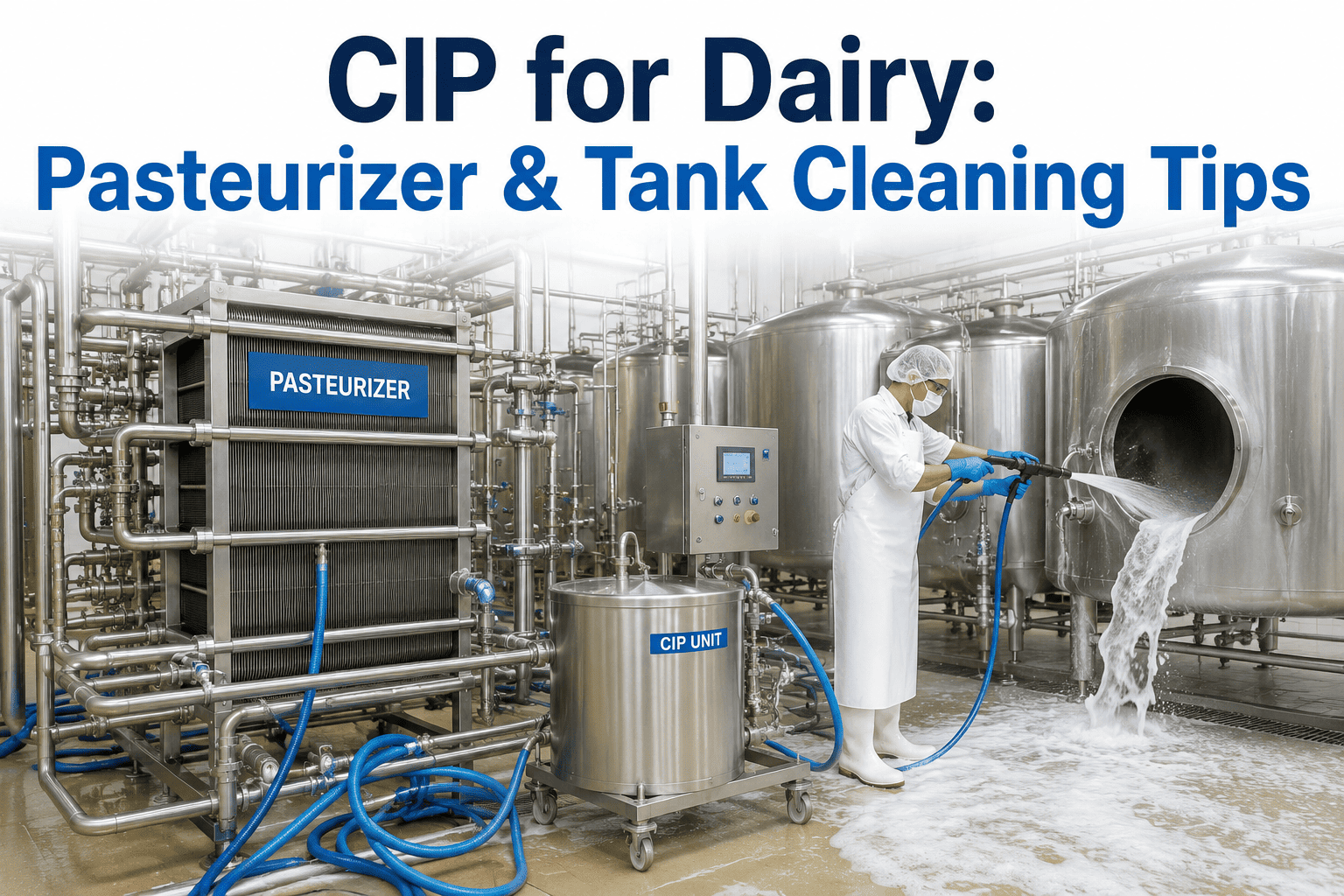
Conductivity and flow-rate tracking ensures that sanitation cycles meet regulatory concentration and dwell-time requirements. Flags "shadow zones" where cleaning efficiency is dropping.
Pneumatic Control Valves
Cycle counting and stroke-time analysis identify solenoid sluggishness and air-seal wear. Prevents divert valve failures that send product back to the balance tank, wasting energy.
AI-Driven Dairy PM: Moving Beyond Static Maintenance Schedules
Traditional dairy maintenance regimes are built around time intervals—monthly homogenizer seal swaps, quarterly plate inspections, annual motor bearing replacements. This approach is inefficient: it either leads to "over-maintenance" (replacing perfectly good parts) or "under-maintenance" (failure occurring between intervals due to high production loads).
A separator processing high-solids cream 20 hours a day accumulates wear at a rate far exceeding one processing skim milk for 8 hours. iFactory's platform replaces fixed schedules with dynamic, condition-triggered workflows. When the system detects a vibration signature consistent with early-stage bearing fatigue, it automatically generates a work order and stages the required parts—all before a breakdown occurs. Book a Demo to see condition-triggered dairy workflows in action.
| Maintenance Dimension | Calendar-Based | iFactory AI-Driven |
|---|---|---|
| Homogenizer Seal Changes | Every 1,000 hours (fixed) | Continuous condition monitoring |
| Separator Vibration Checks | Weekly manual check | Real-time 24/7 vibration profiling |
| Pasteurizer Plate Inspections | Quarterly shutdown | Continuous differential pressure monitoring |
| Failure Prediction Horizon | No prediction (Reactive) | 3–4 weeks advance warning |
| Sanitary Compliance Documentation | Manual paper charts | Auto-generated timestamped records |
| Unplanned Downtime Rate | 15–20% annually | Less than 0.6% with iFactory |
| Energy Efficiency | Static operation | AI-optimized thermal load tracking |
High-Temperature Short-Time (HTST) System Monitoring: The Most Critical Safety Layer
The HTST pasteurizer is the most regulated piece of equipment in the dairy plant. A failure to maintain the correct pasteurization temperature or the correct pressure differential between raw and pasteurized product is not just a maintenance issue—it is a public health risk that triggers immediate product recalls and regulatory fines.
iFactory's dairy analytics deploys precision pressure transducers and thermal sensors across the entire HTST circuit. The platform's machine learning models learn the unique thermal signature of your pasteurizer under varying flow rates: processing whole milk at 30,000 lbs/hr produces a different profile than processing fat-free milk at 45,000 lbs/hr. By establishing these baseline profiles, iFactory detects anomalies indicating plate fouling or divert valve sluggishness with extraordinary precision.
Thermal Fingerprint Learning
Over the first 14 days, iFactory builds a dynamic thermal and pressure fingerprint for each HTST system across all product types and CIP cycles. This becomes the reference model for anomaly detection.
Differential Pressure Monitoring
Every second of operation is compared against the learned baseline. Pressure decay across the regeneration section that exceeds 0.2 PSI/hour flags potential plate fouling or gasket degradation.
Predictive Divert Analysis
When divert valve stroke times begin to drift by more than 150 milliseconds, iFactory automatically schedules an inspection—preventing the valve from sticking in the divert position during a production run.
Post-CIP Validation
After each cleaning cycle, iFactory validates that the system has returned to its "Clean Baseline" range—providing documented proof of sanitation efficiency for regulatory compliance records. Book a Demo to see HTST monitoring in action.
Dairy Safety Inspection Compliance: Meeting PMO, FDA, and SQF Standards with AI Audit Trails
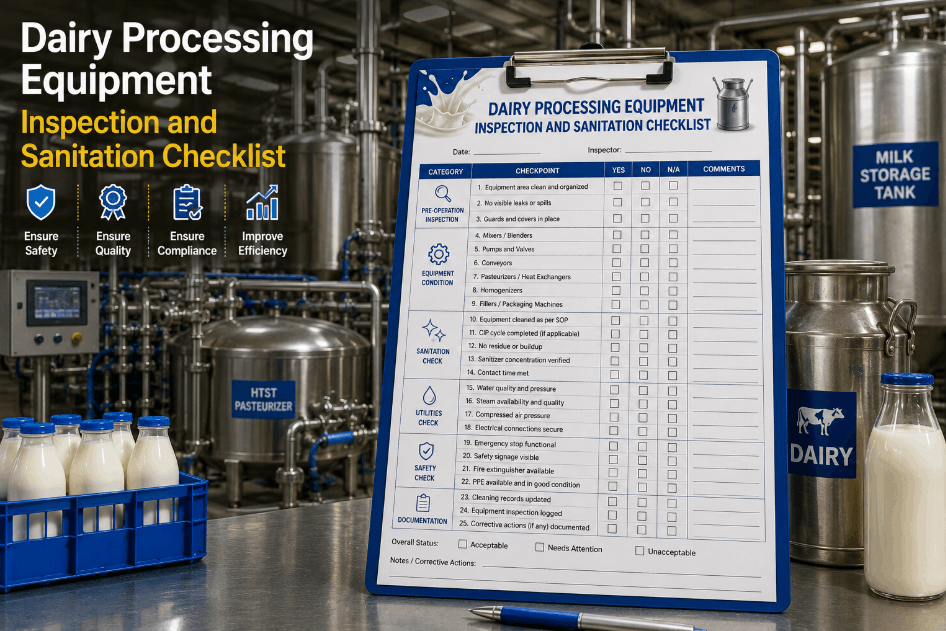
Regulatory compliance for dairy processing is governed by the Pasteurized Milk Ordinance (PMO) and strict SQF/BRC standards. Compliance documentation built on paper charts and manual logs is prone to error and audit failure. When an FDA inspector requests calibration records for your homogenizer pressure gauges or pasteurizer divert valves, the ability to pull up complete, timestamped documentation in under 60 seconds is critical.
iFactory's platform auto-generates compliance-ready records for every dairy maintenance event. Each record includes sensor trend graphs, technician confirmation, and post-maintenance validation—transforming 3-hour audit preparation into a 15-second search query.
PMO Section 7 Compliance
Automated documentation of all HTST public health controls, including temperature dwell times and pressure differentials. Every divert event and seal check logged with GPS-synced timestamps.
SQF/BRC Food Safety Ready
iFactory's inspection workflows align with Global Food Safety Initiative (GFSI) standards. Condition-based maintenance records provide continuous evidence of equipment sanitary integrity.
HACCP Monitoring & Verification
Full alignment with Critical Control Point (CCP) monitoring requirements. Equipment performance KPIs are reported automatically to your facility's food safety dashboard.
The Business Case for Dairy Predictive Analytics: Quantifying Downtime & Batch Loss ROI
Dairy plant managers often underestimate the true cost of equipment failure. Beyond the repair labor, a single hour of downtime during peak milk intake can lead to souring product, emergency sanitation labor, and missed delivery windows that damage retail relationships.
| Cost Category | Without iFactory | With iFactory | Annual Saving |
|---|---|---|---|
| Emergency Repair Labor | $62,000/yr per line | $9,500/yr per line | $52,500 |
| Product Batch Waste (Souring) | $250,000+ per year | Near-zero events | $235,000+ |
| CIP Chemical & Energy Waste | Over-sanitation 25% | Condition-based CIP | $42,000/yr |
| Audit Prep & Compliance Time | 35+ hours per audit | Under 2 hours | $15,000/yr |
| Asset Life (Homogenizer/Separator) | 12-year average life | 18+ year lifespan | $85,000 CapEx deferral |
For a mid-size dairy plant with 4 main processing lines, iFactory customers report a total annual saving exceeding $1.4 million — with full ROI achieved within the first 8 months.
Ready to Eliminate Unexpected Downtime in Your Dairy Plant?
iFactory's AI platform is already protecting dairy processing operations at major co-packers and global brands. See a live walkthrough of the dashboard configured for your unit count—no obligation.
Dairy Asset Management: Extending Sanitary Equipment Lifecycle Through Analytics
A high-capacity dairy separator or homogenizer represents a capital investment between $350,000 and $1.2 million. The difference between an asset that reaches its full 20-year lifespan and one that requires an early rebuild at year 10 is almost entirely determined by the quality of maintenance executed across thousands of thermal cycles. iFactory's dairy asset module tracks cumulative stress, modeling remaining useful life based on actual operational data rather than arbitrary age thresholds.
Operational Baseline
iFactory captures factory-standard performance benchmarks for every pasteurizer, separator, and pump in the first 30 days. This sets the reference point for all future AI anomaly detection and degradation analysis.
Active Condition Monitoring
Continuous real-time monitoring across mechanical and thermal systems. Health scores adjust dynamically based on production intensity, product solids content, and CIP chemical exposure throughout the year.
Mid-Life Overhaul Planning
At the 8–10 year mark, iFactory identifies subsystems nearing end-of-life (such as separator gearbox bearings or plunger blocks) and auto-generates targeted overhaul scopes—deferring total replacement costs.
End-of-Life Capital Strategy
Condition-based replacement forecasting driven by actual asset health data—eliminating unplanned capital budget surprises and ensuring every dairy investment reaches its maximum designed service life.
Deploying Dairy Analytics Across Your Plant: What the First 90 Days Look Like
Dairy operations cannot afford long implementation windows. iFactory's deployment methodology is engineered for live food production environments where downtime is strictly controlled. Sensors are installed during scheduled sanitation windows or overnight shifts, with most units instrumented in under 4 hours.
Sanitary Sensor Deployment
IoT sensor installation across pasteurizers, separators, and homogenizers during off-peak sanitation windows. Network connectivity established. iFactory dashboard configured for your plant's line assignments.
AI Training & Thermal Baselines
Machine learning models analyze operational data across different product types (Milk, Cream, Yogurt mix). Thermal health baselines established for every heat exchanger and motor assembly.
Predictive Alerts & PM Interventions
First predictive maintenance alerts generated. Maintenance teams respond to condition-triggered tasks rather than calendar rounds. Typically, 2–4 developing failures are identified and resolved before they cause stoppages.
Full Operational Optimization
Dairy analytics fully integrated with production scheduling. Compliance documentation workflow is live. Lifecycle dashboards accessible to plant managers. KPI reporting automated to food safety centers.
Frequently Asked Questions: Dairy Equipment Analytics
Can iFactory sensors be installed on legacy dairy equipment?
Yes. iFactory's universal IoT bridge allows us to instrument older pasteurizers, homogenizers, and separators that lack native digital output. We use non-invasive vibration and thermal sensors that do not require any modifications to the sanitary product path.
How does the platform handle daily CIP and high-pressure washdowns?
All iFactory dairy sensors are IP69K-rated, the highest standard for washdown environments. They are specifically designed to withstand daily exposure to 185°F caustic cleaning solutions and high-pressure water jets used in dairy sanitation.
Does iFactory integrate with our existing SCADA or PLC systems?
Yes. The platform integrates with leading dairy control systems via REST API and industrial protocols (Modbus, OPC-UA). We provide a unified data layer that complements your existing SCADA by adding a predictive analytics engine on top of raw sensor data.
How does the AI account for different product viscosities?
The machine learning models are "product-aware." They learn the different load signatures for milk vs. high-fat cream. This prevents "false positives" that might occur when a separator motor works harder to process high-viscosity products.
Can the platform generate reports for SQF or BRC audits?
Absolutely. The platform generates automated SQF/BRC-ready equipment reliability and sanitation reports. These include trend analysis, incident logs, and maintenance validation, making audit preparation a matter of minutes rather than days.
How does iFactory handle sensor calibration in sanitary environments?
All iFactory sensors are pre-calibrated for high-thermal cycles and are self-diagnostic. The platform monitors for "sensor drift" in real-time, alerting technicians if a temperature or pressure transducer requires recalibration before it impacts regulatory compliance.
Can the platform detect "shadow zones" in CIP spray balls?
Yes. By correlating flow rates, return conductivity, and actuator stroke timing, iFactory identifies potential "shadow zones" or blocked spray ball nozzles that could lead to microbial contamination. This ensures 100% surface coverage for every sanitation cycle.
How does the system handle high-solids products like yogurt or sour cream?
The AI models are viscosity-aware. They automatically adjust torque and pressure thresholds based on the product recipe currently running through the line. This ensures that a thicker product like yogurt doesn't trigger "false positive" alerts for motor strain or blockage.
Stop Letting Equipment Failures Waste Your Milk
Join the world's most operationally resilient dairy brands. We'll show you exactly which unit in your plant is carrying hidden failure risk—before the next production window.


.png)