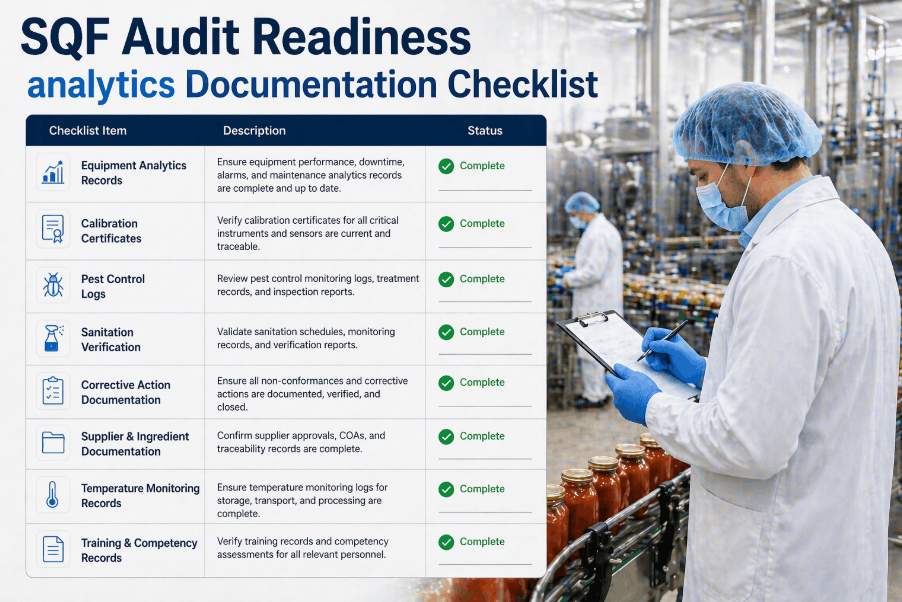
SQF Audit Readiness analytics Documentation Checklist

By Josh Turley on April 23, 2026

sqf-audit-readiness-analytics-documentation-checklist

SQF (Safe Quality Food) certification is one of the most rigorous benchmarks in food manufacturing — and maintaining audit readiness between certification cycles requires more than good intentions. For analytics teams, the challenge is ensuring that every calibration certificate, equipment record, pest control log, sanitation verification, and corrective action document is not only current but instantly retrievable when an SQF auditor walks through the door. A single missing record or expired certificate can result in a major non-conformance that delays recertification and disrupts your supply chain. Book a Demo to see how iFactory keeps your SQF documentation audit-ready 365 days a year.

SQF COMPLIANCE AI ANALYTICS READY AUDIT TRACKING

Achieve Zero-Finding SQF Audits with AI-Driven Documentation Tracking

iFactory monitors every calibration certificate, pest control log, sanitation record, corrective action, and equipment analytics file across your facility — delivering real-time compliance status and audit-ready documentation for your next SQF certification inspection.

Why SQF Audit Readiness Analytics Documentation Matters

SQF Code Compliance & Certification Risk

SQF Code Edition 9 requires documented evidence for every food safety and food quality system element — from equipment calibration schedules to supplier verification records. Major non-conformances identified during an unannounced audit can result in suspension of your SQF certificate within 30 days. Maintaining a continuous, analytics-backed documentation trail is the only reliable way to close compliance gaps before they become certification-threatening findings. Book a Demo to automate your SQF compliance calendar and eliminate documentation gaps.

Analytics Teams as the First Line of Defense

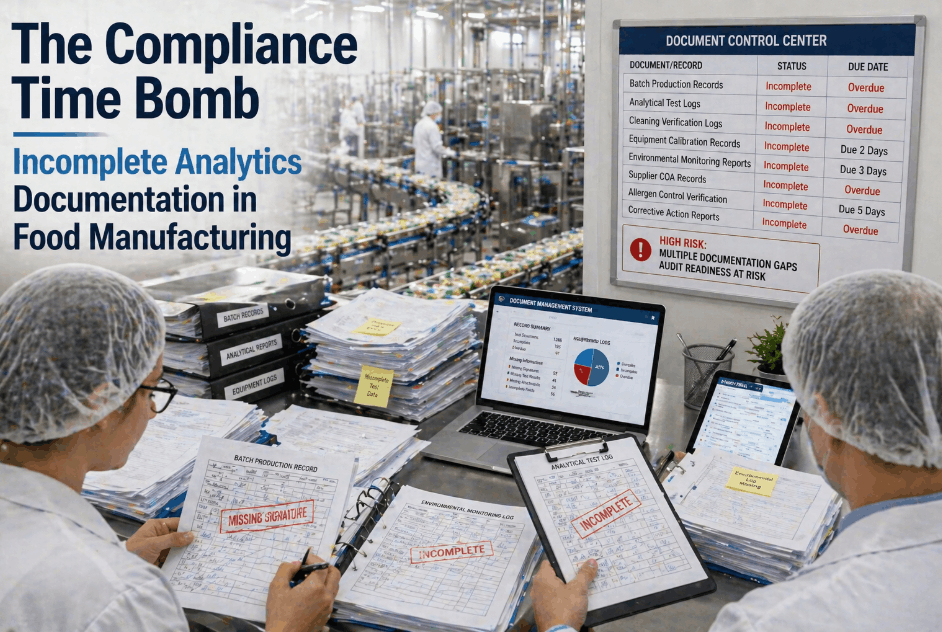
Analytics teams in food manufacturing facilities carry the documentation burden that determines whether an SQF audit passes or fails. Equipment performance records, calibration traceability, environmental monitoring trends, pest activity logs, and corrective action closure rates all require systematic digital tracking. Without a structured analytics documentation program, critical records are scattered across paper logs, spreadsheets, and email threads — creating serious liability during third-party audits and regulatory inspections. Book a Demo to unify your SQF analytics records into one audit-ready platform.

1. Equipment Analytics Records & Maintenance Documentation
2. Calibration Certificates & Measurement Traceability
3. Pest Control Logs & Environmental Monitoring Records
4. Sanitation Verification & Cleaning Effectiveness Records
5. Corrective Action & Non-Conformance Documentation
6. Food Safety Plan & HACCP/HARPC Documentation
7. Supplier Verification & Approved Supplier Program
8. Training Records & Operator Competency Documentation
REAL-TIME DATA SQF COMPLIANCE

Ready to Eliminate SQF Documentation Gaps Across Your Facility?

Standardize your SQF analytics inspections, track calibration certificate expiry dates, and generate predictive compliance alerts before an auditor finds the gap. iFactory keeps your SQF documentation program audit-ready every single day.

Benefits of Digital SQF Analytics Documentation Management

SQF Audit Readiness on Day One

Timestamped digital records for calibration certificates, pest control logs, and sanitation verification satisfy SQF Code Edition 9 documentation requirements and significantly reduce the risk of major non-conformance findings during announced and unannounced audits.

Automated Calibration & Certificate Renewals

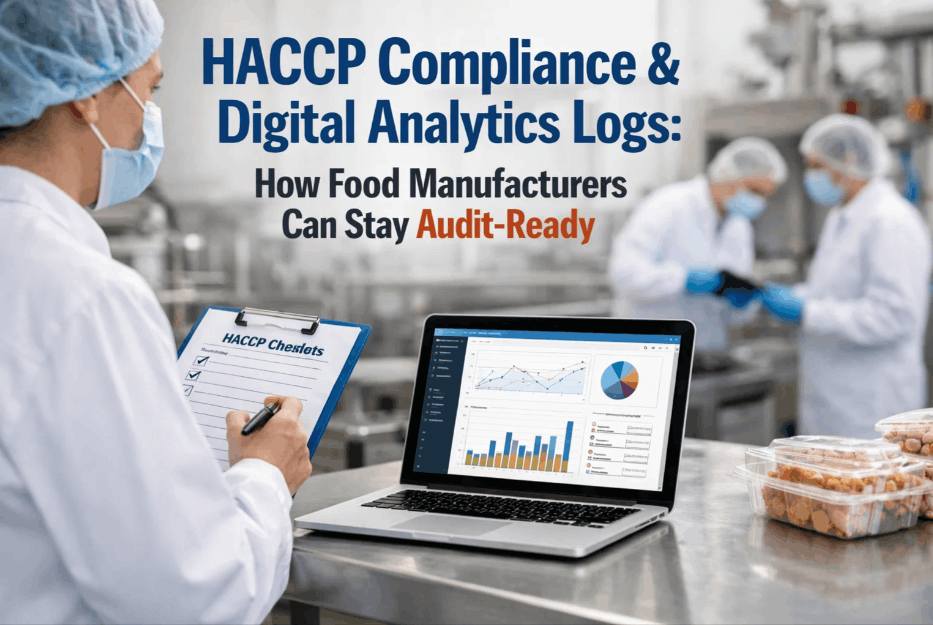
iFactory automatically tracks calibration certificate expiry dates, PM schedule windows, and supplier verification renewal intervals — sending escalating alerts to your quality and analytics teams before any deadline lapses and before an SQF auditor finds the gap.

Corrective Action-to-Closure Automation

Non-conformances captured during pre-op inspections, environmental swabs, or customer complaints automatically generate timestamped corrective action records with assigned owners, due dates, and root cause fields — eliminating the manual tracking that lets CARs fall through the cracks.

Mobile-First Sanitation & Inspection Logging

Quality and analytics staff log ATP swab results, pre-op inspections, and pest trap activity directly from smartphones at the inspection point — replacing paper logs with GPS-tagged, tamper-proof digital records that are instantly searchable during an SQF audit.

Multi-Site SQF Compliance Dashboard

Monitor SQF analytics compliance scores, open corrective actions, overdue calibrations, and pest activity trends across every facility in your food manufacturing network from a single centralized command center with drill-down capability per site.

Certification & Customer Audit Documentation

Immutable, cloud-stored SQF documentation records provide verified proof of food safety diligence for SQFI certification bodies, retail customer audits, and FDA inspection readiness — supporting faster certification renewal cycles and reduced audit preparation time.
SQF Audit Readiness Analytics Documentation FAQs

1. What records does SQF require for equipment calibration compliance?
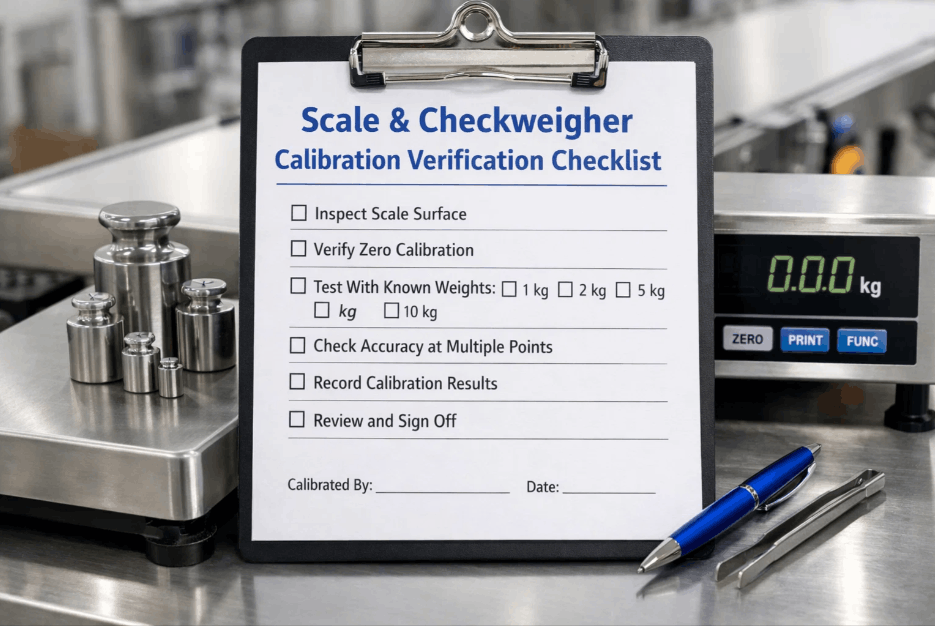
SQF Code Edition 9, Element 11.7 requires that all measuring and monitoring devices used at CCPs and critical quality points are calibrated at a defined frequency against a traceable standard. Records must include the device identifier, calibration method, reference standard used, measured values before and after adjustment, and the technician performing the calibration. Out-of-tolerance findings require a documented product impact assessment and a corrective action record. Book a Demo to centralize your calibration records and receive automated renewal alerts before certificates expire.
2. How often must pest control records be updated for SQF compliance?
SQF requires pest management records to be maintained at the frequency specified in your site's Pest Management Program, which must be risk-based and reflect the pest pressure of your facility's location and product type. Internal trap inspection logs are typically completed weekly, while licensed pest control contractor service reports are required following every scheduled or emergency service visit. All records must document trap locations, activity levels, treatments, and corrective actions for positive findings.
3. What is the SQF requirement for corrective action documentation?
SQF Code Element 2.5.3 requires that all non-conformances identified through internal audits, CCP deviations, customer complaints, or inspection failures have a documented corrective action record that includes the description of the non-conformance, root cause analysis, corrective action taken, preventive measures implemented, person responsible, target closure date, and effectiveness verification. Open corrective actions without documented progress are a common source of major non-conformance findings during SQF audits.
4. How does SQF define sanitation verification documentation requirements?
SQF Code Element 11.3 requires documented sanitation standard operating procedures (SSOPs) for all food contact and non-food contact surfaces, along with pre-operational inspection records that verify cleaning effectiveness before each production run. Verification methods such as ATP bioluminescence testing, microbiological swabbing, and allergen testing must be performed at defined frequencies with documented results. Sanitation monitoring records must be retained for the minimum retention period specified by your SQF practitioner and applicable regulatory requirements.
5. Can digital records satisfy SQF documentation requirements?
Yes. SQF Code does not mandate paper-based records and explicitly permits electronic documentation systems, provided that records are secure, tamper-evident, backed up, and accessible to the SQF auditor on request. Digital systems must also support electronic authorization and sign-off workflows that demonstrate operational accountability. Cloud-based platforms with audit trails, role-based access controls, and automatic backup are increasingly preferred by SQF certification bodies because they provide more reliable evidence of system compliance than paper-based records.
6. What analytics records do SQF auditors most commonly cite for non-conformance?
The most frequently cited SQF documentation gaps during analytics-focused audits include expired calibration certificates for CCP monitoring instruments, incomplete pest trap inspection logs with missing entries, corrective action records that lack root cause analysis or effectiveness verification, pre-operational inspection records with missing signatures or times, and environmental monitoring swab programs where results are recorded but out-of-range findings lack documented corrective actions. Systematic digital tracking of these record categories is the most effective way to eliminate repeat citations.
GET STARTED TRANSFORM NOW

Digitize Your SQF Analytics Documentation Program Today

Join leading food manufacturers and cold-storage operators automating SQF compliance, tracking calibration certificates in real time, and passing SQF audits with zero documentation findings using iFactory.


Share This Story, Choose Your Platform!