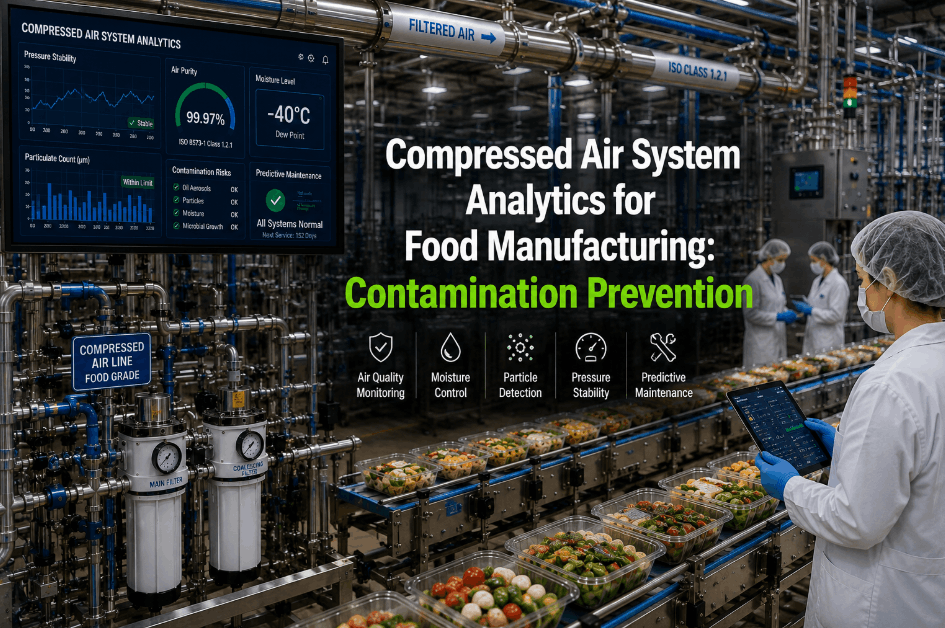
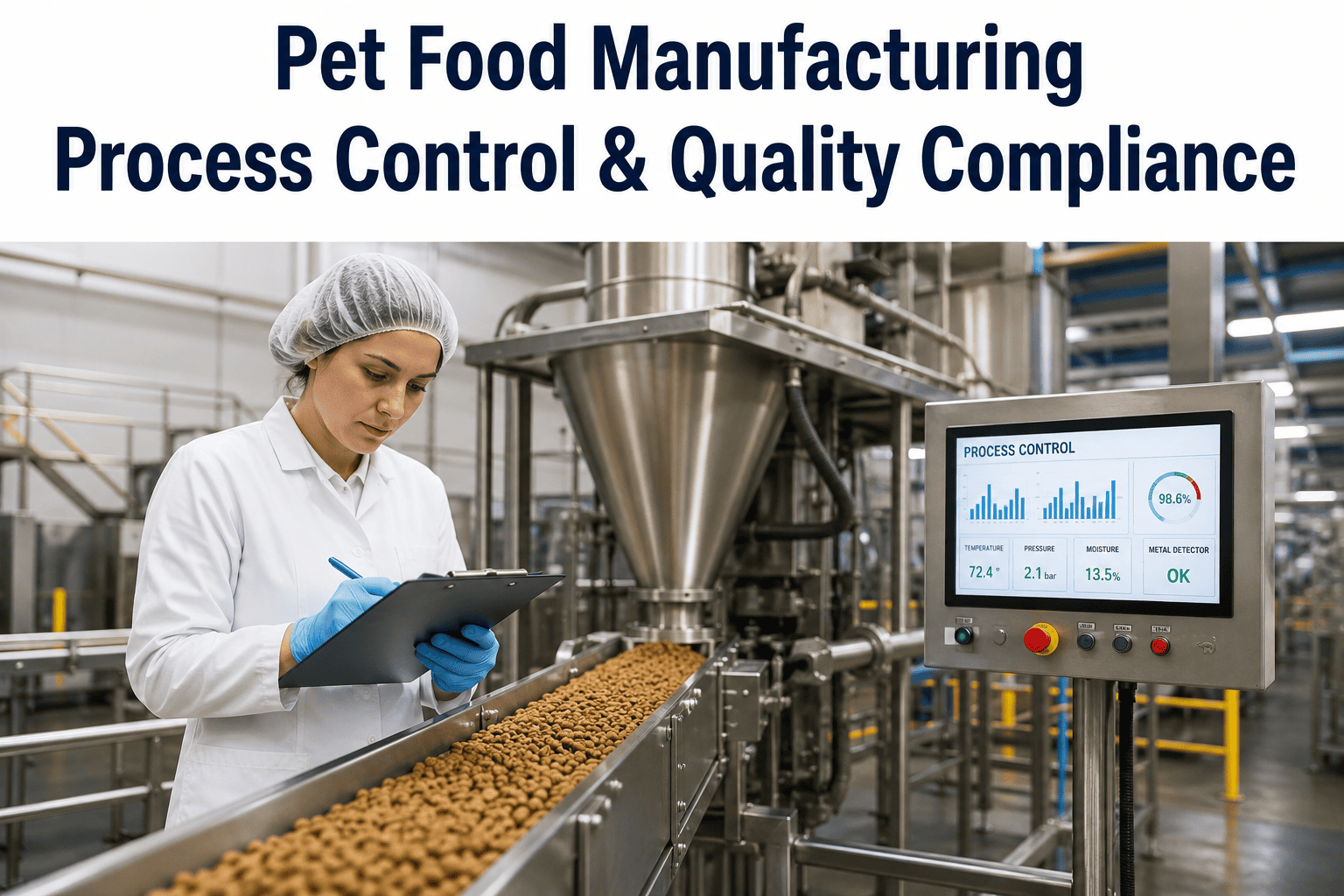
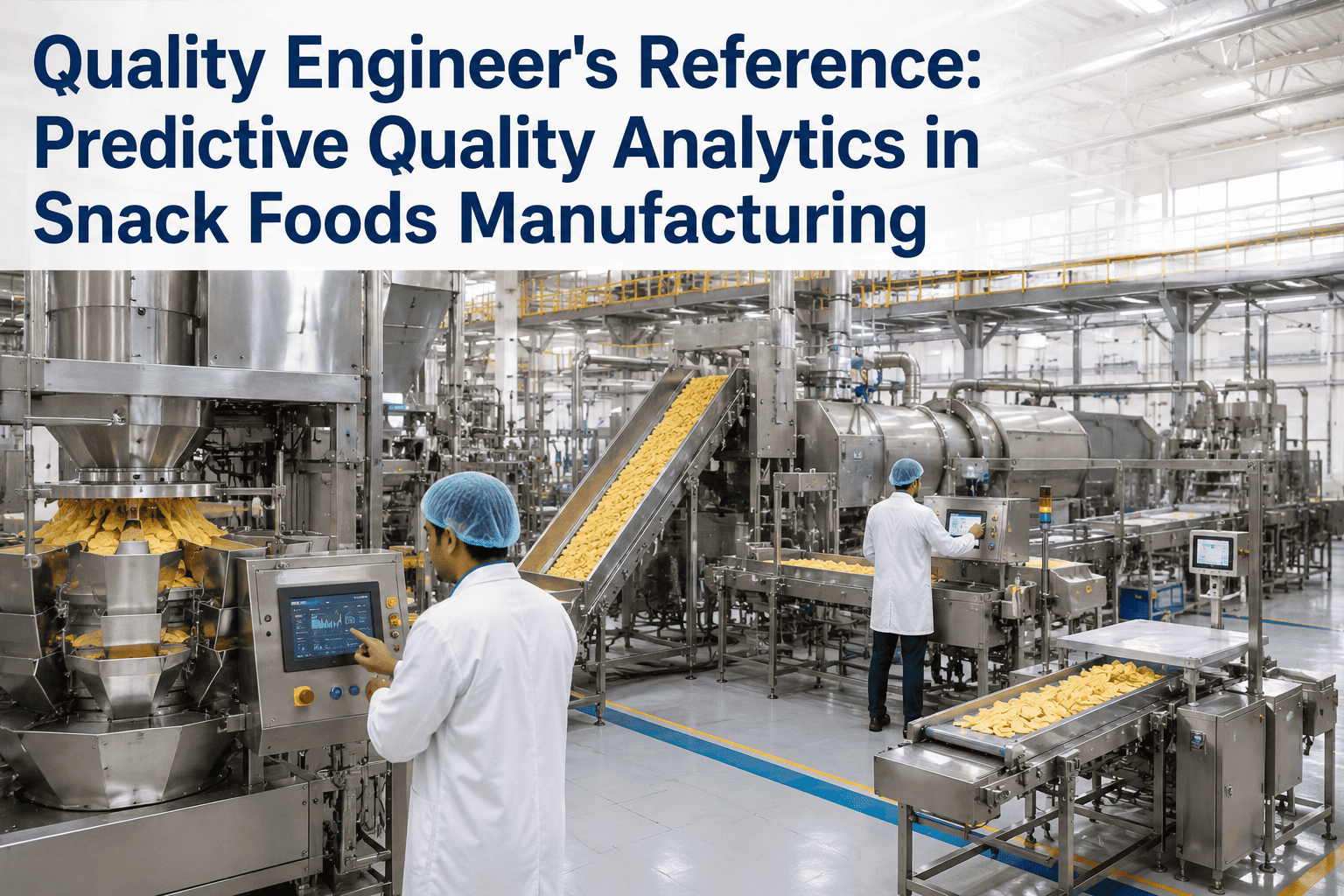
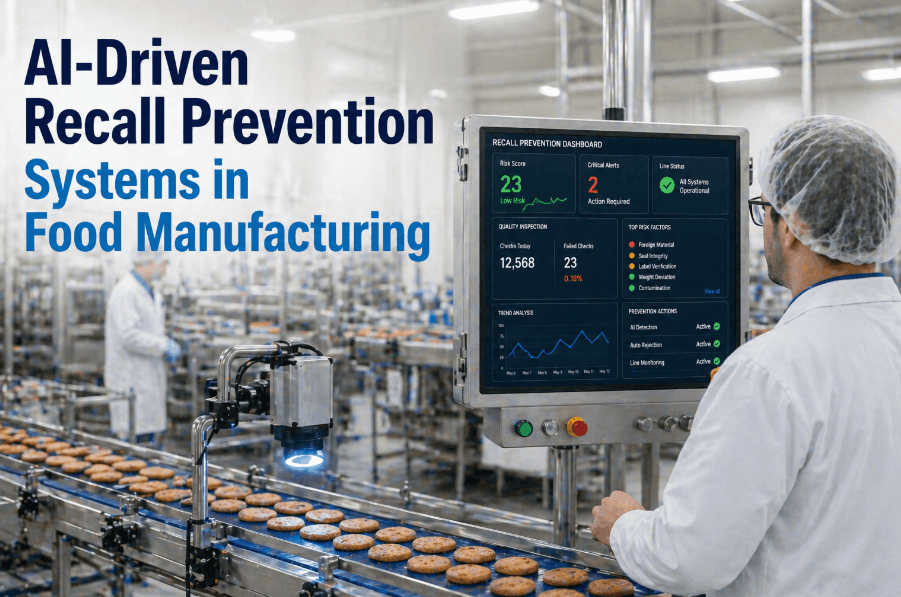
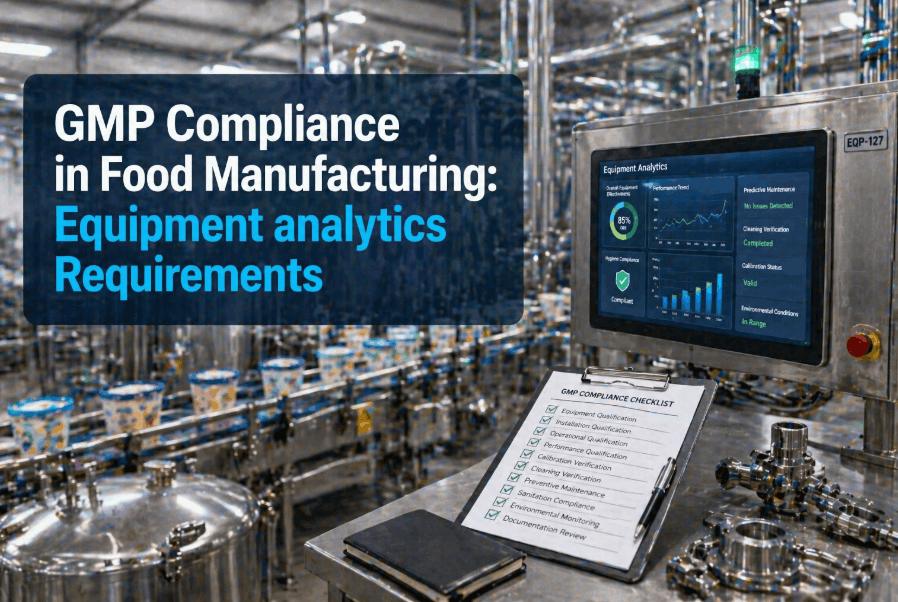
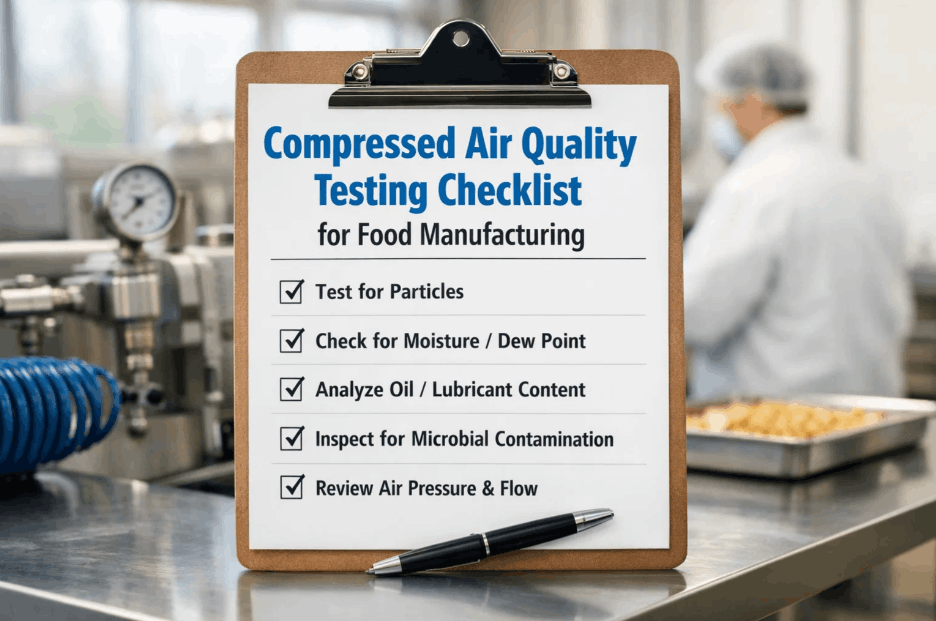
In food manufacturing plants, compressed air system analytics have emerged as the most critical — and most overlooked — line of defense against product contamination. Compressed air comes into direct or indirect contact with food products, packaging materials, and processing equipment throughout every stage of production. When air quality degrades due to moisture ingress, lubricant carryover, or microbial growth, the consequences range from costly product recalls to serious public health incidents. Proactive food plant air quality monitoring powered by AI-driven analytics is now the industry standard for achieving ISO 8573-1 compliance and eliminating contamination risk at the source. Book a Demo to see how ifactory's Compliance Tracking module builds a 24/7 air quality intelligence layer across your entire facility.
Prevent Compressed Air Contamination Before It Reaches Your Product
ifactory's AI-driven compliance tracking delivers real-time compressed air quality analytics, automated ISO 8573-1 reporting, and predictive filter management — purpose-built for food and beverage manufacturing environments.
Why Compressed Air Contamination Is a Silent Threat in Food Processing
Most food plant engineers understand the risks of biological contamination on processing surfaces, but far fewer have fully quantified the contamination risk embedded in their compressed air systems for food processing. Every cubic meter of compressed air drawn from ambient conditions carries moisture, particulates, and microorganisms into your pneumatic network — and without continuous monitoring, these contaminants travel directly to filling nozzles, blowing stations, and product conveyors without triggering a single alarm. A 2024 industry analysis found that compressed air contamination events account for nearly 18% of food plant production holds triggered by quality audits, making reactive maintenance an unacceptable strategy for any facility operating under modern food safety standards.
AI-Driven Compressed Air Analytics for Food Manufacturing
ISO 8573-1 Compliance Tracking · Filter Lifecycle Analytics · Real-Time Dew Point Monitoring · Contamination Risk Scoring
99.7%
Air Quality Compliance Rate Achieved Through Predictive Filter Management and Dryer Analytics
60%
Reduction in Unplanned Compressed Air System Downtime Using Predictive Maintenance Scheduling
14-Day
Advance Warning Window for Filter Saturation and Dryer Performance Degradation Events
Understanding ISO 8573-1: The Compliance Standard Your Compressed Air System Must Meet
ISO 8573-1 compliance defines the purity classes for compressed air used across industrial applications, with the most stringent classes reserved for direct food contact environments where oil concentrations must remain below 0.01 mg/m³ and dew points as low as -70°C in critical zones. The core challenge is not simply installing the right filtration equipment — it is continuously verifying that the installed system performs within specification during every production shift, since a desiccant dryer that begins channeling at 2:00 AM can partially recover before a technician arrives at 6:00 AM, masking the deviation entirely. Book a Demo to see how ifactory's continuous ISO 8573-1 compliance monitoring eliminates these blind spots with sub-minute sensor polling across all air quality parameters.
Compressed Air Contamination Pathway — From Compressor Intake to Food Contact Point
Ambient Air Intake
Particulates, moisture, and microorganisms enter with every compression cycle
Filter & Dryer Stage
Degraded filters and under-performing dryers fail silently — contamination passes through
Distribution Network
Moisture in pipework generates biofilm and corrosion, adding secondary contamination
Food Contact Point
Contaminated air reaches filling, blowing, or cutting stations — triggering a product hold
The Four Critical Failure Points in Food Plant Compressed Air Systems
Effective food grade compressed air management requires monitoring four distinct failure domains simultaneously — each with its own degradation signature and analytics requirement. Addressing any one in isolation leaves the others as unmonitored contamination vectors that standard threshold-based alarms will never surface in time.
1
Coalescing Filter Saturation — The Invisible Bypass Risk
A coalescing filter operating past its rated capacity develops a bypass flow channel where unfiltered aerosols — including oil mist and sub-micron particulates — pass directly into the clean air stream. Compressed air filter analytics track differential pressure trends across each filter stage, identifying saturation well before the bypass threshold is reached and auto-generating replacement work orders with a 14-day lead window.
Contamination Risk
Critical
2
Refrigerant Air Dryer Performance Drift — Moisture Carryover Events
Refrigerant dryers degrade gradually as refrigerant levels drop and heat exchanger surfaces foul, causing a rising outlet dew point that creeps above the ISO 8573-1 Class 2 limit before any conventional alarm triggers. Air dryer analytics capture the thermal trend of the dew point trajectory in real-time, alerting maintenance teams days before a moisture carryover event compromises a production run.
Book a Demo to review a live dew point analytics dashboard.
Moisture Risk
High
3
Compressor Lubricant Carryover — Oil-in-Air Contamination
In lubricated rotary screw compressors, worn piston rings or degraded separator elements can dramatically increase oil aerosol carryover — imparting taste, odor, and chemical contamination to food products at parts-per-billion concentrations. Oil vapor sensor analytics integrated with compressor runtime and oil change interval data allow predictive intervention before separator elements reach end-of-life.
Oil Carry Risk
High
4
Pipework Biofilm & Corrosion — The Distribution Network Threat
Moisture ingress from failing dryer seals, combined with warm ambient temperatures in production areas, creates ideal conditions for biofilm growth on pipe inner surfaces — a contamination source that compressor-room sensors will never detect. Compressed air monitoring at multiple distribution nodes is the only way to identify localized contamination events downstream of an otherwise healthy compressor room.
Biofilm Risk
Medium
How AI-Driven Compressed Air Analytics Works: The Three Intelligence Pillars
ifactory's compressed air AI analytics for food manufacturing integrates sensor data ingestion, predictive degradation modeling, and automated compliance reporting into a unified platform — where the operational value comes from orchestrating all three layers into a single contamination prevention system rather than managing each in isolation.
Pillar 1: Continuous Sensor Intelligence
✓ Sub-minute polling of dew point, particulate count, and oil vapor sensors
✓ Automatic normalization of air quality readings against flow rate and temperature
✓ ISO 8573-1 purity class status displayed per zone across the facility
✓ Immediate alert escalation when any parameter approaches compliance limit
Pillar 2: Failure Forecasting
✓ Filter differential pressure trend modeling with 14-day replacement horizon
✓ Dryer dew point trajectory analysis to predict moisture breakthrough events
✓ Compressor separator element health scoring based on oil carryover rates
✓ Automatic CMMS work order generation with parts staging for predicted replacements
Pillar 3: Audit-Ready Documentation
✓ Continuous ISO 8573-1 compliance log with immutable timestamped records
✓ Automated non-conformance reports for any out-of-specification air quality event
✓ Audit-ready export for BRC, SQF, and FSSC 22000 food safety scheme audits
✓ Regulatory deviation trend analysis for proactive CAPA management
Compressed Air Testing in Food Plants: Moving from Periodic Sampling to Continuous Analytics
Traditional compressed air testing in food manufacturing relies on quarterly or monthly microbiological and chemical sampling programs — but a dryer failure on Day 3 of a quarterly testing cycle will go undetected for up to 87 days, producing contaminated air across hundreds of production shifts before the next scheduled test captures the deviation. Sensor-based monitoring of particle concentration, dew point, and oil vapor treats every minute of production as a compliance checkpoint, generating an unbroken audit trail that satisfies the documentation requirements of BRC Global Standard Issue 9, FSSC 22000 Version 6, and SQF Edition 9. Book a Demo and review a sample compliance audit export from an active food plant installation.
Contamination Detection Speed
Days to weeks after event
Real-time (sub-60 seconds)
Prevents product exposure
Filter Replacement Timing
Fixed calendar schedule
Predictive (14-day advance alert)
Eliminates emergency shutdowns
ISO 8573-1 Audit Trail
Sparse (quarterly samples only)
Continuous immutable log
Audit-ready at all times
Dew Point Monitoring
Manual portable meter checks
Continuous in-line sensor network
Zero moisture breakthrough events
Compliance Reporting Time
Manual compilation (8–12 hours)
Automated (on-demand export)
Audit preparation time eliminated
Air Compressor Analytics for Food Plants: Quantifying the ROI of Proactive Monitoring
The business case for air compressor analytics in food manufacturing is grounded in three measurable value streams: contamination incident avoidance, maintenance cost reduction, and compliance labor savings — each delivering a payback period of 6–14 months for mid-size facilities. A single compressed air contamination event resulting in a product hold or recall carries direct costs of $80,000–$500,000 depending on the scale of the affected production run, and when combined with a 35–45% reduction in filter consumable costs achieved through predictive scheduling, the ROI case becomes compelling for both operations and finance stakeholders. Book a Demo to model the financial impact for your specific fleet size and production environment.
The food plants that achieve zero compressed air contamination incidents are not the ones with the newest compressors or the most expensive filtration packages. They are the plants that have built continuous intelligence into their air systems. A dew point sensor generating data without a predictive analytics layer is just an alarm waiting to trigger after the damage is done. The same sensor connected to a platform that understands its historical pattern, its dryer's thermal trajectory, and its correlation with downstream filter performance becomes a contamination prevention asset. Real-time compressed air analytics is the infrastructure that transforms a reactive food safety program into a proactive one.
Food Safe Air System Implementation: The Four-Stage Analytics Maturity Roadmap
Deploying a fully integrated food safe air system monitoring program does not require a complete infrastructure overhaul — ifactory's staged maturity model delivers measurable value at each phase while building toward a fully autonomous contamination prevention system over 8–12 months.
Stage 1: Sensor Network Deployment
Install in-line dew point, particulate, and oil vapor sensors at critical monitoring points: compressor outlet, post-dryer, post-filtration, and at food contact zone distribution headers. Connect all sensors to the ifactory ingestion layer and establish ISO 8573-1 purity class baselines per production zone.
Stage 2: Predictive Component Modeling
Train predictive degradation models on 12 months of historical differential pressure, dew point, and oil carryover data. Activate automated work order generation for filter replacement and dryer servicing events with a minimum 14-day advance window.
Stage 3: Cross-System Compliance Integration
Integrate compressed air quality data with production scheduling, HACCP control point records, and food safety management system documentation. Enable automatic non-conformance reporting for any ISO 8573-1 deviation and link air quality status to production line authorization workflows.
Stage 4: Autonomous Contamination Prevention
Operate a fully autonomous compressed air quality management system where predictive alerts, compliance documentation, and maintenance scheduling require zero manual intervention — with audit-ready reporting and a measurable zero-incident contamination record that becomes a competitive differentiator in customer and retailer audits.
Frequently Asked Questions: Compressed Air Analytics for Food Manufacturing
What ISO 8573-1 purity classes apply to food manufacturing compressed air?
Direct food contact applications typically require Class 1 or Class 2 air purity for particulates, oil content, and dew point, while indirect contact zones may use Class 3 or Class 4. ifactory's compliance tracking module automatically maps real-time sensor readings to the correct purity class for each monitored zone in your facility.
Can ifactory's analytics integrate with our existing compressor management system?
Yes — ifactory supports open-protocol integration via Modbus, OPC-UA, and MQTT, making it compatible with all major compressor controllers without hardware modifications.
Book a Demo to walk through your specific integration architecture with our team.
How does predictive filter analytics reduce food plant maintenance costs?
Instead of replacing filters on a fixed calendar schedule, ifactory triggers replacements based on measured differential pressure trends — capturing full service life and eliminating both premature waste and late-replacement contamination risk. Most plants achieve a 30–45% reduction in annual filter consumable spend within the first year.
Does continuous compressed air monitoring satisfy BRC and FSSC 22000 audit requirements?
Yes — BRC Issue 9 and FSSC 22000 Version 6 both require documented air quality monitoring at a risk-appropriate frequency, and continuous sensor-based monitoring exceeds those minimum standards. ifactory generates pre-formatted audit evidence exports aligned to BRC, FSSC 22000, SQF, and IFS Food scheme documentary requirements.
What happens when a compressed air quality deviation is detected during production?
ifactory triggers an immediate multi-channel alert to the maintenance supervisor and quality manager, automatically generates a non-conformance record with timestamped sensor data, and — when integrated with production scheduling — can initiate an automated production hold until the air quality issue is resolved and re-verified.
Build a Zero-Contamination Compressed Air Program with AI-Driven Analytics
ifactory's Compliance Tracking module delivers continuous ISO 8573-1 air quality monitoring, predictive filter and dryer analytics, and automated audit-ready documentation — purpose-built to eliminate compressed air contamination risk in food and beverage manufacturing environments.