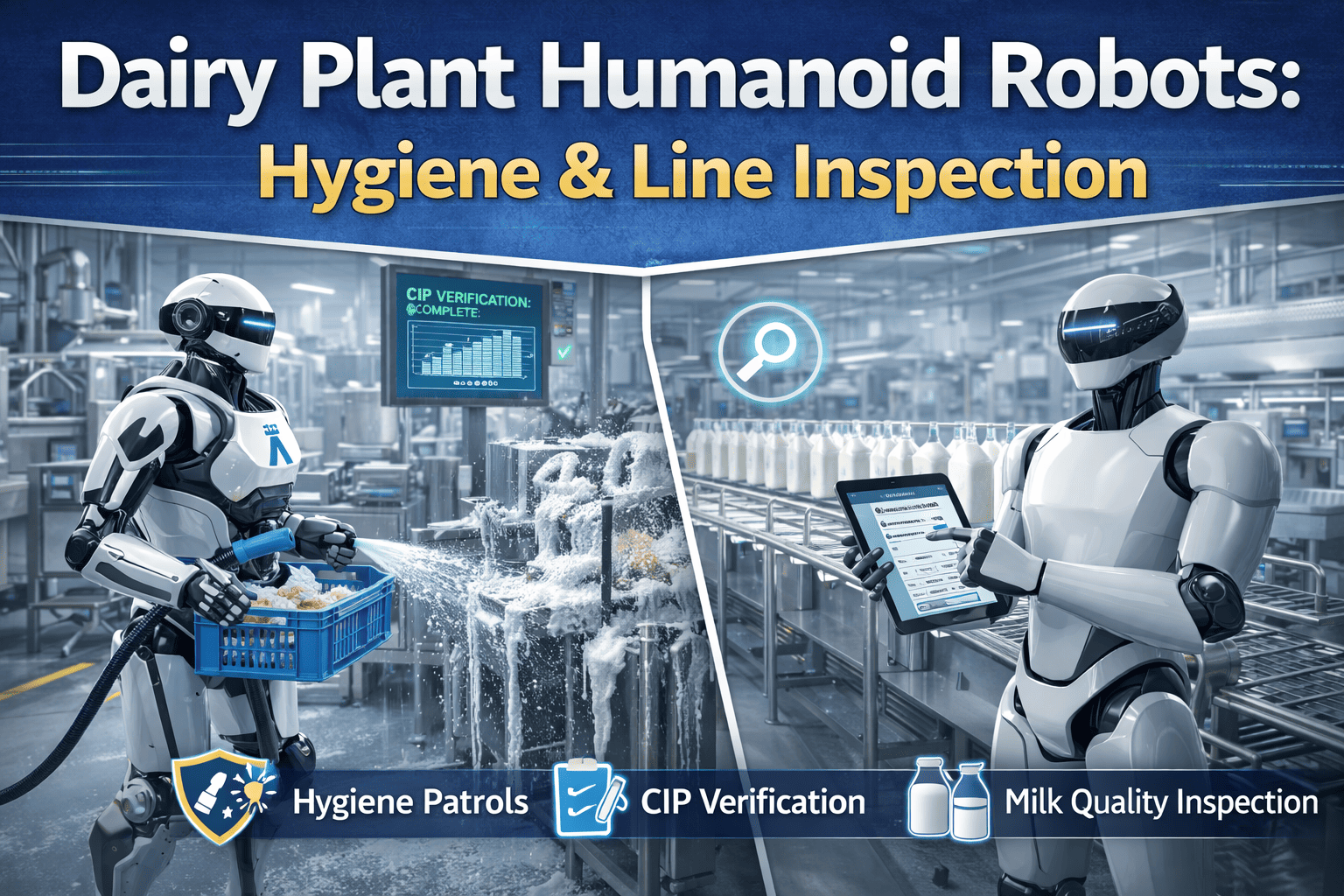
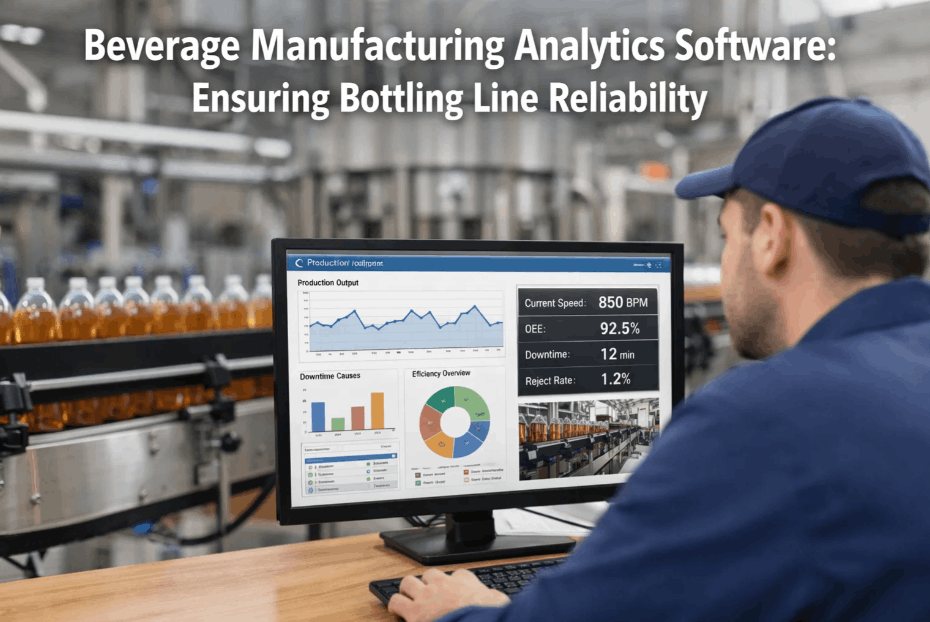
Dairy and beverage bottling lines operating at 300-800 bottles per minute cannot afford human inspection gaps. Manual quality checks miss 2-8% of defects while consuming 40+ labor hours per shift. A single missed contamination or labeling error triggers recalls costing $2-10M and regulatory action. Robotic vision inspection systems deployed on bottling lines eliminate the speed-accuracy tradeoff — catching fill level drift, cracks, contamination, and labeling errors at line speed while generating immutable SQF/FSSC 22000-compliant inspection records automatically. Documented dairy and beverage deployments show 99.7% defect detection accuracy, zero audit findings on inspection records, and labor reduction of 60-75% on QA functions. See how robotic inspection works on your specific bottling line in a live demo.
The Bottling Line Inspection Problem
Manual quality control on high-speed bottling lines is structurally broken. An operator sampling every 100th or 500th bottle at 300-800 bottles per minute achieves, at best, 0.2-1% actual coverage. The gaps hide defects that reach customers: underfilled containers, cracked bottles, contamination particles, misaligned labels, and foreign objects. When defects reach market, the cost structure is punitive — field recalls, regulatory investigation, brand damage, and legal liability.
Manual inspection on high-speed lines cannot catch defects that automated vision systems identify reliably.
Full-time operators required per bottling line even with statistical sampling. Compliant inspection requires manual record-keeping.
Manual inspection logs are not ALCOA+ compliant. Auditors require electronic timestamps, system validation, and immutable trails.
A single missed defect that reaches market triggers field action, regulatory notification, and brand damage.
What Robotic Vision Sees on a Bottling Line
AI vision systems deployed on dairy and beverage bottling lines inspect in real time at line speed — detecting fill level, bottle integrity, contamination, and labeling with accuracy that manual inspection cannot achieve. The robot does not make decisions; it flags every defect and automatically records the finding in a format that SQF and FSSC 22000 auditors recognize as audit-ready.
Optical volumetric measurement of every container. Detects underfill, overfill, and meniscus anomalies. Records per-bottle measurement for trend analysis and CCP documentation.
Multi-wavelength imaging detects hairline cracks, glass fragments, and particulate contamination. Foreign object detection with size threshold and material classification.
OCR and positional verification of label alignment, content readability, and allergen statement presence. Flags labeling defects that trigger FALCPA non-compliance.
Optical torque estimation and seal presence verification. Detects missing caps, loose seals, and misalignment that compromises product integrity.
Spectral analysis detects color drift, clarity anomalies, and consistency variations that correlate with batch quality and spoilage indicators.
Every inspection result recorded with immutable timestamp, line identifier, batch number, and operator ID automatically. FDA 21 CFR Part 11 compliant records.
How Robotic Inspection Integrates with SQF/FSSC 22000 Compliance
Dairy and beverage bottling plants operating under SQF or FSSC 22000 certification carry strict documentation requirements for product inspection. Auditors expect: (1) objective evidence that every lot was inspected, (2) measurable acceptance/rejection criteria, (3) immutable records with timestamps and authorization, and (4) corrective action triggers when defects exceed threshold. Robotic vision systems deliver all four automatically. See how robotic inspection documentation maps to your auditor's checklist in a demo.
Every bottle imaged and analyzed by AI vision system at line speed. No sampling bias. No operator fatigue. Objective defect classification per predefined thresholds.
Defects categorized as critical, major, or minor. Classification rules configurable per product and SQF/FSSC 22000 standard. Compliant decision logic documented and validated.
Defective bottles automatically diverted to reject bin without operator intervention. System records rejection reason, timestamp, and batch. Zero confusing manual entries.
Electronic records with system-generated timestamps, operator authorization, batch traceability, and defect trend reports. Pre-formatted exports for auditors. Instant retrieval on demand.
Documented Bottling Line Outcomes
Results from dairy and beverage bottling plant deployments. Robotic vision systems integrated with existing bottling line equipment and compliance systems.
Compared to 0.2-1% effective coverage from manual sampling. Includes fill level drift, contamination, labeling, cracks, and seal integrity.
40+ labor hours per shift per bottling line reallocated from sample inspection to exception handling and corrective actions.
SQF and FSSC 22000 auditors find no deficiencies in robotic inspection records. Automated timestamps and decision logic meet ALCOA+ standards without manual workarounds.
Documented dairy deployments report zero customer complaints attributable to missed inspection defects post-deployment. First-time rejection rate improves field quality perception.
Instead of 2-3 weeks of manual data assembly. All inspection records pre-formatted and electronically exportable. Auditors receive compliant documentation on demand.
Robotic vision systems operate at line speed without conveyor modification. Designed for typical dairy and beverage bottling speeds. No production slowdown.
How Robotic Vision Integrates with Existing Bottling Equipment
Robotic inspection systems do not require bottling line replacement. They integrate with existing equipment as an add-on monitoring layer. Vision cameras mount at inspection checkpoint post-line. Defect data feeds to your existing quality management system and ERP.
Robotic vision monitors output directly from existing filling and capping equipment. No line modification. Defect signals trigger automatic reject mechanisms on compatible equipment.
Vision system communicates with existing plant control systems via Ethernet/Modbus. Real-time signals halt line or trigger reject. Integrates with existing OEE dashboards.
Inspection data exported to your existing QMS automatically. Defect records, batch traceability, and SPC data populate without manual entry. Pre-formatted for audit export.
Vision system operates independently if network connection is lost. Records queue locally and sync when connectivity resumes. Zero downtime risk.