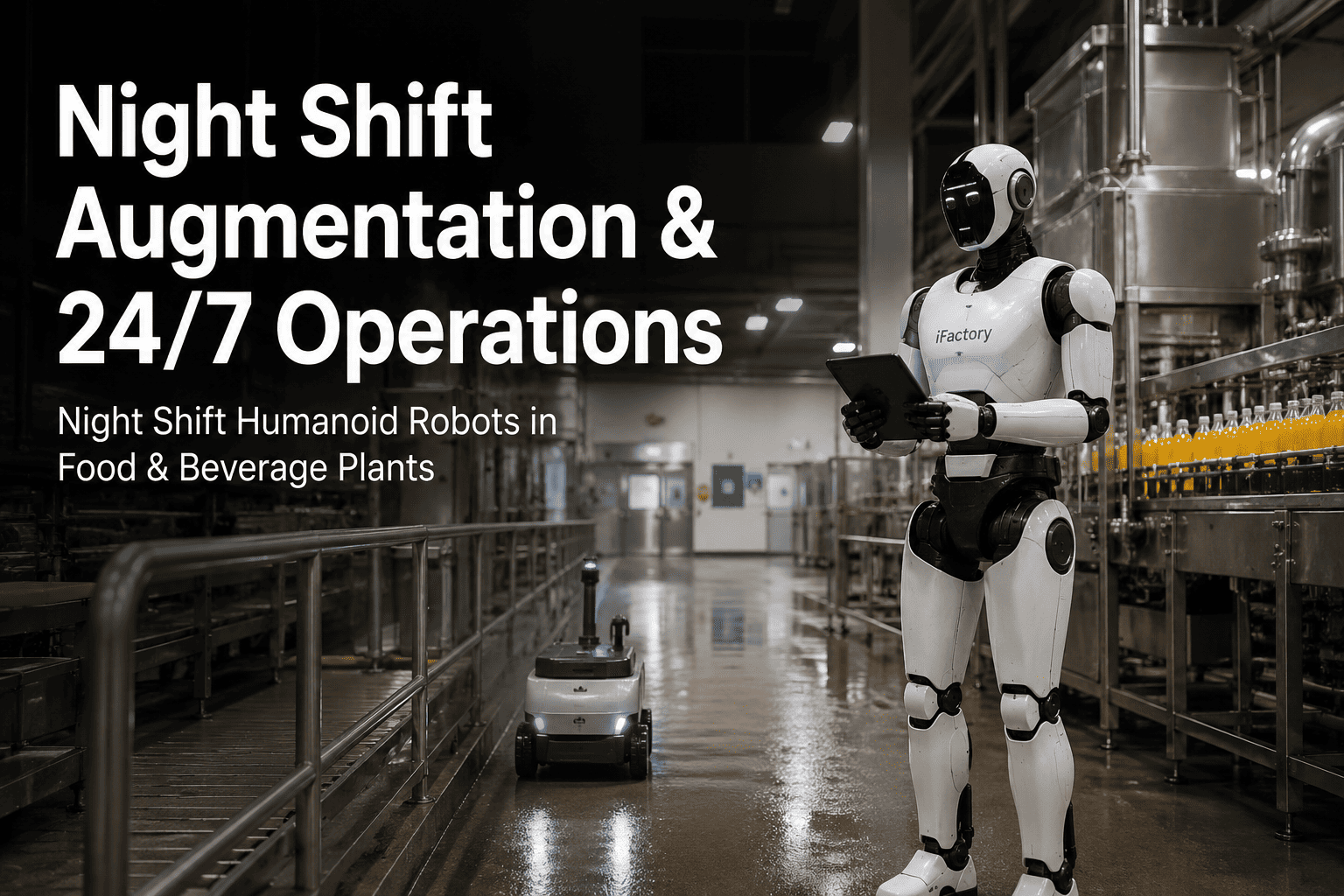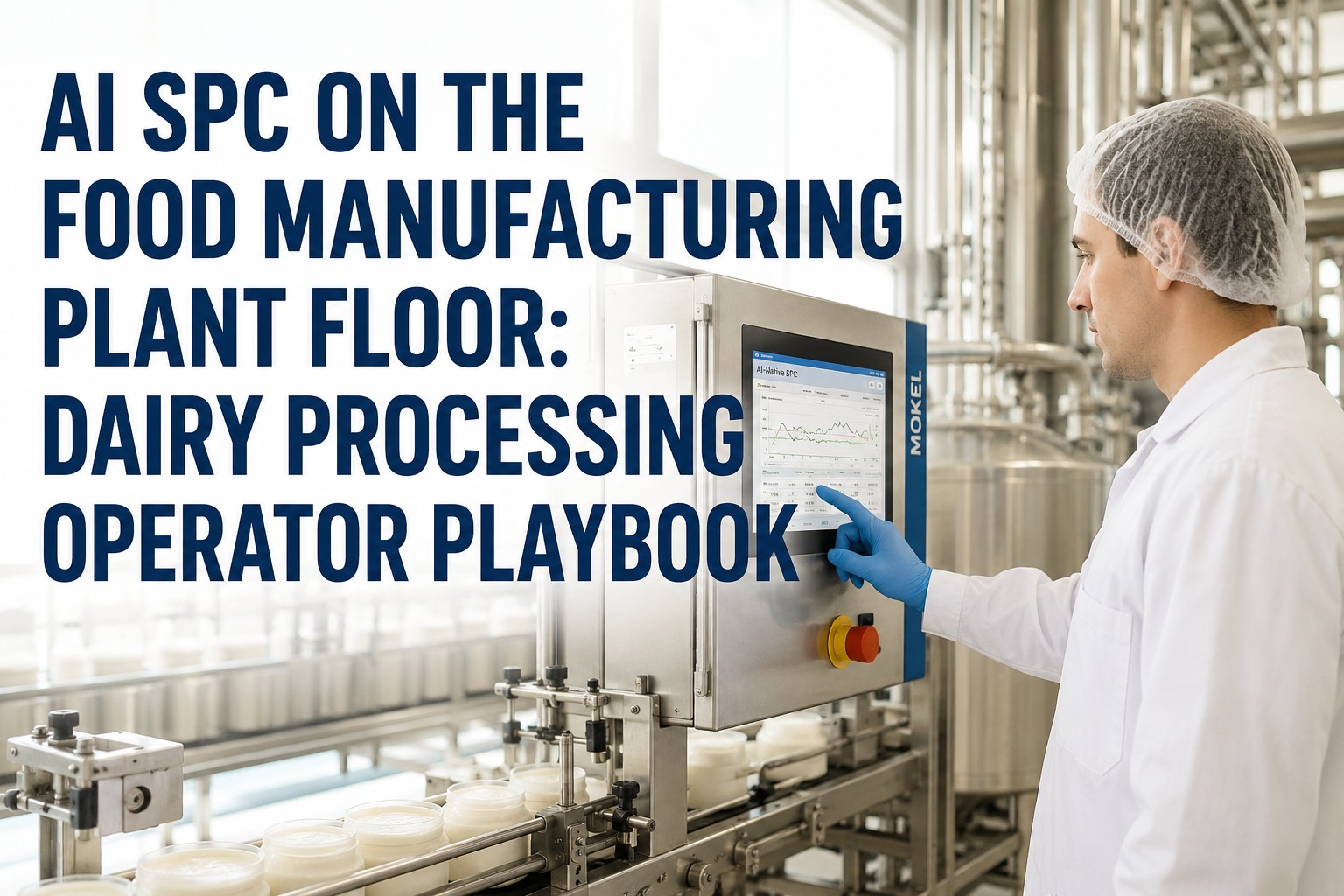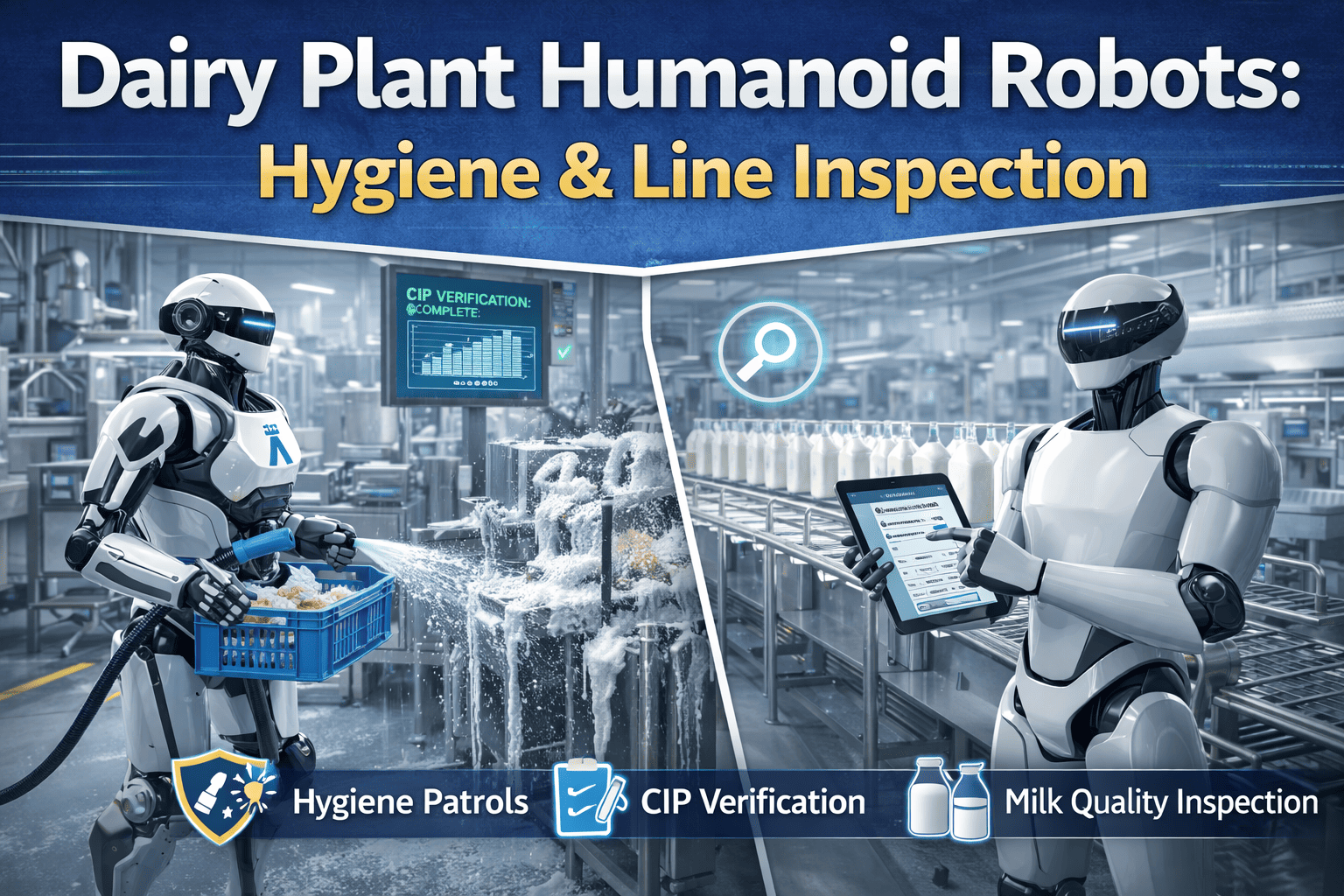
Humanoid robots deployed in dairy plants face a paradox: they are designed to interact with human environments, but dairy production requires sterile zones where external electronics introduce contamination risk. The actual automation solutions working in dairy facilities today are not humanoid — they are purpose-built systems: stationary AI vision cameras for line inspection, quadruped robots for outdoor and maintenance areas, and IoT sensor networks for equipment monitoring. This guide separates the theoretical promise of humanoid robots in dairy operations from the documented reality of what automation solutions are actually solving critical dairy plant problems in 2026. See what automation actually works in dairy plants.
Why Humanoid Robots Don't Work in Dairy Plants (Yet)
Humanoid robots are designed for human environments — offices, retail spaces, service settings. Dairy plants operate in a fundamentally different constraint model. Product safety requires strict separation of food zones from external contamination sources. Electronics, moving joints, and actuators introduce vectors for pathogenic contamination. Every non-dairy item that enters a production or product-contact area must be validated against FDA and SQF/FSSC 22000 standards — a process that takes 6-18 months per equipment type.
Humanoid robots carry electronics, motors, and sensors that shed particles. In sterile dairy zones, this is unacceptable. Stationary systems eliminate this risk entirely. Quadruped robots operate in maintenance/outdoor areas only.
FDA and SQF require documentation that every item in food zones meets contamination standards. Humanoid robots lack this validation. Purpose-built dairy automation systems are pre-validated and documented.
Dairy plants operate at temperatures (0-10°C in processing, -18°C in storage) where humanoid actuators and batteries degrade faster. Stationary cameras and hardened sensors are rated for the environment.
Humanoid robots cost $150K-$400K per unit with unproven ROI in dairy. AI vision and quadruped systems cost 30-60% less with documented 18-30% maintenance reduction and 60-75% QA labor savings.
No USDA or FDA guidance exists for humanoid robots in dairy. Deploying one means becoming a regulatory pioneer with unquantified liability. Purpose-built systems operate within established compliance frameworks.
What Actually Works in Dairy Plants Today
Documented automation solutions deployed at scale in dairy facilities. Each solves specific problems within established compliance frameworks. See which solutions map to your facility's biggest bottlenecks.
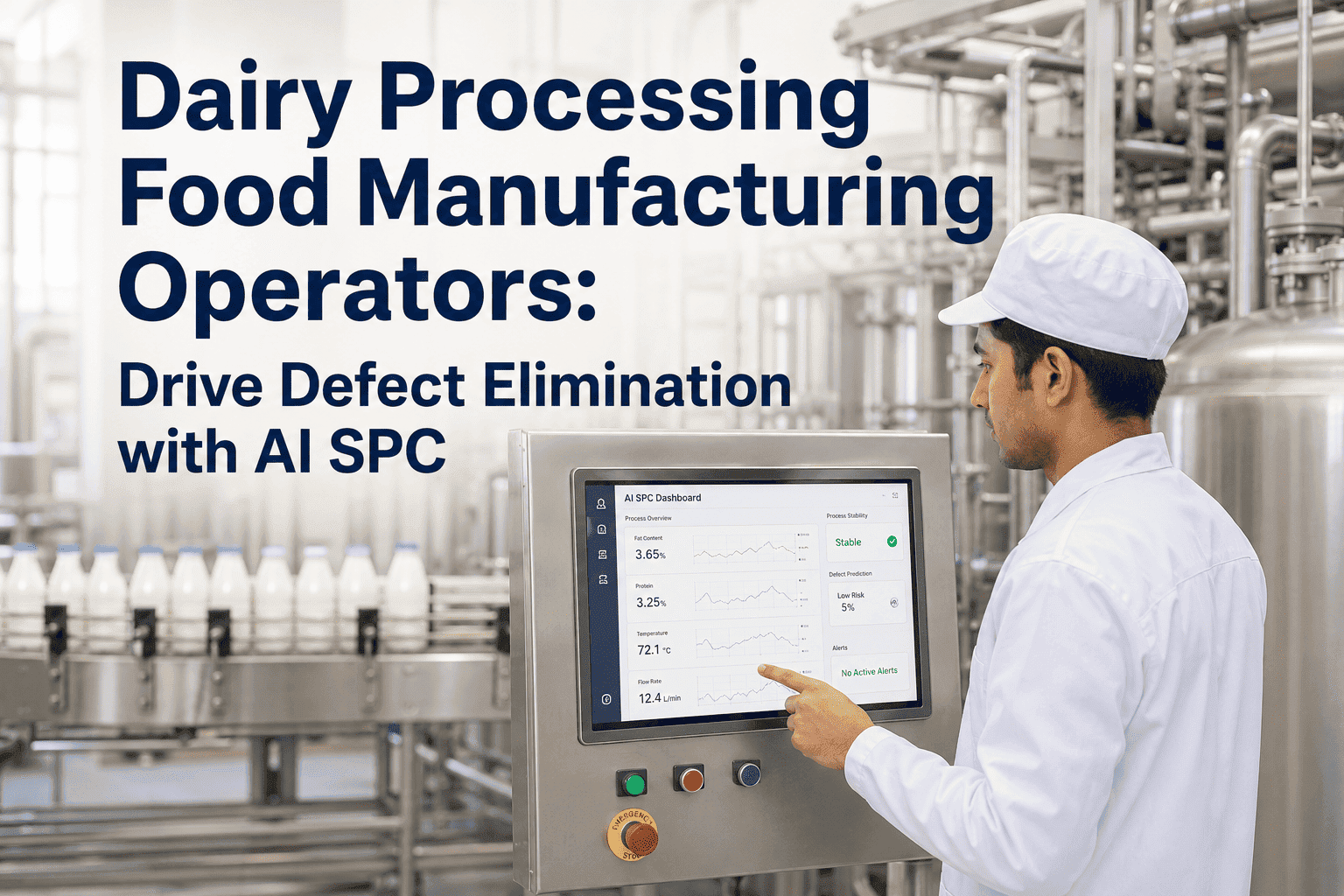
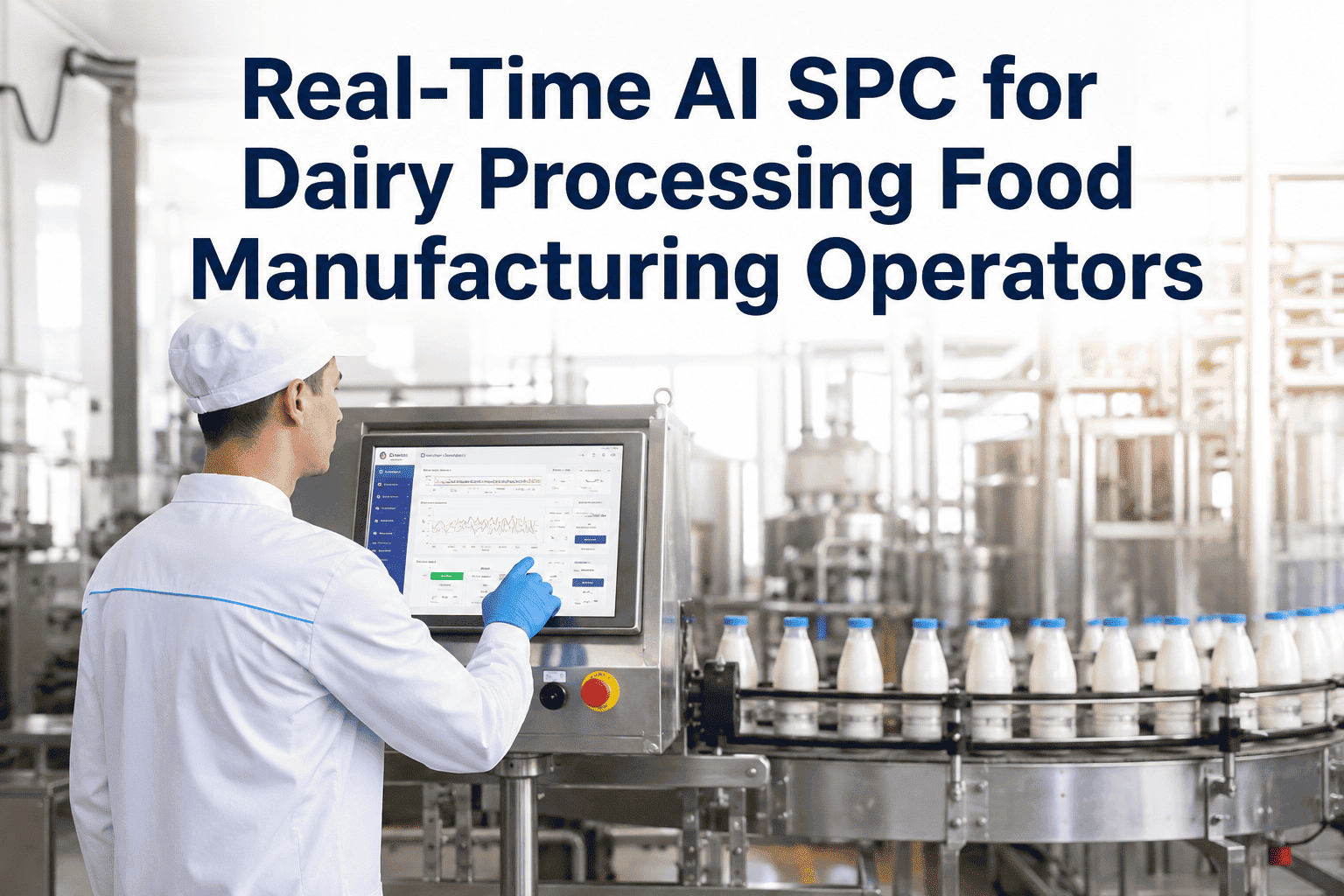
Fixed cameras at inspection checkpoints. 99.7% defect detection. Zero food contamination risk. SQF/FSSC 22000 compliant. Documented 60-75% QA labor reduction. Deployed in 100+ dairy facilities.
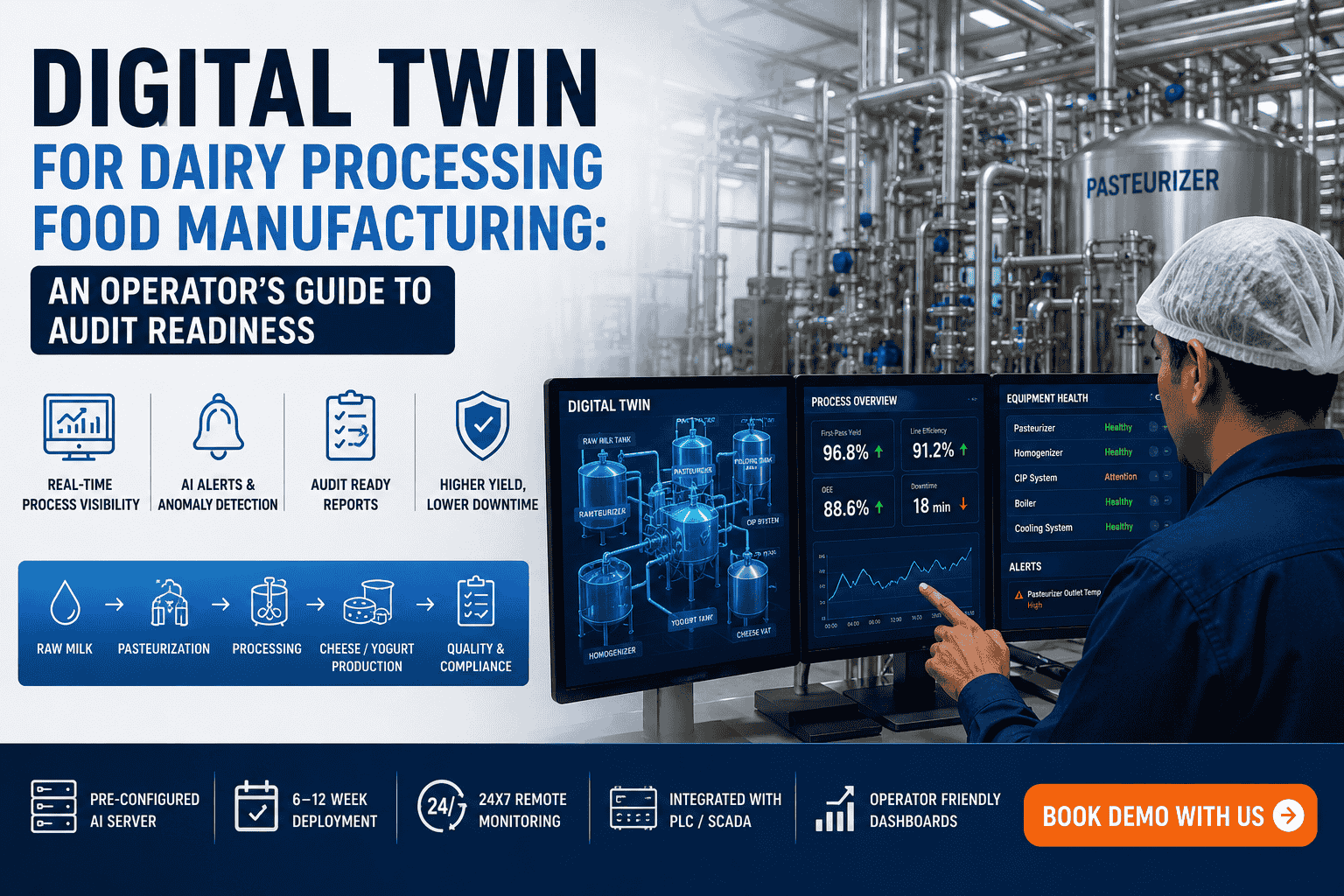
Temperature, humidity, pressure sensors across CIP systems, chillers, and milk lines. Real-time data flow to CMMS. Predictive maintenance alerts 1-2 weeks before failure. 18-30% maintenance cost reduction documented.
Spot-like robots for facility perimeter patrols, equipment inspection in non-food zones, hazardous area monitoring. Operates in cold. No food contamination vector. Documented outcomes: reduced human exposure to hazards, predictive equipment analytics.
Live data from sensors and vision systems feeds CMMS and compliance system. SQF/FSSC 22000 audit records generated automatically. 140 hrs manual assembly reduced to 18 hrs per cycle. Zero audit deficiencies documented.
Humanoid Robot Pilot Projects in Food (What Actually Happened)
Several high-profile pilot projects have tested humanoid robots in food manufacturing environments. Here's what the documentation shows:
Documented Dairy Automation Outcomes (Real Deployments)
These outcomes come from actual purpose-built systems, not theoretical humanoid scenarios.
Bottling line inspection. 100+ dairy facilities. Zero missed contamination incidents post-deployment.
Operators reallocated from sampling to exception handling. No headcount addition required.
IoT + predictive analytics. Planned maintenance replaces emergency calls. Documented across 50+ dairy deployments.
Automated compliance from live data. Largest single-cycle maturity improvement in state benchmarking reports.
Instead of 2-3 weeks manual assembly. All records pre-formatted, electronically exportable.
IoT sensor networks. Predictive alerts before chillers, pumps, and CIP systems fail. Eliminates emergency downtime.
The Humanoid Robot Timeline: When They Might Actually Work in Dairy
This is not 2026. Humanoid robots in food manufacturing are a 5-10 year problem, not today's solution.
Continued proof-of-concept work in non-sterile food processing. Focus on robotics companies validating basic dairy environment compatibility. No production deployments. Risk remains high.
If regulatory pathway clarifies, FDA may issue preliminary guidance on humanoid food contact requirements. Specialized dairy-validated humanoid variants would begin development. 3-5 year lead time for production certification.
First production-scale humanoid deployments in dairy, IF validation completes and costs fall below competing stationary/quadruped systems. Current ROI gap suggests this doesn't happen until mid-2030s at earliest.