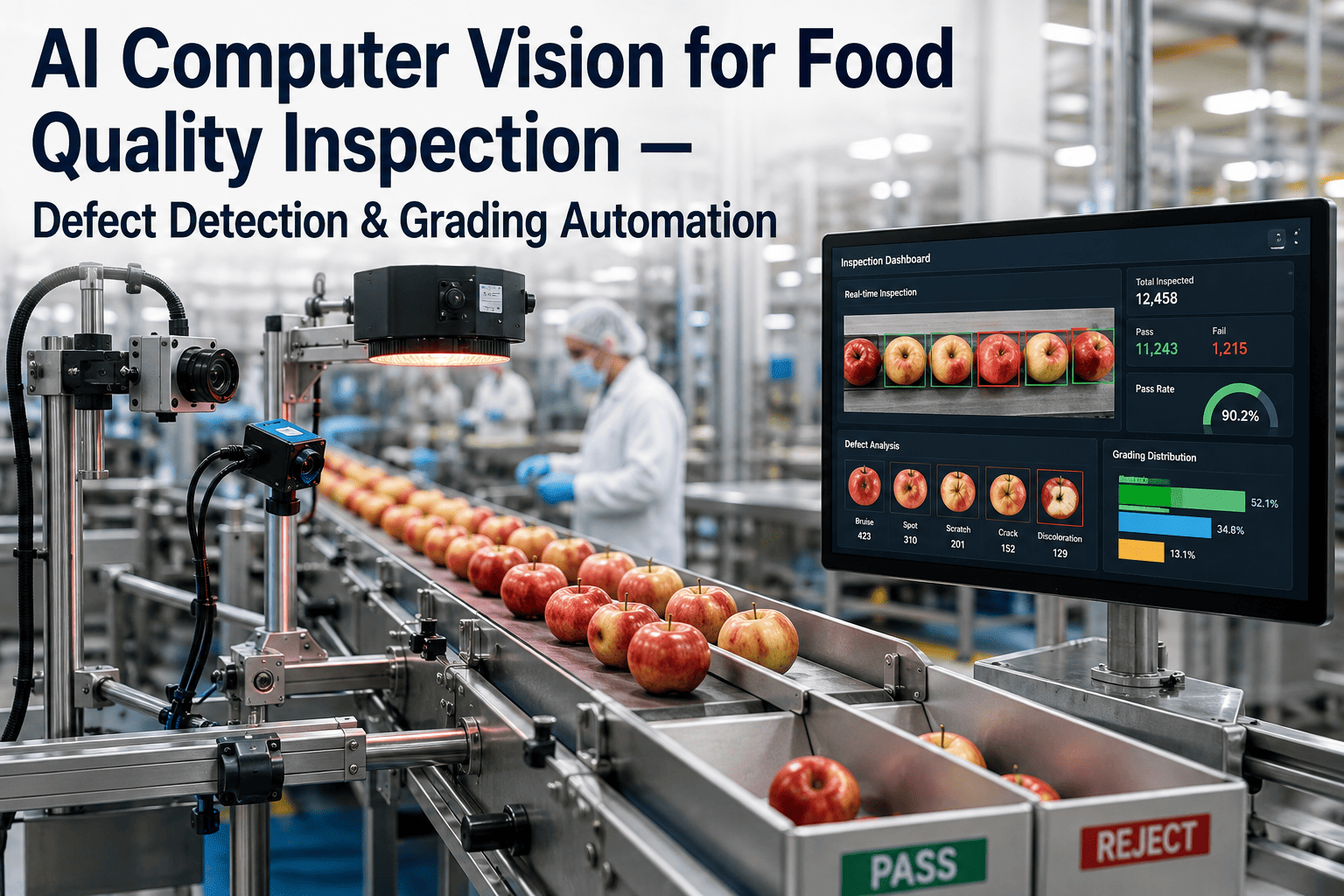
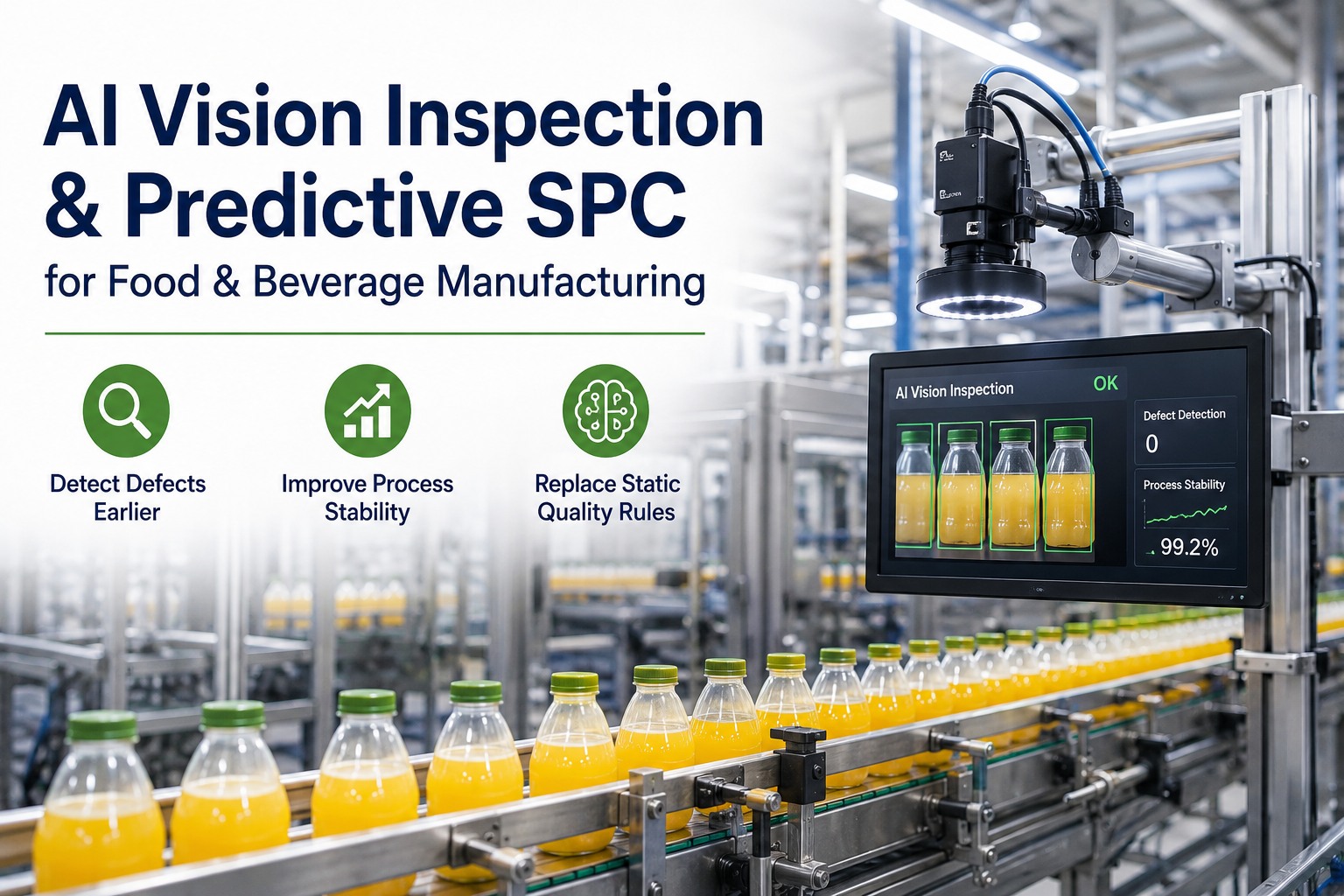
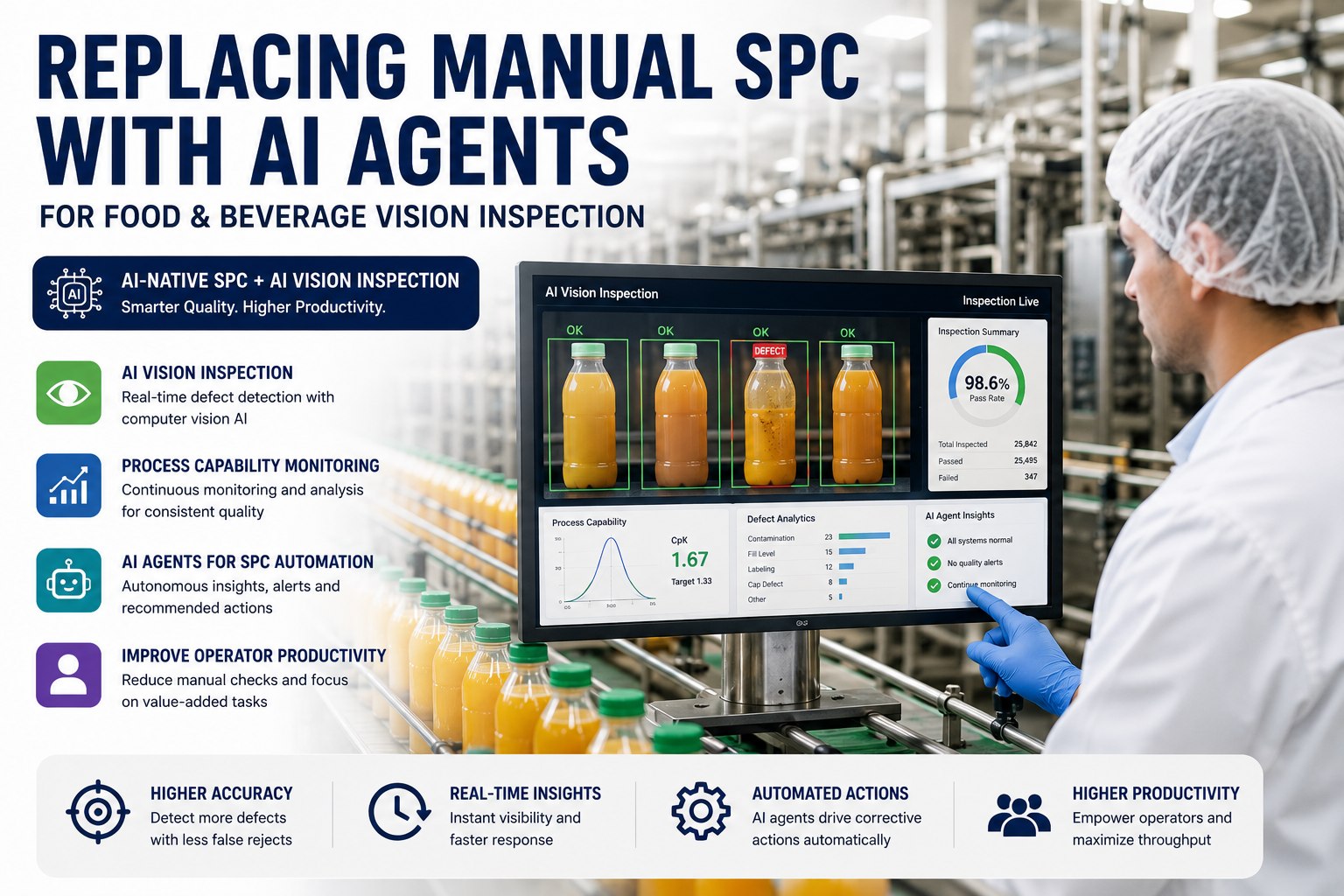
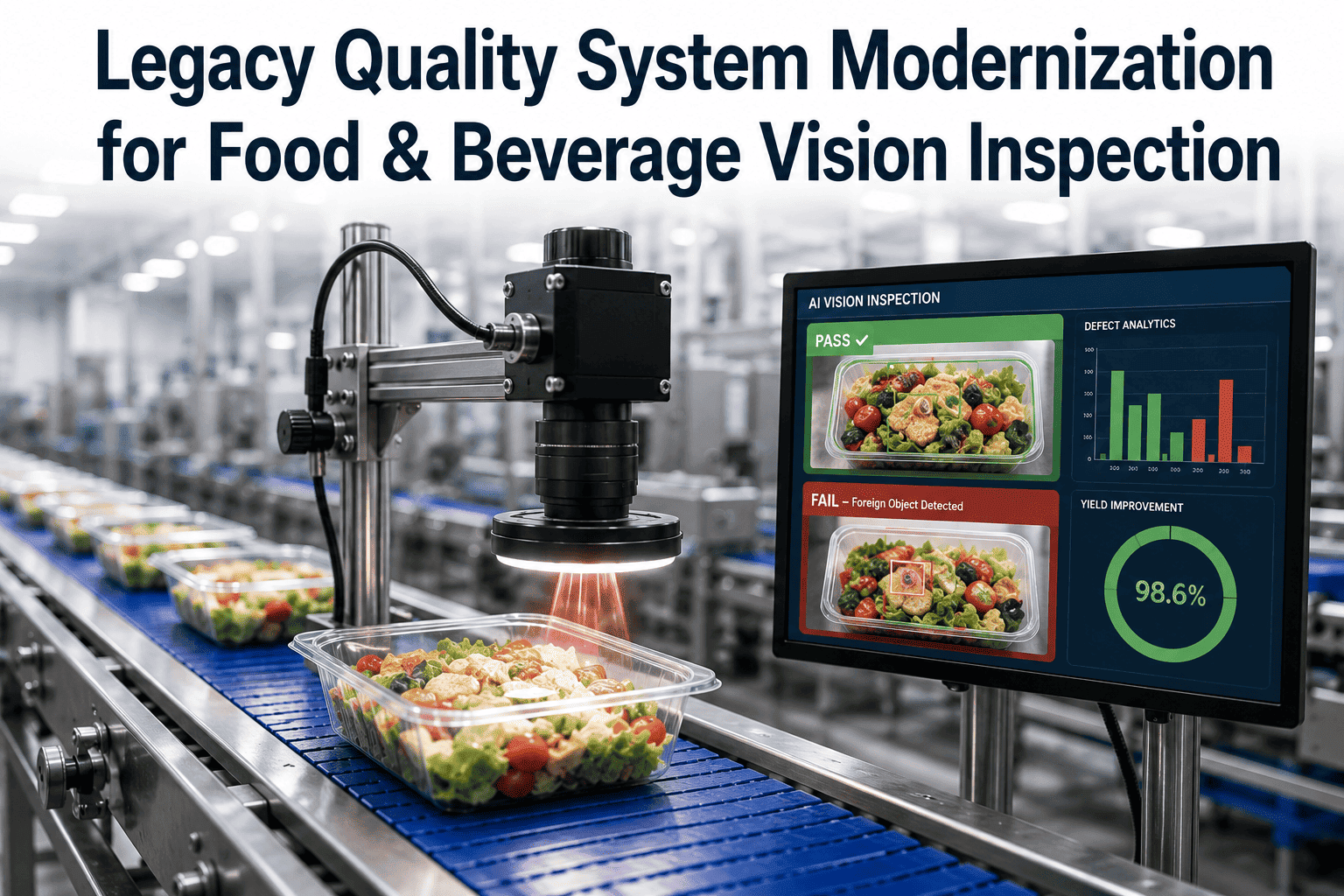
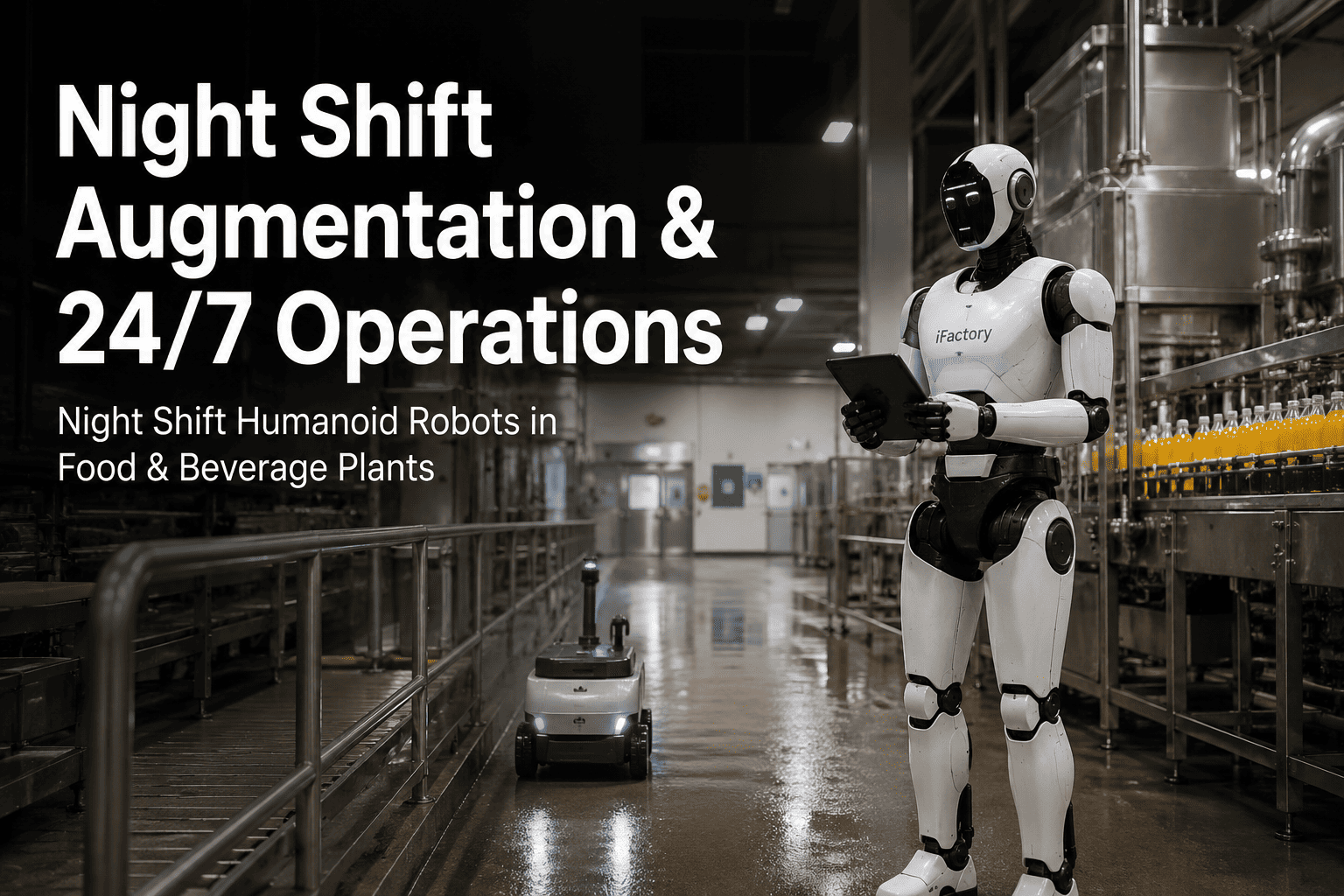
Beverage bottling lines operate at 200-600 bottles per minute — a speed where human inspection becomes physically impossible and traditional quality control fails silently until defects reach the consumer. Industrial humanoid robots equipped with AI vision handle three critical functions simultaneously: detect micro-defects at line speed with 99.2% accuracy, execute SKU changeovers in under 15 minutes (down from 45-60), and transmit real-time OEE data to manufacturing execution systems. The result is 12-18% throughput recovery on existing lines without capital equipment replacement. This guide shows beverage manufacturing directors and line engineers how humanoid robots are becoming essential production infrastructure — not optional automation. Book a demo to see how humanoid robotics applies to your beverage line SKU mix and production targets.
Food & Beverage Manufacturing — Humanoid Robotics 2026
Beverage Line Humanoid Robots: Speed + Quality at Line Rate
99.2% defect detection at 400+ bpm · <15 min SKU changeovers · Real-time OEE to MES · 12-18% throughput gain · Carbonated & still product support · Zero line redesign required.
99.2%
Defect detection accuracy on PET/glass
400+ BPM
Vision inspection line speed
<15 min
SKU changeover vs 45-60 min
12-18%
OEE recovery on existing lines
The Three Bottlenecks Humanoid Robots Eliminate From Beverage Production
At 300-600 bottles per minute, traditional quality control operates blind. Humanoid robots solve three interconnected problems that exist across every beverage bottling operation: inspection speed (human operators catch 65-75% of defects), changeover logistics (consuming 45-60 minutes per SKU variant), and OEE blindness (daily or weekly reporting creates 12-24 hour detection lag). These are not independent problems — a defect spike that goes undetected for 20 minutes contaminates 6,000-12,000 bottles; a changeover that runs 50 minutes instead of 15 costs $500-$1,000 in lost throughput; OEE data that arrives a day late prevents rapid problem response. Humanoid robots operating in real time address all three simultaneously.
1
Inspection Speed Bottleneck: 65-75% Defect Catch Rate at Human Speed
Visual inspection by human operators cannot keep pace with 400+ bpm lines. Micro-cracks in PET bottles, underfill errors, misaligned labels, and seal failures happen in milliseconds — a physical impossibility for human perception to track continuously. The industry standard is that human inspection catches 65-75% of defects, leaving 25-35% to reach packaging or consumers. The cost of a defect escaping to market (recall, brand damage, regulatory intervention, customer safety liability) is 1,000-10,000x the cost of catching it at the line. Humanoid vision systems with AI-trained models detect the same defects at 99.2% accuracy, eliminating the asymmetric risk that costs beverage manufacturers millions when quality failures reach customers.
99.2% accuracy vs 70% human
Micro-crack detection
Fill error prevention
2
Changeover Logistics: 45-60 Minutes of Non-Productive Line Downtime
Each SKU variant requires sequence-dependent changeover steps: drain old product from lines, replace filter cartridges, validate incoming pressure from supply, confirm fill-level calibration for new product density, set seal temperature, and run trial fill cycles to confirm quality. A single human operator manages these steps sequentially — taking 45-60 minutes from "stop running SKU A" to "first bottle of SKU B meets quality spec." In a production facility running 3-5 SKU variants per shift, changeover downtime alone consumes 2-5 hours daily. A humanoid robot coordinates these steps in parallel with line control systems, executing the complete changeover sequence in under 15 minutes. Across a 350-day production year, reducing changeover time from 50 to 15 minutes recovers 200+ hours of throughput — worth $100K-$200K+ per line in recovered production value.
15-min changeovers
Parallel orchestration
$100K+ annual recovery
3
OEE Visibility Lag: 12-24 Hours Before Leadership Sees Problems
Most beverage lines report OEE once daily — morning reports summarizing the previous shift's performance. A line that drops to 65% OEE at 3 PM on the night shift is not visible to production management until the next morning — 12-18 hours later, by which point compounding problems have already occurred. A defect detection failure affecting 10,000 bottles, a changeover delay cascading into subsequent SKU start, or an equipment fault that should have triggered maintenance — all of these remain invisible in real time, only surfacing in daily reports. Humanoid robots transmit OEE data every 60 seconds to manufacturing execution systems, enabling production directors to see and respond to problems within minutes instead of hours. Real-time visibility typically prevents 2-5% of undetected downtime that would otherwise cascade unrecognized through the shift.
Real-time MES feed
60-sec updates
2-5% downtime recovery
How Humanoid Robots Operate on Beverage Lines: Three Deployment Models
Model A
Inspection Specialist
Defect Detection Only
Single humanoid positioned at filling stage with AI vision. Detects micro-cracks, underfills, seal failures, label misalignment in real time at 400+ bpm. Automatically ejects defective bottles via pneumatic gates. Transmits defect count and types to MES for quality trending. Integrates with existing line PLC — zero line redesign required. This model delivers immediate defect accuracy improvement (65-75% to 99.2%) without changing line throughput or changeover workflows.
Accuracy: 99.2% micro-defect detection
Deployment: 30-45 days, non-invasive
ROI: Immediate defect cost reduction
Book Demo
Model B
Changeover Specialist
SKU Logistics Only
Single humanoid manages entire changeover sequence: product line drain, filter replacement, pressure validation, fill-level calibration for new SKU, seal temperature setting, trial fill cycles. Orchestrates steps in parallel with line control systems via network APIs. Reduces changeover time from 45-60 minutes to under 15 minutes. Executes across carbonated, juice, water, and specialty beverage product types. This model delivers fastest productivity recovery — recovered throughput time immediately translates to additional SKU production capacity.
Changeover: <15 min vs 45-60 min
Daily recovery: 2-3 hours per multi-SKU shift
ROI: $100K-$200K+ annual per line
Contact Support
Model C
Full-Stack Integration
Inspection + Changeover + Intelligence
Two coordinated humanoids — inspection robot + changeover robot — operating in concert with real-time OEE transmission to MES. Inspection humanoid feeds defect data (count, type, severity), changeover humanoid feeds downtime duration and setup validation status, and MES receives complete operational picture every 60 seconds. Manufacturing directors see real-time OEE trends, can distinguish whether downtime is driven by defects, changeover delays, or equipment faults, and respond with targeted interventions. This model delivers maximum visibility and responsiveness benefit — real-time signal typically enables additional 2-5% OEE recovery through faster problem response.
Integrated OEE: Real-time MES feed (60 sec)
Total throughput: 12-18% recovery on line
ROI: $250K-$500K+ annual per line
Book Demo
What Humanoid Integration Includes: Vision, PLC, Workflows, MES
Deploying humanoids on beverage lines requires more than hardware placement — it demands vision system calibration for your specific bottle geometry, PLC integration for line control coordination, changeover workflow orchestration for your SKU mix, and MES connectivity for real-time OEE transmission. iFactory's deployment package includes all required components, pre-configured for beverage manufacturing operations. Contact iFactory to scope the specific deployment model that fits your line configuration and production targets.
AI vision models
Trained + deployed
PET, glass, aluminum detection
Generic vision fails on beverage defects — trained models deliver 99.2% on your SKU mix and bottle formats
PLC integration
Line control coordination
Rockwell, Siemens, ABB, Beckhoff
Humanoid must coordinate rejection gates, line stops, parameter passes with existing automation — pre-built drivers reduce integration time from weeks to days
Changeover sequences
Orchestrated workflows
Drain, validate, test-fill templates
Changeover is sequence-dependent logic — pre-built templates for carbonated, juice, water reduce customization from weeks to days
MES connectivity
OEE transmission
Siemens MES, Rockwell FactoryTalk, Aspen
Real-time OEE data is only valuable if MES receives it — standard connectors available for major platforms
Bottle geometry training
Custom calibration
12-64 oz PET, glass, cans
Vision accuracy depends on correct bottle profile — pre-training on your SKU mix eliminates weeks of vision tuning
Implementation support
30-60 day hands-on
Beverage-experienced engineers
Humanoid integration is new to most facilities — dedicated support prevents deployment delays and false starts
FAQ: Beverage Line Humanoid Robotics Implementation
Unlock Beverage Line Throughput With Humanoid Robotics
99.2% defect detection at line speed. SKU changeovers under 15 minutes. Real-time OEE to MES. 12-18% throughput recovery without capital equipment replacement. Deployed across beverage bottling operations nationwide — with 30-60 day implementation support included and zero line redesign required.
Defect Detection
Fast Changeovers
Real-Time OEE
No Redesign
MES Ready
30-60 Days Live