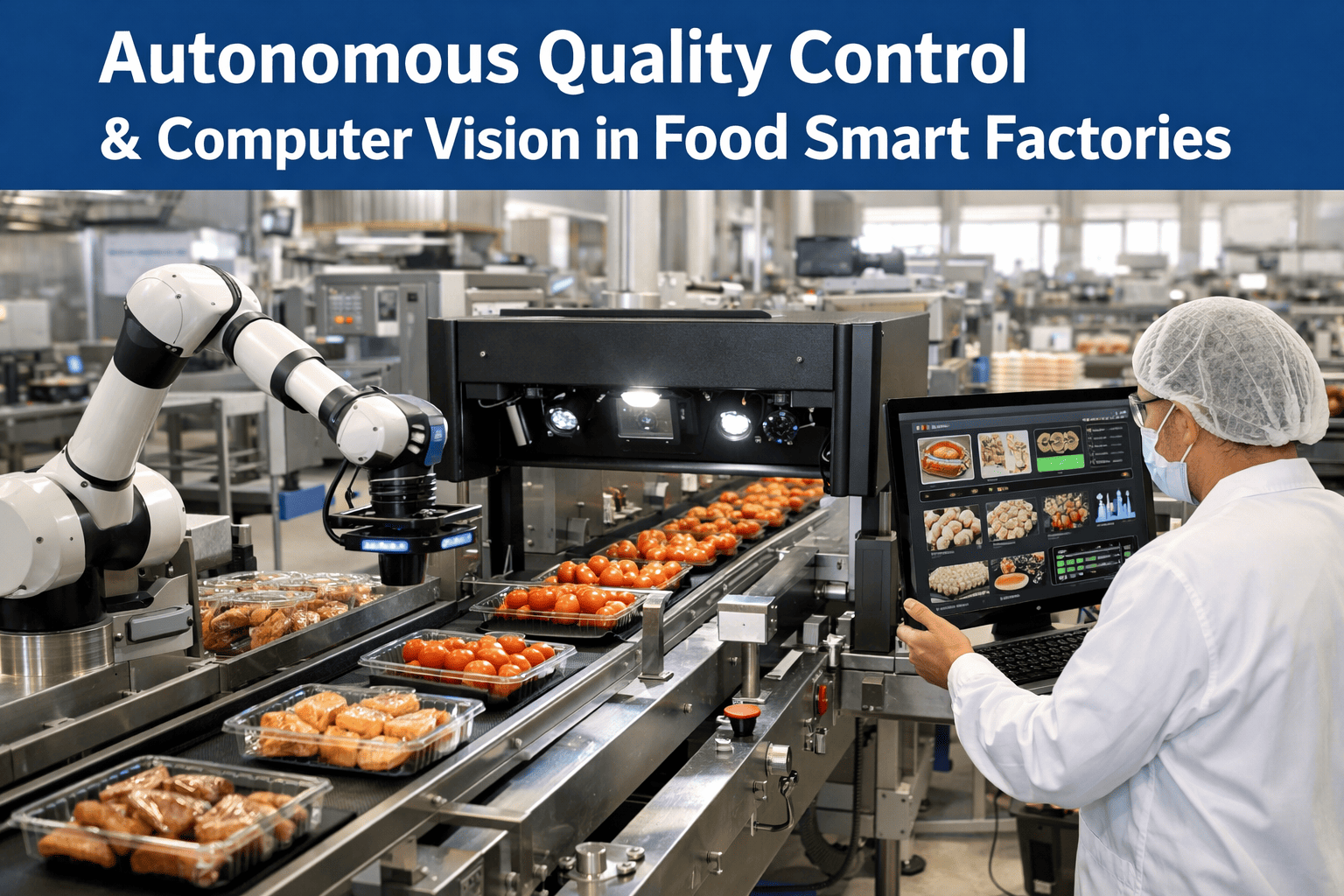
Legacy Quality System Modernization for Food & Beverage Vision Inspection
By Riley Quinn on June 9, 2026
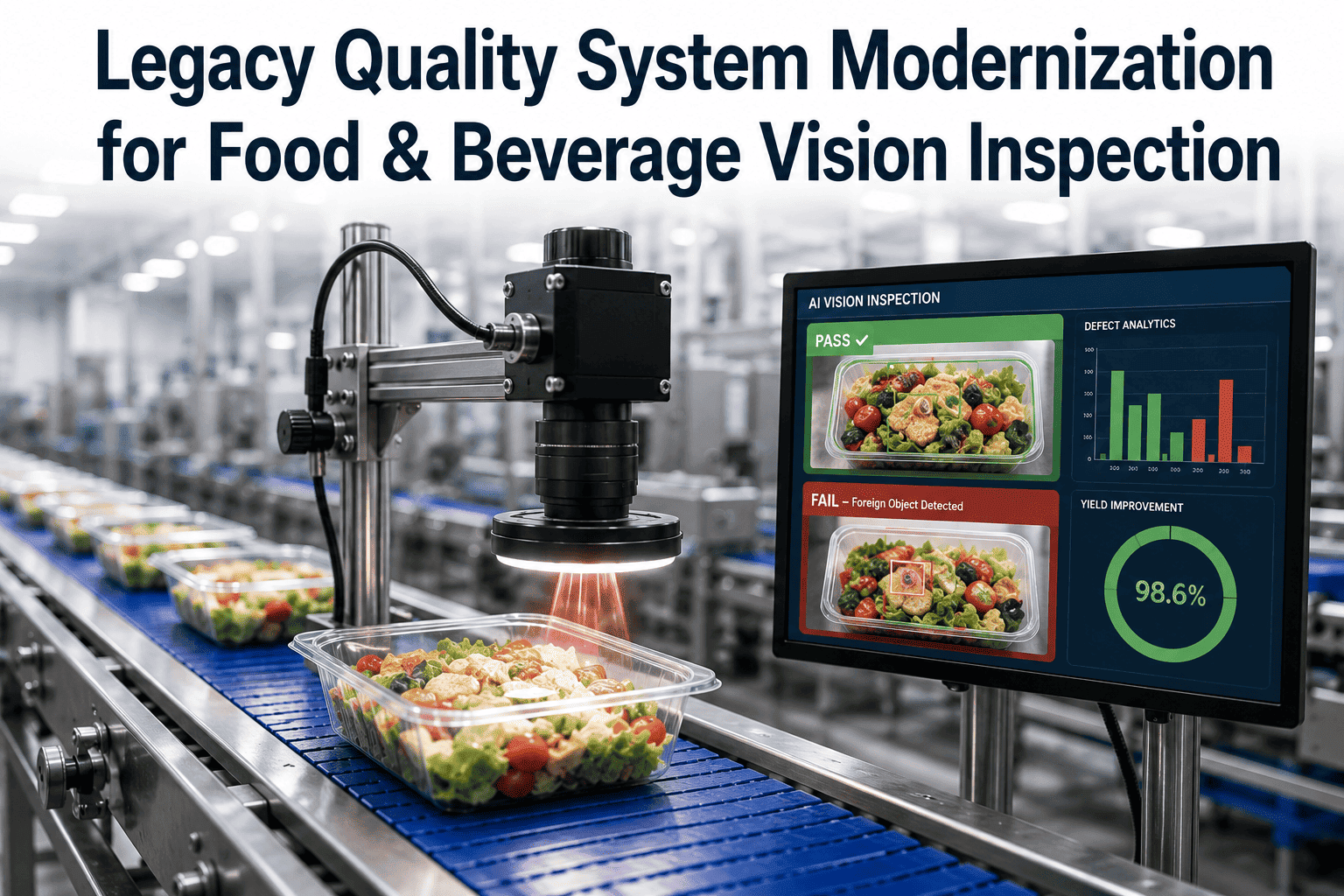
Human inspectors checking food products at 600+ units per minute are fighting a battle they physically cannot win—attention degrades within 20 minutes, accuracy drops below 80%, and inconsistencies between shifts mean your yield losses are invisible until they compound into millions. Legacy quality systems like SAP QM and SAP xMII record these failures after they happen but cannot see them in real time, cannot learn from patterns, and cannot prevent the next defect. AI vision inspection changes the model entirely: 99%+ detection accuracy at full line speed, automated root-cause correlation, and predictive SPC that catches drift before it destroys yield. Book a demo to see how iFactory modernizes legacy quality with AI vision that pays for itself in 8–14 months.
Legacy QM Migration
From Manual Inspection to AI Vision Intelligence
Modernize SAP QM and legacy quality systems with AI-powered vision inspection and predictive SPC
Why Legacy Quality Systems Can't Deliver Yield Improvement
SAP QM, SAP xMII, and traditional quality management systems were built to document quality—not to improve it in real time. They excel at inspection lot processing, quality notifications, and audit-ready reports. But for food manufacturers chasing yield gains on high-speed vision inspection lines, these systems have three structural blind spots that no configuration change can fix.
70–80%
human accuracy ceiling
Human Inspection Doesn't Scale
Human inspectors degrade after 20 minutes of repetitive visual tasks. Accuracy varies between inspectors, between shifts, and within the same inspector's day. At 600+ units per minute, the cognitive load is unsustainable—and the defect escape rate compounds silently into yield losses that legacy QM systems never surface because they only see the samples, not the escapes.
2–5%
sample rate at best
Sampling-Based Inspection Misses Drift
SAP QM triggers inspection lots at batch boundaries—checking 2–5% of production while 95%+ flows uninspected. Process drift that develops between sampling points is invisible until it produces a batch-level failure. By then, the defective product is already packaged, staged, and potentially shipped.
Hours
to root-cause analysis
No Automated Root-Cause Intelligence
When defects spike, legacy systems generate quality notifications—but they can't correlate defect patterns with upstream process variables like temperature, humidity, ingredient lot, or equipment wear. Quality engineers manually export data, cross-reference logs, and hypothesize causes—a process that takes hours while yield bleeds.
Seeing these gaps in your quality operations? Book a live demo to see AI vision detect defects your current system misses.
What AI Vision + Predictive SPC Delivers
AI vision inspection doesn't just replace the human eye—it creates a continuous quality intelligence loop that legacy systems cannot replicate. Every inspection generates structured data that feeds predictive SPC, root-cause analytics, and yield optimization models.
Vision
100% Inline Inspection
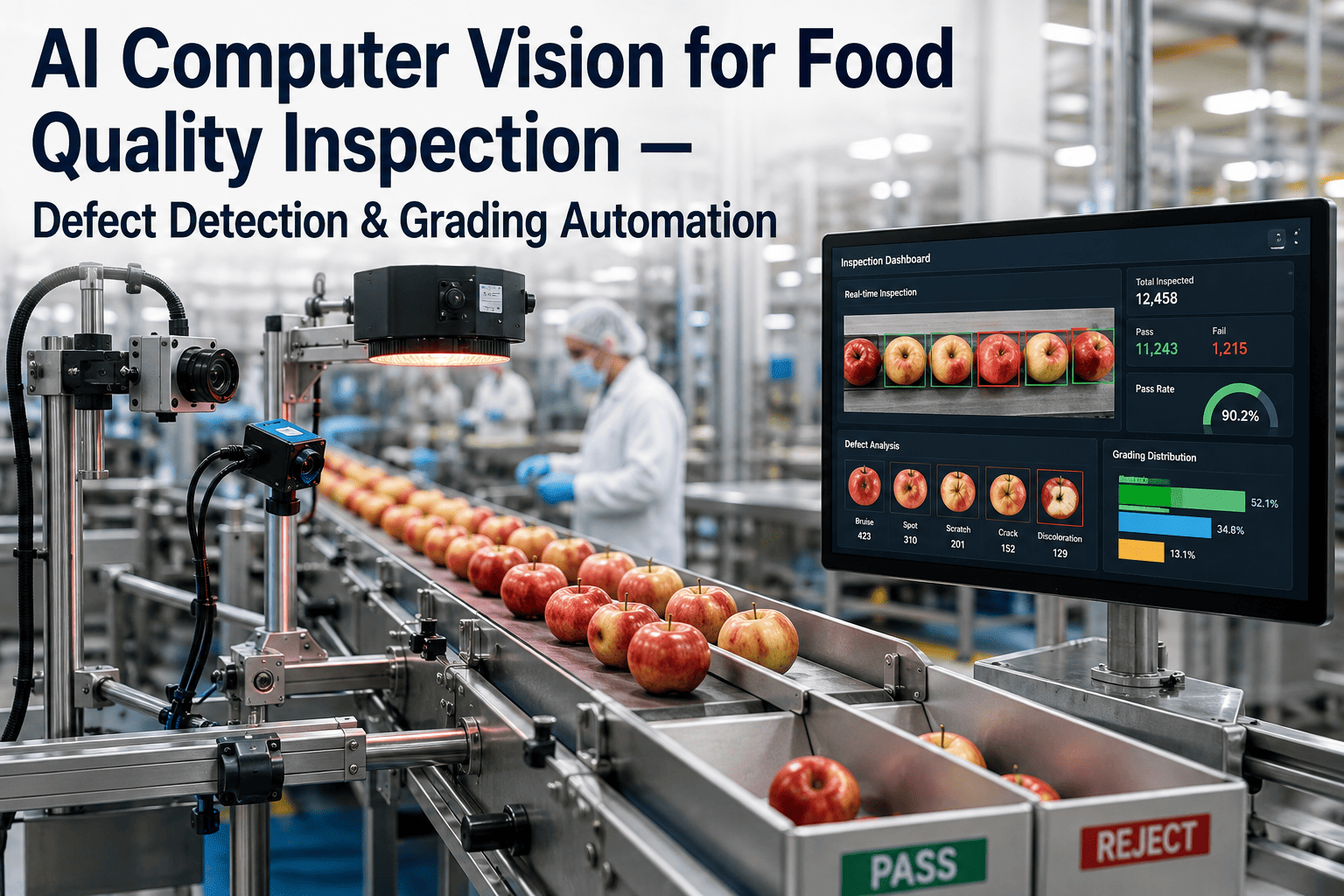
AI cameras inspect every single unit at full production speed—color, shape, surface defects, foreign objects, fill level, label integrity, seal quality, and date code legibility. No sampling gaps, no fatigue degradation, no shift-to-shift variability.
99.5%+ detection accuracy, 1,000+ units/min
SPC
Predictive Drift Detection
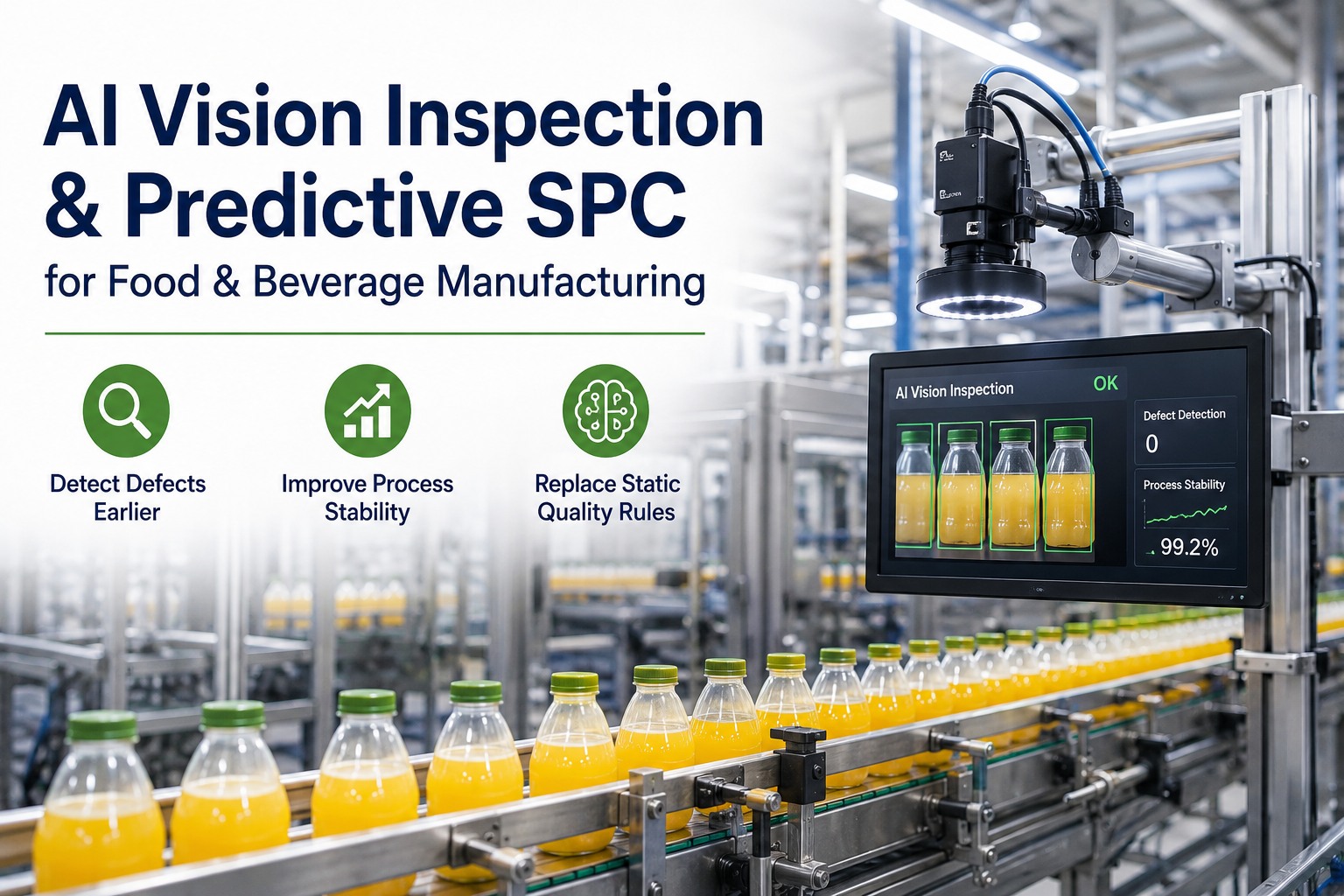
Real-time SPC control charts track every quality parameter. Adaptive limits adjust for ambient conditions, material lots, and equipment state. Trend analysis detects drift 15–30 minutes before it crosses spec limits—giving operators time to correct before yield is lost.
15–30 min early warning before spec exceedance
Root Cause
Automated Correlation Engine
When defect rates shift, AI correlates vision data with every upstream variable—ingredient properties, process temperatures, equipment cycle counts, environmental conditions—and surfaces the most probable root cause in seconds, not hours.
Seconds to diagnosis vs. hours with manual analysis
Yield
Continuous Yield Optimization
AI learns the relationship between input variables and output quality—then recommends parameter adjustments that maximize yield while maintaining compliance. Every production run generates data that makes the next run better.
3–8% yield improvement within first 90 days
See AI Vision on Your Product Line
In a 30-minute workshop, we'll show you how AI vision and predictive SPC would detect defects, predict drift, and improve yield on your specific products and line configurations.
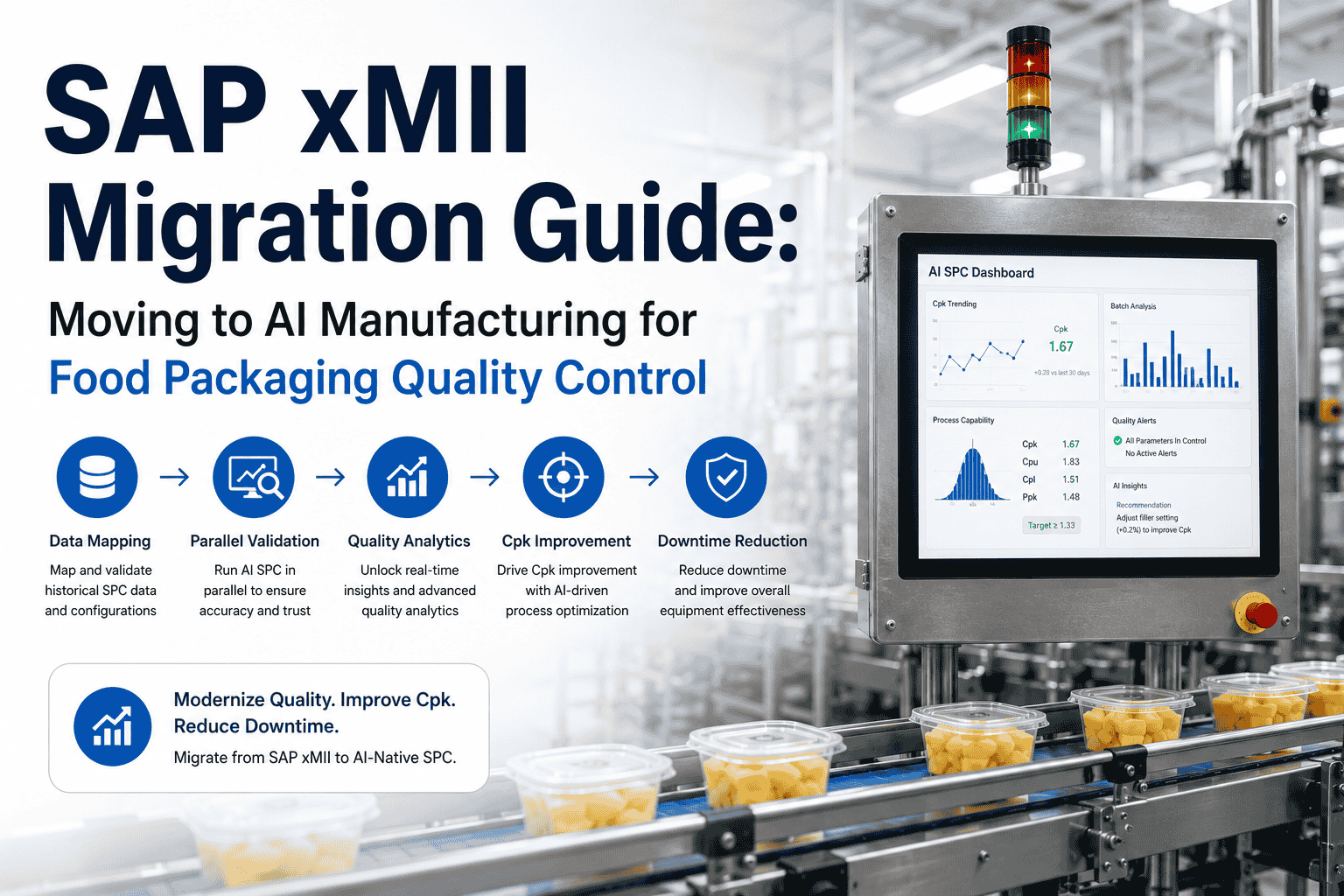
Modernizing doesn't require ripping out SAP. AI vision and predictive SPC layer alongside your existing quality infrastructure—connecting to the same data sources, enhancing them with real-time intelligence, and feeding results back into SAP for compliance documentation.
1
Assess and Connect
Week 1–2
Audit current quality workflows, defect types, and yield loss patterns. Connect AI platform to PLCs, SCADA, existing vision systems, and SAP QM data feeds. No SAP reconfiguration required.
2
Train and Baseline
Week 3–5
Train AI vision models on your specific products, defect types, and packaging formats. Calibrate detection thresholds to minimize false rejections while maintaining HACCP-compliant sensitivity. Establish predictive SPC baselines.
3
Validate in Parallel
Week 6–9
Run AI vision alongside existing inspection. Compare detection rates, false positive rates, and root-cause speed. Validate yield predictions against actual production outcomes. SAP QM continues as compliance system of record.
4
Go Live and Scale
Week 10–12
Activate AI vision as primary inspection. Automated SPC alerts, root-cause reports, and yield recommendations go live. SAP QM receives results for compliance records. Scale to additional lines and facilities.
Ready to modernize your legacy quality system? Schedule a migration demo to see the 12-week roadmap applied to your facility.
Expert Perspective
"Food manufacturers using AI-powered vision inspection report payback periods of 8–14 months, with ongoing savings compounding as the AI model improves with every production shift. The inspection data captured by the cameras becomes the foundation for everything else—predictive maintenance, root-cause analysis, supplier scoring, and continuous yield optimization."
— AI Vision Quality Control Best Practice
35%
fewer quality defects with AI vision systems in 2026
82%
of food safety directors investing in autonomous vision inspection
8–14 mo
typical payback period for AI vision quality deployment
Still relying on manual inspection and legacy QM? Request a demo and see real-time AI vision on your product types.
Conclusion: Legacy QM Documents Quality — AI Vision Improves It
Your legacy quality system isn't going away—it remains essential for compliance documentation, audit trails, and regulatory reporting. But for food manufacturers where yield improvement is measured in fractions of a percent worth millions, and where human inspection accuracy tops out at 80% on a good day, the legacy system alone cannot deliver the improvement your business needs. AI vision inspection sees every unit at full speed with 99%+ accuracy. Predictive SPC catches drift before it destroys yield. Automated root-cause analysis resolves issues in seconds instead of hours. The migration layers these capabilities on top of your existing SAP QM infrastructure—no rip-and-replace, no compliance disruption, and measurable yield improvement within the first 90 days.
Modernize Your Quality System With AI Vision
In a 30-minute workshop, we'll map your legacy QM gaps, show AI vision on your defect types, and build a 12-week migration plan. No disruption to your current SAP environment.
How accurate is AI vision inspection compared to human inspectors in food manufacturing?
AI vision systems achieve 99%+ detection accuracy consistently across all shifts and line speeds. Human inspection typically achieves 70–80% under optimal conditions, dropping further during night shifts and extended production runs. The accuracy gap widens significantly for subtle defects like micro-contamination, internal defects, and high-speed packaging integrity checks. AI also maintains identical standards 24/7 without fatigue degradation. Book a demo to see the detection difference on your specific defect types.
Does AI vision modernization require replacing SAP QM or SAP xMII?
No. AI vision and predictive SPC layer alongside your existing SAP infrastructure. The AI platform connects to your PLCs, SCADA, and sensor feeds for real-time inspection while SAP QM continues handling compliance documentation, audit trails, and regulatory reporting. Quality results flow back into SAP automatically. The modernization is additive—your SAP environment stays intact while gaining vision intelligence it was never designed to provide.
How much yield improvement can AI vision inspection deliver?
Food manufacturers typically see 3–8% yield improvement within the first 90 days, with gains compounding as AI models improve over time. The improvement comes from three sources: eliminating false rejections (good product previously scrapped by imprecise inspection), catching upstream process drift before it creates defective output, and automated parameter optimization that maximizes yield while maintaining compliance. On continuous-process lines, even small percentage-point yield improvements translate to millions in annual savings.
What types of food products can AI vision inspect?
Modern AI vision covers every category: fresh produce (bruising, discoloration, size grading), packaged goods (seal integrity, label accuracy, fill level, date codes), proteins (bone fragments, fat content, surface contamination), beverages (fill level, cap placement, label alignment), and baked goods (color uniformity, shape consistency, topping distribution). The AI model trains on your specific product profiles and defect types—detection thresholds are calibrated to minimize false rejections while maintaining HACCP-compliant sensitivity.
What is the ROI timeline for AI vision quality modernization?
Most food manufacturers see full payback in 8–14 months, with ongoing savings compounding as AI accuracy improves with accumulated production data. The ROI comes from reduced scrap and rework, eliminated false rejections, faster root-cause resolution, reduced manual inspection labor, and lower recall risk. Documented deployments show 30–40% reductions in defect escape rates and measurable yield improvements from the first production shift after go-live.