SAP QM Modernization for Food Packaging Quality Control
By Riley Quinn on June 9, 2026
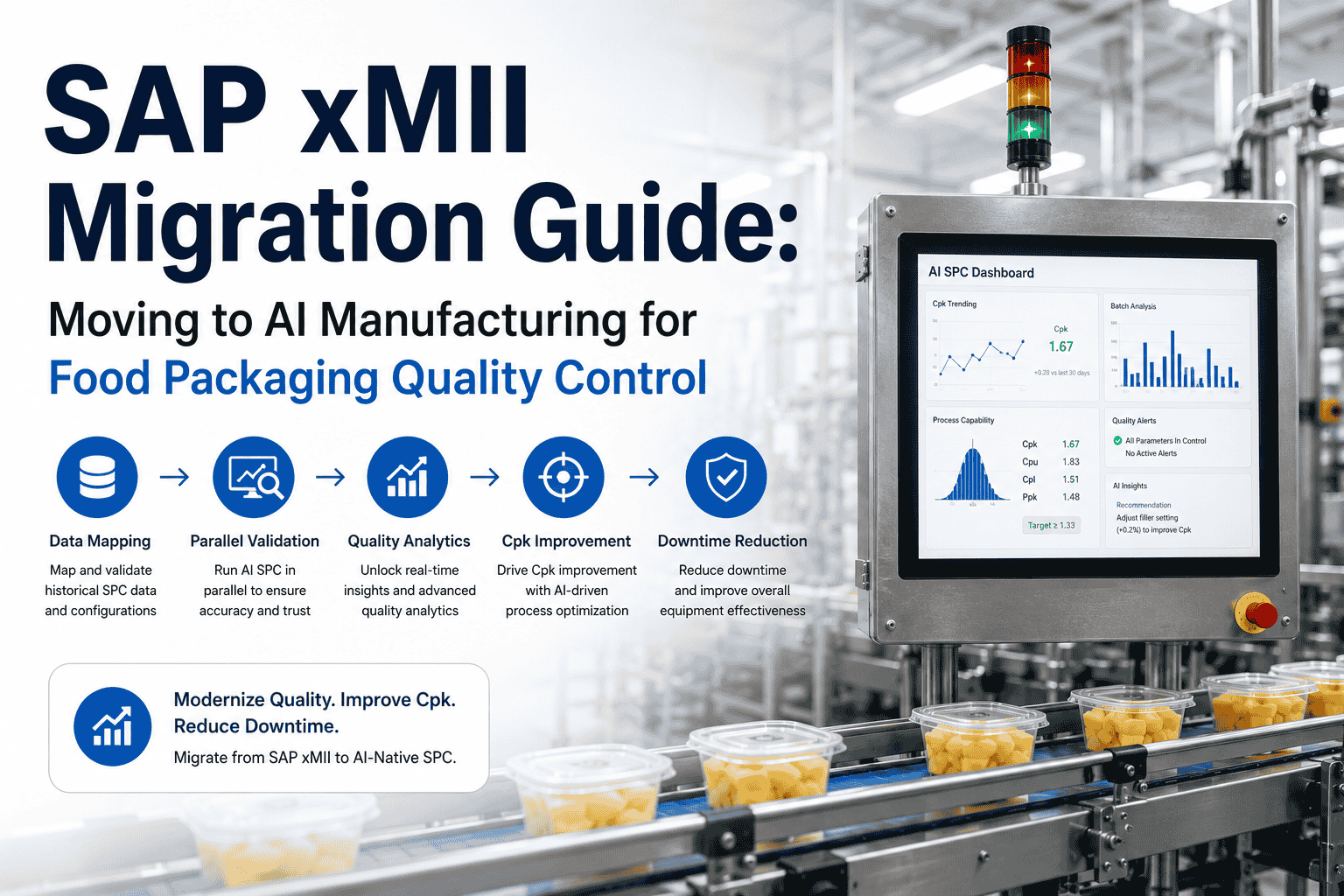
SAP QM can tell you that yesterday's packaging line had a 10% scrap rate. What it cannot tell you is why—whether it was a seal-bar temperature drift, a film tension variance, or an upstream filling inconsistency. That gap between knowing what happened and knowing why is where food manufacturers lose millions in avoidable scrap every year. AI-native SPC closes this gap by detecting process drift before it produces defects, identifying root causes automatically, and triggering corrections in real time. Book an AI SPC demo to see how iFactory replaces reactive inspection with predictive quality intelligence that cuts packaging scrap by 30–60%.
SAP QM Migration
From Reactive Records to Predictive Quality
How food manufacturers are modernizing SAP QM with AI-native SPC for packaging inspection
SAP QM Today
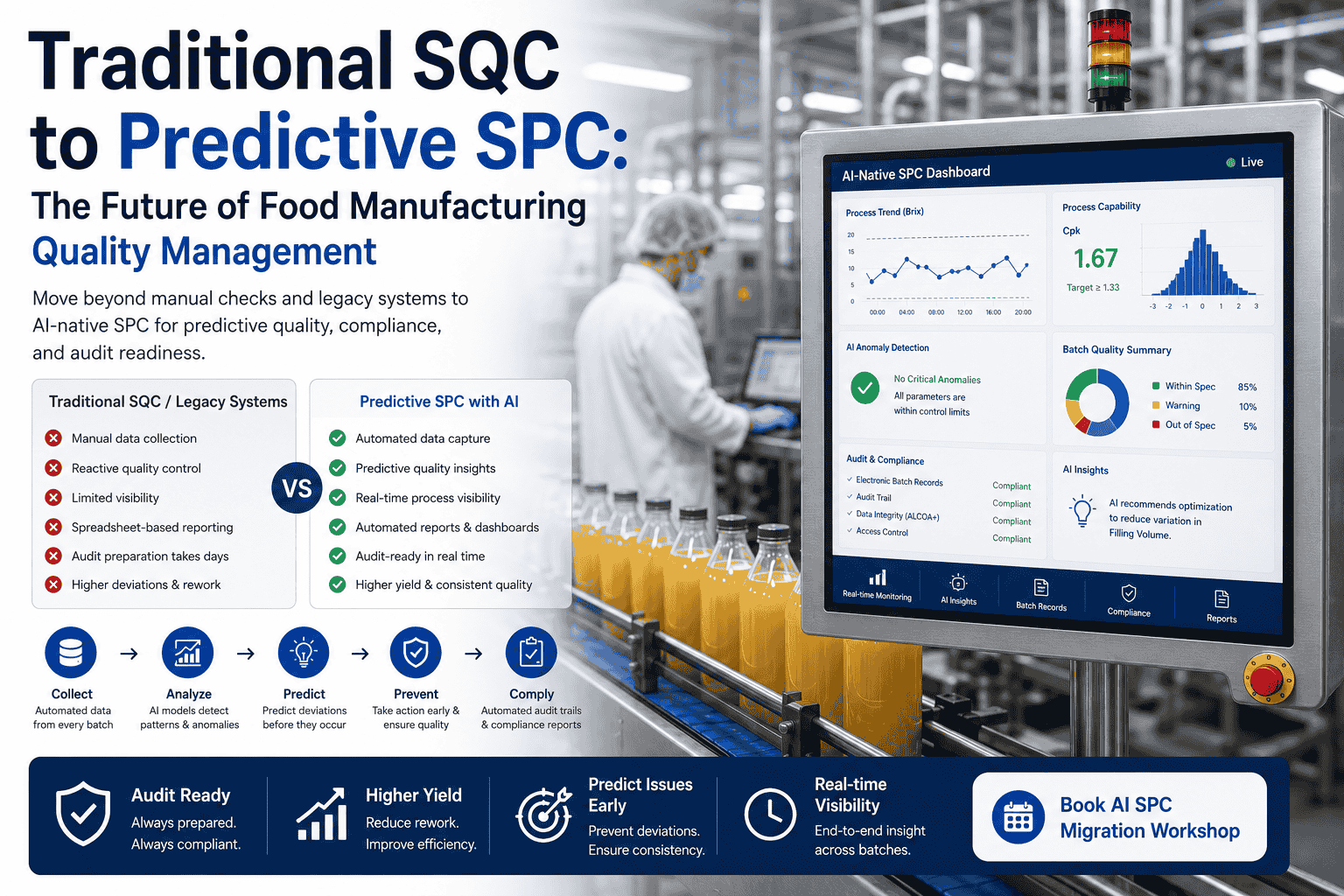
Batch-based inspection — defects found after production
Manual root-cause analysis — hours to days to identify drift
Static control limits — same specs regardless of conditions
Compliance-focused — meets audit requirements, not prevention
AI-Native SPC
Real-time monitoring — drift detected before defects occur
Automated root-cause — AI correlates variables in seconds
Adaptive limits — control specs adjust to real-time conditions
Prevention-focused — predicts and prevents scrap proactively
SAP QM is a powerful ERP quality module—but it was architected for compliance record-keeping, not real-time process control. In food packaging, where defect windows are measured in seconds and scrap compounds at line speed, the architectural limitations become operational liabilities.
01
15–30 min
typical inspection lag
Batch-After-the-Fact Inspection
SAP QM triggers quality inspections at batch milestones—not in real time. By the time a packaging defect is detected through inspection lot processing, hundreds or thousands of defective units have already been produced, sealed, and staged for shipping. At 600 units per minute, a 15-minute inspection delay means 9,000 potentially defective packages.
02
Hours
to find root cause
No Automated Root-Cause Detection
SAP QM records that a quality notification was created and a defect type was logged. But it cannot automatically correlate seal-bar temperature, film tension, ambient humidity, and filling weight to identify which variable caused the packaging failure. That analysis falls on quality engineers working manually through data exports—taking hours to days while scrap continues.
03
Static
control limits
No Predictive or Adaptive SPC
SAP QM uses fixed specification limits defined during quality planning. It cannot adapt control limits based on real-time conditions like ambient temperature shifts, material lot variations, or equipment wear patterns. A seal spec set for summer conditions produces false alarms in winter and misses real drift in shoulder seasons.
Experiencing these SAP QM limitations in your packaging operations? Book a live demo to see how AI-native SPC closes these gaps on your actual process data.
What AI-Native SPC Delivers for Packaging Inspection
AI-native SPC doesn't just replace SAP QM's inspection workflow—it fundamentally changes the quality model from reactive recording to predictive prevention. Here's what that looks like on a food packaging line running at production speed.
Real-Time
Continuous Process Monitoring
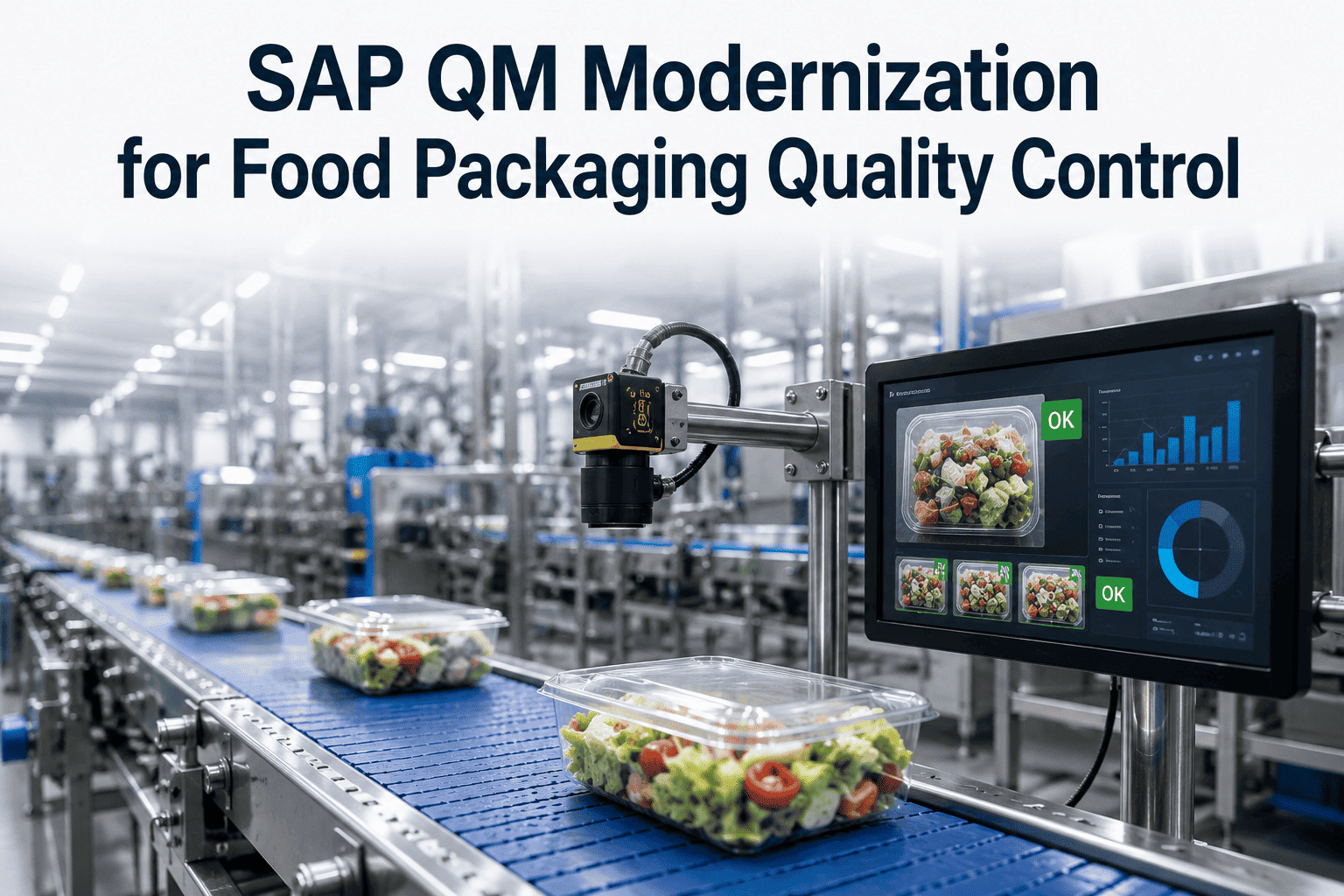
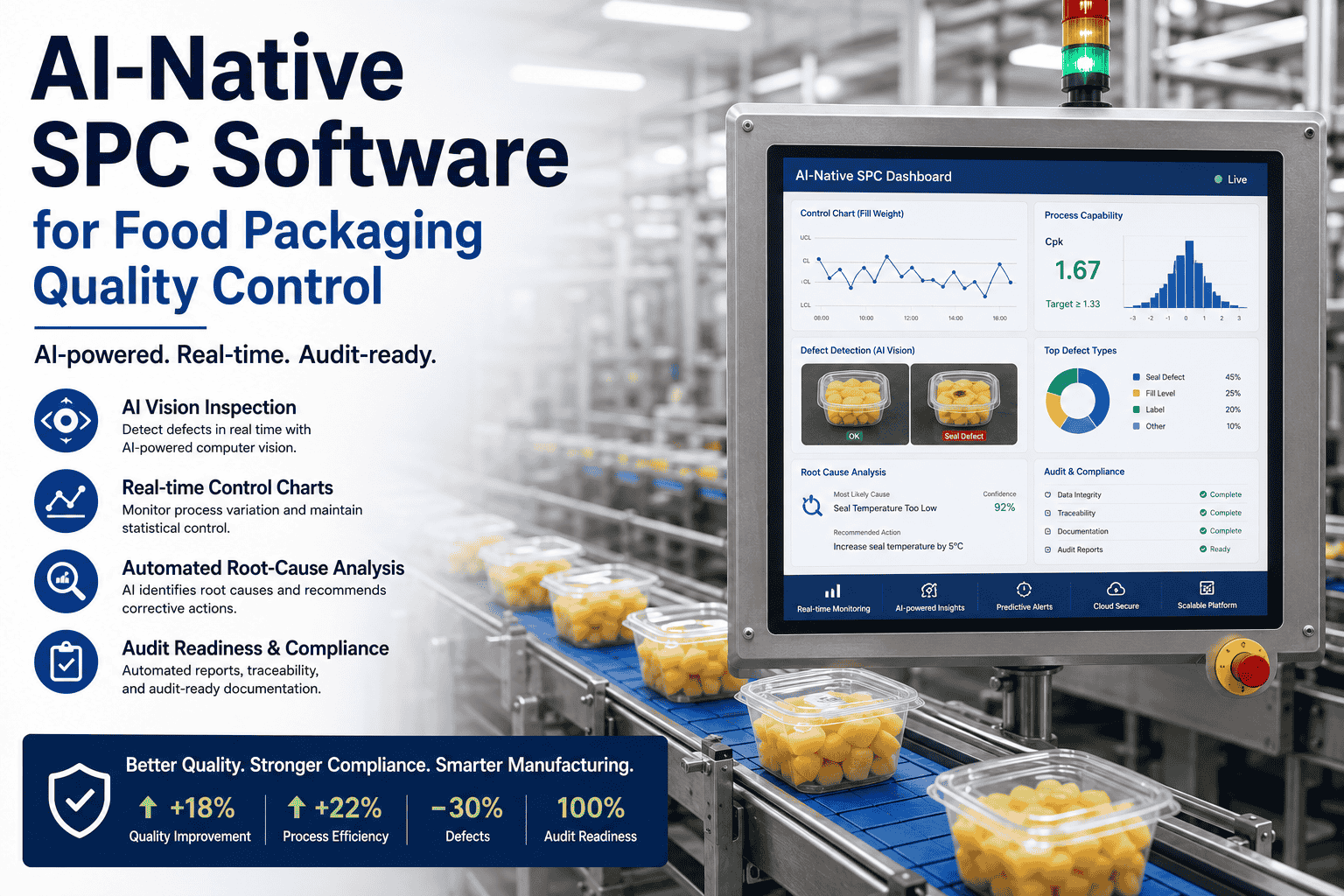
AI vision systems inspect every single package at line speed—not batch samples. Seal integrity, label placement, fill level, date codes, and foreign object detection run simultaneously on every unit. SPC control charts activate automatically with drift alerts firing before a single defective package reaches the end of line.
99.5%+detection accuracy at full production speed
Predictive
Automated Root-Cause Detection
When a process drifts toward a control limit, AI correlates every upstream variable—seal-bar temperature, film tension, filling pressure, ambient conditions, material lot properties—and identifies the most probable root cause within seconds, not hours. Quality engineers get actionable diagnosis, not just a defect notification.
Secondsto root-cause identification vs. hours with manual analysis
Adaptive
Dynamic Control Limits
Control limits adjust automatically based on real-time conditions. When ambient humidity changes, when a new film lot is loaded, when equipment wear shifts process capability—the system recalculates limits to maintain the same defect probability. No more false alarms from seasonal variation or missed drift from stale specifications.
30–60%packaging scrap reduction within first 90 days
See AI-Native SPC on Your Packaging Data
In a 30-minute workshop, we'll show you exactly how AI SPC would detect drift, identify root causes, and reduce scrap on your specific packaging lines—using your real process parameters.
Modernizing doesn't mean ripping out SAP. The most effective migration layers AI-native SPC alongside your existing SAP QM infrastructure—ingesting the same process data, enhancing it with real-time analytics, and feeding quality intelligence back into SAP for compliance documentation. SAP remains your system of record; AI SPC becomes your system of action.
1
Connect and Ingest
Week 1–2
Connect AI SPC platform to your existing data sources—PLCs, SCADA, sensor feeds, and SAP QM inspection results. No changes to SAP configuration. The AI layer reads the same process data your current systems generate.
2
Model and Baseline
Week 3–4
Train AI models on your specific packaging process, product SKUs, and known defect patterns. Establish dynamic SPC baselines for every critical quality parameter—seal strength, label accuracy, fill weight, date code legibility.
3
Run in Parallel
Week 5–8
AI SPC runs alongside SAP QM, comparing predictions against actual outcomes. Validate that AI catches drift earlier, identifies root causes faster, and reduces false alarms. SAP QM continues as your compliance system of record.
4
Activate and Scale
Week 9–12
Switch primary quality decisions to AI SPC. Automated alerts, root-cause reports, and adaptive control limits go live. SAP QM receives quality results for compliance records, audit documentation, and regulatory reporting. Roll out to additional packaging lines.
Ready to run AI SPC alongside your SAP QM system? Schedule a migration demo to see the 12-week implementation roadmap in action.
Expert Perspective
"An ERP system can report that a production run resulted in a 10% scrap rate. But it cannot typically identify the specific machine calibration drift or procedural error that caused it. Manufacturers are turning to real-time quality intelligence systems to provide the essential context that ERP data alone cannot deliver."
— Manufacturing Quality Intelligence Best Practice
70%
of food manufacturers increased compliance technology investment in 2024
70–80%
manual inspection accuracy vs. 99.5%+ AI vision accuracy
30–60%
typical scrap reduction in first 90 days of AI SPC deployment
Still relying on SAP QM's batch inspection for packaging quality? Request a demo and see real-time drift detection on your packaging parameters.
Conclusion: SAP QM Is Your System of Record — AI SPC Is Your System of Action
SAP QM isn't going away—and it shouldn't. It remains the compliance backbone for quality documentation, audit trails, and regulatory reporting. But for food packaging operations where scrap costs compound at line speed and a 15-minute inspection delay means thousands of defective packages, SAP QM alone is structurally insufficient. AI-native SPC fills the operational gap by monitoring every package in real time, detecting process drift before it produces defects, correlating root causes in seconds, and adapting control limits to real-world conditions. The migration isn't a rip-and-replace—it's a layered enhancement that makes SAP QM smarter by giving it the real-time quality intelligence it was never designed to generate on its own.
Modernize Your SAP QM With AI-Native SPC
In a 30-minute workshop, we'll map your SAP QM gaps, show you how AI SPC closes them, and build a 12-week migration plan for your packaging lines. No disruption to your current SAP environment.
What are the main limitations of SAP QM for food packaging quality control?
SAP QM's three primary limitations for packaging operations are: batch-based inspection timing (defects detected minutes to hours after production, not in real time), no automated root-cause analysis (quality engineers must manually correlate process variables to identify drift causes), and static control limits (specification limits don't adapt to real-time conditions like ambient temperature, material lot variations, or equipment wear). These gaps mean SAP QM records quality problems after they occur but cannot prevent them. Book a demo to see how AI SPC closes each gap.
Does modernizing with AI SPC require replacing SAP QM?
No. The recommended approach layers AI-native SPC alongside your existing SAP QM installation. AI SPC connects to your PLCs, SCADA, and sensor feeds for real-time process monitoring and predictive quality analytics. SAP QM continues as your compliance system of record—receiving quality results from AI SPC for documentation, audit trails, and regulatory reporting. The migration is additive, not replacement. Your SAP environment stays intact while gaining the real-time intelligence layer it was never designed to provide.
How much can AI-native SPC reduce packaging scrap?
Food manufacturers typically see 30–60% packaging scrap reduction within the first 90 days of AI SPC deployment. The reduction comes from three mechanisms: catching process drift before it produces defects (eliminating the batch-inspection lag), automated root-cause identification that resolves issues in seconds instead of hours, and adaptive control limits that maintain process capability through environmental and material variations. The specific reduction depends on your current scrap rates, packaging line complexity, and the number of quality parameters being monitored.
How long does the SAP QM to AI SPC migration take?
A typical migration follows a 12-week implementation: connect and ingest data sources (weeks 1–2), train AI models and establish baselines (weeks 3–4), parallel operation alongside SAP QM to validate accuracy (weeks 5–8), and full activation with automated alerts and adaptive control limits (weeks 9–12). The first packaging line goes live in 8 weeks, with additional lines rolling out in parallel. No SAP downtime or reconfiguration is required at any stage.
Does AI-native SPC support FSMA and GFSI compliance for food packaging?
Yes. AI-native SPC strengthens FSMA and GFSI (BRCGS, SQF, FSSC 22000) compliance by providing continuous monitoring with complete audit trails—every inspection, every alert, every corrective action is time-stamped and traceable. Unlike SAP QM's batch-based approach, AI SPC documents quality decisions in real time, giving auditors unbroken evidence of preventive control. Adaptive control limits demonstrate that your quality system responds to changing conditions, which satisfies the FSMA preventive controls framework more thoroughly than static inspection plans.