Vision AI Humanoids for Food Packaging Defect Detection
By Mark Nessim on May 27, 2026
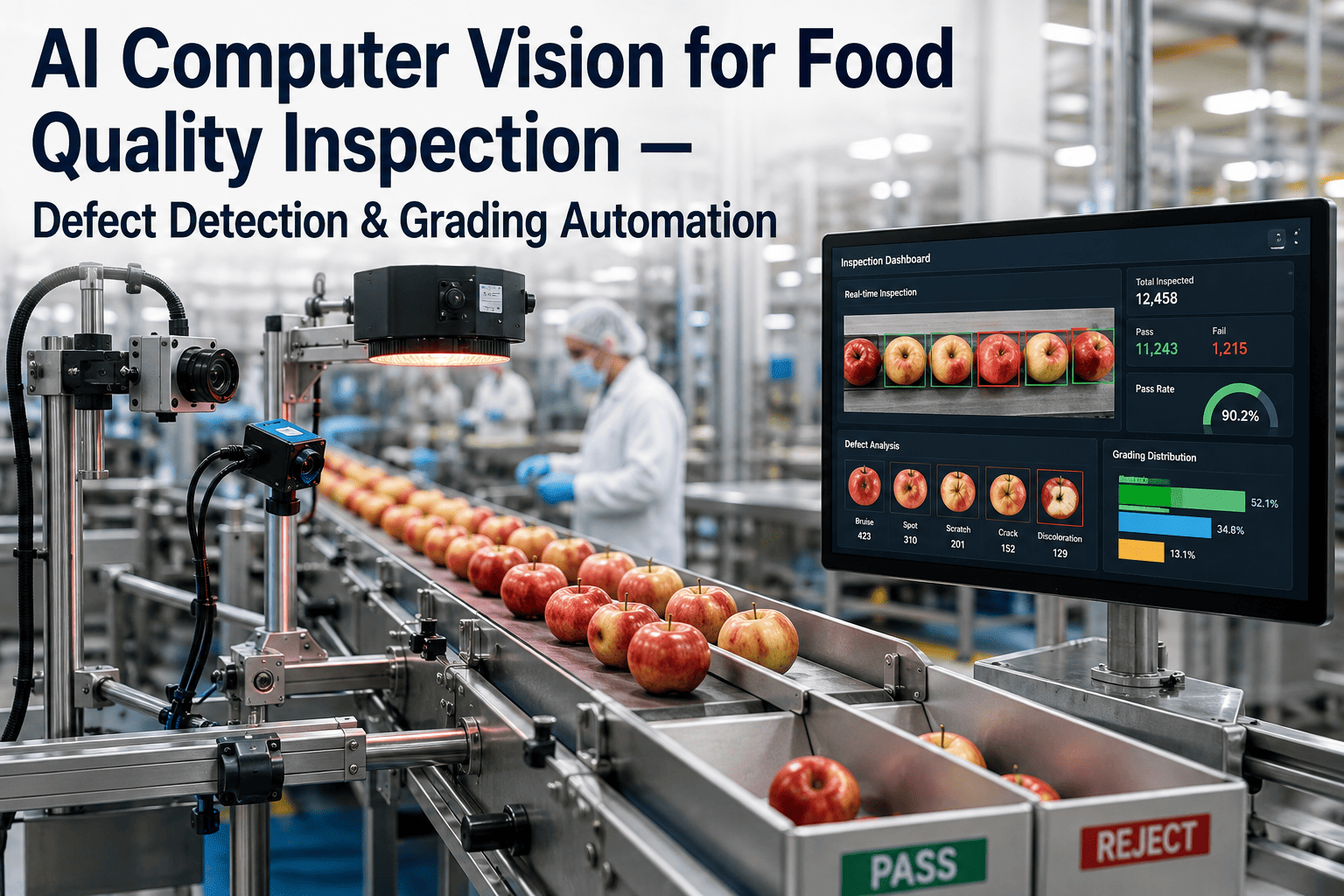
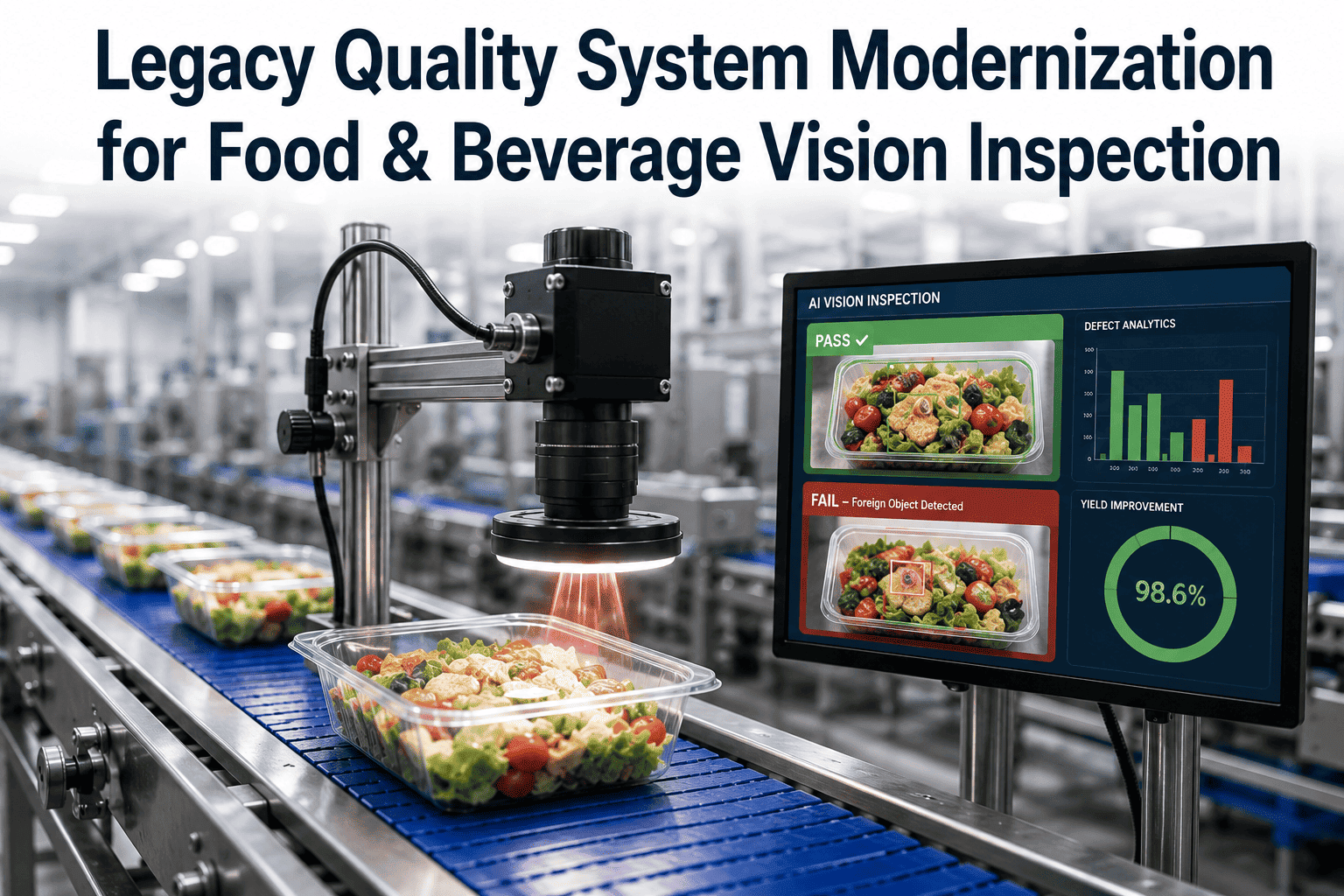
Food packaging defects — incorrect fill levels, misaligned labels, missing date codes, damaged seals, foreign object intrusion, allergen-mislabeled SKUs — are the leading cause of consumer complaints, retail rejections, and product recalls in food & beverage manufacturing. Traditional vision inspection systems use fixed cameras at specific line positions, which means defects outside the camera's view escape detection. Humanoid robots equipped with Vision Language Models (VLMs) and AI vision cameras execute mobile inspection routes that cover the entire packaging line — examining bottles, cans, pouches, cartons, and cases for defects that fixed cameras can miss. If you'd like to see how iFactory routes humanoid vision data into your quality and food safety systems, book a demo with our team.
Vision AI & Granular Visibility · 2026
Vision AI Humanoids for Food Packaging Defect Detection
VLM-powered mobile inspection · Fill level verification · Label & date code reading · Foreign object detection · Seal integrity check · All flowing into iFactory CMMS.
Per-unit verification of bottle, can, and pouch fill
⌖
Label & Code
Position · legibility · SKU correctness
◈
Seal Integrity
Closure quality · leakage risk
⊕
Foreign Object
Contamination detection in-pack
Why Fixed Vision Cameras Miss Defects That Mobile Humanoid Vision Catches
Traditional packaging line vision systems use fixed cameras at specific line positions — typically at the filler exit, post-labeler, and pre-case-packer. Each camera inspects from a single angle in a single moment. Defects that develop between camera stations, on the underside of containers, on case bottoms, or during pallet build-up escape detection. Humanoid robots carrying AI vision cameras and VLM inspection capability execute mobile inspection routes — covering the entire packaging line, every angle, every case orientation. The combination of fixed and mobile inspection closes the coverage gap.
FIXED VISION LIMITATIONS
1
Single-angle inspection — defects on opposite side of container missed entirely
2
Stationary positions — defects developing between camera stations not detected
3
Top-down only — case bottoms, pallet undersides, and side walls not inspected
4
No VLM reasoning — fixed cameras detect known defects but cannot reason about novel ones
Three Vision Defect Problems iFactory Solves With Humanoid VLM Inspection
01
Fill Level Variation & Underweight Pack Detection
Fill level variation is a leading consumer complaint — bottles short-filled by 5-10% generate retail rejections and lost shelf space. Fixed checkweighers catch gross variation but miss per-bottle visual confirmation. Humanoid vision routes inspect filled containers across the line with VLM reasoning — comparing actual fill against the SKU's specification image. Out-of-spec units trigger automatic reject mechanism activation and feed iFactory's per-SKU quality dashboard. If you'd like to see how fill-level vision data flows into per-SKU OEE and quality dashboards, schedule a demo with our team.
Per-unit fill checkVLM reasoningAuto reject
02
Label Position, Date Code Legibility & SKU Verification
Mislabeled or wrong-SKU products on a line are the leading cause of allergen-related recalls in food manufacturing. Humanoid vision verifies that the label SKU matches the production run schedule, captures date code legibility for every variant, and confirms label position is within tolerance. iFactory's allergen workflow integration ensures that any SKU mismatch on an allergen changeover line triggers immediate line stop and CAPA workflow before product ships.
Label SKU verifyDate code OCRAllergen safeguard
03
Seal Integrity, Foreign Object & Contamination Detection
Seal failure leads to leakers, spoilage, and product loss. Foreign object intrusion — particularly glass, metal, plastic fragments — creates the highest-severity food safety recalls. Humanoid vision combined with VLM reasoning examines closure quality on every accessible unit, identifies seal anomalies, and flags suspect units for downstream X-ray or metal detector verification. Every inspection event creates an immutable record in iFactory tied to the production lot for FSMA 204 trace-back. If you'd like to discuss integrating humanoid vision with your existing X-ray and metal detector systems, contact our support team.
Seal QCFO flaggingFSMA 204 trace
How Humanoid Vision Data Flows Into iFactory
iFactory is the AI software intelligence layer — not a humanoid manufacturer or vision hardware vendor. The platform integrates with vision data from any source already on your packaging line, including fixed cameras, line-mounted vision sensors, X-ray and metal detectors, and humanoid platforms carrying VLM-powered AI cameras during mobile inspection routes.
Inspection Type
Humanoid Vision Capture
iFactory Output
Why It Matters
Fill level
Per-unit visual + VLM
Quality logs · auto reject
Reduces consumer complaints and retail rejection rates
Label SKU verify
OCR + SKU image match
Allergen workflow alerts
Prevents the #1 cause of allergen recalls
Date code legibility
OCR + position check
Code quality logs
Retail compliance and shelf-life traceability
Seal integrity
VLM closure analysis
Seal anomaly flags
Prevents leakers reaching the consumer
Foreign object risk
Visual + suspect flag
X-ray re-route flag
Highest-severity recall prevention
Case & pallet integrity
Multi-angle vision
Case damage records
Detects defects fixed cameras cannot see
Vision Defect Use Cases on Packaging Lines
Fill LevelPer-Unit Fill Verification with VLM ReasoningContinuous
Humanoid vision routes inspect filled containers — bottles, cans, pouches, jars — across the packaging line. VLM reasoning compares actual fill against the SKU specification image, flagging under-fills and over-fills with per-unit accuracy. Out-of-spec units trigger reject mechanism activation. The captured data feeds iFactory's per-SKU quality dashboard, exposing fill-level drift patterns that indicate filler maintenance needs.
Seal QCSeal Integrity & Closure Quality InspectionContinuous
VLM-powered humanoid vision examines closure quality on every accessible unit — cap torque indicators, foil seal integrity, induction seal patterns, and shrink wrap finish. Seal anomalies route the suspect unit to downstream verification (X-ray, metal detector) or directly to reject. Every inspection event creates an immutable record in iFactory tied to the production lot and shift for FSMA 204 trace-back reference.
Major allergens tracked with FALCPA + sesame compliance
Label SKU mismatch triggers line stop
FSMA 204
Trace-back tied to every vision inspection event
One-click recall lot retrieval
2 Days
Audit prep — vs 3 weeks of binder searching
SQF · BRC · FSSC 22000 ready
FAQ
iFactory is the AI software intelligence layer — not a humanoid manufacturer or vision hardware vendor. The platform integrates with vision data from PLCs, SCADA (Rockwell, Siemens, Wonderware), ERP (SAP, Oracle), fixed AI vision cameras, X-ray and metal detectors, IoT sensors, mobile devices, and robotic platforms including humanoid robots carrying VLM-powered cameras. Your facility selects the humanoid and vision hardware; iFactory turns the captured data into quality records, allergen workflow events, and audit-ready compliance documentation.
Fixed AI vision cameras inspect from a single angle at a single position — they detect known defect patterns at known points on the line. Vision Language Models (VLMs) running on humanoid platforms add two capabilities: (1) mobile inspection that covers angles and positions fixed cameras cannot reach, and (2) reasoning about novel defects by comparing against SKU specification images and natural-language defect descriptions. Combined with fixed cameras, the result is full-coverage inspection across every container and every angle.
The platform supports HACCP/HARPC, SSOP, SQF, BRC, FSSC 22000, FSMA 204, GMP, and FDA 21 CFR Part 11. Every vision inspection event — fill level reading, label SKU verification, seal integrity check, foreign object flag — becomes part of immutable records with electronic signatures and ALCOA+ data integrity. Records remain retrievable for audit purposes and tied to FSMA 204 lot-level trace-back across the production line.
Deploy iFactory for Vision Defect Detection
AI-powered CMMS connecting humanoid VLM vision, fixed AI cameras, X-ray and metal detectors, and PLC telemetry into one platform — with per-unit fill verification, label SKU match, seal integrity, foreign object flagging, and FSMA 204 lot trace-back.