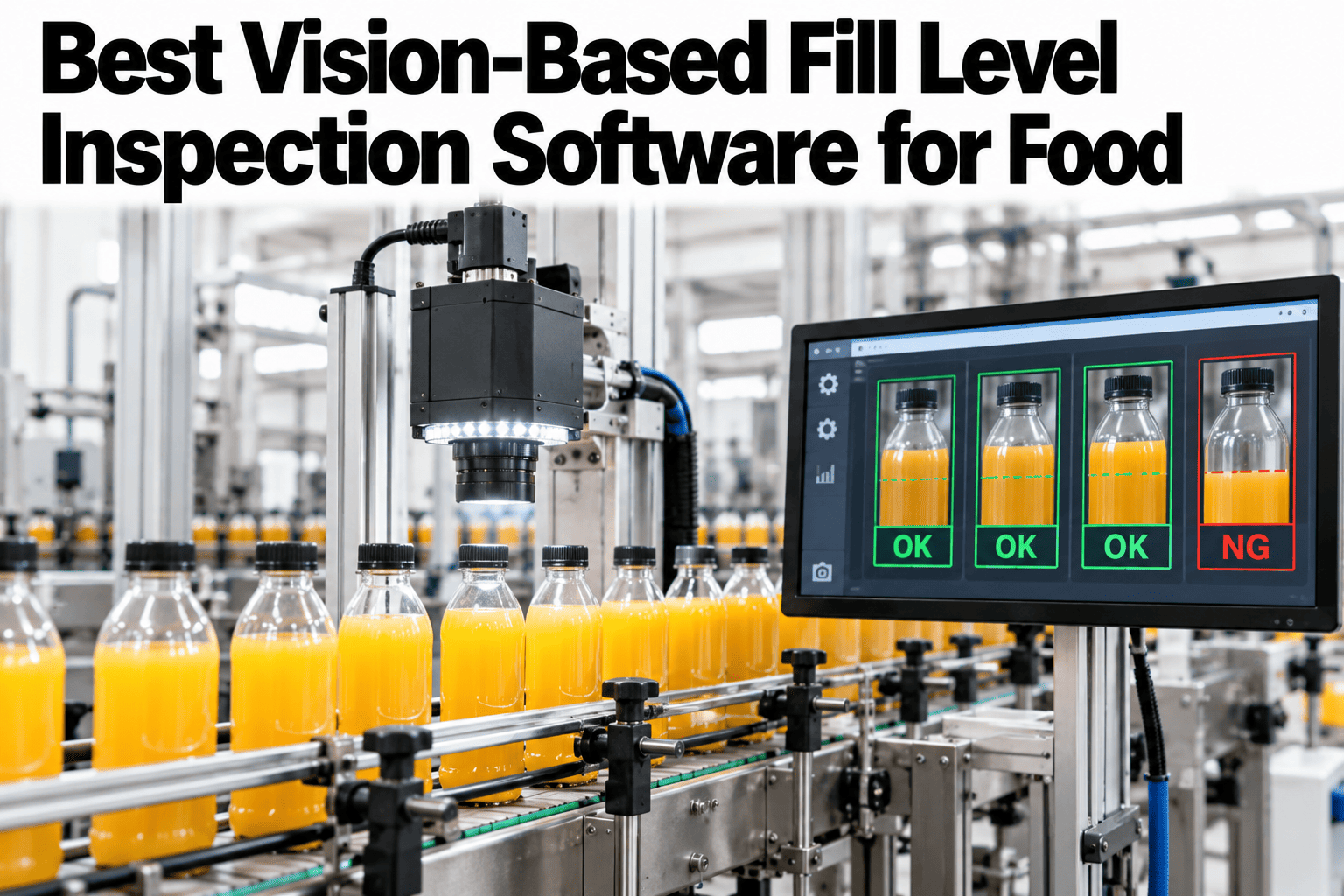
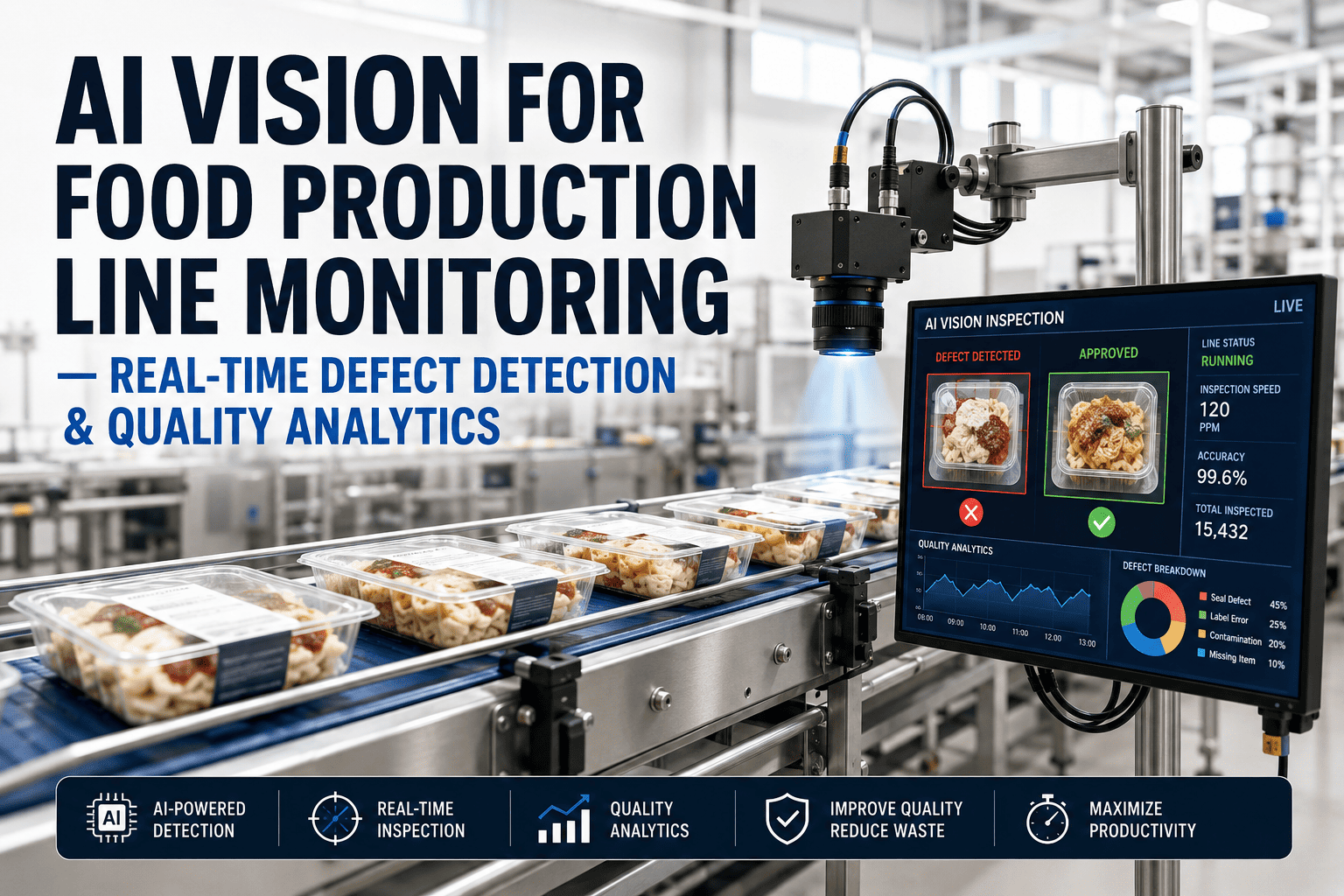
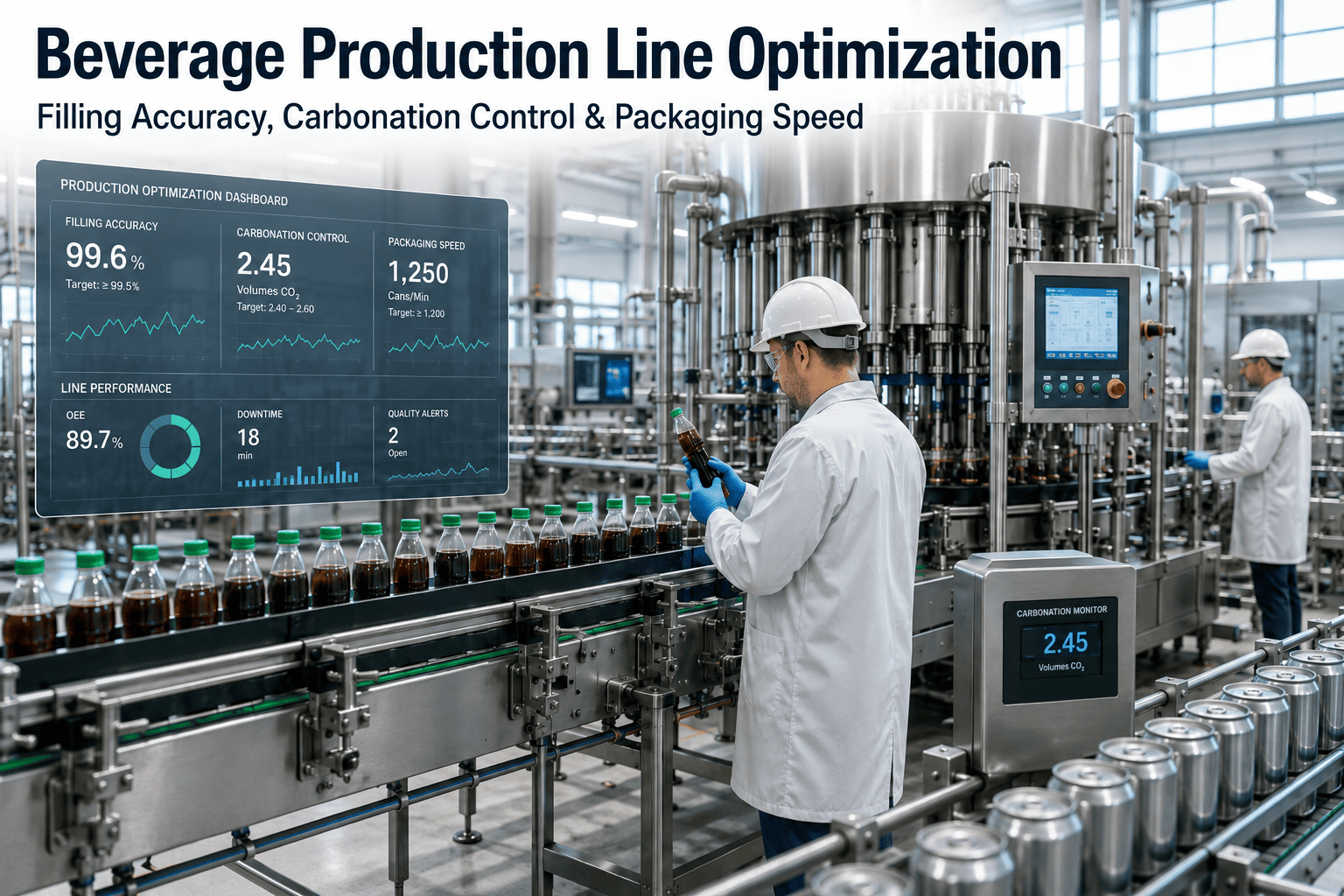
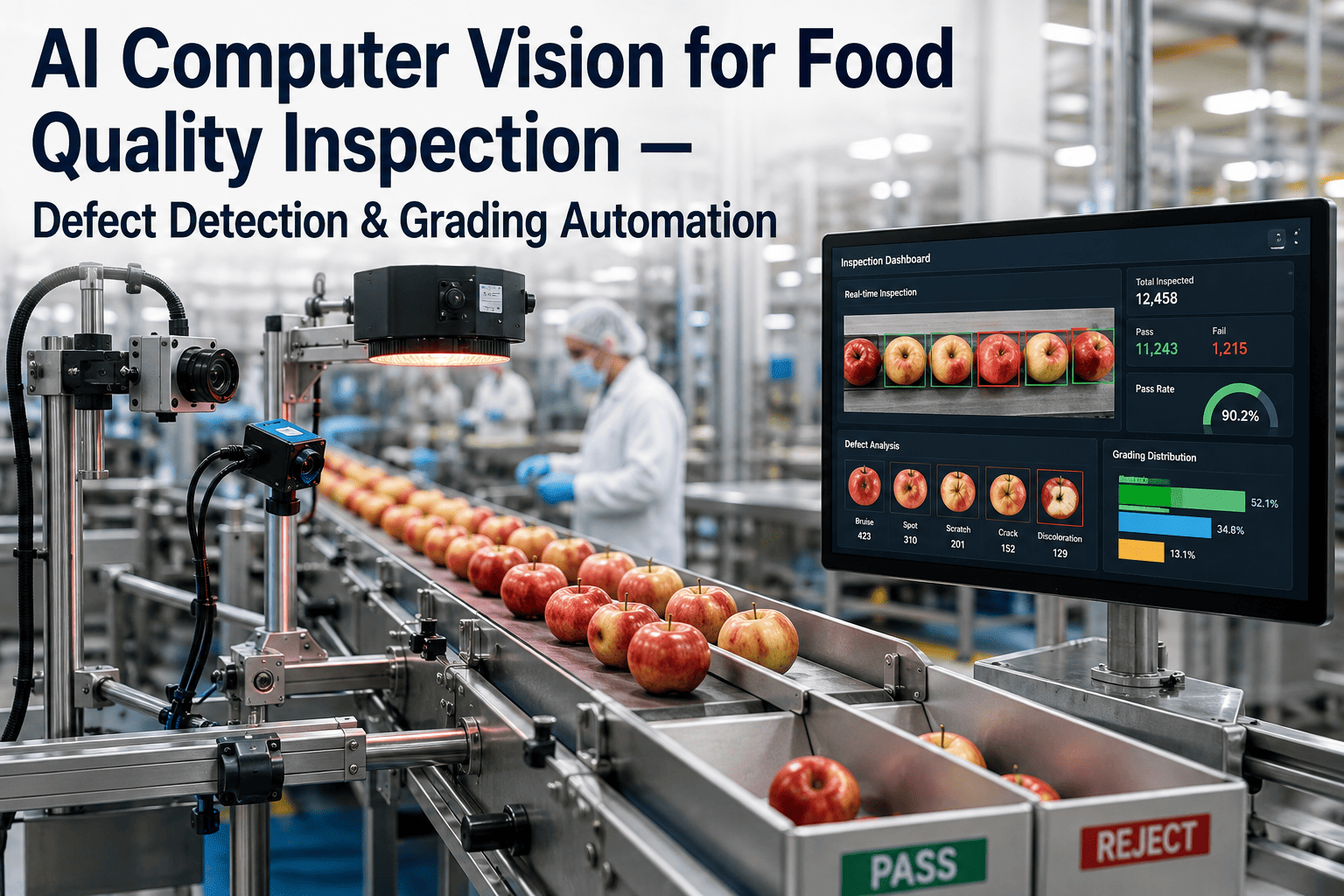
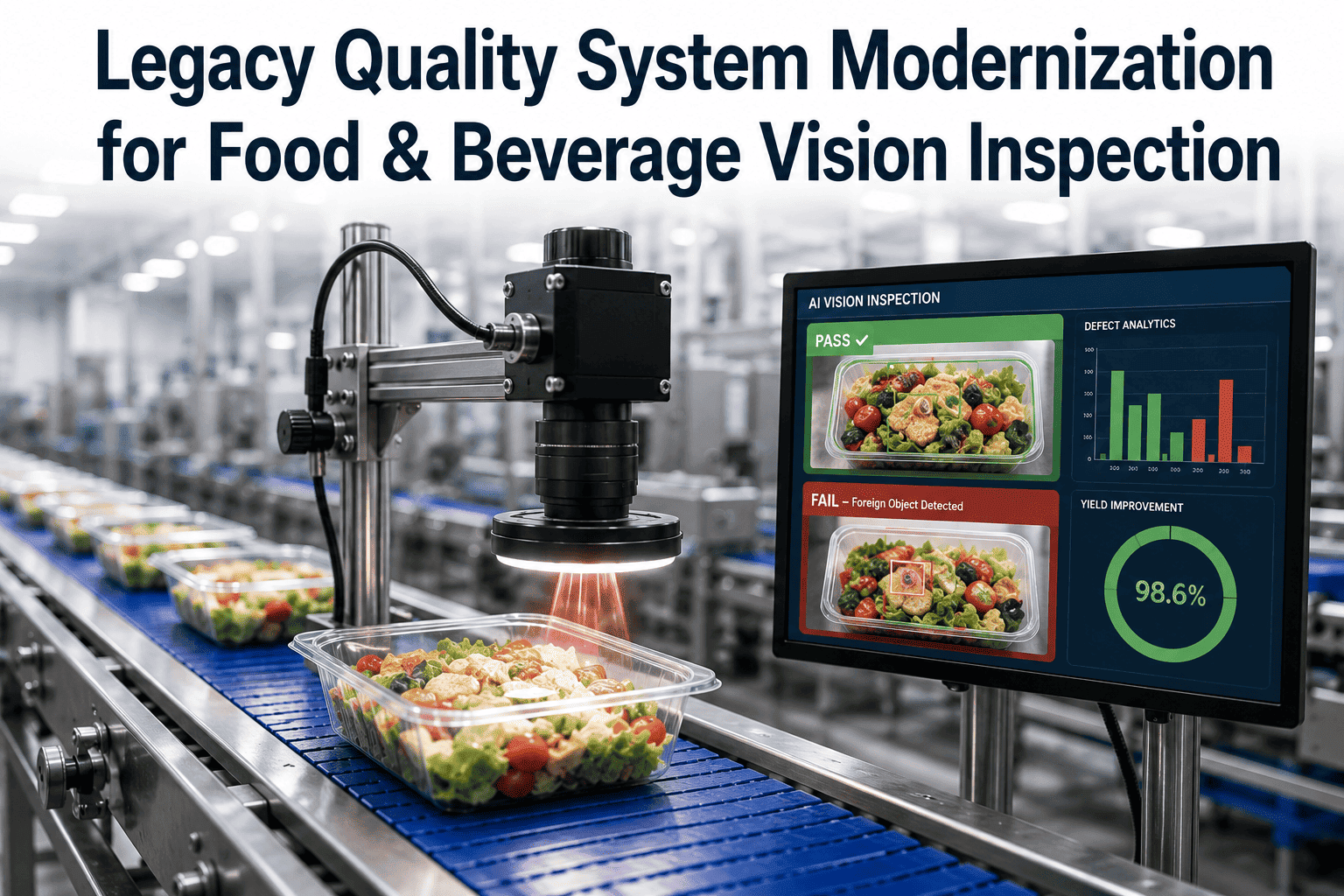
Walk the packing end of any high-speed bottling line and you will find a sampling station where one person checks one bottle out of every hundred, or every thousand, and waves the rest through. That gap is where underfilled bottles, crooked caps, and skewed labels slip past and reach a retailer's shelf. A three-millimetre shortfall on a six-hundred-bottle-a-minute water line adds up to thousands of litres of giveaway product every shift, and a single cocked cap that reaches a distribution pallet can trigger a recall that costs far more than the bottle itself. AI vision inspection closes that gap by checking every single container instead of a sample, and iFactory's support team can walk you through what that looks like on your own line.
FOOD & BEVERAGE · FILL LEVEL · CAP TORQUE · LABEL INSPECTION
Inspect Every Bottle and Can, Not Just the Ones You Sample
Human inspectors on a fast-moving cap station catch roughly four out of every five defects at the start of a shift, and that catch rate keeps sliding as fatigue sets in over the following hours. AI vision holds the same accuracy on container number one and container number forty thousand, which is the difference between a quiet quality program and a recall notice.
Why Sampling Cannot Keep Up With the Line Speed
Modern canning and bottling lines move fast enough that a human eye simply runs out of time. High-speed can lines push through thousands of containers a minute, which leaves a fraction of a second per unit to judge fill height, cap seating, and label placement before the next one arrives. Rule-based photo sensors were built for that speed, but they struggle with the realities of a wet, reflective, foaming line: shiny aluminium throws off specular glare, carbonation creates false fill readings, and a plant running a dozen SKUs forces constant reprogramming every changeover. The defect that ships is almost always the one nobody had time to look at.
82%→70%
Typical human cap-seal catch rate at the start of a shift, sliding lower by hour six
2,000+
Cans or bottles per minute on a modern high-speed packaging line
14,000L
Estimated giveaway volume per shift from a 3mm underfill on a mid-speed water line
~$10M
Approximate average cost of a food or beverage product recall
What Each Missed Defect Actually Costs
Not every defect on a bottling line carries the same weight, and a quality program that treats them all the same tends to over-inspect the cheap problems and under-inspect the expensive ones. Underfill quietly erodes margin because it usually stays below the threshold that triggers a formal complaint. Overfill gives away product on every single unit and rarely gets noticed until someone reviews yield numbers at month end. A missing or cocked cap is a different category entirely, because it turns into a contamination and leak event the moment it leaves the plant.
Underfill
Reads below target fill line on every unit from a specific head, usually tied to valve wear or pressure drift.
Cost class: Margin erosion, regulatory exposure
Overfill
Fill height above spec, giving away product silently across an entire run without tripping any alarm.
Cost class: Direct yield loss
Cocked or Missing Cap
Cap seated at an angle or absent entirely, almost always traced to torque drift after a changeover.
Cost class: Leaks, spoilage, contamination
Label or Code Defect
Skewed label, illegible date code, or wrong allergen declaration on the applied label.
Cost class: Pallet rejection, recall risk
See What a Full-Line Inspection Station Catches on Your Own Bottles
iFactory's vision station reads fill height, cap seating, and label position in a single pass, at full line speed, without slowing the conveyor.
How the Inspection Station Fits Into Your Line, Step by Step
A vision-based inspection station is designed to sit above an existing conveyor without touching the machinery around it. Cameras, lighting, and a GPU-backed inference unit go in at the point where containers are already moving in single file, and the reject gate that already exists on most lines becomes the enforcement point for what the model decides.
01
Capture
High-frame-rate cameras image every container from top-down and angled positions as it passes the station, capturing fill line, cap, and label in one pass.
02
Inference
An on-premise model scores the image against learned spec ranges in single-digit milliseconds, so the decision keeps pace with line speed with no cloud round-trip.
03
Reject
An out-of-spec container triggers the existing reject gate before the next unit arrives, with no change to line PLCs or control logic required.
04
Trend
Every reject is timestamped and tagged to the specific filler head and shift, building a searchable record for quality and maintenance teams.
Catching Drift Before It Turns Into a Recall
The real value of inspecting every container instead of a sample shows up once you look at the reject data over time rather than one bottle at a time. A spike in cocked-cap rejects that only shows up on one filler head, on the same two days of the week, at the same hour, is not random noise — it is a maintenance signal. Because every reject is tied to a timestamp and a line position, patterns that would be invisible to a spot-check inspector become obvious in a shift report: a head drifting out of torque spec after a midday changeover, a capper alignment slipping after a tool change, or a label applicator drifting after a roll swap.
A Pattern a Sampling Program Would Never Catch
On a carbonated soft drink line running an eight-head rotary filler, cocked-cap rejects climbed from a fraction of a percent to over three percent on one specific head, always around the same point in the afternoon shift, always on the same two days. Because full-line inspection tags every reject to its head and timestamp, the pattern surfaced within a day instead of after weeks of accumulated customer complaints, and a scheduled torque check on that single head brought the rate back down before it ever reached a distribution pallet.
Manual Sampling vs. Full-Line AI Inspection
| Inspection Dimension | Manual Sampling | AI Vision, Full Line |
| Coverage |
One container in every hundred or thousand |
Every container, every shift |
| Consistency over a shift |
Declines as fatigue sets in |
Same accuracy at minute one and minute 480 |
| Root cause visibility |
Defect noticed after the fact |
Reject tagged to head, time, and shift |
| Response to defect drift |
Found once complaints arrive |
Surfaced within a shift or two |
| Recall exposure |
Depends on what the sample happened to catch |
Bounded by 100 percent inspection coverage |
Building the Business Case for a Quality Director or Plant Manager
The easiest way to justify a vision inspection station internally is to separate the guaranteed savings from the avoided-risk savings, because they get evaluated differently by a finance committee. The guaranteed part is giveaway reduction: tightening fill variance even slightly on a high-speed line pays for itself in reclaimed product within the first few months, and that number does not depend on ever catching a serious defect. The avoided-risk part is harder to put a single figure on but is usually larger — a prevented recall, a prevented pallet rejection at a retailer's dock, a prevented allergen mislabel. Framing that second category as a realistic range rather than a guaranteed number tends to land better with a skeptical budget owner who has sat through an overpromised pitch before, and it is also simply the more honest way to present it.
Run a Pilot on Your Highest-Volume Line Before You Commit
A four to six week pilot on one line and one SKU family shows real catch rate and false-reject rate against your own containers before any wider rollout.
Questions Worth Asking Before You Choose a Vision System
Does It Run On-Premise?
A cloud round-trip adds latency a fast-moving line cannot afford. On-premise inference keeps every decision inside your plant network at line speed.
Does It Handle SKU Changeovers?
A line running a dozen container shapes needs a model that adapts to new SKUs without a full manual reprogramming cycle each time.
Is Every Reject Traceable?
A reject image and timestamp tied to a specific batch record matters as much for an internal audit as it does for a customer complaint response.
Does It Touch the PLC?
A well-designed deployment layers above the existing reject gate and conveyor logic rather than requiring changes to line control systems.
Frequently Asked Questions
How fast does an AI vision station need to run to keep up with a canning line?
On a high-speed can line moving thousands of units a minute, the inspection window per container is measured in milliseconds, which means both image capture and the accept-reject decision have to happen well inside that window. An on-premise GPU-backed system processes each container in single-digit milliseconds, which is what allows one inspection station to keep pace with the fastest lines in a plant without becoming the bottleneck. Details on matching a system to your specific line speed are available through
iFactory Support.
Can one camera station really check fill level, cap seating, and label position at the same time?
Yes, and this is one of the bigger practical advantages over older single-purpose sensors. A modern vision station captures multiple angles of the same container in one pass and scores fill height, cap seating, and label placement from that single image set, rather than requiring three separate inspection stations spaced along the conveyor. That also means less line real estate is needed and fewer points of failure exist between filling and packing.
What happens when the line changes over to a new bottle shape or label design?
A properly built vision model is trained across a range of container geometries and label layouts within a SKU family, so a changeover to a known variant does not require re-programming the station from scratch. New SKUs outside that trained range do need a short calibration pass, which is typically far faster than reprogramming a rule-based sensor system by hand.
Does adding a vision inspection station slow the line down?
No. The station is designed to sit inline at full running speed, capturing and scoring each container as it passes without requiring the conveyor to pause or slow. The reject decision is made and passed to the existing reject gate before the next container arrives at the station, so line throughput is unaffected by the added inspection layer.
How long does it take to see results after installing a vision inspection station?
Most plants start seeing usable reject-rate and root-cause data within the first few shifts, since every unit is inspected and logged from day one. A short pilot period of several weeks on one line is usually enough to validate catch rate and tune the reject threshold before rolling the system out to additional lines.
Book a demo to see a realistic pilot timeline for your own plant.
FOOD & BEVERAGE · 100% LINE INSPECTION · ON-PREMISE AI
Turn Every Bottle Into an Inspected Bottle
See how iFactory's vision station reads fill level, cap torque, and label position on every container at full line speed, without touching your existing PLC or reject gate.