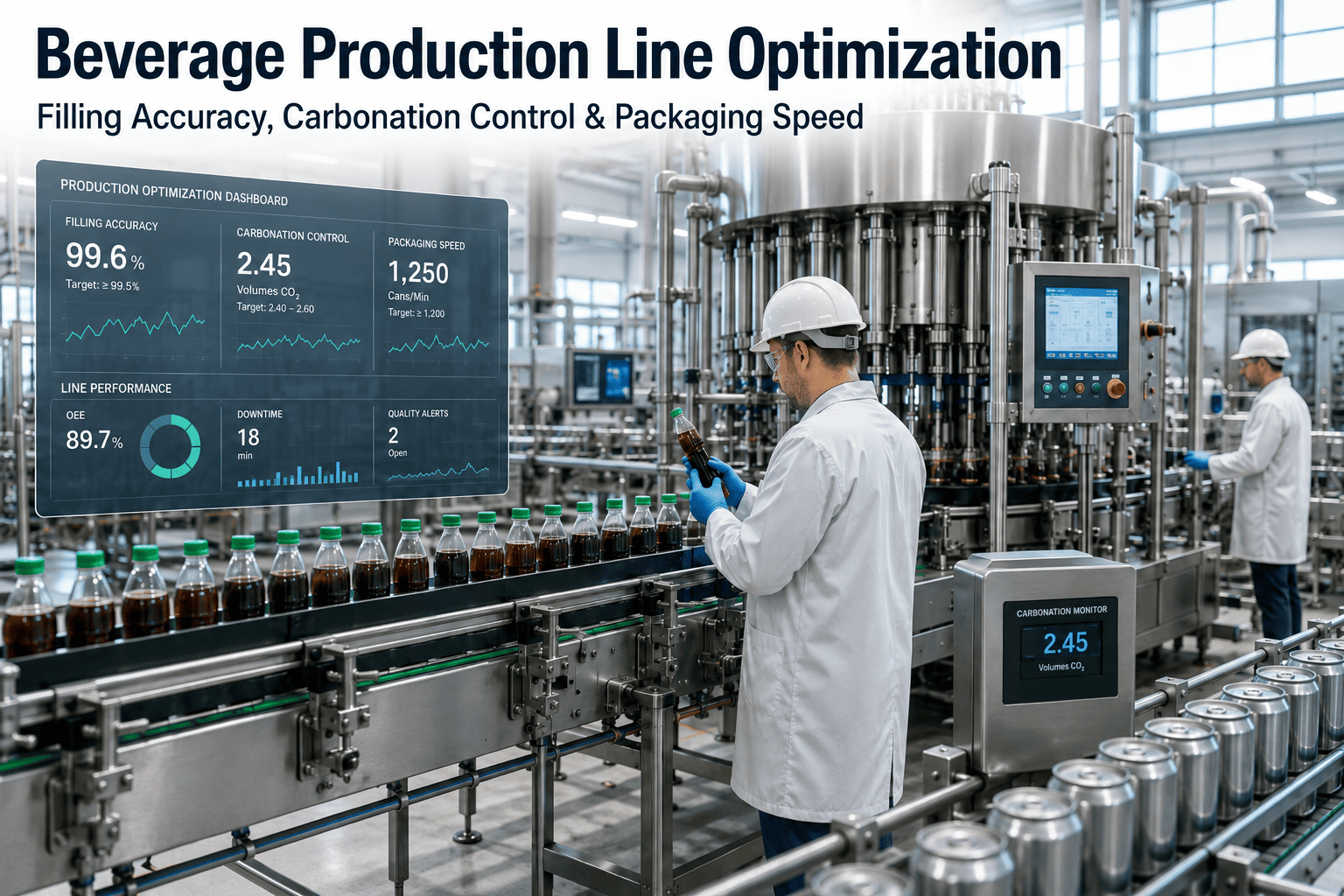
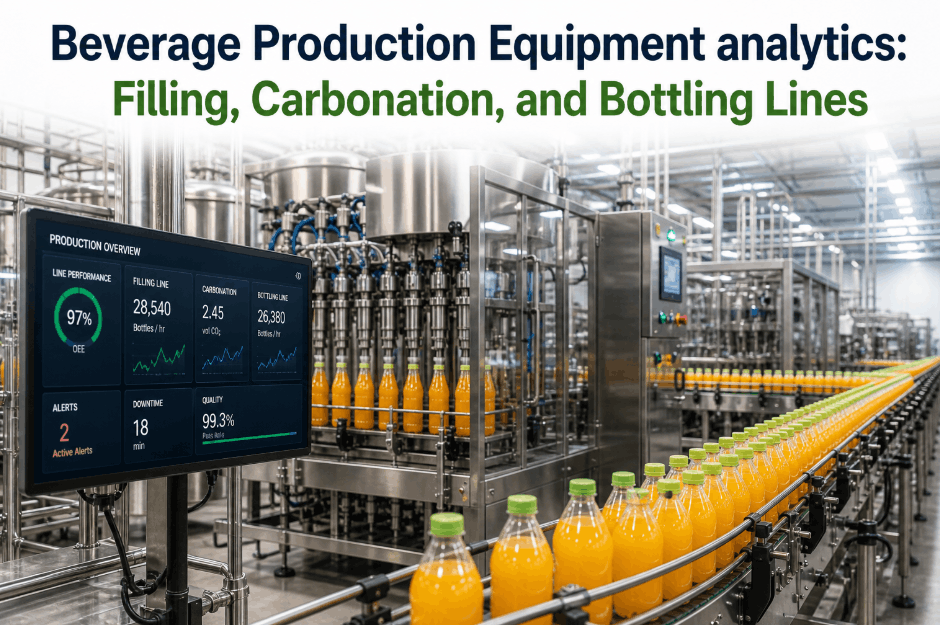
A beverage line only moves as fast as its slowest station, and on most lines that bottleneck shifts depending on the shift, the product, or even the ambient temperature that day. A filler running slightly under target volume gets caught late by manual checks, a carbonation level drifting out of range affects mouthfeel across an entire run, and a capper applying inconsistent torque risks leaks that only show up after cases are already palletized. AI-driven line optimization watches all of these stations together, catching small deviations before they compound into a slow shift or a rework pile. Plant managers looking to close these gaps are increasingly starting with a demo focused on their specific filling and packaging line.
AI OPTIMIZATION FOR BEVERAGE LINES
Keep Filling, Carbonation, and Packaging in Sync
Continuous monitoring across filler valves, carbonation levels, labelers, and cappers catches drift before it slows the whole line down.
Whole-Line View
Filling, carbonation, labeling, and capping tracked together in real time
Earlier Correction
Small deviations flagged before they compound into a slow or stopped line
Fewer Reworks
Catching fill and torque issues early reduces cases pulled for rework
Stations Where Line Speed Is Won or Lost
Every station on a beverage line has its own failure pattern, and monitoring each one differently is what keeps the whole line running at full speed.
Filler Valve Accuracy
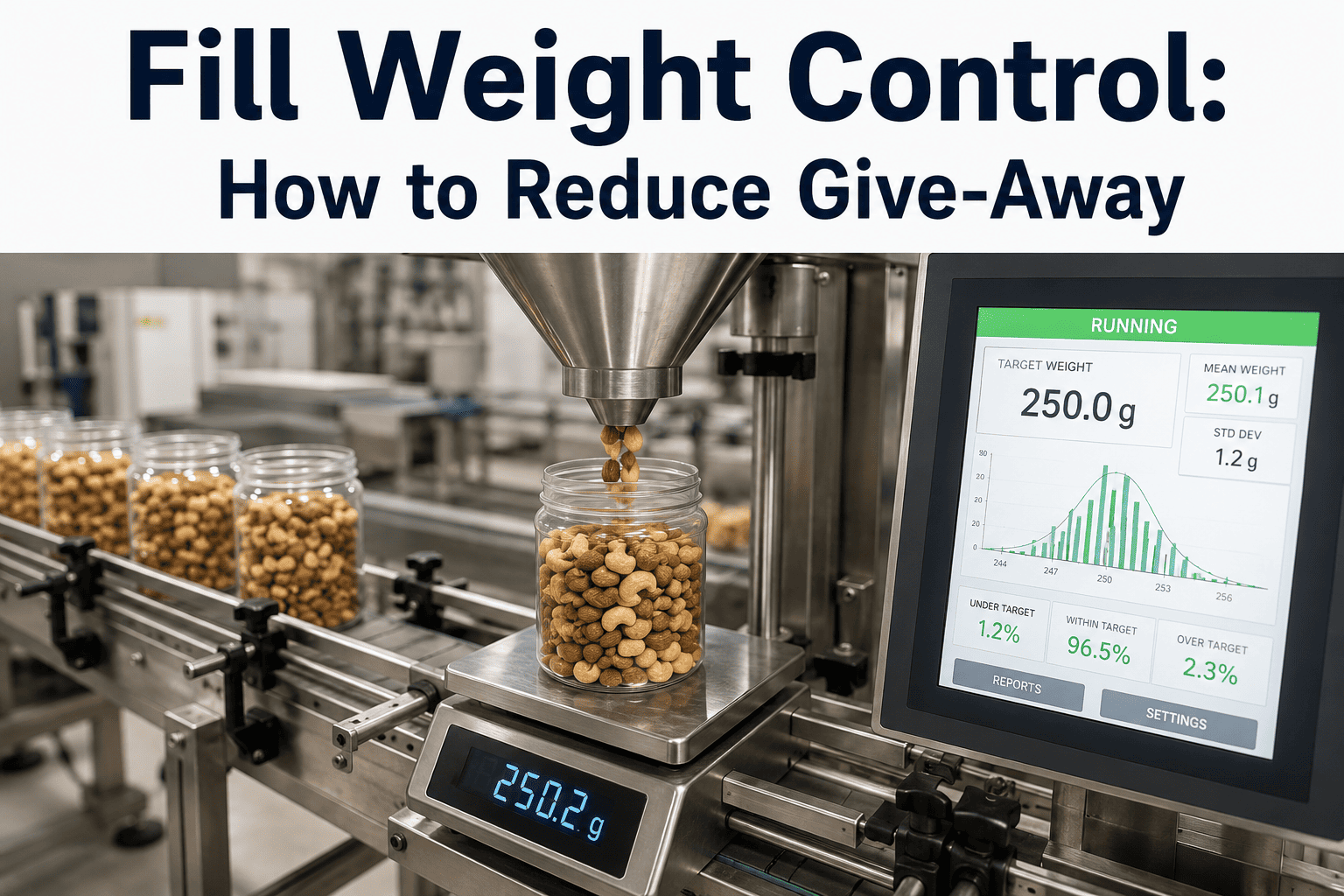
Fill volume sensors catch valve wear or timing drift that would otherwise lead to under-filled or over-filled containers across a run.
Carbonation Level Consistency
Continuous carbonation monitoring flags CO2 level drift, protecting product consistency across carbonated beverage lines.
Labeler Placement Accuracy
Vision-based checks confirm label placement and alignment, catching a slipping applicator before an entire batch runs mislabeled.
Capper Torque Monitoring
Torque sensors on capping heads catch inconsistent seal pressure early, reducing the risk of leaks discovered only after palletizing.
Detection Timing: Manual Checks vs Continuous Monitoring
Manual spot checks catch problems only when an inspector happens to look at the right station at the right time. Continuous monitoring closes that gap.
Manual Spot Checks
Catches issues only during scheduled inspection rounds
End-of-Line Inspection
Flags issues after product has already moved through the whole line
Continuous AI Monitoring
Flags drift at the station where it originates, in real time
How a Deviation Gets Caught and Corrected
1
Station-Level Sensor Reading
Fill volume, carbonation level, label placement, and capper torque are each tracked continuously at their own station.
2
Trend Comparison Against Target
Each reading is compared against the target specification for that product run, flagging drift as it starts rather than after it accumulates.
3
Line Operator Alert
An alert reaches the line operator with enough detail to make an adjustment at the specific station before more product is affected.
4
Run Record and Review
Every deviation and correction is logged against the production run, supporting review and continuous improvement over time.
See Where Your Line Loses the Most Time
Walk through a station-by-station monitoring plan built around your filling, carbonation, and packaging equipment.
Frequently Asked Questions
Fill volume sensors track each filler valve's output continuously, comparing it against the target fill level for the current product run. As a valve begins to wear or timing drifts slightly, the sensor picks up that trend early, allowing an operator to make an adjustment before enough containers are affected to trigger a larger rework or compliance issue. This is a meaningful improvement over periodic manual checks, which only catch a problem if it happens to occur during a scheduled inspection.
Carbonation level can drift due to temperature fluctuations, pressure changes in the carbonator, or wear in dosing equipment, and any of these can shift CO2 content away from the target level for a product. Continuous carbonation monitoring tracks this in real time, flagging drift before an entire batch runs with inconsistent carbonation, which matters both for consumer experience and for meeting product specification.
Vision systems positioned at the labeling station capture images of each container as labels are applied, comparing placement and alignment against expected positioning in real time. A labeler that begins drifting out of alignment, whether from mechanical wear or a jam, gets flagged quickly rather than continuing to apply mislabeled product across an entire run. Teams can review sample vision monitoring output during a demo session.
Capper torque that is too low risks an incomplete seal and potential leaks, while torque that is too high can damage the cap or container thread, both of which typically go unnoticed until a case is opened later in the supply chain. Continuous torque monitoring at the capping head catches drift toward either extreme early, reducing the number of cases that would otherwise need to be pulled for inspection after palletizing.
Yes, station-level monitoring is typically designed to work alongside existing line control and SCADA systems rather than replacing them, feeding alerts and trend data into dashboards operators already use during a shift. This keeps the transition manageable for production teams, since the underlying line equipment and control logic remain the same. Plants with specific control system requirements can confirm compatibility through support.
KEEP EVERY STATION AT FULL SPEED
Optimize Your Beverage Line Station by Station
Get a monitoring plan mapped to your filler, carbonator, labeler, and capper equipment.

.png)