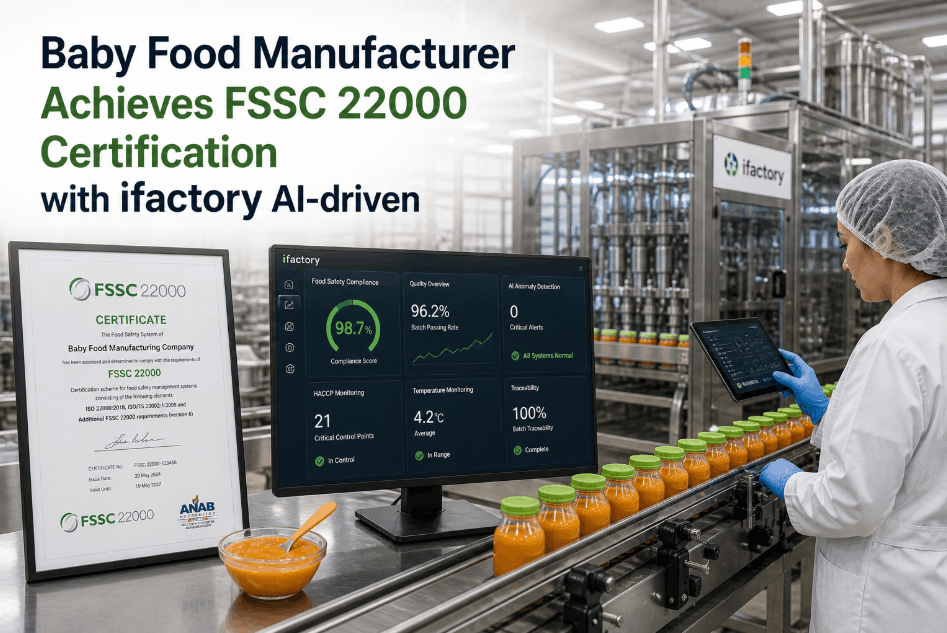
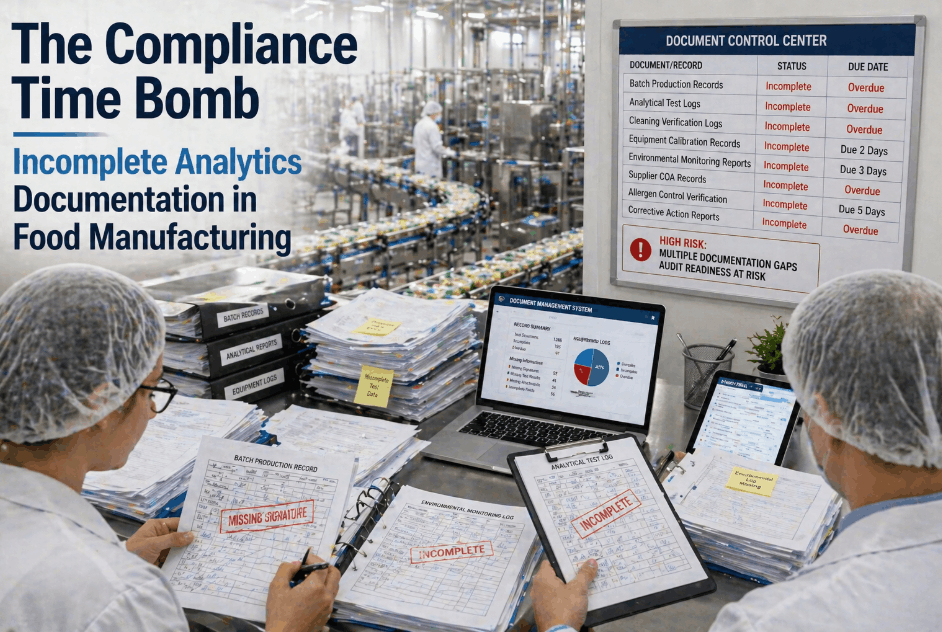
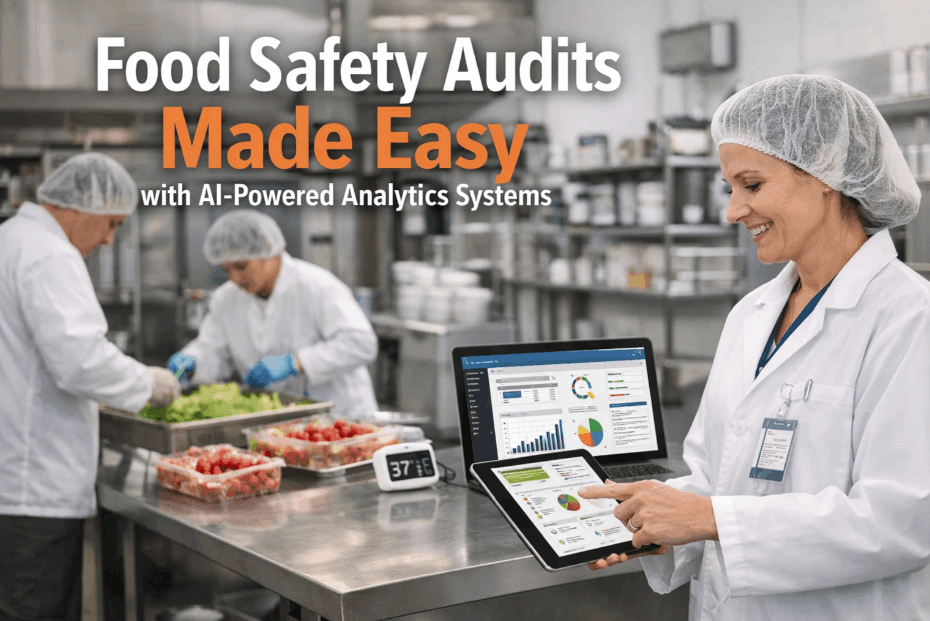
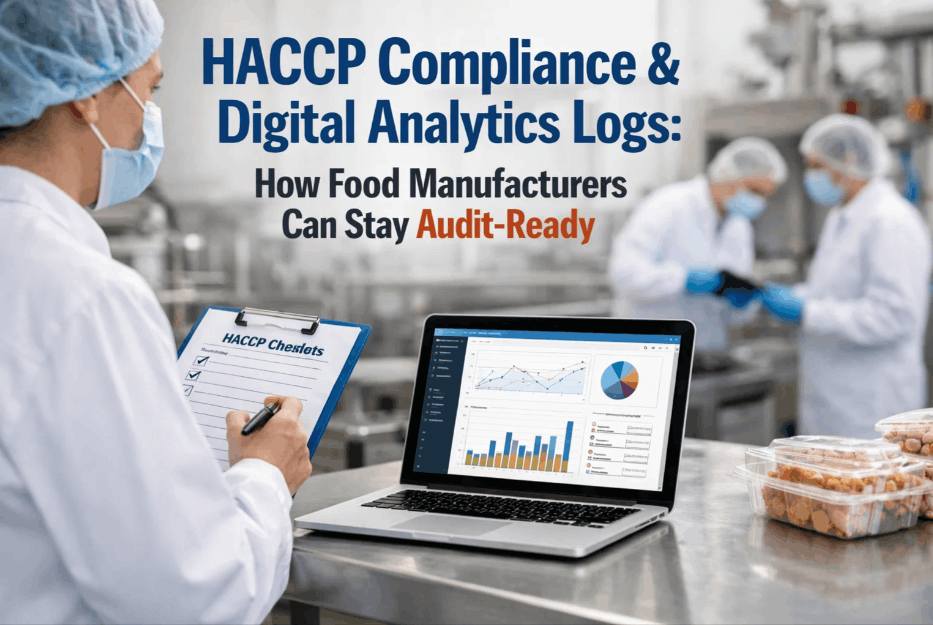
Food safety compliance is no longer a checklist exercise — it is a continuous analytics discipline. For operations teams managing FSMA, HACCP, SQF, BRC, and FSSC 22000 requirements simultaneously, the challenge is not knowing the frameworks exist. The challenge is producing evidence that every critical control point was monitored, every deviation was documented, and every corrective action was completed — across every shift, every line, and every SKU. Facilities that adopt AI-driven compliance tracking platforms close this evidence gap systematically, converting raw process data into audit-ready records that satisfy every major food safety standard. Book a demo to see how iFactory's compliance tracking layer maps directly to your certification requirements.
COMPLIANCE TRACKING PLATFORM
One Platform. Every Major Food Safety Standard.
FSMA, HACCP, SQF, BRC, and FSSC 22000 compliance tracking — automated, documented, and audit-ready from day one.
Understanding the Five Major Food Safety Frameworks: What Analytics Teams Need to Know
Food and beverage manufacturers operating across the US, UK, Canada, Germany, and the UAE must navigate five major frameworks simultaneously — FSMA, HACCP, SQF, BRC, and FSSC 22000 — each with distinct documentation expectations, audit scopes, and certification requirements. Understanding how they interrelate is the foundation of any analytics-driven compliance program that avoids maintaining separate record sets for each standard.
US federal law requiring preventive controls, supply chain programs, and FSVP. Focuses on prevention over response — applies to all facilities selling food in the US, including foreign exporters.
The science-based foundation embedded within FSMA, SQF, BRC, and FSSC 22000. Defines CCP identification, critical limit setting, monitoring procedures, and corrective action documentation.
GFSI-benchmarked certification with three levels, widely mandated by North American and Australian retail buyers. Edition 9 expanded food safety culture and supplier management requirements significantly.
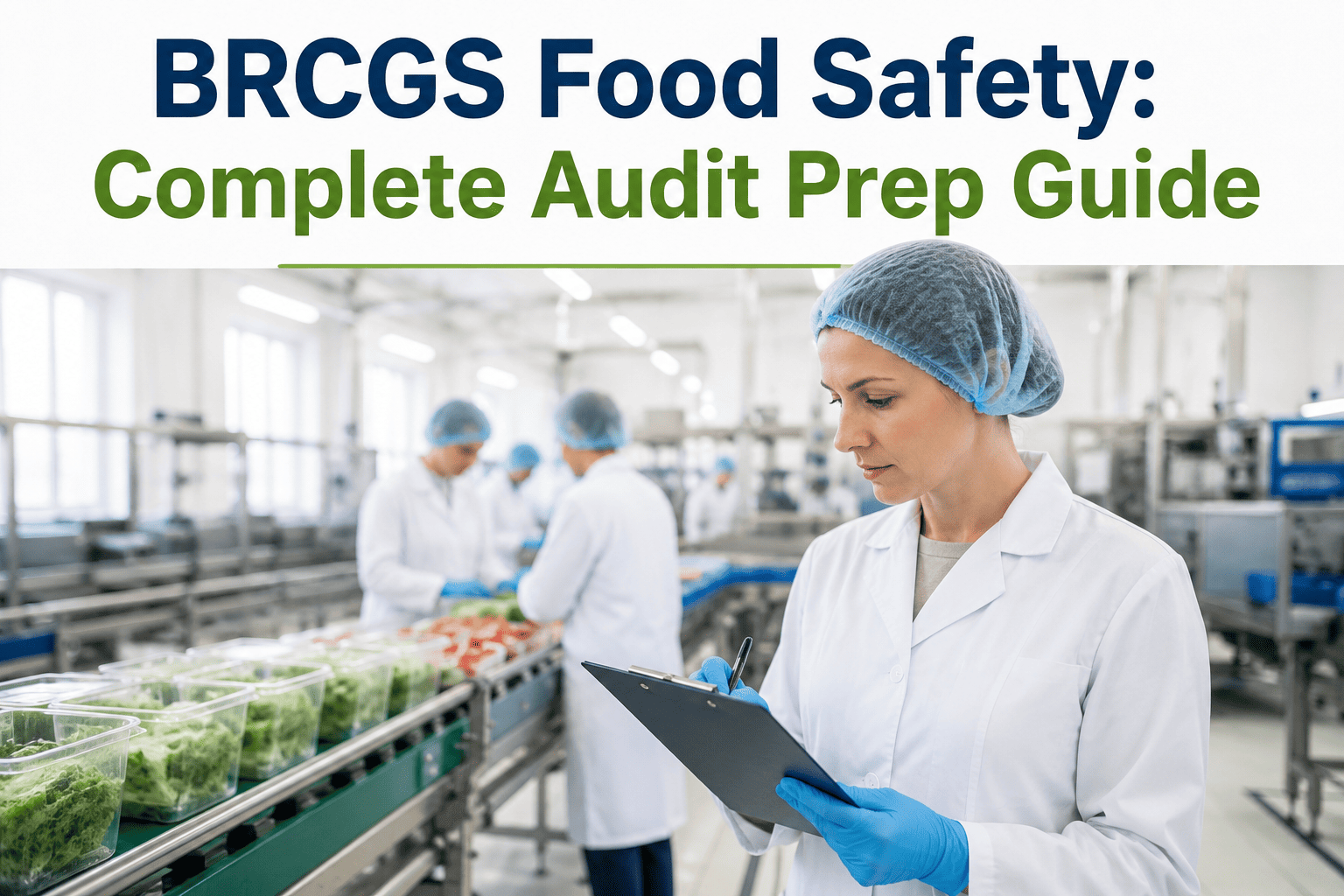
Preferred certification for UK and European retail supply chains. Issue 9 introduced unannounced audits, stronger food safety culture requirements, and expanded environmental monitoring for high-care zones.
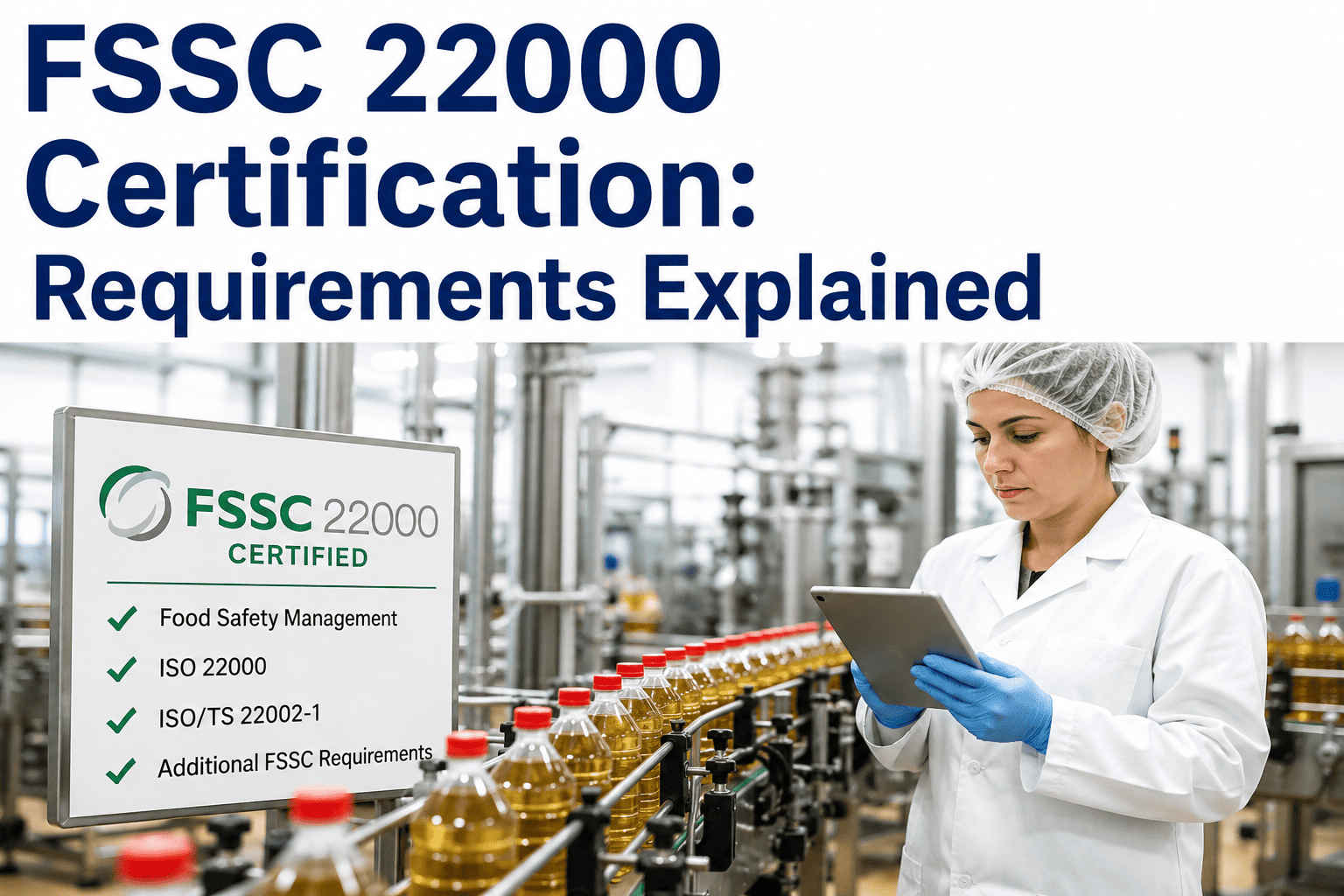
ISO-based food safety management system recognized globally across EU, Middle East, and beyond. Version 6 added food fraud, food defense, and environmental monitoring — preferred in Germany and UAE markets.
FSMA Preventive Controls: Documentation Requirements for Analytics-Driven Compliance
FSMA Preventive Controls for Human Food (21 CFR Part 117) created the most significant shift in US food safety regulation since HACCP was introduced. The law moved the compliance model from reactive inspection to proactive hazard prevention — requiring facilities to identify hazards, implement preventive controls, monitor those controls, take corrective action when deviations occur, verify the system is working, and maintain records proving all of the above. For analytics teams, this translates into a documentation architecture that must be continuously operational, not activated only during inspections.
The four categories of preventive controls — process controls, food allergen controls, sanitation controls, and supply chain controls — each carry specific monitoring and documentation requirements. Process control monitoring records must demonstrate that CCPs and PCs were monitored at the frequency specified in the food safety plan. Corrective action records must capture what happened, what action was taken, and how the disposition of affected product was determined. Book a demo to see how iFactory's compliance tracking module structures FSMA preventive control records in real time without requiring manual data entry from operators.
Hazard Analysis and Food Safety Plan
The written hazard analysis and food safety plan must identify known or reasonably foreseeable biological, chemical, and physical hazards for each type of food manufactured at the facility. Analytics platforms support this by maintaining digital hazard records linked to monitoring data, making food safety plan review and update a data-driven process rather than a periodic document exercise.
Preventive Control Monitoring Records
Monitoring records must be created at the time the activity is performed, include the date and time, reflect actual monitoring results rather than scheduled values, and be signed or initialed by the person conducting the activity. Automated sensor integration with timestamped data capture satisfies all four requirements simultaneously and eliminates transcription error from manual log sheets.
Corrective Action and Correction Records
When monitoring reveals a deviation from a preventive control, FSMA requires prompt corrective action, identification and isolation of affected food, evaluation of the food for safety, and disposition records. Analytics platforms that generate real-time deviation alerts enable faster corrective action initiation and automatically create the documentation chain from deviation detection through product disposition.
Verification and Validation Activities
FSMA requires that the preventive controls are validated to establish that they are capable of controlling the identified hazards and that monitoring is actually being conducted as required. Automated compliance dashboards that aggregate monitoring completion rates, deviation frequencies, and corrective action closure times provide the verification evidence FDA inspectors expect to find during establishment inspections.
Supply Chain Program Documentation
When a facility relies on a supplier to control a hazard, FSMA requires a documented supply chain program including supplier approval, verification activities, and records of those activities. Analytics platforms that integrate supplier quality data provide a unified compliance record linking incoming material specifications to monitoring outcomes across the full supply chain.
HACCP System Analytics: Monitoring Critical Control Points in Real Time
HACCP's seven principles — hazard analysis, CCP identification, critical limit establishment, monitoring procedures, corrective actions, verification, and record-keeping — define the compliance structure every major food safety framework builds upon. Analytics platforms close the gap between what the HACCP plan specifies and what actually gets documented: sensor-driven CCP monitoring captures data continuously, compares it against validated critical limits in real time, and generates automated deviation alerts the moment a parameter approaches or breaches its critical limit — giving corrective action the seconds of response time that food safety demands. Book a demo to walk through a sample HACCP monitoring dashboard for your CCP categories.
Continuous temperature and time logging across pasteurizers, retorts, and heat exchangers — with automated critical limit alerts and hold/release documentation per batch.
Performance logs for foreign body detection — sensitivity verification, test frequency, and reject confirmation — structured as HACCP CCP records with automated exception flagging.
In-line pH and aw measurement logging for acidified and low-moisture products — with instrument calibration status and operator ID captured per reading.
Continuous temperature logging across cold storage, blast freezing, and distribution — with automated excursion alerts and degree-hour exposure tracking.
Changeover and cleaning verification records linking sanitation completion, rework status, and label verification into a single allergen CCP audit trail.
Dose and intensity logging for UV and irradiation CCPs — comparing delivered dose against validated minimums with automated compliance status per batch.
SQF, BRC, and FSSC 22000: Comparative Requirements for Analytics Documentation
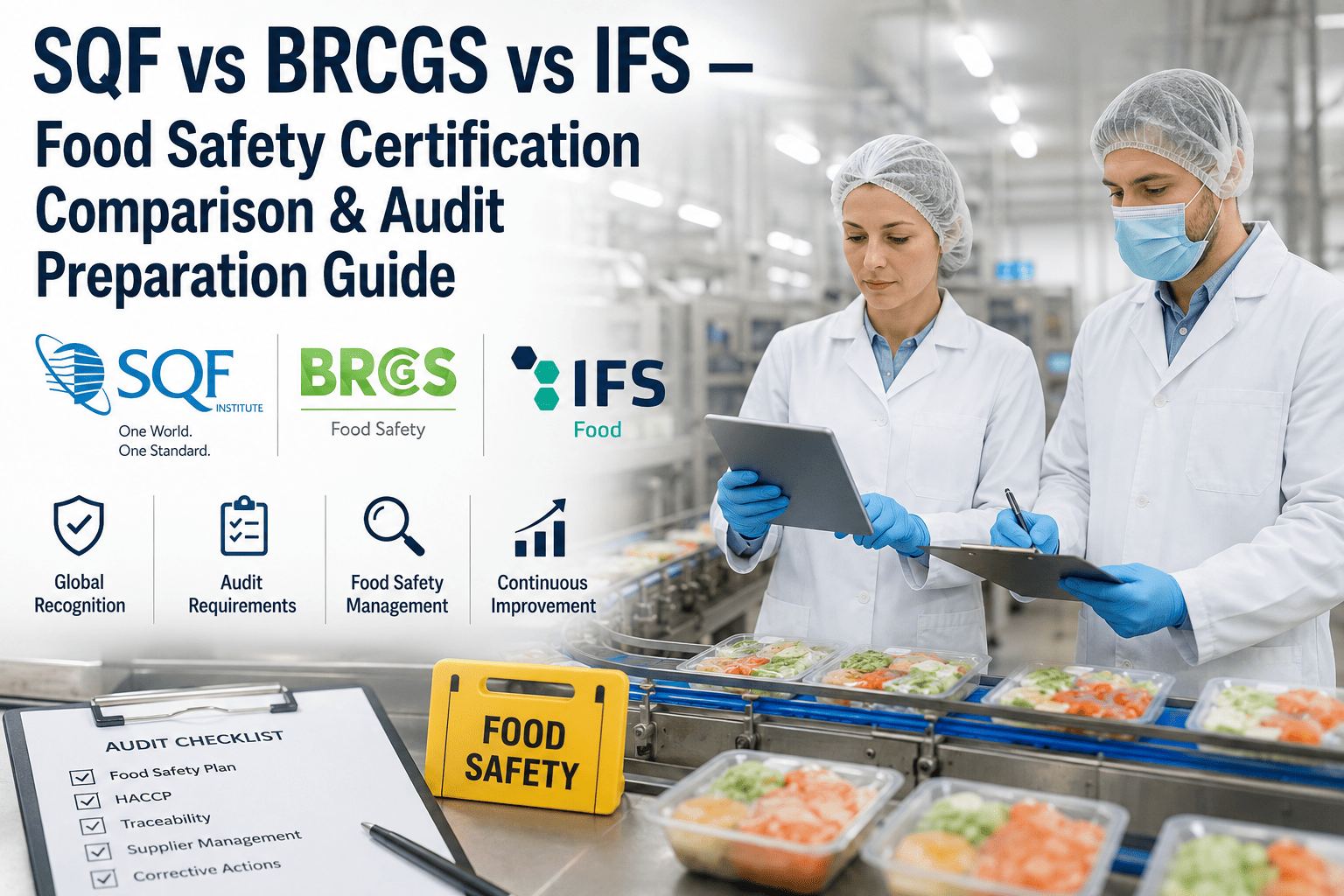
SQF Edition 9, BRC Issue 9, and FSSC 22000 Version 6 all share the same core documentation requirements — real-time CCP monitoring, deviation management, and verification evidence — but differ in scope-specific mandates: BRC requires zone-classified environmental monitoring, FSSC 22000 adds food fraud vulnerability assessment, and SQF Edition 9 now measures food safety culture. An analytics platform capturing comprehensive process data can serve all three standards from one foundation, eliminating duplicate record sets for facilities exporting to the UK, Canada, Germany, or the UAE. Book a demo to see how iFactory maps outputs to your specific certification portfolio.
| Requirement Area | FSMA (21 CFR 117) | SQF Edition 9 | BRC Issue 9 | FSSC 22000 v6 | iFactory Analytics Coverage |
|---|---|---|---|---|---|
| CCP Monitoring Records | Required — real-time or at time of activity | Required — per HACCP plan frequency | Required — per HACCP plan | Required — ISO 22000 clause 8.5.4 | Automated sensor logging, timestamped |
| Deviation & Corrective Action | Required — product evaluation and disposition | Required — root cause analysis for repeating deviations | Required — documented corrective action procedure | Required — clause 8.9 nonconformity management | Real-time alerts, automated CAPA workflow |
| Environmental Monitoring | Required for RTE with Listeria risk | Required — site-specific program | Required — zone 1–4 classification, trend analysis | Required — FSSC v6 additional requirement | Swab schedule tracking, trend dashboards |
| Allergen Control Documentation | Required — allergen preventive control records | Required — changeover and verification records | Required — Issue 9 expanded allergen requirements | Required — ISO 22000 clause 8.5.3 | Changeover checklists, rework traceability |
| Supplier Verification | Required — supply chain program, FSVP | Required — approved supplier program | Required — raw material risk assessment | Required — clause 7.1.6 externally provided processes | Supplier scorecard and COA management |
| Food Fraud / Defense | Not explicit — covered under supply chain | Required — vulnerability assessment | Required — threat assessment (TACCP) | Required — FSSC v6 additional requirement | Vulnerability assessment module |
| Food Safety Culture | Not explicitly required | Required — Edition 9 Element 2.1.6 | Required — Issue 9 leadership requirement | Required — ISO 22000 clause 5.1 | Training records, engagement metrics |
| Internal Audit Records | Required — verification activities | Required — annual full system audit | Required — minimum 12-month cycle | Required — clause 9.2 internal audit | Audit scheduling, finding, closure tracking |
How AI Vision Enhances Food Safety Compliance in Manufacturing Facilities
AI vision systems — cameras and imaging sensors that interpret the physical production environment in real time — give compliance teams a category of evidence no sensor or paper log can produce: continuous visual proof of what actually happened on the floor. From GMP adherence at hand-wash stations to foreign object presence on conveyors, computer vision closes the observation gap that auditors, supervisors, and periodic manual inspections leave open. Book a demo to see iFactory's AI vision compliance module applied to your facility's highest-risk zones.
GMP Behavioral Compliance
Monitors hand-washing steps, PPE completeness, and unauthorized material entry at production zone transitions. Logs compliance rates by shift — providing the food safety culture evidence SQF Edition 9 and BRC Issue 9 now require.
Foreign Object Detection
Detects visual anomalies — plastic, wood, bone fragments — that pass through conventional metal detection or X-ray. A complementary layer that covers material types with low detection probability in physical systems.
Label Verification
Confirms that labels applied match the current authorized version for the active product run — catching missing allergen declarations, outdated label versions, or incorrect language variants before product leaves the line.
Sanitation Verification Imaging
Compares post-CIP equipment surfaces against validated clean-state baselines — flagging visible soil, standing water, or reassembly errors before production resumes. Directly supports FSMA sanitation preventive control verification.
Pest Activity Monitoring
Continuous visual monitoring of perimeter entry points and high-risk storage areas detects pest activity between scheduled inspection intervals — providing BRC and FSSC 22000 auditors with a visual evidence record of program effectiveness.
Traceability and Batch Verification
AI-captured reading of lot codes and date codes on raw materials, work-in-process, and finished goods creates a visual traceability chain that complements barcode and RFID systems — strengthening track-and-trace compliance for UAE and German market exports.
Food Safety Compliance Software and Analytics Platforms: What to Evaluate
The critical distinction when evaluating food safety compliance software is between document management tools — which store records — and integrated analytics platforms that actively monitor parameters, detect deviations in real time, and generate documentation from operational data rather than manual entry. Platforms that connect directly to your SCADA, MES, or historian eliminate the transcription risk they are intended to solve. Book a demo to review iFactory's integration architecture for your technology stack.
Connects directly to process control sensors and PLCs to capture CCP data at the time of the activity — satisfying FSMA's requirement that monitoring records be created contemporaneously, not entered after the fact.
Configurable templates mapped to FSMA, HACCP, SQF, BRC, and FSSC 22000 simultaneously — one data foundation, multiple certification-specific record outputs.
Automated alerts linked to corrective action workflows ensure every deviation is documented from detection through root cause analysis, corrective action, and effectiveness verification.
Electronic signature, record locking, and full audit trail functionality aligned with 21 CFR Part 11 — making records attributable, contemporaneous, and indelible for FDA and GFSI auditor review.
Swab schedule management, result logging, and trend dashboards structured for BRC zone classification, FSSC 22000 v6, and FSMA Listeria control requirements.
Mobile applications with offline data capture for floor-level compliance activities — CCP checks, receiving inspections, swabs — that sync when connectivity is restored, eliminating remote-area documentation gaps.
Benefits and ROI of AI-Driven Food Safety Compliance Analytics
The business case for AI-driven food safety compliance platforms extends well beyond audit preparation efficiency. Facilities that implement integrated compliance analytics consistently report measurable improvements across three dimensions: reduced compliance labor cost, lower recall and deviation risk, and faster certification audit cycles. For food manufacturers in competitive supply chains — particularly those serving UK retail customers who mandate BRC certification and German market partners who require FSSC 22000 — certification maintenance speed directly affects customer acquisition and supply chain eligibility.
Automated record generation from process data eliminates manual log completion, reduces QA review time, and removes transcription errors that require investigation before records can be approved.
Digital, searchable compliance records reduce inspection preparation from days of manual record compilation to hours of targeted report generation — with confidence that records are complete and accurate.
Real-time deviation detection enables corrective action before deviations accumulate into systemic non-conformances. Facilities report significantly fewer audit findings when continuous monitoring closes gaps that periodic manual checks miss.
Integrated compliance and traceability records reduce the time required to isolate affected product in a recall scenario — limiting the scope of a recall, reducing recall costs, and demonstrating compliance system effectiveness to regulators.
Common Challenges in Multi-Framework Compliance and How Analytics Resolves Them
Documentation Silos Across Certification Programs
Separate record sets for SQF, BRC, and FSSC 22000 create duplication and inconsistency. A unified analytics platform generates framework-specific outputs from one monitoring event — one data source, multiple compliant record formats.
Manual Record Gaps During High-Production Periods
Peak production is exactly when manual logging lapses. Automated sensor monitoring maintains CCP record frequency regardless of production volume — no operator dependence required.
Unannounced Audit Readiness
BRC Issue 9 unannounced audits and FDA FSMA inspections require no preparation window. Continuous analytics keeps compliance records current and searchable at all times.
Multi-Site Compliance Consistency
Facilities in the UK, Canada, Germany, or UAE alongside domestic sites need centralized visibility. Cloud-based dashboards give corporate QA teams real-time compliance performance across all locations.
Supplier Compliance Verification
Managing COA collection, verification schedules, and non-conformance follow-up across hundreds of suppliers manually is unsustainable. Supplier portal integration automates the full program without dedicated manual follow-up.
Best Practices for Building an Integrated Food Safety Compliance Analytics Program
Map Current Monitoring Data to Framework Requirements
Document every CCP and preventive control monitoring activity, identify which are sensor-monitored vs. manually logged, and map each to its specific certification requirement. This gap analysis defines your compliance data architecture.
Prioritize Real-Time Integration Over Document Storage
Real-time deviation detection is where compliance risk is managed. Prioritize platforms that integrate with process control infrastructure and alert on deviations as they occur — not after the shift ends.
Establish Electronic Record Integrity Controls Early
Audit trail, electronic signature, and record locking must be configured before the platform goes live. Retroactive compliance documentation lacks the contemporaneous integrity FDA inspectors and GFSI auditors require.
Build Trend Monitoring Into Your Verification Program
Deviation frequency by CCP, corrective action closure rates, and monitoring completion percentages transform verification from a periodic review into a continuous performance activity.
Train for Data Quality, Not Just Platform Usage
Connect data quality to compliance outcomes in operator training — making record accuracy a food safety culture value, not just a procedural requirement, aligned with SQF Edition 9 and BRC Issue 9 culture expectations.
Frequently Asked Questions: Food Safety Compliance Framework Analytics
What is the difference between FSMA preventive controls and HACCP critical control points?
HACCP CCPs are specific process points where control is essential to prevent a food safety hazard. FSMA preventive controls is broader — covering allergen, sanitation, and supply chain controls in addition to CCPs. Analytics platforms must track both categories with appropriate monitoring frequency and documentation for each.
Can a single analytics platform satisfy SQF, BRC, and FSSC 22000 documentation requirements simultaneously?
Yes. Core CCP monitoring, deviation management, and corrective action records are structurally similar across all three GFSI-benchmarked standards. Standard-specific requirements — BRC zone classification, FSSC 22000 food fraud assessment, SQF culture evidence — are handled through additional module configuration within a single unified platform.
How does AI-driven compliance analytics support unannounced BRC audits?
Continuous analytics keeps CCP logs, environmental monitoring results, and corrective action records current and searchable at all times — no preparation required. When an auditor arrives unannounced, the compliance record is immediately available. Book a demo to see iFactory's audit-ready record structure.
What monitoring records do FDA FSMA inspectors most commonly request during establishment inspections?
Inspectors typically request the written food safety plan, CCP monitoring records for a specified date range, corrective action records for any deviations, and verification activity records. Sanitation control records and allergen preventive control documentation — including changeover verification — are also frequently reviewed.
Is iFactory's compliance tracking module validated for 21 CFR Part 11 electronic records requirements?
Yes. iFactory's module includes audit trail, electronic signature, and record locking capabilities aligned with 21 CFR Part 11. Implementation includes validation documentation support to ensure your specific record categories meet Part 11 requirements for your regulatory context.
READY TO UNIFY YOUR COMPLIANCE PROGRAM
From FSMA to FSSC 22000 — One Analytics Platform, Every Standard.
iFactory's compliance tracking module captures CCP monitoring data in real time, generates audit-ready documentation across FSMA, HACCP, SQF, BRC, and FSSC 22000 requirements, and keeps your facility inspection-ready at all times — across dairy, beverage, bakery, meat, and prepared food operations in the US, UK, Canada, Germany, and UAE markets.