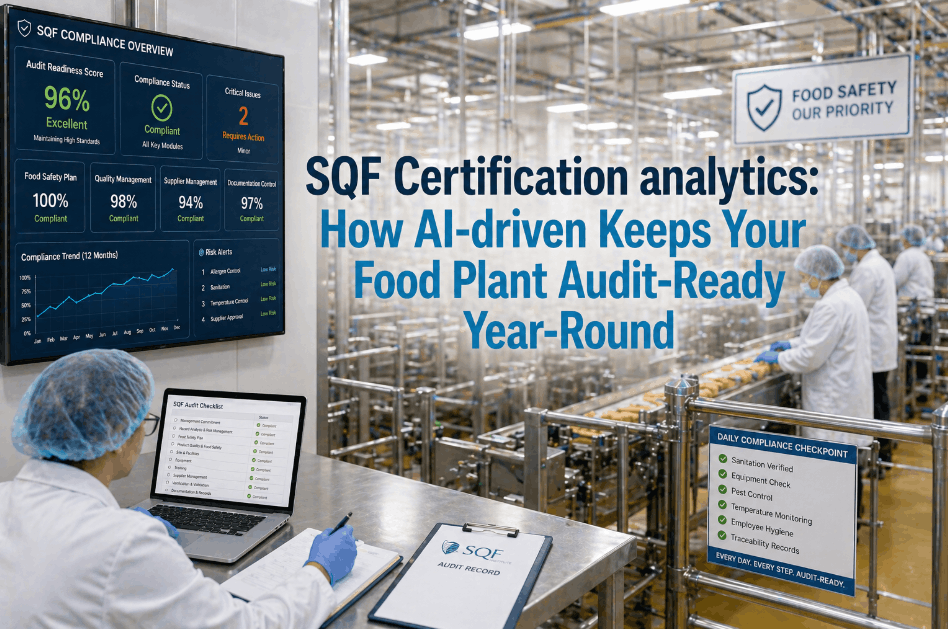
SQF certification analytics is no longer a once-a-year scramble for food manufacturers — it is a continuous, data-driven discipline that separates audit-ready plants from those caught off-guard by unannounced inspections, corrective action backlogs, and documentation gaps. In 2026, quality assurance teams deploying AI-driven SQF compliance software are eliminating the two most costly audit vulnerabilities: incomplete sanitation verification records and unresolved corrective action items that surface only under auditor scrutiny. The financial and reputational stakes are significant — a failed SQF audit can suspend certification, disrupt customer contracts, and trigger costly re-audits that consume QA bandwidth for months. To see how AI-driven SQF certification analytics performs inside a live food manufacturing environment, Book a Demo with the iFactory team today.
Why Traditional SQF Audit Preparation Creates Compliance Gaps
The Structural Failure of Reactive SQF Documentation and Corrective Action Management
Most food manufacturing plants still approach SQF certification preparation reactively — pulling together documentation, closing out corrective actions, and auditing sanitation logs in the weeks before a scheduled audit. This methodology is increasingly dangerous in an environment where SQF code updates require ongoing compliance, unannounced audits are becoming more common, and food safety regulators expect evidence of continuous improvement rather than periodic cleanup. Traditional quality management systems cannot convert operational data into forward-looking compliance readiness fast enough to close gaps before an auditor identifies them. AI-driven SQF compliance software solves this by replacing manual document chasing with automated verification workflows, real-time corrective action monitoring, and predictive audit gap analysis trained on SQF code requirements.
How AI-Driven SQF Certification Analytics Keeps Your Plant Audit-Ready
From Periodic Preparation to Continuous SQF Compliance Intelligence
The core shift that AI-driven SQF certification analytics introduces is the move from audit-season document assembly to continuous compliance monitoring — systems that track which SQF code elements are approaching non-conformance risk, which corrective actions are approaching deadline exposure, and which sanitation verification records have gaps before an auditor reviews them. Quality assurance teams exploring this capability can Book a Demo and review live SQF compliance dashboards built from real food manufacturing audit data. The result is a QA operation that greets every audit — scheduled or unannounced — with complete, verified, timestamped evidence of SQF code compliance across every element.
Six SQF Audit Gaps That AI-Driven Analytics Closes Year-Round
Where Predictive SQF Compliance Software Eliminates Non-Conformance Risk at Every Stage
SQF audit readiness requires predictive intelligence applied simultaneously across document control, corrective action management, sanitation verification, supplier qualification, and continuous improvement tracking. To identify which SQF compliance gaps represent the highest certification risk in your facility, Book a Demo for a live SQF audit readiness assessment with the iFactory quality team.
Core Capabilities of AI-Driven SQF Food Safety Audit Software
What SQF Certification Analytics Actually Delivers for Quality Assurance Teams
An enterprise-grade SQF compliance platform is not a digital filing cabinet for your existing paper records — it is a connected intelligence layer that integrates document control, corrective action management, sanitation verification, supplier qualification, and audit trail generation into a single compliance framework. Quality assurance teams ready to move from reactive preparation to continuous SQF audit readiness can Book a Demo and review how the iFactory SQF analytics platform maps to every SQF code element in their facility.
SQF Compliance Software Comparison: Analytics vs. Traditional Approaches
Evaluating SQF Audit Readiness Platforms for 2026 Food Safety Requirements
The table below maps critical SQF compliance capability dimensions across three tiers of food safety audit management — from paper-based systems to purpose-built AI platforms designed for continuous SQF certification readiness.
| SQF Compliance Capability | Paper / Manual System | Standard QMS Software | AI SQF Analytics Platform |
|---|---|---|---|
| Document Control Method | Manual Filing / Binders | Basic Version Tracking | Automated Review Cycle Alerts |
| Corrective Action Tracking | Spreadsheet Logging | Basic Task Assignment | Full CAPA Lifecycle Automation |
| Sanitation Verification | Paper Log Review | Record Storage Only | Real-Time Completeness Monitoring |
| SQF Audit Gap Detection | Not Available | Pre-Audit Manual Checklist | Continuous Element-Level Scoring |
| Supplier Qualification Tracking | Manual COA Filing | Expiry Date Alerts Only | Automated Qualification Monitoring |
| Training Record Management | Paper Sign-Off Sheets | Basic Training Logs | Completion Gap Identification |
| Continuous Improvement Evidence | Not Documented | Retrospective Reporting | Ongoing Trend-Based Documentation |
| Audit Readiness Score Visibility | Not Available | Not Available | Live SQF Element Readiness Dashboard |
Measured Results: AI-Driven SQF Certification Analytics in Food Manufacturing
Documented Compliance Outcomes Across AI-Powered SQF Audit Deployments
Building the Business Case for SQF Compliance Software Investment
Translating SQF Audit Readiness Into Executive Financial Language
The fastest path to executive approval for SQF compliance software is grounding the business case in three scenarios every operations director recognizes: the cost of a failed SQF audit and re-certification process, the QA labor hours consumed by manual document preparation before each audit cycle, and the customer contract exposure from a certification suspension. In virtually every mid-to-large food manufacturing operation, these three numbers generate a payback calculation that outpaces platform investment within the first audit cycle. Quality assurance directors ready to build this case can Book a Demo for a live SQF compliance ROI analysis mapped to their specific facility and certification tier.
Implementing AI-Driven SQF Certification Analytics in Your Food Plant
Integration Architecture Without Disrupting Existing QA Workflows
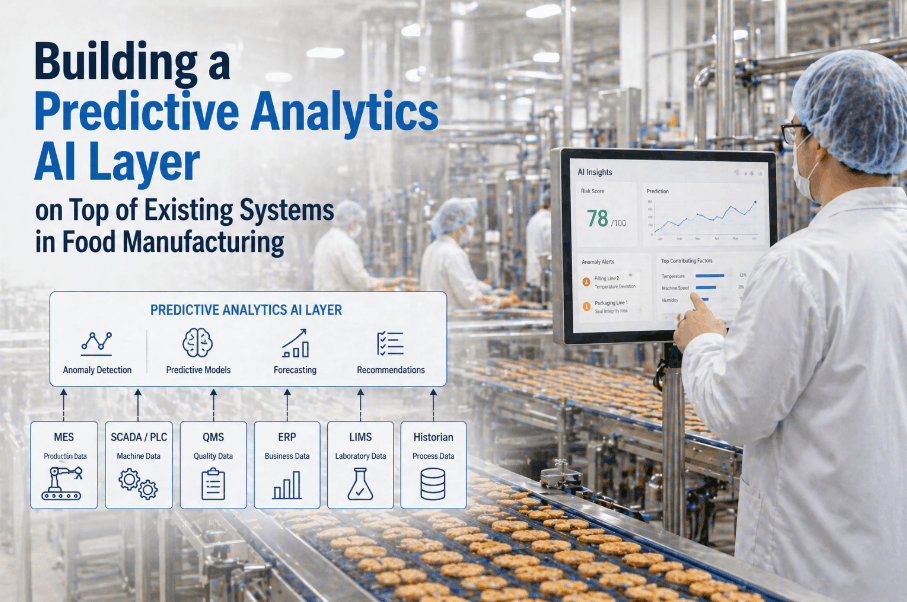
Purpose-built SQF compliance platforms layer over existing quality management infrastructure through standard data protocols — without replacing any validated operational configuration. The standard deployment delivers live SQF element readiness scoring and corrective action tracking within four to six weeks: phase one ingests existing documentation and historical audit findings, phase two activates automated corrective action and sanitation verification workflows, and phase three connects continuous improvement tracking to SQF code element dashboards. To begin with a deployment timeline built around your existing QA systems, Book a Demo with the iFactory engineering team.
Frequently Asked Questions
What is SQF certification analytics and how does it work?
SQF certification analytics uses AI-driven software to continuously monitor food plant compliance against SQF code elements — tracking document control status, corrective action progress, sanitation verification completeness, and supplier qualification currency — and generating real-time readiness scores that identify non-conformance risk before an auditor does.
How does AI-driven SQF compliance software reduce audit non-conformances?
By continuously evaluating every SQF code element against actual facility records, AI identifies documentation gaps, overdue corrective actions, and missing sanitation verification records in real time — giving QA teams the lead time to close compliance gaps weeks or months before an audit rather than discovering them during one.
How quickly can food plants expect to see SQF compliance improvements?
Most deployments deliver measurable SQF audit readiness improvements within the first six to eight weeks — with corrective action closure rates and documentation completeness improving within the first 30 days. Full platform payback is typically achieved within the first SQF audit cycle where non-conformance findings are measurably reduced.
Does SQF analytics software require replacing our existing quality management system?
No. AI-driven SQF compliance platforms integrate with existing QMS, ERP, and document management systems through standard data protocols — adding predictive audit readiness intelligence without modifying any validated operational or food safety configuration. Most food plant integrations complete within four to six weeks with zero audit disruption.
What SQF code elements does the analytics platform monitor?
The platform monitors all core SQF system elements including management commitment, document control, corrective and preventive action, internal audits, supplier qualification, food safety training, sanitation verification, HACCP monitoring, and continuous improvement documentation — with element-level readiness scores updated in real time.
Can the platform support SQF Edition 9 requirements and future code updates?
Yes. AI-driven SQF certification analytics platforms are configured to map compliance tracking against the current SQF code edition and update element monitoring frameworks as the SQF Institute releases code revisions — ensuring continuous alignment without manual reconfiguration of compliance workflows.
How does the platform support unannounced SQF audits?
By maintaining continuous SQF element readiness scores and real-time document verification status, the platform ensures a facility is always in the same state of audit readiness — eliminating the preparation window dependency entirely so QA teams can respond to unannounced audits with the same confidence as scheduled ones.