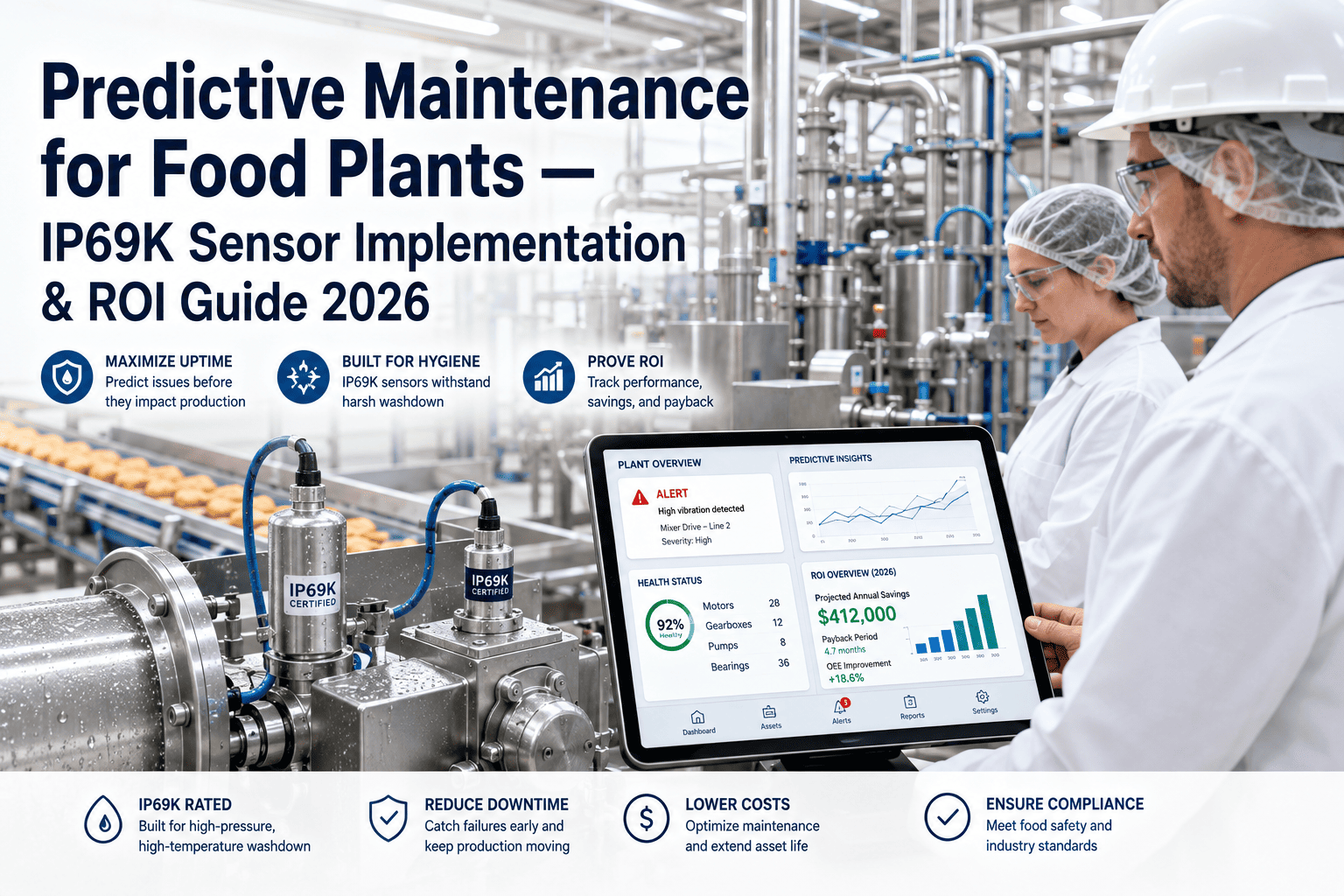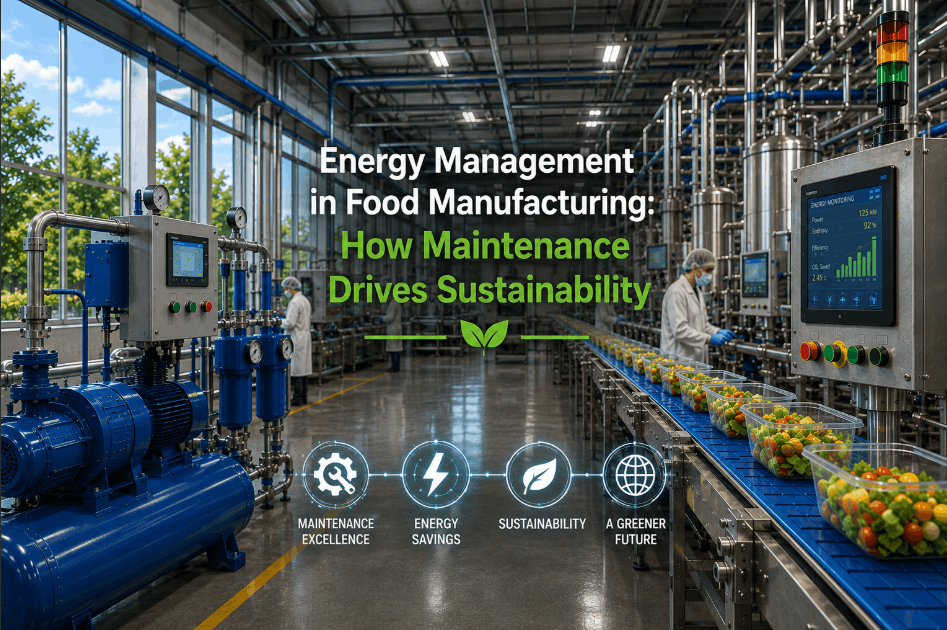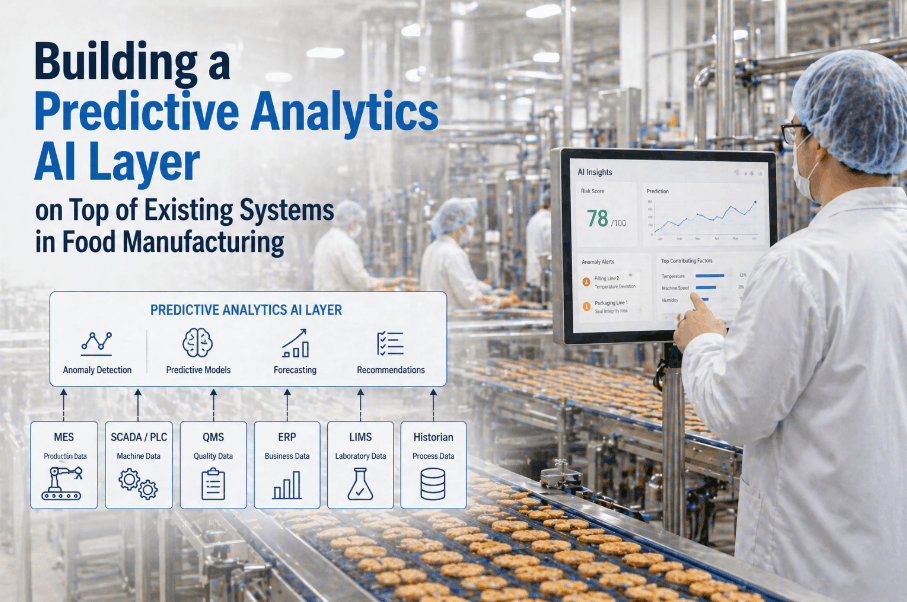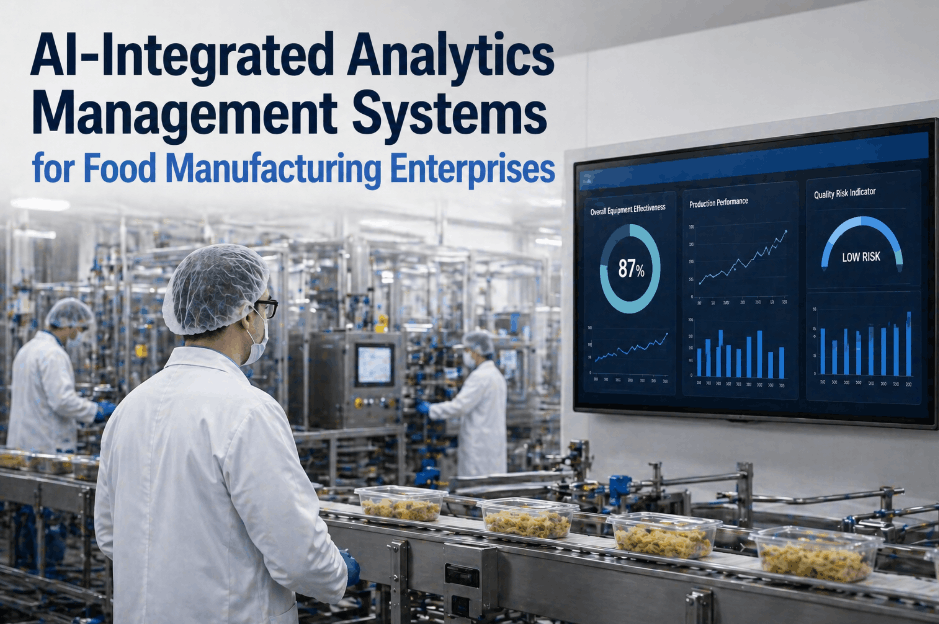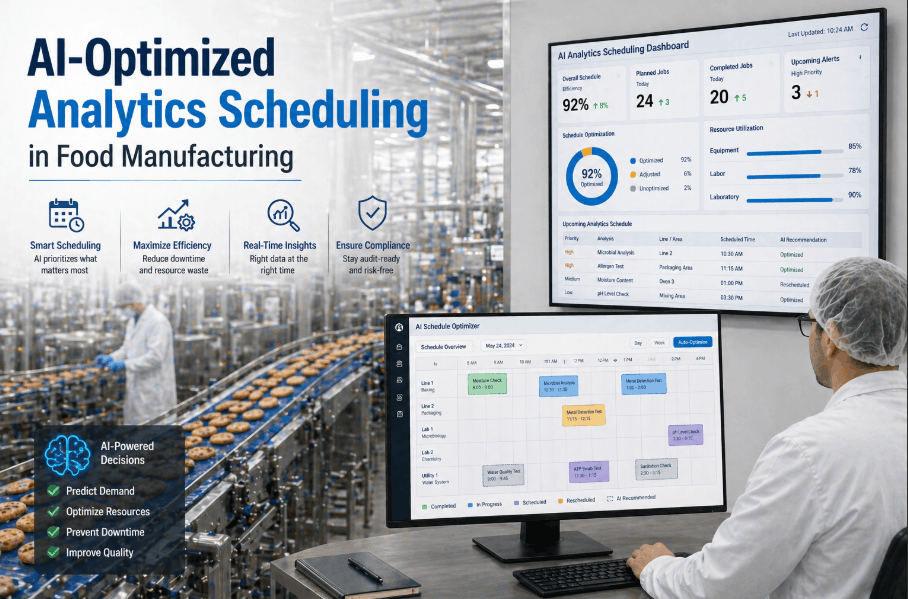
In 2026, food manufacturers face mounting pressure to eliminate unplanned downtime, reduce operational waste, and meet tightening compliance benchmarks — all while managing labor shortages and increasingly complex production schedules. AI-optimized analytics scheduling has emerged as the transformative answer, reshaping how maintenance planning software, production scheduling software, and workforce scheduling software converge into a single, intelligent operational layer. For plant managers, operations directors, and reliability engineers, the shift from reactive scheduling to AI-driven predictive maintenance software is no longer a future aspiration — it is a present competitive requirement. This guide covers every critical dimension of AI scheduling in food manufacturing: from industrial IoT monitoring and asset performance management to smart factory scheduling and workload optimization software.
See AI-Optimized Scheduling in Action
iFactory's manufacturing intelligence platform integrates predictive analytics, smart scheduling, and real-time industrial IoT monitoring into one inspection-ready system built for food manufacturers.
What Is AI-Optimized Analytics Scheduling in Food Manufacturing?
AI-optimized analytics scheduling combines machine learning algorithms, real-time sensor data, and historical production intelligence to automatically generate, adjust, and execute maintenance and production schedules with minimal human intervention. Unlike traditional calendar-based planning, AI scheduling software continuously ingests data from equipment, production lines, and workforce systems to make dynamic decisions that maximize uptime, minimize waste, and align maintenance windows with actual operational demand. In food manufacturing, where production windows are tight and ingredient shelf lives are limited, every unplanned stoppage cascades into spoilage, missed shipments, and compliance documentation gaps — making AI-driven scheduling a direct profitability lever. Book a Demo to explore how AI scheduling maps to your specific production environment.
Core Pillars of AI Scheduling in Food Manufacturing Operations
AI scheduling in food manufacturing rests on four interconnected pillars that create a self-optimizing operational engine. Understanding each pillar is essential for operations leaders evaluating maintenance scheduling software or upgrading existing enterprise asset management systems.
Predictive Maintenance Scheduling
Traditional time-based maintenance schedules service equipment on fixed intervals regardless of actual condition. AI-driven predictive maintenance software inverts this model — sensors monitor vibration, temperature, pressure, and electrical signature data from motors, conveyors, filling machines, and refrigeration systems in real time, with machine learning models predicting remaining useful life for each asset so maintenance teams can schedule interventions precisely when needed, before failure but not wastefully early.
Dynamic Production Scheduling and Manufacturing Execution
A manufacturing execution system powered by AI continuously reoptimizes production sequences based on real-time inputs: ingredient availability, equipment health scores, workforce capacity, changeover requirements, and customer order priorities. When a processing line shows early signs of performance degradation, the AI scheduling engine automatically reschedules that line's highest-complexity products to healthy equipment, queues the maintenance window, and adjusts downstream packaging and shipping schedules — all without manual dispatcher intervention.
Workforce Scheduling and Workload Optimization
Workforce scheduling software integrated with AI production planning ensures technician availability, skill sets, and certifications are always matched to scheduled maintenance tasks. Workload balancing algorithms prevent technician overload during peak maintenance periods and idle capacity during low-demand windows — reducing overtime costs, improving wrench-time ratios, and ensuring food safety-critical maintenance tasks are always assigned to personnel with documented competency records.
Industrial IoT Monitoring and Real-Time Analytics
Industrial IoT monitoring forms the sensory nervous system of an AI scheduling platform. Edge-connected sensors stream continuous condition data to an industrial analytics platform that transforms raw signals into actionable scheduling intelligence — real-time anomaly detection identifies deviations from baseline performance and automatically escalates these signals into the scheduling engine before they become failures. Book a Demo to see how IoT monitoring integrates with scheduling workflows in a live environment.
Asset Performance Management: The Strategic Foundation of Smart Scheduling
Asset performance management (APM) is the strategic discipline that ties AI scheduling to long-term capital planning — tracking asset health scores, maintenance cost accumulation, mean time between failures (MTBF), and overall equipment effectiveness (OEE) across the entire asset portfolio from high-speed filling lines to CIP skids and refrigerated storage systems. These metrics feed directly into AI scheduling algorithms, allowing production scheduling software to factor asset reliability trajectories into long-range schedule optimization, with facilities running APM-integrated scheduling consistently reporting OEE improvements of 8–15% and maintenance cost reductions of 20–30% within the first 18 months. Book a Demo to benchmark your current OEE against AI-optimized performance targets.
How AI Scheduling Software Outperforms Traditional Planning Systems
The performance gap between AI-driven scheduling and conventional planning approaches is measurable across every key operational metric. The following comparison illustrates why food manufacturers are rapidly transitioning from manual and rule-based systems to operational analytics software platforms.
| Capability | Traditional Planning Systems | AI Scheduling Software | Operational Impact |
|---|---|---|---|
| Maintenance Triggering | Fixed calendar intervals | Condition-based AI prediction | Up to 40% reduction in unnecessary PM labor |
| Production Sequencing | Static planner-built schedules | Real-time dynamic reoptimization | 8–12% throughput improvement |
| Workforce Assignment | Manual dispatcher decisions | Automated skill-matched scheduling | 25% reduction in overtime costs |
| Downtime Response | Reactive breakdown dispatch | Predictive failure avoidance | 60–70% reduction in unplanned stoppages |
| Data Integration | Siloed ERP/CMMS systems | Unified IoT + ERP + MES data layer | Single source of truth for all scheduling decisions |
| Compliance Readiness | Manual documentation assembly | Auto-generated audit trails | Always-current regulatory documentation |
Smart Factory Scheduling: Integrating AI Across the Production Ecosystem
The full potential of smart factory scheduling is realized when AI scheduling logic integrates across every operational system in the facility — connecting maintenance planning software with the manufacturing execution system, ERP, quality management platform, and supply chain systems into a unified operational intelligence layer that enables scenarios manual planning simply cannot replicate at scale.
Allergen Changeover Scheduling Optimization
AI scheduling automatically sequences production runs to minimize allergen changeover cleaning requirements. By clustering allergen-free runs before allergen-containing runs and scheduling CIP cycles at optimal intervals, smart factory scheduling reduces cleaning time by up to 35% while maintaining full allergen control documentation required for FSMA compliance.
Cold Chain Maintenance Windows
Refrigeration and cold storage maintenance windows must align with production cycles to prevent temperature excursions for perishable ingredients and finished goods. AI scheduling coordinates refrigeration PM windows with production troughs and automatically reroutes chilled products to compliant storage during planned service.
Regulatory Inspection Preparation
An enterprise asset management platform integrated with AI scheduling continuously generates documentation FDA investigators request: calibration records, preventive maintenance completion logs, equipment qualification status, and environmental monitoring schedules — making inspection readiness a continuous state rather than a pre-audit scramble.
Energy and Utility Scheduling
Industrial analytics platforms optimize energy-intensive operations — pasteurizers, dryers, ovens, refrigeration compressors — against time-of-use electricity tariffs and demand charge windows, shifting flexible load operations to off-peak periods and coordinating utility maintenance during planned production downtime rather than consuming operational hours.
Implementing AI Scheduling: A Phased Roadmap for Food Manufacturers
Successful deployment of maintenance planning software and AI scheduling capabilities in food manufacturing follows a structured implementation pathway that delivers measurable operational improvements at each stage while building toward full smart factory scheduling maturity.
IoT Sensor Deployment and Data Foundation
Install condition monitoring sensors on your highest-criticality assets first — motors, compressors, conveyors, and critical process equipment — and establish the industrial IoT monitoring data pipeline to your analytics platform. Baseline performance data collection typically requires 60–90 days before AI models achieve meaningful predictive accuracy. Book a Demo to see how iFactory's onboarding process compresses this baseline period using transfer learning from industry-wide equipment datasets.
Predictive Maintenance Model Activation
Activate AI failure prediction models for monitored assets and integrate prediction outputs into your existing CMMS or maintenance planning software workflow, with maintenance planners receiving AI-generated work order recommendations with confidence scores and projected failure windows. Most facilities achieve first measurable reductions in unplanned downtime within 90 days of model activation.
Production Scheduling Integration and Workload Optimization
Connect predictive maintenance outputs to the production scheduling engine and workforce scheduling software so AI automatically optimizes maintenance windows within production schedules — balancing asset health requirements against throughput targets and customer order commitments while aligning technician availability with maintenance demand curves to reduce overtime and improve wrench time.
Full APM and Continuous Improvement Loop
Activate the full asset performance management layer — long-range capital planning models, OEE trend dashboards, regulatory documentation automation, and continuous model retraining on accumulated operational data — at which point the AI scheduling platform drives continuous improvement autonomously, identifying emerging reliability patterns, recommending PM interval adjustments, and surfacing equipment replacement candidates before capital planning cycles begin.
Measuring ROI from AI Scheduling and Predictive Analytics
Quantifying the return on investment from AI scheduling software and predictive maintenance platforms is straightforward when organizations track the right metrics from deployment. The following key performance indicators represent the most reliable ROI measurement framework for food manufacturing AI scheduling deployments. Book a Demo to receive a custom ROI projection based on your facility's current maintenance profile.
Common Implementation Challenges and How AI Platforms Resolve Them
Despite the clear performance advantages of AI-optimized scheduling, food manufacturers frequently encounter predictable implementation challenges. Understanding these obstacles — and how modern industrial analytics platforms address them — helps operations teams set realistic expectations and structure successful deployments.
Legacy Equipment Without Native Connectivity
Many food manufacturing facilities operate equipment that predates digital connectivity. Modern industrial IoT monitoring platforms address this through retrofit sensor packages — vibration, temperature, current, and acoustic sensors that attach externally to legacy equipment and transmit condition data wirelessly to the analytics platform — extending AI scheduling benefits to the full asset portfolio without requiring capital equipment replacement. Book a Demo to evaluate retrofit IoT options for your specific equipment types.
Data Silos Across ERP, CMMS, and MES Systems
AI scheduling software requires unified access to data that typically lives in separate systems — work order history in the CMMS, production schedules in the MES, ingredient inventory in the ERP, and quality results in the QMS. Integration middleware and pre-built API connectors in modern manufacturing intelligence software platforms create a unified operational data layer without requiring system consolidation or workflow disruption during transition.
Workforce Adoption and Change Management
Maintenance technicians and production planners who have built careers around manual scheduling expertise can perceive AI scheduling platforms as threats rather than tools. Successful deployments present AI recommendations as decision support for planners — not autonomous directives — and when AI scheduling delivers the first significant unplanned downtime prevention event, workforce adoption typically accelerates organically as the technology earns trust through demonstrated results.
Frequently Asked Questions: AI Scheduling for Food Manufacturing
How does predictive maintenance software differ from preventive maintenance scheduling?
Preventive maintenance schedules service tasks at fixed time intervals regardless of actual equipment condition. Predictive maintenance software uses sensor data and machine learning to forecast remaining useful life and schedules interventions precisely when degradation data indicates an action is needed — eliminating both unnecessary early maintenance and costly unplanned failures.
What types of food manufacturing equipment benefit most from industrial IoT monitoring?
Rotating equipment with predictable failure modes delivers the highest predictive accuracy: motors, pumps, compressors, conveyor drives, and fans. Refrigeration systems are also high-priority candidates given their food safety implications and the high consequence of unplanned cold chain failure.
Can AI scheduling software integrate with existing CMMS and ERP systems?
Yes. Modern manufacturing intelligence software platforms provide pre-built API integrations with major CMMS platforms such as Maximo, SAP PM, Infor EAM, and UpKeep, as well as ERP systems including SAP S/4HANA, Oracle, and Microsoft Dynamics — allowing AI scheduling recommendations to flow directly into existing work order systems without requiring system consolidation.
How long does it take for AI scheduling to generate measurable ROI in food manufacturing?
Most food manufacturers report first measurable improvements in unplanned downtime frequency within 60–90 days of AI predictive model activation. Full ROI realization — including production scheduling and workforce scheduling benefits — typically occurs within 12–18 months, with speed directly correlated to IoT sensor coverage and historical maintenance data quality.
How does workload optimization software support food safety compliance?
Workload optimization software ensures food safety-critical maintenance tasks — CIP system calibration, allergen line cleaning, and temperature control maintenance — are always assigned to personnel with verified training and certification records, preventing these tasks from being deprioritized during peak production periods and maintaining the documented maintenance cadence FDA investigators expect.
What is the difference between asset performance management and enterprise asset management?
Enterprise asset management (EAM) handles transactional management: work orders, parts inventory, maintenance history, and cost tracking. Asset performance management (APM) extends beyond transactions to analyze asset health trajectories, predict future performance, and inform capital replacement decisions within a unified operational intelligence architecture.
Ready to Transform Your Scheduling with AI-Driven Analytics?
From predictive maintenance and smart factory scheduling to industrial IoT monitoring and workforce optimization — iFactory delivers a unified manufacturing intelligence platform that keeps your food manufacturing operation running at peak performance, 365 days a year.