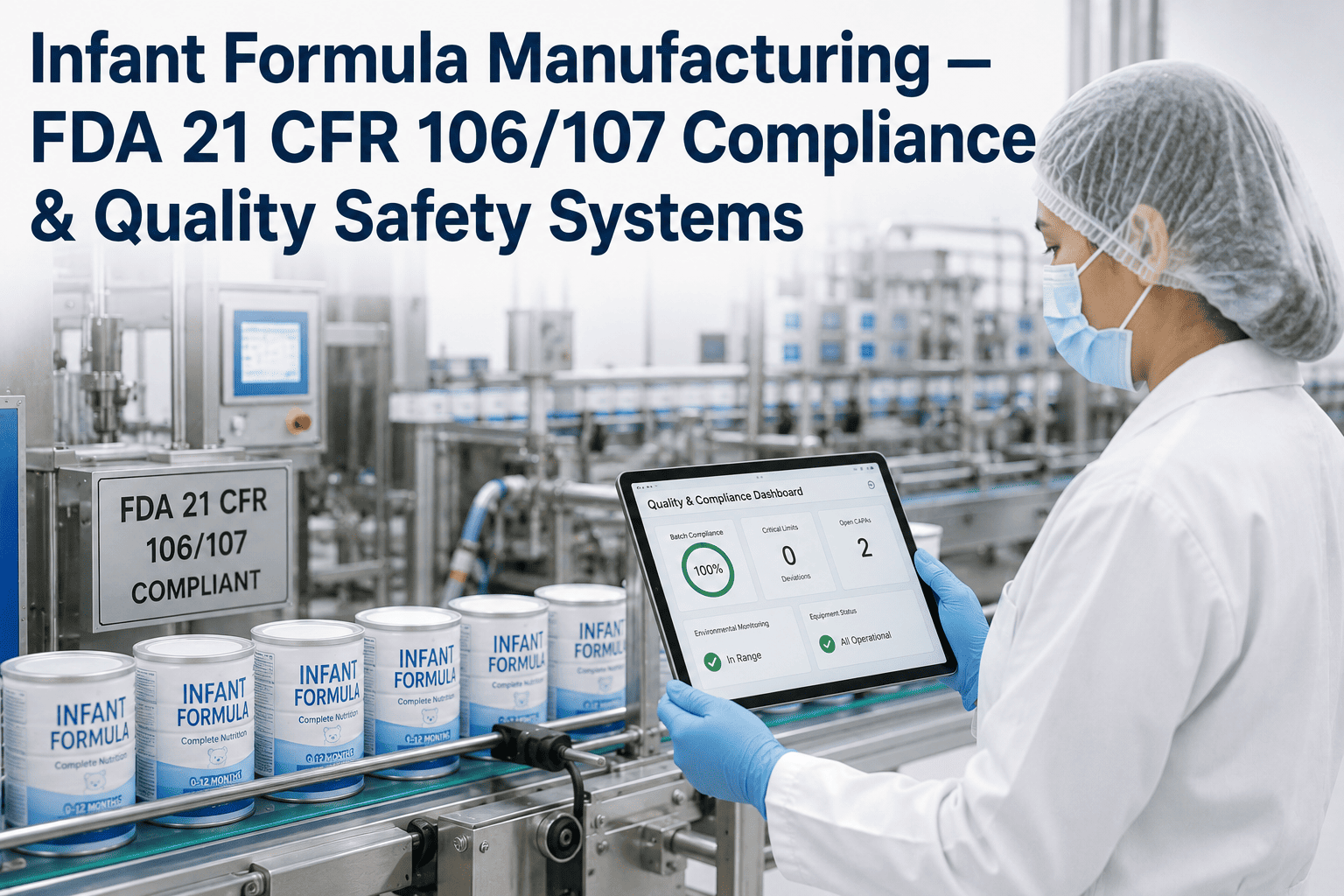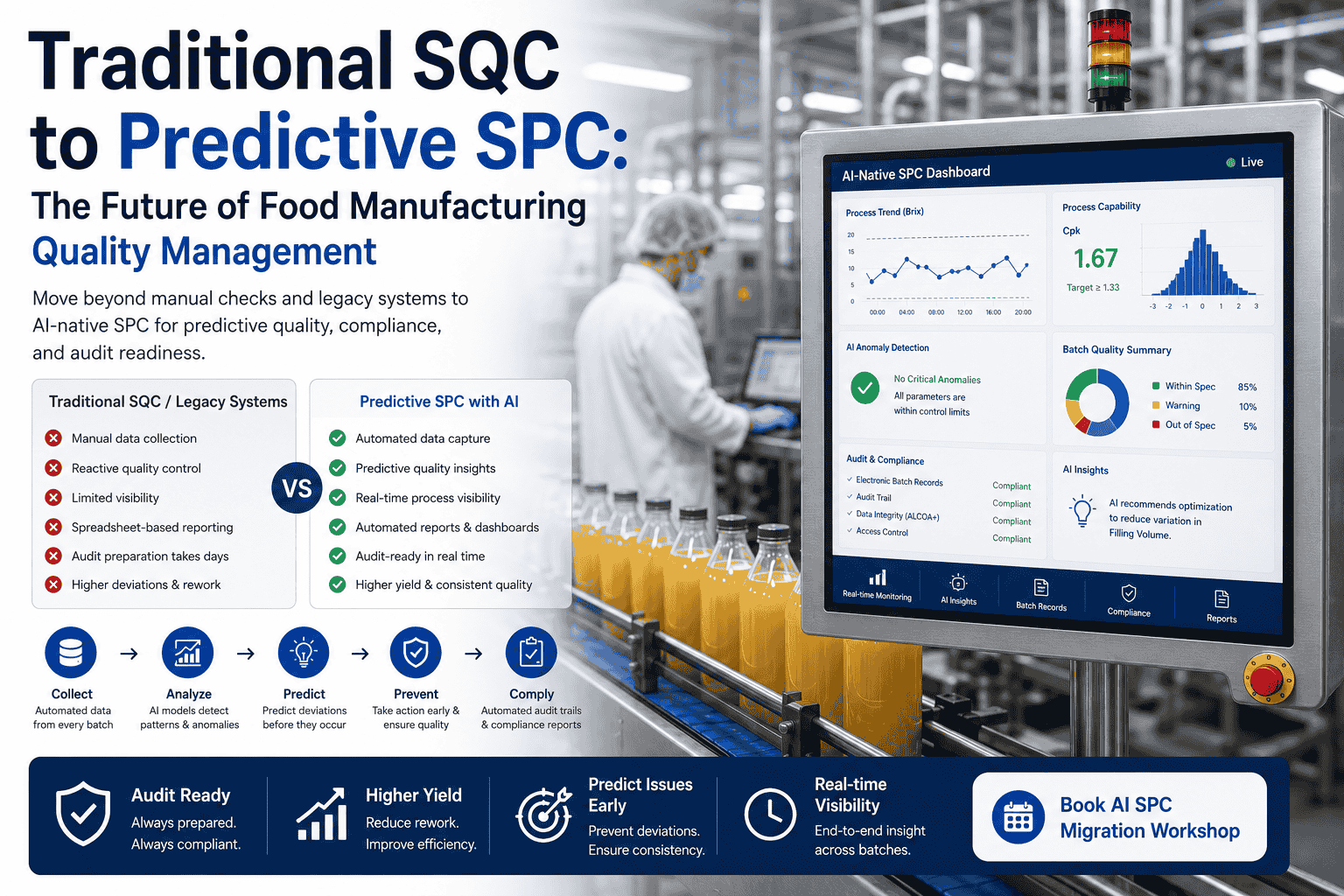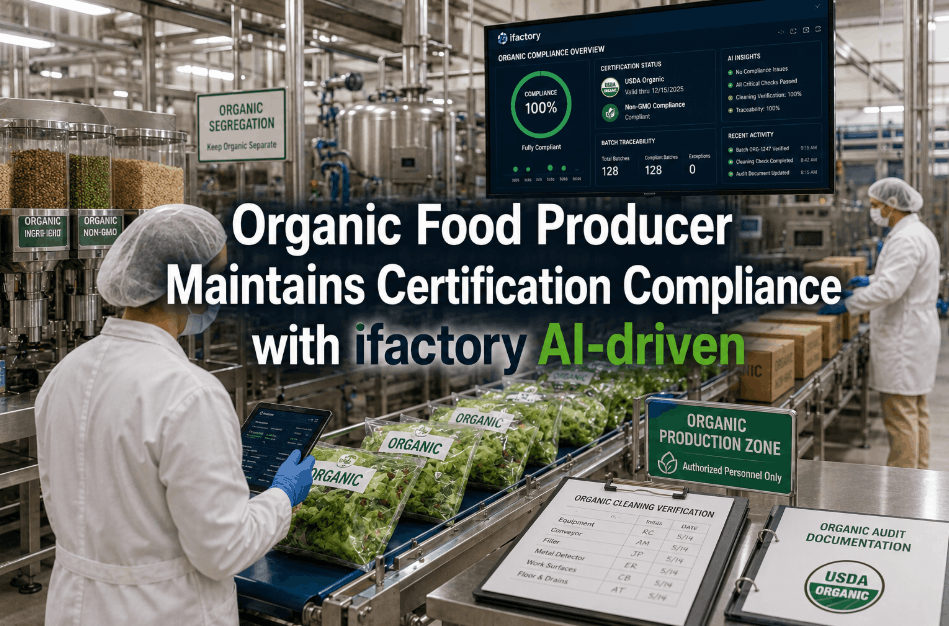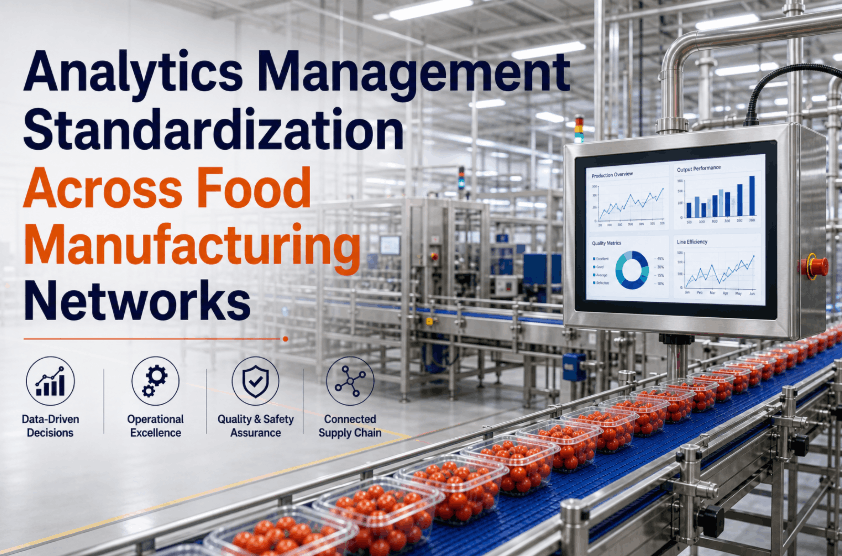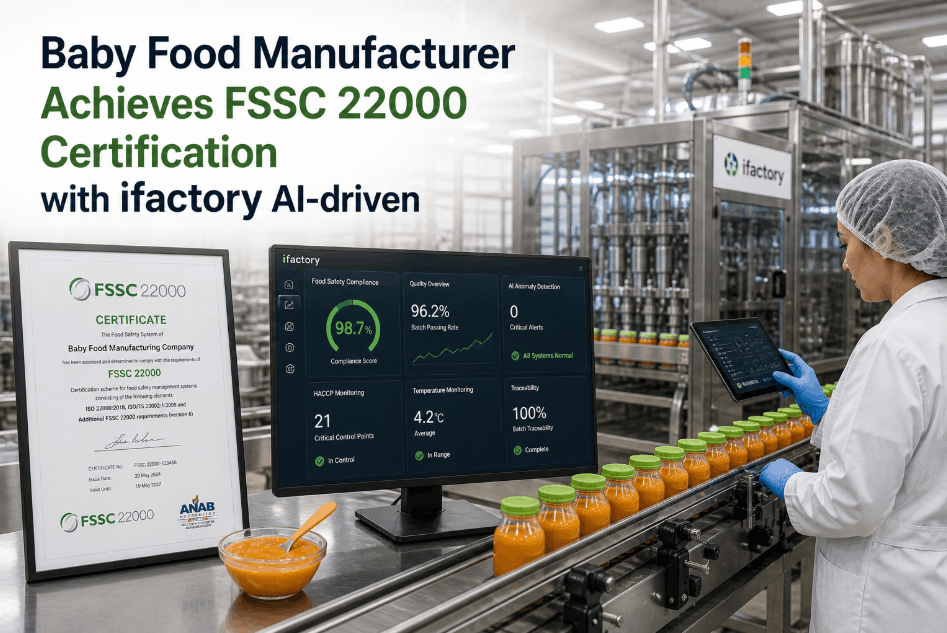
A leading baby food manufacturer producing over 12,000 tonnes of infant formula and complementary food products annually faced mounting pressure to achieve FSSC 22000 certification — one of the most stringent food safety management standards in the consumer goods sector. With fragmented hygiene zone documentation, manual calibration logs prone to human error, and allergen changeover records stored across disconnected spreadsheets, the facility's compliance posture was too inconsistent to withstand a GFSI-benchmarked audit. Deploying ifactory's AI-driven Compliance Tracking platform unified every critical control point under a single, audit-ready intelligence layer — and the manufacturer achieved full FSSC 22000 certification within nine months of deployment, with zero major non-conformities. Book a Demo to see how ifactory transforms compliance readiness for regulated food manufacturers.
Client Background
The manufacturer operates a purpose-built facility producing infant formula, weaning cereals, and stage-two complementary food products distributed across 14 export markets. With annual output exceeding 12,000 tonnes, the plant runs three production shifts, maintains seven designated hygiene zones across wet and dry processing areas, and manages 340+ calibrated instruments across filling, sealing, moisture analysis, and thermal processing lines. Prior to ifactory deployment, all compliance documentation was managed through a combination of paper-based checklists, shift-supervisor sign-off sheets, and Excel workbooks — with no centralized tracking, no automated alerting for overdue calibrations, and no digital audit trail for allergen changeover verification. Book a demo to see how ifactory maps to complex infant food manufacturing environments.
The Challenge
FSSC 22000 certification demands documented, traceable, and consistently executed food safety controls — a standard that exposes every weakness in manual compliance systems simultaneously. For a manufacturer producing products consumed by infants, the stakes extend well beyond audit outcomes: compliance failures carry direct product safety implications, regulatory consequences, and reputational risk in markets where parent trust is non-negotiable.
The Solution: AI-Driven Compliance Tracking Platform
The manufacturer deployed ifactory's Compliance Tracking platform to establish a unified, real-time compliance intelligence layer across the entire facility. The platform digitized and automated every critical documentation workflow required for FSSC 22000 certification — from instrument calibration scheduling and hygiene zone access verification to allergen changeover hold-and-release protocols and prerequisite program completion tracking. AI-driven alerting replaced reactive discovery with proactive escalation, ensuring compliance gaps were surfaced and resolved before they accumulated into audit-critical non-conformities.
- Centralized calibration register for all 340+ instruments with interval tracking and certificate storage
- Automated alerts triggered 14 days before calibration due dates, with escalation to department heads at 7 days
- Digital certificate upload and validation linked to each instrument record for instant audit retrieval
- Digital access logging for all seven hygiene zones with time-stamped entry and exit records
- Cleaning verification workflows with mandatory photographic evidence and supervisor e-sign-off
- Zone integrity dashboards surfacing incomplete cleaning records before shift handover
- Standardized digital allergen changeover workflow enforcing mandatory completion of all verification steps before production release
- Integrated allergen swab result logging with pass/fail validation against configurable threshold limits
- Automated hold-and-release controls preventing line restart until all required documentation is confirmed complete
- Digitized PRP completion checklists mapped directly to FSSC 22000 clause requirements
- Real-time completion status dashboards showing open, overdue, and verified PRP actions by zone and shift
- Automated non-conformance flagging when PRP completion rates fall below configurable thresholds
- One-click generation of FSSC 22000 documentation packages covering calibration, hygiene, allergen, and PRP records
- Immutable time-stamped audit trails capturing every data entry, verification action, and sign-off event
- Structured export formats aligned with certification body requirements for streamlined auditor review
- Predictive compliance risk scoring identifying facilities and control areas approaching non-conformance thresholds
- Escalation workflows routing unresolved compliance actions to department leads and quality managers automatically
- Trend analytics surfacing recurring deviation patterns for root cause investigation and corrective action prioritization
Implementation Approach
Deployment followed a structured eight-week onboarding sequence designed to digitize compliance workflows without disrupting active production. The platform was configured against the facility's existing FSSC 22000 gap assessment findings, with each compliance module mapped directly to the specific clause requirements and documentation deficiencies identified in the two prior pre-certification attempts. Full compliance tracking capability across all seven hygiene zones, 340+ instruments, and 23 monthly allergen changeover events was operational within 54 days of project initiation.
The ifactory implementation team worked with the facility's quality manager to map all existing compliance documentation requirements against FSSC 22000 clause structure. All 340+ instruments were registered in the calibration module with current certificate data, due dates, and responsible owner assignments. Hygiene zone boundaries, cleaning schedules, and access authorization matrices were configured based on the facility's validated zone classification documentation.
All 23 allergen changeover procedure types were digitized as enforced workflow templates, with mandatory step sequencing, swab result integration, and automated hold-and-release logic configured per product changeover category. FSSC prerequisite program checklists were mapped to the platform's PRP tracking module, with completion status dashboards activated for each of the three production shifts.
A simulated FSSC 22000 internal audit was conducted using documentation packages generated entirely from the ifactory platform. The audit confirmed complete, time-stamped records for all compliance categories with no missing entries across the six-week operational period. AI alerting thresholds were calibrated based on the facility's shift patterns and historical compliance deviation data.
From month three onward, the facility operated with full real-time compliance visibility across all FSSC-critical control categories. Zero overdue calibrations, zero incomplete allergen changeover records, and zero hygiene zone verification gaps were recorded in the six months preceding the certification audit. The FSSC 22000 stage-two audit conducted in month nine resulted in certification with zero major non-conformities.
Results After Full Deployment
ifactory's Compliance Tracking platform delivered measurable transformation across every dimension of the facility's food safety management system — culminating in FSSC 22000 certification after two previously unsuccessful attempts, with a compliance documentation posture that has sustained zero major non-conformities across 14 consecutive months of operation.
Performance Summary
| Metric | Before | After | Improvement |
|---|---|---|---|
| FSSC 22000 Certification | 2 failed attempts | Certified — 0 major NCs | Full Certification |
| Calibration On-Time Rate | ~85% (estimated) | 100% | +15 pts — 14 Months Sustained |
| Allergen Changeover Doc Completeness | 4.2 missing fields avg. | 100% complete | Zero Gaps — Enforced by Platform |
| Hygiene Zone Verification Gaps | Multiple per shift cycle | Zero | 100% Eliminated |
| Monthly Audit Prep Time | 60+ hours manual | Under 6 hours | 91% Reduction |
| Time to FSSC Certification | Previously uncertifiable | 9 months post-deployment | Achieved First Attempt |
| Compliance Deviation Response | Reactive — discovered post-event | Proactive — 14-day advance alerts | From Reactive to Predictive |
Key Benefits and Business Impact
The deployment delivered impact that extended well beyond the certification milestone — fundamentally transforming how the facility manages ongoing food safety compliance, responds to emerging risks, and prepares for routine and unannounced inspections across its FSSC-certified operations.
Digitizing the facility's compliance documentation infrastructure resolved the root cause of both prior certification failures — inconsistent, incomplete, and non-retrievable audit evidence. The certification body found a fully traceable food safety management system where previous assessments had found fragmented manual records.
Proactive alerting transformed calibration management from a reactive, discovery-based process to a planned, scheduled discipline. Instrument out-of-interval events — which had previously created FSSC clause 8.7 non-conformance risk — have been entirely eliminated since platform activation.
Mandatory workflow gate logic made documentation incompleteness structurally impossible — eliminating the allergen control documentation gaps that had characterized both prior pre-certification audit findings and representing the highest-consequence compliance risk in an infant food environment.
Replacing 60+ hours of monthly manual documentation compilation with automated FSSC package generation returned significant quality team capacity to active food safety management — corrective action investigation, supplier qualification, and HACCP review activities that strengthen compliance rather than merely document it.
AI-driven compliance risk scoring and proactive escalation workflows replaced a reactive system in which deviations were discovered only at the moment of failure. The facility now surfaces emerging gaps before they accumulate into non-conformances, rather than after they have already entered the audit record.
With complete, time-stamped digital records maintained in real time across all compliance categories, the facility's audit readiness is now a continuous operational state rather than a pre-audit preparation exercise. Regulatory inspectors can access any requested compliance record within minutes of arrival.
Conclusion
For baby food and infant formula manufacturers pursuing FSSC 22000 certification, the most common barrier to successful audit outcomes is not a failure to execute food safety controls — it is the inability to prove, with complete and traceable documentation, that those controls were executed consistently across every shift, every zone, and every changeover event. This case study demonstrates what becomes possible when AI-driven compliance tracking replaces manual documentation systems: a facility that had failed to achieve certification twice successfully completed FSSC 22000 stage-two audit with zero major non-conformities — in nine months, with sustained compliance performance across 14 consecutive months of post-certification operation. Book a demo to see how ifactory's Compliance Tracking platform applies to your facility's certification roadmap and food safety management requirements.
Any baby food or infant formula manufacturer operating compliance documentation through manual systems is carrying avoidable certification risk, audit preparation burden, and food safety documentation liability that AI-driven tracking can systematically eliminate.