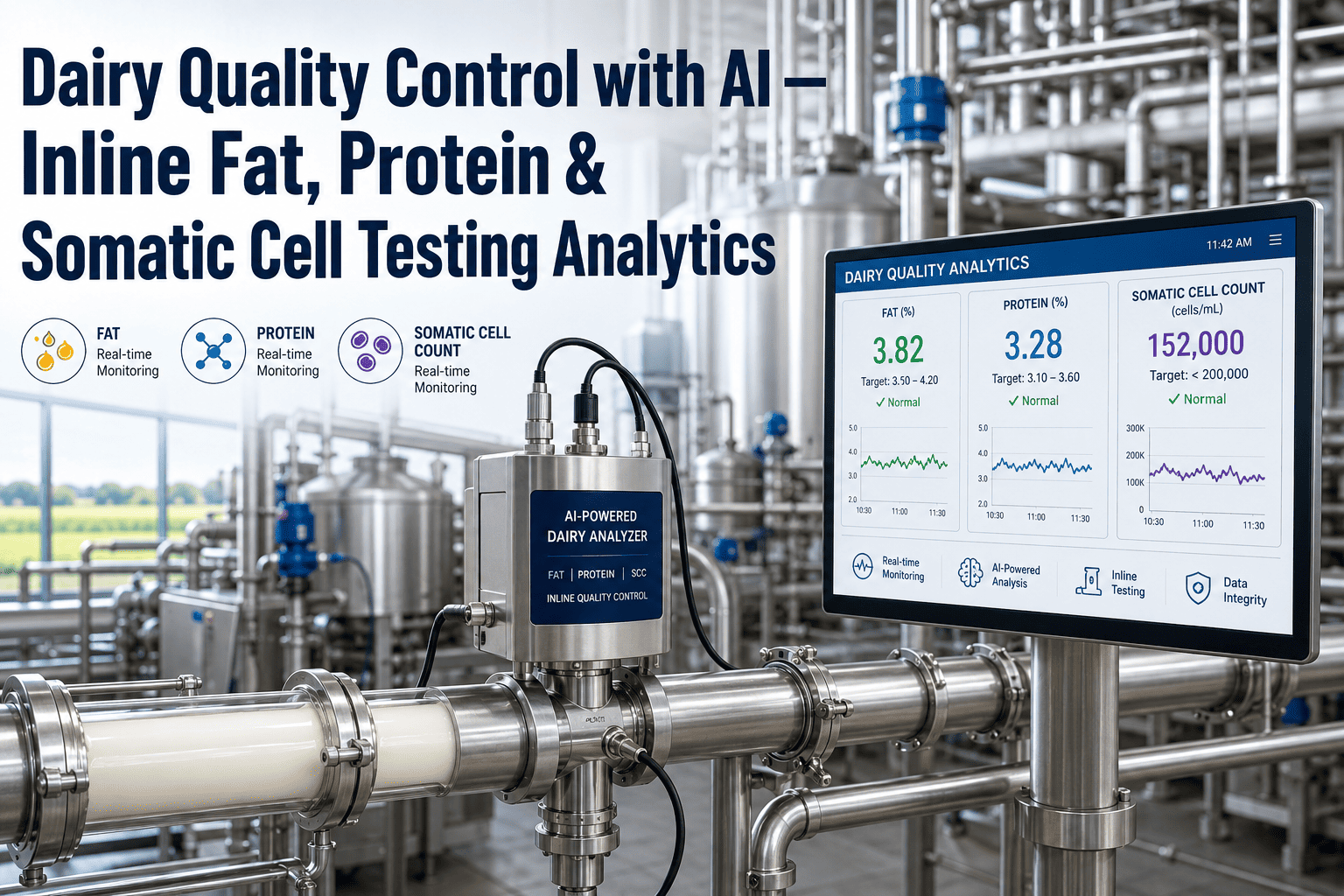
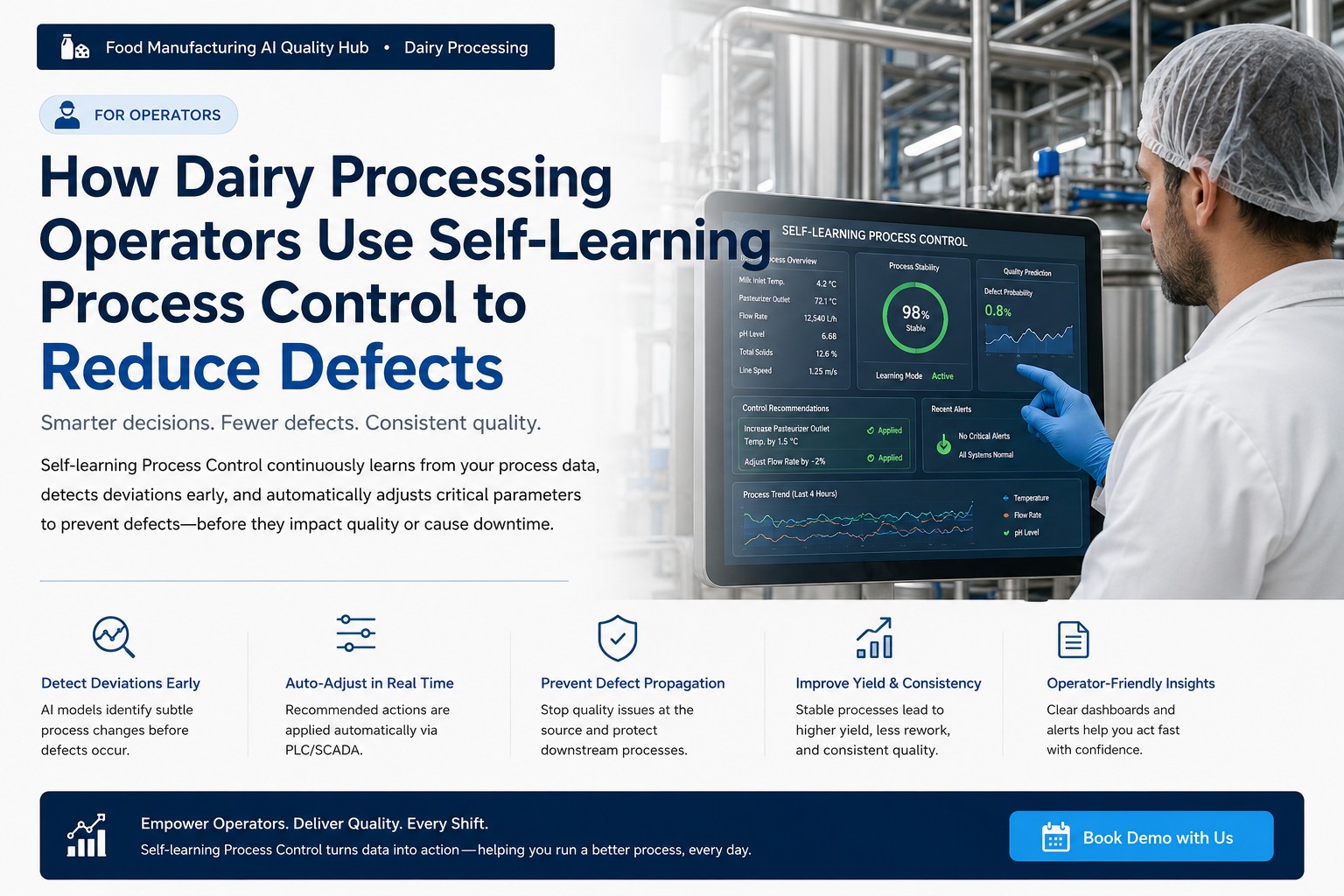
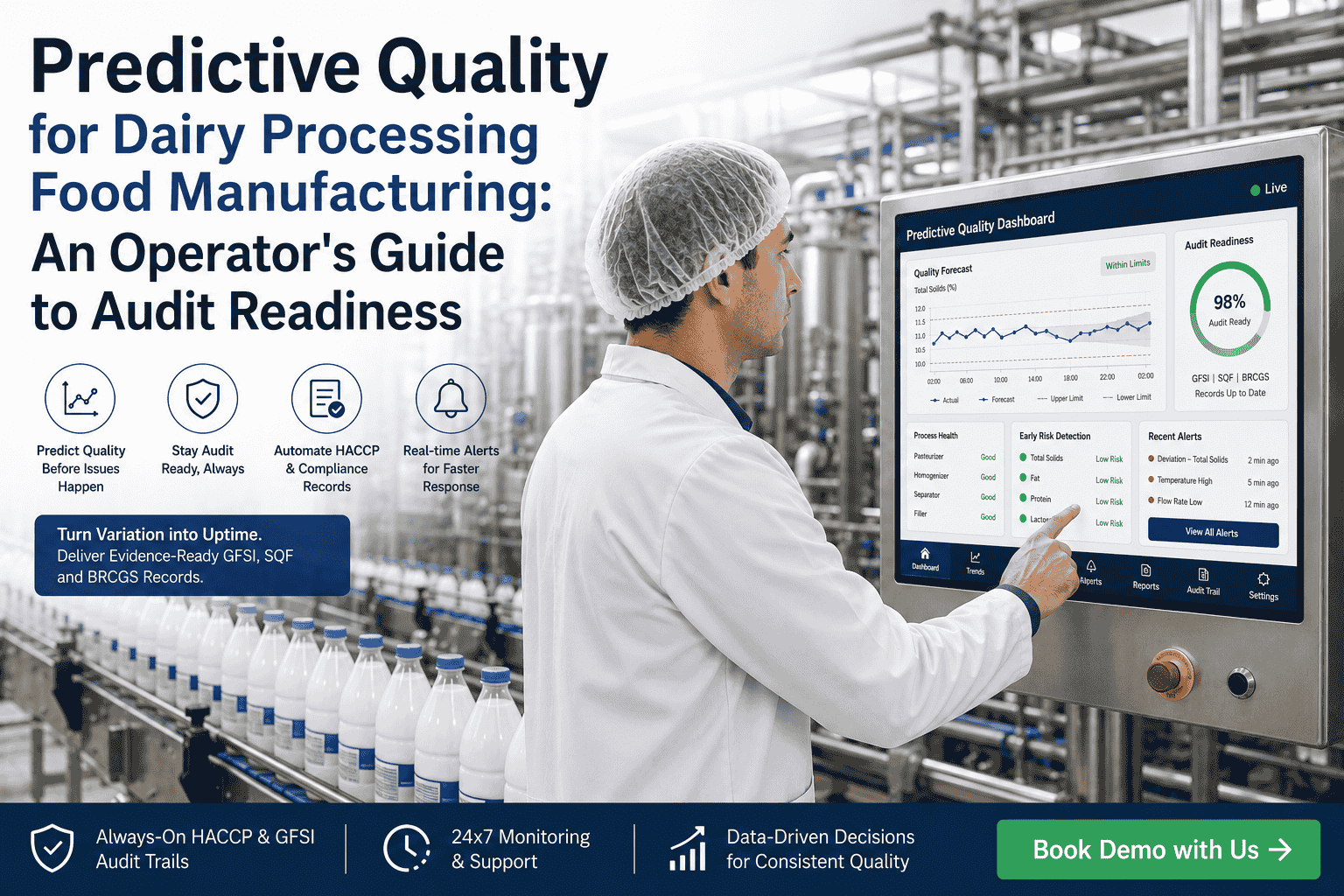
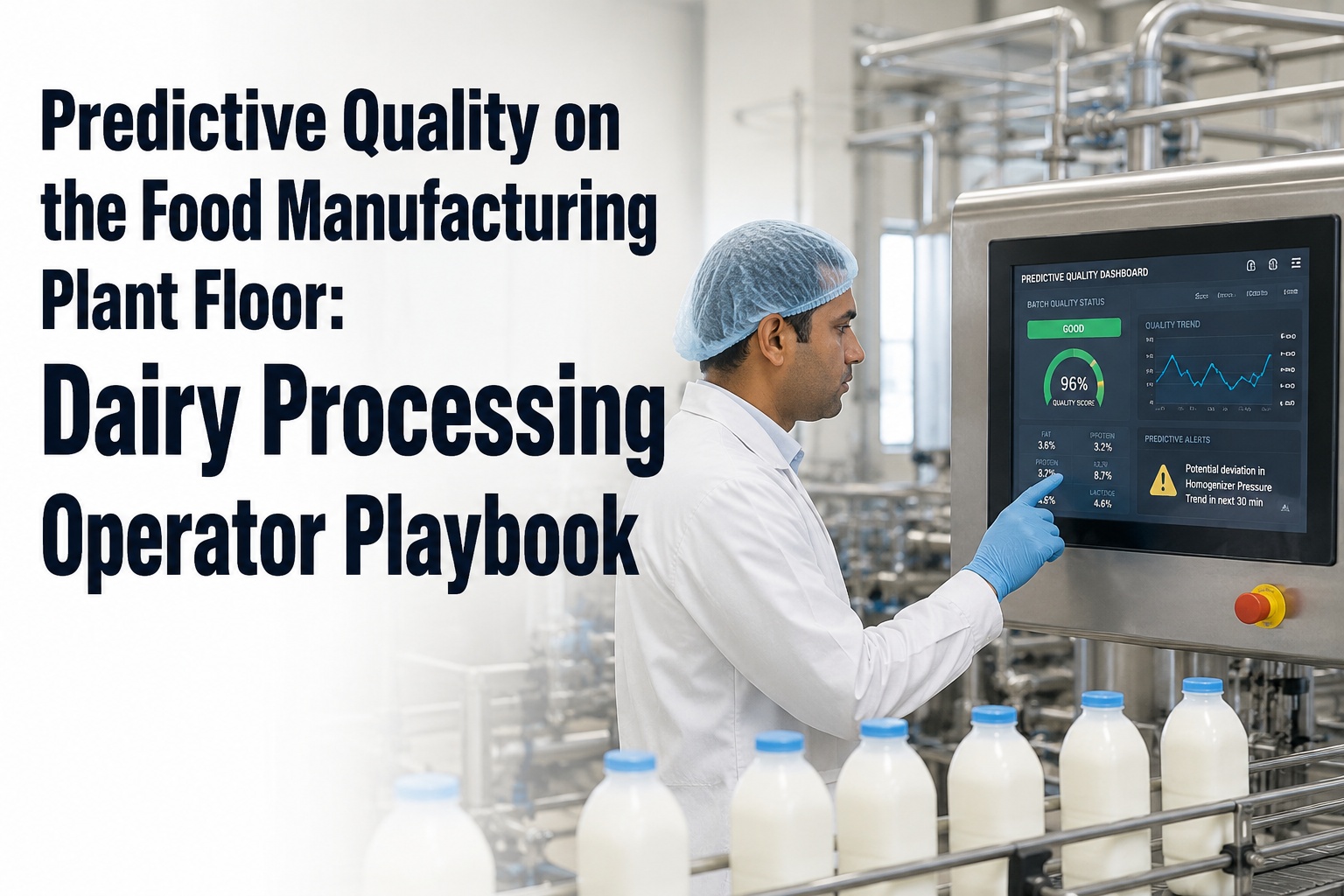
Quality teams in dairy plants spend a lot of their day waiting, sending samples to a lab, waiting for fat and protein results, then adjusting the process based on numbers that already describe milk that has moved several steps down the line. By the time a result comes back showing protein standardization drifted off target, the batch behind it may already be blended or packaged. Inline AI-driven testing changes that timing entirely, reading fat content, protein levels, and somatic cell trends continuously as milk flows through the line instead of at scattered checkpoints. That shift from delayed lab results to real-time visibility is exactly why quality managers are increasingly requesting a demo of inline testing running against their own product lines.
AI-DRIVEN DAIRY QUALITY TESTING
Real-Time Fat, Protein, and Somatic Cell Visibility
Inline analyzers replace scattered lab checkpoints with continuous quality data, giving quality teams the chance to correct drift before it reaches finished product.
Lab Sampling vs Inline Continuous Testing
The difference between periodic lab sampling and continuous inline testing comes down to how quickly a quality team can actually act on a result.
What Inline Analyzers Track
Fat Content Monitoring
Continuous fat percentage readings allow standardization adjustments to be made immediately rather than after a delayed lab confirmation.
Protein Standardization
Real-time protein tracking supports consistent standardization across batches, which matters heavily for cheese yield and label accuracy.
Somatic Cell Count Trending
Trending somatic cell data over time helps quality teams flag incoming raw milk quality issues before they affect finished product batches.
Antibiotic Residue Screening
Rapid inline screening flags potential antibiotic residue presence early, supporting faster hold decisions before a batch proceeds further.
How Inline Data Becomes an Action
1
Continuous Sensor Reading
Analyzers positioned in-line read fat, protein, and related parameters continuously as product flows past the sampling point.
2
Real-Time Dashboard Update
Readings populate a live dashboard visible to quality and production teams, replacing the wait for a lab report to come back.
3
Threshold and Trend Alerts
When a reading drifts toward a specification limit, an alert notifies quality staff while there is still time to adjust the process.
4
Batch Record Logging
Every reading is logged against the batch it corresponds to, building a complete quality record for compliance and traceability.
Continuous Data
Fat, protein, and cell count readings streamed rather than sampled periodically
Faster Response
Drift is flagged while the batch is still correctable in-line
Full Traceability
Every reading is tied to a batch record for audits and reviews
See Inline Testing Against Your Product Line
Walk through how continuous fat, protein, and somatic cell tracking would apply to your specific dairy line.
Supporting Existing Quality Programs
Complements Lab Verification
Inline data speeds up day-to-day decisions while lab testing remains available for formal verification and regulatory reporting.
Audit-Ready Reporting
Continuous logs create a clear, timestamped record that supports both internal reviews and third-party audits.
Cross-Team Visibility
Shared dashboards give production and quality teams the same real-time view, reducing back-and-forth during a fast-moving shift.
Frequently Asked Questions
CATCH DRIFT WHILE IT IS STILL CORRECTABLE
Bring Real-Time Quality Data to Your Dairy Line
Get an inline testing plan built around your fat, protein, and somatic cell quality requirements.