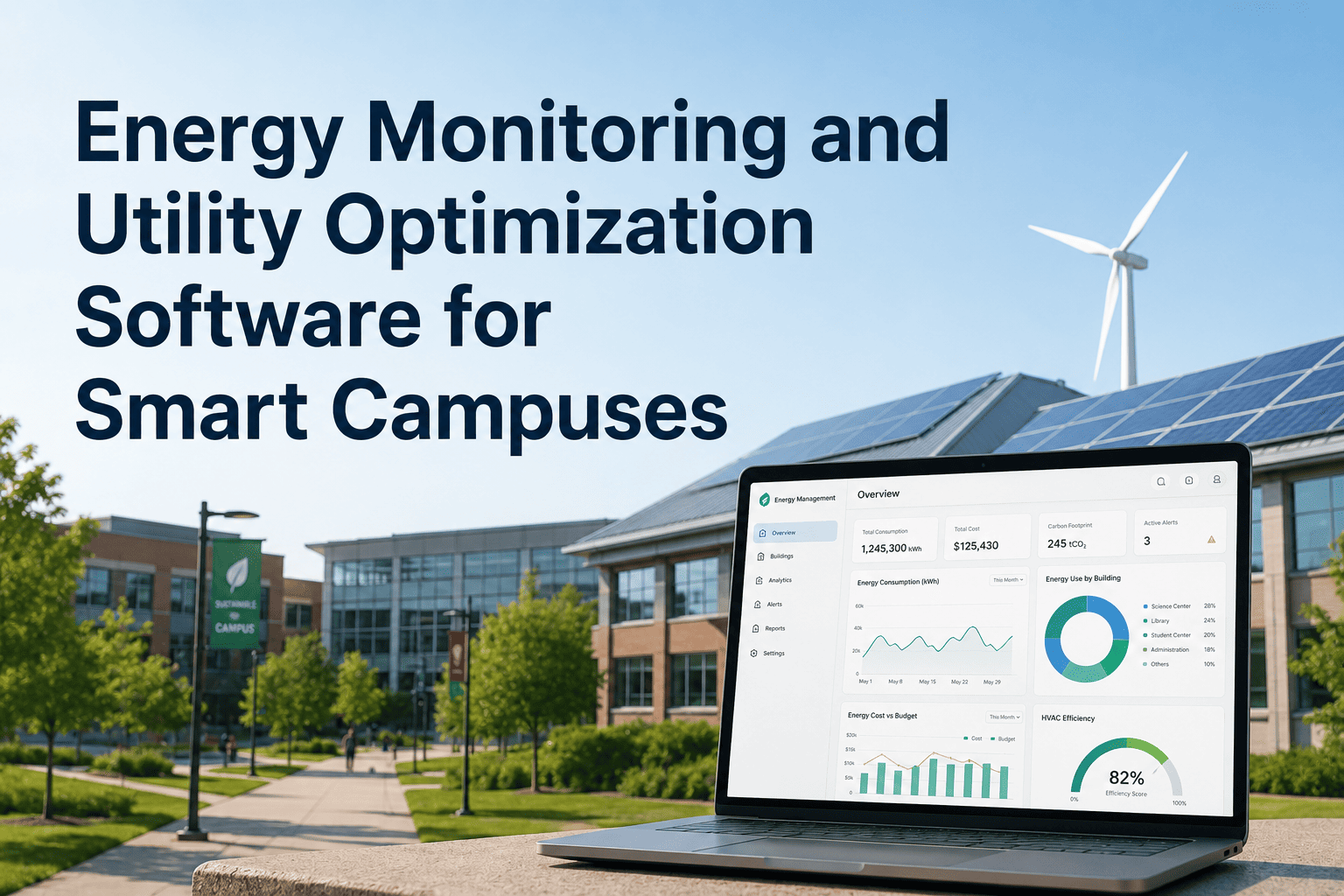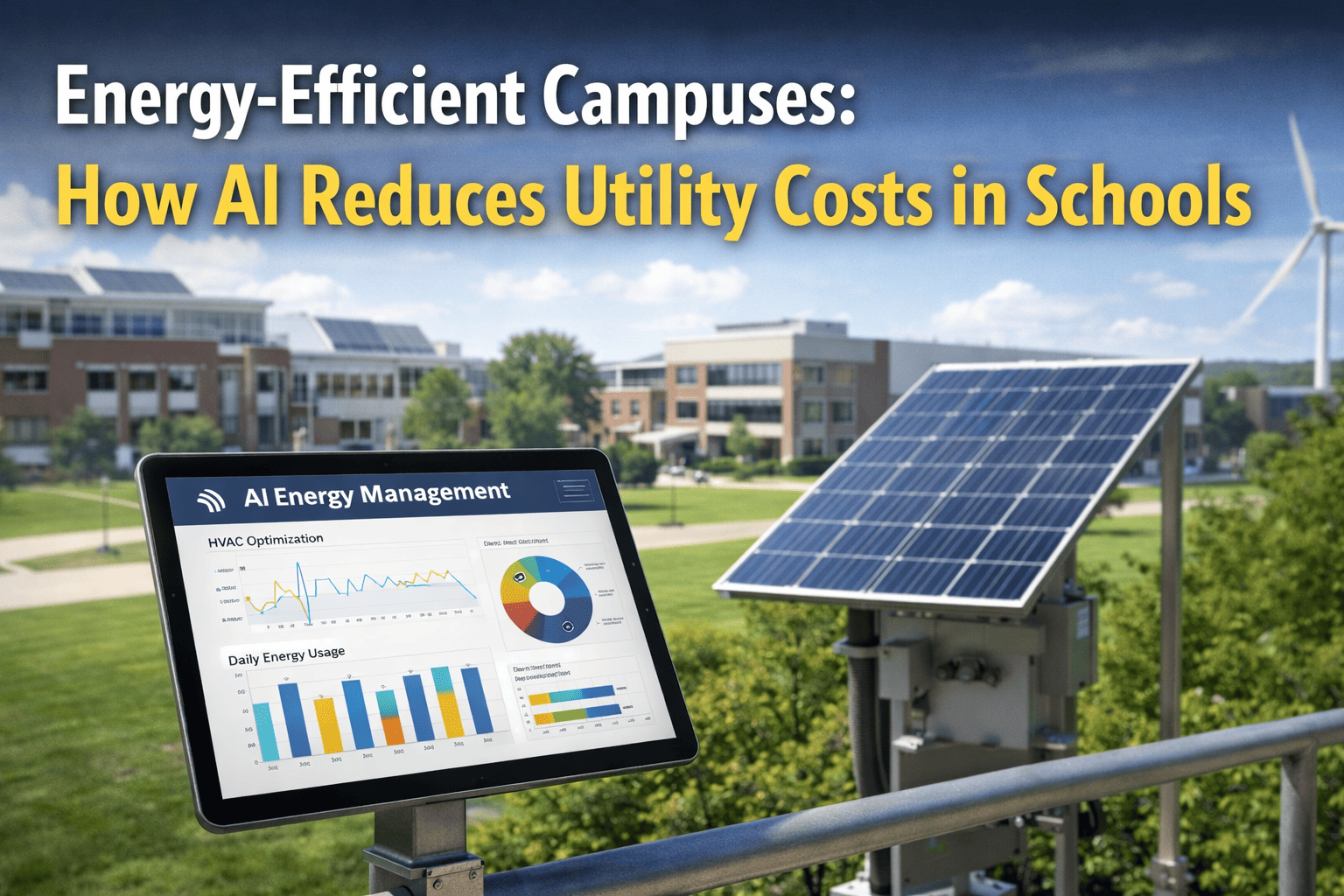
School and university campuses waste 30-40% of their energy budget conditioning empty spaces, running degraded HVAC systems, and operating on fixed schedules that ignore actual occupancy. AI-driven energy management eliminates this waste by connecting real-time sensor data to automated optimization engines. Documented deployments show 15-19% energy cost reductions on existing infrastructure — no capital equipment replacement required. See how AI maps to your campus utility spend — Book a Demo.
Where Campus Energy Is Wasted and What AI Finds
Most campus energy waste is invisible without real-time per-building data. AI analytics surfaces waste sources within the first semester and generates automatic corrections without manual intervention.
Fixed-schedule HVAC runs during nights, weekends, and breaks regardless of occupancy. Occupancy sensors feed real-time data to the AI engine, which activates setback schedules automatically — accounting for the majority of documented 15-19% savings.
Chillers and air handlers losing 15-25% efficiency due to fouling draw excess energy for months before visible symptoms appear. AI detects degradation from consumption signatures and dispatches maintenance before efficiency loss compounds into failure.
Demand charges from coincident electrical peaks can represent 20-35% of a campus electricity bill. AI forecasts demand windows using weather and occupancy data, then pre-conditions buildings before peak rate periods to flatten load spikes.
Building automation systems accumulate override commands over years, eroding 10-20% of the savings they were designed to deliver. AI continuously audits active BAS configurations and flags deviations for correction — no manual system audits required.
Lab HVAC runs at 5-10x the energy intensity of office space. Demand-controlled ventilation tied to occupancy sensors and fume hood position reduces exhaust volume when labs are unoccupied while maintaining ASHRAE safety minimums. Per-lab savings are proportionally the largest on most campuses.
Residence hall energy consumption rises gradually as plug loads increase and HVAC ages. Per-floor metering identifies which dormitories consume above benchmark so targeted audits replace expensive campus-wide investigations.
How the AI Energy Platform Works
The platform connects to existing BAS, smart meters, and occupancy sensors via open API — no system replacement required. Three optimization engines activate simultaneously within 60-90 days. Check if your BAS is compatible — Book a Demo.
- Real-time occupancy replaces fixed timer schedules for HVAC and lighting across all building types
- Summer breaks, semester transitions, and event-driven shifts applied campus-wide automatically
- Classrooms, labs, dining, and dorms each optimized to their specific usage patterns
- Per-building consumption benchmarked continuously against baseline and peer buildings
- Deviations trigger fault investigation with asset history and recommended correction
- HVAC faults, stuck dampers, and degraded chiller performance identified from energy signatures alone
- AI forecasts demand peaks using weather data, occupancy schedules, and equipment run history
- Pre-cooling and pre-heating shift thermal load out of peak utility rate windows
- Utility tariff structure analyzed continuously to identify rate schedule optimization opportunities
Documented Energy Reduction Outcomes
Results from K-12 and university deployments measured against pre-deployment baselines on existing infrastructure. No capital equipment replacement was required. Calculate what these savings mean for your utility budget — Book a Demo.
| Energy Metric | Before AI Deployment | After 18 Months | Change |
|---|---|---|---|
| Total Energy Operating Cost | Fixed-schedule baseline | 81-85% of baseline | -15% to -19% |
| Peak Electrical Demand Charges | Unmanaged spikes | Managed pre-conditioning | -12% to -18% |
| Unoccupied Space Conditioning | 30-40% of HVAC runtime | Near-zero unoccupied runtime | -30% to -40% |
| HVAC Fault Detection Time | Weeks to months | Hours to days | -95%+ |
| Per-Building Consumption Visibility | Utility bill totals only | Real-time per building | Full visibility |
| Energy Reporting Hours per Cycle | Approx 140 hrs | Approx 18 hrs | -87% |
| BAS Override Efficiency Loss | 10-20% undetected | Continuously audited | Eliminated |
| Sustainability Report Assembly | Manual, quarterly | Automated, on demand | -87% hours |