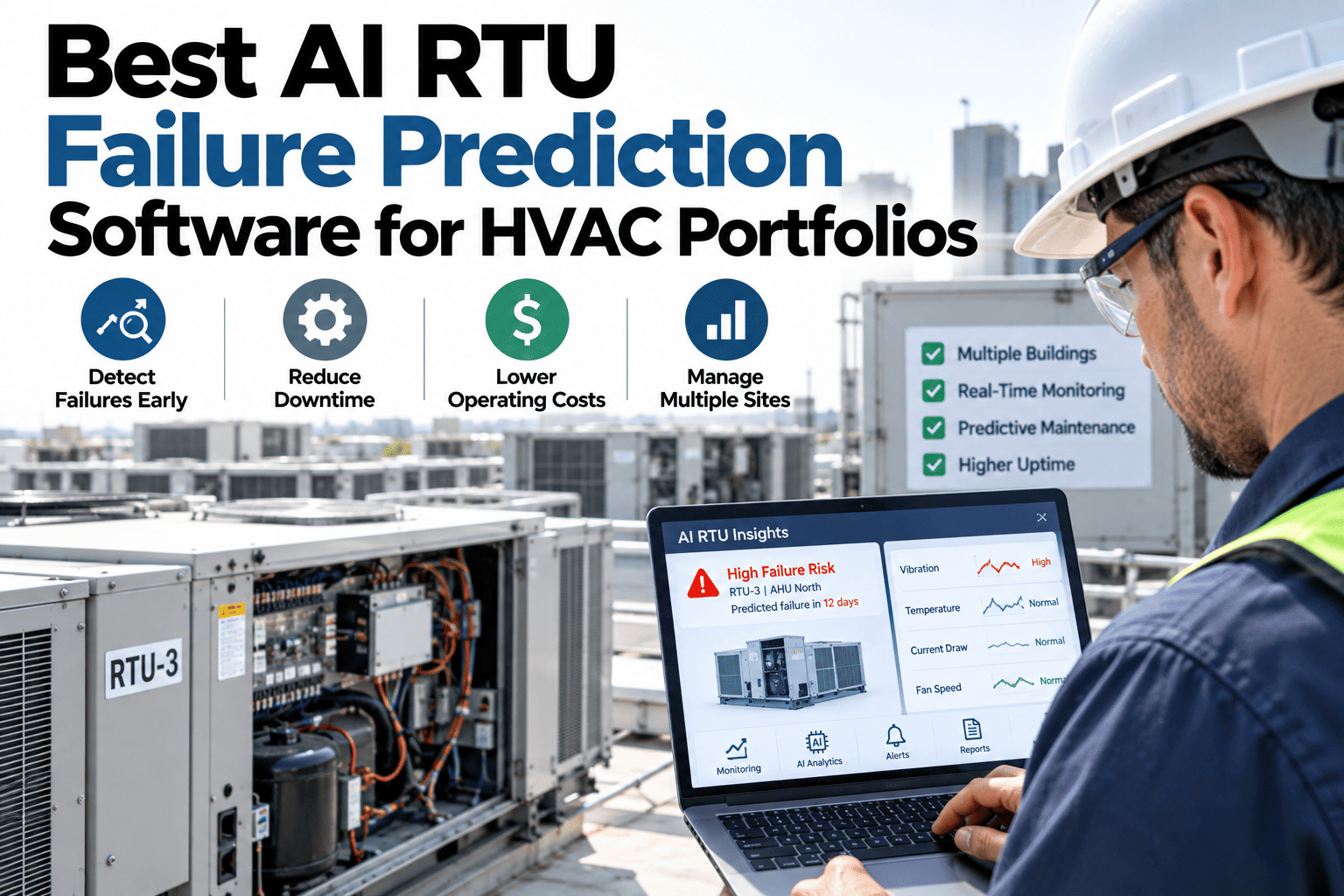
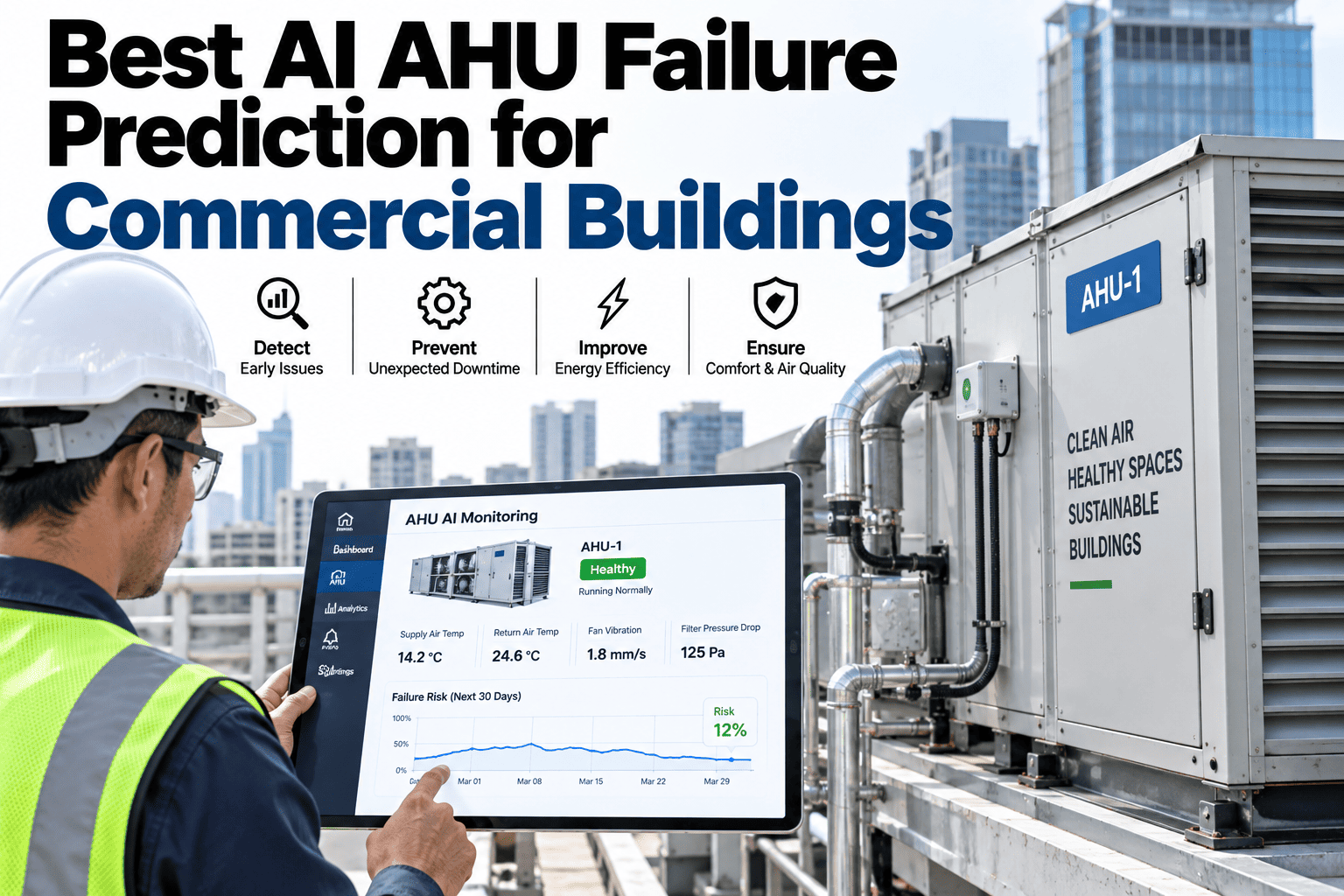
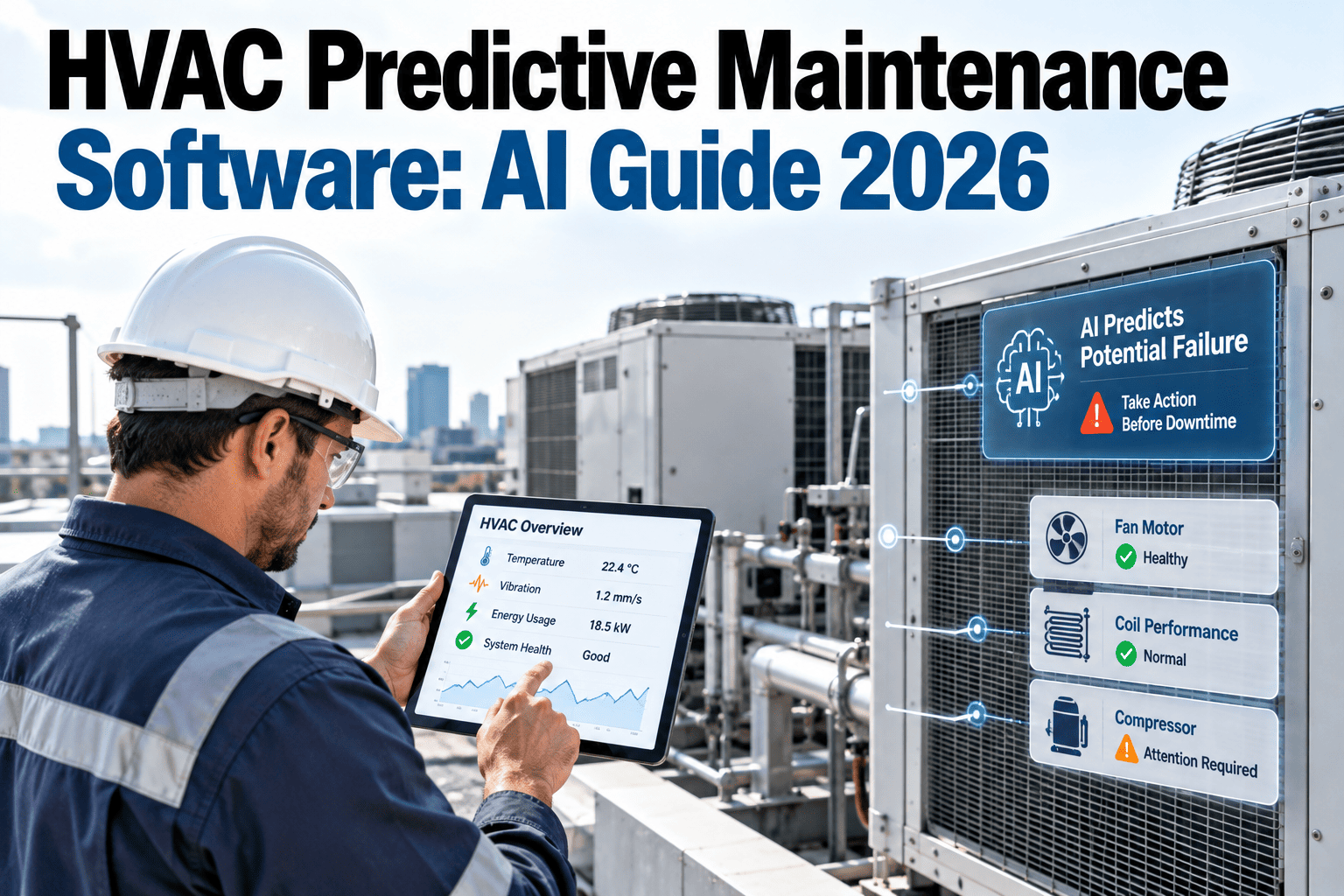
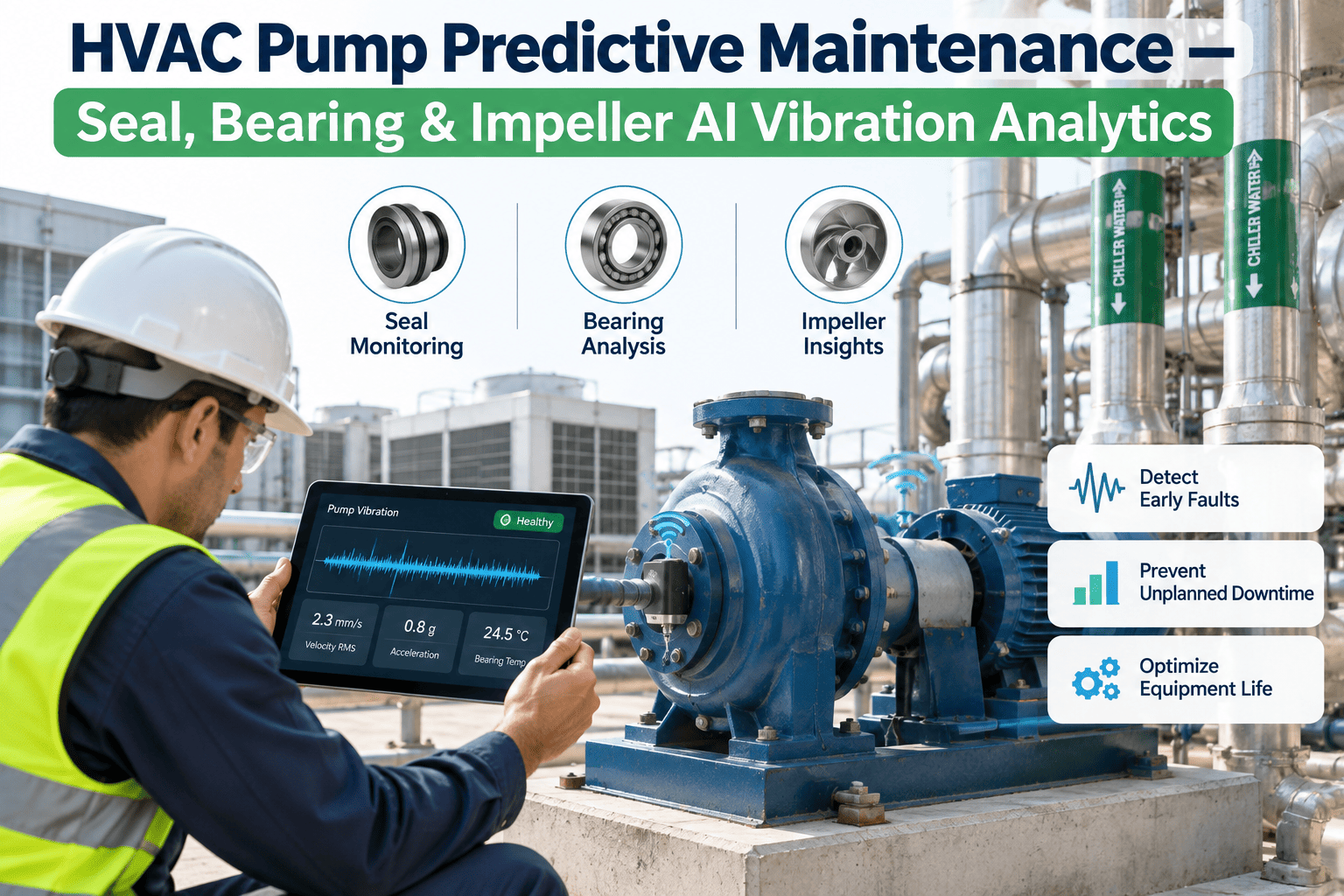
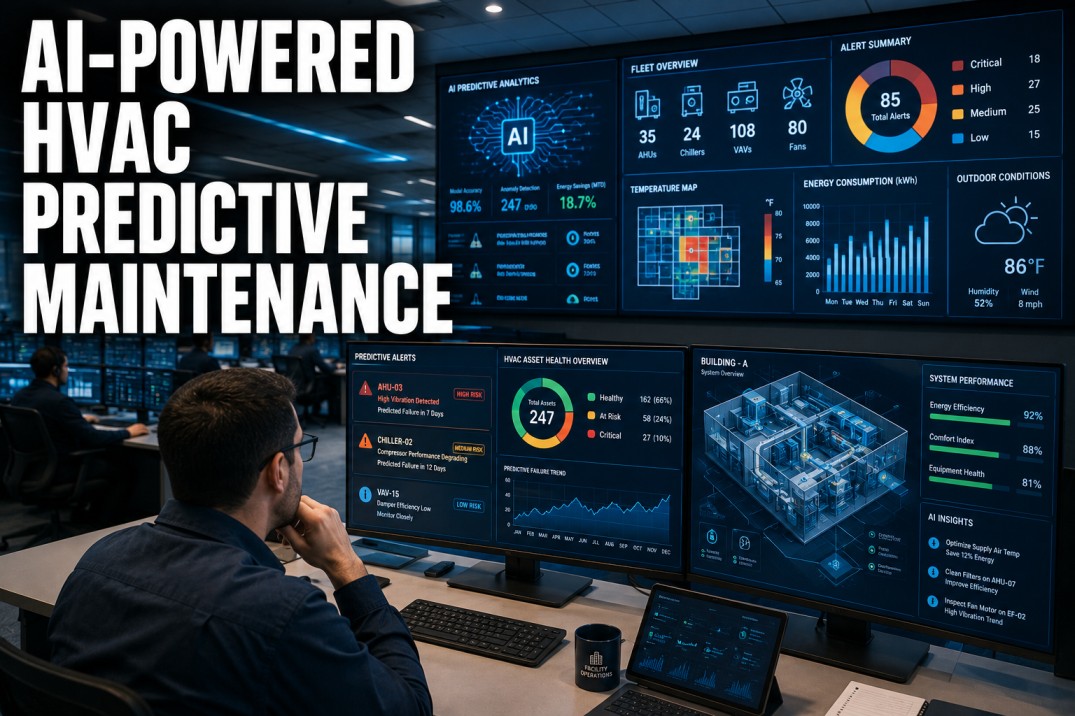
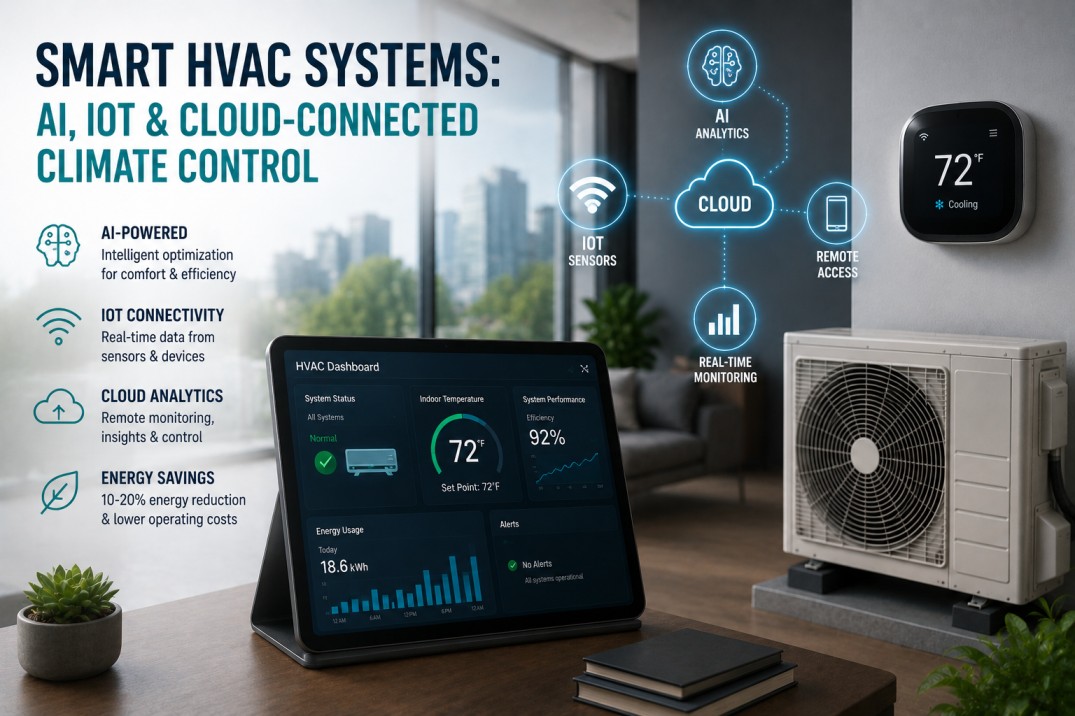
HVAC systems account for 40–60% of a commercial building's total energy consumption — and when they fail, the consequences cascade: tenant complaints, emergency repair bills 3–5x the cost of planned service, lost productivity, potential health and safety violations, and equipment damage that shortens asset life by years. Yet the vast majority of commercial and industrial facilities still maintain HVAC equipment on fixed calendar schedules or, worse, wait for something to break. AI-powered predictive maintenance changes the equation entirely — using real-time sensor data, machine learning algorithms, and pattern recognition to detect equipment degradation weeks or months before failure occurs. The results are documented and dramatic: 40–60% reduction in emergency calls, 20–30% extension of equipment life, 8–15% energy cost reduction, and ROI of 8–15x within the first year. For a typical 500,000 sq ft commercial portfolio, predictive maintenance investment of $35K–$80K annually returns savings measured in hundreds of thousands. OxMaint combines AI-powered predictive analytics with full-featured CMMS work order management — detecting HVAC equipment degradation automatically and generating prioritized work orders before failures happen. Book a free demo and stop guessing when your equipment will fail.
HEROAI-Powered Predictive Maintenance for HVAC Systems: The Complete Guide
Stop Scheduling Maintenance by Calendar. Start Maintaining by Condition.
This guide covers everything you need to know about implementing AI predictive maintenance for commercial and industrial HVAC: the technology behind it, which equipment to prioritize, what sensors you need, implementation timelines, real-world ROI data, and the exact failure modes AI catches that human inspections miss.
The Three Eras of HVAC Maintenance — And Why AI Is the Third Revolution
Era 1: Reactive
Wait for it to break, then fix it.
The most expensive and disruptive approach. Emergency repairs cost 3–5x planned service. Tenant comfort is compromised. Equipment life shortened by years of running with degraded components. Still used by a surprising number of facilities — 38% of maintenance professionals report relying on run-to-failure as a strategy.
Era 2: Preventive
Maintain on a fixed schedule, regardless of condition.
Better than reactive, but fundamentally flawed. A technician visits quarterly — but a belt could snap two weeks after inspection. Calendar-based PM generates 25–40% unnecessary visits (equipment that's fine) while still missing failures between intervals. Used by 71% of maintenance teams, but delivers diminishing returns.
Era 3: AI Predictive
Maintain based on real-time equipment condition data.
AI monitors vibration, current, temperature, pressure, and airflow 24/7 — detecting degradation patterns weeks before failure. Technicians are dispatched to equipment that actually needs attention, with specific diagnostic context. Emergency calls drop 40–60%. Equipment life extends 20–30%. Energy waste caught in real time. ROI: 8–15x. See AI predictive maintenance live
AI Failure Detection by HVAC Equipment Type
AI applies different analytical techniques to different HVAC subsystems — detecting failure modes that are invisible to quarterly inspections and inaudible to technicians.
Chillers & Compressors
AI detects bearing wear via vibration spectrum analysis, refrigerant charge degradation through pressure trending, condenser/evaporator fouling via approach temperature monitoring, and compressor valve leakage through current signature analysis — 8–14 weeks before catastrophic failure. An avoided chiller compressor emergency saves $40,000–$80,000 per event.
Air Handling Units
AI detects belt slip and tension loss via motor current signatures, bearing race defects via vibration spectrum shifts, and reduced airflow via supply air temperature deviation — catching belt glazing 6–10 weeks before a snap and bearing defects 8–14 weeks before seizure. Belt failure is the most common AHU failure mode and one of the most preventable. See AHU monitoring
Boilers & Heating
AI monitors combustion efficiency through exhaust gas analysis trending, heat exchanger effectiveness via temperature differential patterns, pump cavitation via acoustic signatures, and scale buildup through gradual efficiency loss curves. Early detection of heat exchanger fouling prevents the 1–2% weekly efficiency degradation that compounds into major energy waste.
Cooling Towers & Pumps
AI tracks cooling tower fan motor vibration, fill media degradation via water temperature differential trending, pump seal wear through pressure fluctuation patterns, and VFD health through power quality analysis. Cooling tower failures during peak summer can leave entire buildings without cooling — AI catches developing issues months ahead.
ROI Breakdown — 500,000 sq ft Commercial Portfolio
Documented annual returns from AI predictive maintenance on a typical commercial HVAC portfolio (1,500 tons cooling capacity).
Emergency Call Reduction
$32K–$96K/year
40–60% fewer emergency calls at $800–$3,000 saved per avoided emergency (labor premium, expedited parts, after-hours dispatch).
Equipment Life Extension
$100K–$450K/year
20–30% life extension through optimized operation and early intervention — deferring $500K–$1.5M in capital replacement across the portfolio.
Energy Cost Savings
$48K–$120K/year
8–15% reduction through early detection of fouled coils, low refrigerant, worn belts, and failing VFDs — before energy waste accumulates. Calculate your energy savings
PM Visit Optimization
$15K–$40K/year
25–40% reduction in unnecessary PM visits — technicians dispatched to equipment that needs attention, not equipment on a calendar rotation.
Comfort Complaint Reduction
$10K–$30K/year
50–70% fewer temperature excursions and faster resolution — protecting tenant satisfaction, lease renewals, and occupancy rates.
Sensors Required for AI Predictive HVAC Maintenance
Most buildings already have 60–70% of required sensing through their existing BAS. AI platforms integrate with this data and supplement with targeted additions.
Wireless Vibration Monitors
Mounted on bearings and rotating equipment (compressors, fans, pumps) — detecting imbalance, misalignment, looseness, and bearing defects through frequency spectrum analysis.
Current Transformers
Clamped on motor circuits — analyzing electrical signatures to detect winding deterioration, rotor bar defects, belt slip, and power quality issues across compressor and fan motors.
Temperature Sensors
Monitoring heat exchangers, supply/return air differentials, condenser/evaporator approach temperatures, and bearing temperatures — the core data for fouling detection and thermal performance trending.
Pressure Transducers
Tracking refrigerant system pressures, hydronic system differentials, and filter pressure drops — enabling real-time refrigerant charge monitoring, pump performance analysis, and filter replacement optimization. See sensor requirements for your building
Airflow Measurement Devices
Monitoring major ductwork to detect static pressure changes, damper malfunctions, and airflow imbalances that affect both comfort and energy efficiency.
From First Sensor to Full AI Coverage — Your Deployment Path
The biggest lesson from real implementations: don't start with AI — start with data. Get a deployment plan for your portfolio
Months 1–2 · Data Foundation
CMMS asset registry audit — every unit tagged with nameplate data, every component cataloged, PM history imported. Connect BMS data feeds into centralized historian. Add wireless sensors to equipment the BMS doesn't monitor. Establish clean, consistent data pipelines. This step determines everything that follows.
Months 3–4 · AI Model Training & Baseline
AI establishes baseline operating profiles for every monitored asset. Machine learning models begin learning normal vs. abnormal patterns for your specific equipment, building characteristics, and operating conditions. Initial predictive alerts start generating within 2–4 weeks of sensor installation.
Months 5–8 · Optimization & Expansion
Model refinement from confirmed predictions. PM schedule optimization based on actual equipment condition. Energy savings verification. Expand monitoring to additional equipment and buildings. Team training on predictive dashboards and CMMS integration workflows.
Month 9+ · Full Predictive Operations
AI models achieve 85–94% prediction accuracy. Maintenance team operates in full predictive mode — dispatching based on AI work orders, not calendar schedules. ROI measurement and continuous improvement. Most facilities achieve full payback within 6–14 months and 60–70% of projected savings within the first quarter post-implementation. Get your timeline
Every HVAC System Monitored & Maintained
Frequently Asked Questions — AI Predictive Maintenance for HVAC
How is AI predictive maintenance different from standard preventive maintenance?
Preventive maintenance follows a fixed calendar — a technician visits every 90 days regardless of equipment condition. This generates 25–40% unnecessary visits while still missing failures between intervals. AI predictive maintenance uses continuous sensor data (vibration, current, temperature, pressure) analyzed by machine learning algorithms to detect actual equipment degradation — catching belt wear 6–10 weeks before failure, bearing defects 8–14 weeks ahead, and refrigerant loss in real time. Technicians are dispatched when equipment needs attention, not when a calendar says so. Book a demo to see the difference
What ROI can I expect and how quickly?
For a typical 500,000 sq ft commercial portfolio, annual investment of $35K–$80K (platform + sensors + integration) returns $200K–$700K+ annually through emergency call reduction (40–60%), energy savings (8–15%), equipment life extension (20–30%), and PM optimization (25–40% fewer unnecessary visits). Most buildings achieve payback within 3–6 months and 60–70% of projected savings within the first quarter. Overall ROI ranges from 8–15x annually.
Do we need to replace our existing BMS or HVAC equipment?
No. AI predictive platforms integrate with your existing BAS/BMS via standard protocols (BACnet, Modbus, API). Most buildings already have 60–70% of the required sensing through their existing automation. Supplementary wireless sensors (vibration, current, temperature, pressure) retrofit onto existing equipment without modification. The AI platform sits as an intelligence layer on top of your current infrastructure — no rip-and-replace required. See integration options for your building
Which HVAC equipment should we prioritize for AI monitoring?
Start with equipment that has the highest failure costs and most predictable degradation patterns: centrifugal chillers, screw compressors, large AHU fans, cooling tower motors, and boiler feed pumps. These systems offer the largest delta between predicted and reactive maintenance costs. Secondary priority includes heat exchangers, VFDs, and control valves. A typical implementation starts with 3–5 critical assets in Phase 1 and expands based on proven results.
How accurate are AI failure predictions for HVAC equipment?
Machine learning models achieve 85–92% accuracy in predicting HVAC component failures, with accuracy improving over time as the system learns your facility's unique patterns. Early warnings typically provide 2–14 weeks advance notice depending on the failure mode — belt degradation detected 6–10 weeks ahead, bearing defects 8–14 weeks, and refrigerant charge loss in real time. Prediction accuracy improves continuously as more facility-specific data is accumulated. See accuracy benchmarks in your demo
How does this integrate with our CMMS?
OxMaint combines AI predictive analytics with full-featured CMMS in a single platform. When AI detects equipment degradation, it automatically generates a prioritized work order with specific diagnostic context — your maintenance team receives data-driven instructions, not vague alerts. For facilities using other CMMS platforms, OxMaint's API integrates with ServiceNow, Maximo, eMaint, and others. The goal: AI detection triggers actionable maintenance workflows without manual intervention.
How long does implementation take?
Phase 1 (data foundation) takes 1–2 months. AI models begin generating actionable predictions within 2–4 weeks of sensor installation. Full optimization occurs by month 5–8 as models accumulate facility-specific data. Most facilities see measurable returns within 3–6 months. The biggest success factor is starting with a clean CMMS asset registry and reliable sensor data — the AI is only as good as the data feeding it. Get your deployment timeline
Stop Guessing When HVAC Equipment Will Fail. Start Knowing.
AI predictive maintenance catches HVAC failures weeks before they happen, cuts emergency costs 40–60%, extends equipment life 20–30%, and pays for itself in 3–6 months. Let our HVAC specialists show you exactly how it works for your building or portfolio — in a free 30-minute demo.