Elevator modernization is one of the most expensive capital decisions a property manager faces — and one of the most misunderstood. Get the scope wrong and you're back at the bidding table in three years. Get the timing wrong and a single breakdown costs more than the upgrade would have. This guide walks through every decision point: when to modernize, what to upgrade first, what full replacement actually costs, and how to build an ROI case your ownership team will approve. Book a demo to see how iFactory helps property teams track elevator performance data and build modernization business cases automatically.
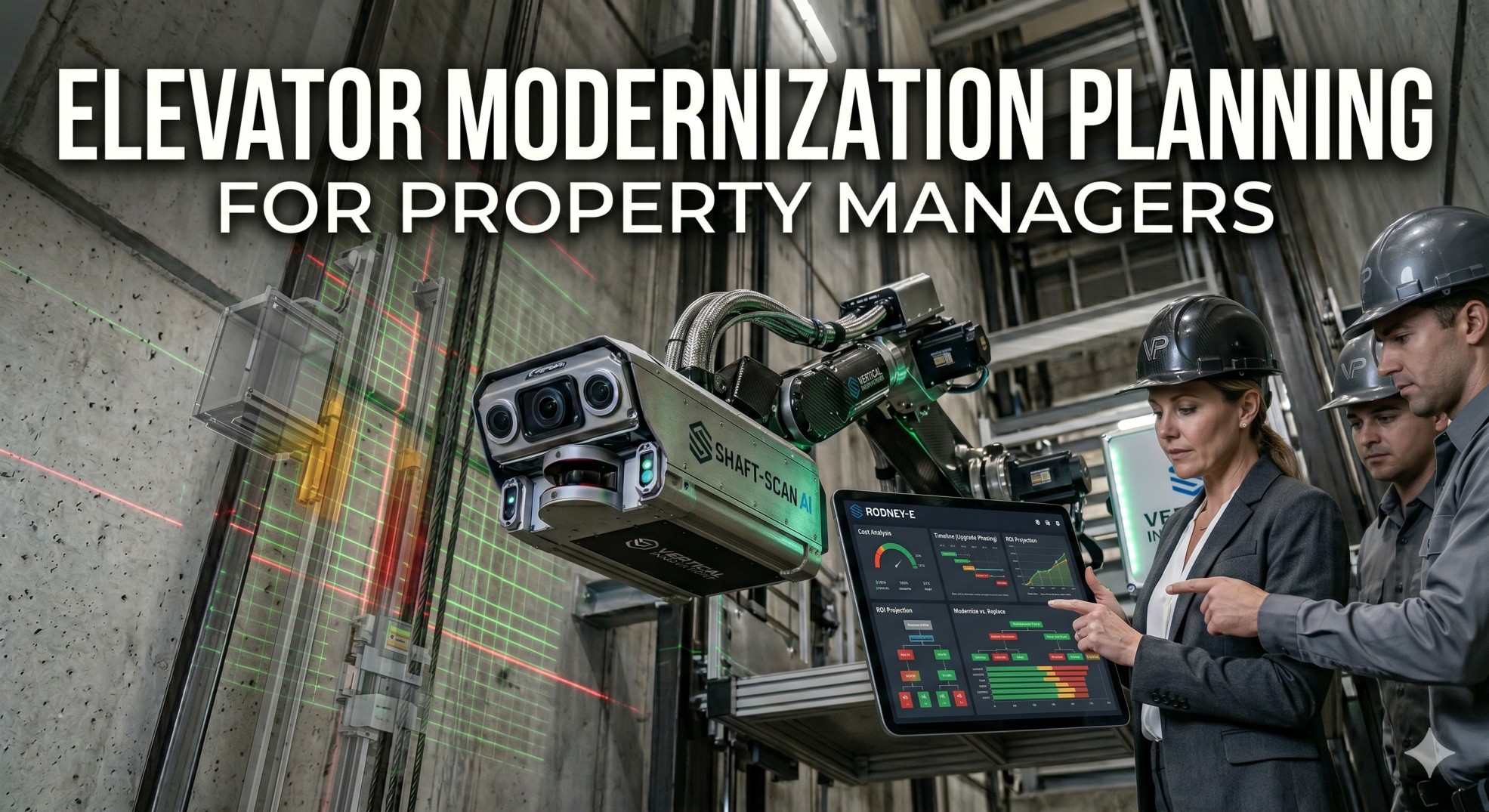
Elevator Modernization Planning for Property Managers
Cost benchmarks, upgrade priority order, modernize vs. replace decision framework, and a vendor selection checklist — everything you need before you sign a contract.
Modernize or Replace? The Framework That Matters
Most property managers approach this as a gut-feel decision. The ones who avoid expensive mistakes treat it as a data question. Two variables drive the answer: structural condition and cumulative repair trajectory.
When the structure is still sound
- Cab frame, rails, and hoistway in good condition
- Annual repairs under 50% of modernization cost
- Equipment is 15–25 years old
- Parts availability declining but not critical
- Downtime under 8% annually
- Code gaps are component-level, not systemic
When the structure is compromised
- Rails, buffers, or shaft showing deterioration
- Annual repairs exceed 50% of modernization cost
- Equipment is 30+ years old
- Parts discontinued with 8+ week lead times
- Downtime exceeding 8% annually
- Failed inspections on structural elements
What Elevator Modernization Actually Costs in 2025–2026
Costs vary 20–40% based on location, site conditions, and code requirements. Urban labor rates run 15–25% higher than suburban markets. Use these ranges as a planning baseline, not a bid number.
| Scope | What's Included | Cost Per Car | Best For |
|---|---|---|---|
| Controller Only | New microprocessor controller, wiring, software | $75K – $150K | Reliable cab, frequent misfires or outages |
| Partial Mod | Controller + door operators + cab interior | $120K – $250K | 15–20 yr old systems with multiple pain points |
| Full Modernization | Controller, doors, cab, machine, safety devices | $250K – $500K | 20–30 yr systems, sound structure, poor performance |
| Full Replacement | Everything — new system from pit to penthouse | $400K – $750K+ | 30+ yr systems, structural issues, repeated failures |
Which Components to Upgrade First
Not all upgrades deliver equal return. This priority order reflects impact on downtime reduction, code compliance, and tenant satisfaction — the three metrics ownership actually tracks.
Controller & Drive System
Highest ImpactThe controller is the brain. Obsolete relay-logic controllers cause 60–70% of modern service callbacks. Replacing with an open-protocol microprocessor system eliminates most mystery faults, enables remote diagnostics, and opens the door to competitive maintenance bidding after installation.
Door Operators & Safety Edges
Safety CriticalDoor-related failures account for roughly 50% of all elevator service calls. Modern harmonic-motion operators improve floor-to-floor time and near-eliminate door reversals. Adding 3D detection meets current ASME code requirements in most jurisdictions and protects you from liability exposure.
Machine & Motor
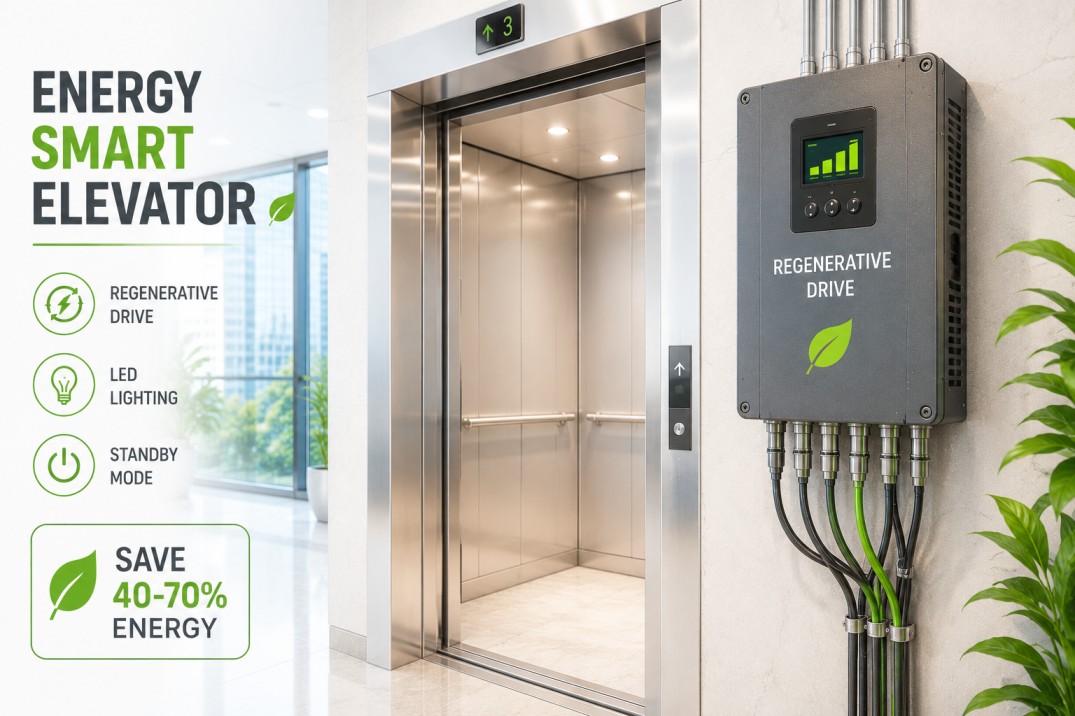
Energy SavingsReplacing older worm-gear machines with gearless permanent magnet motors typically cuts elevator energy consumption by 40–60%. A regenerative drive can return braking energy to the building grid. For high-rise buildings or multi-car properties, this upgrade has the clearest and fastest energy ROI of any modernization line item.
Cab Interior & Fixtures
Tenant PerceptionPassenger perception is a real factor in lease renewal conversations. Upgrading car operating panels (COP), hall lanterns, flooring, and lighting is the fastest way to change how tenants experience the building. ADA-compliant fixtures, touchless controls, and modern finishes address both compliance gaps and tenant satisfaction in one scope.
Safety & Code Compliance Devices
Non-NegotiableFire service phase I/II, emergency lighting, video communication, and governor/buffer upgrades. These aren't optional when triggered by modernization scope — most jurisdictions require retroactive compliance for fire service and door protection when a major alteration is performed. Identify jurisdiction-specific triggers before finalizing any project scope.
See How Property Teams Build Elevator Modernization Business Cases Automatically
In a 30-minute walkthrough, our team shows you how iFactory tracks repair cost trends, downtime patterns, and compliance gaps per unit — so the capital planning case writes itself from your own data.
How to Build the ROI Case for Ownership
Elevator upgrades rarely boost rental rates directly — which makes the ROI case harder to sell. The right model focuses on cost avoidance and liability reduction, not revenue upside.
Repair Cost Reduction
Track your current annual repair spend per elevator. A modernized system typically cuts repair costs 60–80% in years 1–3. If you're spending $30K/year on callbacks for one car, that alone builds a compelling case.
Energy Savings
Gearless permanent magnet motors and regenerative drives reduce elevator energy consumption by 40–60%. For a mid-rise commercial building, this can translate to $8,000–$18,000 per year per elevator in reduced utility spend.
Liability & Insurance
Outdated safety systems are a direct liability exposure. A single serious incident on an uninspected or non-compliant elevator can generate legal costs that dwarf the upgrade price. Insurance carriers increasingly price this risk — some now require modernization timelines before renewing policies on older equipment.
Downtime Cost
Calculate lost productivity and tenant dissatisfaction costs. For multifamily properties, one elevator down in a mid-rise means complaint calls, rent concessions, and lease non-renewals. For commercial properties, it means tenant escalations and lease risk. Quantify this and put it in the ROI model.
A Realistic Timeline from Assessment to Completion
Simple upgrades can take days. Full modernization projects for a multi-car building can run 6–12 months. Here is a realistic sequence for a full or partial modernization project.
Condition Assessment & Scope Definition
Hire an independent elevator consultant (not the contractor who will bid the work) to conduct a pre-bid condition assessment. This surfaces hidden deficiencies — non-compliant buffers, machine room HVAC issues, groundwater in the pit — that are the primary cause of cost overruns. Define scope based on findings, not contractor recommendations.
Bid Package & Vendor Qualification
Send the defined scope to at least three qualified contractors. Specify open-protocol controller platforms — proprietary OEM controllers lock you into that vendor for future maintenance. Vet vendors on: years in market, local service infrastructure, reference buildings comparable to yours, and post-modernization maintenance terms.
Contract Finalization & Permit Applications
Permits for elevator work can take 4–12 weeks in major metro areas. Start this process before construction mobilization. Clarify jurisdiction-specific code compliance triggers in writing — get the inspector's list before the contract is signed, not after construction begins.
Construction & Phased Downtime
For multi-car buildings, stagger modernization to keep at least one car running at all times. Coordinate outage windows with tenant schedules — not peak lobby hours. Track milestones weekly and document any scope additions in writing with updated cost confirmations before approving.
Inspection, Commissioning & Baseline Reset
State inspection and certificate of operation before returning to service. Reset preventive maintenance schedules for the modernized equipment. Begin tracking new warranty items separately. Start a fresh lifecycle cost baseline against which you'll measure actual ROI versus projections at 12 and 24 months.
Elevator Modernization Vendor Selection Checklist
The contractor you choose matters as much as the scope you define. Use this checklist during the evaluation phase before awarding any contract.
What the Data Tells Us About Modernization Timing
The most common mistake property managers make is waiting for a major failure before modernizing. By that point, you're negotiating from a position of zero leverage — you'll accept whatever timeline and price the contractor offers because you have no service. The optimal modernization window is when annual repair costs approach 30–40% of the modernization cost for that scope, not 50%. At 50%, you've already overspent.
The Property Manager's Modernization Summary
Elevator modernization is a capital decision that rewards preparation and penalizes urgency. Property managers who track repair cost trends per unit, conduct independent pre-bid assessments, and specify open-protocol systems consistently get better outcomes — lower project costs, fewer surprises, and a competitive maintenance market after completion. The ones who wait for a failure and accept the first bid typically pay 20–35% more for the same result.
The data-driven approach starts before any contractor conversation: know your repair trajectory per elevator, know your jurisdiction's code triggers, and build the ROI model from your own maintenance records. If you're managing those records in spreadsheets today, a significant amount of the business case is already invisible to you.
Elevator Modernization: Frequently Asked Questions
How do I know when annual repair costs justify starting a modernization project?
The standard threshold used by facilities professionals is when annual repair spend for a single elevator exceeds 30–40% of the estimated modernization cost for that scope. At 50%, you have likely already overspent. Track repair costs per unit, not across your portfolio as a blended number — otherwise high-repair units subsidize others and hide the true picture.
Does elevator modernization trigger code compliance requirements I didn't budget for?
Yes — this is one of the most common sources of budget overruns. In most jurisdictions, a controller replacement or major alteration triggers retroactive compliance for specific code items, typically fire service phase I/II, 3D door protection, and video communication systems. In states that have adopted ASME A17.1-2019, add a line item of $15,000–$50,000 per elevator for these requirements before finalizing your project budget.
What is the difference between an open-protocol and proprietary controller, and why does it matter?
A proprietary OEM controller locks you into that vendor for all future maintenance and parts — you lose competitive bidding leverage permanently. An open-protocol controller allows any qualified elevator service company to maintain the equipment after installation. Always specify open-protocol platforms in your bid package. The price difference is marginal; the long-term cost difference is significant.
How long will elevator modernization disrupt building operations?
Simple component upgrades can be completed in a few days per car. A full modernization takes 4–12 weeks per elevator depending on scope, parts lead times, and inspection scheduling. For multi-car buildings, phase the work to keep at least one car in service at all times. Schedule downtime windows outside peak lobby hours and communicate timelines to tenants at least 30 days in advance.
Should I modernize all elevators at once or phase the project?
For most properties, phasing delivers better outcomes: it preserves cash flow, reduces disruption, and lets you validate contractor performance on the first car before committing the full portfolio. The trade-off is slightly higher total cost versus a simultaneous multi-car contract discount, typically 5–10%. For buildings with three or more elevators, consider pairing contractor-negotiated bundled pricing with a staggered construction schedule.
Turn Your Maintenance Records Into a Modernization Business Case
iFactory tracks repair costs, downtime hours, compliance gaps, and parts obsolescence per elevator — giving your team the data to make the right call at the right time, and present it to ownership with confidence.