Regulatory compliance is the non-negotiable foundation of vertical transportation management — a complex web of ASME A17.1 standards, state-specific modifications, and ADA accessibility requirements that dictate the operational legality of every lift in your portfolio. For a high-density commercial property, a single failed state inspection or an expired permit doesn't just result in a marginal fine; it triggers a mandatory equipment lockout, disrupts tenant flow, and creates severe legal liability for the ownership entity. The challenge is the volume of documentation: tracking pressure tests, fire service recalls, and governor overspeed trips across a fleet of 50+ elevators is a manual, error-prone process that typically discover gaps only when an auditor arrives. iFactory's elevator compliance requirements module digitizes the entire regulatory lifecycle — from ASME A17.1 compliance tracking to automated permit filing — ensuring your fleet remains 100% audit-ready 24/7/365. By integrating elevator code requirements directly into your maintenance workflow, iFactory eliminates the chaos of paper-based filing and guarantees that every safety test is documented, verified, and submitted before the deadline expires.
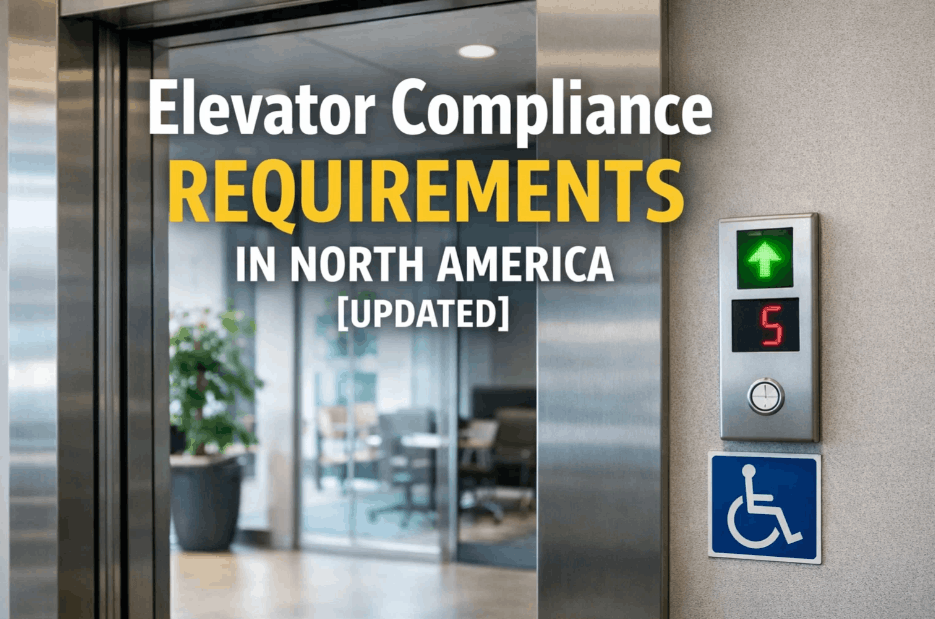
Elevator Compliance Requirements in North America [Updated]
iFactory automates the entire North American vertical transportation compliance lifecycle — from ASME A17.1 safety audits to ADA accessibility standards. Eliminate manual paperwork, prevent expired permits, and ensure your building is always 100% audit-ready with real-time digital verification and automated filing.
Regulatory Priority Analysis — Which Compliance Codes Carry the Most Risk
Not all compliance gaps are created equal. iFactory ranks your regulatory obligations based on safety consequence and the probability of an immediate equipment lockout. Our AI engine monitors upcoming elevator inspection requirements and alerts managers 60 days before a critical deadline. Run your portfolio compliance audit in iFactory — results in 72 hours.
| Requirement | Safety Risk | Legal Impact | Code Reference | Audit Score | Action Priority |
|---|---|---|---|---|---|
| Annual Safety Test (Cat 1) | Extreme | Immediate Lockout | ASME A17.1 | 98 | P1 — Non-Negotiable |
| Fire Service Recall (Ph I/II) | Extreme | Heavy Liability | NFPA 72 / A17.1 | 95 | P1 — Non-Negotiable |
| ADA Accessibility Mod | Medium | Civil Penalties | ADA Stnds 2010 | 84 | P2 — 30 Days |
| Operating Permit Renewal | Low | Equipment Seizure | State Regulation | 80 | P2 — 30 Days |
| 5-Year Load Test (Cat 5) | High | Operational Disrupt | ASME A17.1 | 65 | P3 — Scheduled |
| Emergency Communication | High | Filing Anomaly | A17.1 Section 2.27 | 32 | P4 — Standard PM |
Regulatory Gap Matrix — Severity vs Probability of Code Violation
iFactory's compliance module automatically populates violation probability based on real-time sensor health and past maintenance records. The heatmap below visualizes exactly where your elevators are most vulnerable to regulatory failure. Run a code gap analysis for your top 5 buildings.
The iFactory Compliance Management Workflow — From Code to Submission
Compliance is not a once-a-year event; it is a continuous data loop. iFactory automates the transition from regulatory identification to technical execution and final documentation submission, ensuring that no permit ever reaches a "Late" status again.
Frequently Asked Questions
How does iFactory handle city-specific elevator codes that differ from ASME A17.1?
iFactory's regulatory database is geo-fenced. When you onboard a building in NYC, Chicago, or LA, the system automatically pulls the specific local code modifications (e.g. NYC Appendix K) and updates your inspection checklists accordingly.
What happens if a safety test is logged in iFactory but fails the technical criteria?
The system immediately blocks permit submission and triggers a P1 corrective work order. iFactory will not allow a safety certificate to be filed if the sensor data (e.g. brake deceleration rate) falls outside of the ASME A17.1 safety window.
Can we migrate our existing paper-based compliance history into the platform?
Yes. iFactory's Digital Onboarding team uses OCR to scan and vault your last 5 years of paper inspection reports, mapping them to each specific asset so your compliance thread is complete from day one.
Is iFactory recognized by state elevator inspectors and jurisdictional authorities?
Yes. iFactory provides a "Public Inspection Portal" where authorized state auditors can instantly view all tests, certifications, and maintenance logs in an unalterable, blockchain-verified format, speeding up your physical audit time by 75%.
Digitize Your Elevator Compliance Portfolio
Free 5-Building Compliance Gap Analysis for all new demo requests — see exactly where your portfolio is at risk.


.jpg)