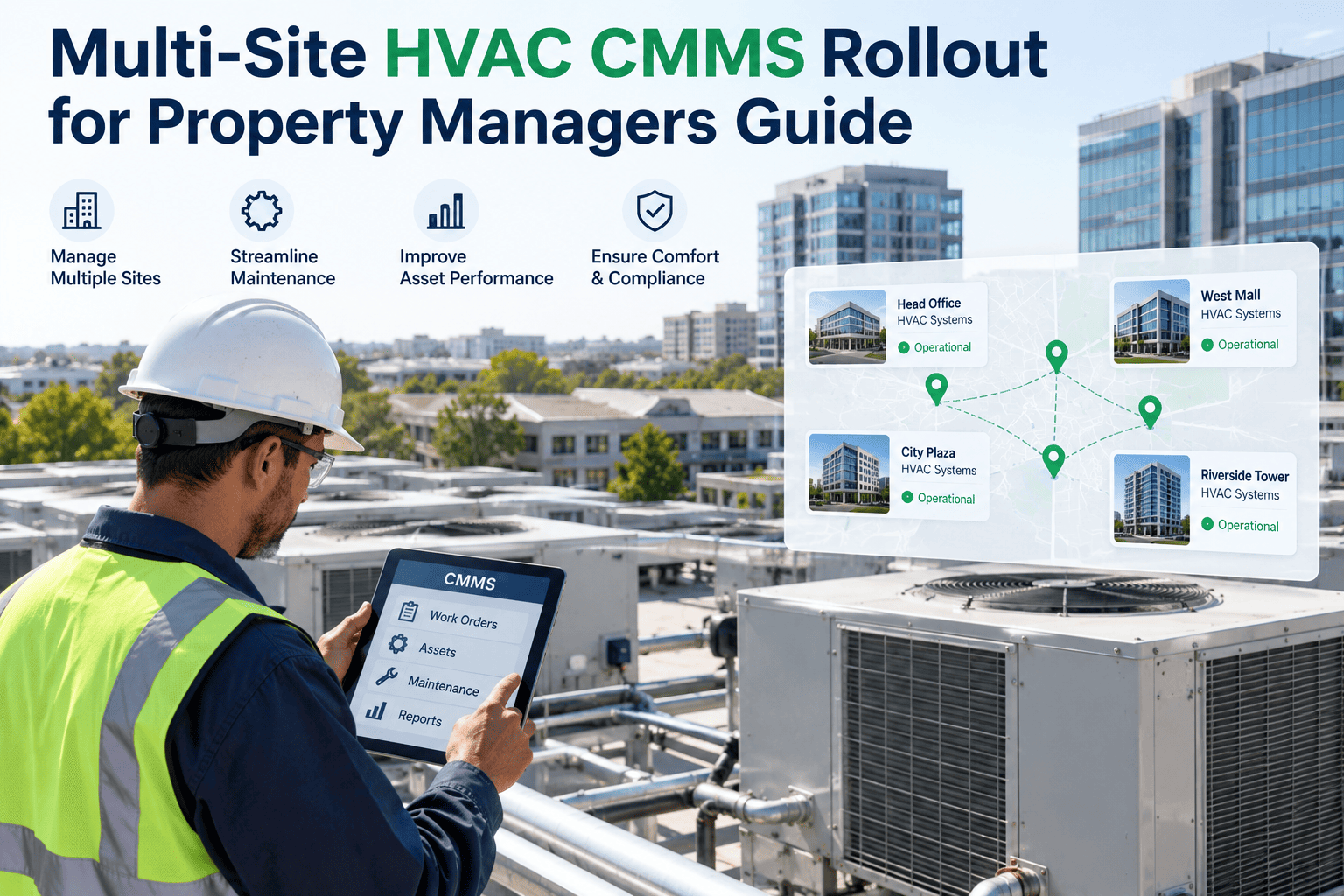
Scaling from 5 properties to 25 isn't a 5x problem — it's a different problem entirely. Spreadsheets break, vendor costs spiral, and reporting devolves into ten copies of the same workflow. iFactory Multi-Site Property Operations brings every site under one governance layer with portfolio-wide visibility, standardized workflows, and centralized vendor management. Book a demo to see how operators run 20+ properties without proportional headcount growth.
Run 25 Properties Like One — Not Like 25 Separate Companies
Standardized workflows, portfolio-wide vendor governance, and unified reporting across every site — without losing the local responsiveness that keeps tenants happy.
Why Multi-Site Operations Break Around Property #8
Most property management companies hit the same wall around their seventh or eighth property. The processes that worked for a small portfolio quietly fall apart at scale — and by the time leadership notices, vendor costs are bloated, data is scattered, and reporting takes a full week of analyst time per cycle.
Centralized vs Decentralized vs Hybrid — Pick Your Architecture
The single biggest decision in multi-site operations is your governance model. Each has clear strengths and clear failure modes. Most portfolios above ten properties end up at hybrid — central control with local execution.
Fully Centralized
One team. One playbook. Decisions flow from HQ.
Works Well When
- Properties are similar asset class
- Geographically clustered
- Strong reporting requirements
- Vendor consolidation is priority
Breaks When
- Geographic spread is wide
- Asset types vary significantly
- Approvals create response delays
- Remote teams lack site visibility
Fully Decentralized
Each site runs its own team, vendors, and workflows.
Works Well When
- Portfolio is under 6 properties
- Each site has distinct local market
- Strong on-site management depth
- Tenant intimacy is differentiator
Breaks When
- Portfolio grows past 8 properties
- Investor reporting needs alignment
- Vendor pricing power matters
- Best practices stay siloed
Hybrid (Recommended)
Central control + local execution. Standards from HQ, judgment on-site.
Works Well When
- Portfolio is 8+ properties
- Mixed asset classes
- Geographically distributed
- Need scale without rigidity
Requires
- Clear authority boundaries
- Software that supports both layers
- Regional manager roles
- Disciplined standards governance
The Five Stages of Multi-Site Maturity
Property management companies move through predictable stages as they scale. Knowing where you are — and where the next inflection point is — helps you invest in the right systems before they become emergencies.
Solo Operator
One manager handles everything. Spreadsheets work. Vendor relationships are informal. Reporting fits on one page.
Coordinated Sites
First regional roles emerge. Property-level systems start diverging. Shared services (accounting, vendor lists) begin forming organically.
The Scaling Wall
Decentralized operations buckle. Reporting becomes a weekly burden. Vendor costs vary wildly between sites. Best practices stay trapped at high-performing properties.
Portfolio Operations
Regional managers run zones. Central team owns vendor contracts, accounting, and reporting. Hybrid governance is now standard practice.
Enterprise Scale
Multi-region operations. Investor reporting cadence. AI-driven anomaly detection across properties. M&A integration becomes routine.
See How One Platform Replaces Spreadsheets Across Every Property
In a 30-minute walkthrough, our team configures a sample portfolio with your asset mix, geographic spread, and reporting structure — showing exactly how iFactory eliminates the multi-site coordination tax.
Five Things That Must Be Identical Across Every Site
Standardization isn't about killing local autonomy — it's about removing the friction that prevents leadership from comparing properties. These five elements should look identical at every site in your portfolio, regardless of asset class or location.
Work Order Intake Format
Same fields, same categories, same priority tiers across every site. Without this, cross-site KPI comparison is meaningless.
Vendor Onboarding Standards
COI requirements, license verification, rate cards, performance scorecards — applied consistently to every vendor at every property.
PM Schedule Templates
Asset-class-specific preventive maintenance schedules become reusable templates instead of being rebuilt at each new property.
Reporting Cadence & Format
Weekly, monthly, and quarterly reports use the same template across every property. Leadership reads one format, not ten.
Approval Authority Matrix
Dollar thresholds for site managers, regional managers, and central approvers — documented and enforced in the platform.
The Portfolio-Wide Vendor Governance Matrix
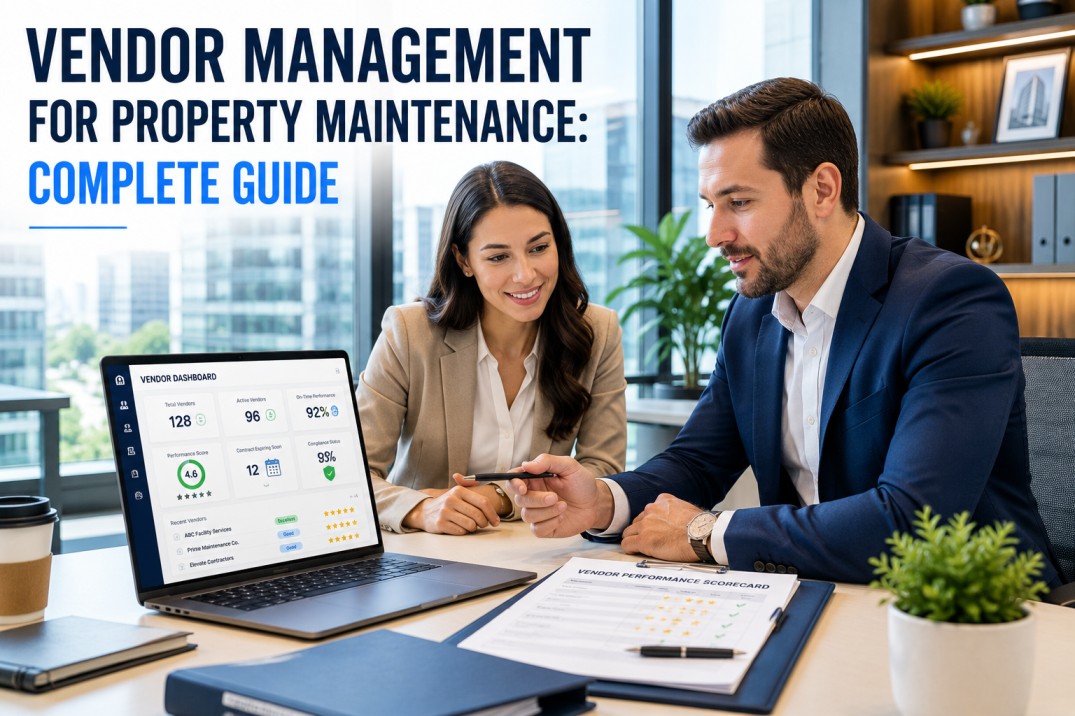
Vendor management is where multi-site portfolios save — or lose — millions per year. Centralized vendor contracts unlock pricing leverage, while local dispatch keeps response times sharp. This matrix shows how to split the decision.
| Vendor Category | Contract Owner | Dispatch Owner | SLA Standard |
|---|---|---|---|
| HVAC Service | Central | Local site | P1: 1hr · P2: 4hrs · P3: 24hrs |
| Elevator Maintenance | Central | Central dispatch | Entrapment: immediate · Other: 4hrs |
| Plumbing | Central | Local site | Emergency: 1hr · Routine: 24hrs |
| Janitorial / Cleaning | Central | Local site | Recurring schedule + same-day request |
| Landscaping | Regional | Local site | Seasonal schedule + 48-hour response |
| Pest Control | Central | Local site | Routine: monthly · Emergency: 24hrs |
| Specialty Trades | Local site | Local site | Per-project SOW & quote |
What Real Multi-Site Software Actually Looks Like
Most platforms claim multi-site support. Few deliver it. The difference becomes obvious the first time you try to onboard your fifth property and discover you're running five copies of a single-site tool. These are the four operational tests that separate genuine portfolio architecture from a login switcher.
One Login, Every Site
A regional manager added once should appear across every property they oversee — no separate admin accounts per site.
Portfolio-Level Dashboards
Aggregate KPIs across every site in one view, with one-click drill-down to individual property performance — no exports, no manual joins.
Hierarchical Asset Model
Portfolio → Region → Property → Unit → Asset. The same hierarchy should handle a high-rise tower and a flat warehouse without dual systems.
Standardized Templates Library
PM schedules, work order types, vendor scorecards, and inspection forms should clone from a central library to every new property in minutes.
Frequently Asked Questions
When should we move from decentralized to hybrid operations?
The clearest signal is around 8 properties — when consolidated reporting starts taking more than a day to compile and vendor pricing varies meaningfully between sites. At that point, the cost of decentralization (lost pricing leverage, fragmented data, slow reporting) consistently exceeds the cost of standardization.
How does iFactory handle different asset classes in the same portfolio?
Each property keeps asset-class-specific PM schedules, priority tiers, and vendor lists while sharing a single portfolio-wide reporting structure. A multifamily building and a Class-A office tower coexist in the same dashboard with their own rules, but with the same KPI vocabulary.
Can we onboard properties one at a time without disrupting existing operations?
Yes. Most portfolios roll out in waves — typically 3–5 properties per cycle. Properties already live aren't impacted by new additions, and standardized templates make each subsequent rollout faster than the last. Full portfolio onboarding typically takes 3–6 months depending on size.
How do we keep local site teams engaged when standardization increases?
Standardization works best when it removes administrative friction, not site judgment. Standardize intake formats, vendor onboarding, and reporting — but keep site managers in charge of dispatch decisions, tenant relationships, and on-site judgment. Role-based access prevents the platform from feeling like top-down surveillance.
What if our properties use different existing systems we can't replace?
iFactory integrates with major PMS, accounting, and access-control systems through two-way sync — so portfolio-wide reporting and standardization work even when individual sites are running different legacy tools. Consolidation can happen gradually as contracts renew, not as a forced cutover.
Bring Every Property Under One Operations Layer
Replace ten copies of spreadsheets with one portfolio-wide platform that handles standardization, vendor governance, and consolidated reporting — without forcing every site to look identical.