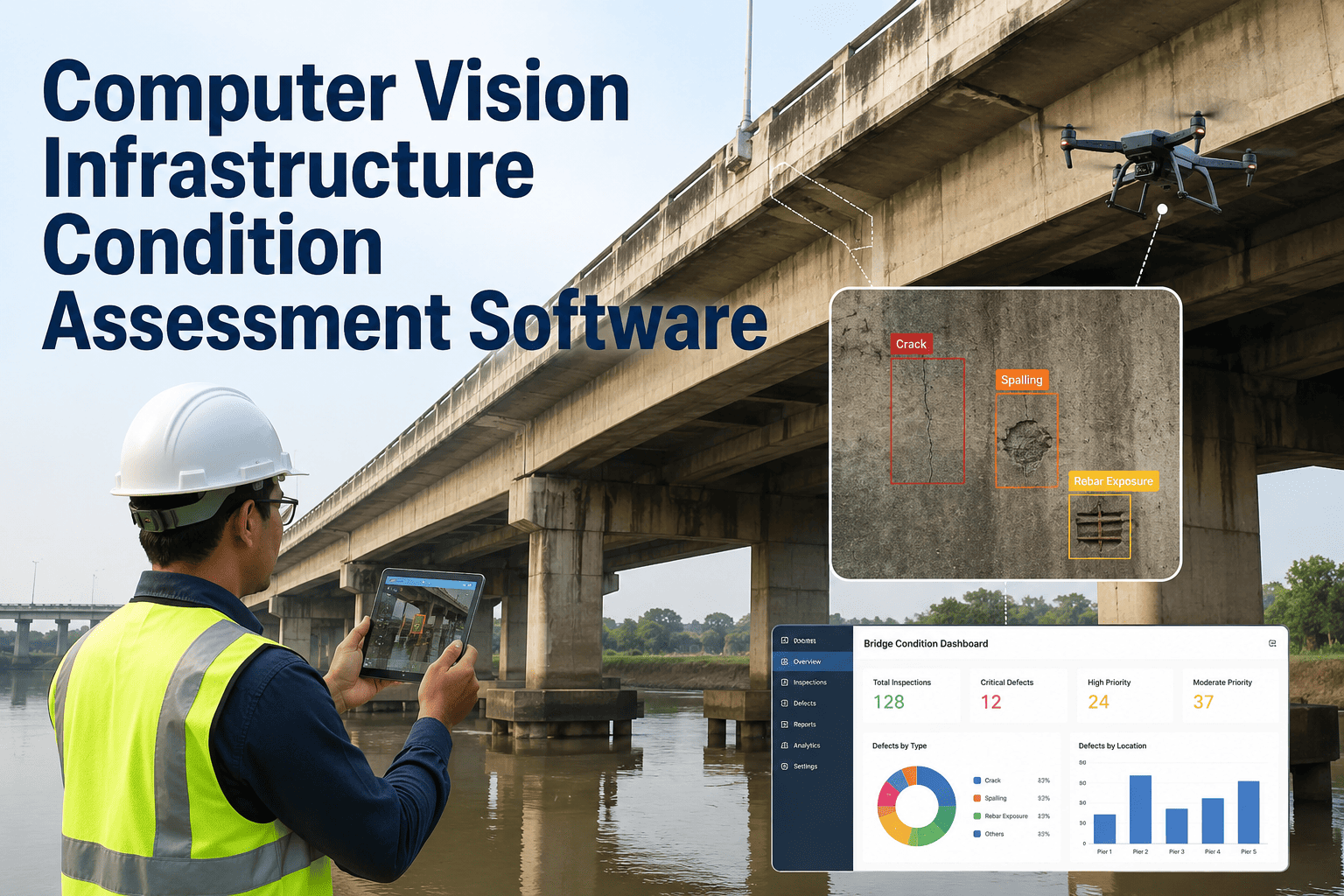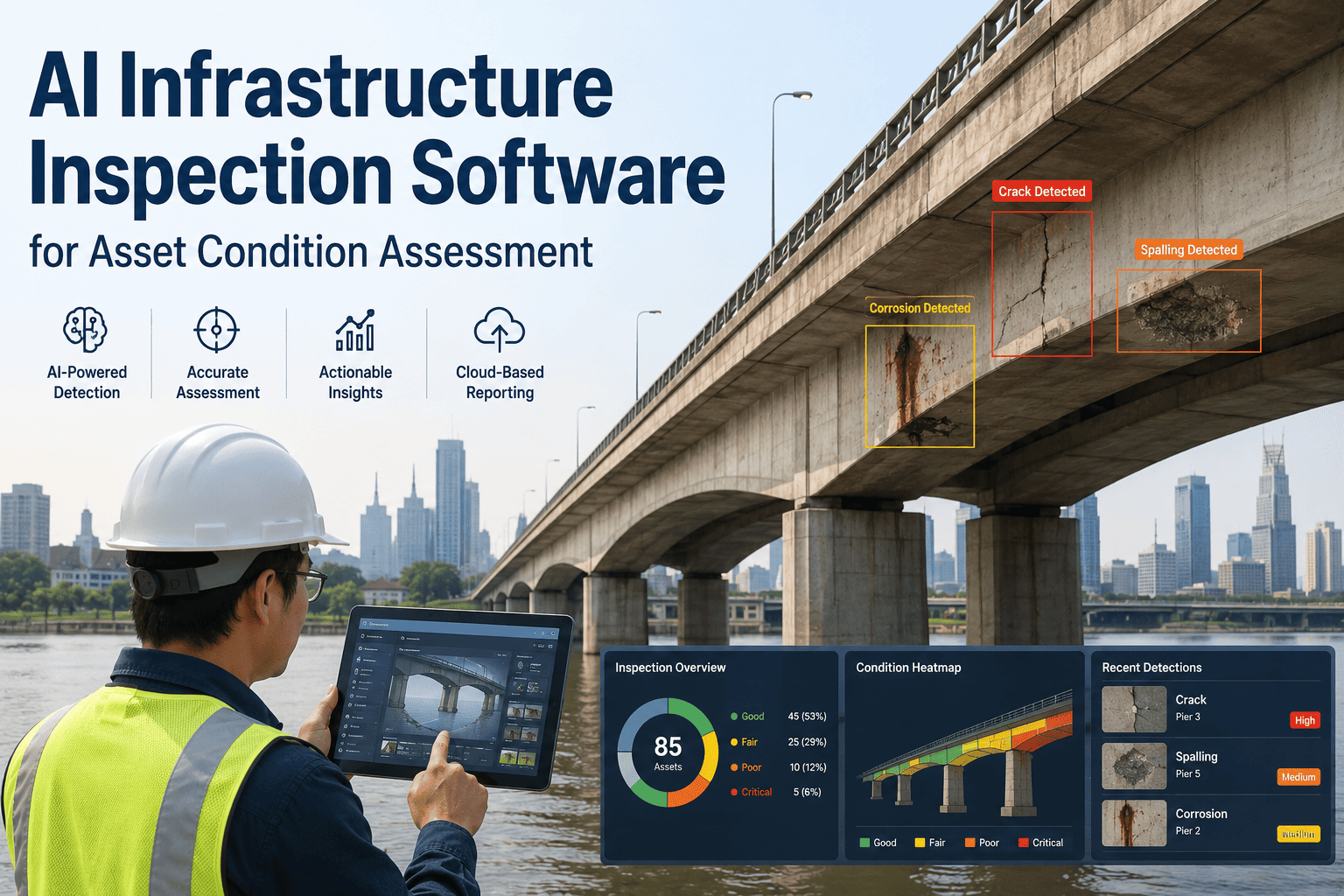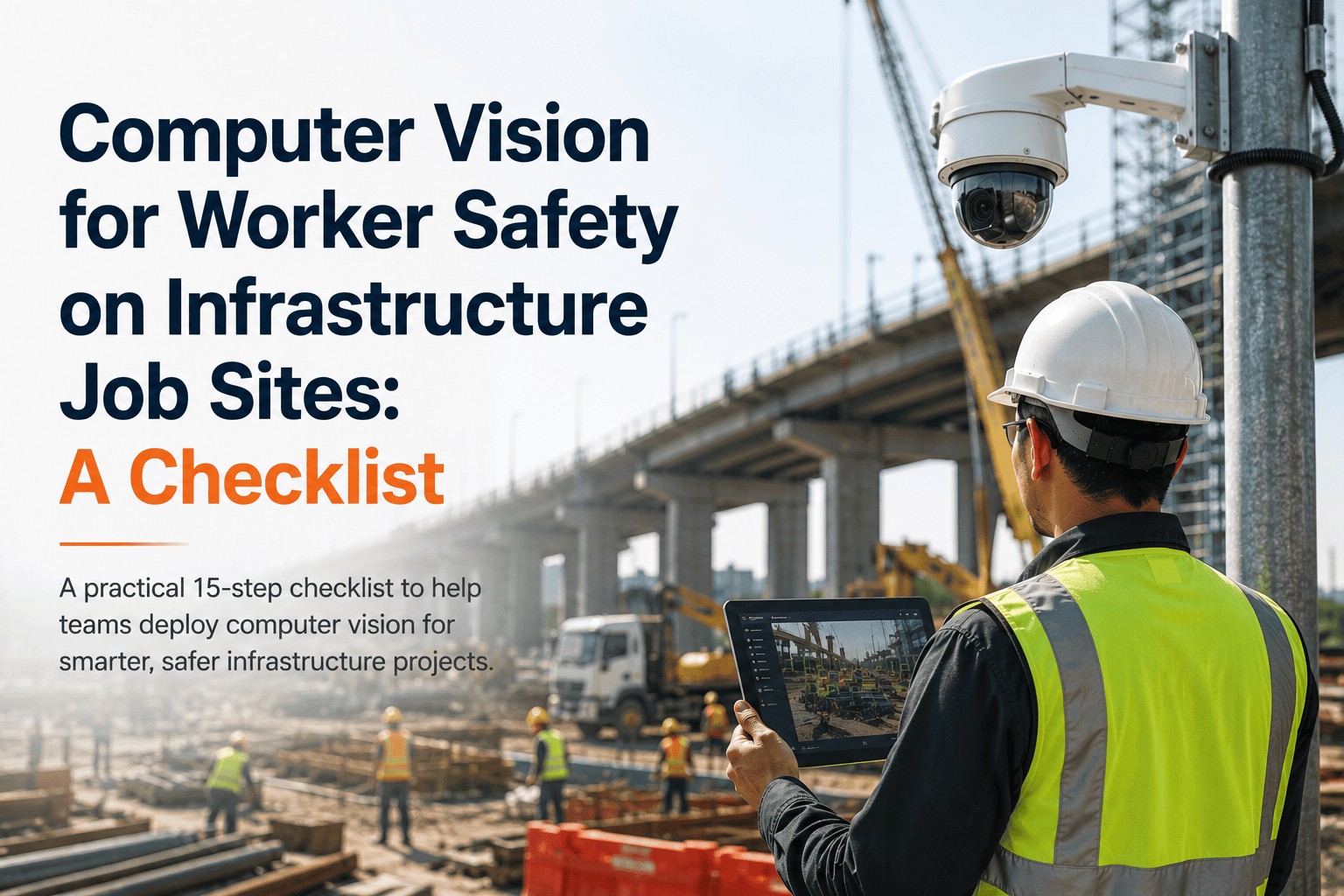
Deploying AI computer vision on civil infrastructure is not the same as installing it in a factory. Bridges, tunnels, and pipelines are remote, weather-exposed, structurally heterogeneous, and subject to strict public-safety regulations. Teams that skip even one of these 15 pre-deployment steps face costly rework, model retraining, or — worst of all — a live system that misses the defects it was built to catch. Use this checklist before a single camera goes up. Book a Demo to see how iFactory handles every item below out of the box.
The 15-Item Pre-Deployment Checklist
Organized into 5 deployment phases. Complete every phase in order — gaps in earlier phases compound into larger failures later.
Generic "find damage" instructions produce generic, low-accuracy models. AI computer vision on infrastructure must be trained on precise defect signatures: spalling, delamination, rebar corrosion, fatigue cracks, joint separation, or pipeline wall thinning. Undefined scope is the single most common reason pilots fail.
Civil infrastructure CV deployments span remote bridges, subterranean tunnels, and underwater pipeline segments — each with unique power availability, mounting constraints, and access requirements. Every deployment site must be surveyed before hardware procurement begins.
Without a documented pre-deployment baseline, there is no way to prove the ROI of your CV program to leadership or regulators. Capture current defect detection rates, inspection labor hours, emergency repair frequency, and missed-defect costs before the system goes live.
Generic CV models trained on manufacturing or retail data perform poorly on civil infrastructure — aged concrete, corroded steel, and spalled surfaces have very different visual signatures than defects in controlled environments. Your training dataset must include images from your specific asset type, geography, and age.
Annotation by non-specialists is one of the most common sources of AI model failure on infrastructure. A pixel-level difference between a fatigue crack and a construction joint matters enormously — one is a structural emergency, the other is normal. Structural engineers must review and approve annotation guidelines before labeling begins.
A model that performs well on training data but poorly on unseen images is a deployment risk, not an asset. Blind test validation must use images the model has never seen — collected from different days, lighting, and weather conditions than the training set — before any live deployment is approved.
Infrastructure conditions change with seasons, age, and environmental events. A model trained in summer will encounter different visual conditions in winter. Without a retraining protocol, model accuracy drifts silently — meaning your system may be missing defects months after go-live without anyone knowing.
Consumer or office-grade cameras fail rapidly in infrastructure environments. Bridges experience continuous vibration, wind loads, and UV exposure. Tunnels require low-light performance. Pipelines need IP68-rated weatherproofing. Hardware selection that ignores these conditions produces cameras that are offline within 6 months.
Remote infrastructure rarely has reliable broadband. A CV system that depends on cloud inference for every frame will fail the moment connectivity drops — which, on a rural bridge or a mountain tunnel, is routine. Edge compute at the asset location enables sub-5-second real-time detection with no cloud dependency for critical alerts.
Civil infrastructure spans geographies that mix urban broadband, rural LTE, and dead-zone locations. Your connectivity plan must address every tier. LoRaWAN or NB-IoT for telemetry, LTE/5G for video frames, and encrypted VPN tunnels for cloud sync — each site may require a different approach.
A CV system that flags a defect but cannot automatically route it to a work order creates a dangerous gap: someone must manually monitor the alert feed and act. End-to-end integration from detection to dispatched work order must be configured and tested before go-live — the speed of response depends on it.
A detection without location context is nearly useless in the field. "Crack detected" tells an engineer nothing — "fatigue crack detected at pier 3 north face, 2.3m above waterline" gives them everything. Every CV detection must be spatially indexed to a verified location reference in your asset's digital model or coordinate system.
AI does not replace the inspector — it changes what they do. Field teams must understand how to interpret CV alerts, confirm or reject detections, and feed outcomes back into the model. Undertrained teams produce poor feedback loops, degrading model accuracy over time instead of improving it.
Public infrastructure AI systems are subject to FHWA, PHMSA, and state-level data retention requirements. Every image, every detection, every alert, and every field confirmation must be timestamped, immutably stored, and accessible for regulatory audit. A system without a data governance policy is a compliance liability from day one.
Fully autonomous CV systems on safety-critical infrastructure are neither technically reliable enough nor regulatorily acceptable as sole decision-makers. Seattle's 2025 AI deployment framework and FHWA guidance both mandate a human-in-the-loop review for all high-severity structural findings. Define this protocol before go-live — not after a missed detection becomes a liability.
Pre-Deployment Readiness at a Glance
Every phase must be complete before the next begins. Use this as your executive sign-off summary.