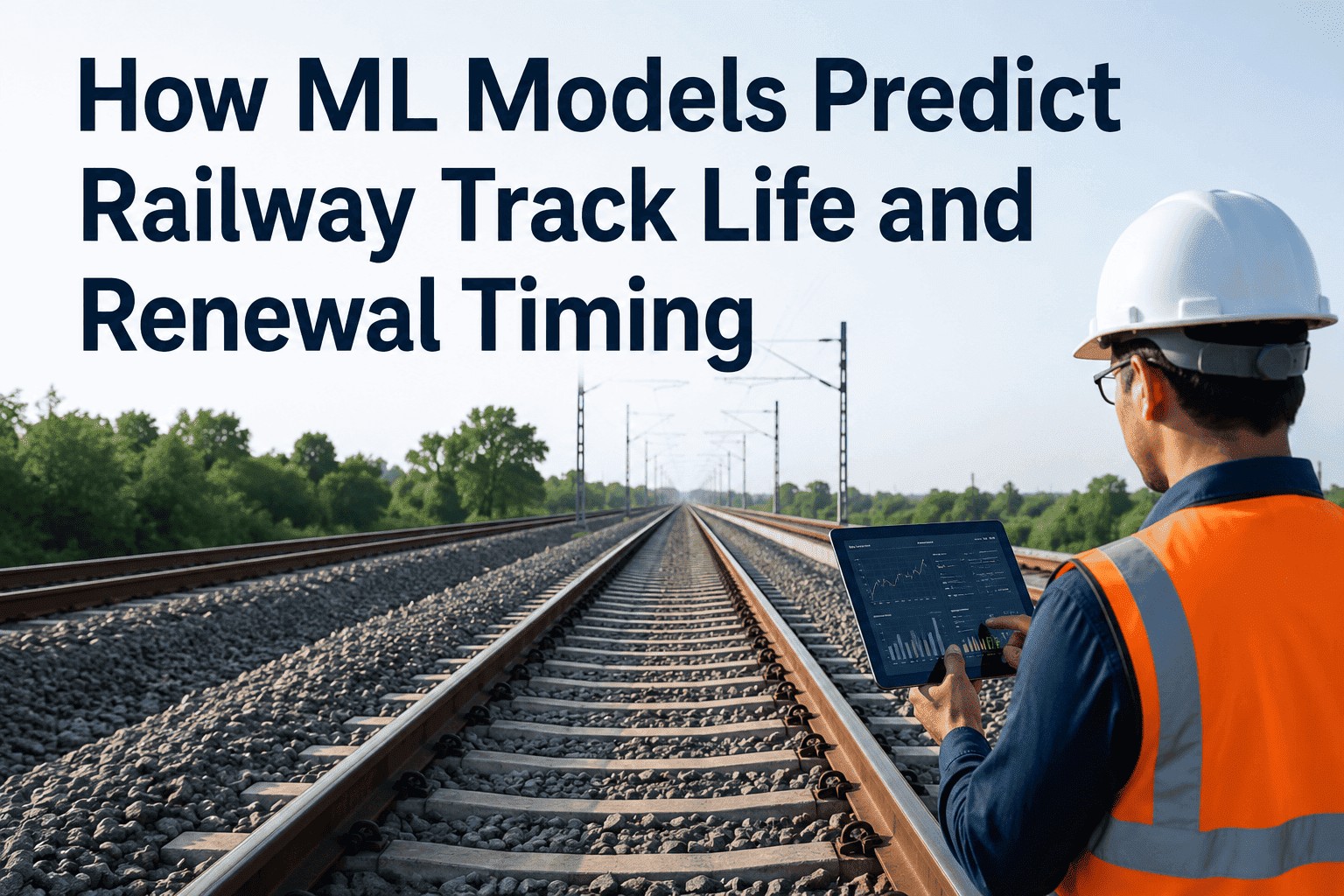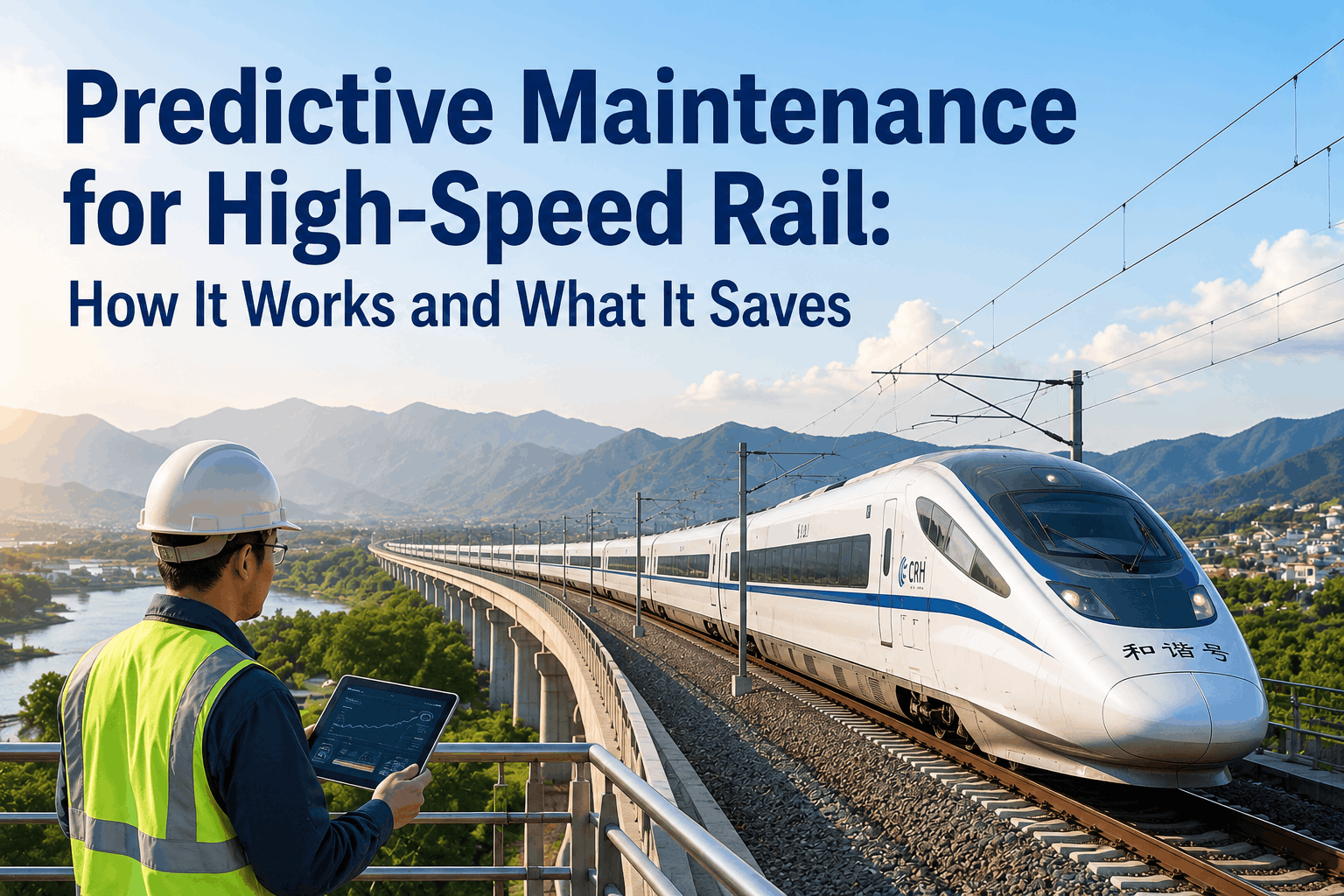
For high-speed rail (HSR) operators, maintenance isn't just about reliability—it's about managing the "Speed-Wear Multiplier." At velocities exceeding 250km/h, track geometry deviations that would be negligible on freight lines become catastrophic safety risks. This is compounded by "The Aerodynamic Lift Paradox," where the intense air pressure generated by the train's nose can mask structural vibrations, requiring specialized high-frequency filtering. Traditional time-based maintenance is fundamentally incapable of keeping pace with the exponential degradation curves of high-speed corridors. Predictive maintenance for high-speed rail utilizes machine learning and real-time sensor fusion to intercept failures before they manifest as speed restrictions or service halts. iFactory’s AI-powered platform provides the precision required for 300km/h operations, identifying microscopic rail fatigue and catenary sag in real-time. By digitizing the "Dynamic Signature" of the corridor, we transform HSR from a high-maintenance burden into a lean, predictable asset. Book a Comprehensive HSR Audit to secure your high-speed reliability.
Digitize Your High-Speed Network & Eliminate Speed Restrictions
Deploy AI-powered vibrational analysis and thermal catenary mapping to ensure 100% uptime at 300km/h across your entire HSR corridor.
The Engineering Reality of 300km/h Predictive Analytics
High-speed rail operates in a "Precision Envelope" where tolerances are measured in millimeters. HSR Infrastructure Analytics identifies the subtle vibrational shifts that precede a bearing failure or a track geometry shift. This predictive maintenance guide reveals how digital oversight allows for "Just-in-Time" interventions, ensuring that high-speed rail repair happens during scheduled night-windows, avoiding the massive economic impact of daytime service disruptions. We utilize "Physics-Informed Neural Networks" (PINNs) to validate AI predictions against structural engineering laws, ensuring that every maintenance alert is backed by both data and science. Schedule a Demo to see HSR dynamic monitoring in action.
Effective HSR health monitoring requires high-frequency data ingestion from axle-box accelerometers and OHE-mounted cameras. iFactory processes these multi-terabyte datasets using Long Short-Term Memory (LSTM) networks to predict the "Remaining Useful Life" (RUL) of critical components. By digitizing HSR condition assessment, operators can shift from a 2,000km inspection cycle to a condition-based model, reducing manual labor costs by over 45% while simultaneously improving the network's safety profile. This transition also eliminates the "Human Inspection Risk," where subtle fatigue markers are missed by the naked eye during standard track walks.
The Four Failure Vectors of High-Speed Rail
HSR systems face unique aerodynamic and mechanical stresses. iFactory HSR predictive inspection telemetry monitors for the four primary vectors of speed-induced decay. Book a Lifecycle Review.
Dynamic Track Geometry Drift (TQI)
At high speeds, minor rail misalignment causes "hunting" oscillations. AI-vibrational analysis identifies these shifts ($35k/km in prevented grinding cost) before they impact passenger comfort or derailment safety.
Catenary Wave Dynamics & Contact Loss
Pantograph-wire interaction at 300km/h creates physical waves in the contact wire. AI-thermal cameras identify "Hard Spots" and arcing that lead to catenary failure and power loss.
Rolling Stock Bearing Thermal Runaway
HSR axle bearings operate at extreme RPMs. Acoustic and thermal sensors identify "Hot Box" precursors weeks in advance, allowing for bearing replacement before a catastrophic melt-down occurs.
Tunnel Aerodynamic Pressure-Pulse Fatigue
Train-tunnel entry creates massive pressure pulses that stress structural liners. iFactory’s structural health monitoring (SHM) tracks liner fatigue cracks with sub-millimeter precision.
HSR Predictive ROI: The Economics of Speed
The economic impact of HSR lifecycle management is driven by service density. Shifting from reactive to predictive monitoring saves millions by eliminating the "Ripple Effect" of HSR delays.
| Maintenance Strategy | Avg. Inspection Cycle | Service Availability | Emergency Response Cost | Passenger Delay Fines | Est. 10-Year OPEX Save |
|---|---|---|---|---|---|
| Reactive "Hard Failure" | Post-Incident | 88% | $500k / Event | $2M+ / Year | $0.0M (Baseline) |
| Time-Based PM | Every 2,000km | 92% | $150k / Event | $800k / Year | $18.5M (Labor Heavy) |
| AI-Driven Predictive | Condition-Based | 99.6% | Zero | <$50k / Year | $42.8M (Optimized) |
| Full Network Sync | 24/7 Digital Twin | 99.9% | Zero | Zero | $55.2M (Maximum Yield) |
Utilizing an HSR PM schedule backed by machine learning allows for "Opportunistic Maintenance," where repairs are performed during low-density windows, effectively eliminating the cost of unplanned downtime.
The HSR Predictive Maturity Curve
High-speed rail Analytics ROI scales with the sophistication of your data capture. Transitioning from Level 1 to Level 5 reduces your network-wide renewal budget by 72%.
| Maturity Level | Technical Capability | Economic Capture | Typical Environment |
|---|---|---|---|
| Level 1 — Visual Patrol | Manual track-walks at night | 10–15% | Low-density HSR lines |
| Level 2 — Geometry Cars | Scheduled monthly test trains | 35–45% | Mainline HSR trunk lines |
| Level 3 — In-Service Monitoring | Sensors on regular passenger trains | 60–75% | Modern HSR networks (Japan/France) |
| Level 4 — Full Predictive AI | LSTM/CNN automated fault detection | 85–94% | Industry 4.0 Digital Rail Hubs |
| Level 5 — Self-Healing HSR | Automated robotic maintenance workflows | 95–99% | Future Autonomous Mobility Corridors |
A Word from the Chief Technical Officer
The implementation of iFactory’s predictive engine has redefined how we view infrastructure stability and passenger safety.
"Managing a 500km high-speed network meant we were constantly chasing ghost failures. We’d see a vibrational spike and have to slow down 50 trains while a crew went out to find nothing. With iFactory’s predictive platform, we’ve eliminated the 'Guesswork Delay.' We now know exactly where the rail-head is fatiguing weeks before it reaches a critical threshold. We’ve seen a 30% reduction in total maintenance labor and, more importantly, our 'Arrival on Time' KPI has hit a record 99.8%. It’s not just maintenance; it’s the operating system for the future of high-speed travel."
CTO, National High-Speed Rail Authority
Frequently Asked Questions
Below are the most common questions from HSR directors regarding predictive rail Analytics.
How does the AI account for the dynamic forces at 300km/h?
Our models are trained on high-frequency (10kHz+) accelerometer data that captures the non-linear forces of high-speed travel. We use 'Physics-Informed Neural Networks' (PINNs) that combine structural engineering principles with raw data to differentiate between normal high-speed vibration and anomaly-driven fatigue.
Can you detect catenary issues without stopping the train?
Yes. iFactory utilizes high-speed vision sensors mounted on regular in-service passenger trains. These cameras capture 500 frames per second, allowing the AI to analyze wire stagger and pantograph contact force at full operational speed with zero disruption.
How does predictive maintenance impact the environmental footprint of HSR?
By extending the lifespan of rails and wheels by up to 25%, we significantly reduce the carbon-intensive manufacturing and logistics associated with steel replacement. Additionally, smoother track geometry reduces rolling resistance, lowering traction energy consumption by 3–5%.
What data security protocols are in place for national infrastructure?
We utilize end-to-end AES-256 encryption and offer on-premise or sovereign cloud deployment options to meet the strict security mandates of national rail authorities. All data is processed within a secure perimeter with full role-based access control (RBAC).
How long does it take to deploy the system across an existing network?
A typical 200km corridor baseline can be established in 60 days. This includes sensor installation on pilot trains, data backhaul configuration, and the initial AI model calibration against your historical maintenance logs.
Ready to Secure the Future of High-Speed Rail?
Quantify the dynamic fatigue on your corridor and find out how much lifecycle extension you can achieve with iFactory Predictive Analytics.