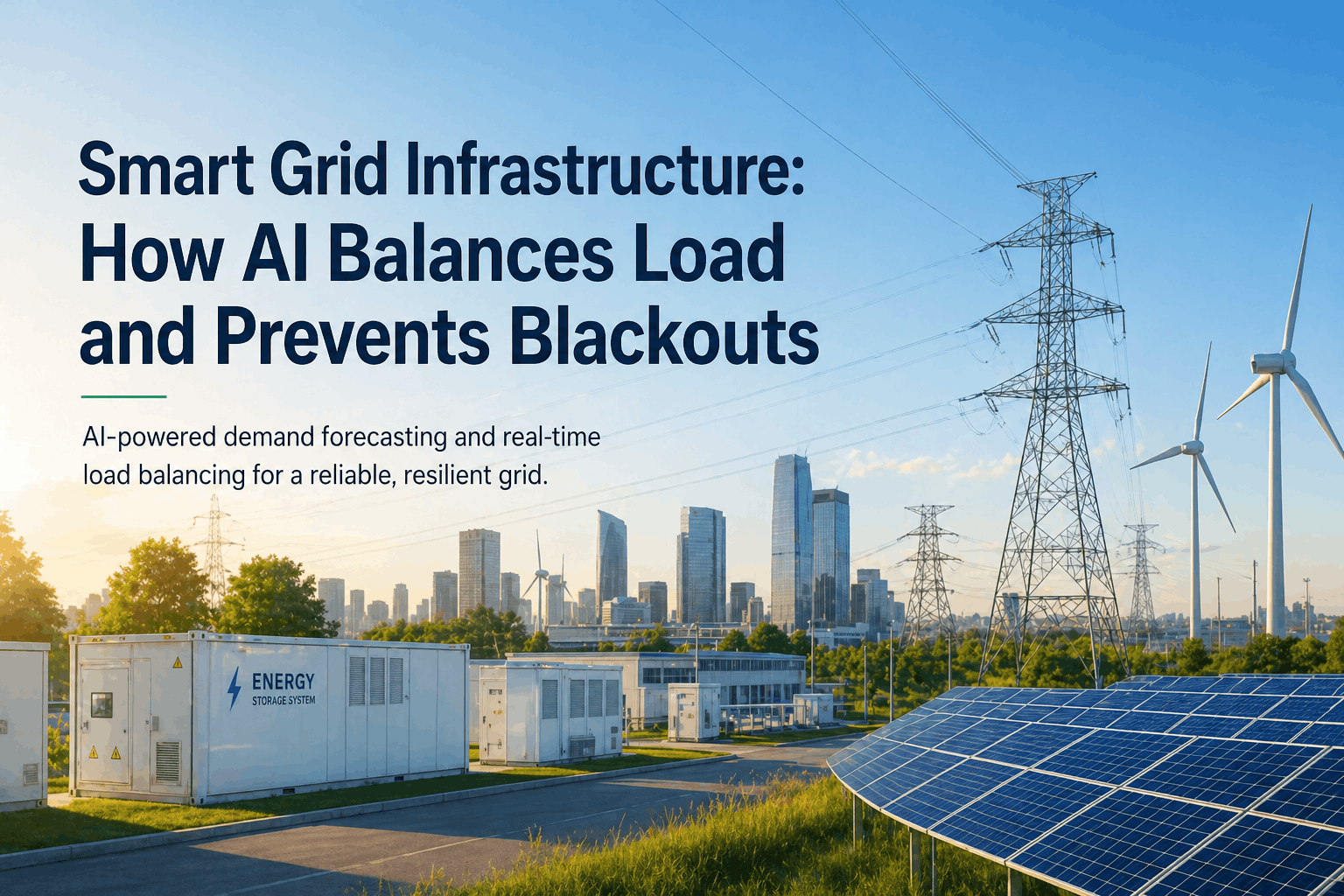
The global transition toward decentralized renewable energy and electric mobility has pushed traditional electrical grids to their structural limits. For utility operators and grid managers, the era of manual load management is over. Smart Grid Infrastructure, powered by real-time Artificial Intelligence, is now the only viable solution for maintaining stability in a high-complexity energy landscape. By utilizing AI load balancing and predictive demand forecasting, modern grids can now anticipate peak surges, integrate volatile solar and wind inputs, and execute sub-millisecond response protocols to prevent cascading blackouts. This intelligent orchestration doesn't just keep the lights on; it optimizes the entire energy value chain for maximum efficiency and sustainability. Schedule a demo to see iFactory's smart grid control center.
The AI Revolution in Grid Stability
Traditional grids were designed for one-way flow: from massive central power plants to passive consumers. Today's smart grid must handle two-way flows from millions of residential solar arrays, fluctuating EV charging loads, and industrial battery storage. Machine Learning (ML) algorithms are the "brain" of this system, processing data from smart meters and synchrophasors to predict demand with 99% accuracy. This allows for dynamic load balancing, where the system automatically shifts consumption patterns or activates storage reserves to match the instantaneous supply-demand curve.
Core AI Capabilities for Smart Infrastructure
Smart Grid Orchestration: The AI Feedback Loop
Managing a modern grid requires a continuous loop of data ingestion, predictive modeling, and automated actuation. iFactory's platform monitors four Critical Tracking Events (CTEs) across the energy lifecycle:
Multi-Source Supply Ingestion
AI monitors output from utility-scale solar, wind farms, and traditional thermal plants. It correlates weather data with astronomical positioning to predict renewable "dips" hours in advance, allowing for the strategic scheduling of backup reserves.
Edge-Based Consumption Analytics
Smart meters at the residential and industrial levels provide granular Key Data Elements (KDEs) on consumption patterns. iFactory analyzes these KDEs to identify non-critical loads (like EV chargers or HVAC units) that can be throttled during peak surges. Book a demo to see our edge-AI modules.
Neural Network Frequency Regulation
System frequency is the "pulse" of the grid. If it deviates by even 1%, generators can trip. iFactory's AI uses Reinforcement Learning to adjust battery storage discharge rates in real-time, keeping the grid at a rock-solid 50Hz/60Hz.
Self-Healing Fault Isolation
When a physical fault occurs (e.g., a tree limb hitting a line), the AI instantly identifies the anomaly and reroutes energy flows through redundant paths—preventing the "cascade" that traditionally leads to city-wide blackouts.
The "Duck Curve" Challenge: Flattended by AI
One of the most difficult challenges for modern utilities is the "Duck Curve"—the massive drop in net load during the day (due to solar) followed by a sharp spike at sunset. iFactory's predictive analytics infrastructure solves this by intelligently shifting demand to mid-day and pre-charging storage reserves.
- Solar & Wind Output
- Grid Battery Storage
- Legacy Base Load
- Load Prediction
- Frequency Balancing
- Automated Curtailment
- Industrial Operations
- EV Charging Hubs
- Residential Smart Hubs
AI Load Balancing vs. Traditional Load Management
| Feature | Traditional Management | iFactory AI Smart Grid |
|---|---|---|
| Response Speed | Minutes (Manual Dispatch) | Sub-100ms (Automated) |
| Data Granularity | Substation Level | Individual Asset Level |
| Renewable Handling | Limited / Curtailed | Optimized / Maximized |
| Demand Response | Static / Calendar-Based | Dynamic / Price-Driven |
| Failure Recovery | Reactive Truck-Rolls | Self-Healing Rerouting |
The Strategic ROI of Grid Intelligence
Investing in smart infrastructure management delivers ROI across three critical metrics: reduced energy procurement costs, lowered operational overhead, and eliminated economic losses from outages. Talk to our grid specialists for a custom ROI projection.
A regional grid operator integrated iFactory's machine learning maintenance and load balancing modules to manage a sudden 200% increase in wind power capacity. The AI model successfully integrated the volatile supply while reducing peak-hour energy purchasing costs by 22%. Most importantly, during a major substation failure, the AI rerouted power in 140ms, preventing a blackout that would have affected 45,000 households.
Roadmap to an Autonomous Smart Grid
System Audit & Digital Twin Creation
We map the entire grid topology—from high-voltage transmission lines to neighborhood transformers—creating a high-fidelity digital twin. Request a grid audit.
IoT & Phasor Measurement Deployment
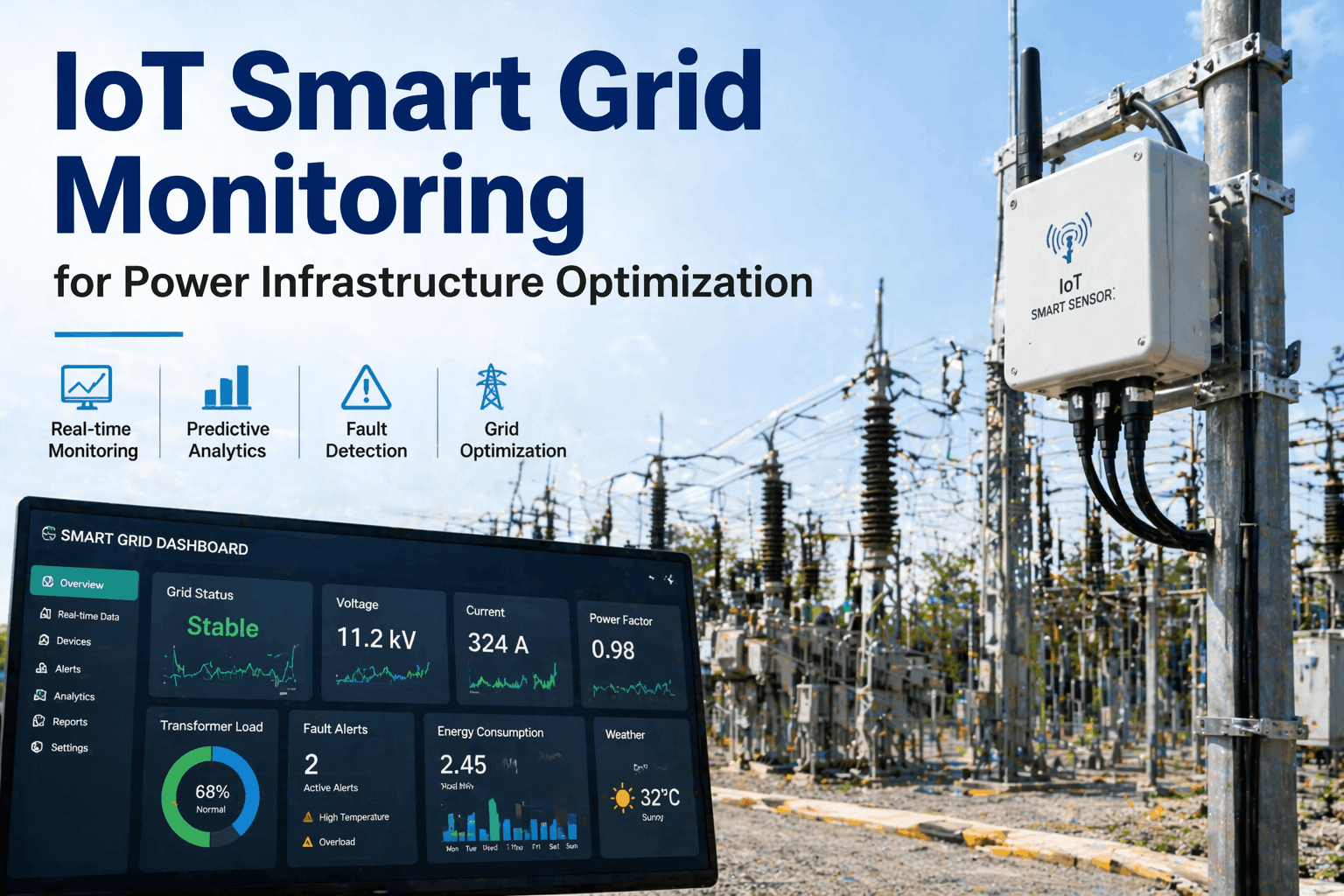
Installation of high-frequency PMUs and edge sensors at critical substations to capture real-time phase and voltage data for the AI engine.
Predictive Model Training
The AI ingests multi-year weather, demand, and outage data to learn the unique "signature" of your regional energy market and climatic load factors.
Autonomous Balancing Activation
Deployment of closed-loop control systems that allow the AI to execute load shedding, storage activation, and voltage regulation without manual intervention.
"iFactory's smart grid platform has completely changed our relationship with our energy assets. We no longer just 'watch' the grid; the AI actively manages it. Our outage hours have dropped by 85% and we are now successfully integrating twice as much solar energy as our legacy systems could handle."
Frequently Asked Questions: AI & Smart Grids
How does AI prevent blackouts?
AI prevents blackouts by detecting frequency anomalies and voltage drops in real-time. It can instantly isolate a failing line or activate battery storage to stabilize the grid before a local problem becomes a cascading disaster.
Is the smart grid vulnerable to cyber-attacks?
iFactory utilizes enterprise-grade cybersecurity infrastructure and AI-driven anomaly detection to identify and block unauthorized access attempts at the edge, before they can affect the core grid control system.
What is "Peak Shaving" and how does AI do it?
Peak shaving is the process of reducing load during maximum demand. AI does this by automatically pausing non-critical loads (like EV charging) and releasing energy from storage systems when demand is highest.
Can this system handle variable renewable energy?
Yes. AI is the only way to manage the volatility of solar and wind. By predicting cloud cover and wind speeds, it can ramp other sources up or down to ensure a constant supply.
What hardware is required for implementation?
The system requires smart meters, Phasor Measurement Units (PMUs) at substations, and edge-computing nodes to process data locally for millisecond-speed response.
How does AI improve grid maintenance?
Through predictive analytics infrastructure, the system identifies transformers or lines that are showing signs of thermal stress, allowing for repair before they explode or fail.
Is the system compatible with legacy substations?
Yes. We use specialized IoT gateways to bridge the gap between traditional analog hardware and our digital AI platform, providing modern intelligence to 30-year-old assets.
What is the typical ROI timeline?
Most utilities see a positive ROI within 18-24 months through reduced peak energy costs, fewer service truck dispatches, and lower regulatory fines for outages.