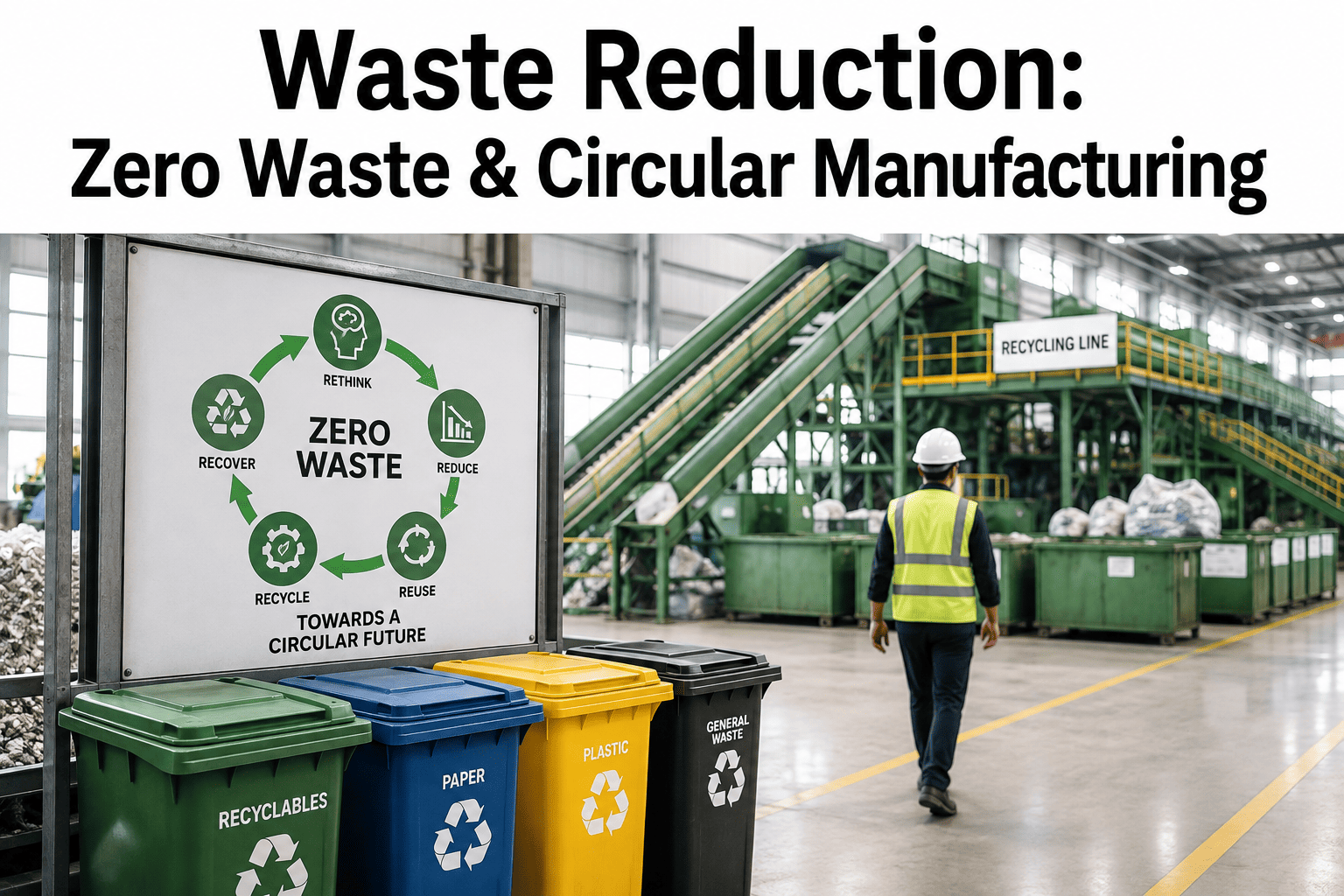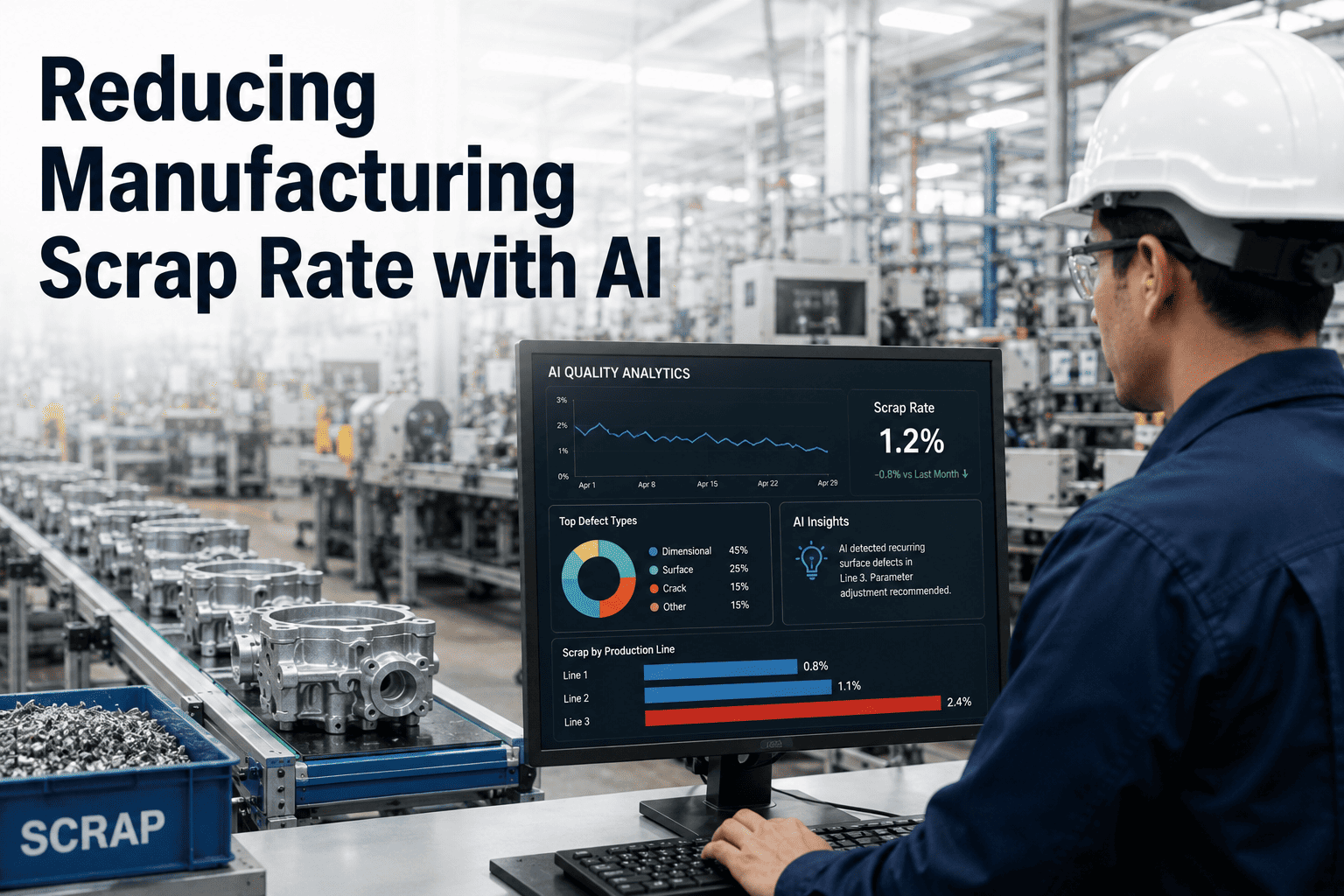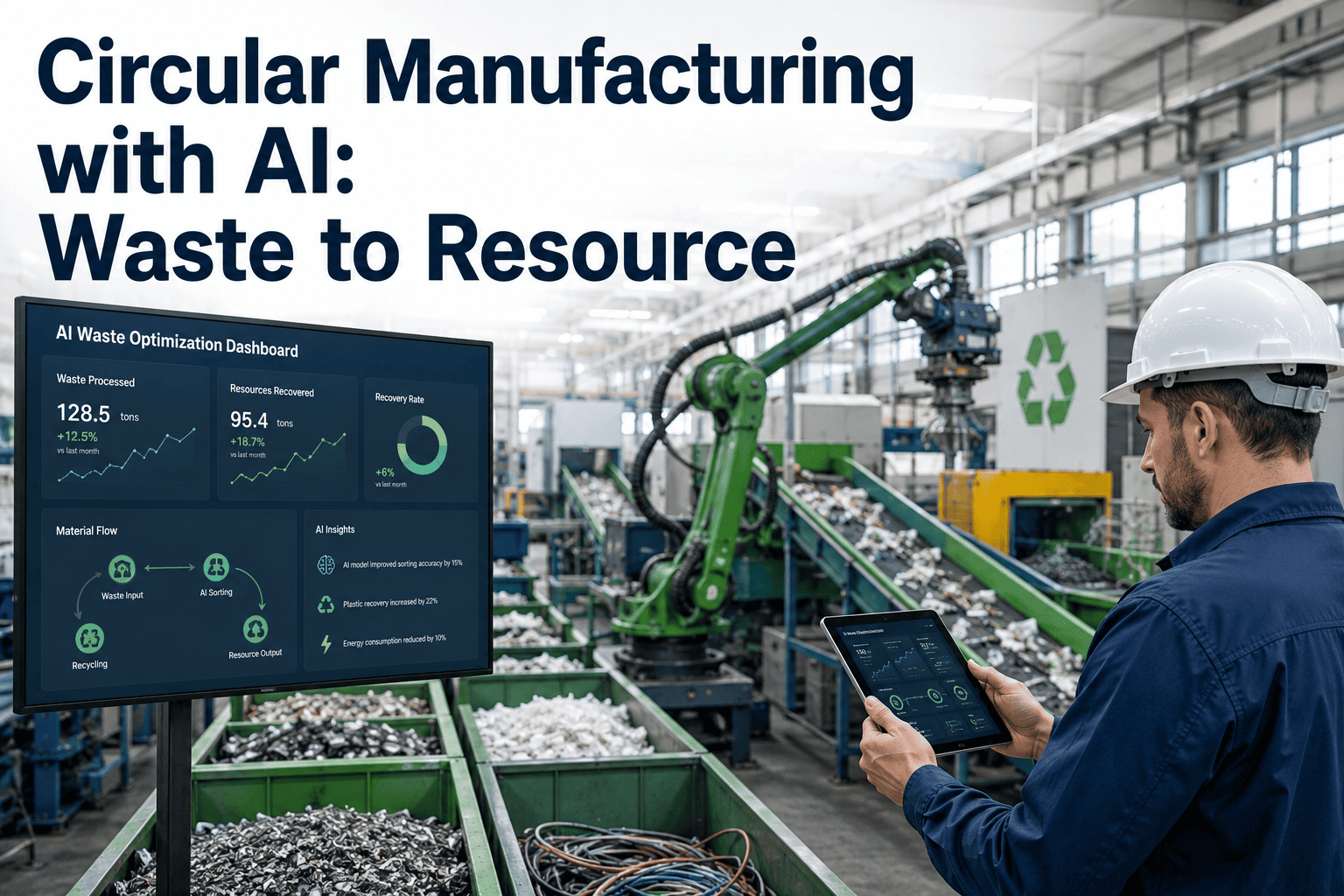
A sustainability lead building the case for circular manufacturing already knows the hardest part is not convincing leadership that linear take-make-waste is unsustainable, it is proving that a circular alternative can run at production scale without slowing the line down or adding cost nobody budgeted for. Scrap sorting by hand is slow and inconsistent, byproduct streams get treated as waste because nobody tracked what they could actually be worth, and reuse cycles that looked good on a sustainability slide often stall the moment operations has to fit them into an already tight schedule. The gap between the circular economy pitch and the circular economy reality is almost always an operational one. iFactory applies AI to scrap classification, byproduct routing, and material recovery tracking so circularity becomes something the plant floor can actually execute on shift after shift, and you can book a demo to see how it maps against your own material flows.
Linear Take-Make-Waste Is Over — The Hard Part Is Making Circular Work at Production Speed
iFactory applies AI classification and routing to scrap, byproducts, and reuse streams, turning circular manufacturing from a sustainability slide into an operational process the plant floor can run every shift.
Four Stages Turn a Linear Material Flow Into a Closed Loop
Circular manufacturing is not a single initiative, it is a loop with four distinct stages, and a gap at any one stage breaks the entire cycle back into a linear waste stream.
Generate
Scrap and byproducts are created as a normal part of the production process, whether metal offcuts, chemical residues, or off-spec product.
Classify
Each stream is sorted and graded by material composition, purity, and condition to determine its viable next use.
Route
Classified material is directed to the highest-value path available: direct reuse, internal reprocessing, or external buyer.
Reintegrate
Recovered material re-enters production or a partner's supply chain, closing the loop instead of exiting it as waste.
Scrap Classification Is the Bottleneck That Keeps Most Circular Programs From Scaling Past a Pilot
Manual scrap sorting works fine for a demonstration project handling a small, predictable stream, but it breaks down the moment volume and material variety increase. A sustainability lead trying to scale a pilot into a plant-wide program usually runs into the same three problems.
Inconsistent Grading
Different operators apply different judgment calls on borderline material, producing inconsistent output quality that downstream buyers or processes cannot rely on.
Line-Speed Mismatch
Manual sorting cannot keep pace with production line speed, forcing a choice between slowing the line or letting sortable material fall through to general waste.
No Volume Visibility
Without consistent classification data, nobody can accurately size a byproduct stream well enough to negotiate a reliable offtake agreement with a buyer.
A Circular Program That Cannot Scale Past a Pilot Never Actually Reduces Waste
iFactory applies AI classification at production line speed, so circularity works at the volume your plant actually generates.
What Changes When Byproduct Routing Becomes a Data-Driven Decision
| Material Handling Step | Linear Default Approach | AI-Driven Circular Approach |
|---|---|---|
| Scrap classification | Manual sorting, inconsistent across shifts and operators | Automated classification with consistent, auditable grading |
| Routing decision | Default to disposal or lowest-value bulk sale | Routed to highest-value path based on classified material properties |
| Byproduct valuation | Treated as a cost center with no tracked recovery value | Tracked as a revenue or cost-avoidance stream with quantified value |
| Offtake agreements | Difficult to negotiate without reliable volume and quality data | Supported by consistent volume and grade data buyers can rely on |
Byproducts Only Look Like Waste Because Nobody Has Measured What They Are Actually Worth
The single biggest mindset shift in a circular manufacturing program is treating byproduct streams as an asset with a measurable value rather than a disposal cost to be minimized. Most facilities have never actually quantified the volume, consistency, and material grade of their byproduct streams in enough detail to know what those streams could be worth to a buyer looking for exactly that input, which means potentially valuable material gets sold at scrap pricing or sent to disposal simply because nobody built the data case for a better outcome. Once classification data exists, a byproduct stream that was previously an unqualified cost line can often be repositioned as a qualified input for another process, either internally or through a partnership with an external buyer who specifically needs that material composition.
This reframing changes the internal conversation from asking how to reduce disposal cost to asking how to maximize recovered value, which tends to unlock far more ambitious circular initiatives than a purely cost-avoidance framing ever does.
What Sustainability Leads Report After Adding AI-Driven Circular Material Handling
Questions Sustainability Leads Ask About AI-Driven Circular Manufacturing
Turn Scrap and Byproducts Into a Tracked Value Stream Instead of an Unmeasured Cost
iFactory brings AI classification and routing to your material flows so circularity works at real production scale.