Lean manufacturing has long been the gold standard for operational excellence, relying on human observation and manual data collection to identify and eliminate waste. But in 2026, the game has changed. Artificial intelligence, specifically machine learning models trained on real-time sensor data, can now detect subtle patterns of inefficiency that even the most seasoned Black Belt might miss. This convergence of Lean principles with AI-driven analytics creates a new paradigm: Lean AI. By combining the structured methodology of DMAIC with the predictive power of neural networks, manufacturers can reduce downtime, optimize throughput, and achieve unprecedented levels of continuous improvement. The result is a factory floor where waste is not just reduced but anticipated and prevented before it occurs. For decision-makers looking to stay competitive, Book a Demo to see how this integration can transform your operations.
Eliminate Waste at Machine Speed
Traditional Lean is powerful. AI makes it predictive. Deploy 2026’s most advanced waste elimination strategy today.
The New Lean: Why AI is the Perfect Complement
Lean manufacturing is built on the relentless pursuit of eliminating muda (waste), mura (unevenness), and muri (overburden). Traditional tools like value stream mapping, 5S, and kaizen events rely heavily on human observation, which is inherently limited by attention span, bias, and the inability to process high-frequency data streams. AI, on the other hand, excels at pattern recognition across thousands of variables simultaneously. When applied to lean, AI can automatically classify machine states, predict breakdowns, and recommend optimal changeover sequences. This synergy allows lean practitioners to focus on strategic improvements while AI handles the heavy lifting of data analysis. In 2026, the most successful plants are those where AI augments every step of the DMAIC cycle—from Define to Control—making continuous improvement truly continuous.
How AI Transforms Each DMAIC Phase
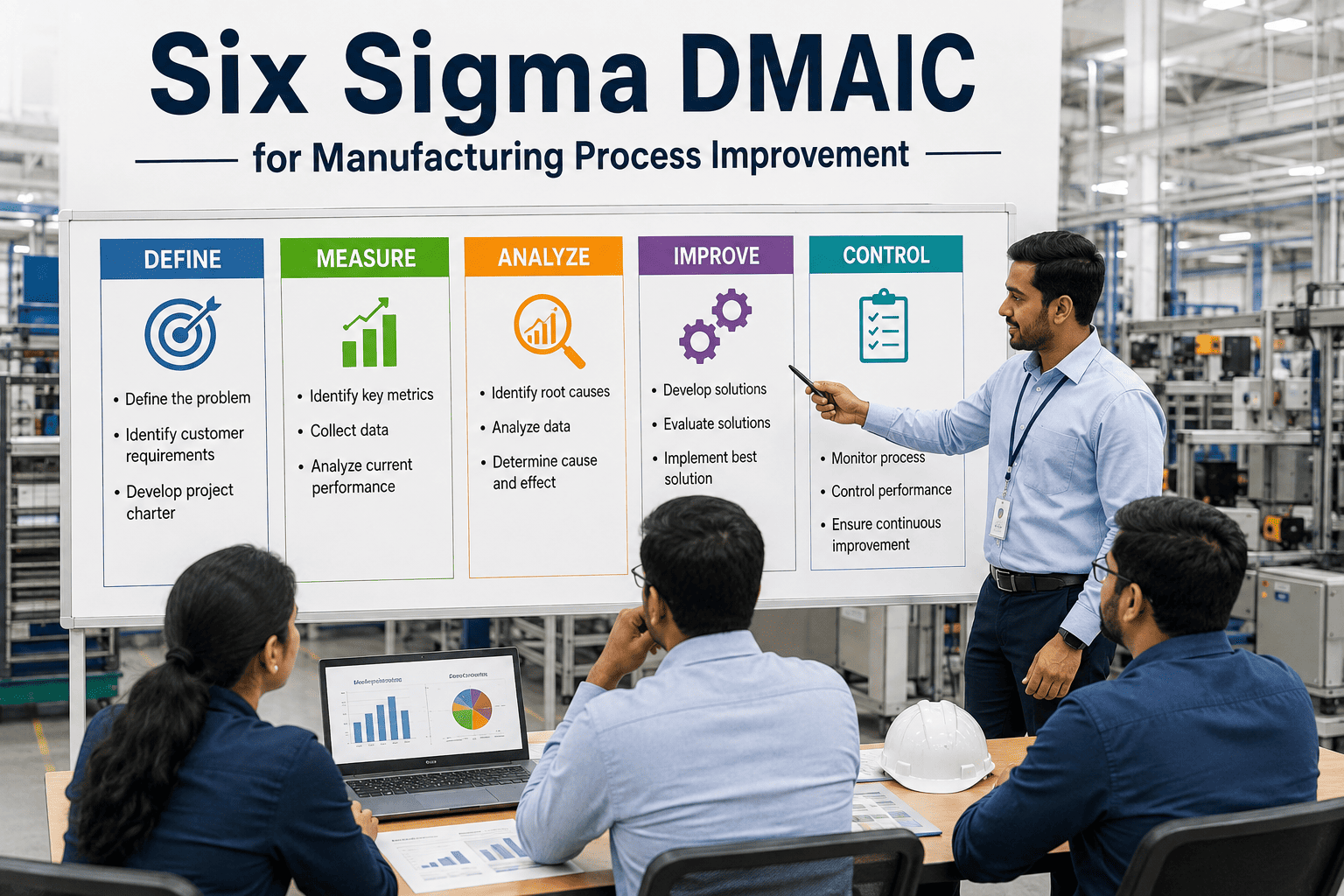
The DMAIC framework—Define, Measure, Analyze, Improve, Control—is the backbone of Six Sigma. AI injects speed and precision into each phase. During Define, natural language processing can analyze maintenance logs and operator notes to identify recurring issues. In Measure, AI models automatically validate sensor data and flag anomalies that would otherwise corrupt baseline metrics. The Analyze phase benefits from unsupervised learning algorithms that cluster failure modes without human bias. Improve becomes a playground for reinforcement learning, where AI simulates thousands of process adjustments to find the optimal settings. Finally, Control is enhanced by real-time monitoring dashboards that alert teams the moment a process drifts out of spec. This integration ensures that improvements are not only data-driven but also sustainable over time.
Real-Time Waste Detection
AI models trained on vibration, temperature, and pressure data can identify the early signs of equipment degradation, allowing maintenance to be performed just in time, eliminating both over-maintenance and under-maintenance waste.
Automated Kaizen Triggers
When AI detects a recurring defect pattern, it automatically initiates a kaizen event, providing the team with a pre-analyzed root cause hypothesis and recommended countermeasures.
Dynamic Standard Work
Machine learning algorithms adjust standard operating procedures in real time based on current machine health, operator skill level, and production priorities, reducing variability and improving quality.
Ready to Supercharge Your Lean Program?
Deploy AI that speaks the language of Lean. Book a demo to see how iFactory integrates with your existing DMAIC workflow.
Top 5 AI Use Cases for Lean Practitioners in 2026
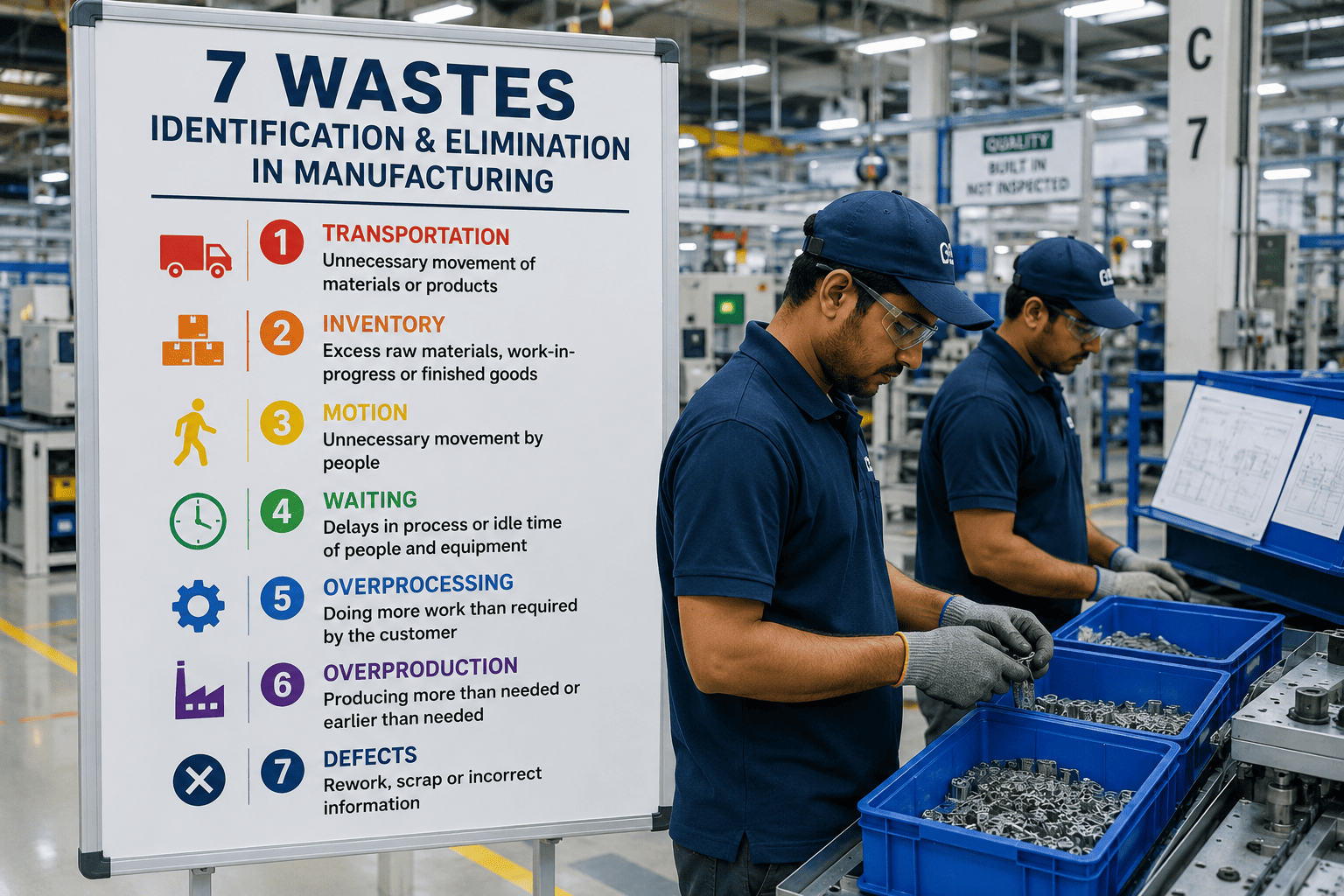
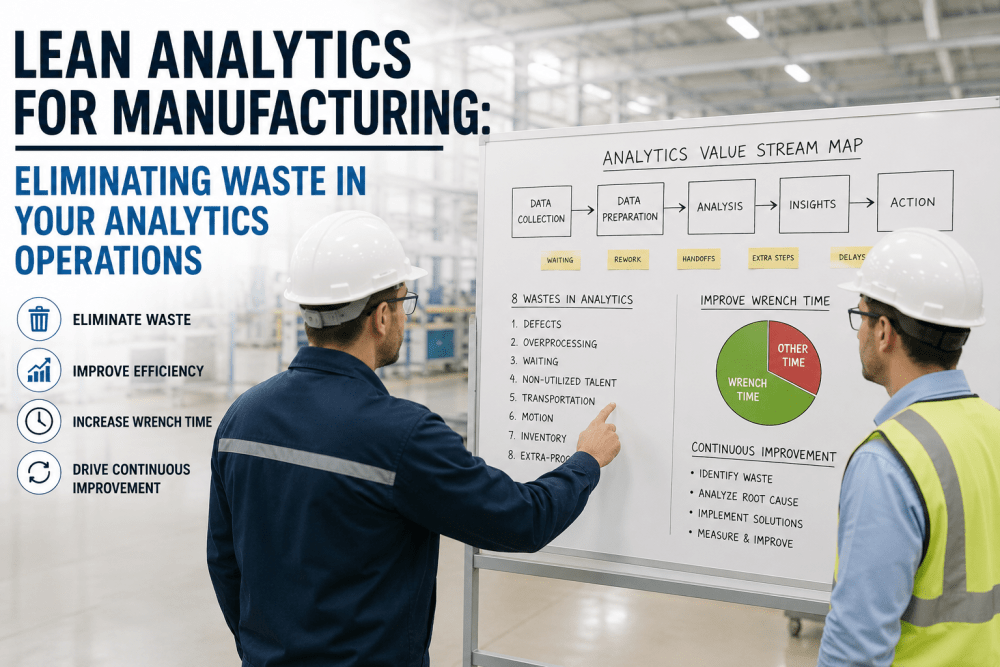
Based on our analysis of over 500 smart factory implementations, these are the most impactful applications of AI in a Lean environment. Each use case directly targets one or more of the seven wastes (overproduction, waiting, transport, overprocessing, inventory, motion, defects).
1. Predictive Quality Control
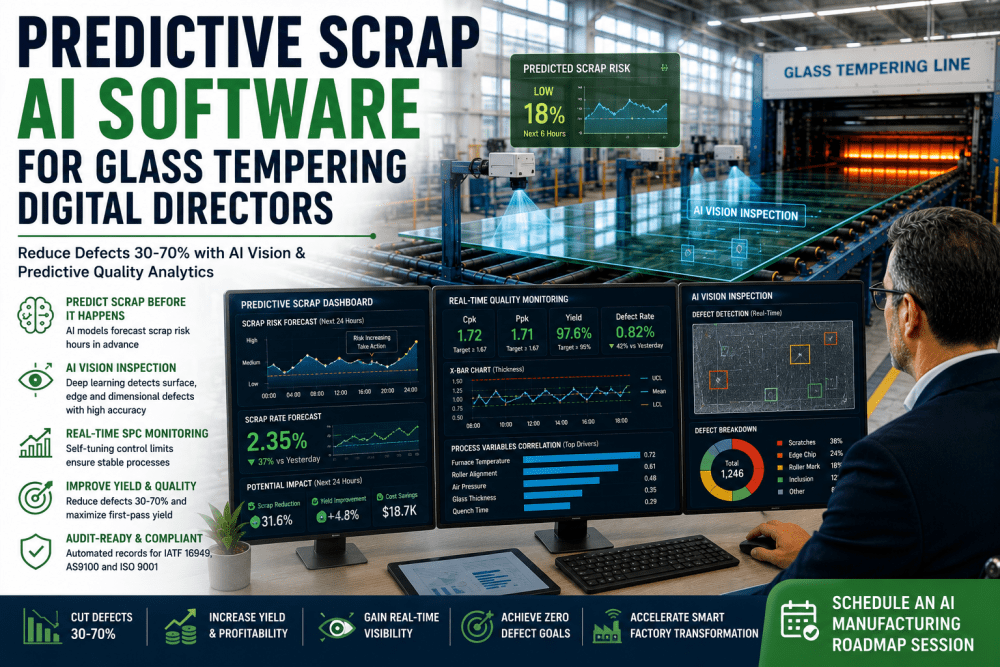
AI vision systems inspect products at full line speed, detecting micro-defects invisible to the human eye. This reduces defect waste and rework, directly improving First Pass Yield.
2. Intelligent Takt Time Optimization
Reinforcement learning models dynamically adjust line speed and resource allocation to match actual demand, reducing overproduction and waiting waste.
3. Automated Root Cause Analysis
When a defect occurs, AI instantly correlates sensor data from multiple machines to identify the root cause, eliminating hours of manual investigation.
4. Energy Waste Reduction
AI models optimize machine startup/shutdown schedules and process parameters to minimize energy consumption without affecting throughput.
5. Intelligent Inventory Management
Predictive algorithms forecast material requirements with high accuracy, reducing inventory waste and the associated carrying costs.
Technical Architecture: How AI Integrates with Lean Systems
Deploying AI in a Lean environment requires a robust data infrastructure. The architecture typically includes edge devices for real-time data collection, a data lake for storage, and a machine learning platform for model training and inference. Integration with existing MES (Manufacturing Execution Systems) and CMMS (Computerized Maintenance Management Systems) is critical. The AI layer sits on top of these systems, consuming data streams and outputting actionable insights directly to operator dashboards and Lean event boards. Data governance and model explainability are paramount, especially in regulated industries. The goal is not to replace human judgment but to provide decision support that is faster and more accurate than traditional manual analysis.
Edge Computing
Processes sensor data locally to reduce latency, enabling real-time anomaly detection without overwhelming central servers.
Digital Twin
Creates a virtual replica of the production line for simulation and what-if analysis, allowing Lean teams to test improvements before implementation.
ML Pipeline
Automated training and deployment of models ensures that predictive accuracy improves over time as more data is collected.
Case Study: AI-Driven Kaizen at a Tier 1 Automotive Supplier
A global automotive parts manufacturer with 12 plants implemented an AI-driven Lean program focused on reducing changeover time (SMED). Traditional kaizen events had reduced average changeover from 45 minutes to 28 minutes over two years. By integrating AI that analyzed historical changeover data, the system identified that 60% of variability was caused by three specific machine parameters. Operators were given real-time guidance to adjust these parameters, reducing average changeover to 19 minutes within three months. The AI also predicted when a changeover was likely to exceed target time, allowing supervisors to intervene proactively. This case demonstrates that AI does not replace Lean; it accelerates it.
Overcoming Common Objections to AI in Lean Environments
Many Lean purists worry that AI will disrupt the culture of continuous improvement by removing the human element. However, experience shows that AI actually enhances engagement by freeing operators from tedious data entry and analysis, allowing them to focus on creative problem-solving. Another objection is the perceived complexity of implementation. Modern AI platforms are designed for non-technical users, with drag-and-drop interfaces and pre-built models for common manufacturing use cases. Data security and ownership are also concerns, but edge computing architectures ensure that sensitive production data never leaves the plant floor. Finally, the cost of AI has dropped dramatically, making it accessible even for small and medium-sized manufacturers. The key is to start with a focused pilot project that delivers measurable ROI quickly.
Measuring the ROI of Lean AI Initiatives
To justify investment in AI, plant managers need clear metrics. Key performance indicators include OEE improvement, reduction in defect rate, decrease in mean time to repair (MTTR), and increase in mean time between failures (MTBF). Soft benefits like improved operator morale and reduced cognitive load are harder to quantify but equally important. A typical Lean AI pilot in a mid-sized plant can yield a 10-15% improvement in OEE within six months, translating to hundreds of thousands of dollars in annual savings. The payback period for the technology investment is often less than 12 months. To ensure sustained results, it is essential to establish a governance structure that includes regular model retraining and performance reviews.
Frequently Asked Questions
Does AI replace the need for Lean Six Sigma training?
No, AI is a tool that amplifies the effectiveness of Lean Six Sigma practitioners. The methodology remains essential for structuring improvement projects and engaging teams. AI provides data-driven insights that accelerate the DMAIC cycle. For more information on how to integrate AI into your training program, visit our support page.
How long does it take to implement AI in a Lean environment?
Implementation timelines vary based on data readiness and complexity. A basic predictive maintenance model can be deployed in 4-6 weeks, while a full Lean AI suite covering quality, inventory, and scheduling may take 3-6 months. The key is to start with a high-impact, low-complexity use case. Book a Demo to discuss your specific timeline.
What data is needed to start a Lean AI project?
Typically, you need historical sensor data (vibration, temperature, pressure, etc.), production logs (cycle times, downtime events), and quality inspection results. Even if your data is sparse, modern AI models can work with limited datasets and improve over time. Contact our team for a data readiness assessment.
Can AI be used in a manual assembly line?
Absolutely. AI can analyze video feeds to identify ergonomic waste, track operator motion to suggest layout improvements, and predict quality issues based on worker fatigue patterns. The technology is adaptable to any production environment. Book a Demo to see examples.
How does AI handle the human side of Lean?
AI is designed to support, not replace, the human elements of Lean. It automates data collection and analysis, freeing up time for team members to participate in kaizen events and problem-solving. The goal is to create a culture where data-driven insights complement human creativity. Learn more about our change management approach.
Transform Your Lean Program Today
Join the 2026 movement of Lean AI pioneers. Book a demo to see how iFactory can help you eliminate waste at machine speed.