.png)
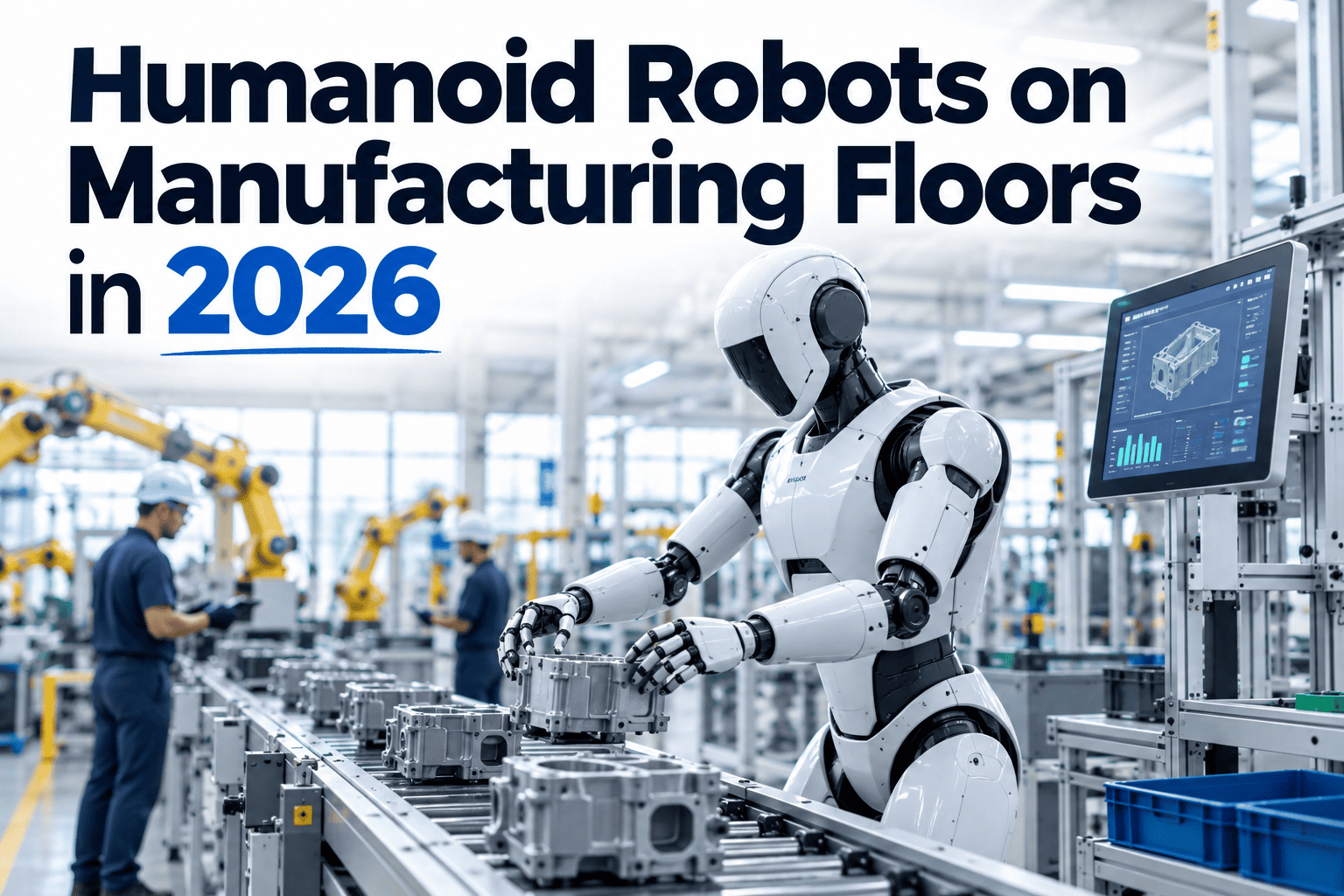
The factory floor is undergoing its most significant transformation since the introduction of the industrial robotic arm. In 2026, humanoid and quadruped robots have moved beyond science-fiction concepts and viral YouTube clips into measurable, revenue-generating roles inside automotive plants, aerospace facilities, fulfillment centers, and process industries. Companies like BMW, Mercedes-Benz, Amazon, GXO, and ST Engineering have published verifiable deployment data, and platforms like Figure 03, Apollo, Optimus, Digit, and Spot are now logging real operational hours on production lines and inspection routes. For U.S. manufacturing professionals evaluating where to place their next automation bet, understanding which platforms are deployment-ready, what tasks they actually perform, and how they integrate with existing MES, CMMS, and predictive maintenance systems is no longer optional. Plant leaders building the business case for a 2026 or 2027 pilot can book a demo with iFactory AI to see how robot fleets, AI vision, and digital twin orchestration come together in a single operations platform.
Orchestrate Humanoid and Quadruped Fleets From a Single Operations Platform
iFactory AI unifies humanoid task execution, quadruped inspection routes, predictive maintenance signals, and digital twin telemetry — giving plant leaders one control layer for every robot on the floor.
Why Humanoid and Quadruped Robots Are Reshaping Manufacturing in 2026
For decades, industrial automation meant fixed-arm robots welded to a single station performing one repetitive task. That model worked for high-volume automotive welding and electronics assembly, but it failed everywhere else: short-run production, brownfield facilities, hazardous inspections, and the thousands of secondary tasks that still require human flexibility. The 2026 generation of humanoid and quadruped robots was engineered specifically to fill that gap — they walk into human-designed spaces, use existing tools, climb stairs, and adapt to changing layouts without months of fixture engineering.
Three structural shifts converged to make this real. First, sim-to-real training pipelines now allow robots to accumulate billions of virtual manipulation experiences before touching a single physical part. Second, large vision-language-action models give robots genuine reasoning ability — Spot, for example, now uses Google DeepMind's Gemini Robotics-ER to read gauges, identify spills, and chain together multi-step inspection tasks autonomously. Third, persistent U.S. manufacturing labor shortages have pushed Tier-1 manufacturers from "exploring" to "deploying." Operations leaders ready to evaluate readiness against their own facility profile can book a demo for a structured deployment assessment.
The Leading Humanoid and Quadruped Platforms Manufacturers Are Deploying
Not every humanoid is ready for a 24/7 shift. Procurement teams should evaluate platforms based on verified operational hours, integration maturity, and the specific tasks they're being deployed for today — not roadmap promises. Below is the deployment-ready landscape U.S. manufacturing leaders are evaluating in 2026.
Figure 03 — Automotive Body-in-White and Material Handling
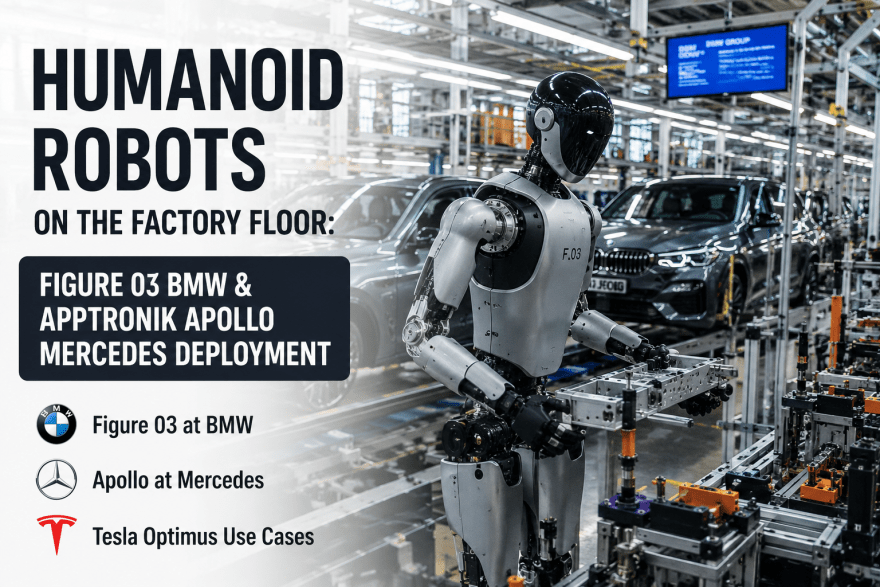
Figure AI's third-generation humanoid is the most production-validated platform in 2026. Following Figure 02's 11-month deployment at BMW Spartanburg — where two robots loaded over 90,000 sheet metal parts across 1,250 operational hours — Figure 03 brings improved dexterity, longer battery life, and tighter integration with automotive manufacturing execution systems. Figure also opened BotQ, a dedicated humanoid manufacturing facility with an initial 12,000-unit annual capacity.
Apptronik Apollo — Mercedes-Benz Intralogistics and Assembly
Apollo stands 5'8", weighs 160 pounds, and lifts up to 55 pounds. Mercedes-Benz is piloting Apollo at its Digital Factory Campus, with initial tasks focused on transporting components to the production line and performing initial quality checks. Apptronik, backed by Google and Mercedes with a $5.5 billion valuation, has positioned Apollo as the most commercially advanced enterprise humanoid for U.S. and European OEMs.
Agility Robotics Digit — Warehouse and Fulfillment
Digit is the most-deployed commercial humanoid in 2026. Operating under a Robots-as-a-Service contract at GXO's Flowery Branch facility, Digit has surpassed 100,000 totes moved and accumulated more than a year of continuous full-time deployment. Its reverse-knee bipedal design is engineered for efficient load-carrying in warehouse environments, and the Agility Arc cloud platform manages fleet orchestration.
Tesla Optimus — Internal Production Line Learning
Tesla is deploying Optimus internally at Fremont and Gigafactory Texas, primarily for data collection and learning rather than productive work. Tesla has broken ground on a dedicated Optimus manufacturing facility with a stated target of 10 million units annually by 2027, and is converting Model S/X lines into a 1-million-unit-per-year Optimus production line by late 2026. External commercial availability remains unannounced.
Boston Dynamics Spot — Quadruped Inspection and Predictive Maintenance
Spot remains the gold standard for industrial quadruped deployment, with over 1,500 units operating across power plants, oil and gas facilities, breweries, aerospace plants, and steel mills. Recent upgrades integrate Google DeepMind's Gemini Robotics-ER 1.6 for autonomous reasoning, alongside acoustic leak detection, thermal imaging, PTZ gauge reading, and laser scanning for digital twin reality capture. Teams evaluating Spot for inspection rounds can book a demo to see how iFactory AI ingests Spot's inspection data into a unified CMMS workflow.
Humanoid and Quadruped Robot Comparison Matrix
The right robot depends on what your plant actually needs to accomplish. This matrix compares the leading platforms across the dimensions that matter most for U.S. manufacturing buyers.
| Platform | Form Factor | Primary Use Case | Verified Deployment | Commercial Status |
|---|---|---|---|---|
| Figure 03 | Humanoid bipedal | Automotive assembly, parts loading | BMW Spartanburg, SC | Production pilot scaling |
| Apptronik Apollo | Humanoid bipedal | Intralogistics, assembly support | Mercedes-Benz, GXO | Enterprise pilots |
| Agility Digit | Humanoid bipedal | Tote handling, fulfillment | GXO, Amazon, Spanx | RaaS commercial |
| Tesla Optimus | Humanoid bipedal | Repetitive line tasks | Tesla Fremont internal | Internal only |
| Boston Dynamics Spot | Quadruped | Inspection, predictive maintenance | 1,500+ industrial sites | Fully commercial |
| Hexagon AEON | Humanoid bipedal | EV battery assembly | BMW Leipzig (pilot) | Full pilot summer 2026 |
| Unitree H1 / G1 | Humanoid bipedal | Research, light material handling | Multiple R&D sites | Commercial purchase |
Verified U.S. and Global Manufacturing Deployments
The most credible signal in the humanoid market is documented operational data from real facilities. These deployments represent the verified, measurable benchmark for 2026.
BMW Spartanburg, South Carolina
Two Figure 02 humanoids ran 10-hour weekday shifts for 11 months, contributing to over 30,000 BMW X3 vehicles. The robots loaded 90,000+ sheet metal parts with greater than 99% placement accuracy across 1,250 operational hours, establishing the first credible automotive production benchmark.
Automotive OEMGXO Flowery Branch, Georgia
Agility Digit humanoids surpassed the 100,000-tote milestone in commercial operation at GXO's Spanx fulfillment facility. Deployed under a Robots-as-a-Service contract, Digit unloads autonomous mobile robots and feeds totes onto conveyors at pack-out stations.
3PL LogisticsMercedes-Benz Digital Factory Campus
Apptronik Apollo is performing intralogistics tasks — transporting components to the production line and conducting initial quality checks. Mercedes is now working on enabling fully autonomous Apollo operations across additional assembly tasks.
Premium AutomotiveST Engineering MRAS Aerospace Facility
A Boston Dynamics Spot quadruped autonomously patrols this 1.5-million-square-foot aerospace facility producing composite engine structures. Spot inspects autoclaves, pressure vessels, and rotating equipment using thermal imaging and acoustic sensors to detect failures before they escalate.
Aerospace InspectionWhere Humanoid and Quadruped Robots Fit on the Shop Floor
Form factor determines function. Bipedal humanoids excel at tasks designed for humans — bin picking, machine tending, intralogistics — while quadrupeds dominate hazardous inspection and reality capture. The phased workflow below reflects how manufacturing leaders are sequencing deployments across their facilities.
Quadruped Inspection Routes — Predictive Maintenance Foundation
Start with a Spot quadruped on autonomous inspection rounds. Spot reads gauges, captures thermal images of motors and electrical panels, listens for acoustic leaks, and feeds data into the CMMS. This builds your machine-health baseline and predictive maintenance dataset before introducing more complex bipedal platforms.
Humanoid Intralogistics Pilot — Material Movement
Introduce a humanoid like Digit or Apollo at a single station for tote handling, kit-cart loading, or machine tending. These constrained workflows have clear performance baselines and prove humanoid reliability without disrupting takt time on critical production cells.
Production Line Integration — Assembly Tasks
Move humanoids onto the production line for sheet metal loading, fastener installation, or sub-assembly support. Integrate the robot's task execution with MES work orders, quality checks, and digital twin tracking so every action contributes to plant-wide visibility.
Lights-Out Operations and Mixed Fleet Orchestration
Scale to mixed fleets where quadrupeds patrol overnight, humanoids handle continuous material movement, and AMRs coordinate transport. The iFactory AI orchestration layer assigns work, monitors health, and routes anomalies — enabling true Industry 5.0 lights-out operations.
Build Your Humanoid and Quadruped Roadmap With iFactory AI
Our team will assess your task inventory, facility readiness, and integration architecture to recommend the right platform mix — Figure, Apollo, Digit, or Spot — for your 2026 deployment.
2026 Robot Capability Benchmarks for Manufacturing
Performance ranges across the deployment-ready humanoid and quadruped platforms operating in industrial environments today.
How iFactory AI Orchestrates Humanoid and Quadruped Fleets
A humanoid on the floor is only as valuable as the systems it connects to. iFactory AI is purpose-built to ingest robot telemetry, dispatch work orders, capture inspection data, and feed the digital twin — turning isolated robots into a coordinated, measurable production system.
Fleet Orchestration Layer
Unified control plane for Figure, Apollo, Digit, and Spot fleets. Assign tasks, monitor battery state, route around obstacles, and balance workload across mixed humanoid and quadruped teams from a single dashboard.
Spot Inspection to CMMS Pipeline
Spot's thermal scans, acoustic readings, and gauge data flow directly into iFactory's CMMS. Anomalies automatically trigger work orders, assign technicians, and update equipment health scores — closing the predictive maintenance loop.
3D Reality Capture and Simulation
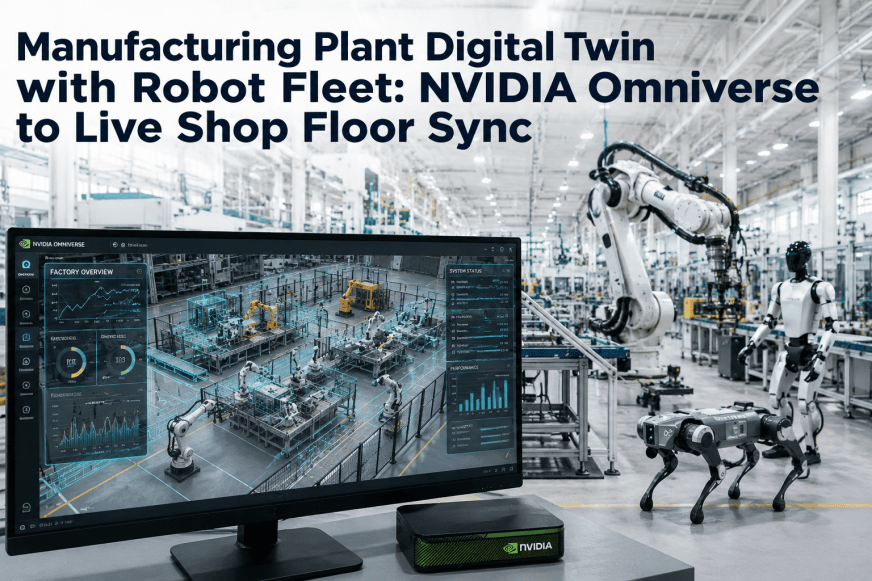
Spot's autonomous laser scans build and continuously update a live digital twin of the facility. Plant engineers simulate humanoid routing, validate task choreography, and identify bottlenecks before changes hit the floor.
Quality Gate Validation
iFactory AI Vision verifies humanoid task completion — confirming parts were placed correctly, fasteners are torqued, and assemblies match specification. Defects are flagged in real time and routed to rework before they reach end-of-line.
Work Order to Robot Dispatch
Production work orders generated by the Manufacturing Execution System automatically dispatch to the right robot — humanoid for assembly, quadruped for inspection, AMR for transport — with full traceability back to the originating order.
Safety, Audit, and Hazard Logging
Every robot interaction is logged for OSHA audit readiness. Spot's hazard detection routes spills, blocked exits, and unsafe conditions into the EHS module, while humanoid e-stop events generate incident reports automatically.
Expert Review — A Practitioner's View of Humanoid Robots in U.S. Manufacturing
Manufacturing leaders evaluating 2026 deployments need to separate genuine production capability from venture-backed marketing. Based on documented operating data from BMW, GXO, Mercedes-Benz, and ST Engineering, the honest assessment for U.S. plants is this: humanoid and quadruped robots are now production-credible in narrow, well-defined applications — but they are not yet drop-in replacements for fixed-arm industrial robots on high-speed automotive welding lines or for skilled human operators on complex variable assemblies.
The 2026 sweet spot for U.S. manufacturers is the long tail of tasks that traditional automation never economically addressed: kitting carts, machine tending across mixed-model lines, autonomous inspection of mechanical and electrical assets, hazardous-environment patrols, and material movement in brownfield facilities. For these workflows, the labor cost reduction in the 22–28% range during year one is achievable when the pilot is scoped correctly — meaning the task is bounded, the cycle time is forgiving, and the surrounding workflow is already digitized in a system like iFactory AI.
The single most common deployment failure is treating a humanoid as a standalone novelty rather than a node in an integrated digital operation. The plants seeing genuine ROI — BMW Spartanburg, GXO Flowery Branch, ST Engineering MRAS — share one trait: the robot is connected to MES, CMMS, and digital twin systems that turn its activity into measurable production data. Plants evaluating their integration readiness should book a demo to map their current architecture against deployment requirements before committing capital to hardware.
Six Criteria for Selecting a Manufacturing Robot Platform
Hardware specs alone do not predict deployment success. Evaluate any humanoid or quadruped platform against these six dimensions before signing a purchase order or RaaS contract.
Verified Operational Hours
Only consider platforms with documented, third-party-verified deployment data measured in operating hours and units produced — not lab demos or trade-show choreography. BMW, GXO, and Mercedes data sets are the credible benchmarks for 2026.
Open Integration Architecture
The robot's control system must publish APIs and event streams that integrate with your MES, CMMS, ERP, and digital twin platform. Closed ecosystems trap your data and prevent the orchestration layer that turns a robot into measurable production capacity.
Safety Certification and Compliance
Look for ISO/TS 15066 collaborative robot compliance and documented OSHA-compatible safety architecture. Operating alongside human workers requires verified e-stop response, force-limited actuation, and incident logging for audit trails.
Total Cost of Ownership Clarity
Unit cost is only part of the story. Evaluate fully loaded TCO including charging infrastructure, software licensing, maintenance, spare parts, training, and integration labor. Apply the same scrutiny you would to a $500K CNC machine purchase.
RaaS vs. CapEx Flexibility
Robots-as-a-Service models (like GXO's Digit deployment) protect against early-generation obsolescence and shift cost from CapEx to OpEx. Evaluate whether subscription, lease, or outright purchase best matches your plant's accounting strategy and risk tolerance.
Vendor Long-Term Viability
The humanoid market will consolidate. Prefer vendors with documented production capacity (Figure BotQ, Tesla Gigafactory), enterprise customer logos, and Series B+ funding from strategic industrial backers like Mercedes, BMW, or Google.
Conclusion — The U.S. Manufacturing Robot Imperative for 2026
2026 is the year humanoid and quadruped robots earned their seat on the U.S. manufacturing floor. With over 30,000 vehicles assembled with humanoid assistance at BMW Spartanburg, 100,000 totes moved by Digit at GXO, and 1,500+ Spot quadrupeds running inspection rounds globally, the question for plant leaders has shifted from "will this work" to "where do we start." The path forward is sequential and disciplined: begin with quadruped inspection to build the predictive maintenance data foundation, pilot a humanoid in a bounded intralogistics task, integrate the data into your MES and CMMS, and scale to mixed fleets coordinated through a single orchestration platform.
The plants that will lead the next decade are those treating robotics not as isolated machines but as a fully integrated layer of their digital operation — connected to digital twins, AI vision, predictive maintenance, and MES through a unified platform. iFactory AI was built specifically for this convergence, giving manufacturing leaders one place to orchestrate humanoid task execution, quadruped inspection, predictive maintenance alerts, work order dispatch, and quality validation. To map your facility's deployment readiness and scope a 2026 pilot, book a demo with our solutions team.
Frequently Asked Questions — Humanoid and Quadruped Robots in Manufacturing
Are humanoid robots actually working in U.S. manufacturing plants in 2026?
Yes, at limited but verified scale. Figure AI's humanoids ran 11 months at BMW Spartanburg contributing to over 30,000 vehicles, Agility Digit has moved more than 100,000 totes at GXO Flowery Branch, and Apptronik Apollo is deployed at Mercedes-Benz. These are real operational deployments measured in production output, not lab demos.
What is the difference between a humanoid robot and a quadruped robot in manufacturing?
Humanoid bipedal robots like Figure 03, Apollo, Digit, and Optimus are designed for tasks originally engineered for humans — material handling, machine tending, and assembly. Quadrupeds like Boston Dynamics Spot excel at inspection, predictive maintenance rounds, hazardous-environment patrols, and 3D reality capture for digital twins.
How much does a manufacturing humanoid or quadruped robot cost in 2026?
Western pilot-stage humanoids run $90,000 to $100,000 per unit, while Chinese-manufactured platforms have bill-of-materials costs near $35,000. A Boston Dynamics Spot starts around $74,500 and can exceed $150,000 fully configured. Many vendors, including Agility Robotics, offer Robots-as-a-Service contracts to shift cost from CapEx to OpEx.
Can these robots integrate with my existing MES, CMMS, and ERP systems?
Yes, but integration quality varies dramatically by platform. The most successful deployments use an orchestration layer like iFactory AI to ingest robot telemetry, dispatch work orders, capture inspection data, and update the digital twin — turning isolated robots into a coordinated production system connected to MES, CMMS, ERP, and quality workflows.
What is the realistic ROI timeline for a humanoid or quadruped deployment?
Well-matched pilot deployments typically deliver 22–28% labor cost reduction in year one for the specific tasks the robot performs. Spot quadrupeds in predictive maintenance roles often pay back within 2–3 years through avoided unplanned downtime, while humanoid intralogistics deployments under RaaS contracts can show positive operational economics immediately depending on labor rates.
Plan Your 2026 Humanoid and Quadruped Robot Deployment
iFactory AI gives U.S. manufacturing leaders the orchestration platform to turn humanoid and quadruped robots into measurable production capacity — connected to MES, CMMS, digital twin, and AI vision in one system.