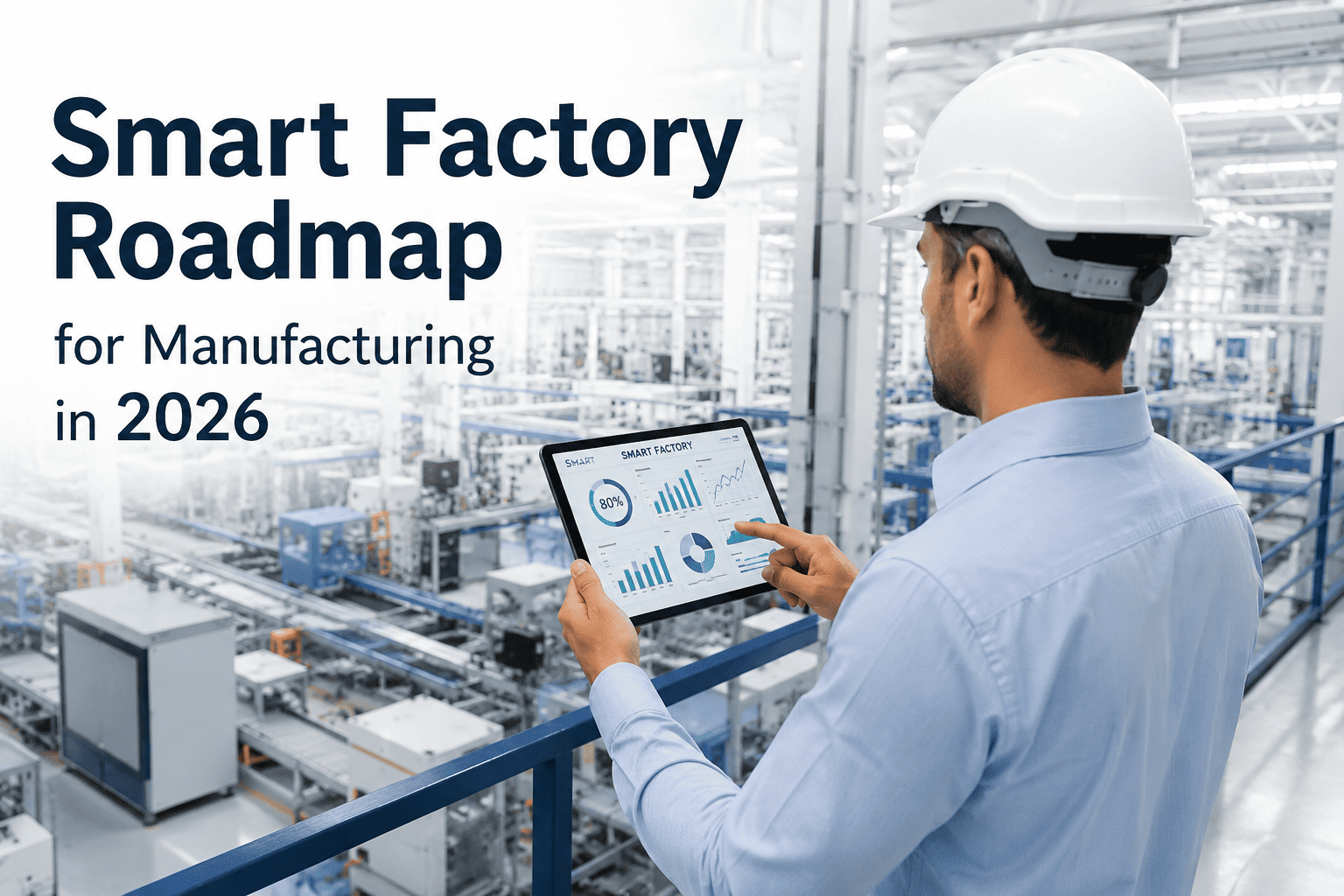
In 2026, the manufacturing sector stands at a critical inflection point. The promise of the smart factory—hyper-efficient, self-optimizing, and deeply connected—has been heralded for nearly a decade, yet fewer than 15% of initiatives have successfully scaled beyond a single pilot line. The gap between proof-of-concept and enterprise-wide deployment remains the industry's most stubborn challenge, often dubbed 'pilot purgatory.' This comprehensive roadmap is designed exclusively for plant managers, CTOs, and maintenance directors who are ready to break that cycle. It provides a technically rigorous, phase-by-phase blueprint to transition from isolated automation to a fully integrated, AI-driven smart factory ecosystem. By following this 24-month strategy, you will not only accelerate your Industry 4.0 journey but also ensure a measurable return on investment at every stage. For a personalized walkthrough of this roadmap and to see how iFactory's solutions can fast-track your deployment, Book a Demo with our experts today.
From Pilot to Scale: Your 24-Month Smart Factory Roadmap
A proven, data-backed strategy to cross the chasm and achieve enterprise-wide smart manufacturing excellence.
Ready to Transform Your Factory?
Begin your journey with a free consultation. Our experts will align this roadmap with your specific operational goals.
Phase 1: Foundation & Assessment (Months 1-3)
The first three months are critical for establishing a solid foundation. Begin with a comprehensive audit of your current manufacturing infrastructure, including all machines, sensors, networks, and data pipelines. Identify key performance indicators (KPIs) such as Overall Equipment Effectiveness (OEE), Mean Time Between Failures (MTBF), and energy consumption per unit. This phase also involves selecting a pilot line that represents a high-impact, low-risk opportunity for initial deployment. Ensure stakeholder alignment by forming a cross-functional team from operations, IT, and engineering. Finally, define your data governance framework to ensure data quality and security from day one.
Infrastructure Audit
Evaluate existing machinery, network latency, and data collection capabilities. Identify gaps and prioritize upgrades.
KPI Benchmarking
Establish baseline metrics for OEE, MTBF, and energy use. These will be used to measure ROI throughout the journey.
Pilot Selection
Choose a production line with high downtime costs but manageable complexity. Ensure it has existing sensors or easy retrofitting capability.
Phase 2: Connectivity & Data Integration (Months 4-6)
With the foundation set, the next three months focus on connecting your pilot line to a unified data platform. Deploy IIoT gateways and edge computing devices to collect real-time data from machines, PLCs, and sensors. Implement a standardized communication protocol (e.g., OPC UA, MQTT) to ensure interoperability. Build a centralized data lake or warehouse that ingests, cleanses, and stores structured and unstructured data. This phase also includes setting up basic dashboards for real-time monitoring of your pilot line's performance. Data integration is often the most technically challenging step, so leverage proven middleware solutions to reduce complexity.
Month 4: IIoT Gateway Deployment
Install gateways on 5-10 critical machines. Configure edge analytics to filter noise and reduce data volume.
Month 5: Data Lake Architecture
Design and implement a scalable data lake using cloud or hybrid storage. Ensure data lineage and versioning.
Month 6: Real-Time Dashboards
Deploy dashboards for OEE, downtime, and quality metrics. Train operators on daily usage and anomaly detection.
Phase 3: AI & Predictive Analytics (Months 7-12)
Months seven through twelve represent the core of the smart factory transformation. With a solid data foundation, you can now train machine learning models for predictive maintenance, quality prediction, and process optimization. Start with supervised learning models using historical failure data to predict equipment breakdowns with 24-hour advance warning. Simultaneously, deploy unsupervised learning for anomaly detection to identify subtle deviations in production parameters. This phase also involves integrating AI recommendations into your existing maintenance workflows and MES. The goal is to move from reactive to predictive operations, reducing unplanned downtime by at least 30%.
| Model Type | Use Case | Expected Impact | Data Required |
|---|---|---|---|
| Supervised Regression | Predict Remaining Useful Life (RUL) | Reduce spare parts inventory by 20% | Historical failure timestamps, sensor data |
| Classification | Quality Defect Prediction | Reduce scrap rate by 15% | Production parameters, inspection results |
| Unsupervised Anomaly Detection | Real-time process deviation alerts | Early warning 48 hours before failure | Continuous sensor streams |
| Reinforcement Learning | Dynamic production scheduling | Increase throughput by 10% | Order data, machine states, energy costs |
Accelerate Your AI Deployment
Our pre-built models cut months off the development cycle. See how iFactory's AI platform can be operational in weeks, not years.
Phase 4: Integration & Workflow Automation (Months 13-18)
After proving value on the pilot line, the next six months focus on integrating AI insights into daily operations. Connect your predictive maintenance system with the CMMS to automatically generate work orders. Deploy digital twins of critical assets to simulate 'what-if' scenarios and optimize maintenance schedules. Implement automated quality gates that reject defective products in real-time based on AI predictions. This phase also involves training operators on new workflows and establishing a continuous feedback loop to improve model accuracy. Integration is where the smart factory truly becomes a self-optimizing system.
CMMS Integration
Automatically create work orders from AI predictions. Reduce manual data entry and response time by 60%.
Digital Twin Deployment
Create virtual replicas of critical assets. Simulate maintenance interventions without disrupting production.
Automated Quality Gates
Deploy computer vision and sensor fusion to reject defects at line speed. Achieve near-zero defect rates.
Phase 5: Scale & Optimize (Months 19-24)
The final six months are dedicated to scaling the successful pilot to other lines and factories. Develop a standardized deployment playbook that includes hardware requirements, software configurations, and training materials. Use the ROI data from the pilot to secure executive buy-in for broader investment. Implement a central command center that aggregates data from multiple plants, enabling cross-site optimization. This phase also involves continuous model retraining and refinement based on new data streams. The result is a truly enterprise-wide smart factory that is agile, resilient, and continuously improving.
Smart Factory Implementation Checklist
Use this checklist to track your progress across all phases. Each item represents a critical milestone for successful scaling.
- Infrastructure audit completed and gaps documented
- Pilot line selected with stakeholder alignment
- IIoT gateways deployed on pilot line
- Data lake operational with real-time ingestion
- Predictive maintenance model trained and validated
- AI integration with CMMS completed
- Digital twin deployed for critical asset
- Automated quality gate operational
- Standardized playbook created for scale
- Central command center aggregating multi-plant data
Frequently Asked Questions
What is the most common reason smart factory pilots fail to scale?
The most common reason is a lack of a structured, phased roadmap that aligns technology deployment with business value. Many organizations rush to implement advanced AI without first establishing robust data infrastructure and connectivity standards. Without a solid foundation, models are trained on poor-quality data, leading to unreliable predictions. Additionally, insufficient cross-functional collaboration between IT and operations creates silos that prevent seamless integration. To avoid this, start with a thorough assessment phase and ensure executive sponsorship for long-term investment. For a detailed analysis of your specific challenges, Book a Demo with our team.
How long does it typically take to see ROI from a smart factory initiative?
ROI timelines vary based on the scope and maturity of the factory, but most organizations see a positive return within 12 to 18 months of pilot deployment. The initial months are heavily focused on infrastructure and data integration, which require upfront investment. However, once predictive maintenance models are operational, reductions in unplanned downtime and maintenance costs quickly offset the initial spend. For example, a mid-sized automotive supplier reduced downtime by 35% within six months of deploying AI-driven maintenance, achieving full payback in 14 months. To estimate ROI for your facility, contact our support team for a custom business case.
What are the key technical prerequisites for implementing a smart factory?
The key prerequisites include a reliable network infrastructure (preferably with low-latency 5G or wired Ethernet), standardized communication protocols (OPC UA, MQTT), and a scalable data storage solution (cloud or hybrid). Additionally, existing machinery should be equipped with sensors or be retrofittable with IIoT gateways. A skilled cross-functional team with expertise in data engineering, machine learning, and operations is essential. Without these, even the best software platform will struggle to deliver value. For a comprehensive readiness assessment, schedule a demo with our technical architects.
How does iFactory's platform support this 24-month roadmap?
iFactory's platform is purpose-built to accelerate every phase of this roadmap. Our pre-configured IIoT gateways and edge analytics reduce Phase 2 connectivity setup from months to weeks. The platform includes a library of pre-trained AI models for predictive maintenance, quality prediction, and energy optimization, cutting Phase 3 development time by 60%. Additionally, iFactory's open APIs seamlessly integrate with existing CMMS, MES, and ERP systems, simplifying Phase 4 workflow automation. For scaling in Phase 5, our multi-plant dashboard provides a unified view across all sites. To see how iFactory can compress your timeline, book a personalized demo today.
What are the biggest risks in scaling a smart factory, and how can they be mitigated?
The biggest risks include data silos between different factory systems, resistance to change from operators and maintenance teams, and underestimating the complexity of integrating AI into daily workflows. Data silos can be mitigated by adopting a unified data platform from the start. Change management requires early and continuous training, as well as clear communication of benefits. Complexity in integration is best addressed by using a platform like iFactory that offers pre-built connectors and a no-code workflow builder. A phased rollout with clear KPIs at each stage also reduces risk. For expert guidance on risk mitigation, book a demo with our implementation specialists.
Start Your Smart Factory Journey Today
Don't let your project stall in pilot purgatory. With the right roadmap and platform, you can achieve enterprise-wide transformation in 24 months.

.png)