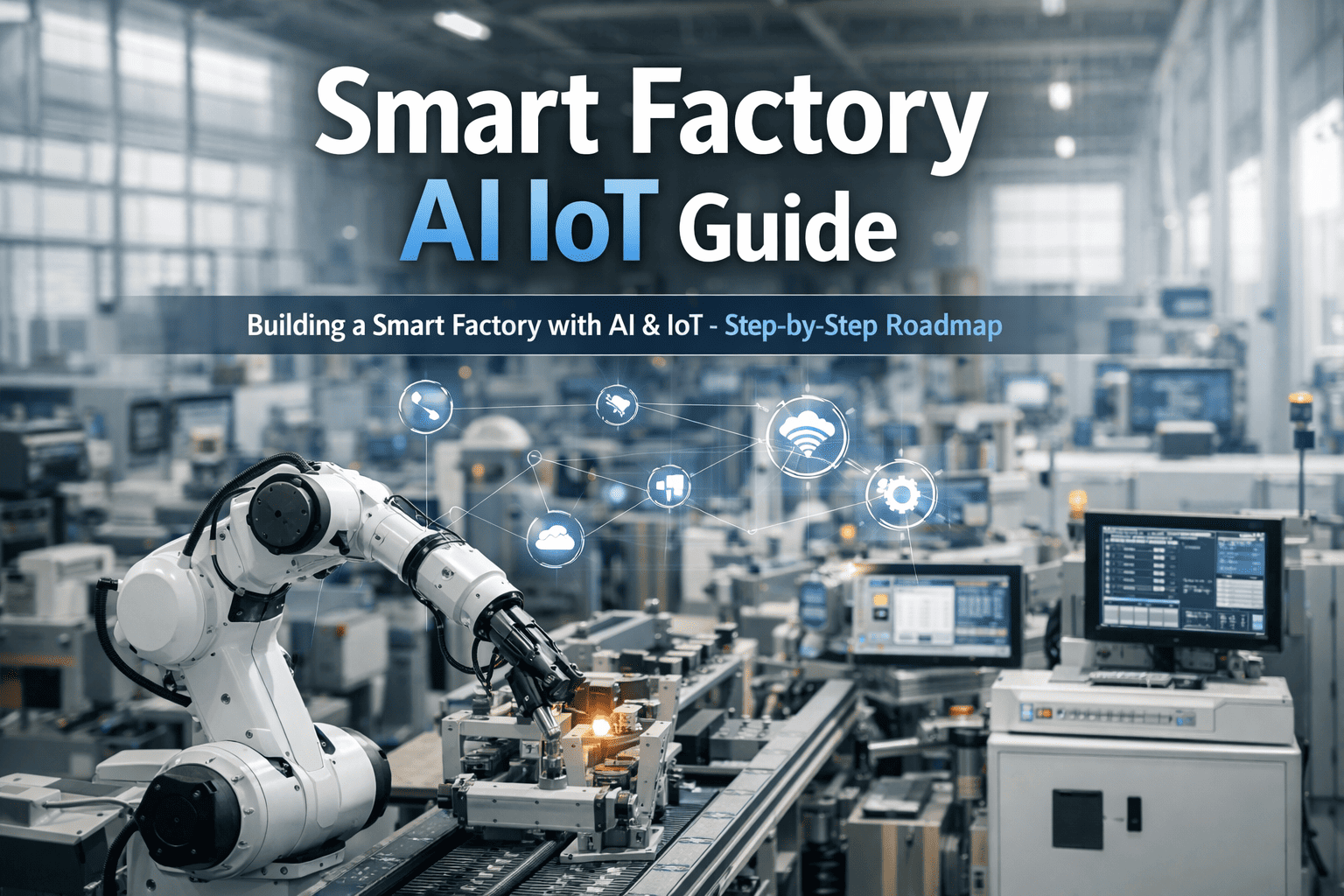
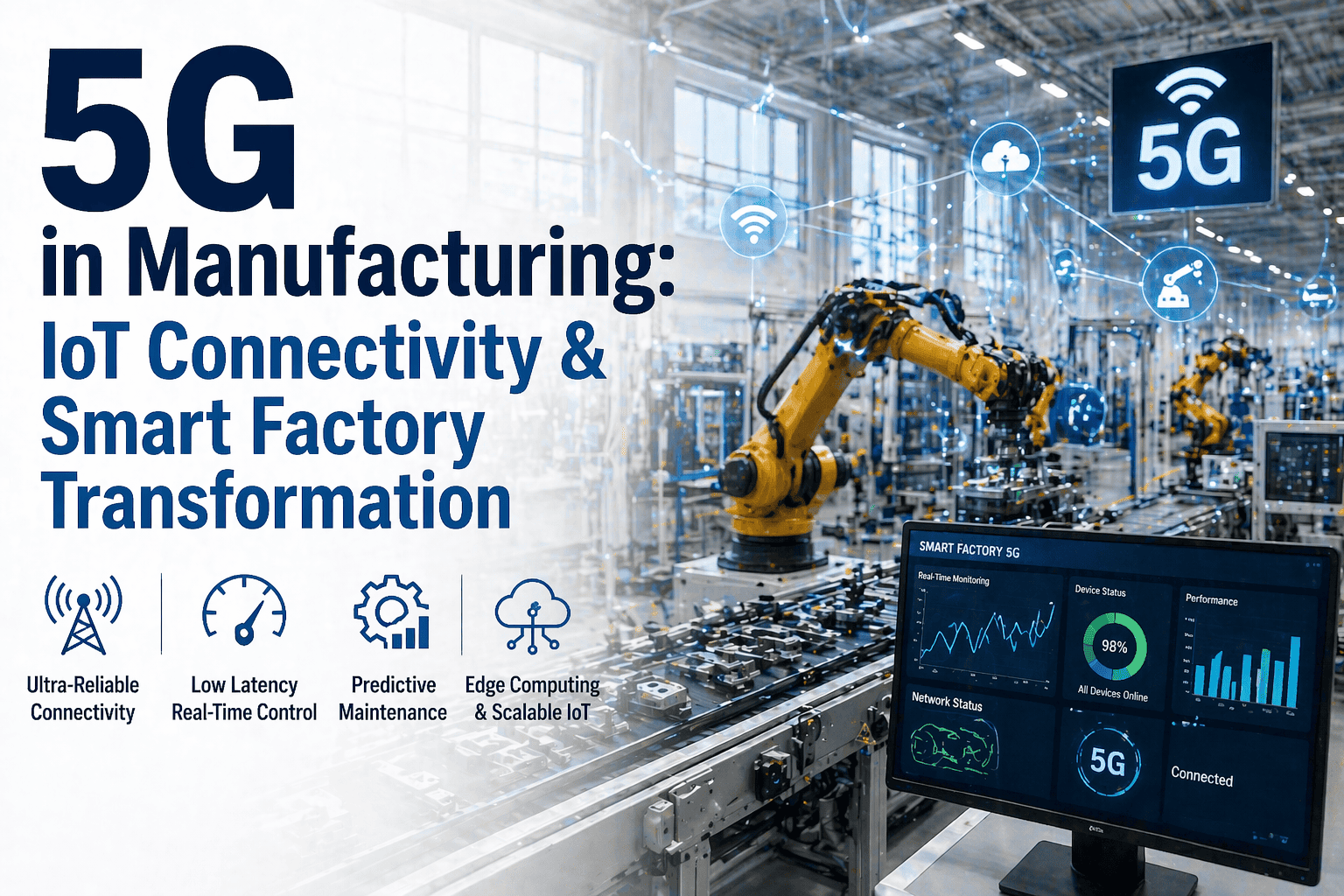
Automotive plants lose $2.3 million per hour to unplanned downtime, 25 incidents monthly, and face 113% cost increases since 2019 from equipment failures that calendar-based maintenance cannot predict. Assembly lines running EV battery production, multi-model configurations, and just-in-time supply chains cannot absorb unplanned stoppages without cascading losses, yet traditional automation lacks intelligence to predict degradation, adapt to model changeovers, or optimize when disruptions occur. iFactory's AI-powered smart factory platform connects every sensor, machine, and robot delivering predictive maintenance 30 days before failure, real-time OEE optimization, and digital twin simulation validating line changes before physical implementation. Book demo to see iFactory deploy smart factory AI within 8 weeks.
35%
Unplanned downtime reduction through AI predictive maintenance replacing reactive schedules
18%
OEE improvement through IoT sensor integration and real-time production optimization
50%
Faster new model commissioning through digital twin simulation and virtual validation
8 wks
Complete smart factory deployment from sensor integration to live AI optimization
Every Equipment Failure Cascades Into Production Losses. AI Predicts and Prevents.
iFactory connects PLC, SCADA, MES, and robotics into unified IoT platform monitoring 100% of assets 24/7 with AI models trained on automotive production identifying degradation patterns 30 days before equipment failure while digital twins simulate every line change before physical implementation.
The Core Problem: Why Traditional Automation Fails Modern Automotive Production
Automotive plants face unprecedented complexity that fixed automation cannot address. Equipment failures cascade through just-in-time supply chains halting production within hours. Line stoppages cost $2.3 million per hour yet calendar-based maintenance cannot predict failures. Multi-model lines require configuration changes that legacy systems handle through extensive downtime. EV battery assembly demands sub-millimeter precision that manual quality control cannot deliver. The solution is smarter automation through AI and IoT integration transforming reactive operations into predictive intelligent manufacturing.
Industry Reality: Automotive Downtime Statistics
$2.3M per hour
Average automotive plant downtime cost, highest of all manufacturing sectors
25 incidents/month
Average unplanned downtime events per facility down from 42 in 2019
113% increase
Downtime cost rise since 2019 vs 19% general inflation during same period
42% equipment failure
Leading cause of all unplanned downtime incidents across automotive manufacturing
What Modern Automotive Plants Need: Industry 4.0 Smart Factory Capabilities
Robotic Systems Predictive Maintenance
IoT sensors monitoring every assembly robot, welding cell, and material handling system detecting vibration anomalies, servo motor degradation, and gripper wear patterns 30 days before failure enabling scheduled interventions during planned downtime windows instead of emergency line stoppages.
Assembly Line Real-Time Optimization
AI analyzing takt time performance across every workstation identifying bottlenecks causing throughput losses and automatically rebalancing workflows to maintain production targets when equipment slowdowns or quality holds occur at individual stations without manual intervention.
EV Battery Production Quality Control
Computer vision systems inspecting every battery cell alignment, electrode coating, and thermal interface connection at production speed with 99.8% defect detection accuracy impossible through manual inspection enabling zero-defect production critical for battery safety and warranty costs.
Stamping Press Shop Monitoring
Force sensors tracking die wear progression through tonnage variation analysis predicting tool replacement requirements before producing out-of-tolerance parts avoiding scrap batches and emergency die changes that halt stamping operations for multi-shift periods.
OEE Performance Tracking
Real-time Overall Equipment Effectiveness monitoring across all production assets automatically calculating availability, performance, and quality metrics identifying improvement opportunities invisible in daily production reports and tracking progress toward world-class 85% OEE targets.
Digital Twin Line Simulation
Virtual factory replica simulating new model introductions, equipment relocations, and capacity expansions before physical implementation validating throughput projections and eliminating costly on-floor trial-and-error reducing commissioning time 30-50% for configuration changes.
How iFactory Solves Smart Factory Implementation for Automotive Plants
Traditional smart factory implementations require 18-24 months of custom development with no guaranteed results. iFactory delivers complete Industry 4.0 platform purpose-built for automotive deploying in 8 weeks with pre-integrated PLC, SCADA, MES connectivity and AI models trained on automotive production. See live demo of iFactory optimizing assembly line operations.
01
AI Predictive Maintenance
Machine learning models analyzing vibration, temperature, current draw, and acoustic signatures from production equipment predicting failures 30 days in advance with 92% accuracy enabling scheduled maintenance during planned downtime reducing emergency repairs 70% and cutting maintenance costs 25-40%.
02
Real-Time OEE Optimization
Continuous monitoring of availability, performance, and quality across all production assets with AI identifying root causes of OEE losses and automatically generating corrective work orders addressing chronic small stops, speed losses, and quality defects that operators cannot detect during production.
03
PLC SCADA MES Integration
Native connectivity to Siemens, Allen-Bradley, Mitsubishi, and Fanuc PLCs plus SCADA systems from Wonderware, Ignition, and WinCC enabling bidirectional data exchange without custom middleware. Integration completed in 2 weeks standard deployments versus 3-6 months traditional IoT implementations.
04
Mobile-First Operations
Production supervisors, maintenance technicians, and quality engineers access real-time alerts, work order management, and performance dashboards from mobile devices enabling faster response times and eliminating delays from workstation-dependent systems that slow decision-making during production issues.
05
Auto Work Order Generation
AI automatically creates maintenance work orders when equipment health scores drop below thresholds assigning tasks to appropriate technicians based on skill requirements and availability with parts lists and service procedures attached eliminating manual work order creation delays that extend equipment downtime.
06
Inspection Automation
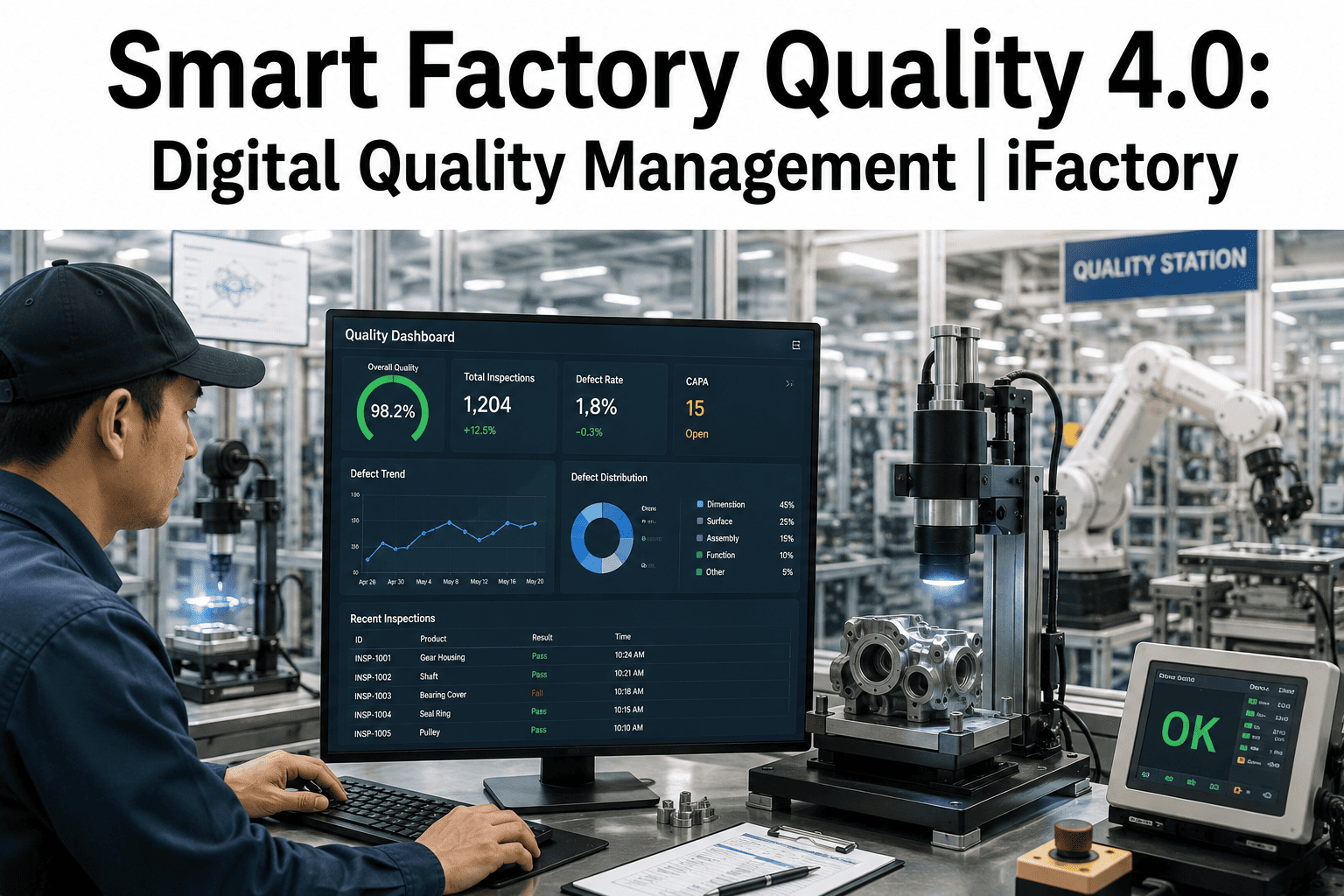
Computer vision systems inspecting critical quality checkpoints at production speed with AI models trained on defect libraries detecting dimensional variations, surface defects, and assembly errors with 99.5% accuracy replacing manual inspection bottlenecks while generating traceable quality documentation for IATF 16949 compliance.
How iFactory Is Different from Other Smart Factory Platforms
Most Industry 4.0 vendors deliver generic IoT platforms requiring extensive customization. iFactory is purpose-built for automotive with pre-trained AI models, pre-configured integrations, and deployment proven across OEM and Tier 1 facilities. Compare iFactory against your current systems.
| Platform |
AI Capability |
Predictive Maintenance |
PLC Integration |
Deployment Speed |
Automotive Fit |
| iFactory |
Pre-trained automotive AI models. 92% failure prediction accuracy. |
30-day advance warnings. 70% breakdown reduction validated. |
Native Siemens, AB, Fanuc, Mitsubishi connectivity. 2-week integration. |
8 weeks to full production deployment. |
Purpose-built for automotive OEMs and Tier 1 suppliers. |
| IBM Maximo |
Generic industrial AI. Requires custom model training. |
Available but requires extensive configuration. |
Middleware required. 3-6 month integration typical. |
12-18 months to production. |
Enterprise asset management focus. Heavy customization needed. |
| SAP EAM |
Limited AI capabilities. Primarily transactional. |
Basic threshold alerts. No true predictive capability. |
SAP ecosystem integration only. |
18+ months including ERP integration. |
Enterprise resource planning. Not manufacturing-specific. |
| QAD Redzone |
Operator-focused analytics. No predictive AI. |
Not available. Reactive monitoring only. |
Manual data entry. Limited automation integration. |
3-6 months for basic deployment. |
Discrete manufacturing. Operator communication focus. |
| Evocon |
OEE dashboards. No AI or predictive capability. |
Not available. |
Basic PLC connectivity. Limited protocol support. |
4-8 weeks for OEE monitoring. |
General manufacturing. Limited automotive-specific features. |
| L2L |
Workflow automation. No AI capabilities. |
Not available. |
App-based data collection. No direct PLC integration. |
2-4 months for workflow setup. |
Lean manufacturing focus. Manual data dependency. |
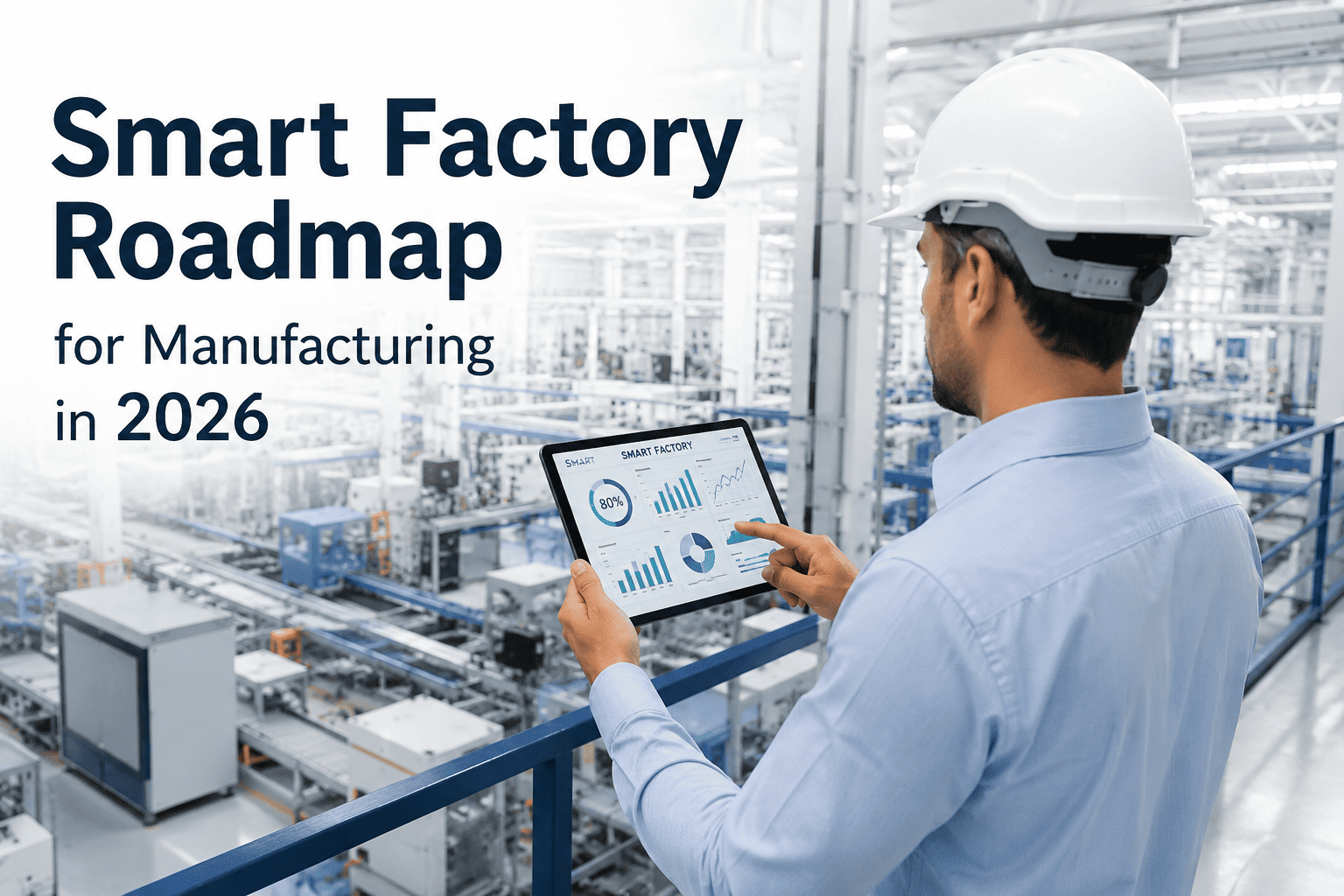
Smart Factory AI Implementation Roadmap
iFactory follows structured 6-stage deployment methodology delivering measurable results in week 4 and full smart factory operations by week 8.
01
Data Integration
PLC SCADA MES connection
02
Asset Onboarding
Equipment inventory sensor mapping
03
AI Setup
Model training on historical data
04
Alerts
Predictive maintenance activation
05
Deployment
Full plant AI monitoring live
06
Scaling
Multi-site expansion rollout
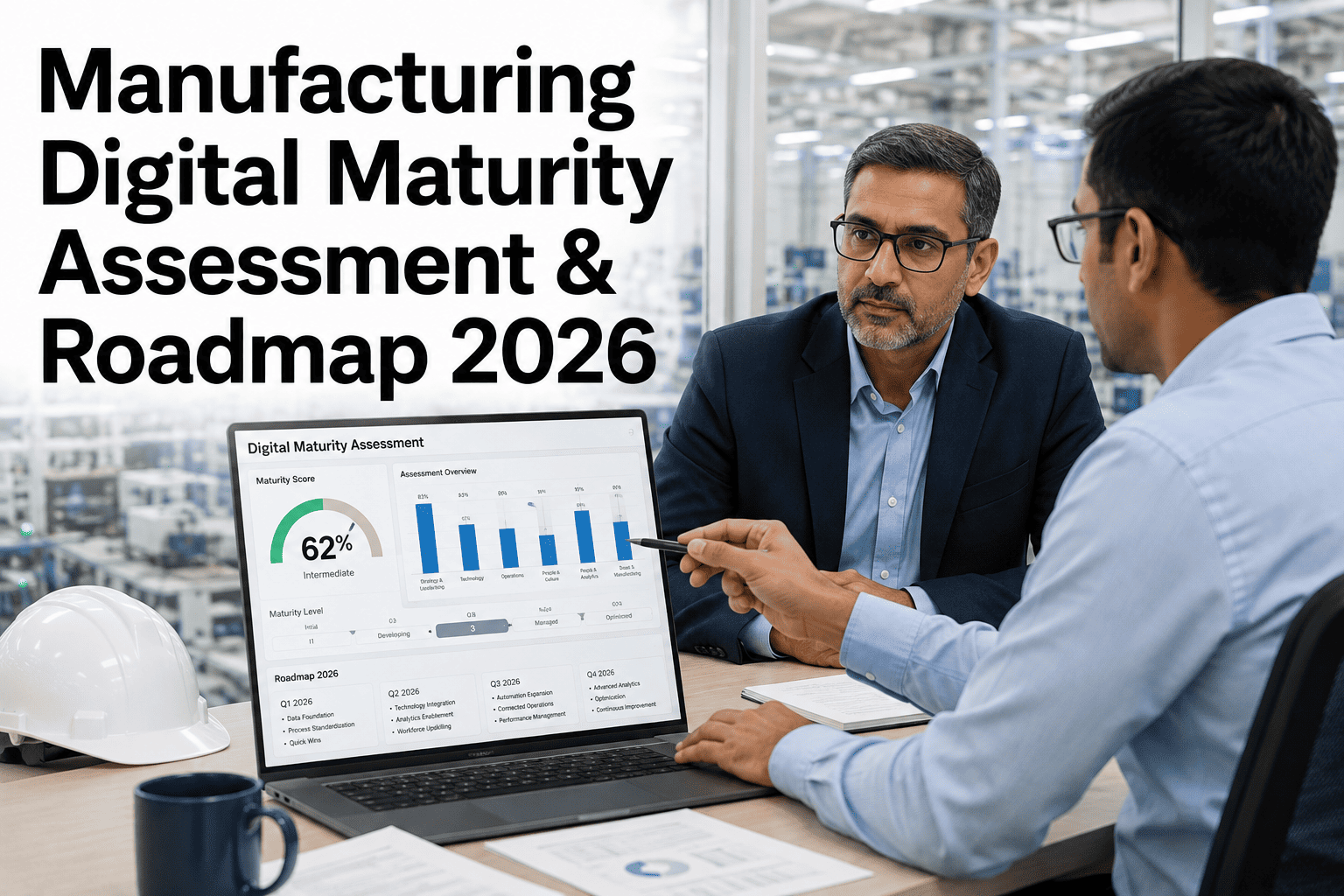
8-Week Deployment and ROI Plan
Weeks 1-2
Infrastructure Setup
PLC SCADA connection across assembly stamping paint body shop
Critical asset inventory including robots presses conveyors AGVs
Historical maintenance downtime data ingestion for AI training
Weeks 3-4
AI Model Training
Predictive models trained on plant-specific failure patterns
Pilot deployment on 10-15 highest-downtime assets
First predictive alerts validated ROI evidence begins
Weeks 5-6
Plant-Wide Expansion
Coverage extended to all production equipment across plant
Maintenance team training on AI alert interpretation
Mobile app deployment for field technician access
Weeks 7-8
Full Production Go-Live
Complete smart factory AI monitoring live 24/7 operations
IATF 16949 compliance reporting activated
ROI baseline report delivered with downtime reduction metrics
ROI IN 6 WEEKS: MEASURABLE RESULTS FROM WEEK 4
Automotive plants completing 8-week program report average 35% unplanned downtime reduction within first 6 weeks of AI deployment with 18% OEE improvements and $8-12M annual savings at mid-size assembly facilities documented by week 4 pilot validation showing equipment failure predictions enabling proactive maintenance impossible with calendar-based schedules.
35%
Downtime reduction validated
18%
OEE improvement typical
92%
AI prediction accuracy
Full Smart Factory AI. Live in 8 Weeks. ROI Evidence in Week 4.
iFactory fixed-scope deployment means no open timelines, no custom development, no months of integration before seeing results.
Use Cases: Smart Factory Results from Live Automotive Deployments
Use Case 01
Assembly Line Predictive Maintenance - 420k Unit/Year OEM Plant
Mid-size automotive assembly plant producing 420,000 vehicles annually was experiencing 28 unplanned downtime incidents monthly from robot failures, welding equipment breakdowns, and conveyor system issues costing $64M annually in lost production. Legacy time-based maintenance missed early degradation signals while emergency repairs required 8-12 hour line stoppages. iFactory deployed IoT sensors across 340 production assets with AI models detecting vibration anomalies, servo motor degradation, and bearing wear 32 days average before failure. Within 12 weeks reduced unplanned downtime 42% saving $27M annually.
42%
Unplanned downtime reduction in 12 weeks
$27M
Annual production loss recovery validated
32 days
Average failure prediction lead time
Use Case 02
EV Battery Production Quality - 180k Pack/Year Facility
EV battery pack assembly facility producing 180,000 units annually was experiencing 3.2% quality escape rate from manual inspection missing cell alignment defects, electrode coating irregularities, and thermal interface gaps causing warranty claims and safety recalls. iFactory deployed computer vision systems inspecting 100% of battery assemblies at production speed with AI models trained on 40,000 defect images achieving 99.8% detection accuracy. Eliminated quality escapes while increasing throughput 12% by removing manual inspection bottleneck.
99.8%
Defect detection accuracy vs 96.8% manual
Zero
Quality escapes in 8 months post-deployment
12%
Throughput increase from automated inspection
Use Case 03
Digital Twin Model Changeover - Multi-Model Flexible Line
Tier 1 supplier operating multi-model flexible assembly line producing 8 different vehicle variants required 72-hour changeover periods for new model introductions involving extensive physical trials, rework, and validation cycles. iFactory deployed digital twin simulation platform validating fixture changes, robot program modifications, and quality checkpoint relocations virtually before physical implementation. Reduced commissioning time 48% to 38 hours while eliminating $840K in trial production scrap.
48%
Model changeover time reduction validated
$840K
Trial production scrap eliminated annually
38 hrs
New commissioning timeline down from 72
Regional Smart Factory Requirements and iFactory Solutions
| Region |
Challenges |
Compliance |
iFactory Solution |
| US |
High labor costs driving automation ROI. EV transition requiring new production capabilities. Supply chain resilience demands. |
IATF 16949, OSHA safety standards, EPA emissions reporting, NHTSA recall compliance. |
Native integration with US-dominant Allen-Bradley PLCs. Automated IATF quality documentation. Safety system integration. |
| UAE |
Extreme temperature environments affecting equipment. Skilled workforce availability. Rapid production scaling requirements. |
UAE Fire and Life Safety Code, ESMA vehicle standards, ISO 9001 certification requirements. |
Environmental condition monitoring for high-temperature operations. Remote technical support coverage. Arabic language interface. |
| UK |
Brexit supply chain complexity. Energy cost pressures. Transition to EV manufacturing infrastructure. |
UKCA marking, HSE workplace safety, WLTP emissions testing, automotive GDPR requirements. |
Energy consumption monitoring dashboards. Supply chain visibility integration. GDPR-compliant data handling. |
| Canada |
Cold climate production environments. USMCA supply chain integration. Bilingual workforce requirements. |
Transport Canada vehicle standards, CSA workplace safety, environmental impact assessments, provincial labor regulations. |
Cold temperature equipment monitoring. French-English bilingual interface. Cross-border production tracking. |
| Europe |
Stringent emissions regulations. Industry 4.0 technology adoption pressure. Multi-country production coordination. |
CE marking, EU machinery directive, REACH chemicals regulation, Euro NCAP safety standards, GDPR data protection. |
Multi-language support. Siemens PLC dominance addressed. EU emissions tracking integration. GDPR compliance built-in. |
Frequently Asked Questions
What IoT sensors are required for smart factory AI implementation?
Most automotive plants already have vibration sensors, temperature monitors, and current meters on critical equipment. iFactory leverages existing instrumentation connecting through PLC integration without requiring expensive sensor retrofits. Where gaps exist, standard industrial IoT sensors costing $200-800 per asset are recommended during Week 1-2 assessment.
Does iFactory integrate with existing MES and ERP systems?
Yes. iFactory connects to SAP, Oracle, Plex, and Epicor ERP systems plus manufacturing execution systems from Delmia, Apriso, and Siemens Opcenter via REST APIs and OPC-UA protocols. Integration maintains existing production workflows while adding AI intelligence layer.
Book demo to discuss your specific system architecture.
How accurate are AI predictive maintenance alerts in automotive environments?
iFactory AI models achieve 92% prediction accuracy in automotive deployments with 30-day average advance warning before equipment failure. False positive rate under 8% significantly better than threshold-based systems generating 40-60% false alarms that maintenance teams learn to ignore. Accuracy improves continuously as models learn from each plant's specific equipment characteristics.
What ROI can automotive plants expect from smart factory AI deployment?
Documented results show 35% unplanned downtime reduction worth $8-27M annually depending on plant size, 18% OEE improvements, and 25-40% maintenance cost reduction. Typical payback period 6-8 months with 10-15x ROI over 3-year period.
Start free trial to validate ROI projections for your facility.
Can iFactory smart factory platform scale across multiple plant locations?
Yes. iFactory supports multi-site deployments with centralized dashboards providing enterprise-wide visibility while maintaining plant-level operational control. AI models trained at one facility can be transferred to similar operations accelerating subsequent deployments. Large OEMs typically deploy pilot at single plant then expand to 5-10 additional facilities within 12 months.
Stop Losing $2.3M Per Hour. Deploy Smart Factory AI in 8 Weeks.
iFactory gives automotive plants AI predictive maintenance, real-time OEE optimization, digital twin simulation, and complete IoT integration with PLC SCADA MES systems in 8 weeks with ROI evidence starting week 4.
35% downtime reduction validated across automotive deployments
92% AI failure prediction accuracy with 30-day advance warnings
18% OEE improvement through real-time optimization
IATF 16949 compliance automation included