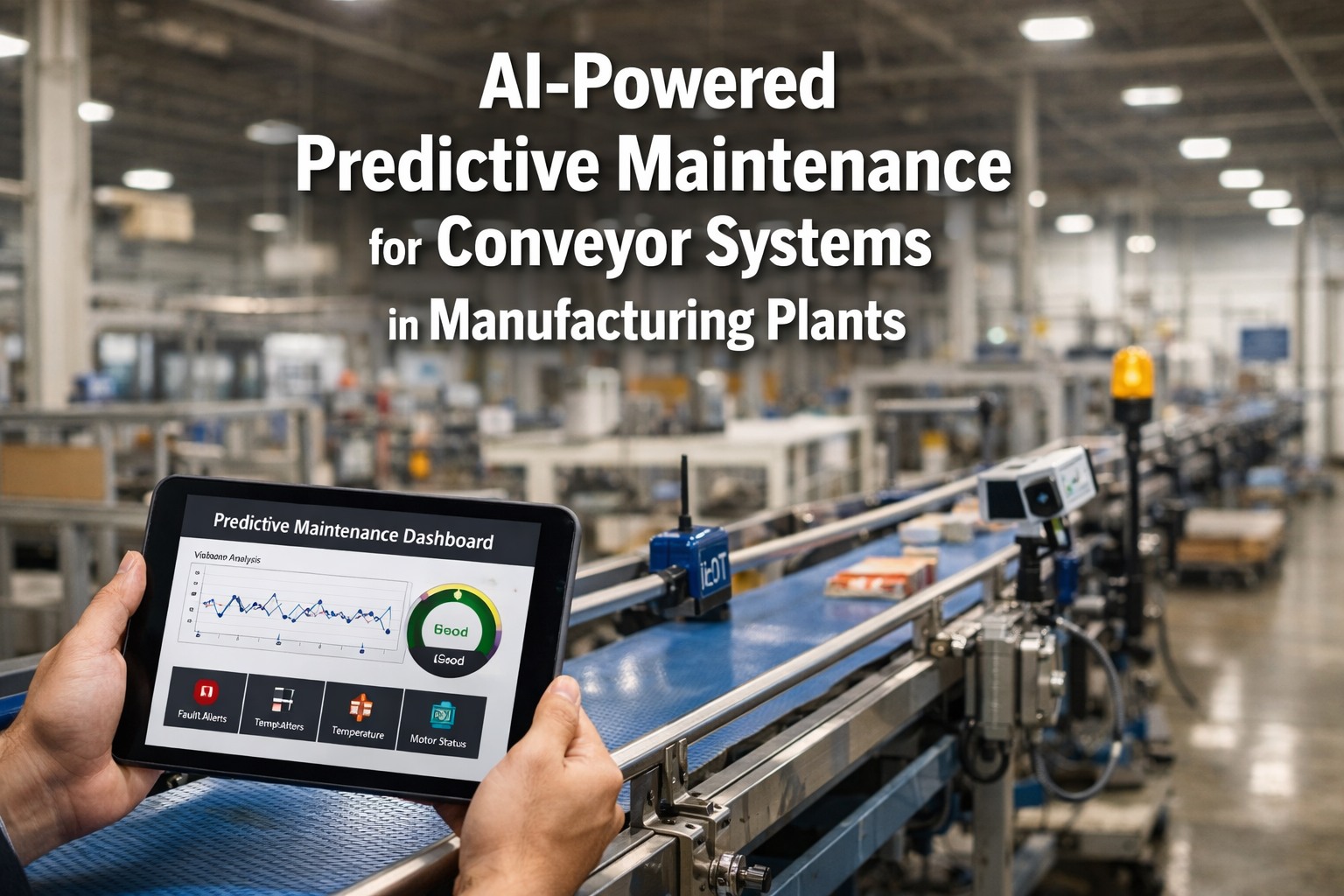
Manufacturing plants heading into 2026 are learning a hard lesson: equipment failure rarely announces itself, but the cost of ignoring the early warning signs keeps climbing every quarter. The average manufacturing facility now loses hundreds of thousands of dollars for every hour a critical line sits idle, and most of that downtime was preventable long before the machine actually broke. Predictive maintenance uses live sensor data, machine learning, and historical failure patterns to flag equipment problems weeks in advance, replacing guesswork with a data-backed maintenance calendar built around your actual asset condition. For maintenance managers under pressure to protect uptime, control spare-parts spend, and prove ROI to leadership, this shift from reactive firefighting to predictive planning is becoming the difference between a plant that hits its numbers and one that doesn't. Maintenance managers ready to see this in action on their own equipment can book a demo and walk through a live predictive maintenance dashboard.
PREDICTIVE MAINTENANCE · MANUFACTURING PLANTS · 2026
Stop Chasing Breakdowns. Start Predicting Them.
See how AI-driven predictive maintenance cuts unplanned downtime by 30-50%, protects your maintenance budget, and gives you weeks of warning before a critical asset fails.
30-50%
Reduction in unplanned downtime reported across manufacturing plants running AI-driven predictive maintenance programs
10:1 to 30:1
Typical ROI ratio delivered within 12-18 months of deployment, with the large majority of plants reporting positive returns
$260K
Approximate cost per hour of unplanned downtime at an average manufacturing facility today
2-6 Weeks
Average advance warning AI failure-prediction models give maintenance teams before a critical component fails
The Hidden Cost of Waiting for Equipment to Fail
Most manufacturing plants still measure maintenance success by how quickly a team responds after a machine goes down. But by the time a breakdown happens, the damage is already done: lost production hours, expedited parts shipping, overtime labor, and often a cascading effect on downstream lines. Plants running purely reactive maintenance lose roughly 40 or more hours a month to unplanned stoppages, while calendar-based preventive maintenance trims that number but still leaves healthy assets over-serviced and failing assets under-monitored. AI-driven predictive maintenance closes the gap by watching the actual condition of every asset in real time, so maintenance managers intervene only when the data says intervention is needed.
Reactive-Only Maintenance
42 hrs/month
Calendar-Based Preventive
30 hrs/month
AI-Driven Predictive
15 hrs/month
Average monthly unplanned downtime by maintenance strategy, based on industry benchmark data across manufacturing plants
Reactive vs Preventive vs Predictive: Where Your Plant Stands
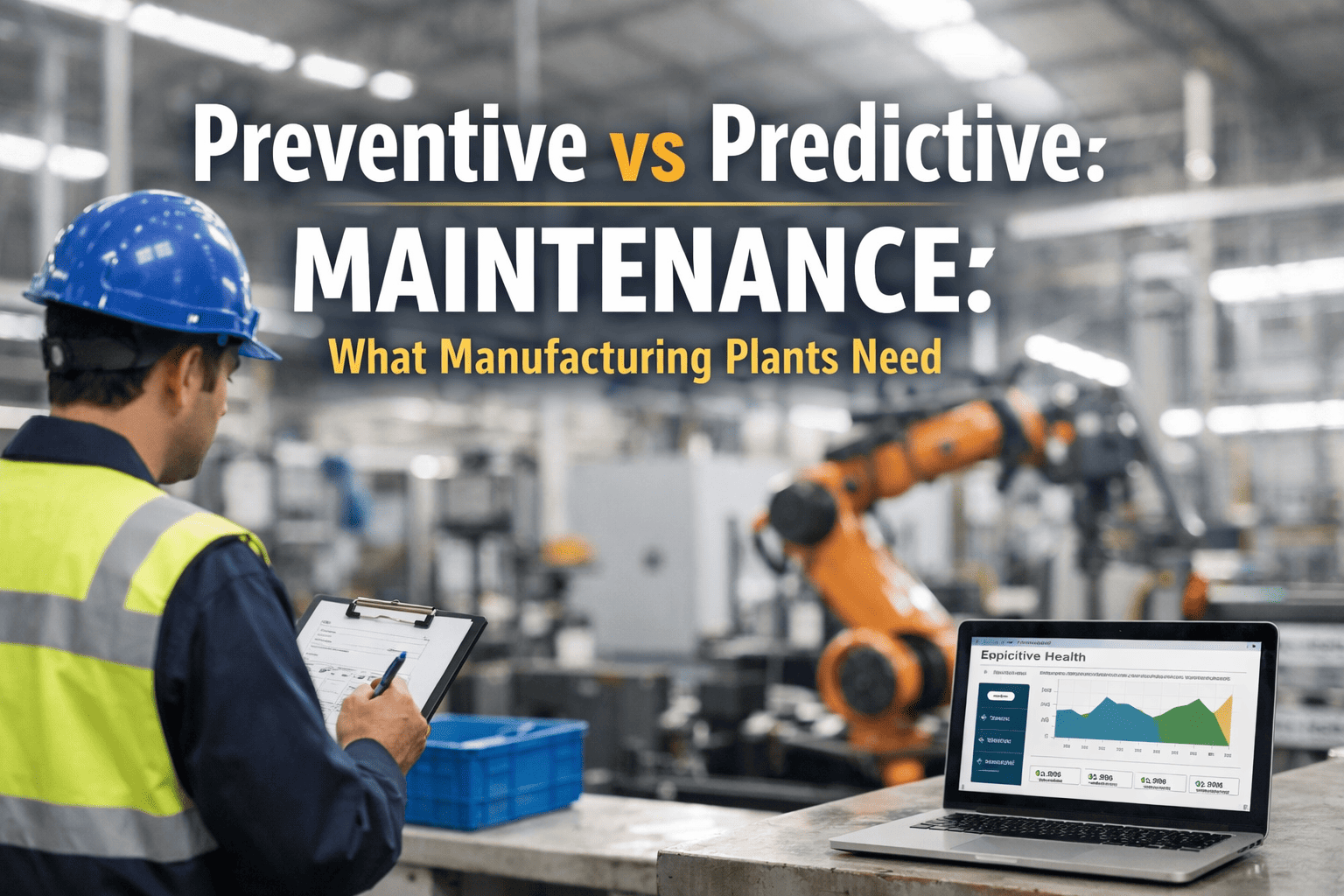
Every plant sits somewhere on this spectrum, and most maintenance managers already know exactly where. The question for 2026 is how fast you can move toward the right side of this table without disrupting production or overwhelming your team with new tools.
| Maintenance Approach |
How Decisions Get Made |
Typical Cost Impact |
| Reactive Maintenance |
Fix it after it breaks; no visibility until the machine stops |
Highest cost per incident; emergency parts and overtime labor |
| Preventive Maintenance |
Fixed calendar or run-hour schedule regardless of actual condition |
Over-maintains healthy assets; still misses off-schedule failures |
| AI Predictive Maintenance |
Live sensor data and ML models trigger action only when condition drifts |
18-25% lower maintenance cost versus reactive or preventive approaches |
How AI Predictive Maintenance Works, Step by Step
Maintenance managers don't need a data-science degree to run a predictive program. Modern platforms handle the modeling in the background and hand your team a simple, prioritized action list. Here is what happens behind the scenes on every monitored asset.
1
Continuous Data Capture
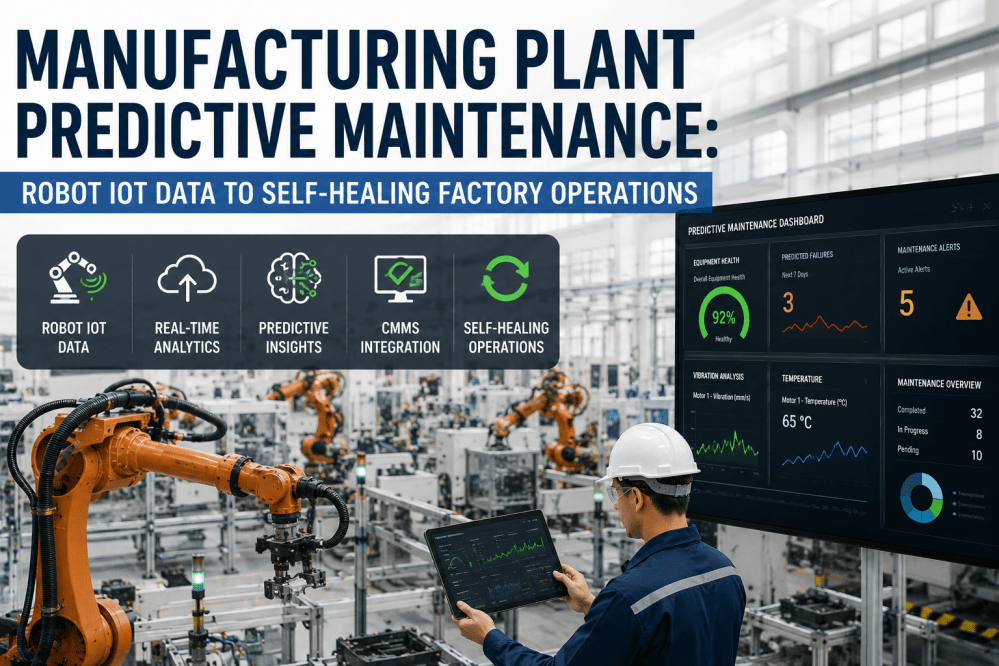
Vibration, temperature, pressure, current draw, and acoustic sensors stream condition data from every critical asset around the clock, often using your existing PLC and SCADA connections.
2
AI Failure Prediction
Machine learning models compare live readings against historical failure signatures, spotting the subtle drift patterns that precede a breakdown weeks before it happens.
3
Prioritized Alerts
Instead of flooding your team with false alarms, the system ranks alerts by risk and business impact so the highest-priority asset gets attention first.
4
Automated Work Orders
Confirmed alerts convert directly into scheduled work orders inside your CMMS, complete with parts, procedures, and technician assignments ready to go.
AI PREDICTIVE MAINTENANCE · MANUFACTURING · 2026
See Your Plant's Downtime Reduction Potential
Get a personalized walkthrough of how AI predictive maintenance would perform on your specific assets, downtime costs, and maintenance team structure.
A Realistic 2026 Implementation Roadmap
Maintenance managers rarely have the luxury of a plant-wide shutdown to roll out new technology. A phased approach protects production while building the trust your team needs to rely on AI-generated alerts.
Weeks 1-2
Asset & Data Audit
Identify critical assets, map existing sensors and data gaps, and set your downtime and cost baseline for measuring results.
Weeks 3-6
Model Training
Historical failure data trains the prediction models; baseline thresholds are calibrated for each asset class before going live.
Weeks 7-10
Pilot Line Rollout
Live monitoring runs on one bottleneck line; the team validates alerts against real inspections before wider deployment.
Month 4+
Plant-Wide Scale-Up
Proven models extend across every critical line, with continuous retraining improving prediction accuracy every month.
What Maintenance Managers Are Saying
We used to plan our week around whatever broke over the weekend. Now the system tells us which bearing is drifting toward failure before it ever shows up on the floor. Our unplanned downtime dropped by nearly half in the first two quarters, and just as important, my technicians trust the alerts enough to act on them without a second inspection.
Maintenance Manager, Tier-1 Automotive Component Plant
Frequently Asked Questions
AI PREDICTIVE MAINTENANCE · MANUFACTURING · 2026
Ready to Cut Unplanned Downtime in 2026?
Join manufacturing plants already using AI predictive maintenance to reduce downtime by 30-50%, protect maintenance budgets, and give technicians weeks of advance warning.