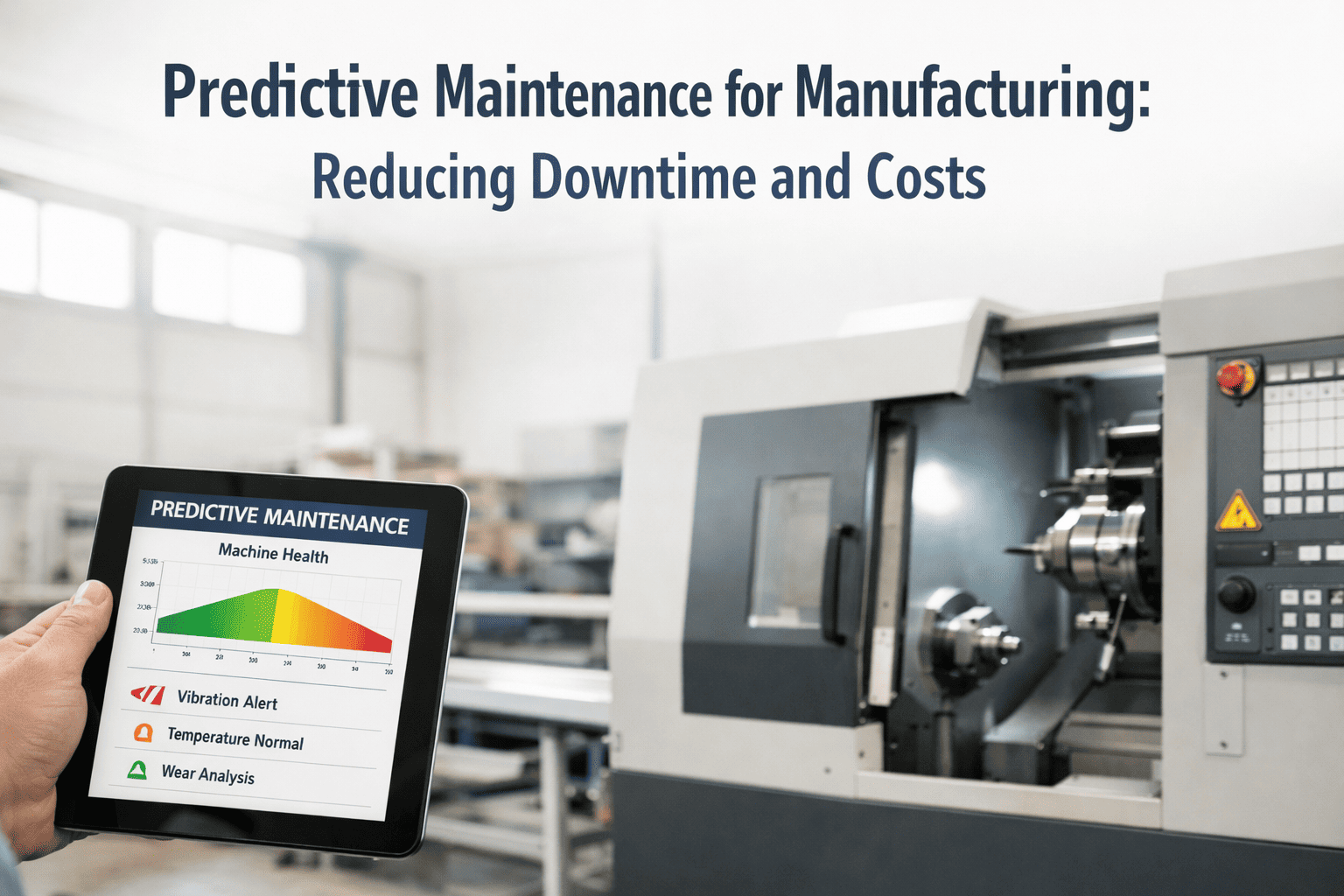
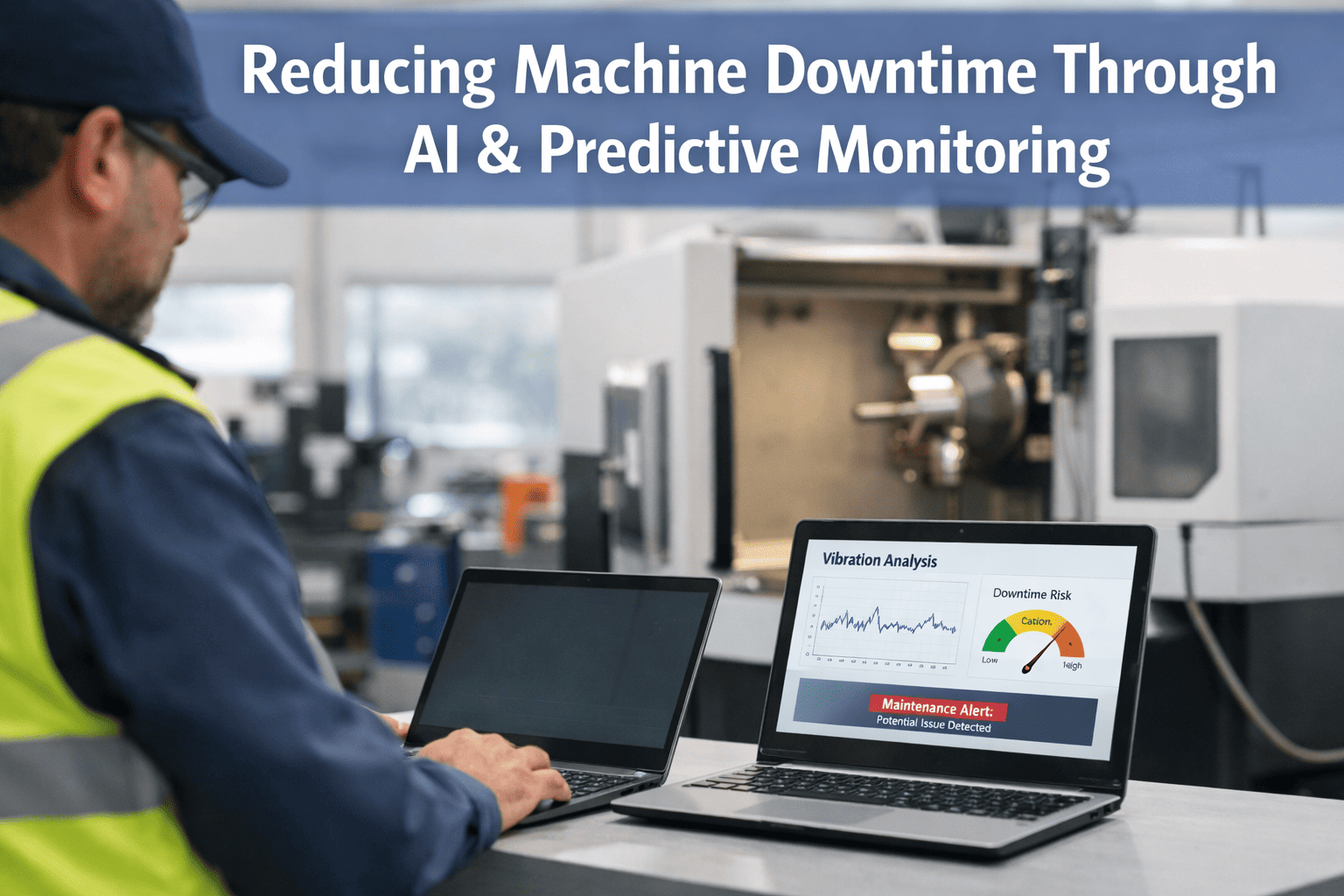
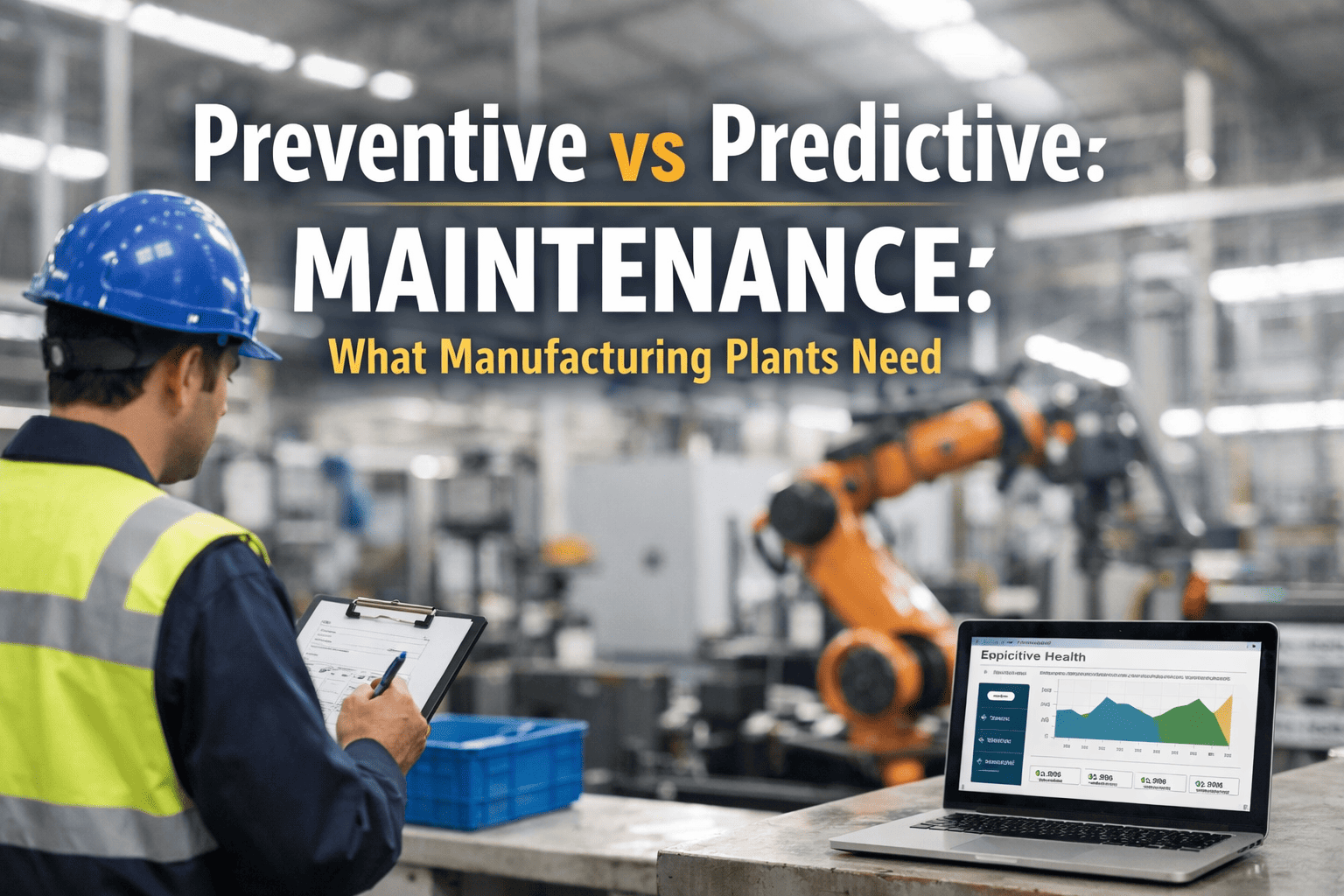
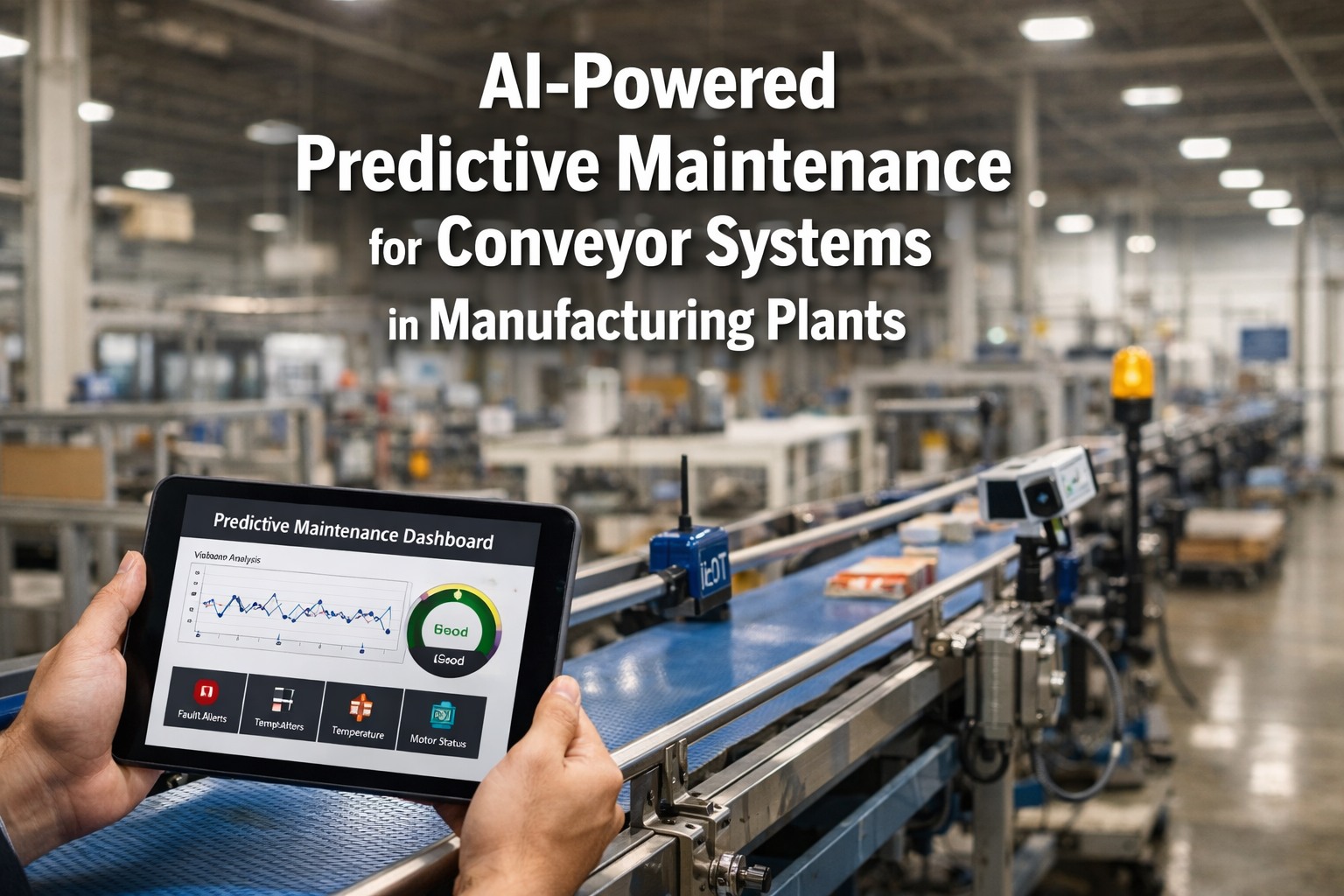
Every manufacturing plant manager knows the dread of an unexpected machine shutdown in the middle of a production run. Unplanned equipment downtime costs industrial manufacturers an estimated $50 billion each year, and the average facility loses over 300 hours of production annually to breakdowns that could have been prevented. Predictive maintenance changes this equation entirely. By using IoT sensors, AI analytics, and real-time condition monitoring, manufacturers can now detect equipment failures days or weeks before they happen — scheduling repairs on their own terms instead of scrambling after a breakdown. If your plant still relies on calendar-based service schedules or waits until something breaks, you are leaving money, safety, and productivity on the table. Book a free 30-minute demo to see how iFactory detects equipment failures before they disrupt your production line.
What Is Predictive Maintenance in Manufacturing?
Predictive maintenance (PdM) is a data-driven maintenance strategy that monitors the actual condition of equipment in real time to determine when maintenance should be performed. Unlike reactive maintenance — which waits for a failure — or preventive maintenance — which services machines on a fixed calendar — predictive maintenance uses sensor data, machine learning algorithms, and historical failure patterns to forecast exactly when a component is likely to fail. This allows maintenance teams to intervene at the optimal moment: early enough to prevent a breakdown, but late enough to extract maximum useful life from every part.
In a manufacturing environment, predictive maintenance typically involves installing vibration sensors, temperature probes, acoustic monitors, and power analyzers on critical rotating equipment like motors, pumps, compressors, gearboxes, and fans. The data from these sensors flows into an AI-powered analytics engine that continuously compares current behavior against learned baselines. When the system detects a deviation — a subtle increase in vibration amplitude, an unusual temperature spike, or a shift in power consumption — it generates a prioritized alert and a recommended action, often weeks before a human technician would notice anything wrong.
$14.29B
Global predictive maintenance market size in 2025
27.9%
Compound annual growth rate projected through 2033
95%
Of adopters report positive return on investment
How Does Predictive Maintenance Reduce Manufacturing Downtime?
The core mechanism is straightforward: if you know a bearing will fail in 12 days, you can order the replacement part, assign a technician, and schedule the repair during a planned maintenance window — rather than shutting down an entire production line for emergency repairs at 2 AM on a Thursday. But the actual impact goes far deeper than just avoiding one breakdown.
The Problem
What Unplanned Downtime Really Costs
Production line stops — hourly losses range from $36,000 in consumer goods to $2.3 million in automotive
Idle workforce costs accumulate while technicians diagnose the root cause
Emergency parts procurement at premium prices — often 3x to 5x standard cost
Missed delivery commitments damage customer relationships and trigger penalties
Cascading failures in interconnected production systems multiply the damage
The Solution
How Predictive Maintenance Eliminates These Costs
Failures detected 10-30 days in advance — repairs happen on your schedule
Technicians arrive prepared with the right parts, tools, and procedures
Standard procurement timelines replace emergency overnight shipping
Production commitments stay on track — no surprise delays or penalties
Root cause analysis prevents the same failure from recurring across similar assets
Still relying on calendar-based maintenance schedules? iFactory helps you shift to condition-based intelligence — so your team fixes what needs fixing, exactly when it needs fixing.
Predictive Maintenance vs Preventive Maintenance: What Manufacturing Leaders Need to Know
Many manufacturing plants already invest heavily in preventive maintenance — and it is a step up from purely reactive approaches. However, preventive maintenance has a fundamental limitation: it services equipment based on time intervals or usage counters, not actual condition. This means parts get replaced before they are worn out (wasting money), while other failure modes go undetected between service intervals (causing surprise breakdowns). Predictive maintenance addresses both problems by monitoring what is actually happening inside each machine in real time.
The Real-World Benefits of Predictive Maintenance for Manufacturing Plants
The business case for predictive maintenance is no longer theoretical. Thousands of manufacturing facilities worldwide have deployed PdM programs and measured the results. The U.S. Department of Energy has documented outcomes across industrial sectors, and industry research firms consistently validate similar findings. Here is what the data shows when manufacturers commit to predictive maintenance with the right platform and process.
Fewer equipment breakdowns documented across industrial deployments
Reduction in unplanned downtime through early anomaly detection
Average reduction in total maintenance costs over first two years
Return on investment reported by the U.S. Department of Energy
AI and IoT Sensors: The Technology Behind Predictive Maintenance
Predictive maintenance is only as good as the data it receives and the intelligence it applies to that data. Modern PdM platforms rely on a layered technology stack that moves from physical sensors on the factory floor to cloud-based AI engines that turn raw signals into actionable maintenance decisions. Understanding this stack helps manufacturing leaders make informed choices about where to invest and what to expect from their deployment.
Layer 1
IoT Sensor Network
Vibration accelerometers, infrared temperature sensors, ultrasonic acoustic monitors, current transformers, and pressure transducers are installed on critical assets. These sensors capture equipment condition data at frequencies ranging from once per second to thousands of samples per second, depending on the failure mode being monitored. Wireless protocols like LoRaWAN and industrial Wi-Fi eliminate the need for extensive cabling.
Layer 2
Edge Computing Gateway
Industrial edge devices aggregate data from dozens or hundreds of sensors, performing initial signal processing, noise filtering, and data validation locally. Edge processing ensures critical anomalies are detected in sub-second timeframes — even if the network connection to the cloud is temporarily interrupted. This layer reduces bandwidth costs by transmitting only meaningful changes rather than raw data streams.
Layer 3
Machine Learning Analytics Engine
Cloud-based or on-premise AI models analyze sensor data against historical baselines, equipment specifications, and cross-fleet patterns. Neural networks identify degradation signatures — bearing wear, shaft misalignment, insulation breakdown, cavitation — that are invisible to threshold-based alarm systems. Models improve continuously as they learn from confirmed failures and maintenance outcomes.
Layer 4
CMMS Integration and Workflow Automation
Predictions flow directly into iFactory as prioritized work orders, complete with recommended actions, required parts, estimated time to failure, and technician assignment. Closed-loop feedback — where maintenance teams confirm or correct predictions — continuously refines model accuracy over time, making every prediction sharper than the last.
See how the full technology stack works in practice. Book a live demo and we will walk you through sensor-to-work-order automation for your specific equipment types.
Which Manufacturing Equipment Benefits Most from Predictive Maintenance?
Not every asset in a manufacturing plant needs predictive monitoring on day one. The highest return comes from focusing first on equipment that is critical to production, expensive to repair, and prone to failure modes detectable through condition monitoring. Here are the asset categories where predictive maintenance delivers the fastest payback.
Electric Motors
Vibration analysis detects bearing wear, rotor bar faults, and winding insulation degradation weeks before failure. Motors power conveyors, pumps, fans, and compressors — making them the backbone of most production lines.
Pumps and Compressors
Pressure and flow monitoring catch cavitation, seal leaks, and impeller damage early. A single compressor failure in a pneumatic-dependent plant can halt every automated line simultaneously.
Conveyor Systems
Belt tension, roller alignment, and drive motor health monitoring prevents the line stoppages that ripple through entire production workflows. Acoustic sensors detect chain wear invisible to visual inspection.
CNC Machines and Robotics
Spindle vibration, servo motor current, and tool wear monitoring maintain machining precision and prevent costly scrap. Automotive plants using PdM on robotic arms have reduced unplanned stops by 45%.
Transformers and Switchgear
Thermal imaging, dissolved gas analysis, and partial discharge monitoring prevent catastrophic electrical failures. One steel manufacturer avoided a $3 million transformer loss through early detection.
HVAC and Cleanroom Systems
Filter pressure differential, refrigerant levels, and fan performance monitoring is essential in pharmaceutical, electronics, and food manufacturing where environmental control directly affects product quality.
How to Implement Predictive Maintenance: A Step-by-Step Guide
Successful predictive maintenance deployment follows a proven path. Rushing to install sensors everywhere without a strategy leads to data overload and poor adoption. The most effective approach starts small, proves value fast, and scales systematically. Here is the implementation roadmap used by manufacturing facilities that achieve the strongest results.
Week 1-2
Criticality Assessment and Asset Selection
Rank all equipment by production impact, failure frequency, repair cost, and safety risk. Select 3-5 of the highest-impact assets for your pilot program. Review maintenance history, failure records, and current monitoring gaps for these pilot assets.
Week 3-4
Sensor Deployment and Platform Configuration
Install the appropriate sensor types on pilot assets — vibration, temperature, current, and acoustic depending on the equipment and failure modes. Connect sensors to the iFactory platform and configure data collection intervals, asset hierarchies, and notification rules.
Week 5-8
Baseline Capture and AI Model Training
Allow the system to observe normal operating patterns across different production loads, shifts, and environmental conditions. AI models learn what healthy looks like for each specific asset. Historical failure data is imported to accelerate pattern recognition.
Week 9+
Live Predictions, Validation, and Scale-Out
Activate real-time predictions and automated work order generation. Track prediction accuracy and confirmed savings over 60-90 days. Use documented pilot results to justify expansion to additional equipment groups and production areas across the facility.
Start your predictive maintenance pilot in under two weeks. Create a free iFactory account and our implementation team will guide you through asset selection, sensor recommendations, and platform configuration.
Predictive Maintenance Cost Savings: What the Numbers Say
The financial return from predictive maintenance comes from multiple value streams working together. Direct savings from avoided breakdowns are the most visible, but the compounding benefits of optimized parts inventory, extended equipment life, reduced overtime labor, and improved energy efficiency often represent an even larger share of total ROI.
$1.5M - $7.5M
Annual savings documented at individual industrial plants through prevented critical equipment failures. A steel manufacturer saved $1.5M in the first year; a power generation facility avoided $7.5M in emergency costs.
18-25%
Reduction in maintenance labor requirements as technicians shift from emergency firefighting to planned, prepared interventions that take less time and fewer resources to complete.
30-40%
Lower spare parts costs by eliminating premature replacements and enabling standard procurement instead of emergency overnight shipping at 3-5x premium pricing.
20-30%
Extension in average asset life through optimized maintenance timing that prevents both catastrophic failures and unnecessary interventions that introduce new wear.
In energy-intensive manufacturing, maintenance is often your second-largest controllable cost after labor. Yet most plants still manage it with fixed schedules and gut instinct. Predictive maintenance does not just track equipment health — it reveals the hidden patterns driving premature failures and shows you exactly where the savings are.
— Manufacturing Operations Director, Fortune 500 Industrial Company
Stop Guessing. Start Predicting.
Your maintenance calendar cannot predict a bearing failure 10 days in advance or tell you which compressor will degrade next month. iFactory connects real-time equipment intelligence with automated maintenance workflows — giving your team the power to prevent breakdowns instead of reacting to them. Join manufacturing plants worldwide that have reduced downtime by up to 50% and maintenance costs by 25%.
Frequently Asked Questions
How quickly will predictive maintenance pay for itself?
What types of equipment failures can predictive maintenance detect?
Modern PdM systems reliably detect bearing degradation, shaft misalignment, rotor imbalance, gear tooth wear, motor winding faults, seal and gasket deterioration, pump cavitation, belt slippage, and electrical insulation breakdown. Detection accuracy for these common failure modes typically reaches 90-95% within three months as AI models learn your specific equipment behavior and operating conditions.
Do we need to replace our existing CMMS to use predictive maintenance?
Is predictive maintenance practical for small and mid-size manufacturers?
Absolutely. Cloud-based platforms like iFactory have eliminated the need for massive upfront hardware and software investments. You can start with as few as 3-5 sensors on your most critical assets, prove value within weeks, and expand based on documented results. Subscription pricing means you pay only for what you monitor. Facilities with as few as 10 critical assets are seeing meaningful ROI from predictive maintenance programs.
How does predictive maintenance improve workplace safety?