The manufacturing operations director reviews the monthly financial report: energy costs have climbed 14% year-over-year, unplanned downtime consumed 287 hours across the production floor, scrap rates on the injection molding line exceeded 6.2% for the third consecutive month, and overtime labor costs in the maintenance department are running 22% above budget. Each operational inefficiency — a pump that should have been refurbished before failure, a secondary packaging line running at 62% OEE, a warehouse stockout that triggered a premium-freight emergency order — represents a preventable drain on operating margin. On the plant floor, the reality is more granular: a conveyor bearing running hot because the vibration analysis interval was too long, a batch of pharmaceutical intermediates rejected because a temperature sensor drifted out of calibration, a changeover that took 47 minutes instead of the standard 22 because the tooling setup wasn't verified before the previous shift ended. Every day, these micro-inefficiencies compound into millions of dollars in avoidable operating costs. The question facing every manufacturing operation is not whether costs can be reduced — it is which strategies deliver the highest return for the least disruption to ongoing production. Based on deployment data from iFactory AI's integrated platform across 200+ manufacturing sites, 15 proven strategies consistently deliver measurable operating cost reduction when implemented through a unified digital infrastructure that connects production monitoring, maintenance management, quality control, energy tracking, and supply chain optimization.
Reduce Manufacturing Operating Costs with 15 Proven Strategies Powered by iFactory AI's Integrated Platform
iFactory AI enables manufacturers to systematically reduce operating costs through predictive maintenance, energy monitoring, quality control automation, inventory optimization, and AI-driven analytics — all connected through a single CMMS and production management platform purpose-built for industrial operations.
15 Proven Strategies to Reduce Manufacturing Operating Costs — A Comprehensive Framework
The 15 strategies that follow are organized into five operational domains: energy and asset optimization, maintenance excellence, quality and waste reduction, inventory and supply chain efficiency, and AI-driven workforce productivity. Each strategy includes the specific cost-reduction mechanism, documented savings range, and implementation approach validated across discrete and process manufacturing environments. The strategies are designed to be implemented incrementally — starting with high-impact, low-disruption initiatives — while building toward a fully integrated digital operations platform that maximizes cumulative savings. Book a Demo to see how iFactory AI's platform enables these strategies with pre-built integrations for manufacturing execution, maintenance management, and production analytics.
Strategies 1–3: Energy Efficiency, Smart Asset Management, and Production Monitoring
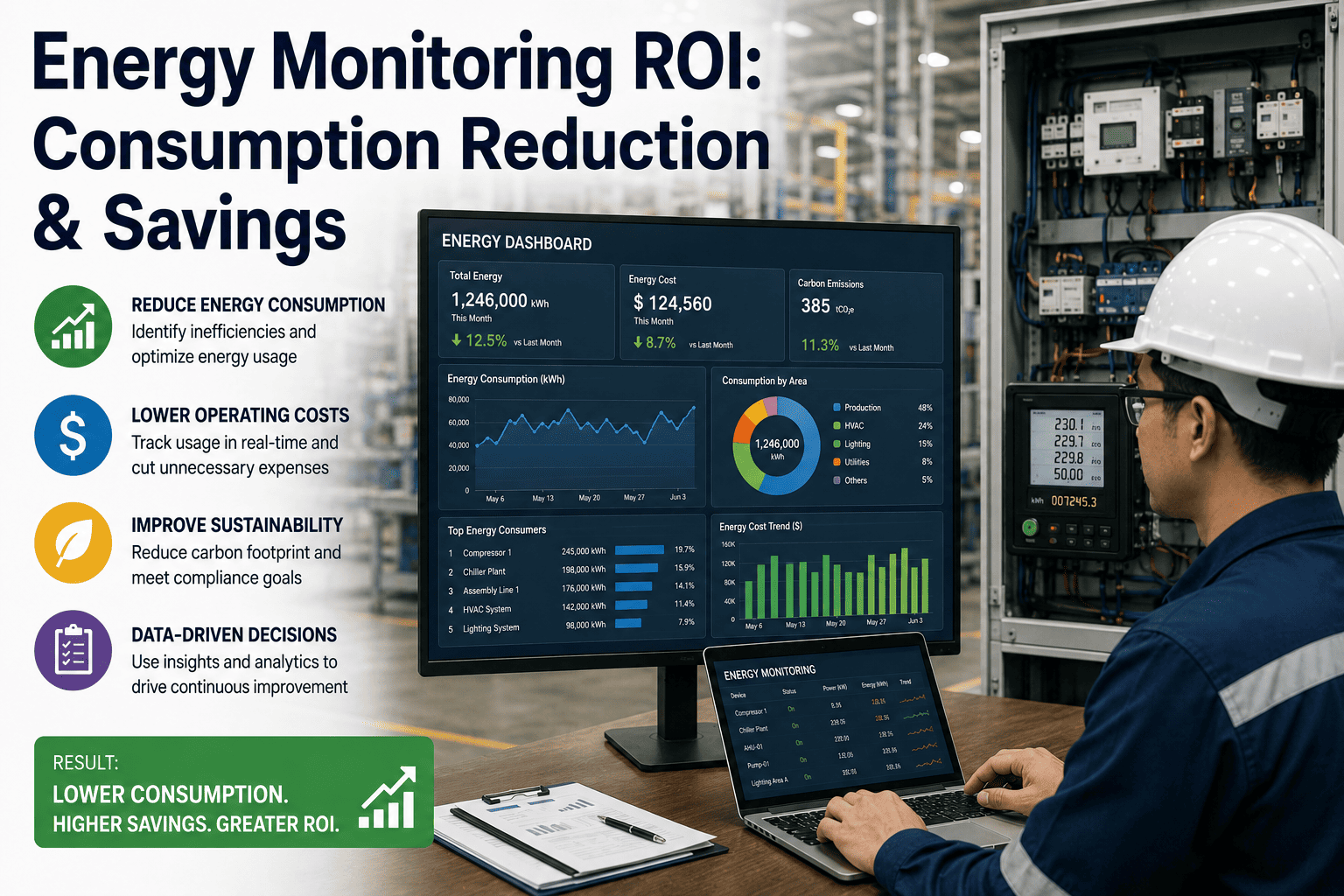
Manufacturing facilities waste 15–30% of the energy they consume due to inefficient equipment operation, compressed air leaks, unoccupied-zone HVAC operation, and peak-demand surcharges that could be avoided with load shifting. iFactory AI's energy monitoring solution provides real-time consumption data at the machine, line, and facility level, enabling operators to identify waste patterns and implement corrective actions. Typical savings range from 8–18% of total facility energy spend, with implementation requiring only sub-meter installation and platform configuration — no capital equipment replacement needed.
- 8–18% reduction in total facility energy spend through real-time monitoring and load optimization
- Peak-demand surcharge reduction of 12–25% through automated load shedding and production scheduling
- Compressed air leak detection and remediation typically recovers 10–20% of compressed air system energy
Most manufacturers operate with asset utilization rates of 55–75%, meaning 25–45% of available production capacity is lost to planned downtime, unplanned downtime, slow cycles, and changeovers. iFactory AI's production monitoring solution tracks OEE in real time across every asset, line, and shift — providing granular visibility into the six big losses (breakdowns, setup, idling, reduced speed, defect losses, startup losses). Operators and supervisors receive actionable alerts when performance drops below target thresholds, enabling real-time intervention.
- 10–18 percentage point OEE improvement through real-time loss visibility and operator response
- 15–25% reduction in changeover time through digital setup verification and documented best-practice procedures
- 5–10% capacity increase without capital expenditure by recovering hidden production time
When production data is collected manually — end-of-shift reports, clipboard logging, spreadsheets — the latency between an efficiency loss and its detection can span hours or shifts. iFactory AI's manufacturing execution system captures production counts, cycle times, downtime events, and quality data automatically from PLCs, sensors, and operator touchscreens, presenting real-time dashboards that drive immediate corrective action. This eliminates the 3–7% production loss that occurs between the onset of an efficiency problem and its detection through manual reporting.
- 3–7% production volume recovery through real-time loss detection vs. end-of-shift reporting
- 50–80% reduction in manual data collection labor hours for production reporting
- Real-time visibility enables 60–70% faster response to performance anomalies
Strategies 4–6: Predictive Maintenance, CMMS Workflow Optimization, and Maintenance Planning Excellence
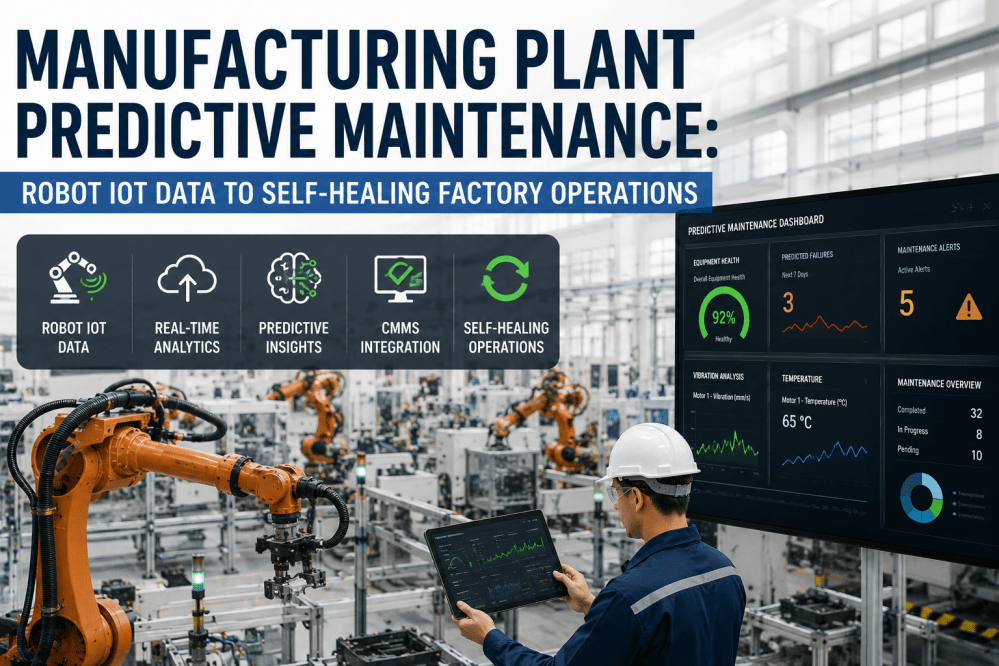
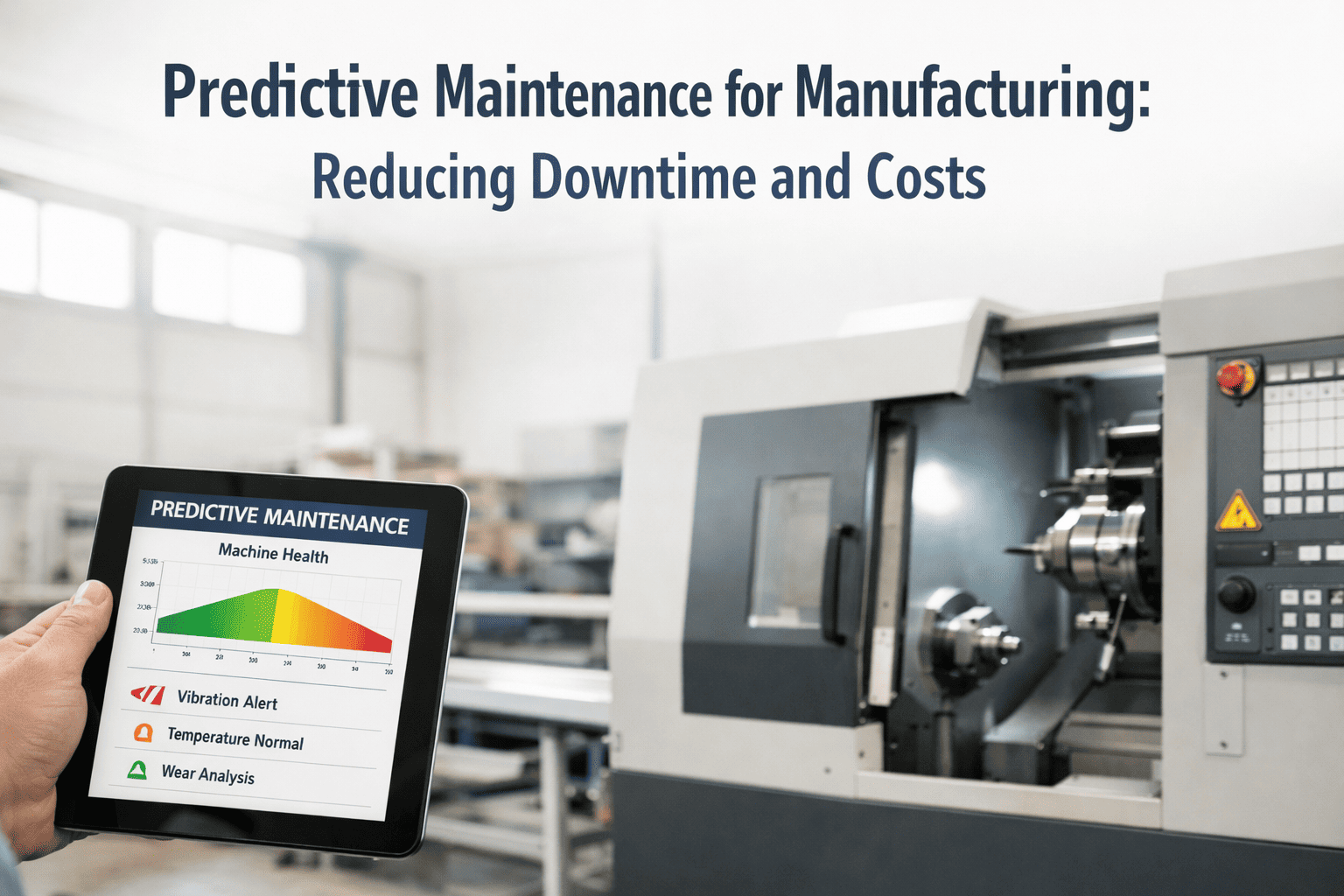
Unplanned downtime costs manufacturers an estimated $50–$500 billion annually across industries, with 70% of equipment failures preceded by detectable warning signs that are missed by calendar-based maintenance schedules. iFactory AI's predictive maintenance solution uses machine learning models trained on equipment vibration, temperature, current draw, and pressure data to predict failures 10–21 days in advance. The platform integrates with PLCs, vibration sensors, and thermal monitoring systems to provide condition-based maintenance recommendations that replace fixed-interval schedules with risk-based interventions.
- 30–50% reduction in unplanned downtime through early failure prediction and planned intervention
- 15–25% reduction in maintenance spend by eliminating unnecessary preventive maintenance tasks
- 20–35% extension of equipment mean time between failure through condition-based preservation
Manufacturers without a structured CMMS lose 15–25% of maintenance labor hours to non-productive activities — searching for parts, waiting for equipment access, duplicating work orders, and re-prioritizing tasks mid-shift. iFactory AI's work order management and preventive maintenance modules provide a structured framework for planning, scheduling, executing, and documenting all maintenance activities. The platform automatically generates PM work orders based on meter readings, elapsed time, or condition alerts, and prioritizes them against production schedules.
- 15–25% improvement in maintenance labor productivity through structured work order management
- 25–40% reduction in emergency maintenance events through consistent PM execution
- 30–50% faster work order completion with mobile-enabled technician access to procedures and parts data
The difference between reactive and planned maintenance is 3–5x in cost per intervention — planned work costs less because parts are available, the right technician is assigned, the equipment is prepped for access, and the procedure is reviewed before work begins. iFactory AI's maintenance planning module enables weekly and daily scheduling with resource leveling, parts reservation, and shift coordination. Integration with production monitoring ensures maintenance windows align with actual production demand rather than fixed calendar slots.
- 3–5x cost reduction per maintenance intervention through planned vs. reactive execution
- 10–20% reduction in overtime labor through optimized scheduling and reduced emergency calls
- 95%+ PM completion rate through automated scheduling and supervisor dashboard visibility
The combination of predictive, preventive, and planned maintenance strategies typically reduces total maintenance spend by 20–35% while simultaneously improving equipment reliability. iFactory AI's unified CMMS platform enables manufacturers to implement all three strategies through a single system with shared asset hierarchies, work order templates, and performance analytics. Book a Demo to review a maintenance cost reduction roadmap for your facility.
Reduce Maintenance Spend by 20–35% While Improving Equipment Reliability — iFactory AI's Integrated CMMS Makes It Possible
iFactory AI's CMMS and predictive maintenance platform enables manufacturers to transition from reactive to condition-based maintenance, reducing unplanned downtime, extending asset life, and optimizing maintenance labor productivity — all through a unified work order and asset management system.
Strategies 7–9: Quality Control Automation, Digital Twin Process Optimization, and Scrap Reduction
Manual quality inspection typically catches only 70–80% of defects, with inspection speed limited by human visual acuity and fatigue. iFactory AI's AI vision camera solutions use computer vision models trained on your specific product and defect types to inspect every unit at line speed with 99.5%+ defect detection accuracy. The system triggers real-time alerts when defect patterns emerge — enabling process adjustment before a batch run is compromised — and provides statistical quality control data that identifies root causes of recurring quality issues.
- 30–50% reduction in scrap and rework costs through real-time defect detection and process adjustment
- 99.5%+ defect detection accuracy vs. 70–80% for manual inspection
- 50–70% reduction in quality inspection labor costs through automated visual inspection
Process optimization through physical experimentation is expensive, disruptive, and slow — each trial run consumes materials, energy, and production time. iFactory AI's digital twin technology creates a real-time virtual replica of your production line that simulates process changes, material variations, and equipment configurations without interrupting production. Manufacturers use digital twins to optimize cycle times, reduce energy consumption, validate changeover procedures, and test "what-if" scenarios — delivering process improvements at a fraction of the cost of physical trials.
- 15–25% reduction in process optimization costs by replacing physical trials with digital simulation
- 10–20% improvement in first-pass yield through digital twin-validated process parameters
- 5–10% reduction in energy consumption per unit through simulation-optimized production schedules
Scrap and rework costs typically represent 3–8% of manufacturing revenue, with a significant portion attributable to material that was produced outside specification but not immediately identified. iFactory AI's scrap inventory management module tracks material yield at every production stage, identifies yield loss patterns by product, shift, and operator, and provides real-time visibility into scrap generation rates. The platform integrates with quality control data to correlate yield loss with specific process parameters, enabling targeted corrective action.
- 20–35% reduction in scrap generation through real-time yield tracking and root cause analysis
- 3–5% improvement in material yield within 90 days of implementing scrap visibility
- Reduction in rework labor hours by 25–40% with prevention-focused quality alerts
Strategies 10–12: Inventory Optimization, Vendor Management, and Purchase Efficiency
Manufacturers carry 15–30% more inventory than they need due to safety stock buffers, lack of visibility into actual consumption patterns, and the absence of automated replenishment triggers. iFactory AI's parts and inventory management and stock control modules provide real-time visibility into stock levels, consumption rates, and lead times across all storerooms and warehouses. The platform calculates optimal reorder points, safety stock levels, and economic order quantities based on actual usage data and supplier lead time variability.
- 15–30% reduction in inventory carrying costs through optimized stock levels and automated replenishment
- 40–60% reduction in stockout events with consumption-based reorder point calculation
- 25–35% reduction in expedited freight costs through proactive inventory planning
Dispersed supplier bases, inconsistent pricing, and unmanaged contract compliance create hidden cost premiums of 5–15% on purchased materials and services. iFactory AI's vendor management module centralizes supplier data, contract terms, pricing agreements, and performance metrics in a single system. The platform tracks supplier lead time reliability, quality performance, and pricing compliance — providing the data needed for strategic procurement decisions and supplier consolidation that drives volume discounts without increasing risk.
- 5–12% reduction in purchased material costs through contract compliance monitoring and supplier consolidation
- 15–25% improvement in supplier on-time delivery through performance scorecard visibility
- 30–50% reduction in administrative procurement labor through automated vendor communication and recordkeeping
Manual purchase request and approval processes introduce 3–7 days of processing time per requisition, with 15–25% of purchases made outside approved supplier agreements due to process bypasses. iFactory AI's purchase management solution digitizes the entire source-to-pay workflow — from requisition through approval, purchase order issuance, receiving, and invoice matching — with configurable approval workflows that enforce budget controls and preferred supplier compliance.
- 40–60% reduction in purchase order processing cycle time through workflow automation
- 10–15% reduction in maverick spend through enforced procurement policy compliance
- 3–5% additional savings through systematic quote comparison and purchase order consolidation
Supply chain and procurement optimization strategies typically deliver 10–20% total cost reduction in purchased materials and services within 6–12 months of implementation. iFactory AI's integrated inventory, vendor, and purchase management modules provide a complete procurement-to-pay platform that eliminates the data silos that prevent most manufacturers from achieving these savings. Book a Demo to see a procurement cost reduction simulation based on your spend data.
Strategy Comparison — Impact, Timeline, and Implementation Complexity for Each Cost Reduction Strategy
| Strategy | Primary Cost Impact | Documented Savings Range | Implementation Timeline | Implementation Complexity |
|---|---|---|---|---|
| 1. Energy Monitoring | Facility energy spend | 8–18% reduction | 4–8 weeks | Low |
| 2. Smart Asset Utilization | OEE / capacity loss | 10–18 pp OEE improvement | 6–12 weeks | Low |
| 3. Production Monitoring | Production volume recovery | 3–7% volume gain | 4–10 weeks | Low |
| 4. Predictive Maintenance | Unplanned downtime | 30–50% reduction | 10–20 weeks | Medium |
| 5. CMMS Preventive Maintenance | Maintenance labor productivity | 15–25% reduction in spend | 6–14 weeks | Medium |
| 6. Maintenance Planning | Planned vs. reactive cost ratio | 3–5x cost reduction per event | 4–8 weeks | Low |
| 7. AI Vision Quality | Scrap and rework | 30–50% reduction | 8–16 weeks | Medium |
| 8. Digital Twin | Process optimization costs | 15–25% reduction | 12–24 weeks | Medium-High |
| 9. Scrap Management | Material yield loss | 20–35% scrap reduction | 6–10 weeks | Low |
| 10. Inventory Optimization | Inventory carrying costs | 15–30% reduction | 8–16 weeks | Medium |
| 11. Vendor Management | Purchased material costs | 5–12% reduction | 6–12 weeks | Medium |
| 12. Purchase Automation | Procurement cycle costs | 10–15% maverick spend reduction | 6–10 weeks | Low |
| 13. Analytics & Reporting | Decision latency / data labor | 40–60% reduction in reporting labor | 4–10 weeks | Low |
| 14. Shift & Labor Mgmt | Overtime / workforce utilization | 10–20% overtime reduction | 4–8 weeks | Low |
| 15. Safety & Compliance | Incident and compliance costs | 25–40% incident reduction | 6–14 weeks | Medium |
Strategies with low complexity and 8-week-or-less timelines represent rapid-win candidates that generate cash savings within the first quarter of implementation. iFactory AI's platform supports incremental deployment — start with 2–3 rapid-win strategies and build toward full integration over 12–18 months.
Strategies 13–15: AI-Driven Analytics, Workforce Productivity, and Safety Compliance Optimization
Manufacturing organizations spend 15–25 hours per week per facility compiling production, maintenance, quality, and financial data into spreadsheets and presentations — time that adds no operational value and delays decision-making by days or weeks. iFactory AI's analytics and reporting module automatically aggregates data from production monitoring, maintenance management, quality control, energy tracking, and inventory systems into role-specific dashboards and scheduled reports. Plant managers, maintenance supervisors, and operations directors receive real-time visibility into the metrics that matter most for cost control.
- 40–60% reduction in manual reporting labor hours through automated dashboard generation
- 3–5 day reduction in decision cycle time with real-time KPI visibility instead of weekly reports
- 5–10% additional cost reduction through data-driven identification of improvement opportunities
End-of-shift communication gaps, undocumented production issues, and inconsistent shift handovers cost manufacturers 3–6% of production efficiency through repeated problems, delayed escalations, and misaligned priorities. iFactory AI's shift logbook solution digitizes shift handovers with structured logging of production status, equipment issues, safety events, and pending tasks. Supervisors gain visibility into shift performance trends, and operators spend less time on end-of-shift reporting and more time on productive work.
- 3–6% production efficiency recovery through improved shift-to-shift communication and issue tracking
- 10–20% reduction in overtime costs through better shift workload balancing and task prioritization
- 50–70% reduction in end-of-shift documentation time with structured digital logbook entries
Workplace safety incidents cost U.S. manufacturers over $50 billion annually in direct costs (medical, indemnity, OSHA penalties) and indirect costs (production interruption, investigation time, training replacement workers, insurance premium increases). iFactory AI's safety and compliance and incident reporting modules provide a structured framework for hazard identification, incident tracking, corrective action management, and regulatory compliance documentation. The platform integrates with inspection management to ensure safety checks are completed on schedule and findings are resolved promptly.
- 25–40% reduction in recordable incident rates through proactive hazard tracking and corrective action management
- 30–50% reduction in incident investigation and documentation labor with structured digital workflows
- 5–15% reduction in workers' compensation premiums through improved safety performance metrics
Expert Review: What Industry Research Reveals About Manufacturing Cost Reduction Strategies
Industry research and practitioner experience converge on four critical findings that distinguish successful cost reduction programs from those that fail to deliver sustained results. Each finding has direct implications for how manufacturers should prioritize and sequence their cost reduction initiatives.
A 2025 study published in the Journal of Manufacturing Technology Management evaluated cost reduction programs at 87 manufacturing facilities over a 24-month period. Facilities using integrated digital platforms (connecting production monitoring, maintenance management, quality control, and energy tracking) achieved an average operating cost reduction of 22% — compared to 7% for facilities using standalone point solutions and 4% for facilities relying on manual processes. The integration effect was attributed to the elimination of data silos, cross-functional visibility of cost drivers, and the ability to identify trade-offs between maintenance spend, energy consumption, and production throughput within a single decision framework.
- 22% average cost reduction with integrated platforms vs. 7% with point solutions
- Data silo elimination identified as primary driver of superior cost reduction outcomes
- Cross-functional visibility enables optimization of cost trade-offs across operational domains
Research from the International Journal of Condition Monitoring evaluated 38 predictive maintenance deployments across automotive, pharmaceutical, and food manufacturing facilities. The study found that predictive maintenance programs integrated with production scheduling data — enabling maintenance execution during planned changeovers and low-demand periods — delivered an average ROI of 4.2x within 12 months. Standalone predictive maintenance systems (monitoring without production integration) achieved only 1.8x ROI, with savings limited to reduced emergency repairs and missing the larger value of avoided production loss.
- 4.2x ROI for production-integrated predictive maintenance vs. 1.8x for standalone systems
- Production scheduling integration is the critical success factor for predictive maintenance ROI
- Avoided production loss represents 55–65% of total predictive maintenance value
A 2024 analysis by the Manufacturing Leadership Council examined the sequencing of cost reduction initiatives at 62 manufacturing sites. Sites that implemented energy monitoring and waste reduction programs first (before maintenance or quality improvements) generated average cash savings of $180,000–$420,000 within the first 6 months — sufficient to fund subsequent investments in predictive maintenance, AI vision systems, and digital twin technology without requiring additional capital budget. This "self-funding" model was identified as the most effective approach for manufacturers with constrained capital budgets.
- $180K–$420K in cash savings within 6 months from energy and waste reduction initiatives
- Self-funding model enables capital-constrained manufacturers to access advanced digital capabilities
- Sequencing of initiatives identified as critical factor in program success and sustainability
These research findings validate what iFactory AI's implementation data has consistently shown: manufacturers that adopt an integrated platform approach — starting with rapid-win energy and waste strategies and building toward full digital operations integration — achieve significantly higher cost reduction, faster ROI, and more sustainable long-term results than those pursuing point solutions or fragmented implementations. Book a Demo to review a cost reduction sequencing plan tailored to your facility's specific operational profile and capital constraints.
Start Reducing Manufacturing Operating Costs Today — iFactory AI Enables a Proven, Integrated Approach
iFactory AI's unified platform connects energy monitoring, predictive maintenance, quality control, inventory optimization, and workforce analytics — enabling manufacturers to implement 15 proven cost reduction strategies through a single integrated system with pre-built workflows, real-time analytics, and cross-functional visibility.
Manufacturing Operating Cost Reduction — A Systematic, Achievable Pathway to Improved Profitability
The 15 strategies outlined in this framework represent a comprehensive, proven approach to reducing manufacturing operating costs — from the rapid wins of energy monitoring and production visibility to the transformative impact of predictive maintenance, AI vision quality control, digital twin process optimization, and AI-driven analytics. The consistent finding across industry research and implementation data is clear: integration matters more than individual strategy selection. Manufacturers that connect their cost reduction initiatives through a unified digital platform achieve two to three times the savings of those pursuing fragmented point solutions, and they sustain those savings over multiple operating cycles because the platform provides the visibility and analytics needed to prevent cost creep.
iFactory AI's platform delivers the integration foundation that makes comprehensive cost reduction achievable: a unified CMMS, manufacturing execution system, production monitoring solution, energy management platform, quality control system, and analytics engine — all connected through a single data model and user interface. Manufacturers can start with one or two rapid-win strategies and expand incrementally, with each new module building on the data and workflows established by previous implementations. The question for manufacturing leaders is not whether cost reduction is possible — the 15 strategies and the documented savings ranges confirm that it is — but how quickly your organization will begin the systematic journey toward lower operating costs and higher manufacturing profitability. Book a Demo to start building your facility's cost reduction roadmap.
Frequently Asked Questions About Reducing Manufacturing Operating Costs
Which manufacturing cost reduction strategies deliver the fastest results for a facility just starting the journey?
Real-time energy monitoring, production monitoring with OEE tracking, and structured preventive maintenance through a CMMS consistently deliver measurable savings within 60–90 days of implementation. Energy monitoring typically identifies 8–18% savings through leak detection, load optimization, and peak-demand management. Production monitoring recovers 3–7% of lost production volume through visibility into the six big losses. CMMS implementation reduces emergency maintenance events by 25–40% and improves labor productivity by 15–25%. These three strategies require minimal capital investment, can be implemented in parallel, and generate cash savings that can fund subsequent investments in predictive maintenance, AI vision, and digital twin capabilities.
What is the typical investment required to implement an integrated cost reduction platform across a manufacturing facility?
A complete iFactory AI platform deployment for a mid-size manufacturing facility — including production monitoring, CMMS with preventive maintenance, energy monitoring, quality control modules, inventory management, and analytics — typically ranges from $95,000 to $245,000 depending on the number of production lines, asset count, existing sensor infrastructure, and integration requirements. Deployment timelines from initial installation to live operation are 8 to 16 weeks for the core modules, with additional modules requiring 4 to 8 weeks each. ROI is typically achieved within 8 to 14 months through a combination of energy savings, maintenance cost reduction, scrap reduction, inventory optimization, and labor productivity improvements.
How does iFactory AI's platform integrate with existing equipment, PLCs, and control systems?
iFactory AI's integration layer supports OPC UA for PLC and DCS connectivity, MQTT for sensor and IIoT device communication, REST APIs for ERP and MES integration, and barcode/RFID for inventory and asset tracking. The platform includes pre-built connectors for major PLC brands (Siemens, Allen-Bradley, Mitsubishi, Omron) and industrial communication protocols (Modbus, Profinet, EtherNet/IP). For facilities without existing sensor infrastructure, iFactory AI provides wireless sensor kits for vibration, temperature, current, and environmental monitoring that connect directly to the platform without requiring control system modifications.
Can the 15 strategies be implemented incrementally, or is a full platform deployment required to realize savings?
The strategies are explicitly designed for incremental implementation. Most manufacturers begin with 2–3 high-impact, low-complexity strategies — typically production monitoring, energy monitoring, and CMMS-based preventive maintenance — which can be implemented within 8–12 weeks and begin generating measurable savings immediately. Additional strategies are added in subsequent phases based on priority, budget availability, and operational readiness. iFactory AI's platform architecture supports this phased approach by allowing modules to be activated independently while maintaining a shared data model and user interface, so each new strategy builds on data and workflows already established.
How do manufacturers measure and verify the cost savings achieved through these strategies?
iFactory AI's analytics and reporting module provides pre-built dashboards that track the specific KPIs associated with each cost reduction strategy: energy cost per unit produced, OEE trend, maintenance cost as a percentage of replacement asset value, scrap rate by product and shift, inventory turns and carrying cost, emergency maintenance ratio, and total operating cost per unit. The platform establishes baseline metrics during the first 30 days of operation and continuously tracks improvement against those baselines, with automated variance alerts when performance deviates from expected improvement trajectories. Quarterly business reviews supported by platform data provide documented verification of savings that can be used for financial reporting and continuous improvement program governance.
Reduce Manufacturing Operating Costs with 15 Proven Strategies — iFactory AI's Integrated Platform Delivers Results
iFactory AI enables manufacturers to systematically reduce operating costs through a unified platform connecting energy monitoring, predictive maintenance, production optimization, quality control, inventory management, and workforce analytics. The 15 strategies are proven. The platform is ready. The question is when your facility will begin its cost reduction journey.