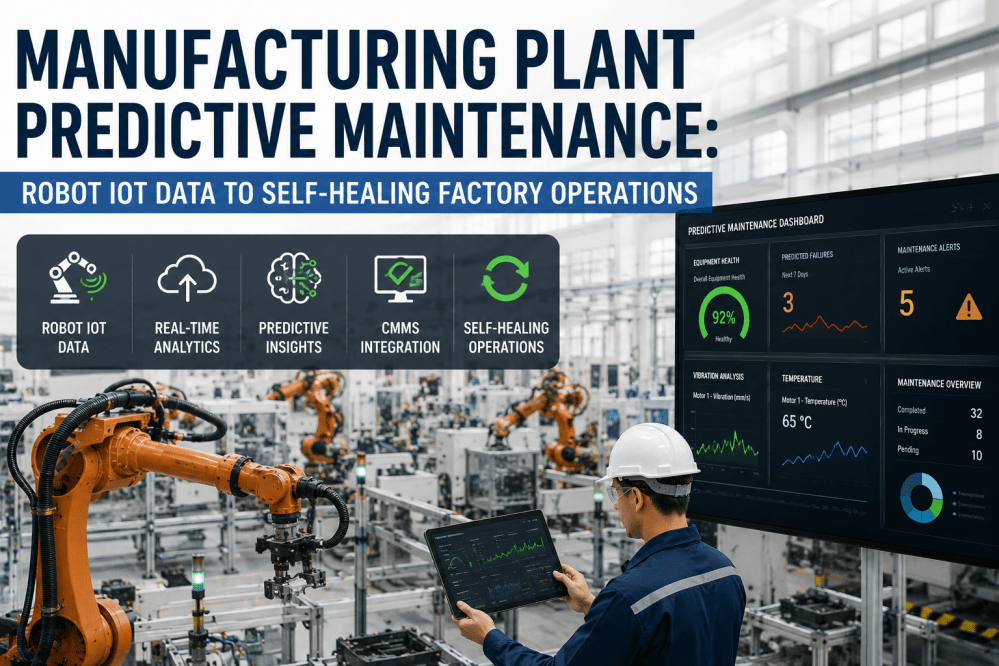
The manufacturing floor of 2026 looks fundamentally different from the one most U.S. plant managers grew up with — and the difference is not just automation. It is the convergence of robot IoT telemetry, sensor fusion, digital twin simulation, and predictive maintenance intelligence into a single closed loop that lets a plant identify, diagnose, and resolve mechanical and process failures before the operator on the shop floor notices anything is wrong. The traditional model of run-to-failure maintenance — or even calendar-based preventive maintenance — is no longer competitive in an environment where unplanned downtime costs U.S. discrete manufacturers an estimated $50 billion annually, and where a single hour of stopped production on a high-volume line can erase the entire margin contribution of that shift. iFactory AI's predictive maintenance platform unifies the data layer that modern manufacturing plants have spent the last decade building: robot controllers streaming joint torque and vibration data, PLC tags from press lines and conveyors, vision system frames from quality inspection stations, and ERP work order history that captures what actually broke and what fixed it. The result is a self-healing factory architecture — one where machines forecast their own remaining useful life, schedule their own maintenance windows, and route work orders to the right technician with the right parts already kitted, all before the failure mode would have triggered a traditional alarm. For a working session on how iFactory's predictive maintenance and digital twin capabilities apply to your specific plant configuration, contact our support team.
Is Your Manufacturing Plant Still Reacting to Failures Instead of Forecasting Them?
iFactory AI's predictive maintenance platform fuses robot IoT data, sensor fusion analytics, and digital twin simulation into a self-healing factory architecture — so your assets forecast their own failures, schedule their own repairs, and protect production targets before downtime happens.
Why Calendar-Based Maintenance Is Costing U.S. Manufacturers Their Competitive Margin
Most U.S. manufacturing plants today operate on a maintenance model designed for the equipment of the 1990s — fixed intervals, manual inspections, and reactive response to alarms that fire only after the failure mode has already begun damaging the asset. The economics of that model have collapsed under the operating reality of modern automated lines, where a robot cell, CNC station, or packaging machine generates 10,000 to 100,000 telemetry data points per minute that calendar-based programs simply cannot process. The cost of that gap is visible on every plant's downtime ledger.
Annual Downtime Cost
Estimated annual cost of unplanned downtime to U.S. discrete manufacturers — a number that has grown each year as line speeds and automation density have increased, multiplying the production impact of every minute a single asset is stopped.
Overall OEE Loss
Average production capacity lost to unplanned downtime, micro-stops, and reactive maintenance events in U.S. manufacturing plants operating on calendar-based maintenance programs — capacity that goes directly to competitor plants with mature predictive programs.
Reactive Repair Multiplier
Cost ratio of a reactive repair compared to the same fault addressed predictively before secondary damage occurred — driven by emergency parts logistics, overtime labor, collateral component damage, and lost production margin during extended outage.
Avoidable Failures
Proportion of unplanned mechanical failures in automated manufacturing assets that exhibit detectable precursor signatures — vibration, temperature, current draw, or acoustic patterns that predictive analytics would have caught 7–30 days before the failure event.
The Five Data Streams That Power a Self-Healing Factory Operating Model
A predictive maintenance program is only as accurate as the data layer that feeds it. iFactory AI's platform unifies five distinct data streams that modern manufacturing plants generate but rarely fuse together — and it is precisely this fusion that converts isolated condition monitoring into the asset-level remaining useful life forecasting that drives self-healing factory operations.
| Data Stream | Primary Source | Sample Rate | What It Reveals | iFactory Integration |
|---|---|---|---|---|
| Robot IoT Telemetry | Robot controllers (FANUC, ABB, KUKA, Yaskawa) | 10–250 Hz per joint | Joint torque drift, servo current, position error, gearbox wear | Native Controller APIs |
| PLC and SCADA Signals | Allen-Bradley, Siemens, Mitsubishi PLCs | 1–100 Hz per tag | Cycle time variation, valve response, pressure trends, motor amps | OPC-UA / MQTT Native |
| Vibration and Acoustic | Wireless sensors, edge gateways | 1–25 kHz spectral | Bearing defect frequencies, imbalance, misalignment, cavitation | Edge AI Spectral Analysis |
| Vision and Thermal Imaging | AI vision cameras, FLIR thermal arrays | Frame-by-frame analysis | Surface defects, hot-spot anomalies, dimensional drift, leakage | NVIDIA-Powered Inference |
| ERP and CMMS History | SAP PM, Maximo, Infor EAM, work orders | Event-driven | Historical failure patterns, MTBF baselines, parts consumption | Bidirectional API Sync |
Reactive Maintenance vs. Self-Healing Factory: The Structural Operating Difference
The self-healing factory is not a marketing concept — it is a measurable operating model defined by a closed loop between asset telemetry, predictive analytics, automated work order generation, and prescriptive repair guidance. The structural difference between a reactive plant and a self-healing plant is not technology stack alone. It is the operating discipline of letting the assets themselves trigger and guide their own maintenance.
- Maintenance schedules driven by calendar intervals regardless of actual asset condition
- Failures detected only after threshold alarms — usually too late to prevent damage
- Work orders created manually by supervisors after failure already impacts production
- Parts ordered emergency-rush after the failure, with multi-day delivery delays
- Technicians dispatched without diagnostic context — root cause discovered on-site
- Robot and PLC data collected but never analyzed for cross-asset failure patterns
- Digital twin used only for initial design — never updated with operational reality
- Same failure modes recur because root cause analysis never feeds back into procedures
- Maintenance triggered by remaining useful life forecasts unique to each asset
- Precursor signatures detected 7–30 days before failure — repair planned, not rushed
- Work orders auto-generated with diagnostic context, parts list, and procedure attached
- Parts pre-staged in kit form before the technician arrives at the asset
- Technicians receive AI-guided repair workflow with asset-specific historical context
- Robot, PLC, and vision data fused into unified asset health score per machine
- Digital twin continuously updated with live telemetry — simulation matches reality
- Failure resolutions feed back into the model — every event makes the system smarter
U.S. plants operating in the self-healing mode consistently report 35–55% reductions in unplanned downtime within 12 months, 40–60% reductions in mean time to repair, and 20–30% reductions in total maintenance cost per unit produced — outcomes that compound year over year as the predictive models continue to learn from every cycle. Book a Demo to see how iFactory's self-healing factory architecture maps to your current automation footprint.
Turn Your Robot and PLC Telemetry Into a Live Predictive Maintenance Engine.
iFactory AI ingests robot controller data, fuses it with PLC tags and vision frames, mirrors the result in an NVIDIA Omniverse digital twin, and writes prescriptive work orders directly into your CMMS — closing the loop from sensor to repair in minutes, not days.
How iFactory AI Builds the Self-Healing Factory Across Three Capability Layers
iFactory's manufacturing predictive maintenance platform is structured around three integrated capability layers — each one solving a specific dimension of the self-healing factory architecture, and each one designed to integrate with the SAP, Maximo, FANUC, ABB, and Siemens systems that U.S. manufacturing plants already operate.
Sensor Fusion and RUL Analytics
- Multi-source data fusion across robot controllers, PLCs, vibration, and vision sensors
- Remaining useful life forecasting per asset with confidence-interval reporting
- Edge AI inference for low-latency anomaly detection on high-speed production lines
- Failure mode classification mapped to specific component, not just generic alarm
- Continuous model retraining as each completed work order adds labeled data
Digital Twin and Simulation
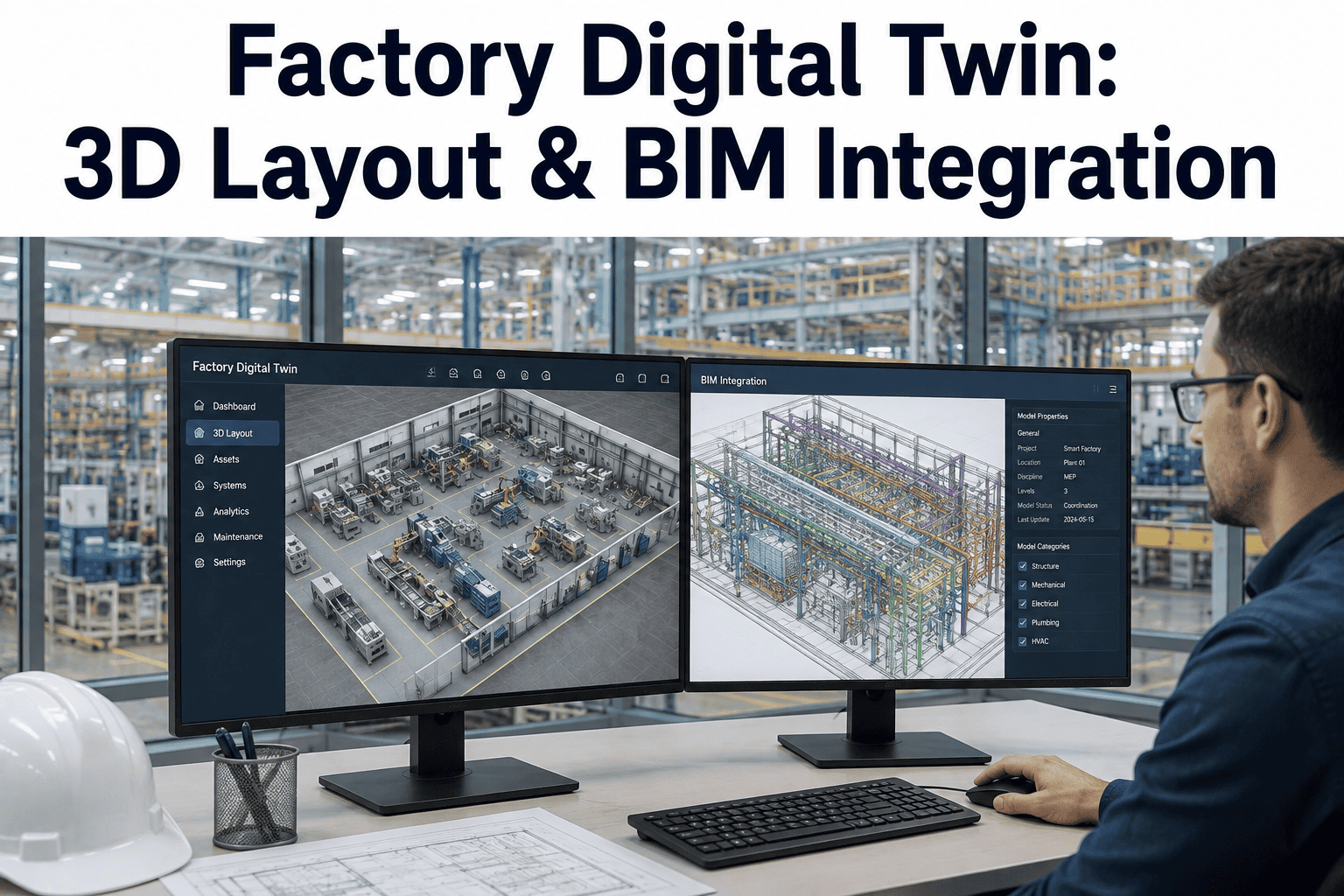
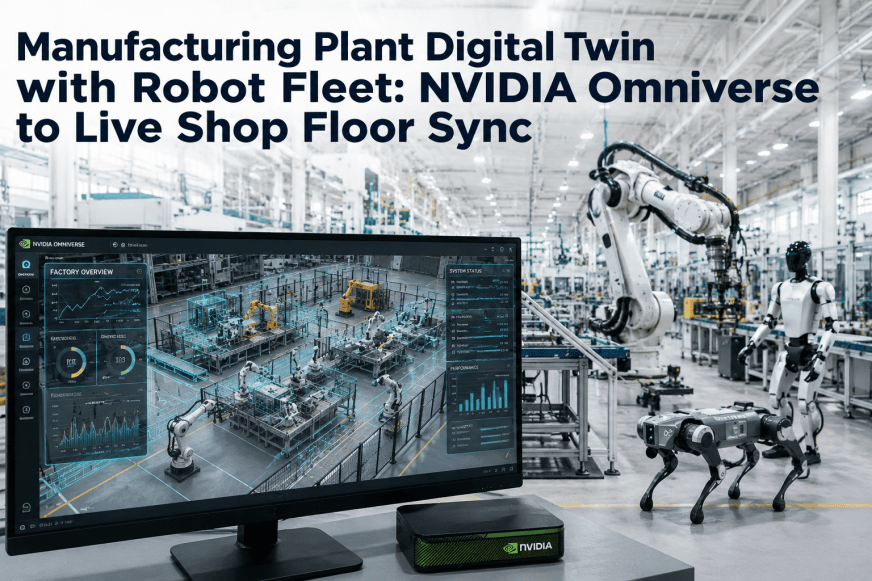
- NVIDIA Omniverse-powered digital twin synchronized with live plant telemetry
- Failure scenario simulation before scheduling outages — validate repair sequence
- Process optimization through digital twin what-if modeling at production speed
- Robot cell simulation for new part introduction and changeover validation
- 3D plant model with live OEE, energy, and condition overlays per asset
Prescriptive Work Order Automation
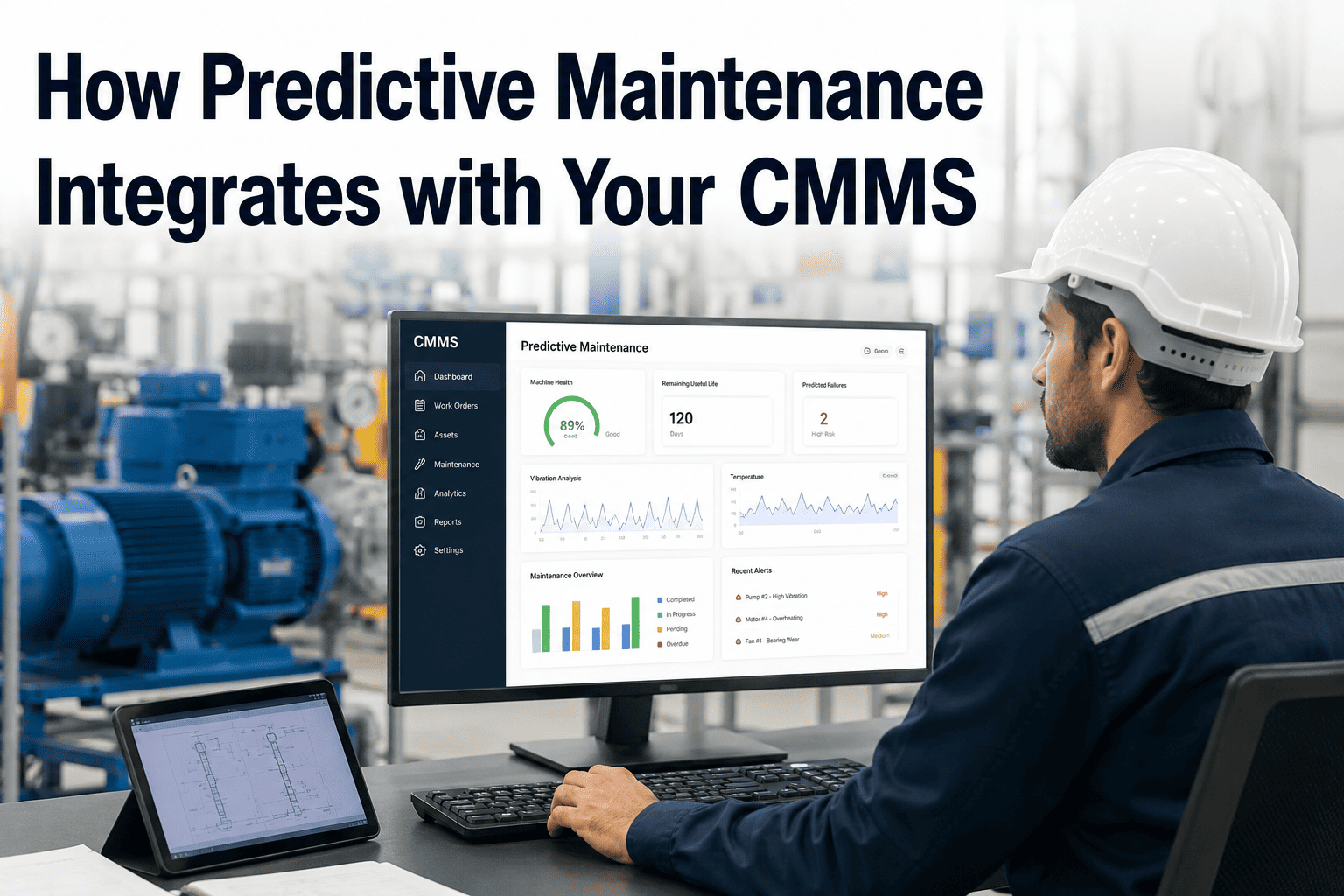
- Automated work order generation in SAP PM, Maximo, and Infor EAM from AI alerts
- Parts kit pre-staging triggered by predictive alert before technician dispatch
- AI-guided repair procedures contextualized to specific asset and failure mode
- Mobile work order execution with photo capture, parts consumption, and time logging
- Closed-loop feedback — every closed work order improves the predictive model
The Five-Stage Workflow From Sensor Telemetry to Self-Healing Production Floor
Building self-healing factory capability is a structured workflow, not a one-time project. Each stage delivers measurable operational improvement on its own, while compounding the value of the stages that follow — so plants can sequence the implementation against their capital cycle and operational constraints rather than waiting for a multi-year transformation to complete.
Stage 1 — Asset Criticality Mapping and Data Stream Onboarding
Identify the 15–25% of assets that drive 80% of unplanned downtime cost on each production line. Onboard robot controller data (FANUC FOCAS, ABB RobotWare, KUKA mxAutomation), PLC tags via OPC-UA, and condition monitoring sensors to iFactory's unified data layer. Even before predictive analytics are activated, the unified visibility this stage delivers typically surfaces 5–10 recurring failure patterns that were invisible to siloed condition monitoring tools — generating immediate maintenance prioritization improvements.
Stage 2 — Sensor Fusion and Baseline RUL Model Activation
Activate iFactory's sensor fusion layer to combine robot torque, PLC cycle data, vibration spectral signatures, and vision frames into unified asset health scores. The platform's baseline RUL models begin forecasting failure windows for the priority assets within 2–4 weeks of data accumulation. Initial alerts focus on high-confidence failure modes — bearing degradation, gearbox wear, servo current drift, hydraulic leakage — where the predictive signatures are well-established across the manufacturing industry.
Stage 3 — CMMS and ERP Integration for Prescriptive Work Orders
Connect iFactory's prescriptive engine to the plant's CMMS (SAP PM, Maximo, Infor EAM) and ERP system. Predictive alerts now flow directly into the existing work order queue with diagnostic context, recommended parts kit, AI-guided repair procedure, and historical reference work orders for the same asset and failure mode. This stage typically reduces mean time to repair by 30–45% because technicians arrive at the asset with complete context rather than discovering the root cause on-site.
Stage 4 — Digital Twin Synchronization and Simulation
Build the NVIDIA Omniverse-powered digital twin of the priority production lines, synchronized with live plant telemetry. Engineering teams use the twin to validate repair sequences before scheduling outages, simulate process changes against actual operational data, and run what-if scenarios for new part introduction or line reconfiguration. The twin becomes the planning surface where production, maintenance, and engineering teams resolve conflicts before they reach the physical plant.
Stage 5 — Closed-Loop Self-Healing Operations
Activate the full closed-loop architecture — robots and machines forecast their own failures, schedule their own maintenance windows during planned production gaps, route work orders to the right technician with parts already staged, and feed the closed work order outcomes back into the predictive model. The plant has now reached the operating state where unplanned downtime becomes the exception rather than the baseline — and where every cycle of every asset improves the system's accuracy for the next cycle.
Most U.S. manufacturing plants reach measurable Stage 2 outcomes within 60 days and full Stage 5 operating capability within 9–12 months — significantly faster than the multi-year transformation timelines associated with traditional manufacturing system replacements. Book a Demo to map this workflow against your plant's specific automation footprint.
What Senior Manufacturing Engineers Say About the Self-Healing Factory Transition
After 22 years across automotive stamping, Tier 1 supplier operations, and high-mix consumer goods, the most important shift I have seen in manufacturing maintenance is the recognition that the data was always there — the robots, the PLCs, the vision systems, the variable frequency drives, all of them have been generating the signals we needed to predict failures for at least the past decade. What changed is the ability to fuse those signals into something operationally actionable. The traditional condition monitoring industry sold us point solutions — a vibration system here, a thermography route there, a lube oil program elsewhere — and each one produced its own report that nobody had time to read in context with the others. The self-healing factory architecture solves a different problem: it stops treating maintenance as a function that responds to the plant and starts treating it as a closed-loop system embedded in the plant. The robot tells the CMMS that it needs attention, the CMMS tells the storeroom which parts to kit, the digital twin validates that the repair sequence will not affect the adjacent line, and the technician arrives knowing exactly what they are doing and why. That is not a software upgrade. It is an operating model change. And the plants that make that operating model change while their competitors are still running calendar-based PMs are the ones that will define the cost-per-unit benchmarks of the next decade. The biggest mistake I see plants make is treating predictive maintenance as a maintenance department initiative. It is a production initiative. Maintenance is just where the work order lands.
The Self-Healing Factory Is Not the Future of U.S. Manufacturing. It Is the Present.
The question facing U.S. manufacturing plant operators in 2026 is not whether predictive maintenance, robot IoT integration, digital twin simulation, and prescriptive work order automation will become standard operating practice. They already are — at the plants that have completed the transition, and at the competitors against whom every other plant is benchmarked on cost-per-unit, OEE, and on-time delivery. The question is whether the transition happens on a deliberate roadmap that protects production continuity and capital efficiency, or under pressure after a major unplanned outage event forces the issue.
iFactory AI's manufacturing predictive maintenance platform delivers the three capability layers that define the self-healing factory: sensor fusion and remaining useful life analytics across robot, PLC, vibration, and vision data streams; NVIDIA Omniverse-powered digital twin simulation synchronized with live plant telemetry; and prescriptive work order automation that closes the loop from predictive alert to completed repair through native integration with SAP PM, Maximo, Infor EAM, and the major robot and PLC ecosystems. Plants that activate this architecture today position themselves on the right side of the manufacturing cost curve for the next decade — while plants that delay continue paying the calendar-based maintenance penalty in downtime cost, OEE loss, and margin erosion that the self-healing operating model is specifically designed to eliminate. Book a Demo to design a self-healing factory roadmap configured for your specific plant, asset mix, and capital cycle.
Your Plant Already Has the Data. iFactory AI Turns It Into a Self-Healing Production System.
Robot telemetry, PLC signals, vibration sensors, vision frames, and CMMS history fused into one predictive engine — forecasting failures, automating work orders, and protecting production targets across every shift, every line, every cycle.
Manufacturing Predictive Maintenance and Robot IoT — Frequently Asked Questions
How does iFactory AI integrate with our existing robot controllers from FANUC, ABB, KUKA, or Yaskawa?
iFactory AI integrates natively with all major industrial robot ecosystems through their published controller APIs and standard industrial protocols. For FANUC robots, the platform connects via FOCAS and Robot Interface; for ABB, through RobotWare and Robot Web Services; for KUKA, via mxAutomation and KUKAVARPROXY; for Yaskawa, through MotoPlus and High-Speed Ethernet Server. The integration is non-invasive — it does not modify robot programs, does not affect cycle time, and does not require taking robots offline during onboarding. iFactory streams joint torque, servo current, position error, gearbox temperature, and cycle telemetry into the unified data layer where it is fused with PLC and condition monitoring data to produce the asset-level remaining useful life forecasts that drive the predictive maintenance engine. Book a Demo to see the integration applied to your specific robot fleet configuration.
What is the difference between predictive maintenance and prescriptive maintenance in iFactory's platform?
Predictive maintenance answers the question of when an asset will fail and what component will fail. Prescriptive maintenance answers the additional questions of what specifically to do about it, what parts will be required, what the optimal repair sequence is, and when the repair should be scheduled to minimize production impact. iFactory AI delivers both capability layers in a single integrated platform. The predictive layer uses sensor fusion analytics across robot, PLC, vibration, and vision data to forecast failure windows with confidence intervals. The prescriptive layer then translates that forecast into an actionable work order — auto-generated in SAP PM, Maximo, or Infor EAM with the recommended parts kit, the AI-guided repair procedure, the technician skill match, and the optimal scheduling window based on production plan and digital twin simulation. This combined capability is what enables the closed-loop self-healing factory operating model.
How does the NVIDIA Omniverse digital twin integrate with iFactory's predictive maintenance engine?
iFactory's NVIDIA Omniverse-powered digital twin is synchronized with the live plant telemetry that feeds the predictive maintenance engine — meaning the twin reflects the actual operational state of every connected asset in near-real-time, not just the as-designed configuration. This bidirectional synchronization enables three high-value use cases that static digital twins cannot deliver. First, engineering teams validate proposed repair sequences in the twin before scheduling physical outages, identifying conflicts with adjacent line operations that would otherwise be discovered during execution. Second, the twin runs what-if simulations for process changes against the actual current operational baseline, so optimization decisions are made with confidence rather than estimation. Third, the twin becomes the visualization layer where production, maintenance, and engineering teams see the same picture of the plant — eliminating the siloed reporting that traditionally prevents cross-functional decision making.
How quickly do U.S. manufacturing plants see measurable ROI from iFactory's predictive maintenance deployment?
Most U.S. manufacturing plants following iFactory's structured five-stage workflow see initial measurable outcomes within 60 days of deployment — primarily through the asset criticality mapping and unified visibility delivered in Stage 1, which typically surfaces 5–10 recurring failure patterns that were previously invisible across siloed condition monitoring tools. Predictive alerts on high-confidence failure modes (bearing wear, gearbox degradation, servo drift, hydraulic leakage) begin producing actionable advance warnings within 90 days as the platform accumulates sufficient asset-specific data to baseline normal operating signatures. Full prescriptive work order automation through the CMMS is typically operational by month 6, with the complete closed-loop self-healing operating model reached at 9–12 months. Plants typically achieve payback on the platform investment within 12–18 months through the combination of downtime reduction, MTTR improvement, parts inventory optimization, and avoided collateral damage costs.
Can iFactory AI work with our existing SAP, Maximo, or Infor EAM CMMS without requiring replacement?
Yes — iFactory AI is specifically designed for integration with the CMMS and ERP systems that U.S. manufacturing plants already operate, rather than for replacement. The platform connects bidirectionally with SAP PM, IBM Maximo, Infor EAM, Oracle EAM, and other major asset management systems through their standard API surfaces. Predictive alerts from iFactory flow into the existing work order queue as enriched work orders carrying diagnostic context, recommended parts list, AI-guided repair procedure, and historical reference work orders for the same asset and failure mode. Completed work order data flows back from the CMMS to iFactory's predictive model, where it becomes labeled training data that continuously improves forecast accuracy. This integration approach protects the plant's existing system investment, preserves established maintenance workflows, and accelerates deployment timelines compared to replacement-based implementations. Book a Demo to walk through the integration architecture for your specific CMMS configuration.